
30 Best Wood Flooring Maintenance Tips for Bathrooms
You can protect bathroom wood floors by sealing seams, using water‑resistant underlayment, and installing thresholds and splash guards to channel water away. Wipe spills, dry after showers, run a properly sized exhaust fan, and lift mats daily to let wood breathe. Reapply durable finishes seasonally, keep a humidity gauge and spare finish for touchups, and inspect trim and underlayment for mold or rot—follow these habits now and you’ll find many more practical tips ahead.
Why Protecting Wood Floors in Bathrooms Matters

Because bathrooms are humid and prone to spills, you need to treat wood floors there as vulnerable surfaces rather than decorative afterthoughts.
You’ll prevent warping and staining by prioritizing surface sealing, prompt cleanup, and routine moisture monitoring.
Small habits—using rugs, wiping puddles, and checking humidity—extend lifespan and save you from costly repairs, so act consistently and inspect often.
Choose the Right Wood Finish for Bathroom Use

Pick a finish that blocks moisture, resists abrasion, and stays stable in fluctuating humidity—those are the three must-haves for bathroom wood floors.
You’ll choose waterproof sealants or durable coatings; oil-modified polyurethane and water-based options work well.
For high-moisture areas consider marine varnish for extra protection.
Apply thin, even coats and follow curing times so the finish performs and lasts without trapping moisture.
Pick Bath Mats That Actually Protect Wood Floors

Don’t just grab the cheapest rug you find—choose bath mats that actually keep water off your wood floors and let them breathe.
Pick machine washable mats with quick-dry backing and absorbent fibers, plus a non slip cork or rubber base to prevent movement.
Rotate and air mats regularly so moisture doesn’t trap underneath, extending your floor’s finish and preventing staining or warping.
Control Humidity With a Bathroom Exhaust Fan
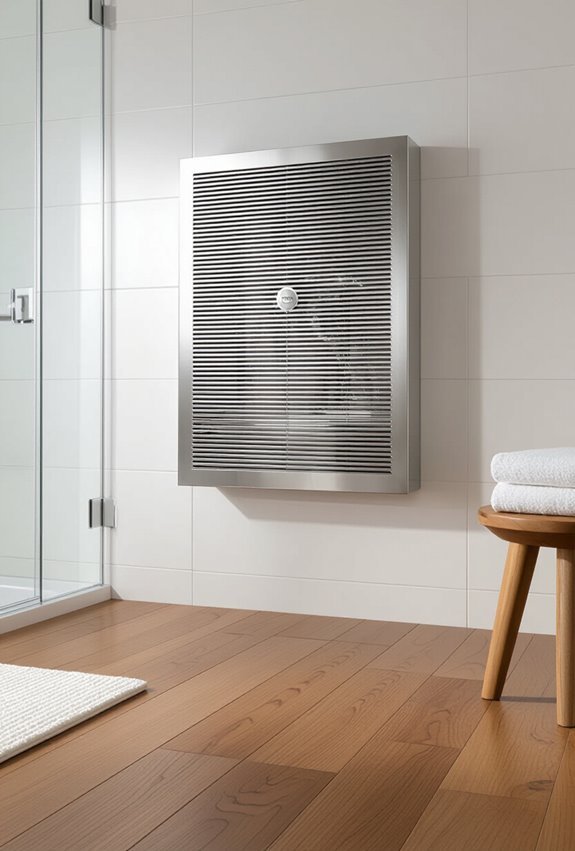
After you wipe down floors, keep the room’s moisture from lingering by running a properly sized bathroom exhaust fan during and after showers; it pulls humid air out before it can settle into seams or reach the subfloor.
Check fan sizing for your bathroom’s cubic footage, set ventilation timing to run 10–20 minutes post-shower, and maintain the fan to guarantee reliable operation and protect your wood.
Inspect Baseboards and Trim for Water Damage Weekly

Regularly inspect baseboards and trim for signs of water damage so you spot problems before they reach the floorboards. Do a weekly inspection for soft spots, discoloration, swelling, or mold.
Pry gently to check behind trim if needed. Address moisture sources and schedule prompt trim repair to prevent rot spreading to flooring.
Document findings and act quickly to protect wood.
Use a Damp Mop: Never a Wet Mop: on Wood Floors
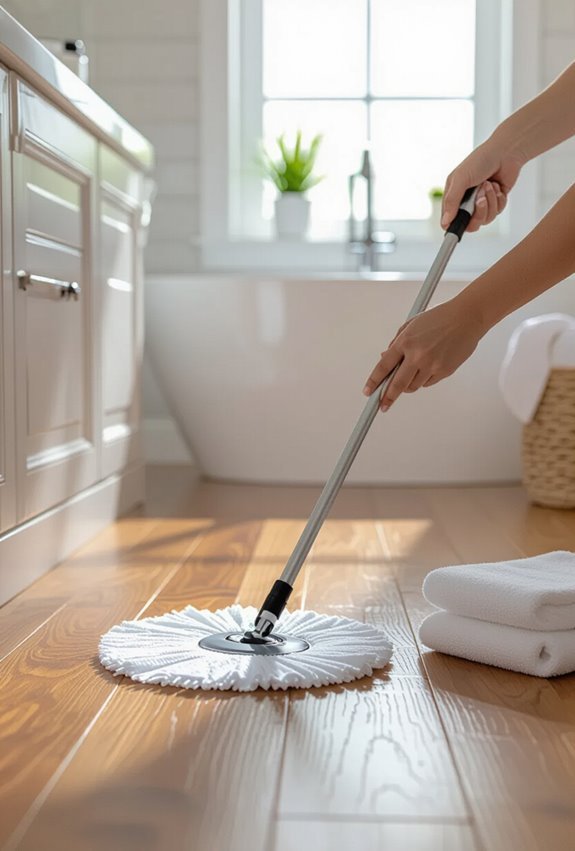
After you’ve fixed leaks and tightened fittings, focus on how you clean—only use a damp mop on wood floors, never a soaking one.
You’ll protect finish and joints by using a microfiber mop and avoiding excess water. Wring the mop with gentle wringing, change water often, and dry the surface quickly with a towel or fan so moisture doesn’t linger.
Avoid Steam Cleaners and Harsh Chemical Products
Because steam forces moisture into seams and fibers, don’t use steam cleaners on bathroom wood floors — they can swell boards, lift finishes, and promote cupping or mold.
You should avoid steam and steer clear of harsh chemicals; opt for pH-neutral wood cleaners, microfiber mops, and quick spot-drying.
Regular gentle care prevents damage and keeps finishes intact without abrasive or caustic products.
Protect Floors From Toilet and Sink Splatter With Splash Guards
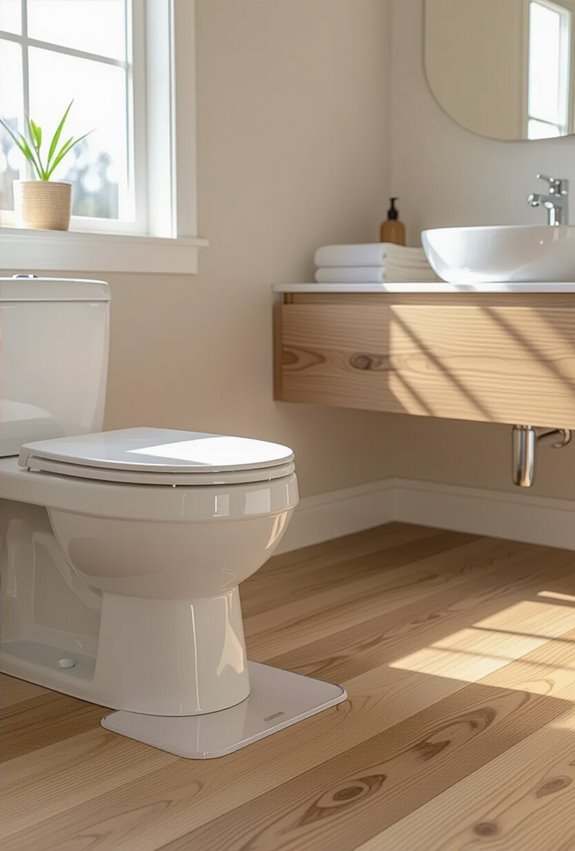
To keep wood floors safe from water and urine splatter around toilets and sinks, install splash guards and simple barriers that channel liquids away from seams and edges.
Fit low-profile splash guards or commercial toilet shields around toilet bases, and add discreet lip guards by sinks.
Clean and dry regularly, check seals, and replace worn guards promptly to prevent staining and warped boards.
Lift Rugs and Mats to Let Wood Breathe Regularly
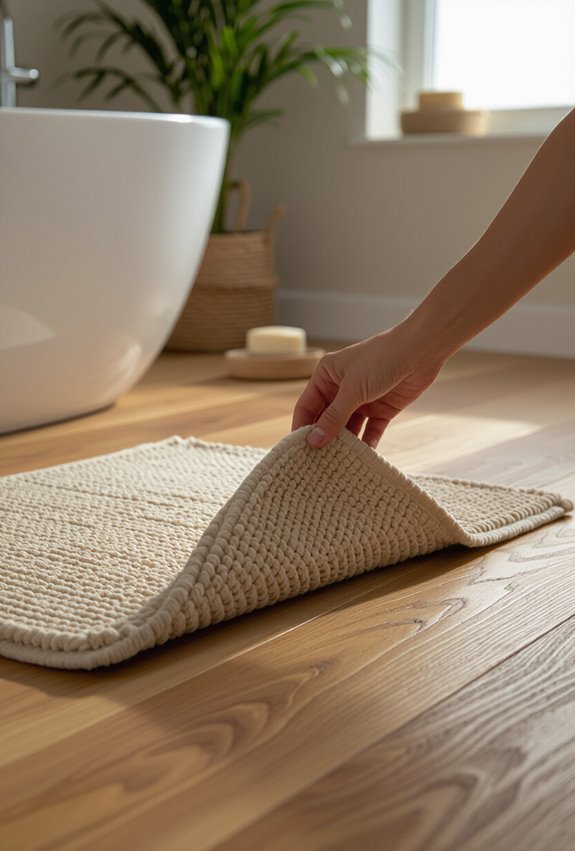
Regularly lift rugs and bath mats so your wood flooring can breathe and dry evenly underneath.
Lift rugs frequently—after showers and at least daily—to prevent trapped moisture and mildew.
Allow air circulation by propping edges or briefly removing mats to let the surface evaporate.
This simple habit reduces cupping, staining, and odors, and extends your bathroom wood floor’s lifespan with minimal effort.
Avoid Rubber-Backed Rugs That Trap Moisture and Cause Staining
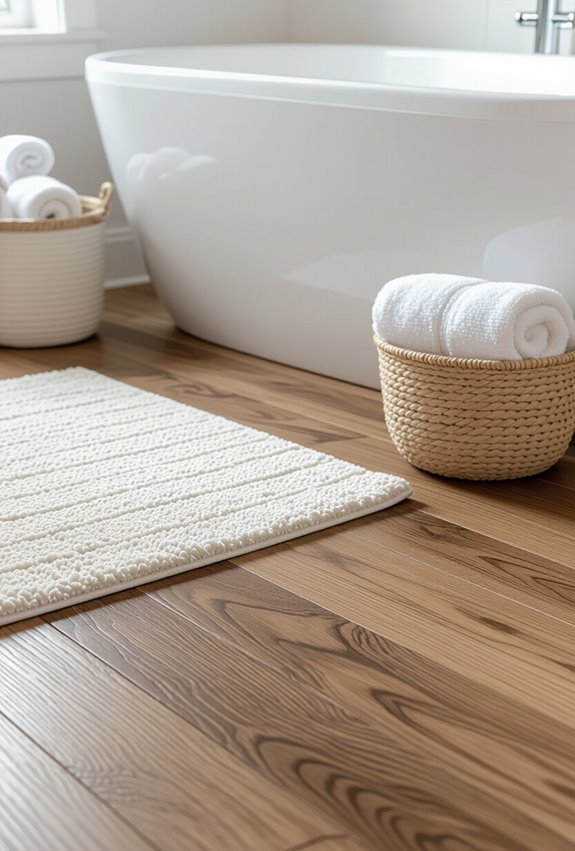
When placed directly on wood floors, rubber-backed rugs can trap moisture and cause dark stains or finish breakdown, so steer clear of them in bathrooms.
Choose breathable, non slip alternatives like woven cotton or latex-free mats that allow airflow promotion beneath. Move and dry mats regularly, clean spills promptly, and inspect for discoloration to protect finishes and prevent hidden moisture damage to your wood floors.
What to Do Immediately After a Major Water Spill or Leak
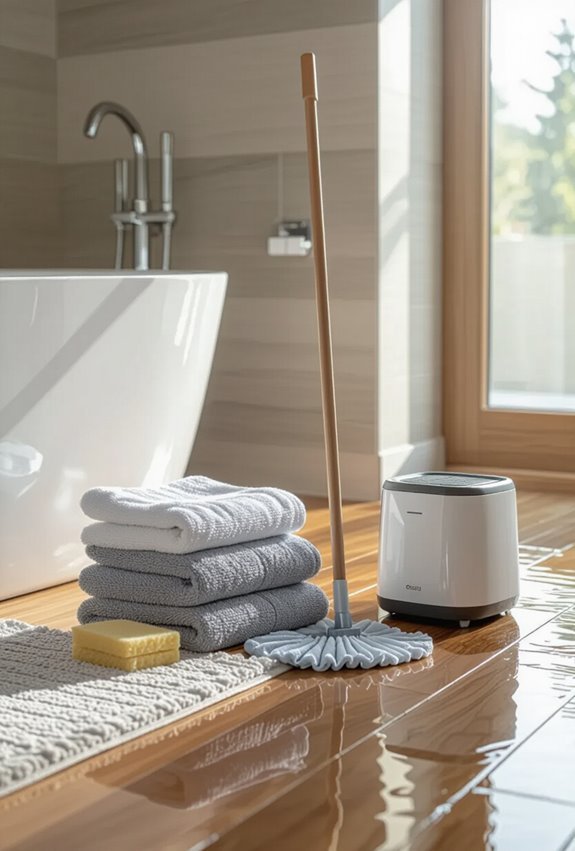
When a major spill or leak hits your bathroom, act fast to remove standing water, shut off the source, and protect the flooring from further damage. Blot and mop immediately, lift rugs, and move furniture to ventilate.
Call for fast extraction and schedule professional drying to prevent warping and mold. Inspect seams and finishes, document damage for insurance, then monitor humidity closely.
Long-Term Care: Seasonal Maintenance Checklist for Bathroom Wood Floors
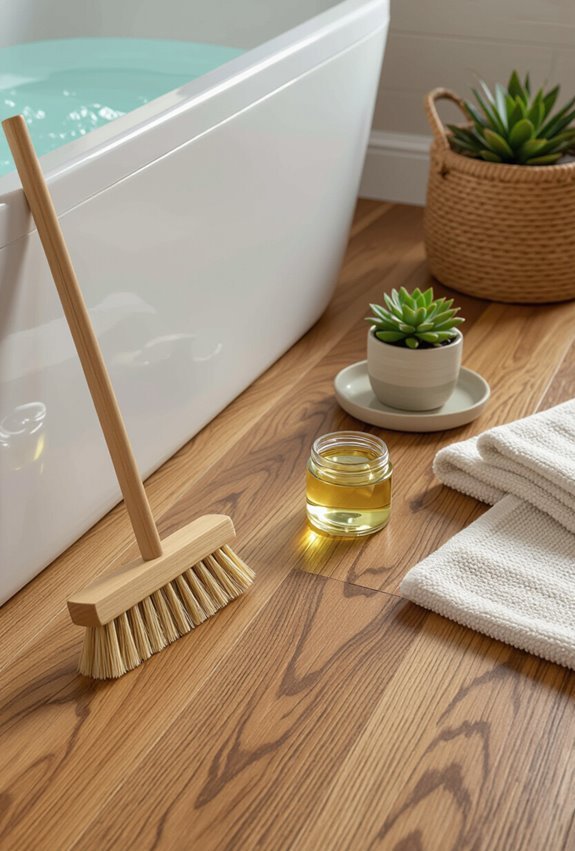
Although bathroom wood floors can handle daily use, they need a simple seasonal routine to stay stable and attractive year-round.
Each season, do seasonal inspections for gaps, cupping, mold, or loose boards. Clean gently, check humidity levels, and reapply or refresh protective coatings as needed to prevent moisture damage. Schedule minor repairs promptly to avoid major issues later.
Cost-Effective Habits That Extend Your Wood Floor’s Life
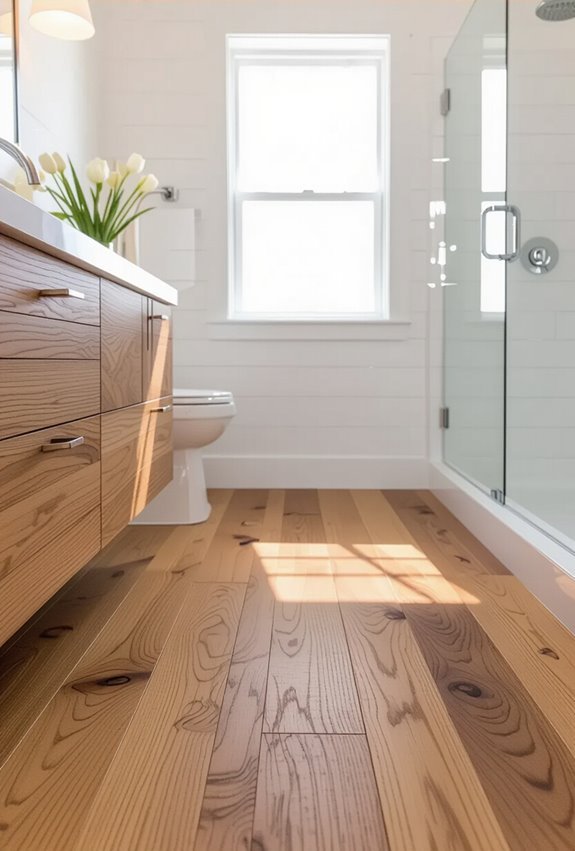
Regularly following a few simple, low‑cost habits can dramatically extend the life of your bathroom’s wood floor and keep repair bills down.
You’ll adopt budget routines like wiping spills immediately, using bath mats, and maintaining humidity.
Make preventative swaps—silicone caulk, water‑resistant finishes, felt pads under cabinets—and inspect seals monthly.
These small actions prevent warping and costly replacements.
Choose the Right Wood Finish for Bathroom Use
Pick a finish that blocks moisture, resists abrasion, and stays stable in fluctuating humidity—those are the three must-haves for bathroom wood floors.
You’ll choose waterproof sealants or durable coatings; oil-modified polyurethane and water-based options work well.
For high-moisture areas consider marine varnish for extra protection.
Apply thin, even coats and follow curing times so the finish performs and lasts without trapping moisture.
Seal Seams and Gaps to Stop Moisture Intrusion

Seal seams and gaps promptly to keep water from finding its way under the planks.
You should inspect joints, doorways, and connections regularly, applying proper edge sealing with a flexible sealant.
Repair gaps immediately and make certain seams are tight.
Combine surface sealing with correctly installed vapor barriers beneath adjoining areas to limit moisture migration and protect the wood’s integrity.
Pick Bath Mats That Actually Protect Wood Floors
Don’t just grab the cheapest rug you find—choose bath mats that actually keep water off your wood floors and let them breathe.
Pick machine washable mats with quick-dry backing and absorbent fibers, plus a non slip cork or rubber base to prevent movement.
Rotate and air mats regularly so moisture doesn’t trap underneath, extending your floor’s finish and preventing staining or warping
Control Humidity With a Bathroom Exhaust Fan
After you wipe down floors, keep the room’s moisture from lingering by running a properly sized bathroom exhaust fan during and after showers; it pulls humid air out before it can settle into seams or reach the subfloor.
Check fan sizing for your bathroom’s cubic footage, set ventilation timing to run 10–20 minutes post-shower, and maintain the fan to guarantee reliable operation and protect your wood.
Inspect Baseboards and Trim for Water Damage Weekly
Regularly inspect baseboards and trim for signs of water damage so you spot problems before they reach the floorboards. Do a weekly inspection for soft spots, discoloration, swelling, or mold.
Pry gently to check behind trim if needed. Address moisture sources and schedule prompt trim repair to prevent rot spreading to flooring.
Document findings and act quickly to protect wood.
Use a Damp Mop: Never a Wet Mop: on Wood Floors
After you’ve fixed leaks and tightened fittings, focus on how you clean—only use a damp mop on wood floors, never a soaking one.
You’ll protect finish and joints by using a microfiber mop and avoiding excess water. Wring the mop with gentle wringing, change water often, and dry the surface quickly with a towel or fan so moisture doesn’t linger.
Avoid Steam Cleaners and Harsh Chemical Products
Because steam forces moisture into seams and fibers, don’t use steam cleaners on bathroom wood floors — they can swell boards, lift finishes, and promote cupping or mold.
You should avoid steam and steer clear of harsh chemicals; opt for pH-neutral wood cleaners, microfiber mops, and quick spot-drying.
Regular gentle care prevents damage and keeps finishes intact without abrasive or caustic products.
Protect Floors From Toilet and Sink Splatter With Splash Guards
To keep wood floors safe from water and urine splatter around toilets and sinks, install splash guards and simple barriers that channel liquids away from seams and edges.
Fit low-profile splash guards or commercial toilet shields around toilet bases, and add discreet lip guards by sinks.
Clean and dry regularly, check seals, and replace worn guards promptly to prevent staining and warped boards.
Lift Rugs and Mats to Let Wood Breathe Regularly
Regularly lift rugs and bath mats so your wood flooring can breathe and dry evenly underneath.
Lift rugs frequently—after showers and at least daily—to prevent trapped moisture and mildew.
Allow air circulation by propping edges or briefly removing mats to let the surface evaporate.
This simple habit reduces cupping, staining, and odors, and extends your bathroom wood floor’s lifespan with minimal effort.
Avoid Rubber-Backed Rugs That Trap Moisture and Cause Staining
When placed directly on wood floors, rubber-backed rugs can trap moisture and cause dark stains or finish breakdown, so steer clear of them in bathrooms.
Choose breathable, non slip alternatives like woven cotton or latex-free mats that allow airflow promotion beneath. Move and dry mats regularly, clean spills promptly, and inspect for discoloration to protect finishes and prevent hidden moisture damage to your wood floors.
What to Do Immediately After a Major Water Spill or Leak
When a major spill or leak hits your bathroom, act fast to remove standing water, shut off the source, and protect the flooring from further damage. Blot and mop immediately, lift rugs, and move furniture to ventilate.
Call for fast extraction and schedule professional drying to prevent warping and mold. Inspect seams and finishes, document damage for insurance, then monitor humidity closely.
Long-Term Care: Seasonal Maintenance Checklist for Bathroom Wood Floors
Although bathroom wood floors can handle daily use, they need a simple seasonal routine to stay stable and attractive year-round.
Each season, do seasonal inspections for gaps, cupping, mold, or loose boards. Clean gently, check humidity levels, and reapply or refresh protective coatings as needed to prevent moisture damage. Schedule minor repairs promptly to avoid major issues later.
When to Replace Wood Flooring With Alternate Options

If your bathroom floor shows widespread warping, persistent buckling, chronic moisture stains, or repeated finish failures despite proper maintenance, it’s time to contemplate replacing the wood with a more water‑resistant option.
When to replace depends on damage extent, repair costs, and future moisture risk. Consider Alternate options like luxury vinyl, porcelain tile, or waterproof engineered flooring to protect your investment and reduce maintenance.
Cost-Effective Habits That Extend Your Wood Floor’s Life
Regularly following a few simple, low‑cost habits can dramatically extend the life of your bathroom’s wood floor and keep repair bills down.
You’ll adopt budget routines like wiping spills immediately, using bath mats, and maintaining humidity.
Make preventative swaps—silicone caulk, water‑resistant finishes, felt pads under cabinets—and inspect seals monthly.
These small actions prevent warping and costly replacements.
Choose the Right Wood Type
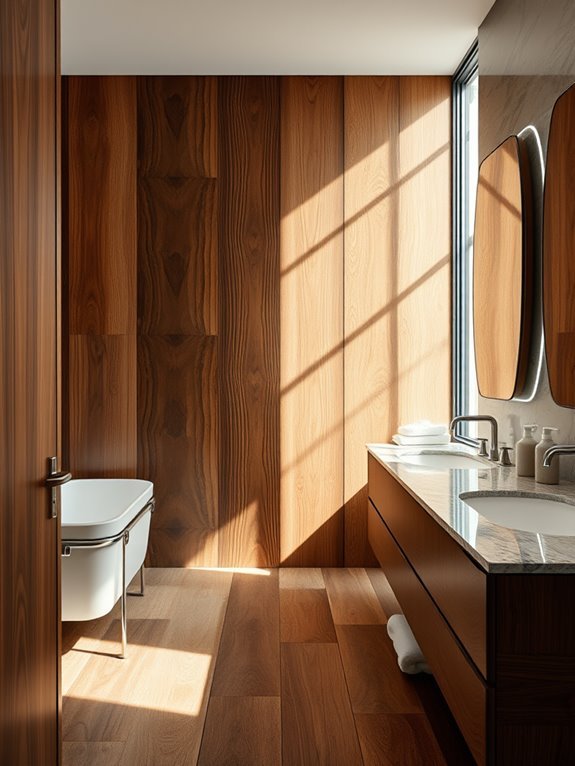
When selecting wood flooring for your bathroom, it’s crucial to choose the right type to withstand moisture and humidity.
Opt for species like teak, cedar, or bamboo, as they naturally resist water damage. Engineered wood can also be a great choice, offering stability and durability.
Avoid softer woods like pine, which can warp or deteriorate in damp environments.
Use Area Rugs Strategically
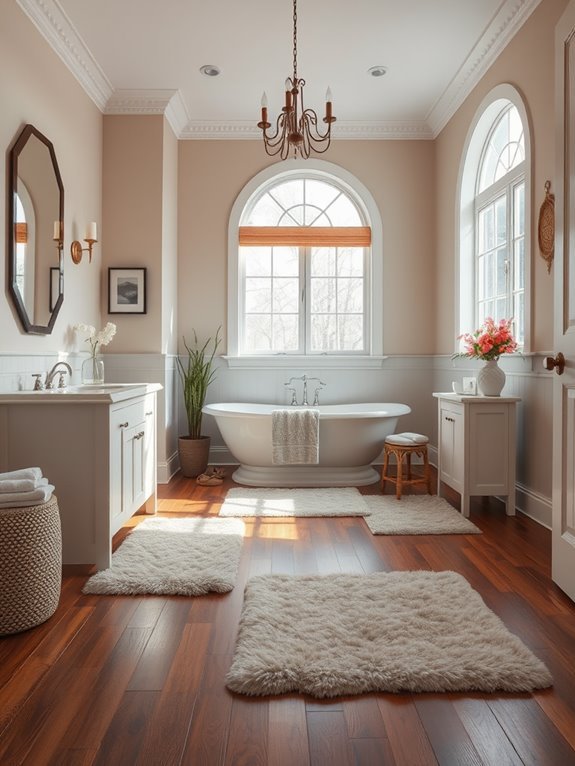
Balanced humidity levels help protect your wood flooring, but using area rugs strategically can provide an extra layer of defense.
Place rugs in high-traffic areas and under sinks to catch any drips or spills. Choose water-resistant materials for easy cleaning and guarantee rugs have non-slip backing to prevent accidents.
This simple addition can prolong your flooring’s life and maintain its beauty.
Avoid Harsh Cleaning Products
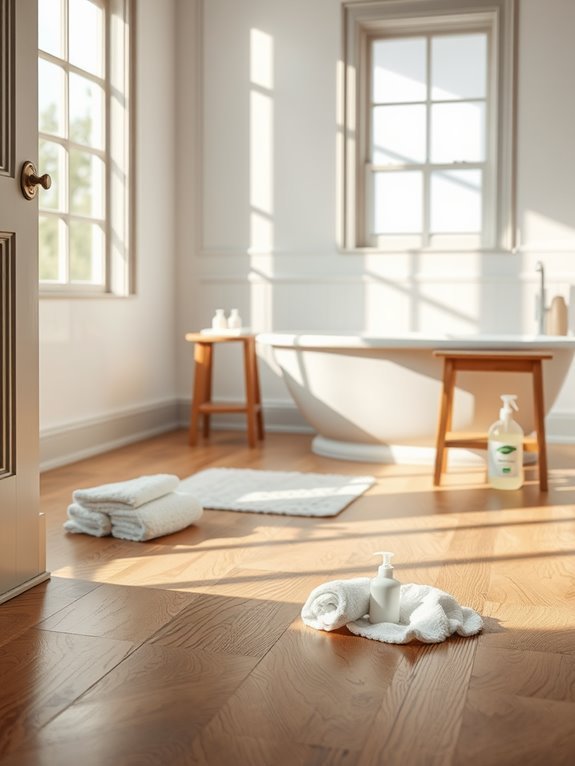
While it might be tempting to reach for strong chemicals to clean your wood floors, doing so can cause more harm than good.
These harsh products can strip the finish, leading to dullness and damage. Instead, opt for gentle cleaners specifically designed for wood.
A simple mix of mild soap and water can effectively clean your floors without compromising their beauty or integrity.
Maintain Proper Ventilation
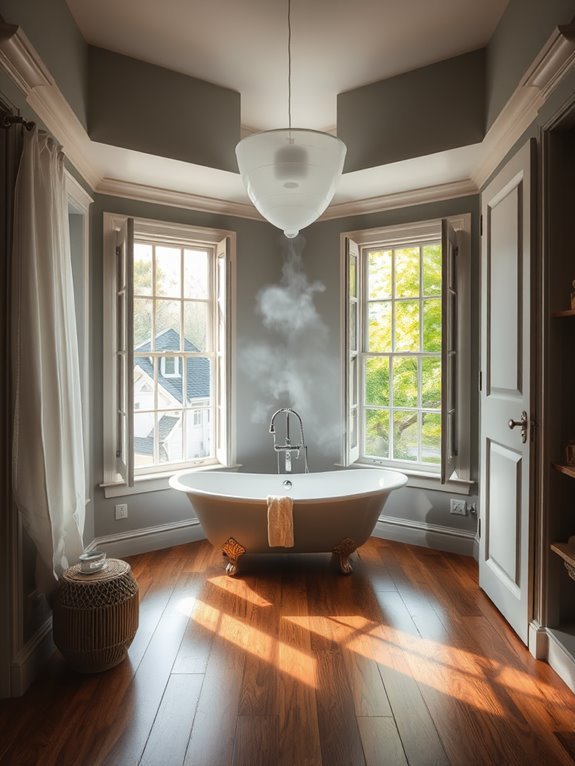
Although you mightn’t think about it often, maintaining proper ventilation in your bathroom is essential for preserving the integrity of your wood flooring.
Here are a few tips to enhance airflow:
- Open windows when possible.
- Use exhaust fans during and after showers.
- Keep doors open to promote circulation.
- Consider a dehumidifier to control moisture levels.
These steps can greatly protect your wood flooring.
Protect From Direct Sunlight
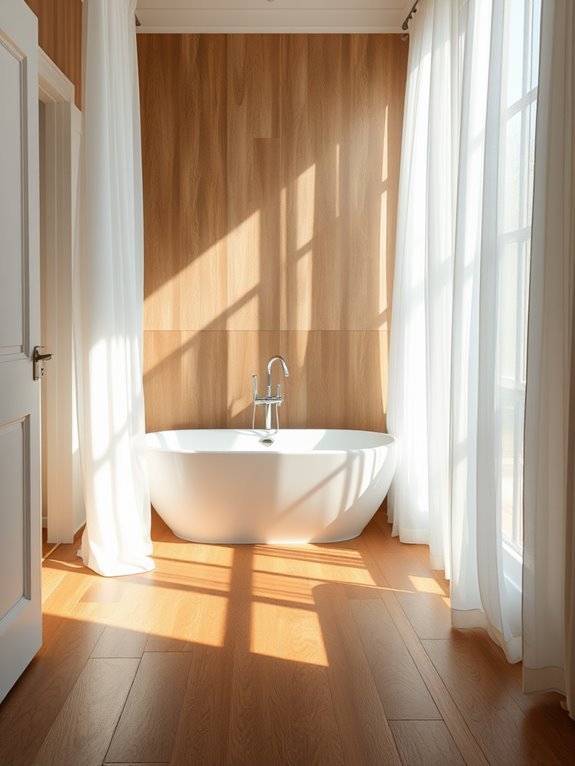
After ensuring your wood floors are properly sealed, it’s important to contemplate how sunlight affects them.
Direct sunlight can fade and damage your wood over time. To protect your floors, consider using window treatments like blinds or shades.
You might also rearrange furniture to block harsh sunlight during peak hours. Taking these steps helps maintain your wood’s beauty and longevity.
Conclusion
By following these 15 essential wood flooring care tips, you can keep your bathroom looking stunning and well-maintained. Just like a well-tended garden flourishes, your wood floors will shine with the right attention and care. Remember, it’s not just about protecting your investment; it’s about creating a warm, inviting space. So, roll up your sleeves and nurture those beautiful floors, ensuring they stand the test of time and continue to bring you joy for years to come.
