
Can You Use Exterior Paint in a Bathroom
You can use exterior paint in a bathroom if you prep well, ventilate reliably, and accept trade-offs. Exterior formulas resist moisture, mildew, and aggressive cleaning, but they’re thicker, less breathable, and may not adhere or finish like indoor bathroom paints. Test a small patch, sand and prime properly, run exhaust fans, and keep humidity down to avoid peeling or mold. If you want guidance on choosing products, prepping surfaces, and long‑term care, keep going.
Quick Answer: Can You Use Exterior Paint in a Bathroom?
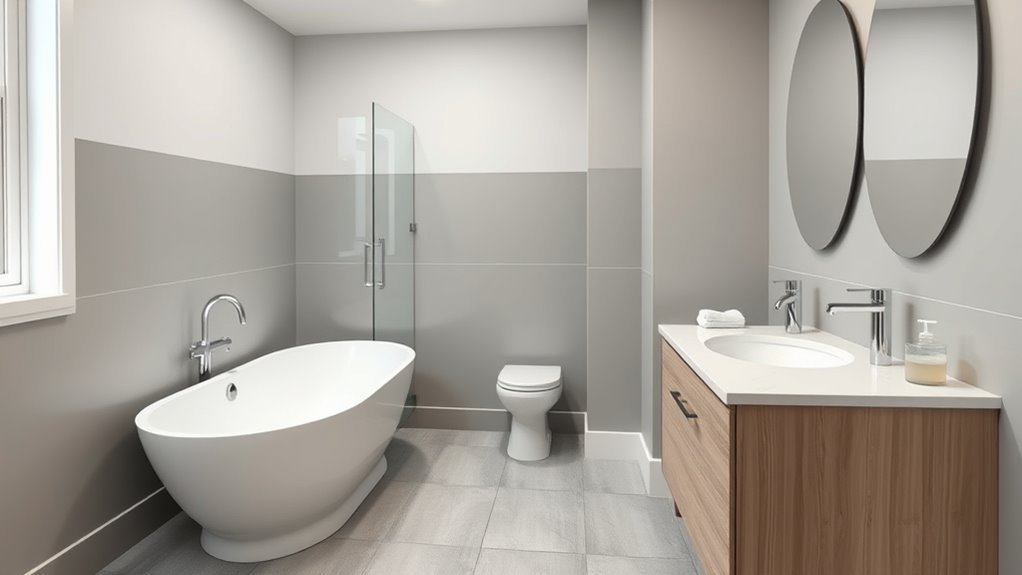
Yes—you can use exterior paint in a bathroom, but it’s not ideal. You’ll get durable, moisture-resistant coverage, yet exterior formulas can be thicker, less breathable, and may trap humidity.
You can use exterior paint in a bathroom, but it’s not ideal—durable and moisture-resistant, yet thicker and less breathable.
If you choose exterior paint, test for proper adhesion and finish before committing.
Pay attention to color matching—exterior shades may appear different under bathroom lighting, so bring samples and compare on a wall.
Store leftover product properly: seal cans tightly and keep them in cool, dry paint storage to preserve solvents and pigments.
Ultimately, weigh longevity against ventilation and look for bathroom-specific alternatives when possible.
Who Should Consider Exterior Paint for a Bathroom?
If your bathroom gets heavy steam or frequent water exposure, you’ll want paint that stands up to high-moisture environments.
You might also consider exterior formulas if you’re on a tight budget and need durable coverage without specialty indoor products.
And if local stores stock exterior options more readily than bathroom-specific paints, those products can be a practical choice.
High-Moisture Environments
When does exterior paint make sense for a bathroom? If you face constant steam, poor ventilation, or frequent splashes, exterior formulas offer paint durability and mildew resistance. You’ll also want to confirm color matching with interior fixtures and trims before committing.
| Situation | Recommendation |
|---|---|
| Windowed shower | Exterior paint for trim |
| Poor ventilation | Exterior in high zones |
| Frequent guests | Durable finish recommended |
| Damp basement bath | Exterior-grade recommended |
You should still use proper primers, maintain ventilation, and refresh seals. Exterior paint helps in high-moisture environments, but test color and adhesion first.
Budget-Conscious Remodelers
Although interior-grade paints are usually cheaper and formulated for living spaces, you can consider exterior paint if you’re cutting costs but need extra durability. It lets you skip frequent repainting in damp bathrooms and often resists mildew better.
If you rent, flip houses, or handle short-term rentals, exterior formulas can reduce maintenance costs.
Watch color matching—exterior lines may not offer the same indoor shades, so bring samples and test under bathroom light.
Expect different paint texture and sheens; roll and brush techniques may vary.
Balance savings against potential indoor performance trade-offs and test small areas before committing.
Exterior Product Availability
Choosing exterior paint for a bathroom makes the most sense for specific situations and buyers, so let’s look at who stands to benefit. You might pick exterior products if you need tougher moisture resistance, unique color options, or have limited interior supplies. If you’re experienced with varied application techniques and want long-lasting finishes, exterior formulas can work. Expect stronger odors and longer cure times; ventilate well. Here’s a quick emotional snapshot to help you decide:
| Who | Why it matters |
|---|---|
| DIY pros | Confidence in technique |
| Renters | Fast fixes |
| Contractors | Durability focus |
| Designers | Bold palettes |
| Budget seekers | Value-driven choice |
How Bathroom Paint Differs From Exterior Formulas
When you compare bathroom paint to exterior formulas, you’ll notice the sheen and finish are chosen to resist scrubbing and hide moisture-related imperfections.
Bathroom-specific paints also include higher moisture resistance and mildew inhibitors to handle steam and frequent humidity changes.
Understanding those differences helps you pick a product that lasts and stays clean in a wet room.
Sheen And Finish
Because bathrooms get steam, splashes, and frequent cleaning, the paint sheen you pick matters more than the color itself. You’ll choose sheens that tolerate wiping and resist marks: satin and semi-gloss are common, while flat hides imperfections but soils easily.
Exterior formulas often use higher-gloss finishes for durability, but indoor bathrooms need balanced sheen for aesthetic and maintenance. Consider color options when testing sheen—light colors reveal scuffs differently than darks—and adapt application techniques: thin, even coats, proper drying time, and sanding between coats yield a smooth, washable finish suited to interior humidity and use.
Moisture Resistance
Although both bathroom and exterior paints aim to protect surfaces, bathroom formulations prioritize mildew resistance and moisture tolerance over UV and weatherproofing. So you’ll want a product designed for high humidity rather than one made for siding.
You should pick paints with mildewcide, low VOCs, and flexible binders that resist peeling in steam. Combine paint choice with Ventilation improvements and regular Surface cleaning to extend performance.
Consider these practical steps:
- Use bathroom-specific mildew-resistant paint.
- Install or upgrade exhaust fans for quicker drying.
- Clean surfaces before painting and regularly afterward.
- Recoat with semi-gloss or satin for washability.
Pros of Using Exterior Paint in a Bathroom
If you want a paint that stands up to humidity and scrubbing, exterior formulas can be a smart choice for bathrooms. You’ll get durable finishes that resist fading, chalking, and stains, so your chosen paint color stays truer longer.
Exterior paints often include mildewcides and tougher binders, letting you clean surfaces more aggressively without damage. That durability supports bold interior design choices, so you can use darker or high-gloss shades where you’d normally worry about wear.
They also bond well to varied substrates, reducing peeling. Overall, exterior paint gives you longevity and ease of maintenance in a busy bath.
Cons and Risks in High-Humidity Bathrooms
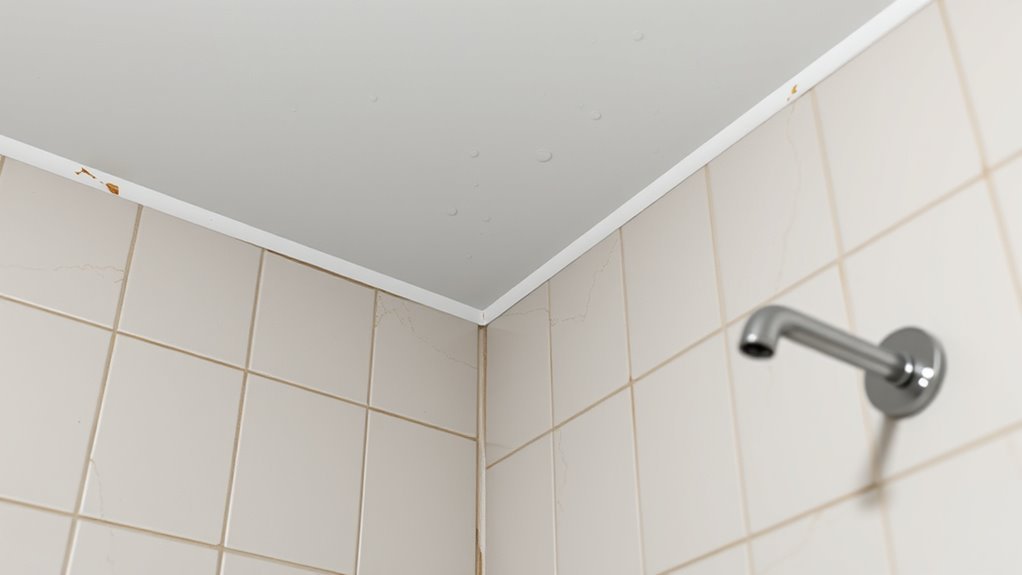
When you use exterior paint in a high-humidity bathroom, you may run into unexpected problems: its thicker formulas and additives can trap moisture behind the coating, promote blistering, or interfere with adhesion on typical indoor drywall and trim.
You’ll also face issues with textured finishes collecting steam and mold, and with color matching fading or appearing uneven under bathroom lighting.
Consider these risks before applying exterior products indoors:
- Trapped moisture causing blistering and peeling.
- Poor adhesion on primed indoor surfaces.
- Textured finishes harboring mildew in seams and crevices.
- Color matching differences under warm, humid light.
When Exterior Paint Is Acceptable: Real Bathroom Use Cases
Because exterior paints are built for moisture and UV exposure, you can use them in specific bathroom situations where those properties matter more than indoor-finish nuances. If you’re painting exterior-facing walls, porch-adjacent bathrooms, or rooms with direct sun through large windows, exterior formulas resist fading and water intrusion better.
Use exterior paint for storage closets, utility sinks, or unfinished basements converted to a bath where durability trumps sheen. Check color matching when blending with exterior trim and verify paint warranties cover indoor use limits.
Always test a small area to confirm adhesion, odor tolerance, and long-term performance before committing.
When You Should Choose Bathroom-Specific or Mildew-Resistant Paint
Exterior-grade paints work in some bathroom scenarios, but you’ll want bathroom-specific or mildew-resistant paint for the majority of indoor baths—especially small, poorly ventilated rooms and showers where steam and surface condensation are routine.
Choose specialty paint when you need reliable mold control, washable finishes, and formulations designed for humidity.
Consider how color matching and paint texture perform under damp conditions; some finishes hide imperfections while others resist mildew better.
Match glossy or semi-gloss finishes to trim and high-contact areas for durability.
- Poor ventilation
- Frequent showers/steam
- High-humidity climate
- Visible mold history
Prep Steps Before Painting a Bathroom With Exterior Paint
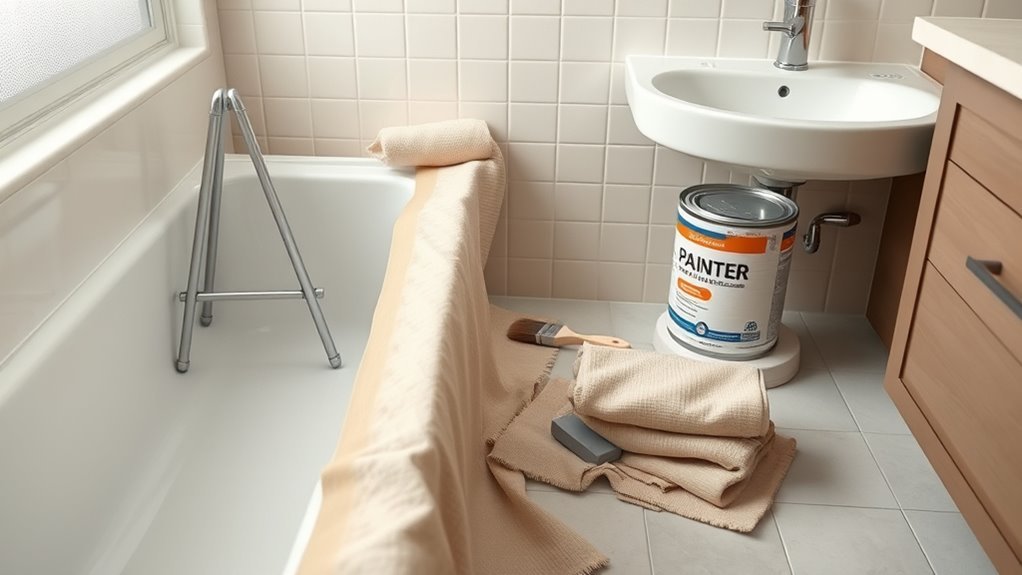
If you’re planning to use exterior paint in a bathroom, prep matters: clean surfaces thoroughly, remove loose or peeling paint, repair damaged drywall or trim, and sand glossy areas so the new coating will adhere properly.
Next, mask fixtures, remove outlet covers, and tape edges for crisp lines.
Mask fixtures, remove outlet covers, and tape edges for neat, precise lines before painting.
Prime repaired spots with a stain-blocking primer suited for high-moisture areas.
Test exterior paint on a small patch to confirm adhesion and color; consider how color schemes will read under bathroom lighting.
Choose quality paint brushes and rollers for even application, and allow full drying between coats before reinstalling hardware.
Ventilation and Moisture-Control Best Practices for Bathrooms
Good prep reduces future problems, but proper ventilation and moisture control will protect your new exterior paint and bathroom finishes long-term.
You’ll install an exhaust fan sized to the room, run it during and after showers, and open windows when possible. Use humidity monitors and wipe wet surfaces regularly with suitable cleaning tools to prevent mold.
Choose paint colors that hide minor staining without encouraging frequent scrubbing.
Coordinate fan runtime with timers or humidity sensors. Keep vents unobstructed and dry, fix leaks promptly, and guarantee ducts exhaust outdoors—not into attics—to maintain healthy, long-lasting surfaces.
- Install and use exhaust fan
- Monitor humidity levels
- Wipe surfaces with cleaning tools
- Pick practical paint colors
Sealing, Touch-Ups, and Long-Term Maintenance in Humid Conditions
Because humid bathrooms speed wear and invite moisture intrusion, you’ll need a proactive sealing and touch-up plan to keep exterior paint and trim sound over time. Inspect paint lines, caulking, and joints monthly; address cracks or peeling immediately.
Use a mildew-resistant sealant designed for high humidity, and follow manufacturer instructions for surface prep and paint application to guarantee adhesion.
Keep small touch-up kits with matching batches or documented color matching formulas so repairs blend invisibly.
When sanding or re-coating, dry surfaces thoroughly and ventilate.
Regular maintenance prevents larger failures and preserves both appearance and protective function.
Cost, Lifespan, and Performance: Exterior vs. Bathroom Paint
Maintaining sealants and doing timely touch-ups will save you money over the long run, but when you choose paint it helps to weigh initial cost against expected lifespan and performance in humid conditions.
Maintaining sealants and timely touch-ups save money—choose paint by balancing upfront cost with lifespan and humidity performance
You’ll find exterior paints often cost less per can and resist mold, but aren’t formulated for repeated indoor cleaning or fine color matching. Bathroom-specific paints cost more up front, offer mildew inhibitors, and hold up to scrubbing.
Consider coverage rates, warranty, and required prep. Also factor tool selection for application—brushes, rollers, and ventilated sprayers affect finish and longevity.
- Compare per-can price vs. coverage
- Evaluate mildew resistance
- Consider color matching limitations
- Match tool selection to surface
How to Choose the Right Product: Checklist and Questions for Pros
When choosing paint for a bathroom, you’ll want to ask about surface prep requirements so the coating bonds and resists peeling.
Check the moisture resistance rating to make sure it can handle steam and condensation.
Also confirm VOC levels and overall durability so you get a safe, long-lasting finish.
Surface Prep Requirements
Before you pick a paint, confirm the surface is properly prepped: clean, dry, and free of loose material, mold, or heavy gloss that would prevent adhesion. Check for mildew with a bleach solution, sand glossy finishes, and repair cracks or loose caulk. Choose primer suited to substrate and follow recommended drying times. Consider how color options react to lighting and which application techniques you’ll use to avoid lap marks.
- Clean: degrease, remove mold, rinse, dry.
- Sand: dull gloss, feather edges.
- Prime: stain-blocking, adhesion-promoting.
- Repair: fill, caulk, smooth before painting.
Moisture Resistance Rating
Because bathrooms see constant humidity and occasional direct water contact, you’ll want paint and coatings rated specifically for moisture resistance so they won’t blister, mildew, or peel over time. Check product labels for “mildew-resistant” and water-shedding finishes, and ask pros about ASTM or ISO test ratings that back claims.
Consider eco friendly options with moisture performance if indoor air quality matters; low-odor mildewcides exist. Verify recommended primer/finish pairings and confirm adhesion to your substrate.
Ask how long color retention is guaranteed under humid cycling, and whether warranties cover bathroom-specific issues before you commit.
VOCs And Durability
How much do VOC levels and product durability matter for your bathroom paint choice? You’ll balance health, longevity, and finish: lower VOCs reduce odors and indoor pollution, while durable formulas resist mildew and scrubbing.
Consider color matching and aesthetic appeal alongside technical specs so your finish looks right and lasts. Ask pros about resin type, recommended prep, and expected lifespan in humid conditions.
- Verify low-VOC certification and drying emissions.
- Check scrub, abrasion, and mildew resistance ratings.
- Guarantee color matching samples under bathroom lighting.
- Confirm warranty and maintenance tips for aesthetic appeal.
Frequently Asked Questions
Will Exterior Paint Affect Indoor Air Quality or Off-Gassing in Bathrooms?
Yes — exterior paint can worsen indoor air quality and produce paint fumes; you’ll need strong indoor ventilation, low-VOC formulations, and curing time to reduce off-gassing, or choose bathroom-rated, low-odor paints for safer results.
Can I Use Exterior Paint on Bathroom Cabinets or Trim?
Yes — think of exterior paint as a raincoat for cabinets; you’re giving indoor wood outdoor durability and stronger paint adhesion. You’ll still want proper priming, ventilation, and low-VOC choices so moisture and fumes stay controlled.
How Does Exterior Paint Interact With Bathroom Caulk and Silicone?
Exterior paint can bead on silicone caulk and may not bond; its outdoor durability helps with weathering but surface adhesion on caulk is poor. You’ll need compatible sealants or primer to guarantee lasting adhesion and flexibility.
Will Exterior Paint Withstand Steam From Frequent Hot Showers?
Think of steam as a persistent drummer; you’ll find exterior paint can resist moisture, but its paint durability varies. You’ll want proper prep, ventilation, and mildew-resistant coatings so steam won’t beat down your finish.
Are Exterior Paints Compatible With Heated Towel Racks or Radiant Floors?
Yes — exterior paints can work with heated towel racks or radiant floors if temperatures stay within the paint’s rated range. You’ll want outdoor durability and excellent paint adhesion; pick low-VOC, heat-rated formulations and prep surfaces properly.
Conclusion
You can sometimes use exterior paint in a bathroom, but you’ll want to be cautious. Exterior paints resist moisture and mildew like a trusty accordion at a Victorian fair, yet they’re formulated for outdoor substrates and UV exposure, not indoor humidity cycles. If your bathroom is well-vented, exterior paint can work for trim or poorly ventilated powder rooms temporarily, but for best longevity choose a paint labeled for bathrooms or high-humidity interiors.
