
Do I Need Primer for Interior Walls
You’ll want primer whenever surface porosity, stains, drastic color changes, or adhesion issues could ruin coverage or durability. Prime new drywall, bare wood, patched areas, or ceilings with texture, and spot-prime water, smoke, or tannin stains. Skip primer for clean, smooth walls already painted in the same sheen and similar color, or for small touch-ups. Use stain-blocking, bonding, or high-build primers for problem areas, and keep going to learn practical tips, product choices, and labor-saving tricks.
Quick Answer: Do You Need Primer for Interior Walls?
Wondering whether you need primer for interior walls? You usually do when switching drastic colors, sealing stains, or painting raw drywall—primer guarantees true hue and better adhesion, which ties into color psychology by helping the shade convey the mood you want.
Wondering if you need primer? Usually yes—especially for drastic color changes, stains, or bare drywall to ensure true color and adhesion.
You can skip primer for same-color repaint if the surface is clean and glossy is lightly sanded.
Primer also offers protection during paint storage and prevents future problems like peeling or uneven sheen.
Assess surface porosity and previous paint condition: when in doubt, prime—it’s quicker than fixing failed paint jobs later and preserves your designed look.
One-Line Decision Checklist: Prime or Paint Now?
You’ve seen when primer matters; now use this one-line checklist to decide fast: prime if you’re covering raw drywall, switching from dark to light, sealing stains or smoke damage, painting over a porous or chalky surface, or moving from oil to latex—paint now if you’re repainting the same color on clean, well-adhered paint with only minor touch-ups or when the surface already has a uniform sheen and porosity.
| Situation | Action |
|---|---|
| Raw drywall or porous surface | Prime |
| Dark-to-light or stained walls | Prime |
| Same color, good condition | Paint |
| Oil to latex or smoke damage | Prime |
Consider color psychology when choosing finishes; plan primer removal only if old primer fails adhesion.
How Primer Helps: Color, Coverage, Adhesion
When you want true color, even coverage, and lasting adhesion, primer sets the stage by sealing porous surfaces, hiding previous tones, and creating a uniform base that paint can grip. You’ll get the desired hue faster—important if color psychology matters in a room—because primer prevents underlying shades from muting or shifting the finish.
It also evens texture so you need fewer finish coats and reduces peeling by improving adhesion on drywall, plaster, and patched areas. After the project, follow local regulations for primer disposal; don’t pour leftover primer down drains—use community hazardous-waste programs or solidify and discard per rules.
When Primer Is Essential for Covering Bold Colors
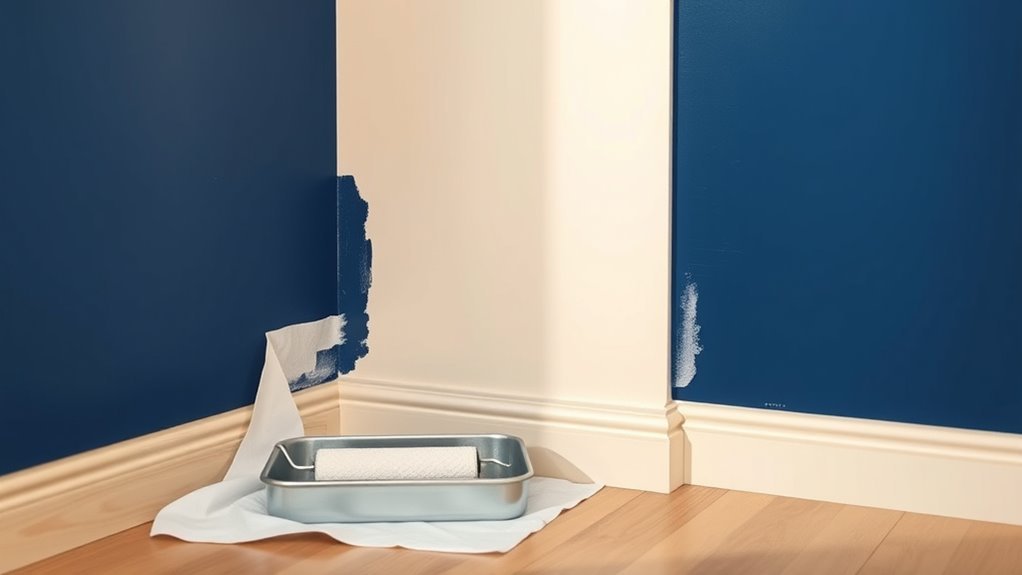
If you’re covering a bold or saturated color, primer becomes essential because it blocks the vivid pigment and prevents multiple full-strength finish coats. You’ll restore a neutral base so the new shade reads true and avoids bleeding-through or flashiness that clashes with color psychology in a room.
Staining or deep reds, blues, and greens demand an opaque, high-hide primer. If you skip it, you’ll waste paint and time correcting streaks or patchy coverage.
Also consider primer removal only when switching to a lighter family after textured or damaged priming; otherwise, use a bonding or stain-blocking primer for best results.
When You Can Skip Primer on Interior Walls
If your walls are already smooth and well-painted, you can often skip primer and go straight to a new coat of paint.
Just make sure the existing paint is the same sheen as the one you’ll use, since switching sheens can affect adhesion and appearance.
Check for stains, peeling, or drastic color changes first, because those issues still call for primer.
Previously Painted Smooth Surfaces
Because the surface is sound and clean, you can often skip primer on previously painted smooth walls—especially when the old coating is a latex paint in good condition and you’re using a similar finish and color. You’ll still check for stains, peeling, or glossy spots, and consider color psychology if shifting tones subtly.
Smooth wall texture helps new paint adhere evenly. Prep includes cleaning, light sanding, and spot-priming problem areas.
Visualize the result:
- Soft neutral living room reflecting calm
- Sharp trim lines against flat walls
- Even sheen across a hallway
- Subtle hue shift on a bedroom wall
- Seamless touch-up after fixtures removed
Matching Paint Sheen
Having checked that the surface and color are compatible, you’ll next consider sheen—matching the new paint’s gloss to the old helps hide touch-ups and keeps the finish uniform. Choose the same sheen (flat, eggshell, satin, semi-gloss) so reflected light doesn’t reveal edges.
If you’re doing small repairs, match sheen and use the same brand for consistent pigment dispersion and paint durability. When switching sheens dramatically, primer or full repainting prevents patchy contrast.
Test a small area, let it dry, and inspect under different lighting. Proper sheen matching simplifies the job and extends the visual lifespan of your work.
New Drywall vs. Previously Painted: Do You Need Primer?
Whether you’re finishing brand-new drywall or repainting an older wall, deciding when to use primer matters for coverage and long-term durability. You’ll always prime new drywall to seal porous paper and joint compound, ensuring uniform paint and accurate color psychology effects.
Whether finishing new drywall or repainting, always prime new surfaces to seal pores and ensure uniform, lasting paint.
For previously painted walls, prime when stains, drastic color changes, or glossy finishes exist; otherwise a bonding primer or direct paint may suffice. Consider furniture placement while planning—primer helps avoid visible patchiness behind sofas or shelving.
Visualize results:
- Fresh smooth surface ready for topcoat
- Stained spot blocked from bleeding through
- Bold color shown evenly
- Glossy to matte transitions secured
- Hidden repairs blended seamlessly
Deciding by Wall Surface Type
What kind of wall are you working with—textured plaster, smooth drywall, concrete, or old wood paneling—because the surface dictates whether and which primer you should use.
For textured plaster, choose a high-build primer to fill pores and guarantee even topcoat adhesion; rough wall texture often needs more product.
Smooth drywall usually only needs primer if it’s new, patched, or stained.
Concrete benefits from a masonry primer to block alkalinity and moisture.
Old wood paneling may require a stain-blocking primer and sanding; if you’re stripping old finishes, address primer removal and surface prep before priming.
Primer for Glossy or Semi-Gloss Finishes?
Glossy and semi-gloss surfaces resist paint and can cause adhesion problems if you don’t address the sheen.
Using a high-adhesion or deglosser primer improves bonding, hides imperfections, and creates a uniform base for topcoats.
Apply thin, even coats, sand lightly between coats, and follow drying times for best results.
Surface Gloss Challenges
Want to paint over a high-gloss or semi-gloss surface? You’ll face surface gloss challenges: slickness reduces adhesion and makes primer compatibility essential. Prep matters—clean, scuff, and choose a primer labeled for glossy surfaces. Imagine the finish as obstacles you must overcome:
- Shiny kitchen cabinet resisting new paint
- Bathroom trim beads reflecting light and hiding flaws
- Smooth banister where paint slides instead of sticks
- Trim corners that show every missed spot
- Door panels that amplify brush marks
Pick a bonding or shellac-based primer when compatibility is indicated; otherwise, sanding and testing save time.
Primer Benefits Explained
If you’re tackling a high- or semi-gloss surface, using the right primer makes all the difference: it promotes adhesion, hides previous sheen, and creates a uniform base so your topcoat goes on smoothly and lasts longer.
You’ll reduce peeling and flashing, so finishes stay even under varied lighting that influences color psychology. A quality primer cuts down on stain bleed-through and minimizes the number of topcoats required, saving time and expense.
That consistency matters when you consider furniture placement near walls, where scuffs and touch-ups are common. Choose a primer formulated for glossy surfaces to guarantee durability and a true final color.
Best Application Practices
How should you approach priming a high- or semi-gloss surface to get a durable, even topcoat? You’ll need careful prep, good tool selection, and attention to color matching so the finish hides and holds.
Sand gloss to dull, clean thoroughly, and patch imperfections. Use a bonding or high-adhesion primer formulated for glossy substrates. Apply thin, even coats and allow full dry time before topcoating.
Finish with a quality semi-gloss or gloss paint for durability.
- Sand with fine grit until surface dulls
- Wipe with a solvent or TSP substitute
- Use a high-adhesion primer
- Roll thin, even coats
- Inspect under bright light
Primer for Stained or Smoke-Damaged Walls
When smoke, water stains, or heavy tannins discolor your walls, a stain-blocking primer is the first step to prevent bleed-through and restore a uniform surface. These primers seal contaminants and create a reliable base for topcoats so you won’t see yellowing or shadowing through new paint.
You’ll prep by cleaning soot, addressing mildew, and repairing the surface. If you’ve just completed wallpaper removal, remove adhesive residue before priming.
Protect floors and furniture protection with drop cloths and tape. Apply a high-quality stain-blocking primer, let it cure fully, then inspect for remaining stains before applying finish coats.
When Oil-Based Stains Need a Stain-Blocking Primer
Because oil-based stains can bleed through latex paints and ruin your finish, you’ll want a stain-blocking primer any time you see discoloration from old oil paint, tar, grease, or solvent-based cleaners. You’ll apply primer to stop tannins and oils, then repaint with attention to color psychology so stains don’t alter perceived hues.
Inspect and spot-prime stubborn areas before whole-wall coats. Consider furniture placement once repainting’s done to avoid scuffs that expose stains.
- dark nicotine haze behind headboards
- greasy kitchen splash zones
- tar marks near windows
- oil drips at baseboards
- solvent-cleaned ghost spots
Tackling Water Stains and Mold With Primer
If water has darkened your ceiling or mold has taken hold in a bathroom corner, you’ll want a primer that seals stains and resists mildew before repainting. Choose a high-adhesion, stain-blocking primer labeled for mold prevention and mildew resistance.
Clean and dry the area, remove loose material, then treat visible mold with an appropriate cleaner. Apply primer per instructions; it seals tannins and inhibits spores, reducing stain bleed-through and odor return.
For recurring issues, pair primer with waterproofing remedies like improving ventilation or fixing leaks. Primer helps cover and protect, but solving moisture sources prevents stains and mold from returning.
Primer for Repaired Patches and Joint Compound
When you prime repaired patches and joint compound, you seal the porous surface so it soaks up less paint. That sealing stops flashing and discoloration that shows through new coats.
It also creates a consistent, adherent base so your topcoat goes on smoothly and lasts longer.
Seal Joint Compound
Want your repaired patches and joint compound to blend seamlessly with the surrounding wall? You should seal joint compound before painting to lock in dust, create a uniform surface, and improve primer adhesion.
Apply a thin, even coat of sealer or diluted primer, let it dry, then spot-prime if needed.
Visualize the finished look:
- Smooth, satin surface with no powdery spots
- Feathered edges that disappear into the wall
- Even paint absorption across repair and original drywall
- No raised texture where mud was applied
- Consistent sheen under room light
Sealing guarantees your primer and topcoat behave predictably and look professional.
Prevent Flashing And Stains
Sealing joint compound first helps, but you’ll also need a primer that prevents flashing and stains so patches don’t stand out after the topcoat. Pick a stain-blocking, high-hide primer and apply a thin, even coat over repairs; that stops water marks, tape lines, and joint shadowing.
Test under the room’s lighting to confirm uniformity—color psychology affects perception, so subtle differences can read as mismatched hues. Once primed, the patched area will take the topcoat like surrounding drywall, easing furniture coordination because walls look consistent against upholstery and wood tones.
Let the primer fully cure before painting for best results.
Improve Paint Adhesion
How do you make sure new joint compound won’t peel or show through the topcoat? You prime repaired patches to seal porous joint compound, prevent suction, and assure color matching so touch-ups blend. Primer builds a uniform surface for texture enhancement and better adhesion, reducing risk of flash or finish irregularities.
After sanding, clean dust, then apply a quality primer to repaired areas before painting.
- Smooth feathered edges around the patch
- Slightly roughened compound for grip
- Even primer coat sealing pores
- Match surrounding sheen and color
- Light sand between coats for uniform texture
Prime first, then paint.
Porous Surfaces: Why Primer Prevents Uneven Sheen
Because porous materials absorb paint unevenly, you’ll often see blotchy shine where bare drywall, wood, or plaster meets painted areas. You’ll prevent that by sealing surfaces with primer, which evens porosity so paint lays down uniformly and reduces gloss variation.
When you skip primer, thin and thick spots create inconsistent sheen under light. Use primer alongside proper painting techniques to control absorption and achieve a consistent finish, especially on raw gypsum and knotty wood.
That smoother base minimizes touch-up visibility and keeps wall textures looking intentional rather than patchy. Primer saves time and gives predictable, professional-looking results.
Using Primer on Textured Walls and Popcorn Ceilings
If your textured walls show stains, patches, or uneven absorption, you’ll want to prime before painting to guarantee uniform coverage.
For popcorn ceilings, use a thick, stain-blocking primer and a low-pressure sprayer or roller with a nap suited for heavy texture to avoid damaging the finish.
Choose primers labeled for high-build or texture—acrylic or oil-based stain-blockers work best depending on stains and substrate.
When To Prime Textured Walls
When you’re dealing with textured walls or popcorn ceilings, prime before painting whenever the surface is stained, patched, or porous, or when you’re switching from a dark to a lighter color. You’ll save time and get even coverage on textured ceilings, and you’ll know when primer alternatives aren’t enough.
Prime after repairs, heavy stains, drastic color changes, or when texture soaks paint unevenly.
- Water stains blooming through paint
- Patchwork with different porosity
- Heavy nicotine or cooking residue
- Switching black or deep tones to pastels
- Rough textures gobbling paint
Always test a small area first.
Priming Popcorn Ceiling Tips
Although popcorn ceilings can be tricky, priming them properly makes the paint adhere better and hides stains or repairs. You’ll work gently—use a low-pressure sprayer or thick-nap roller to avoid dislodging texture.
Test for asbestos first in older homes.
Address stains with a stain-blocking primer, spot-seal repairs, and let everything dry fully.
Don’t buy into popcorn ceiling myths that say you can skip primer or sand aggressively.
Choose primer color options based on topcoat: tinted primer can boost coverage, white for bright finishes.
Work in even passes, ventilate the room, and protect floors and furniture.
Best Primers For Texture
Having covered how to prep popcorn ceilings, let’s look at which primers actually work on textured surfaces. You want primers that promote color blending and assist texture smoothing without filling every nook. Choose high-build, stain-blocking, and flexible latex primers designed for uneven surfaces.
Visualize the finish:
- Thick primer bridging peaks like a soft blanket
- Stain-sealing layer locking tannins and marks
- Spray-applied mist settling into crevices
- Roller stipple hugging bumps, then evening out
- Thin touch-up brushing into tight valleys
Pick products labeled “high-build,” “stain-block,” or “textured surfaces” to get predictable coverage.
Priming Fresh Plaster and Cement-Based Surfaces
Before you apply any paint, make sure fresh plaster or cement-based surfaces are fully cured and dry, because these materials can still release moisture and alkaline salts that will ruin a finish. You’ll want a primer that seals and neutralizes alkalinity, and consider how surface texture affects adhesion and primer color choice. Test a small area first.
| Task | Why | When |
|---|---|---|
| Check cure | Prevent blistering | Before priming |
| Use sealer | Block salts | On fresh plaster |
| Test patch | Verify color | After drying |
| Recoat time | Follow label | As directed |
Primer Choices After Sanding Drywall
After you sand drywall, you’ll need to decide when to seal joints and which primer type will give you the best adhesion and uniform finish.
Choose between a high-quality PVA or an acrylic latex primer for general sealing, or a stain-blocking/adhesion primer for problem areas.
Follow the manufacturer’s recommended application and dry times.
Apply evenly with a roller or brush, keep ventilation good, and wait the specified dry time before sanding or topcoating.
When To Seal Joints
When should you seal drywall joints—right after sanding, or wait until you’ve primed the whole wall? You should seal joints after sanding but before priming to protect wall texture and avoid primer removal later.
Sealants fill gaps, prevent tape telegraphing, and keep primer application smooth. Imagine the finished surface:
- a seamless corner line
- feathered compound into texture
- no glossy spots from patch primer removal
- even absorption across the board
- crisp paint edges at trim
Seal, let the compound fully cure, sand lightly to match texture, then prime. That order minimizes rework and ensures consistent finish without stripping primer.
Best Primer Types
Because drywall soaks and shows differences in texture, choosing the right primer matters. You’ll want a high-quality PVA primer for new or sanded drywall—it seals and promotes color blending so topcoats look uniform.
For patched areas, use a shellac or oil-based primer to lock stains and equalize porosity.
If you’re aiming for subtle texture enhancement, consider a bonding primer with slight fill properties to smooth progression.
For rooms with moisture or odor concerns, pick a mildew-resistant formula.
Match primer type to substrate and problem area so your paint adheres well and finishes consistently.
Application And Dry Time
Now that you’ve matched primer type to the drywall and repairs, pick an application method and plan for drying so your finish goes on smoothly. You’ll choose roller, brush, or sprayer based on texture and room size; allow manufacturer dry times, typically 30 minutes to 2 hours for touch, longer before topcoat.
Consider humidity and temperature; slow drying can affect color psychology and reveal tackiness. Track times between coats to avoid lifting.
Visualize results:
- Smooth roller strokes on flat surfaces
- Feathered brush edges near trim
- Fine mist from a sprayer for cabinets
- Even overlap to prevent lap marks
- Dry, ventilated room for consistent paint color trends
Which Primer Bonds Best to Chalking Paint?
If your walls have a powdery, chalking finish, you’ll need a primer that grips loose particles and creates a stable surface for topcoats. A high-adhesion, stain-blocking primer formulated for chalky surfaces—often labeled “bonding primer” or “masonry primer”—works best.
You should scrape or wash away excessive chalky residue before priming so the bonding agent can adhere. Look for products specifying adhesion to difficult surfaces and enhanced primer durability.
Apply per manufacturer instructions, using a nap roller or brush to work primer into texture. Test a small area to confirm grip and coverage before painting the whole room.
Comparing Latex, Acrylic, and Oil-Based Primers
When choosing a primer you’ll want to compare latex and acrylic formulas for their flexibility and breathability.
Weigh oil-based primers for their stain-blocking and adhesion strengths.
Consider what surface you’re covering—drywall, previously painted walls, or glossy finishes—to match the primer’s compatibility.
That choice will determine durability, drying time, and how well your topcoat performs.
Latex Versus Acrylic
Although both latex and acrylic primers sit under the broad category of water-based products, they differ in chemistry and performance in ways that affect your project choices. You’ll pick based on surface, sheen, and durability: latex is flexible and easy to clean; acrylic bonds tougher to slick or damp surfaces.
Consider color psychology when choosing base tones and how paint texture will hide imperfections. Visualize results:
- Smooth eggshell floor-to-ceiling
- Matte drywall hiding seams
- Semi-gloss trim reflecting light
- Textured plaster showing depth
- Damp-prone areas needing strong adhesion
Match primer to substrate and finish for lasting, predictable results.
Oil-Based Advantages
Because oil-based primers bond to a wider range of surfaces and seal stubborn stains, they’re often the go-to when you need durable adhesion and stain blocking that water-based products can’t match.
You’ll find oil-based advantages include superior sealing of tannins, smoke, and water marks, plus a tougher film that smooths imperfections and promotes topcoat longevity.
You should weigh primer safety: use proper ventilation, respirators, and gloves because solvents emit strong fumes and require careful disposal.
If you accept the handling precautions, oil primers deliver reliability where latex or acrylic might struggle, especially for challenging staining and durability needs.
Surface Compatibility Considerations
How do you pick the right primer for different surfaces? You’ll match primer type to substrate, balancing adhesion, stain blocking, and color matching needs while considering finish texture.
Latex bonds to drywall and is easy to clean; acrylic adds flexibility for semi-gloss; oil-based excels on wood, metal, and glossy finishes.
- Bare drywall: smooth, porous surface needing sealing
- Previously painted glossy: scuff, then use oil-based or bonding primer
- Stained wood: oil primer for tannin blocking
- Plaster: acrylic for slight flexibility
- Metal: oil-based or specialty for rust resistance
Choose by substrate, stain risk, and desired finish texture.
When to Choose Shellac or Shellac-Based Primer
When you need fast stain-blocking and superior adhesion on challenging surfaces, reach for shellac or a shellac-based primer. You’ll choose it when odors, smoke stains, water marks, or tannin bleed threaten your finish, or when slick surfaces resist latex.
Shellac dries quickly, seals porous wood, and helps new paint lay down evenly.
Consider color psychology only when blocking strong pigments that could alter your topcoat’s hue; shellac’s clear or amber tint can warm light colors.
If you need low-odor or longer open time, evaluate primer alternatives like oil- or latex-based primers before committing.
High-Build Primer vs. Standard Primer: When to Use Each
You’ll pick a high-build primer when you need to level uneven textures and fill minor imperfections, while a standard primer works fine on smooth, uniform surfaces.
High-build formulas lay down thicker, more opaque coats for better coverage and fewer topcoats, whereas standard primers are thinner and quicker to sand or recoat.
Consider the surface texture and desired thickness to decide which one matches the room’s condition and your time/budget.
Surface Texture Differences
Because the primer you pick affects both the look and feel of your walls, knowing the difference between high-build and standard primers matters. You’ll notice surface sheen respond differently: high-build smooths irregularities so sheen reads more uniform, while standard leaves more primer texture, letting subtle shadows show.
Choose based on desired finish and existing flaws. Imagine these scenarios:
- A repaired drywall patch you want invisible
- An old plaster wall with shallow waves
- A newly skim-coated surface aiming for satin
- A textured popcorn ceiling you’re keeping
- A budget refresh where minor flaws are acceptable
Match primer to texture, then topcoat.
Coverage And Thickness
How thick should your primer layer be to hide flaws and cut coats of paint? You’ll choose high-build primer when surface imperfections or heavy color contrast demand more filling power; it lays thicker, hides minor texture, and reduces topcoat layers.
Standard primer covers adequately on uniform, lightly stained walls and speeds drying. Apply high-build in even passes, avoiding drips that complicate primer removal later.
Measure coverage by wet-film thickness recommendations and manufacturer’s spread rate; don’t overbuild to save time. Proper thickness guarantees adhesion, uniform sheen, and fewer paint coats while keeping application manageable and reversible if needed.
Best Use Cases
When should you reach for a high-build primer instead of a standard one? You’ll choose based on surface needs: high-build fills minor imperfections and aids texture smoothing, while standard primer is fine for uniform, sound walls and color matching.
- Dull patched drywall where seams show
- Lightly textured plaster needing even finish
- Strong color change, like dark to pale
- Glossy trim that won’t accept paint
- Walls with hairline cracks and minor gouges
Use high-build when you want filling and a smoother topcoat; pick standard for clean, consistent surfaces where bonding and blocking stains matter more.
Tintable Primers: Color-Matched Priming to Save Coats
If you’re aiming to cut down on topcoats and get truer color the first time, tintable primers are one of the smartest tools you can use. You’ll get color matching at the primer stage, so the finish needs fewer full-strength coats to reach depth and uniformity.
Tintable primers also improve surface bonding, helping new paint adhere evenly over patched areas, drywall, or previous hues. Use them when switching to a much lighter or darker shade, or over stained walls.
Apply per manufacturer instructions and sand lightly if needed; you’ll save time, money, and paint without sacrificing final appearance.
Self-Priming Paints: Myths vs. Realities
While self-priming paints promise to simplify jobs by combining primer and paint, they aren’t a one-size-fits-all shortcut; you still need to match the product to the surface and condition. You’ll save time on fresh, similar-colored drywall, but on stains, glossy surfaces, or heavy repairs you shouldn’t skip dedicated primer.
Self-priming paints can save time on fresh drywall, but skip them for stains, glossy surfaces, or major repairs.
Consider how Color psychology affects mood when choosing sheen and opacity, and how Wall art placement may reveal flaws.
Visualize surface needs:
- Smooth, new drywall under soft morning light
- Stained patch near a kitchen backsplash
- High-traffic hallway scuffs
- Previously glossy trim
- Textured plaster with uneven absorption
Choose wisely.
How Primer Affects Final Paint Color and Coverage
Knowing whether to skip a primer is only part of the decision; primer also shapes your final color and how much paint you’ll need. You’ll get truer, more consistent hues when a neutral or tinted primer evens out surface porosity and blocks stains, so your chosen shade reflects meant color psychology rather than underlying tones.
Priming reduces coats required, saving paint and time. If you later decide on primer removal for cosmetic reasons, test strip small areas first to avoid damaging drywall.
Choose primer tint strategically to boost coverage of bold or pale topcoats and minimize uneven finish.
How Primer Improves Adhesion and Prevents Peeling
How does primer lock paint to surfaces and keep it from peeling? You want paint that grips; primer penetrates pores, fills hairline flaws, and creates a uniform surface so paint forms a stronger bond. That prevents blistering and flaking when humidity or movement occurs.
Primer also stabilizes old finishes and seals stains so you don’t get unexpected color shifts affecting color psychology in the room. It helps maintain furniture compatibility by reducing abrasion where pieces rub.
Primer evens old finishes, seals stains, and preserves color integrity while reducing abrasion where furniture contacts walls.
Picture these benefits:
- Micro-anchors in porous drywall
- Sealed knots in wood
- Bonding over glossy paint
- Barrier against stains
- Smooth, even topcoat adhesion
How Primer Reduces Coats and Saves Time
When you prime first, each paint coat covers faster so you finish rooms sooner.
The primer improves adhesion so fewer recoats are needed and they last longer.
It also evens out minor imperfections so you won’t keep adding layers to hide flaws.
Faster Coverage Per Coat
Because primer seals and evens out porous surfaces, your topcoat lays down more smoothly and covers more area with each pass. You’ll notice fewer missed spots and truer Color matching from the first coat, which speeds the job and improves Paint durability. That means fewer ladders, less drying time, and a neater finish.
- A single wide stroke covers a rough patch
- Even sheen avoids blotchy touch-ups
- Less tinting shows through old colors
- Faster roll passes across primed drywall
- One extra bucket of paint stays unused
You’ll spend less time painting and more time enjoying the room.
Improved Paint Adhesion
Beyond faster coverage, primer also locks paint to the surface so it sticks better and lasts longer. You’ll need fewer topcoats because primer evens porosity and creates a uniform base that grips pigments, so your chosen hue reflects true color psychology without patchy undertones.
That means less brushing, quicker drying cycles, and overall time saved when you’re updating wall decor. With improved adhesion, touch-ups blend seamlessly and high-traffic rooms resist scuffs longer, lowering maintenance.
Investing time to prime upfront reduces total labor and paint waste, so you’ll finish faster and enjoy a more durable, consistent finish that complements your design.
Hides Surface Imperfections
One coat of primer can drastically minimize visible flaws so you’ll need fewer topcoats to get a smooth, uniform finish. You’ll notice hairline cracks, patch edges, and uneven porosity disappear, so your Surface prep pays off and you save time.
Primer evens tone, seals patched spots, and boosts paint durability, meaning less touching up later. Picture the result:
- A wall without blotches where old paint soaked in
- Seamless joins between repaired drywall sections
- Pared-down brush marks fading into the background
- A single, even base for color to sit on
- Faster completion with fewer coats
Cost Trade-Offs: Prime Now or Repaint Sooner?
If you skip primer to save money now, you’ll likely pay more later in labor and materials when stains bleed through or adhesion fails and you need to repaint sooner.
You decide based on budget, timeline, and desired finish: primer adds upfront cost but extends topcoat life, saving repaint expenses.
For bold palettes informed by color psychology, primer guarantees true hue and prevents extra coats.
When matching historical finishes, primer helps replicate depth and durability, avoiding costly touch-ups.
Weigh frequency of repainting against primer price per room; often paying for primer now reduces total long‑term cost and effort.
Tools and Techniques for Applying Primer Efficiently
You’ll save time and get better coverage by choosing the right tools—quality brushes, rollers, and a good sprayer for large areas.
Prepare surfaces efficiently with proper cleaning, patching, and sanding so the primer adheres and you avoid rework.
Use fast application techniques like the “cut-in then roll” method and work in sections to keep a wet edge.
Right Tools Selection
Wondering which tools will save you time and give the smoothest primer coat? You’ll pick items that work with color psychology decisions and respect furniture placement so you visualize final rooms. Choose comfortable, durable tools to speed the job and improve finish.
- A high-density roller for even coverage and fewer passes
- Angled sash brush for corners and trim control
- Extension pole to reach ceilings without moving ladders
- Tapered paint tray to reduce drips and waste
- Microfiber cloths for quick touch-ups and edge wiping
Match tool size to wall area, and replace worn rollers for consistent results.
Efficient Surface Prep
Now that you’ve picked the right tools, get surfaces ready so your primer goes on smoothly and sticks well. You’ll clean, sand, and repair imperfections, removing grease and loose paint. Patch holes, feather joint compound, and abrade glossy finishes so primer bonds. Consider color psychology when choosing primer tint—warm undertones boost cozy rooms, cool tints calm spaces—and account for wall decorations that might need extra sealing. Use tack cloths and a vacuum for dust control. Work top-to-bottom and keep ventilation. Follow product dry-time and recoat instructions to avoid traps and ensure uniform coverage.
| Task | Purpose |
|---|---|
| Cleaning | Remove grease/dust |
| Sanding | Improve adhesion |
| Patching | Smooth imperfections |
| Tacking | Remove fine dust |
| Tinting | Adjust undertone |
Fast Application Techniques
How quickly can you cover a room without sacrificing quality? You’ll speed up primer application by planning layout, protecting floors, and choosing the right tools.
Combine rollers, extension poles, angled brushes, and a paint guard to work fast along edges and ceilings.
Keep color psychology in mind for test patches and consider furniture placement before priming to avoid rework.
- 9″ roller with nap suited to texture
- Extension pole for ceiling and tall walls
- Angled sash brush for corners
- Paint tray with liner for quick swaps
- Magnetic paint guard to shield trim
Work methodically, overlap strokes, and keep a wet edge.
Drying Times and Recoat Windows for Primers
Because primers set the foundation for paint performance, understanding drying times and recoat windows is essential before you start rolling or brushing. You’ll check the primer label for tack-free time and full recoat window—often 30 minutes to several hours for latex, longer for oil-based or high-build primers.
Temperature, humidity, and coat thickness change those times, so control ventilation and apply thin, even coats. Wait longer if you’ve used spot priming for stain-blocking or for heavy primer removal areas.
Proper timing prevents adhesion failure, visible lap marks, and problems with color matching when you finish with topcoat.
Surface Prep Checklist Before Priming Interior Walls
Before you open the primer, walk the room and make a quick checklist of what the walls need: clean surfaces, repaired defects, loose or peeling paint removed, and any stains sealed. Then follow this prep routine so your finish looks intentional and consistent. Consider color contrast and aim for texture smoothing where needed.
- Wash walls to remove grease and dust
- Scrape and sand peeling areas until firm
- Fill holes and hairline cracks with spackle
- Spot-seal stains with appropriate primer
- Lightly sand glossy finishes for adhesion
When you’re done, wipe surfaces and let them fully dry before priming.
Common Priming Mistakes and How to Avoid Them
While skipping thorough prep might save time up front, it usually creates bigger problems down the line. Common priming mistakes—like applying primer over damp surfaces, using the wrong primer type, or spreading it too thin—lead to poor adhesion, visible blemishes, and uneven coverage.
You should clean, dry, and sand surfaces, patch holes, and use the correct primer for material and finish. Don’t assume all primers are interchangeable—Priming myths can cost you rework.
Apply recommended coats and allow proper drying time. Also consider environmental impact: choose low-VOC products and dispose of waste properly to minimize harm.
How to Spot When a Wall Actually Needs Priming
You’ve learned how poor prep and the wrong primer can cause problems, so now look closely at the wall itself to decide if priming will actually help. Check for stains, patches, or drastic color shifts before painting, since primer hides tannins and evens absorption.
Consider how color psychology will change a room’s mood and whether underlying hues bleed through. Think about furniture placement that exposes patched areas.
Look for these signs:
- Dark stains or water marks
- Fresh plaster or drywall skim coat
- Glossy or previously stained paint
- Strong color change (e.g., red to white)
- Flaking, chalky surface
Prime when any item above appears.
Primer Recommendations by Room (Kitchen, Bath, Nursery)
When choosing primer for specific rooms, match the product to the room’s moisture, stain, and odor challenges so your topcoat performs and lasts.
In kitchens pick a stain-blocking, grease-resistant primer to seal nicotine, cooking oils, and food splatters; it preserves paint durability and helps colors read true for your color psychology choices.
In baths use a mildew-resistant, high-adhesion primer designed for humid conditions to prevent peeling and staining.
For nurseries select a low-odor, high-hide primer that evens substrate color and improves coverage so soft palettes behave predictably while maintaining long-term durability and easy touch-ups.
Health, Ventilation, and Low-VOC Primer Options
After matching primers to the room’s moisture, stains, and odors, consider how product chemistry affects indoor air and your breathing space. You’ll want low-VOC or zero-VOC options to protect air quality and lower environmental impact.
Ventilation matters: run fans, open windows, and avoid occupying the room until fumes dissipate.
Choose water-based primers when possible and follow label directions for drying times.
- fresh breeze through open windows
- a running exhaust fan near work
- sealed paint cans for disposal
- gloves and a mask for sensitive skin
- airing the space for 48–72 hours
Eco-Friendly Primer Brands and Tips
If you want a genuinely greener project, look for primers labeled low- or zero-VOC, made from water-based acrylics or plant-derived resins, and certified by third-party programs like GreenGuard or Ecologo. You’ll prefer brands that emphasize eco friendly ingredients and natural pigments, offer good adhesion, and dry quickly. Compare options and read labels for allergen info.
| Brand | Key eco feature | Best use |
|---|---|---|
| Brand A | Plant-derived resins | Interior walls |
| Brand B | Natural pigments | Stains & repairs |
| Brand C | Low-VOC formula | Kid rooms, kitchens |
Check reviews, request samples, and prioritize certification.
How to Estimate How Much Primer You’ll Need
Because primer coverage varies by product and surface texture, start by calculating your wall area and checking the label’s coverage rate (typically in square feet per gallon). Measure length × height for each wall, subtract doors/windows, then divide total area by the coverage rate.
Factor in a second coat for porous surfaces or drastic color changes. Think about color psychology when choosing primer tinted to warm or cool undertones—tinting can reduce topcoat coats.
Plan safe primer disposal and leftover storage.
Visualize the room:
- Tape outlines of doors and windows
- Shelves and radiators removed
- Patch spots highlighted
- Test swatch on drywall
- Leftover gallon labeled
When to Hire a Pro vs. DIY Priming
When deciding whether to tackle priming yourself or call a pro, weigh the room’s complexity, your skill level, and the project timeline.
If walls have extensive repairs, drastic color changes, or intricate trim, hire a pro to guarantee even coverage and correct surface prep.
Choose DIY for simple, small rooms where you’re comfortable patching and rolling; it saves money and gives hands-on control over paint texture and sheen.
Consider color psychology when shifting tones—pros can help predict how light and hue interact.
If deadlines, warranties, or perfection matter, pay for professional expertise; otherwise, DIY is practical.
Real-World Examples: How Primer Saved the Paint Job
Although you might skip priming to save time, real jobs show how that shortcut can ruin a paint job fast. You’ll see how primer fixed issues and preserved color psychology and paint texture so rooms feel intentional.
Imagine these scenes where primer saved the day:
- A bright living room where primer prevented uneven sheen and preserved color psychology.
- A kitchen with stains sealed so white stayed crisp, not splotchy.
- A nursery where tannin bleed-through vanished, keeping soft hues calm.
- A bathroom where high humidity didn’t peel the topcoat.
- An accent wall where primer guaranteed rich, uniform depth.
You’d choose primer after seeing results like these.
Frequently Asked Questions
Can Primer Help Reduce Paint Odor in Poorly Ventilated Rooms?
Yes — primer can help reduce paint odor in poorly ventilated rooms by sealing porous surfaces and trapping fumes, but it won’t replace ventilation improvement; you’ll still want to increase airflow and use low-VOC products to minimize lingering smells.
Will Priming Affect the Texture of Faux-Painted or Venetian Plaster Walls?
Yes — priming can subtly change texture; imagine a slightly smoother finish where pores fill. You’ll preserve faux or Venetian plaster appearance while improving surface adhesion, though heavy primers might reduce some micro-textural depth.
Is Primer Necessary Before Applying Wallpaper Adhesive?
You usually should prime before wallpapering to guarantee proper wallpaper preparation and adhesive bond; check primer compatibility with your wall finish and adhesive type, and test a small area so the paste won’t bead, stain, or peel later.
Can Primer Be Used to Seal Nicotine Smell Long-Term?
You can—imagine fogged curtains clearing; a shellac or oil-based primer locks in stubborn nicotine odor, giving long term sealing protection, but heavy contamination may still need cleaning, repainting, or professional remediation for full removal.
How Does Primer Interact With Radiant-Heated Interior Walls?
Primer works fine with radiant-heated interior walls if you choose formulations rated for radiant heat compatibility; you’ll guarantee primer adhesion properties remain strong by confirming manufacturer limits, proper curing, and avoiding excessive surface temperatures during application.
Conclusion
You don’t always need primer, but when you do, use it — to lock in bold colors, seal stains, and help new drywall or patched spots accept paint. Skip it when covering similar light colors on smooth, well-sealed walls. Choose an eco-friendly latex primer for low odor and fast drying, estimate one coat per 250–400 sq ft, and hire a pro for large or tricky jobs. Prime for reliability, prime for coverage, prime for peace of mind.
