
32 Moody Neutral Living Room Ideas for a Sophisticated Look
You can create a sophisticated moody neutral living room by layering warm and cool neutrals, mixing matte and sheen surfaces, and anchoring the space with charcoal or deep taupe on large pieces or an accent wall. Combine boucle, velvet, and woven rugs, add low-profile furniture and sculptural lighting, and balance texture with restrained patterns and metallic accents. Keep lighting layered and dimmable to preserve depth, and continue for practical tips, palette choices, and styling tricks to finish the look.
How to Pick a Moody Neutral Color Palette
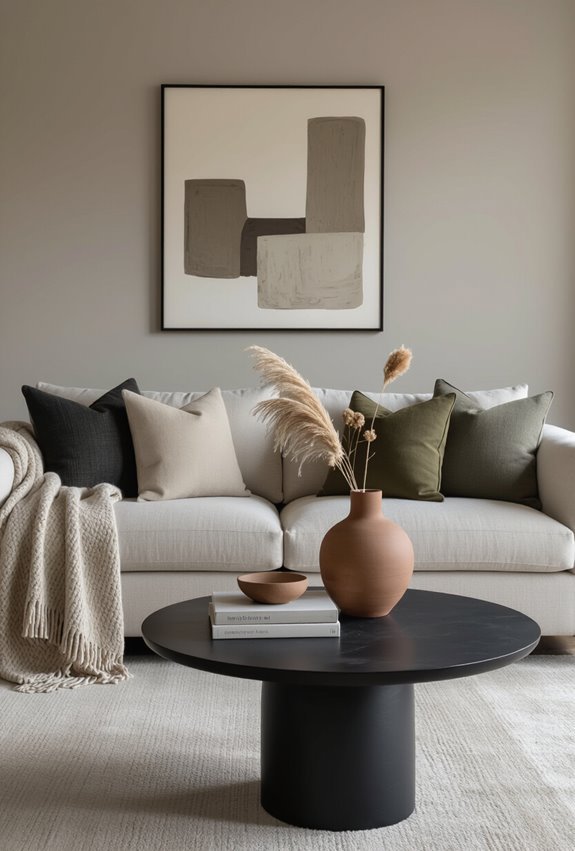
Before you pick paint or fabric swatches, decide on the emotional tone you want—quiet and enveloping, slightly dramatic, or softly warm—because that mood will guide which neutrals and accents feel right.
Use mood boards and sample swatches, do undertone testing in different light, and assess ambient contrasts to choose a focused palette that feels cohesive and intentional.
Layering Neutrals for Depth and Drama
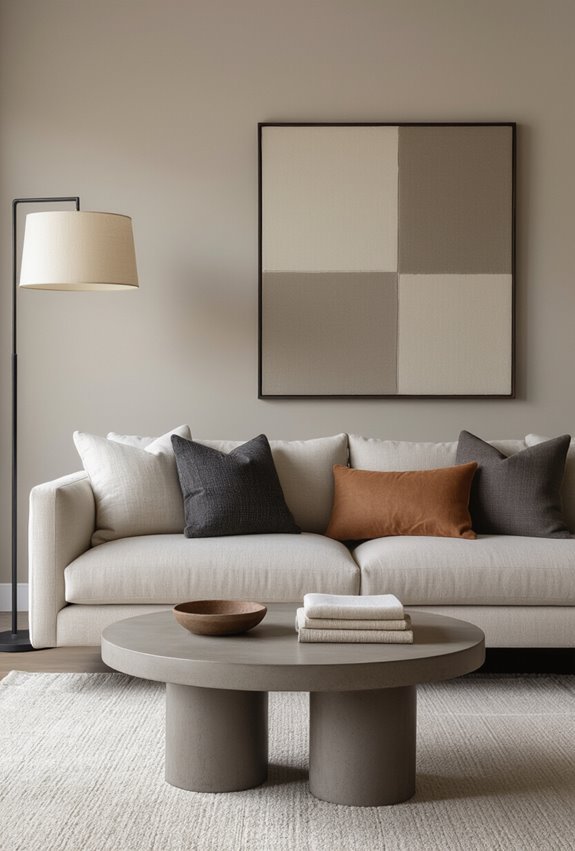
If you want a neutral room that feels layered rather than flat, start by mixing tones, textures, and finishes so each element reads as intentional—deep charcoal or warm taupe can anchor the space while softer beiges and creams provide lift.
You’ll build interest with layered textures, patterned rugs, matte and glossy finishes, and subtle tonal gradients that guide the eye and heighten drama without overwhelming.
Using Charcoal and Deep Taupe as Anchors
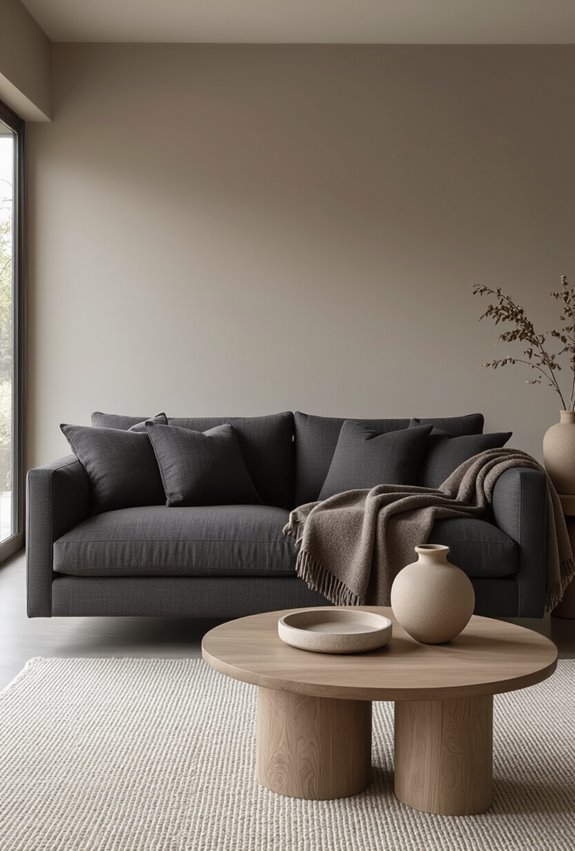
Because deep charcoal and warm taupe ground a room, start by assigning them to your largest, most permanent pieces—think a sofa, media console, or an accent wall—so other neutrals can play off that intentional weight.
Let charcoal anchors define structure while taupe textiles soften seating and drapery.
Balance scale and texture, keeping metallics minimal, for a cohesive, moody yet elegant living space.
Incorporating Warm Beige and Mushroom Tones
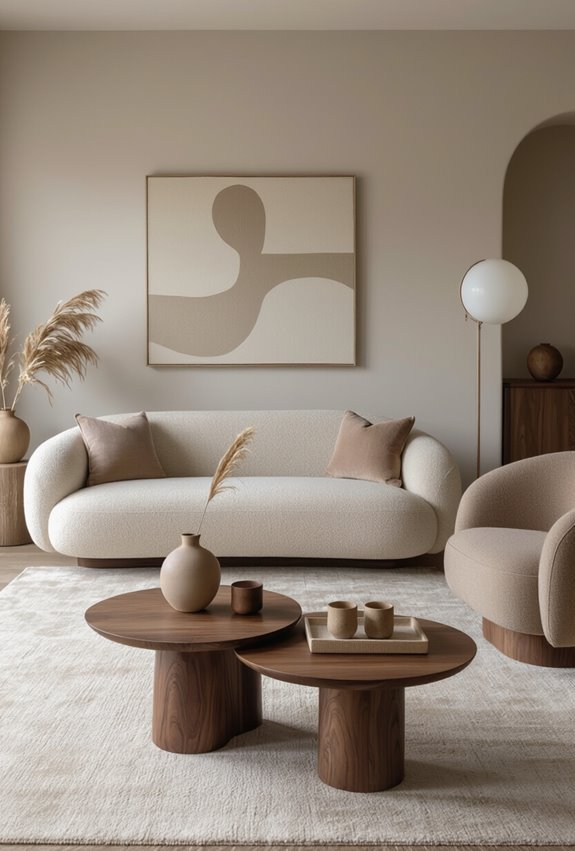
When you layer warm beige and mushroom tones, they bring a soft, lived-in warmth that bridges cooler charcoals and richer taupes; use beige for walls or larger textiles to open the room and reserve mushroom for smaller upholstery, rugs, or trim to add depth without heaviness.
You’ll balance warm mushroom accents with sandy taupe throws and wood finishes to keep the palette chic and grounded.
Statement Walls: When to Go Dark?
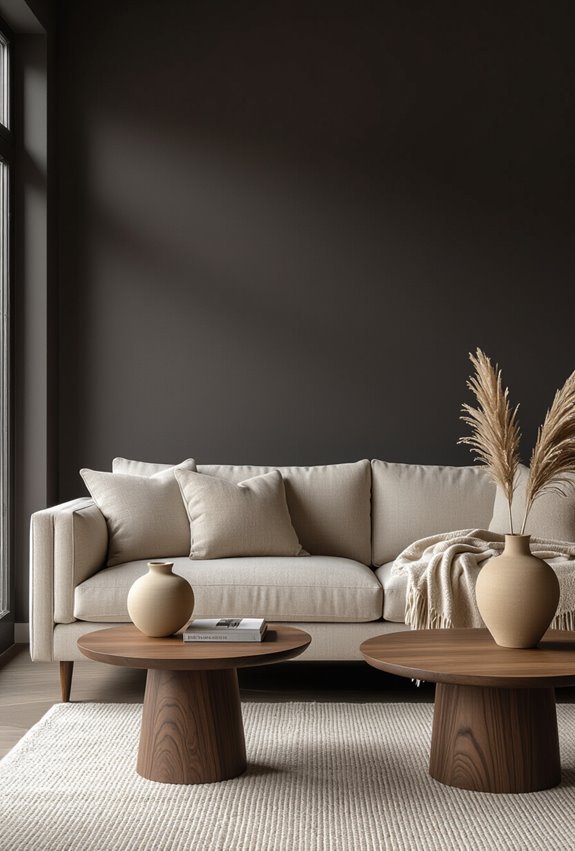
Picking the right sheen helped set the mood; now decide if one wall should take over. You’ll choose a single dark wall to anchor the space, balancing scale and natural light. Use accent lighting to highlight texture or art, and consider bold trim to frame the statement.
Keep other surfaces subdued so the dark wall reads intentional, not overpowering.
Upholstery Fabrics That Add Texture and Mood
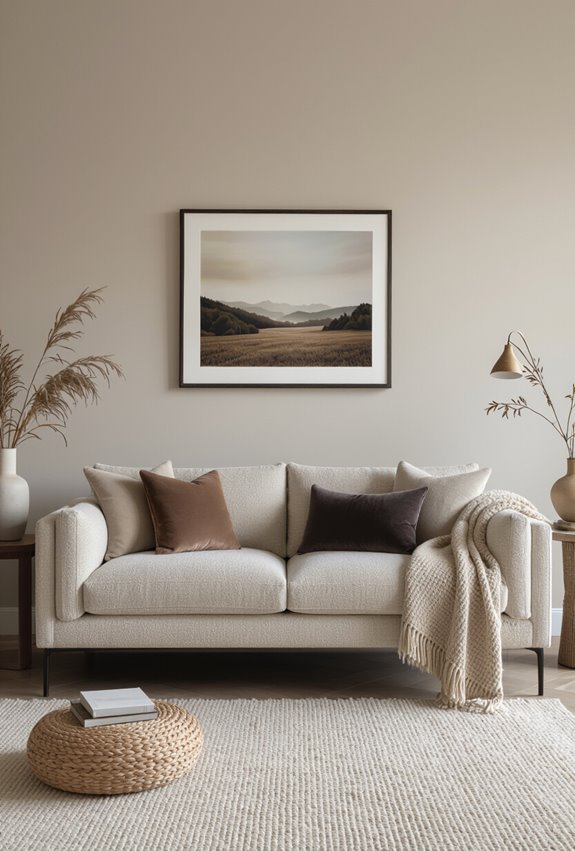
Layer textured upholstery to give your moody neutral room depth and tactile interest without adding color. You’ll mix bouclé accents for warmth, silk velvet for subtle sheen, jacquard upholstery for pattern without contrast, and distressed suede for lived-in softness.
Choose pieces with varied pile and weave, balance scale and touch, and let fabric alone create mood while keeping the palette restrained.
Mixing Metals: Brass, Black, and Aged Nickel
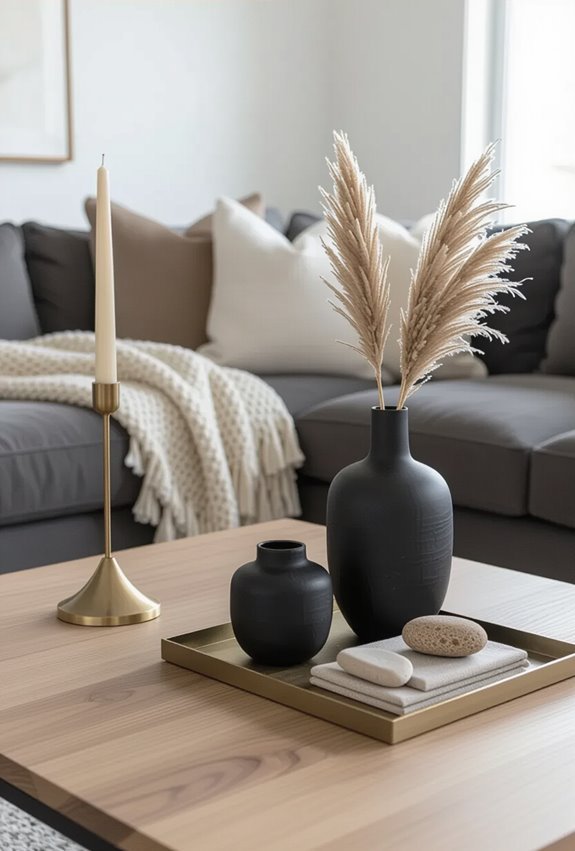
Once you’ve relied on fabrics to build mood, metal finishes become the punctuation that completes the room—brass, black, and aged nickel each bring a different temperature and attitude without upsetting a neutral palette.
You’ll layer brass warmth with black’s graphic edge and aged nickel’s soft glow, swap antique hardware for subtle contrast, and add metallic inlays on furniture or accents to tie the scheme together.
Rug Choices to Ground a Neutral Palette
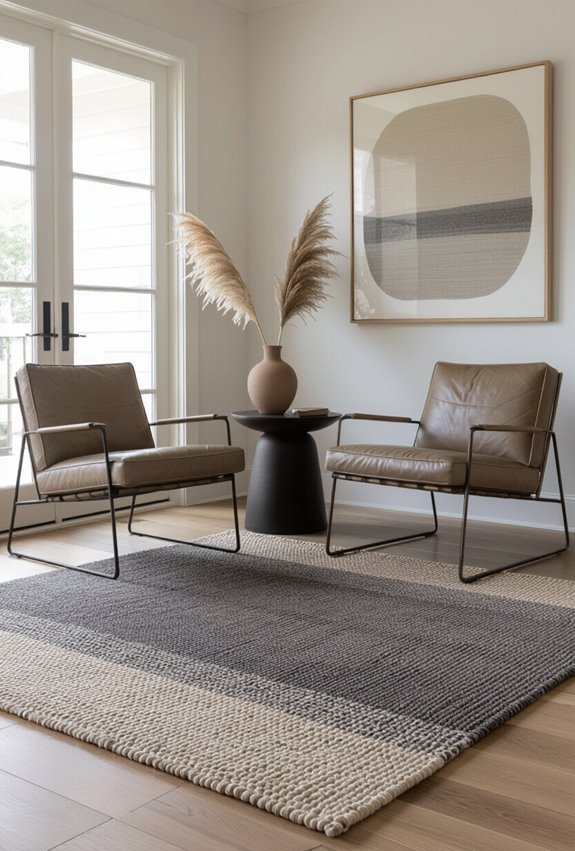
Choose a rug that anchors the seating area and sets the room’s scale—neutral doesn’t mean invisible.
You can combine layered sisal with a patterned jute runner for texture, use wool anchoring under the coffee table for warmth, or place a vintage kilim as a focal point.
Let natural tones, scale, and pile guide placement so the palette stays moody and cohesive.
Window Treatments That Soften Drama
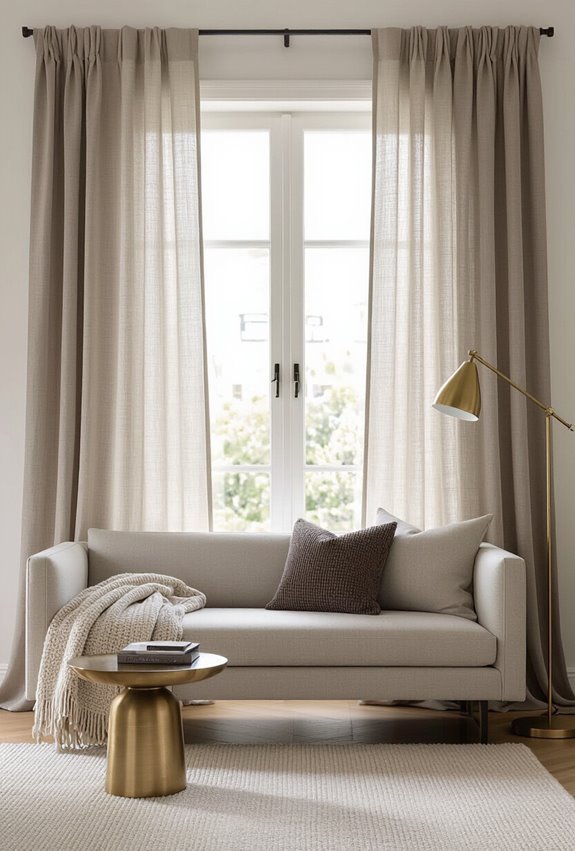
After you’ve grounded the seating with rugs, soften the room’s drama by dressing the windows in fabrics that filter light and add gentle movement.
You’ll pair sheer drapery with heavier panels for privacy and texture, and consider layered valances to add architectural interest without heaviness.
Choose muted tones and natural fibers so curtains read as refined, breezy backdrops to your moody palette.
Using Dimmers and Warm Bulbs for Atmosphere
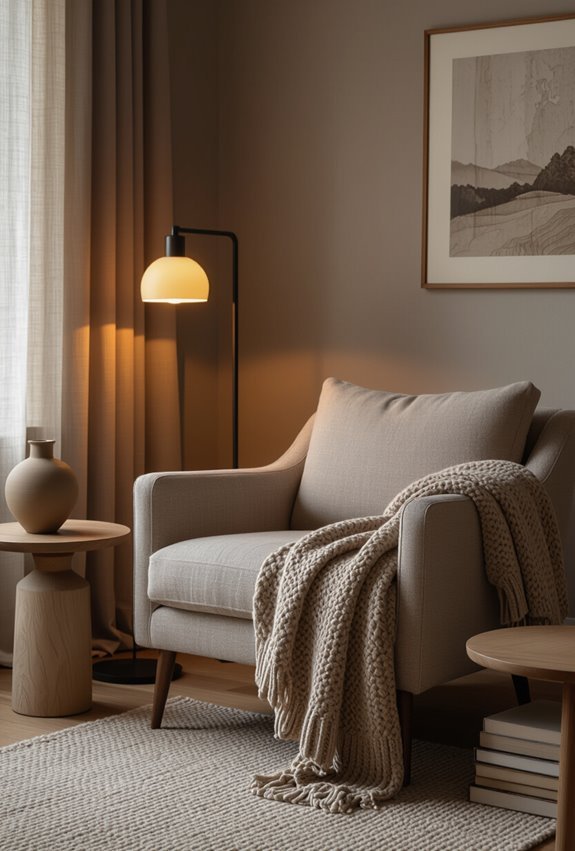
Layered lighting sets the stage, and using dimmers with warm bulbs lets you fine-tune the mood to match activities and time of day.
You’ll install a dimmable pendant for general ambiance, add amber lamps for softer corners, and use dimmers on task and accent fixtures. Adjust levels for reading, entertaining, or winding down to keep the neutral palette cozy and refined.
Accessorizing With Moody Neutral Throw Pillows and Blankets
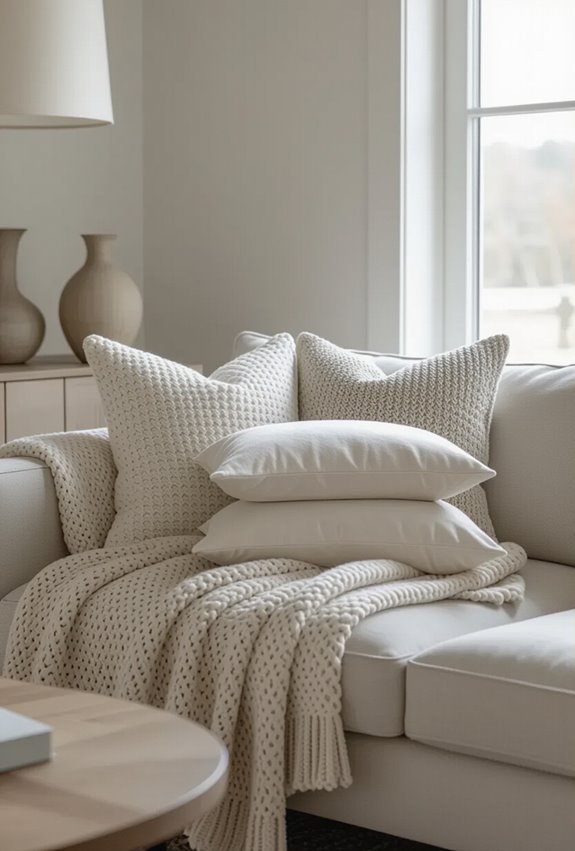
Bring in moody neutrals with a mix of textured throw pillows and blankets to give your living room depth without overpowering its calm palette.
Layer velvet accents with linen and knit textures, alternating solids and patterned throws for contrast.
Keep a restrained color range, vary scale, and arrange casually for comfort.
Rotate seasonally to refresh mood while maintaining cohesion.
Coffee Table Styling for a Sophisticated Look
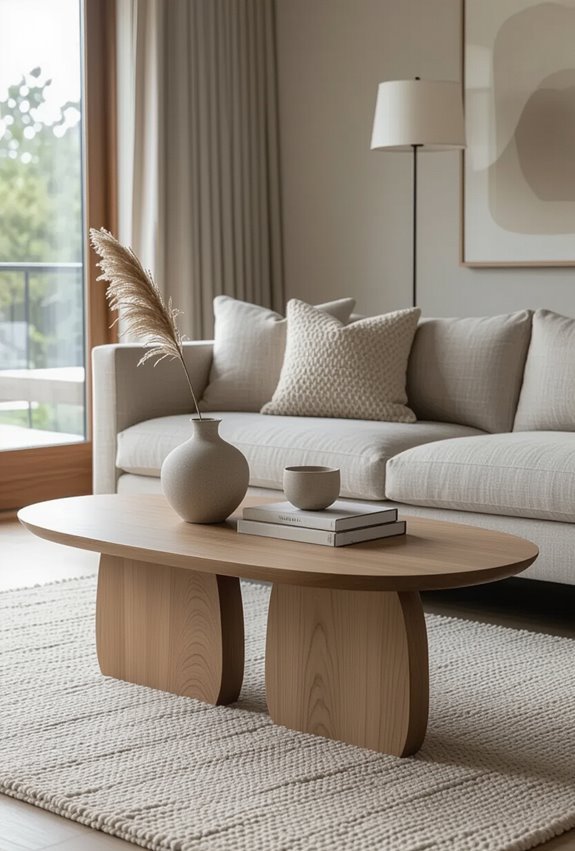
You can carry the moody neutral vibe onto the coffee table to make the whole seating area feel curated and cohesive.
Layer a low profile centerpiece—think matte bowl or sculptural stone—alongside a stack of neutral books and a candle.
Use hidden storage trays to hide remotes and coasters, keeping surfaces calm.
Vary textures subtly for depth without clutter.
Art and Wall Decor That Complement Neutrals
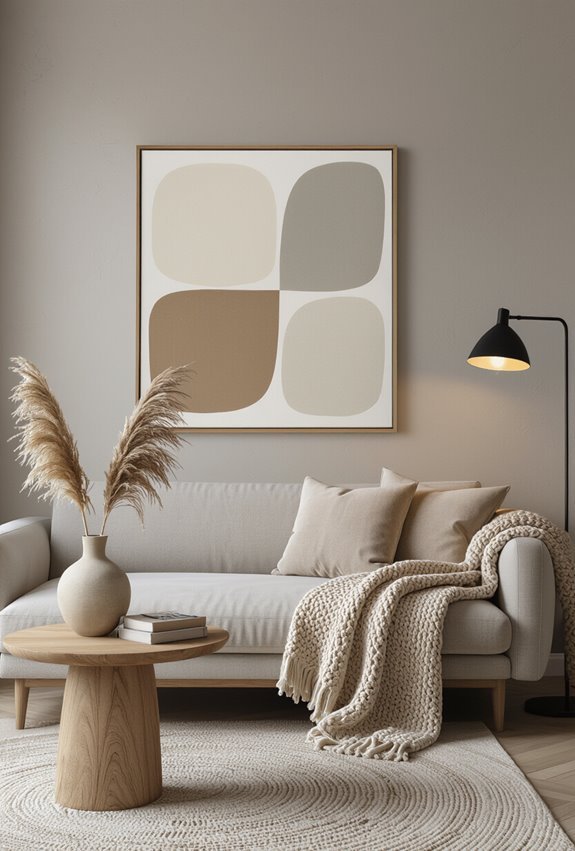
Lean into understated art to let your neutral palette breathe and feel intentional. You’ll choose muted prints, textured canvases, and sculptural pieces that add depth without competing.
Hang works with consistent spacing, use gallery lighting to highlight focal pieces, and mix vintage frames with modern ones for warmth. Keep scale balanced to maintain calm, sophisticated lines throughout the room.
Greenery and Botanicals That Suit Moody Palettes
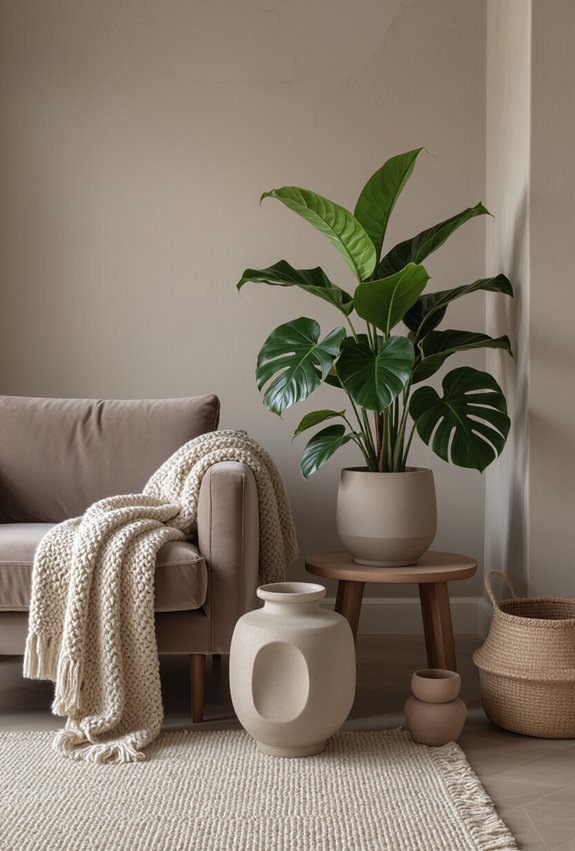
Although moody palettes can feel brooding, the right plants brighten a neutral room without breaking its calm. You’ll choose sculptural foliage—think a potted olive or a fiddle leaf fig—for form and muted green tones.
Add texture with pressed eucalyptus in frames or low bowls. Keep containers matte, colors subdued, and groupings minimal to preserve the sophisticated, tranquil mood.
Styling Shelves and Built-Ins in Neutral Tones
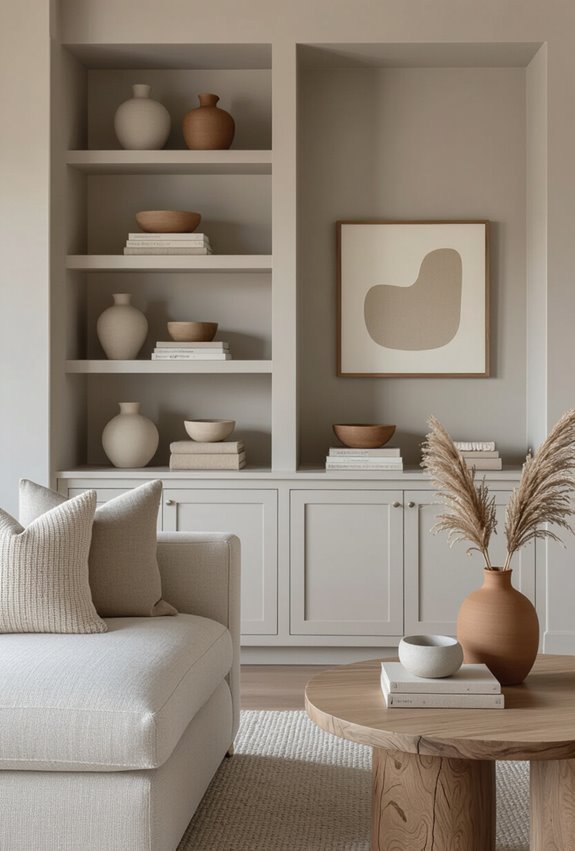
Bring the same restrained approach you used with plants to your shelves and built-ins: pick a limited palette, emphasize shape, and keep groupings airy.
Float matte ceramics beside books, vary heights with frames and sculptures, and leave negative space to breathe. Rotate objects seasonally, balance weight across shelves, and echo a curated coffee tablescape to tie the room together without clutter.
Small Living Room Tricks for a Moody Neutral Feel
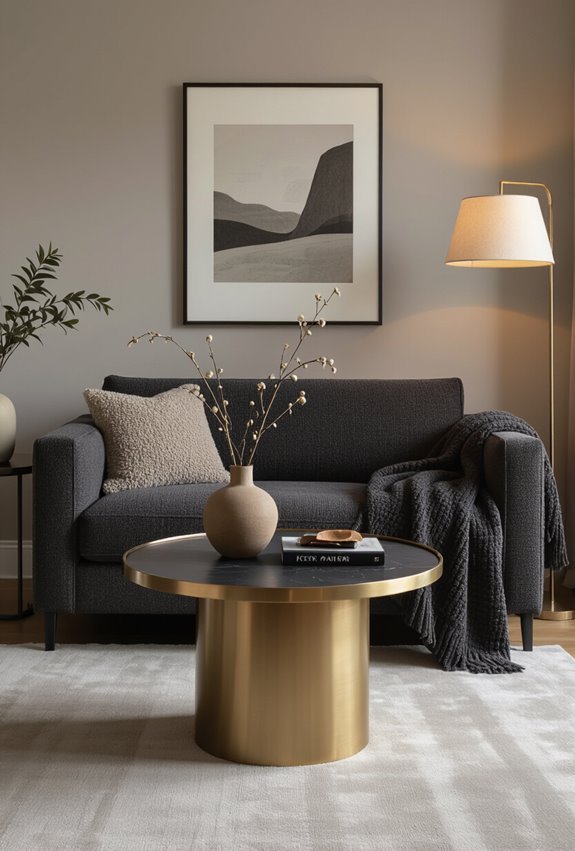
Make tight spaces feel deliberate by dialing up texture, layered lighting, and scaled-back furniture that keeps sightlines open.
You’ll choose slim, space saving seating, a low-profile sofa, and nesting tables to avoid clutter.
Layer rugs and tactile throws for depth, add a miniature artwork display to draw the eye, and use mirrors and focused lamps so the moody palette reads intentional, not cramped.
Open-Plan Tips: Connecting Moody Neutrals Across Spaces
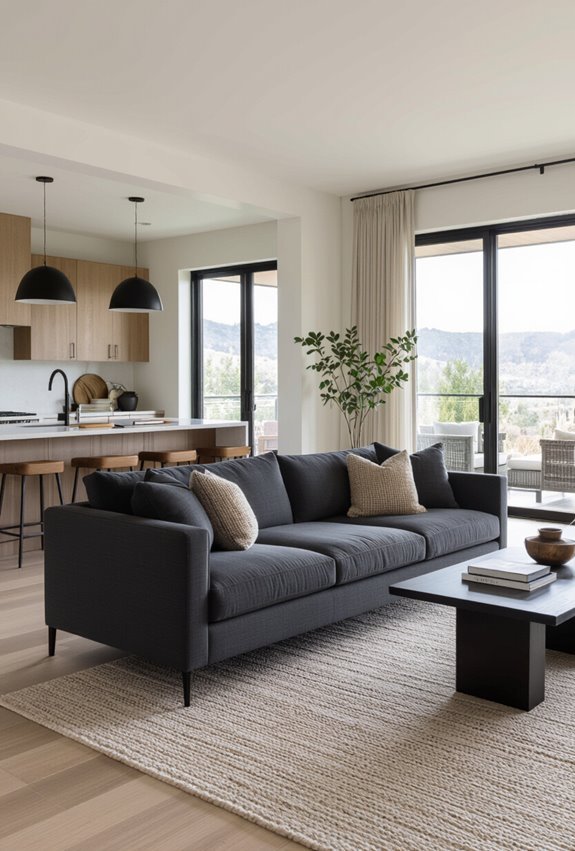
When you’re tying moody neutrals through an open-plan home, prioritize a coherent palette and repeated textures so each zone feels distinct yet connected. Use rugs, lighting, and furniture clusters as visual anchors, and design deliberate flow shifts—low partitions, consistent trim color, and complementary finishes.
Keep scale balanced so sightlines guide movement and spaces read as a unified, sophisticated whole.
Budget-Friendly Swaps to Achieve a High-End Moody Look
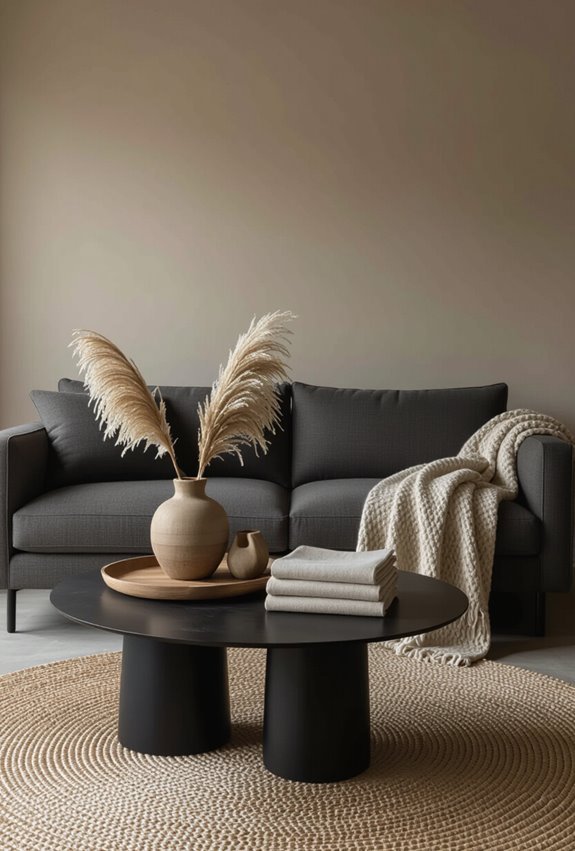
Swap smartly to get a luxe, moody living room without overspending: focus on high-impact items—paint, textiles, and lighting—and substitute budget-friendly versions that mimic premium finishes.
You can score thrifted accents for character, reupholster or dye finds, and use IKEA hacks to craft custom-looking consoles and shelving. Layer textured throws, swap bulbs for warm dimmable options, and prioritize statement fixtures over mass purchases.
Seasonal Tweaks to Keep a Moody Neutral Space Fresh
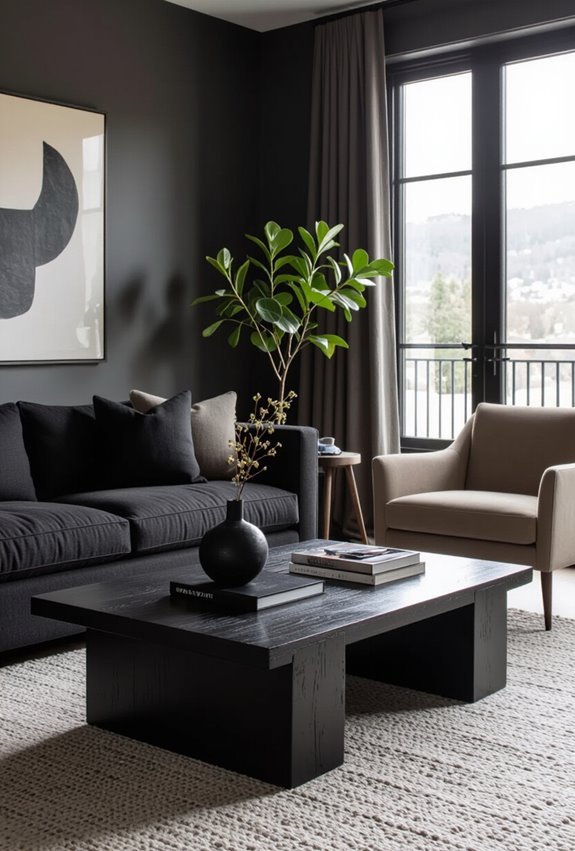
If you want a moody neutral room to feel current through the year, tweak small, season-specific details—textiles, greenery, and lighting—to shift mood without overhauling the base palette.
Rotate seasonal textiles like linen for summer and wool for winter, swap pillows and throws, adjust lamps for warmer glow, add fresh or dried greenery, and use subtle scent layering to evoke each season without changing core decor.
Creating Focal Points With Texture and Silhouette
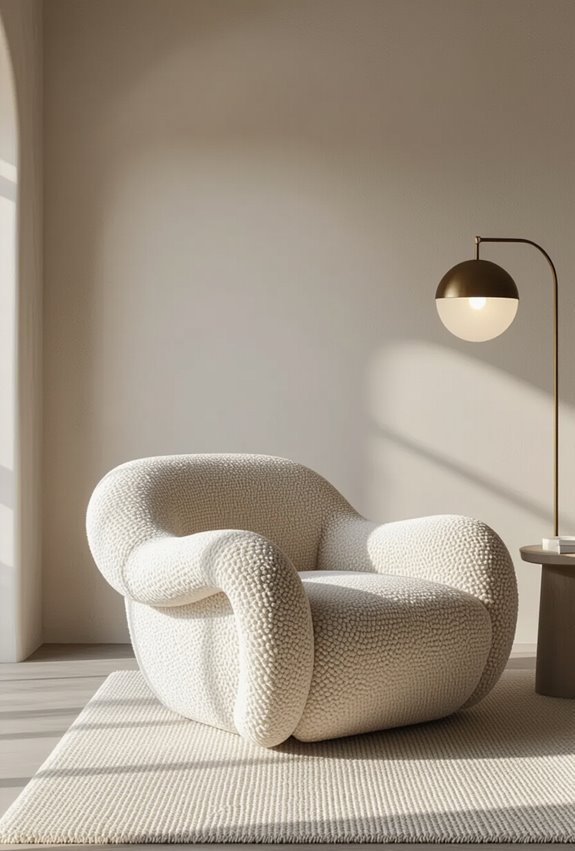
Create a striking focal point by pairing bold silhouettes with rich textures that catch the eye without shouting—think a sculptural sofa in a soft boucle or a low-profile leather chair against a nubby wool rug.
You’ll balance tactile focalpoints and silhouette interplay by anchoring seating, adding a textured throw, and positioning a sculptural lamp so your space reads intentional, layered, and effortlessly moody.
Common Mistakes That Dull a Moody Neutral Scheme
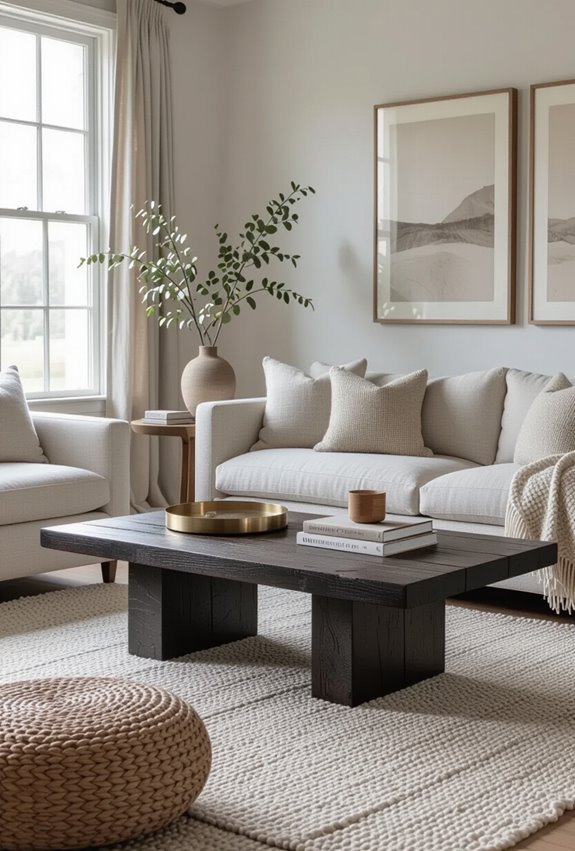
While moody neutrals thrive on restraint, you can unintentionally flatten a scheme by relying too much on a single tone or texture. You’ll spot overly matching neutrals, sparse contrast, and minimal pattern that mute personality.
Avoid flat lighting that erases depth; layer warm and cool shades, mix matte and sheen, and add one dramatic silhouette or tactile piece to restore mood and dimension.
Quick Refresh Checklist for a Polished Moody Neutral Living Room
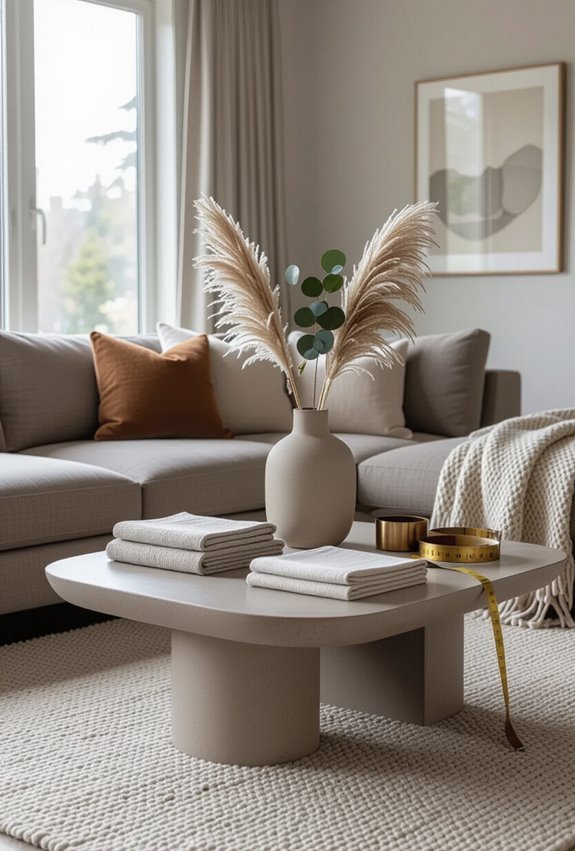
If your moody neutral scheme feels flat, a few targeted swaps will bring it back to life without a full overhaul.
Start with before after photos to guide choices. Swap one textile, add a sculptural lamp, and edit clutter. Refresh greenery and layer a textured throw.
Finish with simple maintenance tips: vacuum, rotate cushions, and wipe surfaces weekly to keep the look polished.
Layered Textures for Depth

Layered textures can transform your living room into a cozy retreat that invites relaxation and comfort.
Combine tactile materials like soft throws, woven rugs, and smooth ceramics to create a rich textural contrast.
This approach adds depth and visual interest to your space, making it feel inviting and warm.
Don’t hesitate to mix different elements for a unique, personalized touch.
Elegant Minimalism

Embracing elegant minimalism in your moody neutral living room allows you to create a serene yet sophisticated atmosphere.
Focus on clean lines and a curated selection of decor.
- Use functional furniture that maximizes space
- Incorporate minimalist art for visual interest
- Stick to a neutral color palette
- Limit accessories to maintain a clutter-free environment
This approach enhances tranquility and style effortlessly.
Monochromatic Color Schemes

Incorporating a monochromatic color scheme can enhance the moody vibe of your living room while maintaining a cohesive look.
By using tonal variations, you create a sense of depth and color harmony that’s visually striking.
Consider these elements:
- Layered textiles
- Statement art pieces
- Accent furniture
- Subtle lighting
These choices will elevate your space and keep it feeling intimate and inviting.
Luxurious Rugs and Carpets
Bold architectural features set the stage for a moody living room, but luxurious rugs and carpets can truly anchor the space.
Choose pieces with luxurious textures that invite touch and comfort. Vibrant patterns can add visual interest, breaking up the neutral tones while still maintaining harmony.
A stunning rug not only enhances your aesthetic but also creates a cozy atmosphere for gatherings.
Mixing Patterns and Prints

While it might seem intimidating, mixing patterns and prints in a moody living room can elevate your design to new heights.
Embrace pattern harmony and aim for print balance by considering these tips:
- Choose a color palette that unites your patterns
- Combine different scales for visual interest
- Layer textures to add depth
- Limit your patterns to three to avoid chaos
Let your creativity shine!
Conclusion
Incorporating these moody neutral living room designs can transform your space into a sanctuary of style and comfort. By embracing earthy tones and layering textures, you’ll create a warm, inviting atmosphere that feels like a warm hug after a long day. Remember, a harmonious blend of art, minimalism, and functional storage can elevate your living area to new heights. So go ahead, let your creativity flow, and watch your dream space come to life!
