
Are Acrylic and Latex Paint the Same? Key Differences
They’re not the same: acrylic paint uses acrylic-resin binders that dry fast, stick hard, and resist UV and moisture, while “latex” usually means water-based paints with synthetic latex binders that dry easy, clean up with water, and stay flexible for interior walls. Acrylic costs more but lasts longer outdoors; latex is user-friendly and cheaper for most indoor jobs. Keep going and you’ll find specifics on prep, tools, durability, and when to pick each.
Are Acrylic and Latex Paint the Same?
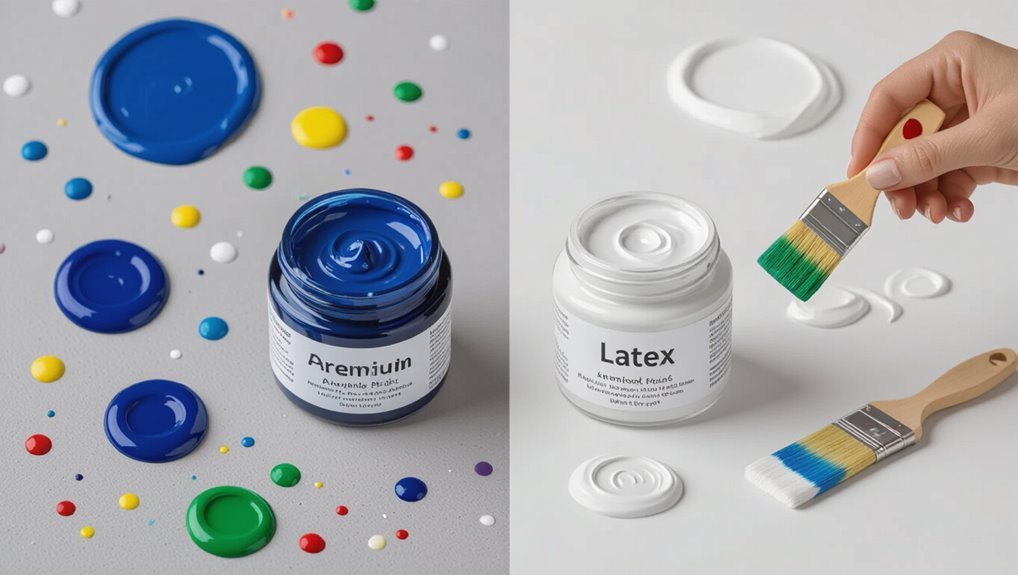
Are acrylic and latex paints the same? You’ll notice they’re often lumped together, but they differ:
Acrylic versatility shows up in faster drying, stronger adhesion, and better weather resistance, while Latex flexibility helps with elasticity and easy cleanup.
You’ll choose acrylic for durability outdoors and latex for interior walls where stretch and touch-up ease matter, matching finish to project needs.
Acrylic Paint Composition and Binders
You’ll notice acrylic paint uses an acrylic resin binder that forms a durable film as it dries, while many latex paints rely on water-based latex binders.
Check how pigments and additives interact with those binders to affect color, opacity, and performance.
Understanding these components helps you choose the right paint for your surface and conditions.
Acrylic Resin Binder
Think of the acrylic resin binder as the glue that holds acrylic paint together: it suspends pigments, binds them to the surface, and forms the durable, flexible film you see when the paint dries.
You’ll notice acrylic advantages in fast drying, UV resistance, and strong adhesion. Its polymer network gives more durability than water-based alternatives while still offering latex flexibility for surface movement.
Water-Based Latex Binder
When you pick up a can labeled “latex,” you’re actually working with a water-based binder system that uses polymer particles dispersed in water to suspend pigments and form the paint film as it dries. You’ll appreciate water based advantages like easy cleanup, low odor, and fast curing; choose latex applications for interiors, trim, and exterior siding.
| Advantage | Typical Use |
|---|---|
| Low odor | Interiors |
| Fast cleanup | Trim & siding |
Pigment And Additives
Although acrylic paints get their strength from synthetic polymer binders, pigments and additives determine color, opacity, durability, and handling, so you should know what each component contributes.
You’ll choose pigment types—organic for vivid hues, inorganic for lightfastness—and rely on additive functions like dispersants, surfactants, thickeners, and UV stabilizers to control flow, film formation, adhesion, and long-term performance.
What “Latex” Paint Means for Homeowners
When you hear “latex” paint, it usually means a water-based formula that uses synthetic polymers rather than natural latex.
That water base makes cleanup easy and lowers fumes compared with oil-based options, but it also affects drying time and durability.
We’ll look at what that means for cleanup, indoor use, and long-term performance around your home.
What “Latex” Means
“Latex” paint doesn’t contain natural latex rubber — it refers to water-based formulas that use synthetic polymers as binders.
For you, the latex definition matters: it’s a convenient label for easy-clean, quick-drying interior and exterior paints.
Knowing a bit of latex history helps you trust modern formulations evolved from early synthetic advances, offering durability, lower odor, and easier cleanup than older options.
Water-Based vs Oil-Based
Because water-based paints use acrylic or other synthetic binders suspended in water, you’ll get faster drying, easier cleanup, and lower odors compared with oil-based formulas — which rely on organic solvents for leveling and durability.
You should note water solubility differences and drying time comparison so you choose right:
- Easier cleanup with soap and water
- Shorter drying windows
- Less solvent odor
Practical Home Implications
If you want a practical, user-friendly option for most interior jobs, choose latex—it’s water-based, cleans up with soap and water, and dries fast so you can finish rooms sooner; you’ll also cut down on lingering solvent smells and make touch-ups easier with just a damp rag. It preserves home aesthetics, speeds projects, and balances cost with project longevity.
| Benefit | Where | Tip |
|---|---|---|
| Cleanup | Interiors | Use soap |
| Odor | Low | Ventilate |
| Durability | Moderate | Recoat often |
| Cost | Affordable | Buy quality |
Durability and Adhesion: Acrylic vs. Latex
When you’re choosing between acrylic and latex, durability and adhesion often decide which paint will hold up over time; acrylic resists cracking and adheres better to challenging surfaces, while latex offers decent bonding on properly primed, smooth substrates.
- You’ll want adhesion testing for prep certainty.
- Consider durability factors like flex and wear.
- Pick acrylic for tough substrates, latex for easy jobs.
Moisture Resistance and Outdoor Use: Acrylic vs. Latex
When you’re choosing paint for exterior projects, moisture resistance and outdoor durability should guide your pick.
Acrylics generally hold up better to rain, sun, and humidity, while latex (water-based) paints can vary in water resistance depending on formulation.
Let’s compare how each performs over time and in wet conditions.
Outdoor Durability Comparison
Because acrylic and latex paints use different binder chemistries, they perform differently outdoors—acrylics resist moisture and UV better, while standard latex can absorb water and degrade faster in harsh conditions.
- You’ll prefer acrylic for superior UV resistance, lower fading rates, and varied surface compatibility.
- Consider coating thickness and application techniques for tougher weather exposure.
- Expect differing maintenance requirements influenced by environmental factors and substrate choices.
Water Resistance Differences
Although both are water-based, acrylic and latex paints handle moisture very differently, and you’ll want to pick the right one for outdoor exposure.
Acrylic resists moisture absorption better, so after water resistance testing it usually outperforms latex on siding and trim.
Latex can swell or peel where humidity or rain are frequent.
For long-term outdoor protection, choose acrylic and follow proper surface prep.
Finish, Color Retention, and Fading
Finish plays a big role in how paint looks and how long its color lasts, so you should pick the right one for the job.
You’ll notice acrylic often offers better color longevity and UV resistance, while latex gives varied finish sheen options indoors.
Consider:
- Acrylic for outdoor durability and slower fading
- Latex for smooth interior sheens
- Match sheen to surface and light exposure
VOCs, Odor, Health Risks, and Disposal
When you’re choosing paint, check VOC levels and odor because they directly affect indoor air quality and how quickly a room becomes usable after painting.
You’ll compare VOCs emissions between acrylic and latex, weigh health concerns like headaches or respiratory irritation, and follow recommended disposal methods for leftover cans.
Choose low-odor, low-VOC options and ventilate well to minimize risks.
Price Comparison and Cost-to-Value
One quick way to decide between acrylic and latex is to compare upfront cost versus long-term value: acrylics usually cost more per gallon but can offer better durability and color retention in certain applications, while latex is cheaper and still provides dependable performance for most interior jobs.
Do a cost analysis and value assessment; consider:
- Upfront price vs. lifespan
- Maintenance and touch-up frequency
- Finish and pigment stability
Best Uses for Acrylic Paint
Because acrylic bonds strongly to many surfaces and resists weathering, it’s your best choice for exterior projects, high-traffic areas, and any job where color longevity matters.
You’ll use acrylic paint for outdoor trim, siding, decks, murals, and mixed-media art.
Consider its fast drying, flexibility, and durability when planning projects.
Keep in mind acrylic’s quick-drying, flexible, and durable nature when choosing paints for lasting, resilient finishes.
These acrylic paint advantages make it versatile; explore acrylic paint applications for long-lasting, vibrant finishes.
Best Uses for Latex Paint
Latex paint works well for most interior walls and ceilings, thanks to its easy cleanup, low odor, and good coverage.
You’ll find latex paint applications ideal for quick refreshes and high-traffic rooms when you use the best painting techniques.
Consider these common uses:
- Bedrooms and living rooms for smooth, washable finishes
- Trim and doors with semi-gloss for durability
- Bathrooms with mildew-resistant formulas
Surface Prep and Primers for Each Type
When you’re prepping surfaces, choose the primer and prep steps that match the paint’s chemistry and the substrate—acrylic paints bond best to clean, porous surfaces primed with an acrylic or stain-blocking primer, while water-based latex needs a clean, dry surface and often benefits from a high-quality latex or multipurpose primer for uniform adhesion and coverage.
For both, follow surface preparation: clean, sand, repair; select primer types for adhesion and stain sealing.
Application: Tools, Dry Time, and Recoats
When you choose between brushes, rollers, or sprayers, match the tool to the surface and finish you want.
Acrylic and latex both work well with quality brushes and rollers, though sprayers can speed large jobs and need different thinning or tip choices.
Pay attention to manufacturer dry times and recommended recoat windows to avoid tackiness or poor adhesion.
Brushes, Rollers, Sprayers
Choosing the right tool—brush, roller, or sprayer—shapes how smoothly acrylic or latex paint goes on, how fast it dries, and when you can recoat.
So pick based on surface, finish, and project speed. Use proper brush types, roller selection, sprayer techniques, application methods, finish quality, and tool maintenance.
- Brush: angled for trim, synthetic for latex
- Roller: nap matched to texture
- Sprayer: thin coats, practice technique
Dry Times And Recoats
Because drying time and recoating windows dictate your workflow, you should factor them into tool choice and technique from the start.
Acrylic often dries faster, letting you use quicker drying techniques and earlier recoat timing.
Latex may need longer cure times; thin coats, good ventilation, and fans speed drying.
Monitor tackiness before recoating to avoid lifting and guarantee smooth, even layers.
Maintenance, Cleaning, and Long-Term Care
Although acrylic and latex paints both look similar once dry, they demand different care to keep finishes looking their best over time.
You’ll follow specific maintenance tips and cleaning techniques for each, consider long term care routines, and heed storage recommendations to preserve cans and brushes.
- Wipe acrylic gently with mild soap and water.
- Avoid harsh solvents on latex finishes.
- Store sealed, upright, cool.
How to Choose: Quick Decision Guide and Scenarios
Now that you know how to care for acrylic and latex finishes, you can match each paint to real-world needs with a quick decision guide and scenario examples.
Consider application scenarios: choose acrylic for exterior durability and flexible surfaces, latex for indoor walls and easy cleanup.
Factor in homeowner preferences like sheen, budget, and drying time to pick the best paint for each room or project.
Troubleshooting: Common Problems and Fixes
When a paint job doesn’t go as planned, you can usually diagnose and fix the issue quickly by identifying the symptom—peeling, cracking, blistering, poor adhesion, or uneven sheen—and checking surface prep, moisture, and temperature first.
When paint misbehaves, identify the symptom—peeling, cracking, blistering—and check prep, moisture, and temperature first.
Troubleshoot application challenges, surface compatibility, drying issues, odor concerns, finish variations, color matching, adhesion problems, and cleanup difficulties:
- Sand, prime, clean for adhesion problems.
- Adjust humidity, thinner, or drying time for drying issues.
- Test swatches for finish variations and color matching.
Frequently Asked Questions
Can Acrylic or Latex Paint Be Used on Metal Surfaces?
Yes — you can use acrylic or latex on metal, but think of it like tuning a bridge: metal preparation guarantees paint adhesion, so you’ll clean, sand, prime with a metal primer, then apply paint for lasting protection and finish.
Are Either Paint Type Eco-Friendly or Recyclable?
Neither paint is fully eco-friendly, but you’ll find eco friendly benefits in low-VOC acrylics and some latex options; check local recycling options for empty cans, and use hazardous-waste programs for leftover paint disposal.
How Do Temperature Extremes During Storage Affect Paint Shelf Life?
If you believe extremes don’t matter, test shows they do: temperature swings accelerate paint degradation and shorten shelf life. You’ll need stable storage conditions, avoiding freezing or high heat to preserve consistency and performance.
Can Acrylic and Latex Paints Be Mixed Together?
Yes — you can mix acrylic and latex paints sparingly, but you’ll need proper mixing techniques to guarantee uniform blend; test first because altered paint performance (adhesion, drying, flexibility) can occur, so proceed cautiously and record ratios.
What Specialty Additives Are Compatible With Each Paint Type?
I once mixed a weatherproofing sachet into a can like adding vitamins to soup; you’ll use mildewcides, flow agents, UV stabilizers for acrylics and thickeners, coalescents, adhesion promoters for latex to boost additive benefits and paint adhesion.
Conclusion
You’ll often hear “acrylic” and “latex” used like twins, but they’re more like cousins—both water-based, yet acrylic uses acrylic polymer for tougher, more flexible skin. Picture a painted fence and an interior wall meeting at the garden gate: the fence needs acrylic’s weatherproof jacket; the wall can wear latex’s easy-care shirt. Match the paint to the task, and you’ll avoid peeling, mildew, and regret—same family, different jobs, same happy home.
