
How to Store Latex Paint Properly So It Lasts Longer
Seal cans tightly and wipe rims after every use to prevent air gaps. Store lids down with cans upright in a cool, dry spot between 50–80°F, away from sunlight, heat and freezing. Label each can with date, color and project, group by room or color family, and avoid stacking more than two high. Check texture and smell before reuse and dispose of unusable paint through proper hazardous-waste or recycling programs — keep going to learn practical storage and disposal tips.
Can You Store Latex Paint for Touch-Ups?
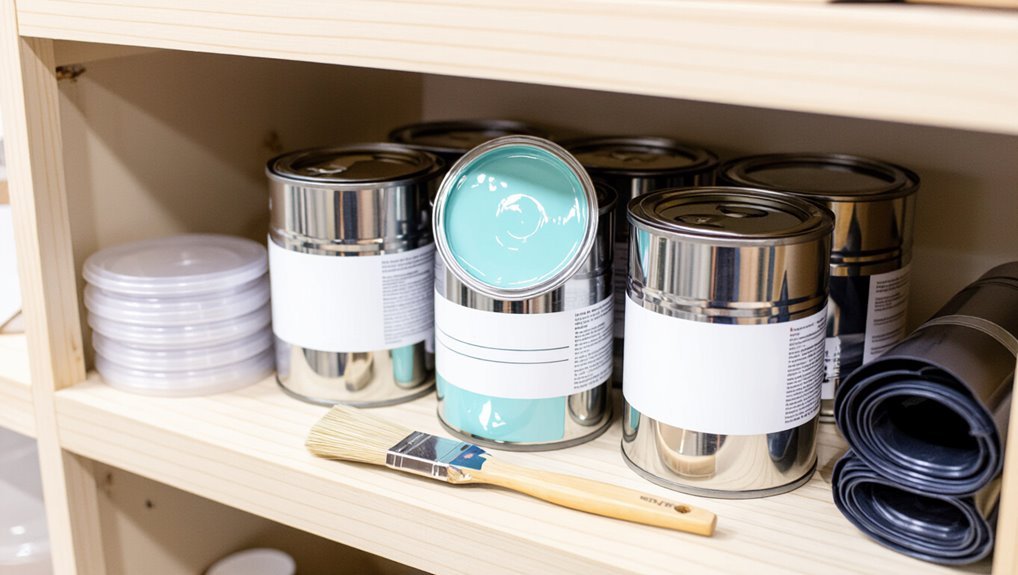
Yes—you can store latex paint for touch-ups, but it only stays good if you seal and store it properly.
You’ll keep color matched cans for touch up techniques by wiping rims, replacing lids tightly, and storing upright in a cool, dry place.
Label cans with date and project.
These steps extend paint longevity and make future repairs quick and accurate.
How Long Latex Paint Stays Usable
If you store latex paint correctly, it can stay usable for years, but several factors determine exactly how long.
You’ll see paint shelf life vary by brand, exposure to temperature swings, and container seal. Proper storage boosts paint longevity, while contamination or freezing shortens it.
Check consistency and smell before use; if it’s smooth and neutral-scented, it’s likely still good.
Quick Checklist for Storing Latex Paint
Keep your latex paint usable by storing cans in a cool, dry spot away from direct heat and sunlight.
After each use, wipe the rim and press a layer of plastic over the surface before sealing the lid tightly.
Label the can with the date and color so you can grab the right one next time.
Store In A Cool Place
Because temperature swings shorten paint life, store latex cans somewhere consistently cool and dry.
You should keep them away from direct sunlight, heating vents, and freezing garages to prevent temperature fluctuations.
Aim for stable indoor temperatures and moderate humidity control—ideally a basement or climate-controlled closet.
Label cans and place them on pallets or shelves to avoid floor dampness and accidental freezing.
Seal Tightly After Use
Seal the lid tightly after every use to preserve latex paint’s consistency and prevent skinning.
You’ll guarantee proper paint can sealing and airtight storage by following these steps:
- Wipe rim clean before closing.
- Press lid evenly with a rubber mallet.
- Store upside down to reduce air contact.
- Label date and color for quick rotation.
Clean and Prep Paint Cans Before Storage
Wipe the lid and rim clean and scrape any dried paint from the can before you put it away to prevent air gaps and sticky seals.
Afterward, use simple cleaning techniques—wipe tools, remove drips, and dry the rim.
For can preparation, press a layer of plastic wrap over the opening, seal the lid tight, label contents and date, and store upright in a cool spot.
Choose the Best Household Container for Latex Paint
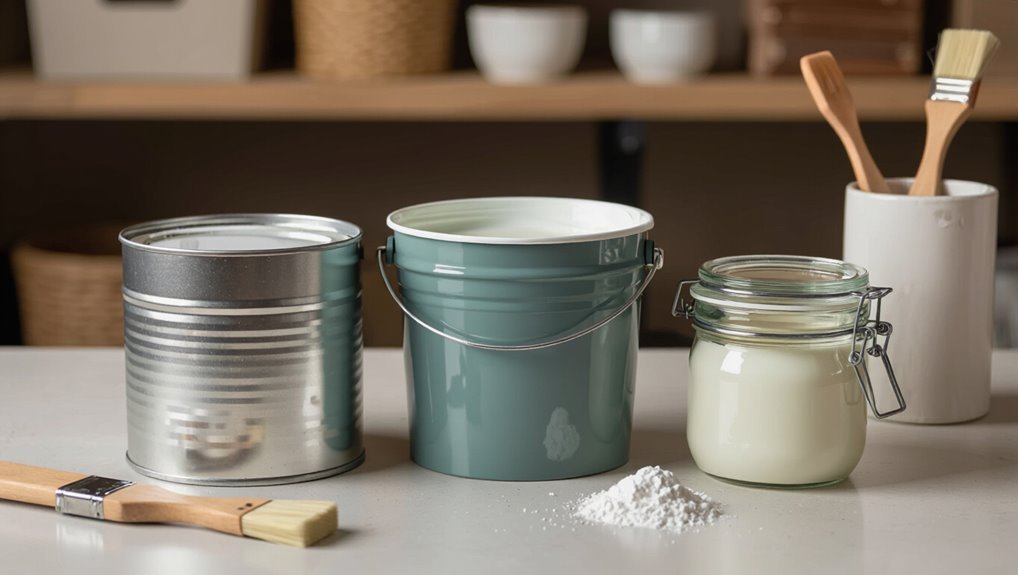
Now that your cans and lids are clean and labeled, pick a container that will actually keep latex paint usable.
Choose based on paint container types and the best storage options:
- Original metal cans for short-term, labeled and organized
- Smaller airtight plastic tubs for portioning
- Glass jars for tiny amounts, clearly marked
- Stackable plastic bins for grouped, upright storage
How to Seal a Paint Can Against Air and Moisture
To keep your latex paint usable, press the lid down firmly until it clicks and wipe any rim residue so the seal sits flush.
For extra protection, pour a thin layer of plastic wrap or a sheet of cling film over the paint before closing, or float a thin layer of water-based clear medium on top to block air.
Store cans upright in a cool, dry spot to maintain that barrier and prevent moisture intrusion.
Tight Lid Closure
A tight lid is the single most important step to keep latex paint usable: press the lid down evenly with a rubber mallet or a block of wood until it snaps into place and creates a seal that keeps air and moisture out.
You’ll protect the paint can and maintain an air seal.
Quick tips:
- Wipe rim clean
- Use even pressure
- Tap around edge
- Store upright
Protective Barrier Layer
Think of the protective barrier layer as an extra gasket for your paint can; it stops air and moisture from creeping in once the lid’s secure.
You can add protective coatings like plastic wrap, a layer of foil, or a purpose-made moisture barrier disk before sealing.
Press the lid firmly, tap the rim to seat it, and store cans upright in a cool, dry spot.
Where to Store Latex Paint in Your Home
When choosing where to store latex paint in your home, pick a cool, dry spot with consistent temperatures—ideally between 50°F and 80°F—to prevent freezing or premature skinning.
Consider ideal locations and temperature considerations, then store cans off the floor and away from sunlight.
- Garage (if insulated)
- Basement (dry area)
- Utility closet
- Laundry room shelves
How Temperature and Humidity Affect Stored Paint
Because paint is mostly water and polymers, temperature and humidity directly change its chemistry and shelf life, so store latex cans where conditions stay steady. You’ll avoid skinning, separation, and mold by minimizing temperature fluctuations and keeping moderate humidity levels. Check cans regularly and move them if conditions shift.
| Cold | Stable | Warm |
|---|---|---|
| Fear | Calm | Loss |
| Freeze | Preserve | Spoil |
Store Opened vs. Unopened Latex Paint
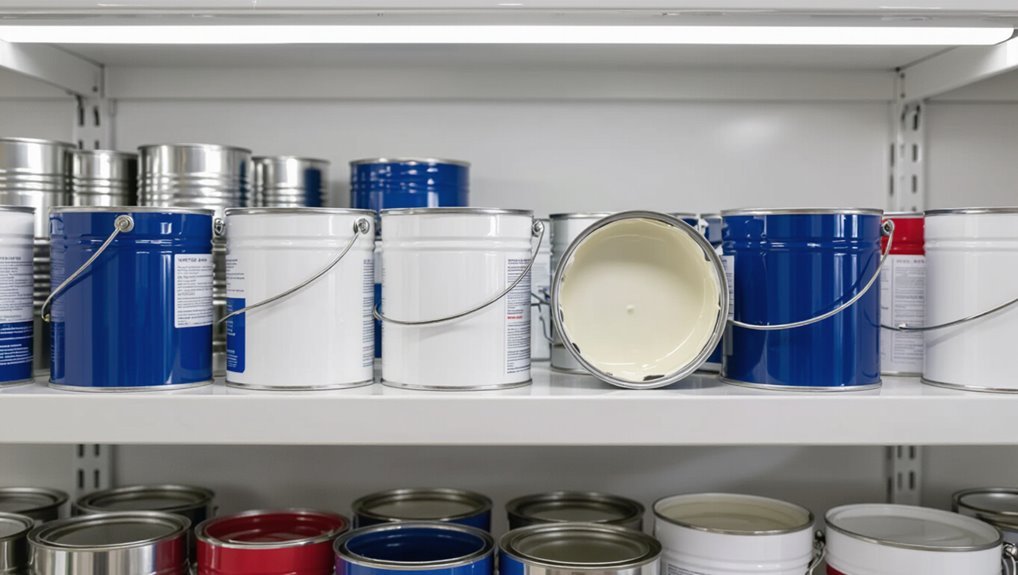
If you’re deciding whether to keep a can of latex paint, the key difference is that unopened cans stay usable far longer than opened ones because their seals keep air and contaminants out.
You should follow paint longevity tips and storage temperature guidelines. Consider:
- Keep unopened cans sealed and upright.
- Re-seal opened cans tightly.
- Store at stable temperatures.
- Discard if mold or foul odor appears.
Organize and Label Paint Cans for Easy Touch-Ups
Although you may think lids and labels are minor, organizing and clearly labeling your paint cans saves time and prevents costly mismatches when you need touch-ups.
Use simple paint organization: group by room or color family, store lids down, and keep cans upright.
Adopt consistent labeling systems — date opened, room, and use — so you can grab the right can fast.
Track Paint Color, Finish, and Batch Information
Keep a clear label on each can that lists the color name, finish (eg. eggshell, satin, gloss), and batch number so you can match touch-ups exactly.
You’ll also want a simple record-keeping system—either a notebook or a digital file—that logs where and when each batch was used.
That way you won’t mix finishes or run into color mismatches later.
Color, Finish, Batch Labels
Want to find the right can quickly? Label lids and sides with color name, color mixing notes, finish type, and batch number so you’ll avoid surprises.
Use clear, permanent markers and date each label.
- Color name
- Color mixing ratio
- Finish types (eggshell, satin)
- Batch/lot number
Record-Keeping System
Labeling lids and sides gets you fast identification at the shelf, but you’ll save more time and avoid mistakes by pairing those labels with a simple record-keeping system. Keep a paint inventory log—color, finish, batch, purchase date—and link it to storage solutions. Use digital or paper logs and update after each use.
| Color | Finish | Batch |
|---|---|---|
| Eggshell | White | 1023 |
| Navy | Satin | 2045 |
| Beige | Matte | 3011 |
How to Revive Slightly Thickened Latex Paint
If your latex paint has thickened a bit but isn’t spoiled, you can usually restore its smooth consistency with a few simple steps.
Use gentle mixing techniques and check paint consistency as you go.
Try these steps:
- Stir thoroughly with a flat paddle
- Add small amounts of water (1–2% per stir)
- Let it rest, then remix
- Strain before use
How to Test Stored Latex Paint Before Use
Before you start a project, you’ll want to check stored latex paint for any off smells and an odd texture that indicate spoilage.
Stir a small amount to see if it mixes smoothly and apply a quick test patch on scrap wood or cardboard to judge coverage, adhesion, and drying time.
If the paint smells foul, remains lumpy, or performs poorly in the test, don’t use it.
Smell And Texture
A quick sniff and a fingertip test will tell you a lot about stored latex paint’s condition.
Check for freshness and simple odor management; strong sour smells mean discard. Feel for smoothness and texture consistency; grit or separation warns against use.
Follow these quick checks:
- Smell: mild, paint-like
- Touch: smooth, creamy
- Separation: minor, remixable
- Clumps: none
Practical Performance Test
You’ve checked smell and texture, so now test how the paint will actually perform on your wall.
Apply a small sample to primer or a hidden area, let it dry, and inspect adhesion, color, and finish.
Note any cracking, peeling, or uneven coverage—this is your paint quality assessment.
Use results to judge paint shelf life and decide whether to refresh or discard.
Move and Stack Paint Cans Safely
When moving paint cans, lift with your legs and keep the can close to your body to avoid spills and strain.
Follow paint can safety and handling procedures every time. Stack cans no more than two high, seal lids tightly, and move one at a time.
- Wear gloves and eye protection
- Use a dolly for multiple cans
- Keep labels visible
- Store on level shelving
Common Storage Mistakes and How to Avoid Them
Because small mistakes can ruin paint and create hazards, you should know the common storage errors and how to avoid them.
Don’t mix incompatible paint container types or leave lids loose; seal cans and label them.
Avoid extreme garages where storage temperature impacts shelf life—keep a stable, cool spot.
Don’t store cans on the floor or in direct sunlight; inspect periodically.
Dispose of Unusable Latex Paint Responsibly
If a can’s dried out, chunky, or smells foul, don’t toss it in the trash—dispose of unusable latex paint responsibly to protect people and the environment.
Follow safe disposal options and local paint recycling programs:
- Contact municipal hazardous waste collection for proper disposal options.
- Use paint recycling drop-offs when available.
- Seal small amounts and label for collection.
- Never pour paint down drains or soil.
Deciding Whether to Keep, Donate, or Recycle Leftover Paint
Before you decide what to do with leftover latex paint, take stock of its condition, quantity, and your future needs so you can choose the most practical option.
If sealed and usable, keep small amounts for touch-ups; label and store properly.
For excess, explore paint donation options to schools or community groups.
Unusable paint should go to local recycling programs for safe disposal.
Frequently Asked Questions
Can Latex Paint Be Used for Exterior Surfaces After Long-Term Storage?
Yes — you can often use latex paint for exterior application after long-term storage, but you’ll check storage conditions, stir thoroughly, strain, and test a small patch; if texture, odor, or coverage’s off, replace the can.
Will Stored Latex Paint Freeze and Become Permanently Ruined?
Yes — latex paint can freeze and get permanently ruined if exposed to freezing temperatures. You should follow paint preservation tips: store cans sealed, off the floor, in a temperature-controlled area, and avoid repeated freeze–thaw cycles.
Can You Mix Different Brands or Sheens of Stored Latex Paint?
You can mix brands cautiously, but don’t assume sheen compatibility—different sheens and formulations may separate, alter coverage, or change drying. Test small batches first; if finish and adhesion match, you can blend for touch-ups or limited projects.
Are There Health Risks From Using Very Old Stored Latex Paint Indoors?
About 30% of household paint cans show degraded seals; you’ll face increased paint toxicity risks indoors from off-gassing and mold if storage conditions were poor, so don’t use very old stored latex paint without testing first.
How Long Can Opened Latex Paint Be Stored in a Plastic Container?
Opened latex paint in a plastic container can last 1–2 years if you maintain ideal storage conditions; you’ll extend paint shelf life by sealing tightly, keeping it cool, dry, and away from temperature swings, and minimizing air exposure.
Conclusion
You can keep latex paint for years for tiny touch-ups, but only if you treat it right: clean the rim, seal the lid, store cans upright in a cool, dry spot, and never freeze them. Imagine a fresh swatch brightening a scuffed wall months from now—contrast that handy patch with the sad, cracked can you tossed in a hot garage. By taking simple steps now, you’ll save time, money, and frustration later.
