
Is It Safe to Wash Latex Paint Down the Drain?
No — you shouldn’t wash latex paint down the drain. It can stick to pipes, form clogs, and foul municipal or septic systems by coating tanks and killing beneficial bacteria. Rinsing brushes under running water spreads solids that treatment plants must remove, raising costs and risking backups. Small amounts should be solidified or wiped off and disposed of properly; larger volumes belong at a recycling or hazardous-waste drop-off. Keep going to learn safe cleanup, storage, and disposal options.
Can You Wash Latex Paint Down the Drain?
Although latex paint is water-based and seems harmless, you shouldn’t pour it down the drain. You’d risk clogging pipes and harming municipal treatment systems; solids and additives create an environmental impact that’s not obvious.
Instead, explore disposal alternatives: dry small amounts for trash, take larger quantities to hazardous-waste or paint-recycling centers, or donate usable paint.
Follow local regulations to avoid fines and contamination.
Quick Decision Test for Leftover Paint
Wondering whether to keep or toss leftover latex paint? Use this quick decision test: smell, texture, and quantity. If smell’s off or chunky, choose proper paint disposal methods. If usable, store or donate. Prefer eco friendly alternatives like curbside recycling or community paint exchanges.
| Condition | Action |
|---|---|
| Fresh & enough | Store/donate |
| Old/sep. | Dispose properly |
How Latex Paint Behaves in Plumbing
If you decide not to keep or donate leftover latex paint, it’s important to know what happens when it goes down the drain: you may damage plumbing materials and strain pipes because paint properties like solids and binders change with water.
Consider these practical effects:
- Water suspends pigments that coat pipe interiors.
- Emulsified binders alter flow and adhesion.
- Solids settle in bends and traps.
Why Dried Latex Solids Clog Drains
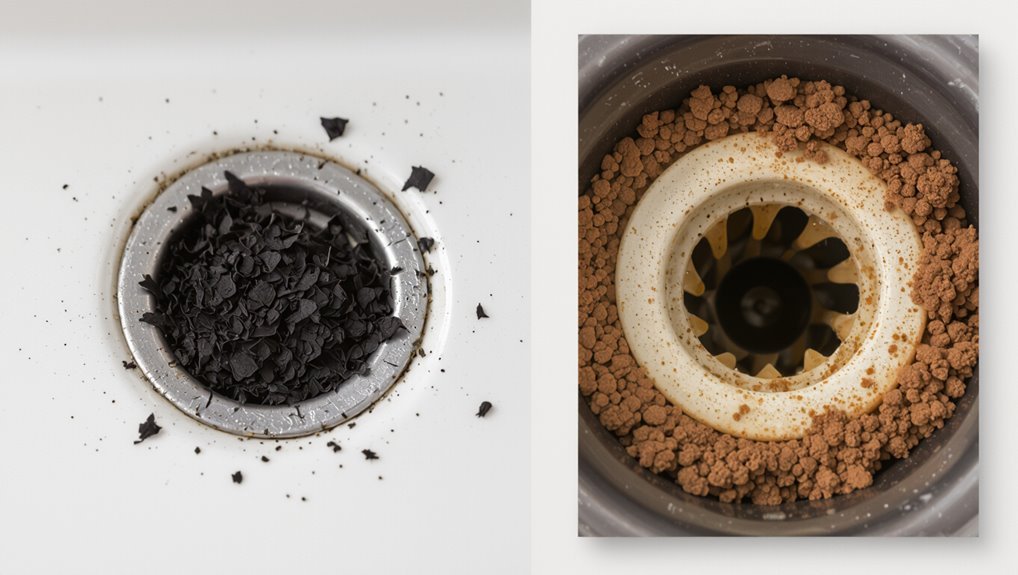
When latex paint dries in your pipes it forms sticky polymer clumps that won’t wash away with normal water flow.
Those solids narrow the passage, restricting water and trapping debris.
Over time the buildup can block traps and pipes entirely, causing slow drains or backups.
Water Flow Restriction
Because latex paint contains polymer binders and fine solid pigments, the water evaporates but the solids stick together and form a dense, tacky residue that narrows pipe passageways.
You’ll notice slower drains, backups, and extra wear on pipes, undermining water conservation and increasing plumbing maintenance needs.
- You’ll see reduced flow during rinses.
- You’ll need frequent snaking.
- You’ll risk costly repairs.
Sticky Polymer Build-Up
Though the water in latex paint evaporates, the polymer binders and pigments stick to pipe walls and harden into a gummy film that traps debris and narrows openings.
You’ll notice sticky residue building over time; it adheres to fittings, reduces flow, and accelerates corrosion.
Regular plumbing maintenance prevents long-term buildup, but letting paint solids go down your drain creates persistent, hard-to-remove deposits that increase repair needs.
Trap And Pipe Blockage
That sticky film doesn’t just slim down flow—it catches and binds dried latex solids into compact masses that quickly form blockages in P-traps and narrower pipe sections.
You’ll face slow drains, backups, and costly repairs if you ignore drain maintenance. Protect plumbing safety by keeping paint out of drains and using proper disposal.
- Slow drains and odors
- Hard, glued clogs
- Corroded fixtures and joints
Risks to Septic Systems From Latex Paint
If you rinse latex paint down a sink connected to a septic system, you can harm the bacteria that break down waste and clog pipes and the drain field.
You’ll disrupt septic health because solvents, pigments, and binders in paint composition can coat solids, kill microbes, and form sticky residues.
That leads to reduced treatment efficiency, faster solids buildup, and costly repairs or system failure.
What Happens to Latex Paint at Treatment Plants
When latex paint enters a municipal wastewater plant, it doesn’t just disappear—you’ll find it treated as a contaminant that must be separated out early in the process.
Plants use treatment processes to remove solids and chemicals to limit environmental impact.
You’ll see steps like:
- Physical separation (settling and skimming)
- Biological treatment adjustments
- Proper sludge handling and disposal
Local Rules and Fines for Disposing Paint
Curious about the consequences of pouring paint down the drain? You’ll need to follow local regulations — fines vary widely and authorities enforce proper disposal methods.
Check municipal websites or call waste hotlines before dumping. Many areas require drying and curbside pickup, drop-off at hazardous waste events, or certified disposal facilities.
Ignoring rules can cost you fines and environmental harm.
When Latex Paint Is Hazardous Versus Not
After checking local rules on paint disposal, you’ll want to know which latex paints are actually hazardous and which aren’t.
You’ll consider ingredients, age, and contamination to judge risks like hazardous components and environmental impact.
- Fresh, water-based latex with no additives is usually low-risk.
- Older or solvent-contaminated cans can be hazardous.
- Paint mixed with heavy metals or mold increases environmental impact.
Simple Tests to Tell If Paint Is Washable
Want to know quickly if a can of latex paint can safely go down the drain? Check simple paint washability indicators: stir; dab a wet paper towel—if it wipes clean, it’s water-soluble.
Smell and inspect latex paint characteristics: low odor, milky consistency, and no separation mean it’s likely washable.
If skin rinses away paint easily, you can usually dispose of small amounts down the sink.
Clean Brushes Without Pouring Paint Down the Sink
Start by wiping excess paint from your brushes onto a rag or newspaper so most of the color never reaches the sink.
Rinse them under running water until the water runs clear, using a brush comb or your fingers to work out trapped paint.
For big jobs, use disposable liners or a bucket to collect rinse water and solidify or dispose of the paint properly instead of pouring it down the drain.
Rinse Properly With Water
When you’re done painting, don’t rinse brushes under a running tap and let paint go down the sink; instead, remove as much paint as you can first by scraping or wiping onto newspaper or back into the can.
Then use a small bucket of water to swish and clean bristles, changing the water and disposing of the rinse water according to local hazardous-waste rules.
- Swish gently to reduce paint dilution.
- Use multiple rinse buckets.
- Note environmental impact and dispose responsibly.
Use Disposable Liners
After you’ve removed excess paint and used rinse buckets, switch to disposable liners to keep cleanup simple and prevent paint from going down the drain.
Line your rinse container or trash can, wipe brushes into the liner, then seal and dispose per local paint disposal rules.
That minimizes environmental impact and avoids clogging plumbing, making responsible paint disposal straightforward and tidy.
Wipe Excess Paint First
Wipe as much paint as you can from the brush or roller before rinsing — use a rag, newspaper, or scrap cardboard to pull paint back into the can or a disposable liner.
You’ll save water, limit clogs, and follow disposal guidelines while using simple paint removal techniques.
- Squeeze excess onto cardboard
- Use disposable liners for trays
- Keep wipes in a sealed bag
Safe Disposal Options for Small Amounts
If you only have a small amount of latex paint to get rid of, you can safely solidify it for regular trash pickup by letting it dry out or mixing in an absorbent so it won’t leak.
Seal dried paint in a sturdy container, label it, and follow local community disposal guidelines.
For eco friendly alternatives, check household hazardous waste events or take-back programs instead of draining paint.
Storing and Reusing Leftover Latex Paint
Keep leftover latex paint fresh by sealing the can tightly, storing it upside down in a cool, dry place, and labeling the color and date.
You can usually reuse paint if it looks smooth and mixes well after stirring, but discard any with a foul odor or mold.
Before reusing, test a small amount on a scrap to confirm color and adhesion.
Proper Storage Techniques
Storing leftover latex paint properly will save you money and time on future touch-ups. Start by consolidating partially used cans into a single, clean container to minimize air exposure and spoilage.
Keep labeled containers sealed, choose appropriate paint container types, and store at an ideal temperature to prolong life.
- Seal lids tightly after use
- Store upright, off concrete
- Keep away from freezing or heat sources
When To Reuse Paint
When you’ve got leftover latex paint, decide quickly whether it’s worth keeping by checking its color, consistency, and smell—fresh paint will blend smoothly, look uniform, and have a neutral or faint odor.
If good, seal cans, label date and color, and store upright.
Use paint repurposing ideas for touch-ups, primer coats, or crafts.
These eco friendly practices save money and reduce waste.
Where to Take Large Amounts Locally
Looking for a place to drop off large quantities of latex paint?
You should take it to your local recycling or hazardous waste facility—never pour down drains.
Check municipal programs, household hazardous waste events, or paint take-back centers for proper disposal.
- Contact city recycling center for guidelines
- Find county hazardous waste collection days
- Use paint retailer take-back or donation programs
Emergency Steps If Paint Is Already in a Drain
If you notice paint going down the drain, stop the water immediately to prevent it from spreading.
Don’t run the tap—use a bucket or shut off the supply so the paint can’t travel farther into pipes.
Scoop or blot out as much wet paint as you can with paper towels or a disposable cloth before it dries.
Stop Water Flow
Should paint already be heading down the drain, act quickly to stop water flow and limit spread; turn off nearby taps, shut off appliances that use water, and avoid running any fixtures until you’ve contained the mess.
For drain safety and proper paint disposal, do these next:
- Block the drain with a rag or stopper.
- Shut off the main water valve if needed.
- Call a plumber for persistent clogs.
Remove Excess Paint
Start by scooping or wiping out as much wet latex paint as you can before it dries and binds to the pipe walls.
Use disposable rags or a putty knife, collect paint into a sealable container, and label it for proper paint disposal.
Don’t flush residues; they harm plumbing and increase environmental impact.
After removal, rinse minimally and trap solids for trash per local guidelines.
Quick Checklist to Avoid Fines and Clogs
1 simple checklist can save you from fines, plumbing headaches, and environmental harm: don’t pour liquid latex or large globs down the drain, scrape and dry leftover paint before disposal, collect rinsate and brush water for proper treatment, and follow local hazardous-waste rules for cans and contaminated materials.
Follow these steps to minimize paint disposal issues and environmental impact:
- Bag dried scraps and lids.
- Store rinsate for proper treatment.
- Check local drop-off rules.
Frequently Asked Questions
Can Latex Paint Affect Fish if Released Into Storm Drains?
Yes — you can harm aquatic life because paint toxicity from latex can stress or kill fish; you shouldn’t release it into storm drains, and you’ll need proper disposal or solidification to prevent environmental damage.
How Long Does Cleaned Paint Smell Linger in a Home?
Like a faint ghost, cleaned paint smell usually lingers 24–72 hours in a home; using cleaning methods like ventilation, activated charcoal, baking soda, and washable surface wipes speeds dissipation, shortening odor duration to under a day.
Are Water-Based Paint Residues Safe for Composting?
No, you shouldn’t add water-based paint residues to compost; while compost benefits soil, paint toxicity risks persist, harming microbes and plants. If small amounts remain, let scraps fully dry and dispose of them with household hazardous waste instead.
Do Paint Pigments Stain Municipal Waterways Long-Term?
Yes — pigments can persist and stain waterways long-term; you should avoid improper paint disposal because the environmental impact includes color contamination, sediment binding, and ecological harm, so follow proper disposal or recycling options.
Can Contractors Be Fined for Improper Paint Cleanup on Job Sites?
Yes — you can be fined for improper cleanup; paint disposal regulations hold contractor responsibilities tightly, and if you dump or rinse paint down drains or storm sewers you’ll face penalties, cleanup orders, and possible legal action.
Conclusion
Don’t pour latex paint down the drain — unless you want your pipes to stage a concrete uprising and your septic to file a formal complaint. Even small amounts can dry into stubborn gunk that clogs lines, harms systems, and could cost you fines. Instead, wipe cans clean, save usable paint, or take leftovers to a disposal site. Be smart: your plumbing isn’t a paint palette, and your future self will thank you.
