
What Gets Latex Paint Out of Clothes Fast?
Act fast: blot up wet latex paint with a clean cloth, scrape off excess gently, then apply liquid detergent or isopropyl alcohol to loosen the stain and rinse with cold water before laundering. For tacky or partially dried spots, soften with rubbing alcohol, scrape carefully, pretreat with detergent, and wash on a safe warm setting. Avoid heat, harsh scrubbing, and bleach. Follow these steps now and you’ll find more tips to fully salvage the garment.
Quick Fix: Remove Fresh Latex Paint Fast
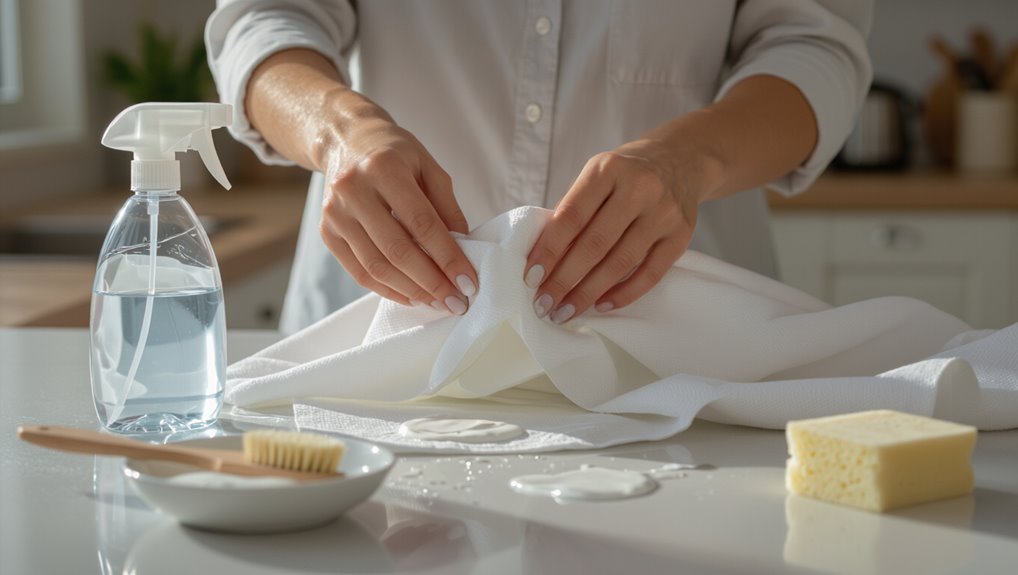
Act fast: if the latex paint is still wet, blot the stain with a clean cloth or paper towel to lift as much as you can without rubbing it deeper into the fabric.
Then scrape excess gently, pre-treat with detergent, and rinse.
Try paint removal techniques like rubbing alcohol or commercial effective solvents on a hidden area first, launder promptly, and repeat if needed.
Why Speed Matters With Latex Paint Stains
When latex paint is still wet it soaks into fibers and bonds with fabric, so the sooner you treat a stain the easier it’s to lift—waiting lets the paint dry, polymerize, and form a tougher film that’s much harder to remove.
Act fast, use appropriate stain removal techniques, and respect latex paint properties.
- Blot excess carefully
- Rinse with cold water
- Apply solvent-safe remover
- Launder promptly
Fresh Vs. Partially Dried Latex Paint: How to Tell
How can you tell if latex paint is fresh or already setting?
Check texture and tack: fresh paint identification shows a wet sheen and transfers when you blot gently; partially dried paint feels tacky, mattes out, and resists transfer.
Smell and drying time help: fresh still smells stronger and wipes away easier, while dried paint detection includes cracking, firmness, and little to no residue on a cloth.
What Supplies to Have on Hand for Latex Paint Spills
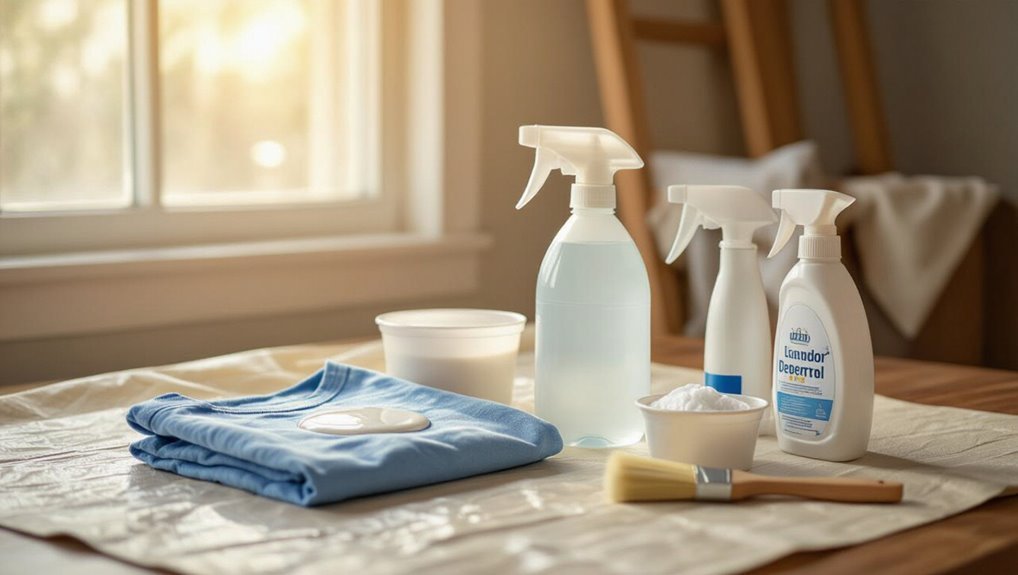
Keep a basic cleaning kit handy—paper towels, mild detergent, a soft brush, and a small bowl of warm water—to tackle fresh spills quickly.
Add a couple of emergency stain removers (latex-specific or a safe solvent like rubbing alcohol) for partially dried spots.
With those supplies ready, you’ll save time and prevent stains from setting.
Basic Cleaning Kit
Anyone can be ready for a latex paint spill with a compact cleaning kit you keep handy—assemble a few targeted items so you can act fast:
- Clean rags and paper towels for blotting and initial cleanup.
- Mild liquid detergent and a soft brush for working out fresh spots.
- A spray bottle of water for dilution and rinsing.
- Disposable gloves and zip bags for containment and stain prevention.
Emergency Stain Removers
Have a small stash of targeted removers so you can tackle fresh latex paint before it sets: a gentle enzyme or color-safe stain remover, rubbing alcohol or denatured alcohol for water-based paints, a paste of baking soda for gentle abrasion, and a commercial latex paint remover for stubborn dried spots—plus disposable applicators and plastic to protect surfaces.
Keep wipes, a spray bottle, gloves, and instructions for emergency techniques and quick solutions.
Supplies to Avoid That Make Latex Paint Stains Worse
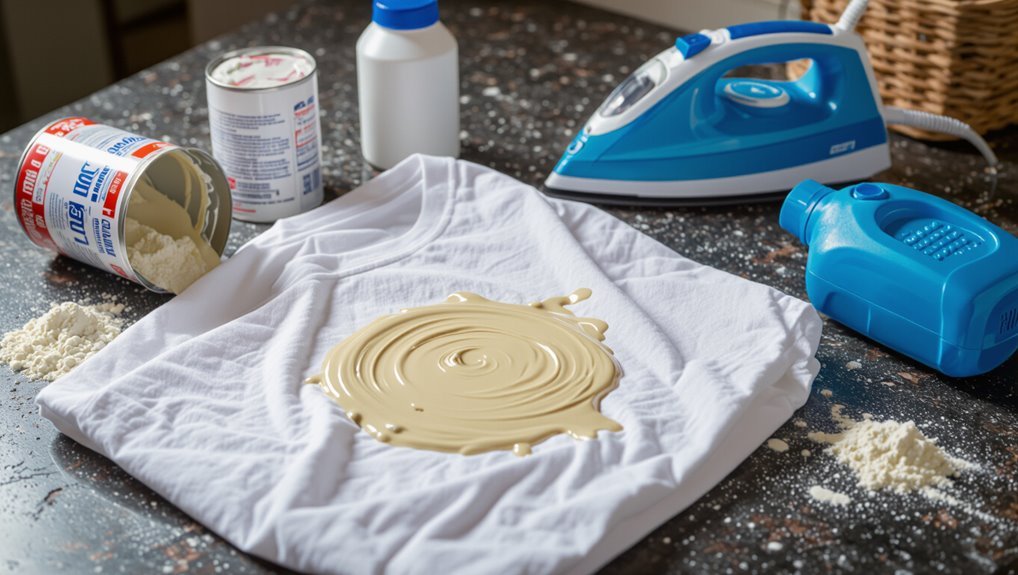
While you want to act fast on a wet latex spot, some common supplies actually make stains set or spread, so don’t reach for them.
- Bleach — it can set pigments and ruin fibers, a common fabric mistakes pitfall.
- Heat (hot dryer/iron) — fixes paint permanently.
- Solvent pails (improper solvents) — harsh ones stain or dissolve dyes.
- Scrubbing brush — spreads stain, thwarts paint removal techniques.
Immediate Steps to Take After a Paint Spill
If you spill latex paint, act fast and blot up as much as you can with a clean cloth to keep the stain from spreading.
Once the excess is lifted, use a suitable solvent like water (for fresh paint) or a recommended remover for dried spots to loosen what’s left.
Work from the outside toward the center so you don’t push paint further into the fabric.
Act Quickly And Blot
The first thing you should do is act fast: blot up as much wet latex paint as you can with plain paper towels or a clean cloth, working from the outside of the stain inward to prevent spreading.
Use paint removal techniques and quick absorption methods to lift pigment without rubbing.
- Blot, don’t scrub.
- Replace towels often.
- Tilt fabric to drain.
- Air-dry briefly.
Remove Excess With Solvent
Once you’ve blotted away as much as possible, reach for a solvent—water for fresh latex or rubbing alcohol/acetone for stubborn areas—and test it on an inconspicuous spot first.
Use appropriate solvent types, apply gently with a clean cloth, and scrape dried blobs with a dull knife.
Work from edges inward, launder after treating, and repeat effective techniques until the stain lifts.
How to Blot and Scrape Without Spreading Paint
Act quickly and resist rubbing — blotting and gentle scraping remove excess latex without pushing it deeper into the fabric.
Use paper towels to lift wet spots, card-edge scraping for thicker blobs, and work from the garment’s outer edge inward to contain spread.
Combine basic blotting techniques with careful scraping methods to minimize transfer before you treat the stain.
- Blot with absorbent towel
- Scrape with a dull card
- Work outward to center
- Replace towels as needed
Rinse Technique: Using Cold Water to Lift Fresh Latex Paint
Start by holding the stained area under cold running water so the flow pushes paint out of the fibers rather than further in; keep the fabric taut and let the water run from the back of the stain to the front to lift fresh latex effectively.
Use steady rinsing techniques, gently agitating the fabric with your fingers to encourage paint removal, and repeat until no more color rinses out.
How Dish Soap Breaks Down Water‑Based (Latex) Paint
When you use dish soap on a fresh latex stain, the surfactants latch onto the paint’s water‑based emulsion and start to pull it apart.
Those surfactant molecules have a water‑loving end and an oil‑loving end, so they surround tiny paint particles and lift them away from fabric fibers.
That lets you rinse the broken emulsion off instead of rubbing the paint deeper into the cloth.
How Soap Breaks Emulsions
Because latex paint is an emulsion of tiny polymer and pigment particles suspended in water, dish soap works by disrupting the surface tension that keeps those particles apart and letting the water carry them away.
You’ll see reduced emulsion stability and quick soap effectiveness when you rinse and agitate.
Steps you’ll follow:
- Wet fabric.
- Apply soap.
- Scrub gently.
- Rinse thoroughly.
Surfactant Action On Paint
Think of dish soap as a molecular wedge that slips between water and the polymer‑pigment particles in latex paint, loosening their grip so the water can carry them away.
You use its surfactant properties to break the paint emulsion, surround tiny droplets, and lift pigment from fibers.
You agitate, rinse, and repeat until residues disperse, preventing re‑deposition and restoring fabric.
Laundry Prewash: Treating Latex Paint Before Washing
Start by scraping or blotting off as much wet paint as you can—quick action keeps the stain from setting and makes the rest of the prewash steps more effective.
Then follow targeted paint removal techniques, checking fabric compatibility first. Treat with mild detergent or stain remover, gently agitate, rinse, and launder promptly.
- Scrape/blot
- Test fabric
- Pretreat
- Rinse & wash
When to Use Isopropyl Alcohol on Latex Paint
If the spot is still tacky, you can blot and gently rub with isopropyl alcohol to lift fresh latex paint before it sets.
For paint that’s fully dried, alcohol can soften and break down the residue but may require more soaking and scraping.
Always test the alcohol on a hidden seam first to make sure it won’t damage the fabric.
Fresh Paint Spots
When you catch latex paint while it’s still fresh, acting quickly gives you the best chance of removal. Isopropyl alcohol can be a useful tool for small water-based spots.
You should blot, test alcohol on a seam, dab gently, and launder promptly to aid fresh paint stain prevention.
- Blot excess
- Spot-test alcohol
- Dab, don’t rub
- Wash promptly
Dried Paint Residue
Although dried latex is tougher to remove, you can still use isopropyl alcohol selectively to soften and lift small, crusted spots.
Test on an inconspicuous area for fabric compatibility, then dab alcohol with a cotton swab until paint softens.
Scrape gently, blot with detergent, and launder.
Use targeted dried paint techniques to avoid spreading or damaging fibers; repeat if needed.
How Vinegar Helps Loosen Partially Dried Latex Paint
Vinegar loosens partially dried latex paint by breaking down the paint’s water-based film and softening its binders, so you can more easily lift or rub the residue away.
Vinegar breaks down partially dried latex paint, softening the film and binders so residue lifts away easily.
Dilute white vinegar is best because its acetic acid penetrates the paint without harming most fabrics. You’ll use vinegar properties to reduce paint adhesion so stains release.
- Blot excess.
- Apply diluted vinegar.
- Wait 10 minutes.
- Scrub gently.
Use Hand Sanitizer or Alcohol Wipes for Tiny Latex Spots
If you catch a tiny latex spot right away, blot the area to remove excess before it sets.
Apply an alcohol-based hand sanitizer or an alcohol wipe to break down the paint, then rinse and blot; you may need to repeat until the stain lightens.
Work quickly and avoid rubbing, which can spread the paint.
Act Quickly, Blot
Move fast and dab—fresh latex paint is far easier to remove than dried. You’ll use a gentle blotting technique to lift spots, avoiding rubbing that increases paint absorption.
Reach for a clean cloth, work outward, and switch fabric layers as needed.
- Blot gently
- Work outward
- Replace cloth surface
- Stop if spreading
Use Alcohol-Based Gel
Reach for an alcohol-based gel or a single alcohol wipe to soften tiny latex spots before they set—press it onto the stain, let it sit a few seconds, then blot gently with a clean cloth.
Choose a product with high alcohol concentration and a smooth gel consistency so it penetrates without spreading.
Test an inconspicuous area first to avoid fabric damage.
Rinse And Repeat
Dab a bit of hand sanitizer or an alcohol wipe onto the tiny latex spot, let it sit for a few seconds to loosen the paint, then blot with a clean cloth; repeat the process until the stain lifts.
- Work outward from the stain.
- Use light pressure.
- Rinse techniques between attempts.
- Repeat process until gone, then launder.
Paint‑Thinner Alternatives for Small Dried Latex Areas
When you’re dealing with a small patch of dried latex, you don’t always need heavy paint thinner—several household alternatives can soften and lift the film without harsh fumes. Use safe alternatives like rubbing alcohol or vinegar as eco friendly solutions and DIY removers suitable for various fabric types. Quick cleaning hacks aid stain prevention; test first on hidden areas.
| Item | Use |
|---|---|
| Rubbing alcohol | Softens paint |
| White vinegar | Loosens film |
| Dish soap | Lift residue |
Safely Using Commercial Fabric Paint Removers
Before you open a bottle of fabric paint remover, read the label and test it on an inconspicuous seam or hem — you’ll confirm compatibility with the fabric and avoid color loss or shrinkage.
Before opening fabric paint remover, read the label and patch-test on a seam to prevent color loss or shrinkage.
Use commercial removers cautiously, prioritize fabric safety, follow application techniques, and focus on stain prevention. Product recommendations and effectiveness comparison guide choices.
- Read label
- Patch test
- Follow directions
- Rinse promptly
Test Solvents on a Hidden Fabric Area First
One more safety check you should do is test any solvent on a hidden seam, hem, or inside panel before applying it to the stain.
You’ll perform fabric testing to check colorfastness and fiber reaction. Dab a small amount, wait a few minutes, then blot.
If the dye or texture changes in the hidden area, don’t use that solvent on the visible stain.
Mechanical Removal: Scraping, Brushing, and Brushing Tips
If the paint’s still wet, you’ll want to scrape off as much as you can with a dull knife or a plastic scraper to avoid pushing it deeper into the fibers.
For dried stains, use a stiff brush to loosen and lift the paint before treating with a solvent or detergent. Work gently and test a small area so you don’t damage the fabric.
Scraping Fresh Paint
Grab a dull knife or a plastic scraper and gently lift the fresh latex paint from the fabric, working from the outside of the stain toward the center to avoid spreading it.
Use paint removal techniques and effective scraping methods; pause often to check progress and avoid damage.
- Scrape gently
- Shift fabric, not stain
- Blot residue with damp cloth
- Rinse promptly
Brushing Dried Stains
When dried latex paint has set into fabric, use a stiff-bristled brush to loosen and lift flakes before applying solvents; work in short, controlled strokes and brush away from the center to prevent grinding pigment deeper into the weave.
After loosening, tap out debris and apply targeted stain removal solvent, then repeat brushing techniques gently until residue lifts, rinsing and laundering promptly.
How to Soak Garments for Stubborn Latex Paint Stains
Start by filling a basin or sink with warm water and a mild detergent or stain remover. Then submerge the stained area so the fabric can soak thoroughly; this loosens dried latex paint and makes it easier to lift without aggressive scrubbing.
Use these soaking techniques for effective stain removal:
- Agitate gently every 15 minutes.
- Soak 30–60 minutes for fresh stains.
- Overnight for stubborn spots.
- Rinse, then assess before drying.
Laundry Pre‑Treater Vs. Homemade Paste for Latex Paint
You’ll find commercial laundry pre‑treaters are fast and formulated to break down latex without extra mixing, which is handy for quick spot treatment.
A homemade paste—like baking soda or dish soap mixed with water—can be effective on fresh stains and is cheaper, but it usually takes more scrubbing and patience.
Compare results on a hidden seam to see which option lifts the paint without harming the fabric.
Laundry Pre‑Treater Benefits
Although a homemade paste can work in a pinch, a commercial laundry pre‑treater often saves you time and reduces risk by using proven stain‑lifting enzymes and surfactants formulated specifically for paint.
This means you’re more likely to remove latex from fabric without scrubbing endlessly or damaging the fibers.
You’ll benefit from laundry science and stain chemistry knowledge in ready‑made formulas.
- Faster penetration
- Fiber‑safe action
- Consistent results
- Less elbow‑grease
Homemade Paste Effectiveness
When you mix common kitchen ingredients like baking soda, dish soap, or vinegar into a paste, it can lift fresh latex spots reasonably well for small, recent stains.
However, it won’t match a commercial pre‑treater’s enzyme and surfactant blend for tougher or set‑in paint.
You can use a homemade paste for quick stain removal, but expect limited power and repeat treatments.
Best Fabrics for DIY Latex Paint Removal
Certain fabrics make removing latex paint much easier than others, so pick garments with smooth, non-porous weaves like polyester, nylon, or tightly woven cotton whenever possible.
You’ll find these fabric types resist deep absorption, aiding stain prevention and quicker cleanup.
Follow this quick guide:
- Polyester — slick surface, easy blotting.
- Nylon — resists soaking, rinses well.
- Tightly woven cotton — workable if treated fast.
- Canvas — durable; scrape then wash.
How to Treat Delicate Fabrics (Silk, Wool, Cashmere)
Delicate fabrics like silk, wool, and cashmere need gentler handling, so act fast and avoid harsh scrubbing or strong solvents that can shrink, felt, or discolor the fibers.
Blot excess paint, gently scrape dried bits, then test a mild dish soap solution on an inconspicuous spot.
For silk care, dab; for wool treatment, use cool water and blotting.
When unsure, consult a professional cleaner.
Removing Latex Paint From Denim, Cotton, and Canvas
Start by blotting or gently scraping off as much wet paint as you can, then work quickly—denim, cotton, and canvas are more forgiving than delicate fibers but still absorb latex fast.
- Rinse cold, use denim tips: lift, don’t rub.
- Pretreat with dish soap for cotton techniques.
- Use a soft brush for canvas care.
- Note paint characteristics and test cleaners on a hidden spot for your fabric types.
Treating Breathable Synthetics (Polyester, Nylon)
If you get latex paint on breathable synthetics like polyester or nylon, act quickly to prevent it from setting.
Gently blot away excess, then use a mild solvent or rubbing alcohol on a hidden spot before treating the stain.
Finish by washing with your usual detergent on the warmest safe setting.
Act Quickly, Blot
Act fast and blot the paint with a clean, dry cloth or paper towel—don’t rub, because that pushes the latex deeper into the fibers.
You’ll limit paint absorption using careful blot techniques and quick action on polyester or nylon.
- Lift excess gently.
- Blot outward from edges.
- Replace cloth as it soils.
- Air-dry before further treatment.
Use Mild Solvent
When you’re dealing with breathable synthetics like polyester or nylon, a mild solvent can break down latex without harming the fibers—test it first on an inconspicuous seam, then apply sparingly with a cotton swab, working from the stain’s edge inward. Use recommended solvent types and careful application techniques to avoid damage.
| Solvent | Strength | Note |
|---|---|---|
| Rubbing alcohol | Mild | Spot-test |
| Acetone-free remover | Mild | Use sparingly |
| Commercial latex remover | Moderate | Follow label instructions |
Wash With Detergent
Start by rinsing any loosened paint under cold running water to flush out residue. Then pre-treat the spot with a liquid laundry detergent by gently working it into the fibers with your fingers or a soft brush.
Use detergent effectiveness and proper washing techniques to protect polyester or nylon.
- Blot excess.
- Pre-soak briefly.
- Machine wash cold.
- Air-dry and repeat if needed.
Saving Painted Upholstery and Removable Covers
If the paint landed on removable covers or upholstery, don’t panic—you often can save the fabric with prompt, targeted action.
Blot excess, scrape dried flecks gently, then treat with a damp cloth and mild detergent. For upholstery care and fabric protection, test cleaners in an inconspicuous spot.
Remove covers for machine washing if labeled; for fixed upholstery, repeat spot-treating and consider professional cleaning if stains persist.
Handling Paint on Washable Vs. Non‑Washable Garments
Although the basic steps are similar, you’ll treat washable and non‑washable garments differently to avoid damage:
- For washable garments, scrape excess paint, pretreat with detergent, and blot—don’t rub.
- For non washable fabrics, test solvent on a hidden seam first.
- Use gentle solvents on delicates and rinse thoroughly.
- When in doubt, consult care labels and consider professional cleaning.
Machine Wash Tips After Latex Paint Stain Treatment
Now that you’ve pretreated the stain and tested solvents on delicate or non‑washable items, you can move on to laundering.
Use cold water and a heavy‑duty cycle for best machine wash techniques; add a stain‑removing laundry detergent and avoid fabric softener.
Turn garments inside out, check stains before drying, and repeat pretreatment if needed to protect fabric care and prevent setting.
How to Avoid Heat‑Setting Latex Paint in the Dryer
Because heat permanently bonds latex paint to fibers, don’t toss stained clothes into the dryer until the spot’s completely gone; check the garment after washing and air‑dry or lay flat if any residue remains.
Don’t dry clothes with latex paint stains — heat sets them. Wash first, then air‑dry until all residue is gone.
- Use low or no heat; review dryer settings and avoid high heat settings.
- Inspect stains before drying.
- Employ dryer precautions like tumble without heat to fluff fabric.
- If unsure, air‑dry until stain is fully removed.
When to Repeat Treatments : And When to Stop
If the stain fades noticeably after a treatment, repeat the same method once or twice more before moving on; but if you see no improvement after two attempts, switch tactics to a stronger solvent or consult a professional cleaner.
Track treatment frequency and perform a careful stain assessment between tries. Stop when diminishing returns appear or fabric weakens, then choose a different approach or seek expert help.
Emergency Fixes When You’re Away From Home
If you get a latex paint splash while you’re out, rinse the spot with cold water right away to stop it from setting.
If water won’t cut it, dab a bit of rubbing alcohol on the stain to break up the paint—test a hidden seam first.
Blot, don’t rub, and head home for a proper treatment as soon as you can.
Quick Cold Water Rinse
When you notice a fresh latex paint spill and you’re not near home, act fast: run cold water through the stained fabric, keeping the stain under steady pressure to flush out as much paint as possible.
Use cold water benefits and simple rinse techniques to prevent setting.
Then:
- Hold fabric under faucet.
- Work water through fibers.
- Blot excess gently.
- Repeat until lighter.
Rubbing Alcohol Spotreatment
1 quick trick you can use on the go is rubbing alcohol; it breaks down fresh latex paint so you can blot it away before it sets.
Dampen a clean cloth with rubbing alcohol, test a discreet seam, then gently blot from edges inward.
Repeat with fresh cloth until paint lifts. This spot treatment works fast—follow with soap and water when you get home.
How to Handle Fully Dried, Cracked Latex Paint Stains
Though dried, cracked latex looks stubborn, you can usually lift it from fabric with the right tools and a bit of patience.
- Scrape gently with a plastic scraper to remove flakes without damaging fabric types.
- Pre-soak stained area in warm, soapy water to loosen residue.
- Apply a solvent like rubbing alcohol for spot removal, testing hidden seam.
- Launder promptly using stain removal detergent and air-dry to check success.
When to Seek Professional Laundering or Dry Cleaning
If scraping, soaking, and spot-treating don’t restore the garment, you should consider professional laundering or dry cleaning to avoid permanent damage.
Take delicate fabrics, high-value items, or pieces with stubborn stains to a cleaner.
Explain laundry concerns, describe the paint type and treatments you tried, and ask for professional help options and expected outcomes so they can choose appropriate solvents and processes.
When Replacement Is Cheaper Than Restoration
When the cost, time, or risk of restoring a stained garment outweighs its value, replacing it is the smarter choice. You should use replacement strategies based on quick cost analysis, sentimental value, and urgency.
Consider practical factors and act decisively.
- Compare repair vs. replace costs.
- Prioritize essentials and workwear.
- Factor time and cleaning risk.
- Buy budget-friendly replacements.
Preventive Habits to Keep Latex Paint Off Your Clothes
A few simple habits can dramatically reduce the chances of latex paint landing on your clothes: wear preventive gear, follow safe painting techniques, choose appropriate fabric choices for casual wear, and set clear clothing policies before projects.
Maintain workspace organization, consider paint alternatives for messy jobs, practice stain prevention by immediate cleanup routines, and train helpers to minimize splatters and accidental contact.
Best Protective Clothing Choices for Painting
Because splatters and drips happen, pick clothing that you don’t mind ruining and that gives full coverage—think long sleeves, full-length pants, and closed-toe shoes made from durable, washable materials.
Because splatters happen, wear durable, washable long sleeves, full-length pants, and closed-toe shoes you don’t mind ruining.
You’ll want protective gear like paint smocks, coveralls options, disposable aprons, safety goggles, and paint gloves.
- Cotton coveralls
- Reusable paint smocks
- Disposable aprons
- Rubber-soled closed shoes
Quick Checklist to Follow After a Paint Spill
1 thing to do right away: act fast and stay calm—your chances of removing latex paint go way up if you tackle the spill immediately. Use these quick steps focused on paint spill prevention and proven cleaning techniques to limit damage.
| Step | Action | Timeframe |
|---|---|---|
| 1 | Blot excess | Immediate |
| 2 | Rinse cold | Within minutes |
| 3 | Apply soap | 5–10 min |
| 4 | Scrub gently | 10–20 min |
| 5 | Launder | After treatment |
Common Mistakes That Permanently Set Latex Paint Stains
If you let paint dry, scrub with hot water, or toss the garment into the dryer before treating the stain, you’ll likely make the mark permanent.
You cause stain setting, paint absorption, and fabric damage by acting too late or using improper washing and heat exposure. Avoid time delay and cleaning misconceptions.
- Blot—don’t rub.
- Rinse cold.
- Pretreat promptly.
- Skip dryer.
Frequently Asked Questions
Can Latex Paint Transfer From Clothes to Skin or Furniture After Treatment?
Yes — treated clothes can still cause paint transfer to skin or furniture if cleanup’s incomplete. You’ll reduce risk by removing residue promptly, washing thoroughly, and checking skin safety; use gloves and avoid rubbing treated areas.
Will Paint-Removal Chemicals Affect Garment Colorfastness?
Yes — like a cautious gardener pruning a prized rose, you’ll risk bloom loss if you’re heavy-handed; paint removal can fade dyes, so test hidden seams, use gentle fabric care methods, and follow garment labels to protect colorfastness.
Can Bleach Safely Remove Latex Paint From White Fabrics?
Yes — you can use diluted bleach on white fabrics cautiously, but it can weaken fibers and affect fabric care; try bleach alternatives first (oxygen-based cleaners), test a hidden area, and avoid prolonged soaking or hot water.
How Long Should I Wait Before Dry-Cleaning a Paint-Stained Item?
You’ll want to wait until paint drying times suggest the stain hasn’t set — usually 24–48 hours — but don’t wait forever; take it to dry-cleaning within two weeks to avoid permanent stain setting, preferably sooner.
Are Heat Treatments Ever Recommended to Remove Latex Paint Stains?
Generally, you shouldn’t use heat application on latex paint stains because it can set the paint; you should avoid heat until stain lifting with cold water, soap, or solvent fails, then consult a dry cleaner for professional advice.
Conclusion
You can still save your favorite shirt — act fast. Picture warm water loosening paint like morning dew and a sponge gently coaxing it away, then the soap cutting through residue until the fabric breathes again. Blot, rinse, repeat; avoid scrubbing hard or tossing it in the dryer. With the right supplies and calm, steady moves, that small streak turns into nothing more than a memory, and you’re back to wearing what you love.
