
How to Remove Dried Paint From Leather Boots Fast
Act fast: scrape loose flakes gently with a plastic scraper or your fingernail, then soften remaining dried paint with a few drops of a leather-safe solvent or warm soapy water for water-based paint; blot, don’t rub. Test any product on an inconspicuous spot first. Use a soft brush for stubborn bits, clean residue with saddle soap, then condition and buff to restore suppleness. Follow the next steps for tips on tough stains, touch-ups, and long-term protection.
Quick Fix: Try This First to Lift Dried Paint From Leather Boots
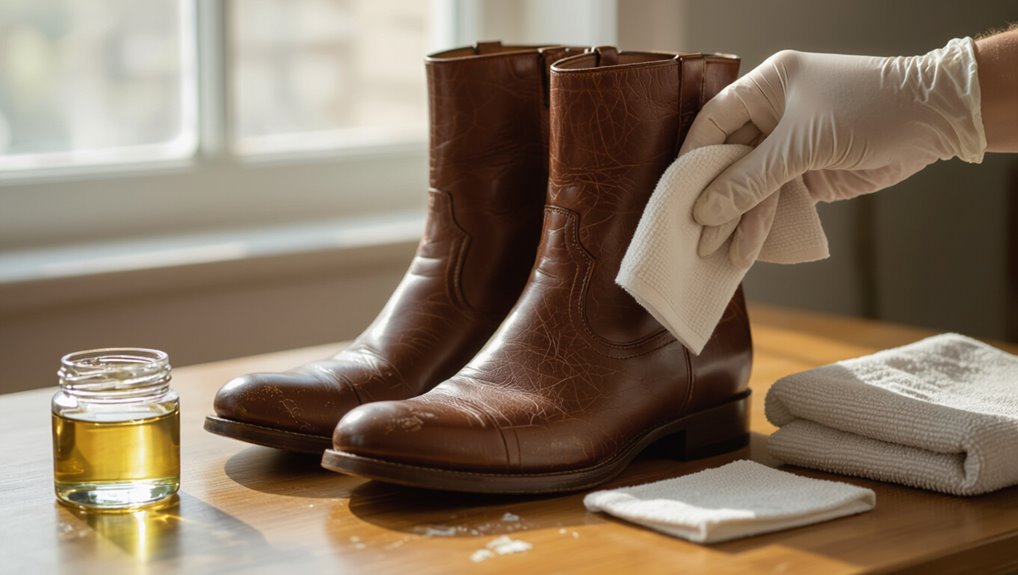
If the paint spot is small and just sitting on the surface, start with a gentle, low-risk approach: dab a soft cloth dampened with warm soapy water and rub lightly to see if the paint lifts.
If it stays, try a cotton swab with a tiny amount of leather-safe cleaner.
These emergency solutions buy time while preventive measures—covering boots during projects—help avoid repeats.
Assess the Paint Type and Your Boot’s Leather Finish
First, figure out what kind of paint you’re dealing with—water-based, acrylic, or oil-based—since each reacts differently to cleaners.
Next, check whether your boots have a smooth, aniline, or protective finished leather, because that affects how aggressive you can be.
Before using any product, test it on a hidden spot to make sure it won’t stain or strip the finish.
Identify Paint Type
Wondering whether that paint will come off? Look at paint characteristics: water-based (softens with water), acrylic (flexible film), oil/enamel (hard, solvent-resistant), or latex.
Tap a discreet spot with a solvent-safe cloth to test the reaction. Identifying the type guides the choice of removal techniques and prevents damage.
Don’t assume; testing first saves your boots from ineffective or harmful cleaning attempts.
Check Leather Finish
Before you start any paint removal, check what finish your boots have so you pick a method that won’t ruin them.
Inspect whether leather is aniline, semi-aniline, pigmented, or coated—those finish types react differently.
You’ll tailor leather care accordingly: gentler cleaners and minimal abrasion for aniline, stronger options for pigmented or coated.
Knowing the finish prevents damage and guides safe paint removal.
Test Inconspicuous Area
Now that you know your boot’s finish, pick a hidden spot—inside the tongue, heel edge, or under a welt—and test there to see how the leather reacts and what kind of paint you’re dealing with.
Use gentle test methods: dab solvent on a cotton swab, try mild soap, then a small scraper.
Note results and adjust application techniques accordingly before treating visible areas.
Test Treatments Safely on an Invisible Spot
Before you apply any cleaner, pick a hidden area like the inside cuff or heel so the test won’t be visible if it alters the leather.
Try a tiny amount of your chosen solvent or cleaner and rub gently with a soft cloth.
Wait a few minutes to check for color change, staining, or finish loss before treating the rest of the boot.
Pick Hidden Area
Choose a small, inconspicuous spot—like the inside heel, tongue edge, or under the sole lip—and try your chosen cleaner there first.
You’ll check for color change, finish damage, or stiffness. Use hidden spots to limit visible risk, and note results before proceeding.
This cautious step protects overall leather care, helping you pick the safest method for the rest of the boot.
Perform Small Patch Test
Although you’ve already picked a hidden spot, perform a small patch test with each cleaner or solvent you plan to use so you can spot any adverse reaction before treating the whole boot. You’ll confirm colorfastness, finish integrity, and odor impact. Patch testing protects leather care and prevents costly damage. Test, wait, inspect, then proceed only if safe.
| Cleaner | Wait Time | Result |
|---|---|---|
| Water | 10 min | OK/Fail |
| Alcohol | 15 min | OK/Fail |
| Solvent | 20 min | OK/Fail |
| Conditioner | 30 min | OK/Fail |
Gather Tools & Supplies for Leather Boot Paint Removal
Start by laying out the essentials you’ll need so the job goes smoothly: a soft cloth, a soft-bristled brush, a mild leather cleaner or saddle soap, a small amount of isopropyl alcohol or rubbing alcohol (for stubborn spots), cotton swabs, a plastic scraper or old credit card, leather conditioner, and clean water.
Collect these essential tools and prep stations for safe, targeted cleaning methods.
Mechanically Remove Dried Paint From Leather Boots
Before you start scraping, check the leather for cracks, finish type, and colorfastness so you don’t cause damage.
Use a plastic scraper or your fingernail to gently lift loose paint, working from the edges toward the center.
Finish by brushing with a soft-bristled brush to remove flakes without abrading the surface.
Assess Leather Condition
First, check the boot thoroughly for cracks, loose stitching, deep scuffs, or areas where the finish has worn through, since these defects affect how aggressively you can work and what tools or products you should use.
Then evaluate:
- Surface finish condition
- Structural integrity
- Stain penetration depth
- Areas needing leather care or paint prevention treatment
Decide if professional repair is required before proceeding.
Use Gentle Scraping
With the boot’s condition assessed and any fragile areas noted, you’re ready to remove loose paint mechanically using gentle scraping. Use gentle tools like a plastic scraper, dental pick, or wooden stick and apply controlled pressure. Focus on edge lifting, avoid gouging, and test often.
| Tool | Use | Pressure |
|---|---|---|
| Plastic scraper | Edge lifting | Low |
| Wooden stick | Creases | Low |
| Dental pick | Detail | Very low |
| Craft knife | Stubborn | Cautious |
Employ Soft Brushing
Grab a soft-bristled brush and start loosening flaky paint from the leather’s surface, working in short, gentle strokes so you don’t abrade the hide.
Use a soft bristle brush and apply gentle pressure, then:
- Brush along grain lines.
- Remove loosened flakes with a cloth.
- Repeat lightly until paint lifts.
- Condition leather after brushing.
Solvent Options by Paint Type (Acrylic, Latex, Oil)
Because different paint chemistries react to different solvents, you’ll choose cleaners based on whether the dried paint is acrylic, latex, or oil-based; each requires a specific approach to soften and lift it without harming the leather.
For acrylic, try isopropyl alcohol for solvent effectiveness and paint compatibility.
For latex, warm soapy water first, then rubbing alcohol.
For oil, use mineral spirits sparingly, testing first.
When to Use Leather-Safe Cleaners vs. Paint Removers
After you identify the paint type and test a small spot, decide whether a leather-safe cleaner will do or if you need a stronger paint remover.
Consider leather properties and cleaner ingredients before proceeding.
Use rules:
- Try gentle cleaner first.
- Watch for color change.
- Escalate to remover for stubborn oil or enamel.
- Condition leather after cleaning.
How to Handle Stubborn Stains and Spot-Repair Scuffs
When a small spot-clean didn’t budge or paint soaked into grain, don’t panic—you can tackle stubborn stains and scuffed areas with targeted techniques that protect the leather.
Work from edges inward, soften paint with a leather-safe solvent, gently lift with a soft cloth or plastic scraper, repeat spot repairs as needed, and stop if color or texture changes—seek professional help for deep damage.
Condition and Restore Leather After Paint Removal
Once you’ve removed as much paint as possible without harming the leather, it’s time to restore moisture, suppleness, and finish.
Use gentle leather conditioning and proven restoration techniques to revive boots.
Steps:
- Clean residue with saddle soap.
- Apply conditioner sparingly.
- Massage into seams and creases.
- Buff and let dry naturally.
Wear only after full absorption.
Prevent Paint Mishaps and Quick Touch-Up Tips
To avoid future headaches, prep before you paint: cover your boots with plastic bags or painter’s tape, work in a well-lit area, and keep a damp cloth nearby for immediate blots.
Adopt preventive measures like removing laces and placing newspaper around work.
If paint lands on leather, act fast: blot, soften with mild solvent, and use precise touch up techniques—small brushes, matching dye, and thin layers.
Frequently Asked Questions
Can Dried Paint Transfer to Suede Boots?
Yes — dried paint can transfer to suede boots, especially oil- or acrylic-based paint. You’ll need careful suede care to lift stains without damage, testing removers first and gently using appropriate brushes or specialist cleaners.
Will Heat (Hairdryer) Help Remove Paint From Leather?
Yes — heat application can soften dried paint so you can gently lift it, but you’ll want to use low heat and a cloth, test a hidden spot first, and follow leather care to avoid cracking or discoloration.
Can I Use Nail Polish Remover on Dyed Leather?
You shouldn’t—think of it like Icarus flirting with fire; nail polish remover can strip dye and finish. It’ll affect color and texture, so test discreetly and prioritize gentle leather care products instead to avoid damage.
Does Paint Removal Affect Waterproofing Treatments?
Yes — aggressive solvents and some paint types can strip waterproofing, so you’ll avoid damage by testing first, choosing gentler removers, and reapplying appropriate leather care products to restore water resistance after paint removal.
How Long After Removal Can I Wear the Boots?
You can usually wear them after 24–48 hours once cleaned and fully dry; follow a gradual wearing schedule, test waterproofing, and continue regular boot care to restore finish and maintain protection before heavy use.
Conclusion
Start with patience and care, test in secret, and lift what you can with gentle tools; match cleaners to paint type, scrape stubborn spots carefully, and touch up scuffs as needed. Condition the leather, restore the finish, and let it dry fully. Prevent future mishaps with protective covers, prompt cleanups, and quick spot treatments. Act calmly, act deliberately, and act quickly—protecting your boots, preserving their look, and keeping them ready for wear.
