
What Paint Dries Fast? Best Fast-Drying Paint Types
You’ll get the quickest, reliable results with water-based acrylics or fast-cure alkyds; acrylics dry to the touch in 30–60 minutes and work great on walls, trim, and furniture, while quick-cure alkyds give tougher finishes for doors and trim with faster hardening than traditional oils. Latex options are affordable and fast for broad surfaces, and spray enamels speed metal touch-ups. Follow temp, humidity, and prep guidance for best outcomes, and keep going to learn specifics.
Fastest Paints: Quick Answer and Picks
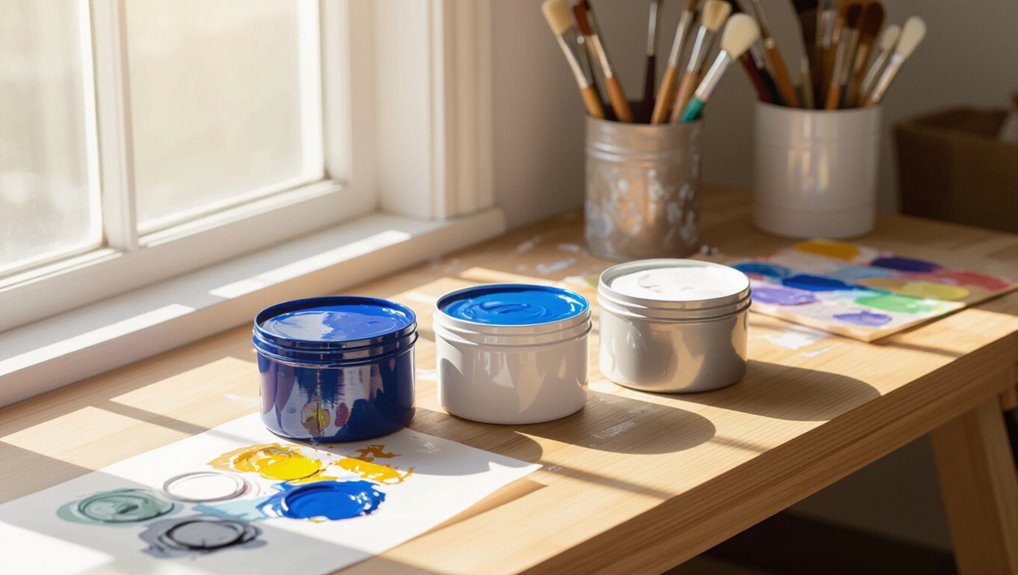
Looking for the fastest-drying paints? You’ll prefer acrylics and alkyds for rapid turnaround; they suit trim, furniture, and light-bodied projects.
Use fast drying techniques like thin coats, proper thinning, and warm, ventilated spaces to speed cure.
For best results, control paint application—smooth, even strokes and minimal load on the brush—so layers dry quickly and adhesion stays strong.
How Paint Dries: Basics and Terms
Paint dries through physical and chemical changes you can watch and influence: solvents evaporate, binders cure or oxidize, and pigments lock into a stable film.
You’ll learn paint chemistry basics like solvent vs. waterborne systems, binder types, and additives.
Drying mechanisms include evaporation, coalescence, and chemical curing. Knowing these terms helps you pick fast-drying formulas and plan recoat times accurately.
Temperature’s Effect on Drying Time
You’ll notice temperature strongly shapes how fast paint dries, so you’ll want to plan for cold weather challenges that can slow curing or cause poor film formation.
Hot, humid conditions speed surface drying but can trap solvents and extend full cure times, so you’ll need to adjust ventilation and application thickness.
Aim for the paint’s recommended ideal drying temperature range to get the quickest reliable results.
Cold Weather Challenges
Because cold slows the chemical reactions that evaporate solvents and cure binders, paint takes much longer to dry and can fail to form a proper film.
In cold weather you’ll see extended tackiness, poor adhesion, and blush or cracking.
You should warm substrates, use fast-curing formulations rated for low temps, and avoid painting near freezing to preserve paint performance and minimize rework.
Heat And Humidity
When temperatures rise and humidity climbs, drying accelerates in some ways but can also create new problems you need to manage: higher heat speeds solvent evaporation and tack-free times, while high moisture slows binder film formation and can cause blushing, surfactant leaching, or improper curing.
You’ll need humidity effects awareness and targeted drying strategies.
- Panic at tackiness.
- Relief with ventilation.
- Frustration from blush.
- Satisfaction when cured.
Optimal Drying Temperatures
After handling humidity, focus on temperature: it directly controls how fast solvents evaporate and how film formation proceeds.
You should aim for ideal drying conditions—too cold slows curing, too hot traps solvents or causes wrinkling.
Maintain an optimal temperature range (typically 50–85°F/10–30°C depending on paint).
Use controlled heat or ventilation to speed drying without compromising finish.
Humidity, Ventilation, and Drying Speed
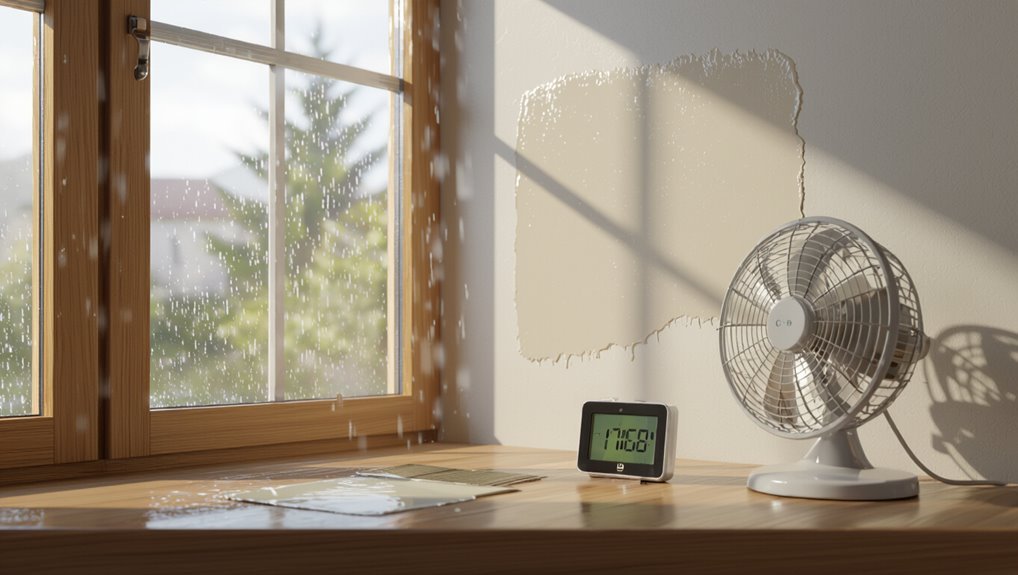
If you want paint to dry quickly, control the moisture in the air and keep fresh airflow moving — both directly affect how solvents and water evaporate from the film.
You’ll feel relief when humidity effects are reduced and you respect ventilation importance.
Use these tactics to speed drying and avoid tacky finishes:
- Dehumidify to cut drying time.
- Open windows for steady airflow.
- Run fans to move air.
- Avoid humid weather painting.
Surface Prep to Speed Drying
Because a clean, smooth substrate lets solvents evaporate evenly, proper surface prep directly speeds drying and reduces tacky spots.
You should prioritize surface cleaning—remove dust, oils, and loose paint—then sand lightly for adhesion.
Choose primer selection based on substrate and paint type to promote uniform absorption and faster cure.
Proper prep minimizes recoat delays and uneven sheen.
Water-Based Acrylic: Dry and Recoat Times
Water-based acrylics typically feel dry to the touch within 30 minutes to an hour, but you should wait at least 2–4 hours before recoating under normal indoor conditions.
Full cure often takes 7–30 days depending on film thickness, humidity, and temperature.
You’ll control drying by adjusting paint consistency and using proper application techniques to avoid tacky layers.
- Relief: fast touch-dry
- Frustration: long cure
- Confidence: right consistency
- Pride: clean technique
Latex vs. Acrylic: Speed and Performance
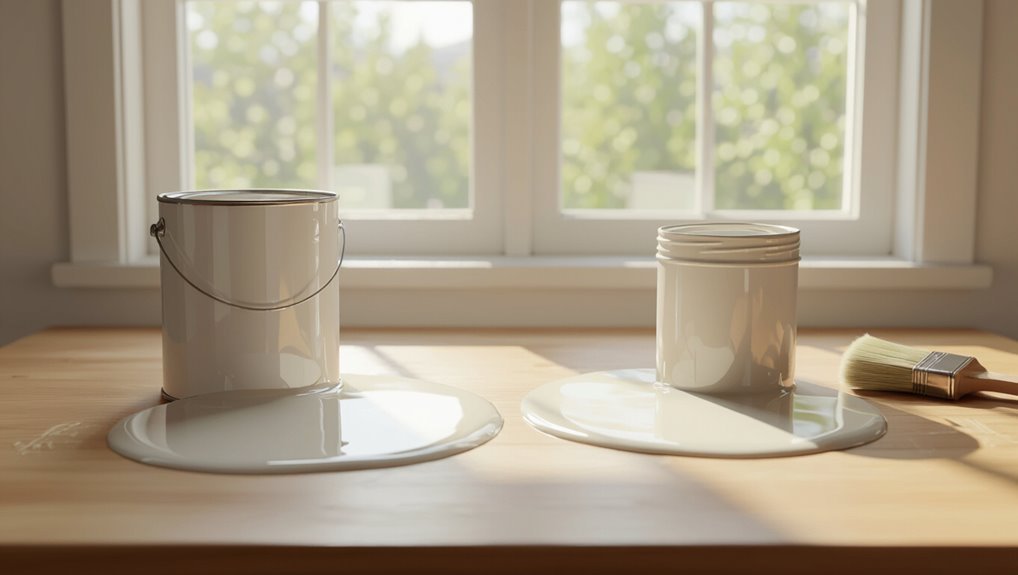
Though both latex and acrylic paints are waterborne, they dry and perform differently in ways that matter when you’re on a schedule: latex (a broad category that often includes vinyl-acrylic blends) generally dries faster to the touch and is cheaper, while 100% acrylics form tougher, more flexible films that resist cracking and weathering but can take slightly longer to fully cure.
You’ll weigh latex performance against acrylic advantages.
Alkyd and Fast-Dry Alkyd Hybrids
When you need durable, hard-wearing finishes that tolerate knocks and scrubbing, alkyds are a go-to: traditional oil-modified alkyds dry by oxidation to form tough films, and fast-dry alkyd hybrids speed that process by using modified resins and faster-evaporating solvents so you can recoat sooner without losing durability.
You’ll appreciate alkyd benefits and hybrid formulations that balance speed and toughness.
You’ll value alkyds and hybrids that deliver fast drying without sacrificing long-lasting toughness.
- Confidence
- Relief
- Satisfaction
- Pride
Spray Paints and Aerosol Primers
If you need fast, even coverage for small projects or touch-ups, spray paints and aerosol primers are your quickest option, delivering consistent films without brushes or rollers.
You’ll get rapid dry times, thin uniform coats, and minimal prep when you use proper spray application and aerosol techniques.
Control distance, temperature, and light passes to avoid runs and guarantee durable adhesion and finish.
Chalk and Milk Paints: Quick Finishes
Because they dry rapidly and need little prep, chalk and milk paints are ideal for quick finishes on furniture and decor.
Chalk and milk paints dry fast with minimal prep, giving matte charm and quick, character-filled finishes for furniture.
You’ll love the matte charm and fast turnaround; use chalk paint techniques for soft distressing and milk paint finishes for vintage patina.
You can sand or seal quickly, saving time while getting character.
- Joy
- Surprise
- Comfort
- Pride
Enamels: Speed vs. Hardness
With enamels, you’ll notice fast surface drying doesn’t mean full cure—hardness keeps improving for days or even weeks.
You’ll need to balance the quick feel against the long-term surface strength, since faster formulas often trade off ultimate hardness.
Also remember that temperature, humidity, and film thickness all change both dry time and final toughness.
Drying Time Versus Cure
Although enamels can feel dry to the touch in minutes or hours, that quick surface drying doesn’t mean the paint has fully cured; you need to distinguish between “dry” and “cured” because cure determines hardness, durability, and chemical resistance.
You’ll monitor the drying process and respect curing time to avoid damage. Feelings and pride hinge on patience:
- Frustration
- Relief
- Confidence
- Regret
Surface Hardness Tradeoffs
When you pick a fast-drying enamel, you’re trading cure time for surface hardness: quicker solvents or co-solvents let the paint skin over fast, but they often leave a softer, more scratch-prone finish than slower-curing formulas that crosslink more completely.
You’ll need to balance surface durability and aesthetics—choose based on expected wear and desired hardness levels, not just dry-to-touch speed.
Application Conditions Impact
If you apply enamel in hot, dry air or under strong airflow, it’ll skin over fast but often cure softer because solvents evaporate before polymers fully crosslink; conversely, cooler, slightly humid conditions slow surface drying, letting the film consolidate and develop greater hardness.
Use proper application techniques and watch environmental factors to balance speed and durability.
- Fear rushing finishes.
- Trust patience.
- Control airflow.
- Monitor humidity.
Epoxies and Two-Part Coatings: Timelines
Because epoxies cure through a chemical reaction between resin and hardener, you’ll need to plan around both work time and full cure time: pot life (how long the mixed product remains usable), tack-free time (when you can handle or recoat), and full mechanical cure (when the coating reaches its rated strength). Epoxy advantages include durability; two part disadvantages are shorter pot life.
| Stage | Typical Time |
|---|---|
| Pot life | 15–120 min |
| Tack-free | 1–8 hrs |
| Full cure | 24–7 days |
Additives and Accelerators That Work
You can speed up or fine-tune epoxy and other fast-drying coatings by adding specific accelerators and performance additives.
You’ll pick additive types to boost cure time, flow, adhesion, or UV resistance, and weigh accelerator benefits like faster handling and reduced tack.
Choose compatible products and test small batches.
- Faster cure — relief
- Better flow — satisfaction
- Stronger bond — confidence
- UV protection — calm
Tools for Fast-Drying Paint Application
Gather the right tools before you start, since fast-drying paints give you little margin for error and demand speed, control, and clean application.
Choose brush types suited to resin or acrylic, pick roller options for texture, and consider spray techniques for large areas.
Match tools to surface types, select application methods that suit cure times, and account for environmental factors like temperature and humidity.
Techniques for Even Finish With Quick-Dry Paint
Start by planning each stroke and sequence so you work quickly but deliberately—fast-dry paints leave little room for corrections, so consistent technique matters.
Plan each stroke and sequence—work quickly but deliberately; fast-dry paints demand consistent, confident technique.
You’ll use precise application techniques, maintain wet edges, and control pressure for a uniform sheen.
Follow these finish tips and feel confident as you create smooth results:
- Breathe—steady hands calm nerves.
- Move rhythmically.
- Light pressure.
- Inspect gently.
When to Recoat: Signs to Wait
Before recoating, you’ll want to use a gentle surface touch test to make sure the paint isn’t tacky.
Check for visual dry indicators like a uniform sheen and no wet spots, and trust elapsed drying time on the can as a guideline.
If the paint still smells strong or feels sticky, wait longer before applying another coat.
Surface Touch Test
How long should you wait before recoating? You’ll press lightly to test surface texture; tackiness means wait.
Use gentle drying techniques like airflow, low heat, or time. Trust your touch, not a clock.
- Relief — smooth, cool surface.
- Frustration — sticky, pulls.
- Confidence — firm, no impression.
- Anxiety eased — dry to the touch.
Visual Dry Indicators
While you can rely on touch, your eyes often give the quickest clues: look for an even sheen, absence of wet streaks, and no color darkening where the paint is still wet.
Use visual cues like uniform gloss, no tacky spots, and crisp brush or roller lines to judge recoat readiness.
These drying indicators help you avoid lifting or uneven finish when you apply the next coat.
Smell And Time
Visual cues are helpful, but smell and elapsed time give reliable confirmation that a coat’s ready for the next one.
Trust odor control: if fumes linger, wait. Track hours per drying techniques and room conditions.
Don’t rush; tacky spots mean more time.
- Relief when odor fades
- Confidence after recommended hours
- Frustration avoided by patience
- Pride in a smooth finish
Durability Trade-Offs: Fast-Dry vs. Lasting
Because fast-dry formulations cure quickly, you’ll often trade some long-term toughness for convenience: thinner, rapid-evaporation binders can make coatings more prone to chipping, abrasion, or UV breakdown compared with slower-curing, heavier-film alternatives.
When you weigh a durability comparison, consider substrate, traffic, and finish: fast options save time but raise longevity concerns, so expect more frequent touch-ups or protective topcoats for lasting performance.
Best Fast-Drying Paints by Project
When you pick a fast-drying paint, match the formulation to the job—spray enamel for metal touch-ups, water-based acrylic for interior walls, and quick-cure alkyds for trim and doors—so you get speed without sacrificing the right finish or durability.
Use fast drying techniques and project specific recommendations to finish confidently.
Use fast-dry methods and job-tailored paint choices to finish projects quickly and confidently.
- Metal: spray enamel — instant satisfaction
- Walls: acrylic — quick, clean results
- Trim: alkyd — durable sheen
- Outdoor: exterior fast-dry latex — weather-ready
Common Mistakes That Slow Drying
If you rush application or ignore surface prep, you’ll likely stall curing and invite problems like tacky finishes, runs, or poor adhesion.
Don’t overload brushes or rollers, paint in high humidity, or apply thick coats—those undo good drying techniques.
Also avoid poor ventilation and mixing incompatible products.
Follow proper paint application steps, wait recommended recoat times, and control temperature for faster, reliable drying.
Buying Fast-Drying Paint: Labels to Check
When you shop for fast-drying paint, start by checking the drying time label so you know how soon you can recoat.
Note the sheen—flatter finishes often dry slower than satin or semi-gloss—and pick the sheen that suits your project.
Also look for low-VOC markings to keep drying quick and indoor air safer.
Check Drying Time Label
Curious how fast a paint will be ready for a second coat? Check paint labeling for clear drying indicators like tack-free time and recoat window. You’ll avoid surprises and speed your project.
- Relief — confirmed recoat time
- Confidence — manufacturer guidance
- Efficiency — faster scheduling
- Satisfaction — predictable results
Identify Paint Sheen
Beyond checking recoat windows, you’ll want to identify the paint sheen — it directly affects dry time and the final look.
Read labels for paint finish and compare sheen levels: flat/matte hides imperfections but dries slower, eggshell and satin balance sheen with reasonable dry time, while semi-gloss and gloss dry faster and clean up easily.
Choose based on room use and desired durability.
Look For Low-VOC
Because fast-drying formulas can still off-gas, look for low-VOC or zero-VOC labels to protect indoor air quality and speed safe reentry into a room.
You’ll find low VOC options across acrylic and waterborne alkyds, reducing odor and environmental impact while keeping drying times fast.
Choose certified brands and ventilate during application.
Frequently Asked Questions
Can Fast-Drying Paints Be Sanded Sooner Than Standard Paints?
Yes — you can sand fast-drying paints sooner than standard ones, but you’ll follow proper sanding techniques and respect manufacturer drying times; test firmness first, use fine grit, and proceed gently to avoid gouging the finish.
Do Fast-Dry Coatings Affect Indoor Air Quality Differently?
Yes — but beware: fast-dry coatings can emit volatile compounds more quickly, so you’ll notice odors sooner, and that spike can raise health concerns, especially in poorly ventilated spaces, so ventilate and choose low-VOC options.
Are Fast-Drying Paints Prone to More Color Fading Over Time?
Yes—you might see faster color fading with some fast-drying paints, but if you choose high-quality formulations and proper prep, you’ll preserve color longevity and maintain paint durability over time.
Can I Tint Fast-Drying Primers at the Store?
Yes, you can usually tint primers at the store; manufacturers offer tinting options for many primer types. Check compatibility with your topcoat and request factory tinting to guarantee even color and adhesion.
Do Fast-Dry Paints Require Different Cleanup Methods?
Yes — they need different cleanup methods. You’ll use specific cleanup techniques: water for water-based, solvents for alkyds, and quick wiping before skinning. For application tips, clean tools promptly and store rags safely to avoid fires.
Conclusion
You want paint that dries fast — and you’ll rush through prep, skip ventilation, and blame the paint when it runs. Ironically, the quickest paints (acrylics, water-based enamels, alkyds with catalysts) only work their magic when you do the sensible stuff first: clean the surface, control temperature and humidity, sand, and use thin coats. So yes, pick fast-drying paint — but don’t be surprised when haste ruins the finish you hoped to save.
