
When Paint Dries Is It Darker or Lighter? Explained
You’ll usually find paint dries slightly darker than it looks wet because solvents and water evaporate, concentrating pigments and binders, though some waterborne paints can lighten as moisture leaves; sheen also matters—matte scatters light and looks softer, gloss reflects more and reads richer; thickness, substrate, primer color, humidity and temperature all shift the final tone, so test swatches and let them cure 24–48 hours to judge true color, and keep going to learn practical fixes and tips.
Quick Answer: Does Paint Dry Darker or Lighter?
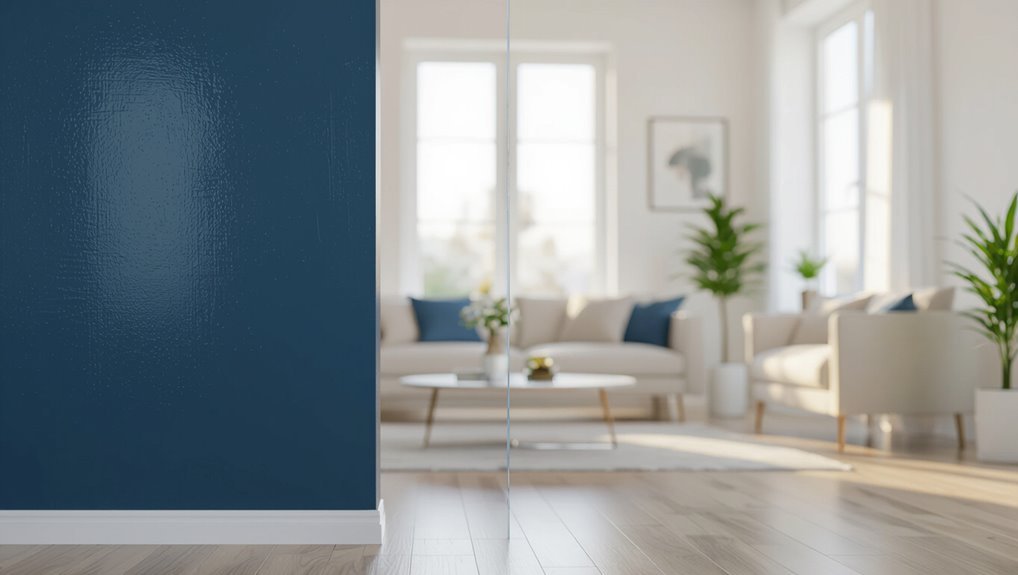
Wondering whether paint dries darker or lighter? You’ll usually see a slight shift: many paints dry a touch darker as pigments concentrate during the drying process.
Though some waterborne paints can appear lighter once moisture evaporates. Color theory explains perception shifts from gloss and surrounding light.
Test a swatch to confirm, since formulation, pigment load, and substrate change the final tone.
How Sheen (Matte vs Gloss) Affects Dry Color
How shiny the paint is will change how you see the color, with matte finishes scattering light and appearing softer.
Gloss finishes reflect light and tend to show a richer, deeper tone once dry.
Keep that in mind when you pick sheen for a room or trim.
Sheen Changes Perception
Because sheen controls light reflection, it can make the same pigment look noticeably different when it dries: matte finishes scatter light and mute colors, while gloss finishes reflect light and deepen saturation.
You’ll notice sheen influence on tone and shadow; your visual perception shifts with finish choice.
Test samples under room lighting to predict final appearance and avoid surprises when selecting paint.
Gloss Shows Richer Tone
Gloss finishes tend to read richer because they reflect more light, which deepens perceived saturation and contrast compared with matte.
You’ll notice gloss intensity boosts highlights and makes shadows pop, changing color contrast.
Picture surfaces:
- Wet-look sheen on trim
- Smooth glossy cabinets reflecting lamps
- High-sheen doors with deep hues
- Matte wall beside a glossy accent
How Pigment Concentration Changes Drying Color
When you change pigment concentration, the paint’s color shifts because higher pigment density absorbs and scatters light differently than a more diluted mix.
As the binder evaporates, the remaining pigment pack becomes more concentrated, often making the dried color appear slightly deeper.
You’ll want to contemplate both initial pigment load and how much binder will leave during drying to predict the final shade.
Pigment Density Effects
If you add more pigment to a paint mix, you’ll notice the dried color shifts because denser pigment layers absorb and scatter light differently than thin ones.
You’ll see pigment interaction and basic color theory play out as saturation deepens and edges crisp.
- Thick layer, richer hue.
- Thin wash, paler tone.
- Overlap, intensified shade.
- Sparse spots, mottled lightness.
Binder Evaporation Impact
Because the binder carries and spaces pigment particles, its evaporation concentrates solids and changes how the dried paint reads.
So you’ll notice colors darken or shift as the liquid phase disappears.
You’ll see different effects with binder types—oil, acrylic, latex—because varying evaporation rates alter pigment packing and refractive index.
Monitor drying conditions to predict final hue and contrast.
How Drying Alters Gloss and Perceived Color
As paint dries, its surface sheen and the way you perceive color shift noticeably: solvents evaporate and binders settle, changing gloss levels and light reflection.
You notice color perception changing during the drying process as sheen flattens or brightens.
Imagine:
- Wet gloss pooling.
- Satin smoothing.
- Matte scattering light.
- Highlights softening.
Why Surface Texture and Porosity Affect Final Shade
After gloss and sheen settle, the substrate you’re painting on keeps shaping the final shade: texture and porosity control how much light gets absorbed, scattered, or reflected.
How Primer and Substrate Color Change the Outcome
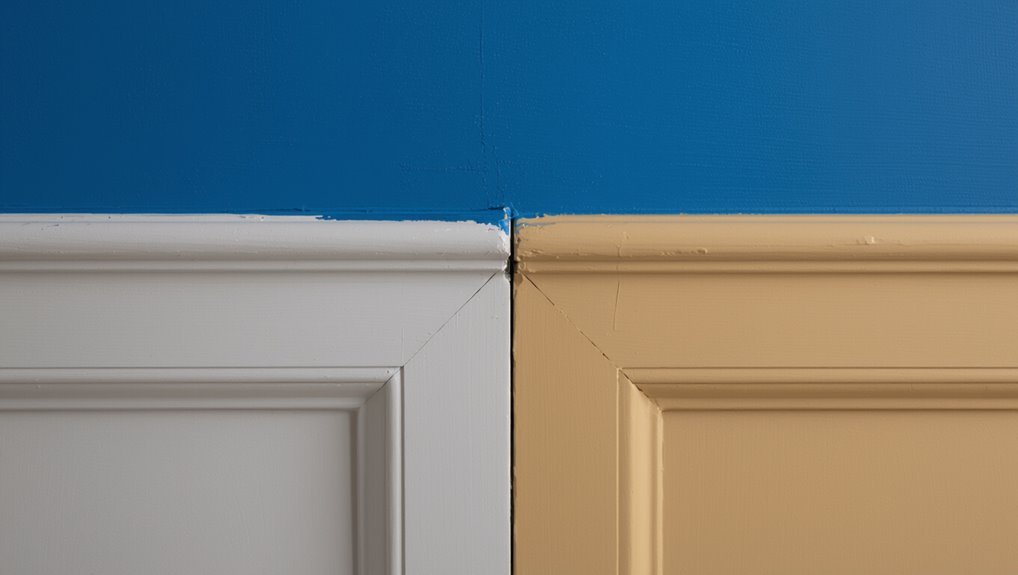
While primer and the underlying substrate might seem like background players, they actually alter the dried color you see by changing how much pigment and light penetrate and reflect; a dark or stained surface will pull a topcoat toward deeper tones, while a bright or tinted primer can boost opacity and shift hue.
Primer and substrate quietly steer final color—dark bases deepen tones, bright or tinted primers shift hue and opacity
- Wood stains showing through.
- Dark masonry dulling vibrancy.
- Tinted primer warming whites.
- Thin primer revealing undertones via poor substrate preparation and uneven primer application.
When Metallic, Pearlescent, or Textured Paints Behave Differently
When you use metallic paints, the tiny metal flakes can make the finish look lighter or darker depending on viewing angle and light direction.
Pearlescent pigments and textured additives scatter light differently, so colors can shift or seem to change depth as the surface dries.
Keep in mind these effects when predicting final tone and when choosing topcoats or lighting.
Metallic Paint Color Shift
Curious how metallic, pearlescent, or textured paints seem to change color as they dry?
You’ll notice metallic finishes shift as binder clears and flakes reorient, altering color reflections and perceived hue.
Watch for lighting and angle to reveal different tones.
- Sunlight gleam
- Shadowed depth
- Angle sparkle
- Wet-to-dry clarity
Pearlescent And Texture Effects
Metallic finishes gave you a hint of shifting tones; pearlescent and textured paints push that effect further by mixing particle orientation and surface topology.
You’ll notice pearlescent effects change with viewing angle and light quality, while texture variations scatter and absorb light unevenly.
Expect perceived color to shift between lighter and darker depending on sheen, granularity, and how highlights or shadows play across the surface.
How Natural vs. Artificial Light Reveals Drying Shifts
Although paint can look different as it dries, the light source you use often determines how obvious those shifts are.
You’ll notice natural light and artificial light change color perception during the drying process—light intensity, color temperature, shadow effects, and visual contrast all matter.
Imagine scenes:
- Morning sun on wet blue
- Cloudy soft midday
- Warm lamp at dusk
- Cool fluorescent shop light
How Humidity and Temperature Change Drying Color
You’ll notice drying speed changes how a color finishes, since fast evaporation can trap solvents and make paint look lighter while slow drying often deepens tone.
Higher humidity tends to mute or darken some pigments by slowing solvent loss, whereas low humidity can leave colors brighter or chalkier depending on the formula.
Temperature also alters pigment behavior and binder chemistry, so warm conditions can intensify certain hues and cold can dull others.
Drying Speed Effects
When air is humid or cold, paint takes longer to cure and its final shade can stay muddled or slightly darker than expected.
You’ll notice drying conditions, evaporation rate, environmental factors, and paint thickness all alter how color sets.
Picture these scenes:
- Slow drip drying on a shaded wall.
- Thick coat holding wet sheen.
- Cool room pausing pigment settling.
- Warm breeze speeding finish.
Humidity’s Color Shift
If humidity’s high or temperature’s low, paint dries slower and pigments can stay suspended longer, making the wet film look darker or muddier than the final color; raise the heat or drop the moisture and solvents evaporate faster, letting binders and pigments settle to reveal the desired shade. You’ll notice humidity effects alter color perception during drying.
| Humidity | Drying | Perception |
|---|---|---|
| High | Slow | Darker |
| Low | Fast | True |
Temperature And Pigment
Because temperature alters evaporative speed and pigment behavior, you’ll see color shift as paint dries: warmer conditions speed solvent loss and can make pigments appear lighter and more vivid, while cooler temps slow settling, letting binders and suspended particles create a darker, muddier look.
- Sunlit room — brighter color temperature glow.
- Cold garage — densified pigment interaction.
- Drafty heat — rapid leveling.
- Humid chill — muted, deeper tones.
Which Sheen Should You Choose to Avoid Surprises?
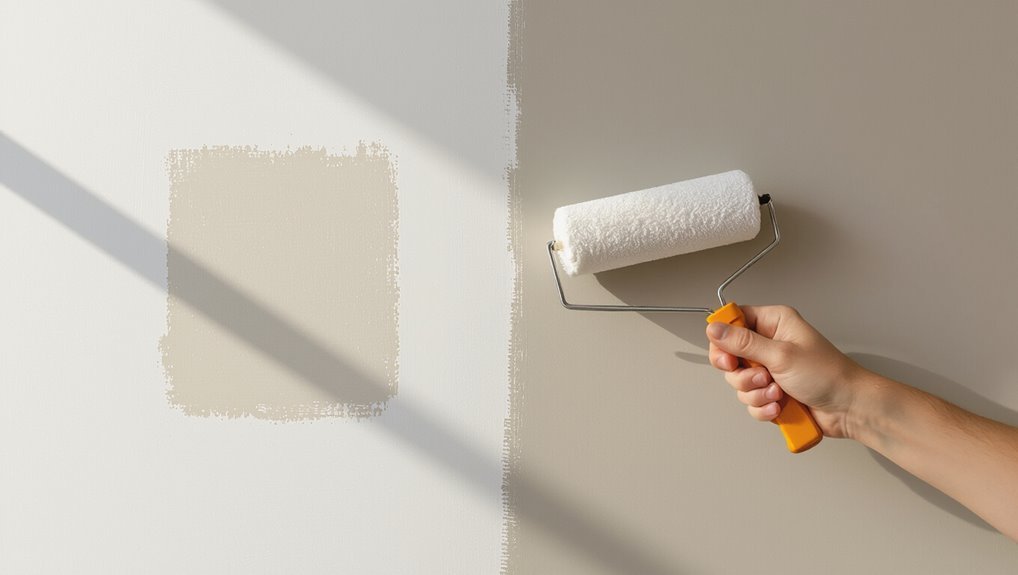
Wondering which sheen will give you the color you expect? You’ll want to understand sheen differences and how they change color perception; glossier sheens reflect more light, seeming brighter, while matte soaks light, appearing richer. Choose based on room lighting and surface flaws to avoid surprises.
| Sheen | Effect |
|---|---|
| Matte | Subtle |
| Eggshell | Soft |
| Satin | Warm |
| Semi-gloss | Bright |
| Gloss | Vivid |
Quick At‑Home Tests to Predict the Dry Color
Curious how a swatch will look once it’s dry? You can run quick at‑home color matching and paint testing to predict results.
Try these simple visuals:
- Paint a 2×2″ swatch on white and dark card.
- Brush a thin stripe and a thick stripe side‑by‑side.
- View under natural and artificial light.
- Let a sample cure 24–48 hours before judging.
How to Make a Reliable Paint Sample Card
Start with three sturdy items: a neutral white card, a mid-tone gray card, and a piece of the wall’s original color (if available).
Tape swatches of each paint coat in consistent strips, label brand and sheen, and note drying time.
Use consistent lighting when comparing for accurate paint color matching.
This sample card preparation helps you choose confidently without guessing.
Fixes for Paint That Dried Too Dark or Too Light
Once you’ve compared your sample card under consistent light and still find the paint looks too dark or too light on the wall, there are practical fixes you can try.
Use color correction and blending techniques to adjust. Consider:
- Lighten with tinted primer.
- Add glazing for subtle shifts.
- Recoat with adjusted formula.
- Use trim or accent colors to balance contrast.
Common Mistakes That Cause Unexpected Color Shifts
When paint shifts color on the wall, it’s usually due to avoidable mistakes you or your contractor made during selection, preparation, or application.
You might skip sample testing or ignore color theory and color perception under varying lighting conditions.
Poor surface preparation, wrong finish selection, rushed paint application, inconsistent application techniques, bad color matching, or unaccounted environmental factors all cause unexpected color shifts you can prevent.
Pro Tips for Achieving Consistent Dry Color on Large Projects
After you’ve identified common traps like poor prep and inconsistent application, keep control across a large job by standardizing every variable you can.
Identify common traps—then standardize lighting, mixing, tools, and workflow to keep large jobs consistent.
You’ll focus on color consistency and repeatable application technique. Plan lighting, batch-mix paint, train crews, and finish in sections.
- Consistent lighting
- Single-batch mixing
- Unified roller/brush technique
- Sectioned workflow and drying checks
Frequently Asked Questions
Can Tinted Primers Affect Final Color Differently Than Topcoat Tints?
Yes — you’ll notice differences: primer opacity and tint intensity interact, so tinted primers can shift undertone, improve coverage, and make final color richer or muted compared to topcoat-only tints, especially under thin topcoats or strong primers.
Do Paint Additives (Retarders, Extenders) Change Dried Shade?
Want to tweak drying time and sheen? You’ll find additive effects mainly alter the drying process and workability, sometimes subtly shifting final shade; they rarely change color dramatically, so test samples before committing to a full coat.
Will Applying Multiple Thin Coats Vs One Thick Coat Alter Final Color?
Yes — you’ll get subtle shifts: layering techniques increase color intensity and depth, while one thick coat can appear uneven or slightly duller. You’ll achieve truer, richer color by applying multiple thin, well-blended coats.
How Long After Drying Is the Color Considered Fully Cured and Stable?
Think of paint like morning mist settling into a meadow: you’ll usually have usable surface dry in hours, but full cure time—and true color stability—takes 1–4 weeks, sometimes up to 30 days depending on type and conditions.
Can VOC Levels or Paint Brand Formulas Shift Drying Color Unexpectedly?
Yes — VOC impact and formula variations can shift drying color unexpectedly. You’ll notice subtle shifts as solvents evaporate and binders cure; different brands’ pigments, additives, and VOC levels alter final shade and sheen unpredictably.
Conclusion
When paint dries, it can look darker or lighter than wet, but you’ll usually see a slight darkening—think of a photograph coming into focus. Sheen, pigment load, and surface porosity all shift the final tone, so always test a sample on the actual wall and view it in different light. If it’s off, you can adjust with glazes, tint extenders, or a different sheen. With care and trials, you’ll get the shade you want.
