
Does Mold Die Without Moisture: Science Explained Simply
Mold usually won’t die just because things dry out; its active growth stops without moisture, but spores can survive long dormancies and spring back when humidity returns. You’ll halt metabolism and reproduction by drying surfaces quickly, yet dried mold can still release allergens and toxins. Fast drying, dehumidifying, and removing soaked materials within 24–48 hours prevents regrowth; if you want practical steps to verify and permanently reduce risk, keep going for clear actions and tips.
Quick Answer: Will Mold Die If It Dries?
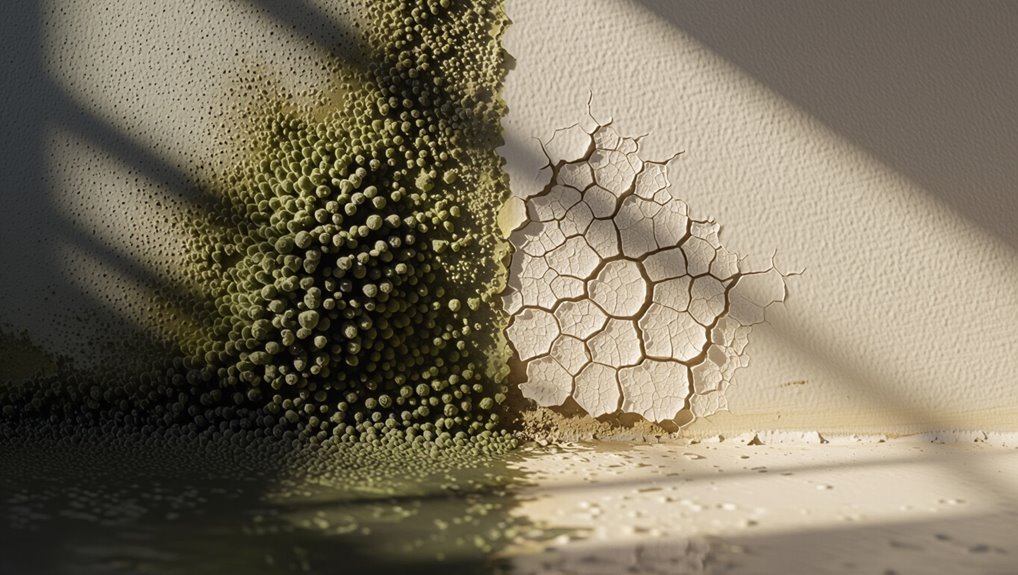
If you dry out a surface, mold will usually stop growing because it needs moisture to reproduce and spread.
You’ll halt active colonies by removing water, since mold biology relies on dampness for metabolism and spore germination.
However, spores can remain dormant and resume when humidity returns.
How to Use This Guide
When you use this guide, follow the step-by-step checks and safety tips to assess moisture, remove mold, and prevent recurrence without skipping critical precautions.
You’ll get a clear content overview and practical tips, with layout clarity that aids guide navigation.
Stay reader-focused; use audience insight and resource accessibility to apply effective strategies.
Prioritize topic relevance and user engagement for actionable results.
Why Moisture Matters to Mold Biology
You need to know that water isn’t just convenient for mold — it’s an essential nutrient that fuels metabolism and tissue growth.
Even when spores seem dormant, moisture levels determine how long they can survive and when they’ll reactivate.
Small increases in dampness can sharply speed up growth rates and colony expansion, so controlling moisture controls mold.
Water As Essential Nutrient
Because mold absorbs water directly through its cell walls and hyphae, moisture isn’t just a comfort—it’s a lifeline for growth and metabolism.
You rely on fungal hydration to enable nutrient absorption and access mold nutrients from substrates.
Maintaining moisture balance meets mold moisture needs, supports enzymatic water roles, and underpins survival strategies.
Remove essential hydration, and metabolic activity halts.
Spore Survival Strategies
Although spores can endure harsh conditions, they still depend on moisture cues to decide whether to stay dormant or germinate.
You observe spore resilience and desiccation tolerance tuned by environmental triggers. Their survival strategies use stress responses and metabolic pathways for nutrient acquisition.
Evolutionary adaptations shape habitat preferences and competitive advantages.
- sensing moisture
- conserving reserves
- activating growth
- outcompeting rivals
Dampness And Growth Rates
When moisture levels rise, mold shifts from dormancy to rapid growth, exploiting water to drive spore germination, hyphal extension, and enzyme secretion. You’ll notice damp conditions and humidity effects act as growth triggers; temperature impact and nutrient availability modulate spore activation across substrate types, speeding the mold lifecycle. Environmental factors determine pace and severity.
| Factor | Effect |
|---|---|
| Moisture levels | Spore activation |
| Temperature impact | Growth rate |
| Substrate types | Nutrient availability |
| Humidity effects | Lifecycle speed |
How Mold Grows: Spores, Hyphae, Colonies
If you’ve ever seen fuzzy spots on bread or a damp wall, you’re looking at a visible stage of mold’s life cycle: microscopic spores land, germinate, and send out threadlike hyphae that weave into a colony.
- spore germination starts when habitat preferences and environmental factors permit.
- hyphal growth drives nutrient acquisition and colony establishment.
- fungal metabolism fuels expansion and competitive interactions.
- mold identification links ecology, ecological roles, and control choices.
What Counts as “Moisture” for Mold
Moisture for mold isn’t just visible water—you’re dealing with any level of humidity, surface dampness, or even microscopic films that let spores absorb what they need to germinate. You’ll consider moisture sources, humidity levels, water types, material moisture and water retention; environmental factors, climate effects and seasonal changes affect mold survival and drive moisture detection.
| Source | Measurement | Risk |
|---|---|---|
| Air | RH% | High |
| Surface | Wetness | Moderate |
| Material | Absorption | Variable |
How Water Availability Affects Mold Reproduction
Because mold needs water to fuel cellular processes, the amount and form of available water directly control how quickly spores germinate and colonies expand.
- You’ll see mold reproduction depend on moisture dynamics and moisture thresholds.
- Environmental factors and nutrient availability shape growth conditions.
- Fungal biology dictates reproductive strategies and survival mechanisms.
- These interactions influence ecological balance and long‑term colonization potential.
How Dehydration Affects Active Mold Colonies
When mold loses water, you’ll often see growth slow or halt as hyphae desiccate and metabolic activity drops.
Some colonies enter dormancy rather than dying, conserving resources until moisture returns.
Even if the mycelium looks inactive, many molds form hardy spores that survive dehydration and can reactivate later.
Water Loss Effects
If you remove the water that feeds a mold colony, its cells start shutting down and spore production falls off rapidly.
You’ll notice water absorption drops, moisture retention fails, and growth inhibition increases as humidity levels fall.
Use drying techniques and surface treatments; consider environmental factors and restoration practices while monitoring mold resilience and microbial competition.
- Rapid desiccation
- Metabolic slowdown
- Reduced sporulation
- Surface stabilization
Dormancy Versus Death
Stopping moisture doesn’t always mean you’ve killed mold; it often forces colonies into dormancy instead. You should know dormant mold can persist until moisture thresholds return. Environmental triggers like humidity spikes prompt mold revival, revealing fungal resilience. Understand survival mechanisms that pause growth versus conditions that cause death; addressing moisture and triggers prevents resurgence.
| State | Trigger | Outcome |
|---|---|---|
| Active | Wet | Growth |
| Dormant | Dry | Pause |
| Revived | Humid | Return |
Spore Survival Mechanisms
Although dehydration halts visible growth, fungal spores deploy several survival tactics that let them endure dry spells and wait out unfavorable conditions.
- You’ll see spore resilience via thickened walls that limit water loss.
- You’ll notice metabolic slowdown conserving energy until moisture returns.
- You’ll find spores forming protective pigments against UV and heat.
- You’ll observe fungal adaptation through rapid germination once humidity rises.
What Happens to Mold Spores When Conditions Dry Out
When moisture disappears, mold spores don’t just vanish — they enter a dormant state and wait for better conditions.
You should know spore viability depends on environmental factors and mold genetics; air circulation and remaining moisture sources influence revival.
Proper drying techniques and surface treatments lower contamination risks and spore dispersal.
Still, you must consider health implications if spores are disturbed or inadequately removed.
Mold Species That Survive Drying Best
Some mold species tolerate drying far better than others, so knowing which ones do will help you prioritize cleanup and monitoring.
- Aspergillus — you’ll note strong mold resilience; use targeted drying techniques.
- Penicillium — survives dry spells; verify with moisture meters.
- Cladosporium — hardy on fabrics; combine surface cleaning and drying techniques.
- Stachybotrys (sporadic) — less drought-tolerant but persistent; monitor and remediate promptly.
How Temperature and Humidity Together Change Mold Survival
You’ll see that temperature mainly controls how fast mold grows, speeding metabolism and colony expansion as it warms.
At the same time, humidity adjusts spore viability—low moisture can inactivate spores even if temperatures are favorable.
Temperature Influences Growth Rate
Although moisture is the key driver, temperature strongly controls how fast mold grows and how humidity affects its survival; higher temperatures generally speed metabolic processes and let spores germinate sooner, while cooler conditions slow activity and can prolong dormancy.
- You see temperature effects on growth dynamics.
- Heat influences microbial responses and thermal thresholds.
- Humidity interactions shift with climate variations.
- Seasonal changes and environmental factors alter ecological balance.
Humidity Modulates Spore Viability
When temperature and humidity shift together, they change how long mold spores stay viable by affecting metabolic rates and water activity; higher warmth plus sustained relative humidity usually lets spores activate and germinate, while dry air and low temperatures push them into dormancy or desiccate them.
You’ll see spore resilience vary with humidity effects, viability factors, environmental influences, mold adaptation, moisture thresholds, survival strategies, fungal biology, ecological niches, desiccation impact.
Porous Materials and Why They Trap Moisture
Because porous materials have tiny interconnected voids, they draw in and hold water the way a sponge does, which gives mold the steady moisture it needs to grow.
You’ll notice:
- Porous surfaces increase water absorption and moisture retention.
- Material composition and material permeability set how long dampness persists.
- Environmental factors and humidity levels influence mold growth pace.
- Inspect for trapped dampness to prevent colonies.
Why a Dry Surface Can Still Harbor Live Mold
Even if a surface looks dry, you can still be hosting mold because spores can stay dormant for long periods.
They’ll reactivate as soon as they encounter moisture, which may be hidden in nearby porous materials or trapped under finishes.
Dormant Spores Persist
If a surface dries out, don’t assume the mold problem’s gone—microscopic spores can enter a dormant state and survive long stretches without moisture.
- You’ll see mold dormancy and spore resilience as survival mechanisms.
- Environmental triggers reset fungal adaptation and the fungal lifecycle.
- Moisture thresholds and habitat conditions influence long term viability.
- Low nutrient availability slows growth but doesn’t eliminate dormant spores.
Moisture Hidden Nearby
When a surface looks dry, don’t assume the mold there’s dead—moisture trapped behind walls, under flooring, or inside insulation can keep fungal cells alive and ready to grow.
You should check for hidden moisture and identify moisture sources, use moisture detection tools and moisture measurement, monitor humidity levels and environmental moisture, and address moisture retention with proactive moisture management to prevent regrowth.
Signs That Dried Mold Is Still Viable
Dried mold can still be alive, and you’ll spot a few clear signs that it’s viable: fuzzy or powdery textures that release spores when disturbed, persistent musty odors, and regrowth or darkening after re-wetting.
Use these mold viability indicators and note dried mold characteristics to judge risk:
- Visible fuzz or powder
- Musty, lingering smell
- Color darkening after moisture
- Spore release when brushed
How Long Can Mold Stay Dormant Without Water?
Noticing those signs of viable dried mold makes you want to know how long it can linger without water. You’ll learn that spore longevity varies widely; environmental factors like temperature, light, and substrate control dormancy. Below, picture persistence across conditions:
| Condition | Likely Dormancy | Visual Cue |
|---|---|---|
| Dry, dark | Months–years | Powdery spores |
| Sunlit | Weeks–months | Faded patches |
| Warm, humid later | Reactivates quickly | Mold growth returns |
Real-World Drying Timelines: Homes vs Outdoors
Because indoor spaces trap humidity and outdoor environments vary more, mold dries out and reactivates on very different schedules.
- You’ll see slower indoor moisture loss; ventilation strategies and surface materials matter.
- Outdoor drying speeds depend on humidity levels and seasonal effects.
- Environmental factors shape the mold lifecycle; cleaning methods and drying techniques change outcomes.
- You should monitor both settings to match remediation to real conditions.
Microscopic Moisture Pockets That Let Mold Persist
How can mold keep growing when the surface looks dry? You’ll find microscopic moisture pockets trapped in pores, supporting mold survival via moisture retention and nutrient access. Environmental factors and habitat variability drive fungal resilience; biological mechanisms and spore dynamics exploit damp environments. Ecological impact follows from persistent colonies that resist simple drying.
| Pocket size | Location | Effect |
|---|---|---|
| Micropores | Wood | Retain water |
| Dust films | Paint | Feed spores |
| Fibers | Insulation | Shelter mold |
When Drying Alone Is Enough to Stop Mold
If you remove moisture quickly and thoroughly, mold’s growth stops because fungi need free water to metabolize and spread. You can often halt mold survival by drying before spores colonize.
Follow steps to guarantee moisture thresholds stay low:
- Detect damp spots fast.
- Ventilate and dehumidify.
- Dry materials within 24–48 hours.
- Monitor humidity to prevent recurrence.
When You Should Treat a Surface as Contaminated
1 clear rule will help you decide: treat a surface as contaminated whenever visible mold, a musty odor, or moisture damage is present, or when the area has been wet long enough (typically over 24–48 hours) for mold to have established itself.
You should perform surface inspection, mold testing, and risk assessment to choose treatment protocols, remediation techniques, cleanup strategies, considering material types, environmental factors, and health implications.
Effective Drying Methods That Reduce Mold Survival
Once you’ve identified a contaminated surface by sight, smell, or prolonged wetting, the next step is to remove the moisture that lets mold thrive.
- Use dehumidification strategies and air circulation to lower humidity levels quickly.
- Apply drying techniques and surface treatments during cleanup protocols.
- Follow restoration methods that consider environmental factors for mold prevention.
- Maintain moisture control to stop regrowth and complete cleanup protocols.
How Heat, Cold, and Desiccants Compare for Killing Mold
You’ll find that heat can kill many mold types quickly if temperatures stay high enough for long enough.
Cold often just puts spores dormant rather than destroying them, so freezing isn’t a reliable kill method.
Desiccants work by removing water to prevent growth, but they don’t actively neutralize spores the way sustained heat can.
Heat Versus Mold
When you compare heat, cold, and desiccants for tackling mold, you’ll find they work very differently:
- Heat effects: you can inactivate spores with sustained high temperatures, useful in some remediation.
- Mold resistance varies; some species tolerate brief heat.
- Thermal conditions matter for long-term control.
- Combine heat with moisture management and desiccants in prevention strategies to reduce regrowth.
Cold Effects On Spores
Although freezing temperatures can pause mold growth by putting spores and hyphae into dormancy, they rarely kill every viable spore outright.
You’ll find spore resilience varies: cold temperatures induce fungal dormancy but don’t sterilize surfaces. If humidity levels rebound, dormant spores can reactivate.
Cold helps control spread temporarily, yet you’ll still need cleanup and moisture control to prevent regrowth and exposure risks.
Desiccants And Drying
Compare drying methods by their mechanism: heat speeds evaporation and can denature fungal proteins at high enough temperatures. Cold slows metabolism and induces dormancy. Desiccants strip water directly from spores and hyphae, often rendering them inactive by disrupting cellular processes.
- You’ll weigh desiccant types and desiccant effectiveness.
- Use drying techniques with good air circulation.
- Control humidity management and drying duration.
- Pair surface treatment with moisture control for mold prevention considering environmental factors.
Safe Cleaning Products That Remove Viable Mold
Because mold spores can remain viable on surfaces, you’ll want cleaning products that actually kill and remove them rather than just hiding the problem. Use eco friendly solutions and natural alternatives: safe sanitizers, enzyme cleaners, vinegar benefits, baking soda, essential oils, citrus extracts, hydrogen peroxide, or tested DIY mixtures. Choose based on surface and ventilation.
| Type | Strength | Use |
|---|---|---|
| Vinegar | Mild | Porous |
| H2O2 | Moderate | Non-porous |
| Enzymes | Gentle | Fabrics |
When to Call a Professional Remediation Team
If mold covers more than about 10 square feet, has penetrated structural materials, or returns despite your cleaning efforts, call a professional remediation team—don’t try to handle extensive or hidden infestations yourself.
- Request a mold assessment to determine spread and risk.
- Ask about remediation options and timelines.
- Guarantee containment and safety protocols.
- Get a written plan and follow-up verification before reoccupying.
How to Test Whether Mold Is Dead or Dormant
Anyone dealing with a visible patch of mold will want to know whether it’s truly dead or merely dormant, because treatment and safety steps differ.
You can use mold testing methods like surface swabs, tape lifts, and air sampling plus professional lab analysis.
Look for color change, brittle texture, and lack of regrowth; dormant behavior may resume if moisture returns, so interpret results cautiously.
DIY Steps After Water Damage to Limit Mold Risk
First, stop the water source and fix leaks so you’re not fighting a continuing problem.
Next, remove wet materials like soaked drywall, carpeting, and insulation that can feed mold growth.
Finally, dry the area thoroughly with fans and dehumidifiers and monitor humidity to keep mold from returning.
Stop Water Source
When water damage occurs, stop the source quickly to keep mold from getting a foothold; shut off the main water valve, isolate the affected area, and turn off electrical power if water has reached outlets or appliances.
- Identify and stop water sources to aid moisture control.
- Use containment strategies to limit spread.
- Focus on humidity management and drying techniques.
- Apply surface treatments considering environmental factors for mold prevention.
Remove Wet Materials
Start by removing soaked carpeting, padding, drywall, and insulation—these porous materials hold moisture and become mold-friendly within 24–48 hours. You’ll bag and discard items, wearing gloves and a mask, to speed mold removal and prevent spread. Limit cross-contamination; separate wet from dry zones and document damage for insurance.
| Item removed | Why |
|---|---|
| Carpeting | Porous |
| Drywall | Traps moisture |
Dry And Monitor
After removing soaked materials, set up drying and monitoring right away to keep mold from gaining a foothold: run fans and dehumidifiers, open windows if weather allows, and direct airflow across wet surfaces while checking moisture levels daily with a meter or by touch.
- Use dehumidifiers for steady moisture control.
- Position fans to speed evaporation.
- Track progress with moisture meters for mold detection.
- Document readings and repeat inspections until dry.
Material-Specific Advice: Drywall, Wood, Carpet, Fabric
Because different materials absorb moisture and support mold in unique ways, you’ll need tailored approaches for drywall, wood, carpet, and fabric.
Different materials absorb moisture differently, so treat drywall, wood, carpet, and fabrics with tailored mold solutions.
For drywall considerations, remove and replace heavily damaged sections; lightly affected areas can be cleaned and sealed.
Use proper wood treatment to dry, sand, and apply antifungal products.
Prioritize professional carpet cleaning for deep contamination, and use fabric protection or washables for soft goods.
How to Monitor Indoor Humidity Long-Term
Monitoring indoor humidity long-term means tracking levels consistently so you can prevent conditions that let mold thrive.
Use humidity monitoring tools and humidity sensors to watch seasonal changes and climate impact. Check building materials and water leaks regularly. Balance moisture control with air circulation.
- Dehumidifier settings tuned to target RH.
- Ventilation systems scheduled checks.
- Monitor indoor plants’ contribution.
- Log trends for mold prevention.
Simple Moisture-Control Habits to Prevent Regrowth
Keeping an eye on humidity trends helps you spot trouble before it starts, but you also need simple daily habits to stop mold from coming back.
Use moisture control routines: humidity management with dehumidifier usage, ventilation strategies and air circulation, routine inspections and leak detection, targeted cleaning practices and surface treatment.
Follow prevention tips consistently to keep surfaces dry and mold discouraged.
Can Dried Mold Still Cause Health Problems?
Even when mold looks dry, it can still pose health risks because fragments and spores remain airborne and inhaled.
You’ll still react to allergens from dead mold, and some species can retain toxic compounds even after drying.
Health Risks Persist
Although mold needs moisture to grow, dried or dead mold can still make you sick because the allergenic and toxic particles it leaves behind remain biologically active; you can inhale fragments, spores, or mycotoxins long after visible growth has dried out.
- You’ll face health implications like allergic reactions and respiratory issues.
- Immune response and sensitivity variations shape symptom severity.
- Chronic exposure and long term exposure raise toxic effects risk.
- Consider environmental factors, prevention strategies, and remediation practices.
Allergens Remain Active
One reason you can still feel sick after mold dries is that the allergens it produced—spores, cell fragments, and proteins—stay airborne and biologically active long after visible growth is gone.
You can inhale these allergen sources; mold exposure still triggers immune system reactions.
If you have mold allergies or mold sensitivity, indoor air contaminants cause allergic reactions, respiratory issues, immune response activation, and ongoing health impacts.
Toxicity Depends On Species
Because different mold species produce different compounds, whether dried mold still harms you depends largely on the type involved.
You should note species differences, mold toxicity levels, and environmental factors that affect persistence.
Consider health implications of mold exposure and pick remediation strategies wisely.
- Identify species quickly.
- Assess toxin presence.
- Evaluate drying conditions.
- Plan cleanup.
Deciding: Dry-Only vs Removal – A Quick Checklist
If you’re choosing whether to just dry the area or remove the mold, use a short checklist to make a safe, practical call:
assess moisture sources, identify species differences, weigh health implications, estimate contamination risks, compare drying techniques versus removal strategies, consider surface treatments and remediation options, plan monitoring methods, and follow prevention tips to reduce recurrence.
Practical Checklist: Dry, Clean, Verify, Prevent
Start by keeping surfaces bone dry—moisture is what lets mold survive and spread, so you’ve got to remove its lifeline.
Next, clean affected areas thoroughly and then confirm mold is gone with a visual check or a simple test.
Finally, put preventive measures in place so the problem doesn’t come back.
Keep Surfaces Bone Dry
When you keep surfaces bone dry, you cut off mold’s easiest route to survival and growth; moisture is the trigger that lets spores germinate and colonies take hold.
- Use moisture monitoring tools and indoor humidity control to prevent mold growth conditions.
- Compare drying techniques, apply surface disinfection methods and surface treatment options.
- Choose mold resistant materials and follow cleaning frequency guidelines.
- Maintain effective ventilation strategies as core mold prevention tips.
Confirm Mold Is Gone
Keeping surfaces dry gets you most of the way there, but you still need a clear plan to verify mold is gone.
Wipe, disinfect, and inspect visible areas. Use mold testing kits or hire a pro for surface analysis if you doubt results.
Monitor humidity, fix leaks, and run dehumidifiers.
Recheck periodically after cleaning to confirm spores don’t return.
Further Reading and Professional Help
If you want reliable, in-depth information beyond this overview, consult trusted sources like the EPA, CDC, and peer-reviewed mycology research, and consider contacting local public health or environmental agencies for region-specific guidance.
- Learn about mold remediation standards and best practices.
- Seek a professional assessment for persistent or widespread growth.
- Read guidelines on moisture control and prevention.
- Review health-focused resources for sensitive populations.
Frequently Asked Questions
Can Mold Rehydrate and Start Growing Again After Years in Storage?
Yes — you can expect mold dormancy to end; if storage items hit moisture thresholds again, dormant spores will rehydrate and resume growth, so you’ll need drying, cleaning, and possibly disposal to prevent new contamination.
Do HVAC Systems Spread Dormant Mold Spores Through Ventilation?
Yes — HVAC systems can spread dormant mold spores through air circulation; you’ll circulate spores if filters or ducts are contaminated, so maintain good moisture control, clean filters, and schedule duct inspections to reduce spread.
Can Mold Pigments or Odors Remain After All Spores Are Dead?
Like a faded painting, yes—you’ll often still see pigments and smell odors even after spores die; mold survival and spore longevity don’t guarantee disappearance, because pigments and volatile compounds can persist long after biological activity stops.
Are There Legal or Insurance Implications for Discovered Dried Mold?
Yes — you’ll face mold liability concerns and might need to check insurance coverage; insurers and laws often require disclosure, remediation, and documentation, so you should report, document, and follow prescribed cleanup to avoid claims or fines.
Can Pets or Plants Be Reservoirs for Mold Reactivation?
Yes — pets and plants can harbor mold spores and reactivate growth if humidity rises; you’ll watch pet health for sneezing or skin issues, practice plant care to avoid overwatering, and manage mold allergies proactively.
Conclusion
In short, drying mold out doesn’t always kill it — it often just pauses growth like a sleeping seed. You can’t assume safety just because surfaces look dry; lingering spores, toxins, or stains may still be present. Treat moisture as the root of the problem: remove water, clean or remove contaminated materials, and stop the conditions that fed it. Do that, and you’ll help your home wake up healthy instead of haunted by unseen guests.
