
What Is the Best Exterior Paint? Top Choices for Durability
You’ll want high-quality 100% acrylic or premium acrylic-latex for most exteriors, matching formulation to your substrate and climate for maximum durability. Acrylics resist chalking, cracking and UV fade; alkyds level well but can yellow and need solvent cleanup. Pick UV-stabilized, mildew-resistant formulas in humid or sunny regions, test colors in direct sun, and choose sheen by substrate. Invest in premium paint to cut maintenance; keep going and you’ll get specific product and prep tips.
How to Choose the Right Exterior Paint (Quick Checklist)
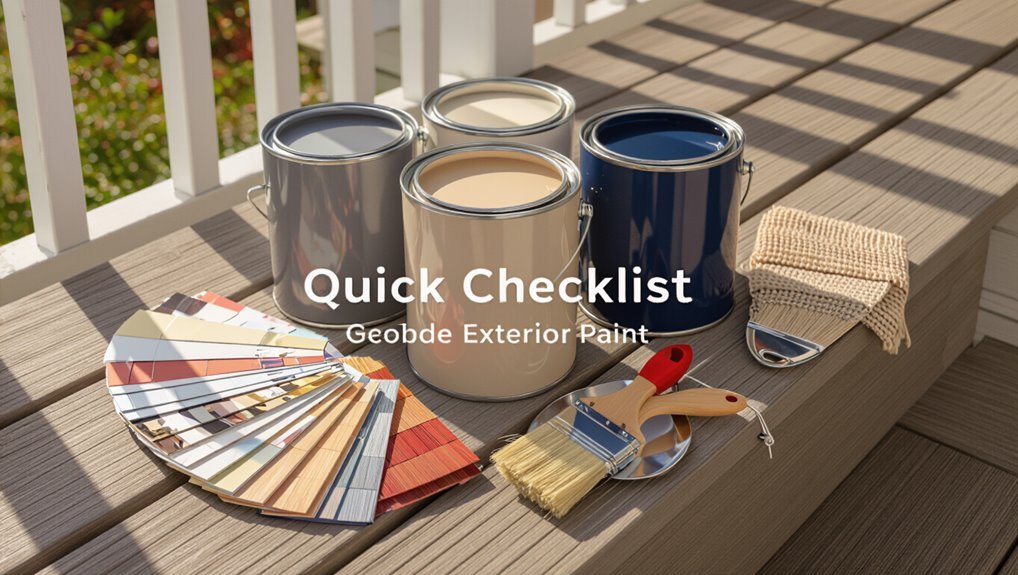
When picking exterior paint, start by matching the coating to your surface and climate: choose a formula made for wood, masonry, or metal, and one rated for your region’s humidity and UV exposure.
You’ll assess color selection for curb appeal and heat reflection, pick finish options for sheen and durability, check VOC levels, guarantee proper primer, and confirm manufacturer warranties before buying.
Acrylic-Latex vs. 100% Acrylic vs. Alkyd: Durability Compared
Although all three paint families protect exteriors, they do it differently: you’ll find acrylic-latex offers easy cleanup and flexibility, delivering many acrylic benefits like mildew resistance and UV tolerance.
100% acrylic lasts longest on siding and trim, resisting chalk and cracking.
Alkyd gives smooth leveling and durability but has alkyd drawbacks—yellowing, slower drying, and tougher cleanup—so pick by substrate and climate.
How Pigments, Binders, and UV Stabilizers Determine Paint Lifespan
Pigment, binder, and UV stabilizer choices drive how long your exterior paint will protect and look good.
You’ll want pigments rated for pigment longevity so colors don’t fade.
Prioritize binder quality for adhesion and weather resistance, since binders hold pigments and film integrity.
UV protection additives slow breakdown and improve color retention.
Together these factors determine maintenance intervals and overall lifespan.
Best Exterior Paints for Harsh Sun and UV Exposure
Because intense sun can break down paint quickly, you should choose exterior coatings formulated specifically for high UV environments. Pick UV resistant formulations with strong binders and pigments, and consider sun reflective coatings to lower surface heat and fade. Test samples in direct sun, and prioritize warranties for UV performance.
| Feature | Benefit |
|---|---|
| UV resistant formulations | Longer color retention |
| Sun reflective coatings | Lower thermal stress |
Best Exterior Paints for Wet, Humid, and Rainy Climates
When you live in a wet, humid, or rainy climate, choose exterior paints formulated for moisture resistance and mold prevention to keep siding and trim durable and healthy.
Opt for high-quality 100% acrylic or elastomeric paints with mildew prevention additives.
Proper surface prep, breathable primers, and good drainage amplify protection.
Recoat as recommended to maintain barriers against moisture and biological growth.
Budget-Friendly Exterior Paints That Still Protect
If you liked the moisture-resistant features in higher-end formulas, you can still get strong protection on a budget by choosing smartly formulated, mid-grade acrylics or hybrid latex blends that include mildew inhibitors and UV stabilizers.
You’ll pick eco friendly options labeled low-VOC, prep surfaces well, and use proper application techniques—thin, even coats with quality brushes or rollers—to extend life without overspending.
When a Premium Exterior Paint Is Worth the Cost
You’ll want to weigh upfront cost against how long the paint actually lasts and how often you’ll need touch-ups.
When a premium formula resists fading, mildew, and weather better, it can cut your long-term maintenance bills.
If the higher price means fewer repaints and repairs, it’s usually worth the investment.
When Cost Matches Performance
Choose a premium exterior paint when its benefits clearly solve problems you face—long-term color retention, superior mildew resistance, or fewer repaint cycles—so the higher upfront cost becomes an investment, not an expense.
Balance cost effective options with a performance comparison to decide.
Consider:
- Climate exposure
- Substrate condition
- Warranty terms
- Project timeline and labor constraints
Long-Term Maintenance Savings
After weighing upfront costs against performance, look at how premium paint reduces recurring maintenance and repainting over the years.
You’ll save via long term savings from fewer coats, less frequent touch-ups, and reduced surface prep.
Pair premium products with smart maintenance strategies—regular cleaning, prompt small repairs, and gutter upkeep—to stretch intervals between repaints and lower lifetime exterior costs.
Which Finish Works Best on Siding, Wood, Brick, or Metal?
Which finish works best depends on the material and the look you want: satin and low-luster acrylics cling well to vinyl siding, semi-gloss or gloss highlights trim and metal by resisting dirt, satin or matt alkyds suit painted wood by hiding minor imperfections, and breathable masonry paints are best for brick to prevent trapped moisture.
- Siding: satin for siding materials, boosts paint longevity.
- Wood: matt/satin alkyd.
- Brick: breathable masonry.
- Metal: semi-gloss or gloss.
Prep, Application, and Maintenance Tips to Extend Paint Life
1 clear step before you open a can is proper surface prep: clean dirt and mildew with a mild detergent or TSP substitute, scrape and sand loose paint, and prime bare or stained areas so the new coating adheres and lasts.
Use correct preparation techniques, follow recommended application methods—proper temperature, tools, and thin even coats—and adopt maintenance strategies like annual inspections to maximize paint longevity.
Quick Decision Guide: Pick the Right Exterior Paint for Your Home
Start by matching paint type to your needs—acrylic or latex for flexibility and durability, oil-based for trim and high-traffic areas.
Consider your climate and pick formulations that resist moisture, UV, or extreme temperatures as needed.
Also check the surface material so you choose a paint and primer system that bonds and lasts.
Paint Type Selection
Because your home’s exterior sees sun, rain, and temperature swings, choosing the right paint type matters more than color alone.
You’ll weigh durability, maintenance, and environmental impact while comparing paint finish options. Decide based on material and exposure:
- 100% acrylic latex – flexible, UV-resistant
- Oil/enamel – durable, tougher in some spots
- Elastomeric – fills hairline cracks
- Low-VOC blends – eco-friendlier choice
Climate and Surface
Now match paint type to your climate and the material you’re covering so the finish actually holds up: sun-baked, humid, coastal salt, or freeze-thaw zones each demand different properties, and wood, stucco, brick, vinyl, and metal accept paint differently. Consider climate impact and rigorous surface preparation to guarantee adhesion and longevity.
| Climate | Surface | Recommendation |
|---|---|---|
| Hot | Wood | UV-resistant acrylic |
| Humid | Stucco | Breathable elastomeric |
| Coastal | Metal | Corrosion-resistant primer |
| Cold | Brick | Flexible masonry paint |
Frequently Asked Questions
Can Exterior Paint Color Affect Heat Absorption and Cooling Costs?
Yes—you’ll notice lighter colors lower color temperature and reflect sunlight, improving energy efficiency and reducing cooling costs; darker paints raise color temperature, absorb more heat, and force your HVAC to work harder during hot weather.
How Long Should Paint Cans Be Stored Before Use?
You should use paint within 1–2 years for best results; primers and latex last about a year unopened, oil-based up to two. Follow paint storage tips, keep cans sealed at an ideal temperature (50–77°F), and avoid freezing.
Are Eco-Friendly/Low-Voc Paints as Durable Long-Term?
On balance, you’ll find eco-friendly paints can hold their own; eco friendly benefits often match conventional formulas in performance. Durability comparison shows modern low-VOC options resist fading and wear, though premium lines still outperform sometimes.
Can Paint Prevent Mold and Mildew on Siding?
Yes — you can reduce mold and mildew on siding by choosing mold resistance additives and proper paint finishes; you’ll also need good surface prep, ventilation, and periodic cleaning to keep coatings effective over time.
Is Repainting Required After Storm or Hail Damage?
You usually will need repainting after storm damage if paint assessment finds cracking, chipping, or exposed substrate; you’ll want to patched, primed, and recoated to seal, restore appearance, and prevent moisture or future mildew growth.
Conclusion
Pick the paint that matches your climate, substrate, and budget, and don’t skip prep—measure twice, cut once. A high-quality 100% acrylic with UV stabilizers usually wins for sun, while durable acrylic-latex or moisture-resistant formulas work best in wet climates. Match finish to surface, follow application steps, and do seasonal touchups. You’ll save time and money long-term: as the old saying goes, an ounce of prevention is worth a pound of cure.
