
What Is in Oil Based Paint? Ingredients Explained Simply
Oil-based paint is basically pigment suspended in a drying oil—usually linseed or an alkyd resin—thinned with a solvent like mineral spirits or turpentine and tweaked with additives for flow, drying speed, mildew resistance, gloss, and durability. Pigments give color and hiding power, extenders affect texture and cost, and binders form the tough, flexible film as they oxidize. You’ll also want to know about VOCs, safe handling, and when a waterborne alternative fits your job.
Quick Answer : What’s in Oil-Based Paint
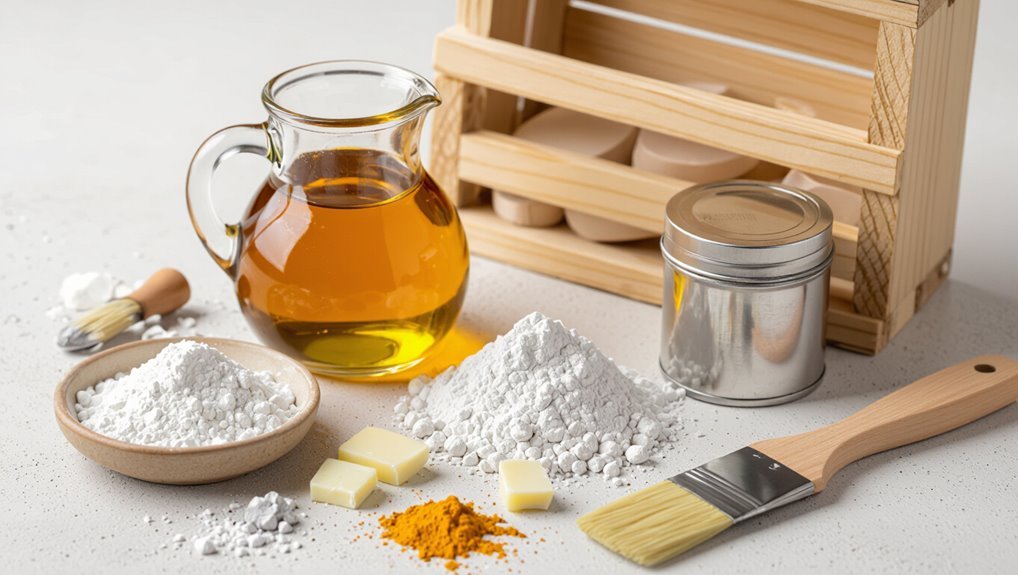
When you read a label for oil-based paint, you’ll find three main components: a drying oil (usually linseed or alkyd), pigments that provide color and opacity, and solvents like mineral spirits that adjust viscosity for brushing or spraying.
You’ll see additives for drying time, mildew resistance, and gloss.
Knowing oil paint history helps you choose finishes, while health regulations guide safe handling and ventilation.
Who This Guide Is For and Why
Because oil-based paints behave differently from waterborne finishes, this guide is for homeowners, DIYers, contractors, and hobbyists who want clear, practical information on selection, application, and safety.
You’ll get straightforward paint basics, safety tips, and troubleshooting so you can choose and use products confidently.
If you’re part of our target audience, this guide saves time and prevents common mistakes.
Core Components: Pigments, Binders, Solvents, Additives
Now that you know who this guide is for and what to expect, let’s look at what actually makes oil-based paint work.
You’ll learn pigment mixing basics without diving into types, how binder types control film strength and flexibility, solvent choices affect drying and cleanup, and additive functions tweak flow, leveling, and durability.
This helps you choose the right formulation for your project.
Pigments: Types, Opacity, and Colorfastness
Although pigments do the visible work of color and hiding, they also determine durability and how a paint behaves over time, so pick them with purpose.
You’ll learn pigment types and pigment sources—natural pigments versus synthetic pigments—so you can assess opacity levels, color stability and lightfastness ratings.
Use careful color mixing to maintain hue integrity and long-term performance.
How Binders (Alkyd Resins) Work
When you apply alkyd-based paint, the binder spreads and coalesces into a continuous film as solvent evaporates and the resin molecules interlock.
The chemical makeup and molecular weight of the alkyd control drying speed, hardness, flexibility, and resistance to yellowing.
Understanding those resin properties helps you predict final appearance and performance.
Film Formation Process
Because alkyd resins bind pigment and solvent into a continuous layer, they’re the heart of oil-based paint’s film formation process.
You rely on polymer coalescence as solvent evaporates while oxidative crosslinking hardens the matrix.
These combined drying mechanisms transform liquid into a durable film, so you get adhesion, flexibility, and resistance without needing extra additives or complex curing steps.
Resin Properties Effects
Binders control how an alkyd paint performs: they set viscosity, drying behavior, hardness, flexibility, and adhesion.
You’ll notice resin types and resin applications determine coating feel; resin effects influence gloss and leveling, while resin durability governs lifespan. Choose accordingly to match substrate and use.
- Paint for furniture: tougher, higher resin durability
- Exterior trim: weather-resistant resin types
- Interiors: smoother resin effects
Natural Oils vs. Synthetic Alkyds
You’ll notice natural oils like linseed and tung bring good flexibility and self-healing but cure slower and yellow more over time.
Synthetic alkyds, on the other hand, give you faster drying, tunable viscosity, and improved solvent and UV resistance.
Compare their performance and durability against your project’s needs to choose the best binder.
Natural Oil Properties
Think of natural oils as the traditional backbone of oil paints: they’re long-chain triglycerides derived from seeds or nuts that dry by oxidizing and polymerizing into a durable film, while synthetic alkyds are modified oils engineered for faster drying and tailored performance.
You’ll notice natural oils affect paint properties, drying times, historical uses, environmental benefits, and health considerations:
- Warmer gloss and longer working time
- Natural sourcing, biodegradable edge
- Require ventilation; may yellow over years
Synthetic Alkyd Benefits
While natural oils give paint a rich, traditional feel, synthetic alkyds speed up drying and boost durability without sacrificing film integrity.
You’ll find synthetic advantages in faster recoats, cleaner formulation control, and consistent gloss.
Alkyd versatility lets you tailor viscosity, sheen, and solvent use for applications where oil character matters but modern handling and manufacturing predictability matter more to your workflow.
Performance And Durability
When you weigh performance and durability, natural oils and synthetic alkyds take different approaches: you’ll see faster curing and tougher films with alkyds, while oils self-heal and age gracefully.
Performance testing and durability comparison help you choose based on environment and maintenance.
- Alkyds: quicker cure, higher hardness
- Natural oils: better flexibility, repairability
- Choice: climate and use determine best fit
Solvents in Oil-Based Paint: Roles and Scents
Although solvents often get blamed just for their smell, they play essential roles in oil-based paint you should understand: they dissolve and thin the binder for proper application, control drying rate, and help pigments disperse evenly, while also affecting open time, leveling, and final film properties.
You’ll learn solvent types, scent profiles and evaporation rates, and consider health impacts to choose and use them safely.
Common Thinners: Mineral Spirits, Turpentine, Substitutes
Now you’ll compare common thinners like mineral spirits and turpentine, explaining what each one does in oil-based paint.
You’ll learn why mineral spirits are a milder, petroleum-derived option and how turpentine—plus modern substitutes—differs in strength, odor, and solvency.
This will help you pick the right thinner for thinning, cleanup, or restoring paint flow.
Mineral Spirits Overview
Solvent choice matters: mineral spirits are a petroleum-derived thinner you’ll commonly use to reduce viscosity, clean brushes, and modify drying times for oil-based paints.
You’ll learn mineral spirits applications and follow mineral spirits safety to ventilate, use gloves, and store properly.
- Thin paint for brushing or spraying
- Clean and restore tools
- Control open time and flow
Turpentine And Substitutes
Curious which thinner will give you the best brushwork and cleanup? You’ll choose between traditional turpentine, mineral spirits, and modern turpentine alternatives.
Each changes flow, drying time, and odor—those solvent effects matter. Turpentine gives strong solvency and aroma; mineral spirits are milder.
Substitutes balance performance and safety, so pick based on ventilation, brush feel, and cleanup needs.
Additives Explained: Drying, Flow, and Leveling Agents
Although the base resin and pigment set the paint’s color and durability, additives for drying, flow, and leveling control how the paint behaves during application and curing.
You’ll rely on additive functions to speed drying, improve flow, and guarantee paint stability so finishes look smooth and uniform.
- Faster drying agents for workable cure
- Flow modifiers to reduce brush marks
- Leveling agents for even sheen
Mildew Inhibitors and Corrosion Preventers
Because oil-based paints often stay damp longer in humid environments, you’ll need mildew inhibitors to prevent fungal growth and corrosion preventers to stop metal substrates from oxidizing.
You’ll add biocides and fungicides for mildew resistance, and metal passivators or sacrificial pigments for corrosion protection.
These additives extend coating life, keep surfaces sanitary, and preserve adhesion without affecting color or sheen.
Fillers and Extenders in Oil-Based Paint
You’ll find common extenders like calcium carbonate, talc, and clay in many oil-based paints, and they help control cost and texture.
They change properties such as viscosity, hiding power, and durability, so you should pick formulations that match your surface and performance needs.
We’ll compare how each extender affects flow, coverage, and long-term wear.
Common Extender Types
Fillers and extenders play a quiet but essential role in oil-based paints, modifying texture, volume, and cost without changing the binder’s chemistry.
You’ll find various extender types with common uses in formulations to adjust body and coverage. Choose based on feel and budget.
- Calcium carbonate: cheap bulk filler, smooth feel
- Talc: improves slip, control sag
- Kaolin clay: boosts opacity, thins viscosity
Effects On Paint Properties
Extenders and fillers change how oil-based paint behaves more than most people realize: they alter viscosity, hiding power, texture, and drying dynamics so you can dial in performance and cost. You’ll adjust oil viscosity and drying times by choosing heavier or lighter extenders; expect trade-offs between coverage, hardness, and texture.
| Property | Effect | Typical Extender |
|---|---|---|
| Viscosity | Raises or lowers | Talc |
| Hiding | Lowers | Calcium carbonate |
| Drying | Slows or speeds | Clay |
How Oil-Based Paint Dries and Cures
When you apply oil-based paint, it doesn’t simply evaporate to dry; it undergoes a chemical curing process where the oil binder oxidizes and crosslinks into a hard film.
So drying time depends on factors like air temperature, humidity, and film thickness. You’ll monitor the drying process and curing time as layers harden.
- Thin coats cure faster
- Warm, ventilated air speeds oxidation
- High humidity slows crosslinking
Durability and Gloss: Which Ingredients Matter
Although the pigment and binder get most of the credit, the paint’s long-term toughness and sheen come from a blend of specific ingredients you mightn’t notice on the can.
You’ll weigh durability factors like extenders and stabilizers, adjust gloss levels with resins and additives, and consider ingredient interactions.
Formulation variations plus proper application techniques directly affect paint longevity, so choose and apply wisely.
VOCs in Oil-Based Paint: What to Know
Those formulation choices that shape durability and gloss also affect volatile organic compound (VOC) levels, so you should factor air quality into product selection and application.
Those formulation choices that shape durability and gloss also influence VOC levels—factor air quality into product selection and application
Know VOCs sources and their health impact to choose wisely.
Consider:
- Oil-modifier solvents often raise VOCs sources.
- Low-VOC alkyds reduce immediate health impact.
- Proper curing time limits exposure and risk.
Ingredients That Drive Odor and Ventilation Needs
When you work with oil-based paints, volatile organic compounds (VOCs) are the main drivers of strong odors and health risks.
Pay attention to solvent evaporation rates, because fast-evaporating solvents will spike indoor concentrations and ventilation needs.
Also note that certain additives and dryers can amplify smell, so choose products and ventilation strategies accordingly.
Volatile Organic Compounds
Odor is usually the first sign you’re dealing with volatile organic compounds (VOCs) in oil-based paints, but they do more than just smell—
them being volatile means they readily evaporate into the air, affecting indoor air quality and necessitating strong ventilation.
You should follow VOC regulations and health guidelines, consider paint alternatives, and use safety measures for odor management and environmental concerns.
- Open windows and run fans.
- Choose low-VOC or waterborne options.
- Check emission standards and labels.
Solvent Evaporation Rates
Because different solvents evaporate at wildly different rates, they largely determine how strong a paint’s smell is and how long you’ll need to ventilate the space.
You should check solvent types listed on labels—short‑chain solvents evaporate quickly, boosting immediate evaporation effects and odor, while heavier solvents linger, extending ventilation time.
Plan airflow accordingly and choose formulas that match your tolerance for smell and drying speed.
Additives Affecting Smell
Although solvents set the baseline smell, additives often control the character and persistence of a paint’s odor, so you should check labels beyond just the solvent list.
You’ll notice odor masking agents, fragrance additives, and anti-ozonants alter scent profiles and ventilation needs.
Consider these common contributors:
- Masking fragrances that hide VOCs
- Reactive additives that prolong off-gassing
- UV stabilizers with metallic notes
Health Risks Tied to Specific Ingredients
When you work with oil-based paints, know that several common ingredients can harm your health if you’re exposed without proper precautions.
You should understand health effects like respiratory irritation, dizziness, and long-term neurological or reproductive risks from solvents, heavy metals, and additives.
Minimize ingredient exposure by using ventilation, respirators rated for organic vapors, gloves, and careful disposal to reduce acute and chronic harm.
Environmental Impact of Oil-Based Paint Components
You should be aware that oil-based paints release volatile organic compounds that affect indoor and outdoor air quality.
You’ll also want to take into account persistent toxic additives like heavy metals and long-lasting biocides that can accumulate in ecosystems.
Finally, improper disposal can leach contaminants into soil and groundwater, so plan for safe handling and waste management.
VOC Emissions And Air
Because oil-based paints rely on organic solvents to dry and cure, they release volatile organic compounds (VOCs) that can affect indoor and outdoor air quality, pose health risks, and contribute to ground-level ozone and smog formation.
You should monitor VOC regulation, ventilate spaces, and choose low-VOC options when possible.
- Open windows and use fans.
- Limit painting duration.
- Store solvents sealed outside.
Toxic Additives And Persistence
Although oil-based paints give durable finishes, they often contain toxic additives—like heavy metal driers, biocides, and persistent hydrocarbons—that can leach into soil and waterways, bioaccumulate in organisms, and resist natural breakdown.
You should know these components pose toxic effects to wildlife and people; long term exposure can impair reproduction, nervous systems, and immune function, so minimize contact and choose safer alternatives when possible.
Disposal And Soil Contamination
Those toxic additives don’t just linger in paint cans—they become a disposal and soil contamination problem when paint is discarded or spills.
You must handle leftovers carefully to avoid soil degradation and protect ecosystems. For contamination prevention, follow safe disposal rules and cleanup steps:
- Never dump paint on ground; use hazardous waste sites.
- Contain spills with absorbents immediately.
- Wear gloves and dispose of contaminated materials properly.
Cleanup: Solvents, Brush Care, and Safe Disposal
Start cleanup promptly to keep solvents from evaporating and brushes from hardening—if you let oil-based paint sit, cleanup gets harder and more hazardous.
Use proper cleanup methods: wipe excess, flush brushes in mineral spirits, then soap and water.
Store leftover solvent and paint in labeled, sealed containers for safe storage and disposal.
Dispose of solvent and contaminated rags at a hazardous-waste facility.
Reading Oil Paint Labels for Ingredient Clues
When you inspect an oil paint label, focus on the ingredient list, hazard warnings, and VOC information to quickly gauge toxicity and cleanup needs.
When checking oil paint labels, prioritize ingredients, hazard warnings, and VOCs to assess toxicity and cleanup.
You’ll read label design cues and demand ingredient transparency; abbreviations hint at solvents, resins, or additives.
Check seal icons and safety phrases so you’ll handle and dispose correctly.
- Look for CAS numbers
- Note VOC g/L
- Spot hazard pictograms
Choosing the Right Oil-Based Paint for Your Project
Having read labels for solvents, resins, and hazard info, you can now pick an oil-based paint that matches your project’s surface, durability needs, and ventilation limits.
Consider color selection for lightfastness and maintenance, then weigh finish options—gloss for trim, satin for cabinets, matte for subtle walls.
Match solvent type to application and drying time, and choose additives sparingly to preserve desired performance.
Safe Handling and Storage by Ingredient Risk
Different ingredients demand different precautions, so organize your handling and storage around each component’s specific risks. You should perform a risk assessment, follow storage guidelines, and apply handling precautions to protect health and property.
Keep labels, ventilation, and PPE ready; separate flammables from oxidizers; monitor containers for leaks.
- Check MSDS for ingredient safety
- Store cool, ventilated, upright
- Use gloves, respirator, spill kit
When to Choose Waterborne Alternatives and Why
After you’ve assessed risks and set up safe storage and handling, consider waterborne alternatives for projects where lower toxicity, easier cleanup, and reduced flammability matter.
You’ll gain waterborne benefits like lower VOCs and simpler environmental considerations.
Expect faster or variable drying times and adjust application techniques—thin coats, proper ventilation, and compatible primers—to match performance while minimizing odor and cleanup hassle.
Quick Reference: Do’s, Don’ts, and Product Pointers
1 clear checklist will save you time and prevent costly mistakes when working with oil-based paints.
Follow safety precautions, prep surfaces, and pick compatible primers. Mind drying times and ventilation, and refine application techniques for smooth results.
- Wear respirator and gloves; ventilate workspace.
- Sand between coats; use proper thinner.
- Test product compatibility on scrap wood.
Frequently Asked Questions
Can Oil-Based Paint Be Used on Floors With Heavy Foot Traffic?
Yes — you can use oil-based paint on heavy-traffic floors, but you’ll face durability concerns; choose high-gloss formulas, apply multiple coats, and follow maintenance tips like regular cleaning and occasional recoat to preserve finish and resist wear.
How Long After Painting Can Furniture Be Moved Into the Room?
You can’t rush it — wait at least 24–48 hours, preferably 72 for tougher spots. For safe furniture placement, let paint drying reach light cure; heavier pieces should wait a week to avoid sticking or dents.
Do Oil-Based Primers Prevent Tannin Bleed-Through From Wood?
Yes — you can expect oil-based primers to reduce tannin bleed-through: they offer strong tannin resistance and primer effectiveness on dense woods. Still, you’ll want a stain-blocking sealer for heavy tannin sources to be safe.
Can Oil-Based Paint Be Applied Over Previously Painted Latex Surfaces?
About 70% of pros report success applying oil over latex when you properly prep—yes, you can, but latex paint compatibility hinges on thorough surface preparation: clean, sand, degloss, and use a bonding primer before rolling oil-based topcoat.
Are There Special Disposal Rules for Rags Soaked in Oil-Based Paint?
Yes — you must handle rags soaked in oil-based paint as hazardous waste; you’ll follow paint safety protocols and approved disposal methods to prevent unexpected combustion, often by drying, sealing in metal cans, or using hazardous waste collection.
Conclusion
You’ve got the basics now: oil-based paint mixes pigments, alkyd binders, solvents, and additives to give durable, glossy finishes. Choose products by surface, drying time, and ventilation needs, and handle them like chemicals—store sealed, use gloves, and ventilate. Pick waterborne alternatives for lower odor and easier cleanup when you don’t need extreme durability. Like a clockwork engine, understanding the parts helps you pick and use paint so your project runs smoothly and lasts.
