
Why Is Paint Bubbling on Wall? Causes and Fixes Explained
You’re seeing paint bubbles because moisture, heat, poor surface prep, or incompatible coatings have broken the paint’s bond to the wall. Moisture from leaks, rising damp, or condensation vaporizes under the film and lifts it; direct sun or high heat softens paint and increases blistering; dirty, oily, or flaky surfaces stop primers and paint from sticking. Small spots can be popped and repaired; widespread damage needs full removal and priming. Keep going to learn causes, tests, and fixes.
Search Intent: Who This Guide Helps
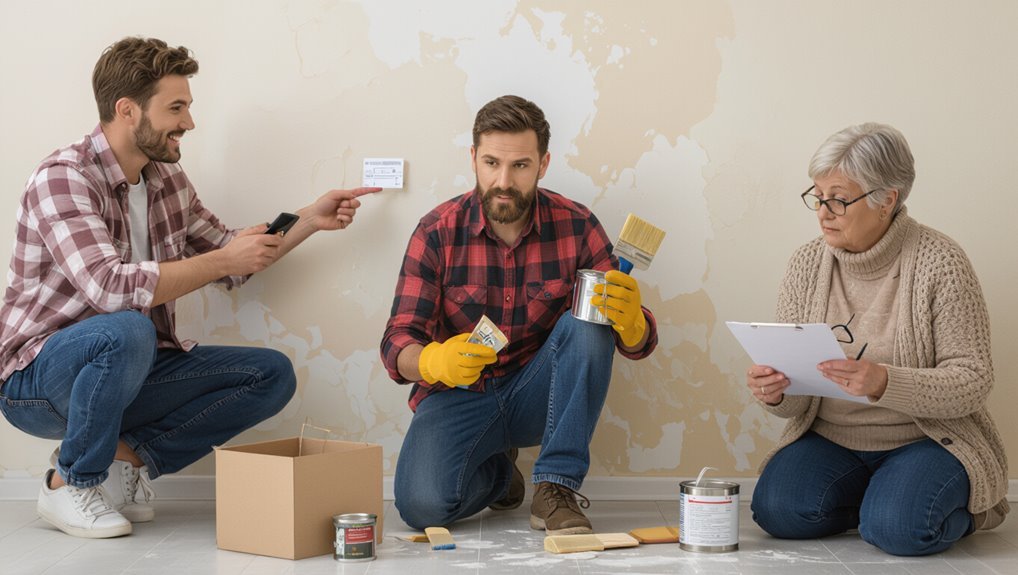
Who’s this guide for?
You’re a homeowner spotting bubbling paint and wanting clear homeowners tips to diagnose causes and act smartly.
You’ll get concise paint maintenance steps, safety-minded DIY fixes, when to call a pro, and what tools or materials you’ll need.
This guide helps you decide next steps fast, avoid bigger damage, and plan repair or repainting.
Quick Answer: Why Paint Bubbles on Walls
You’re usually looking at one of three causes when paint bubbles: moisture trapped under the undercoat, prolonged heat or sun exposure, or poor surface preparation.
Each problem causes the paint to lose adhesion or expand, creating blisters or peeling.
I’ll explain how to spot which cause it’s and how to fix it.
Trapped Moisture Undercoat
If moisture gets trapped beneath a wall’s undercoat, it’ll vaporize as temperatures change and push the paint film away from the substrate, creating bubbles or blisters.
You should locate and fix leaks, strip bubbled areas, dry the substrate thoroughly, and install proper moisture barriers before repainting.
Doing this improves paint longevity and prevents recurring blisters, saving time and repair costs.
Heat Or Sun Exposure
Besides trapped moisture, excessive heat or direct sunlight can also make paint bubble by softening the film and boosting vapor pressure beneath it. You’ll see blisters where heat exposure or sun damage weakens adhesion, especially on exterior walls. Protect surfaces with shade, reflective coatings, or heat-tolerant paint to prevent bubbling and premature failure.
| Cause | Effect |
|---|---|
| Heat exposure | Film softening |
| Sun damage | Adhesion loss |
| High temp cycles | Vapor buildup |
| Direct sun | Blistering |
Poor Surface Preparation
Anyone painting a wall can trigger bubbling by skipping proper prep—dust, grease, loose old paint, or glossy surfaces prevent new paint from bonding, so moisture or heat pushes the film up into blisters.
You should prioritize surface cleanliness, assess substrate stability and moisture assessment, choose primer selection for material compatibility, use correct application techniques, consider environmental factors, schedule inspection frequency, and follow repair methods promptly.
How to Tell Bubbling From Peeling or Cracking
You can tell bubbling from peeling or cracking by looking at size and shape—bubbles are rounded blisters while peeling lifts in larger, sheet-like sections and cracks form narrow splits.
Check the paint surface texture: bubbles feel raised and soft, peeling edges are flaky, and cracks are often sharp and dry.
Finally, test attachment to the wall; bubbles sit above the substrate, peeled paint comes away, and cracked paint usually stays bonded.
Size And Shape
Look at the size and shape of the damaged area to quickly tell bubbling from peeling or cracking: bubbles are usually rounded, raised blisters with smooth edges, while peeling shows larger, flaking sections that lift away in sheets, and cracking appears as thin, irregular lines or networks.
You’ll note paint bubble characteristics depend on wall surface factors, location, and moisture—observe closely to diagnose.
Paint Surface Texture
After checking size and shape, examine the paint’s surface texture to distinguish bubbling from peeling or cracking.
Run your hand lightly: bubbles feel raised and smooth, cracks are dry and jagged, peeling lifts in sheets.
Consider paint finishes and underlying wall textures—gloss hides small flaws, flat shows them.
This tactile check helps you identify the defect type quickly and accurately.
Attachment To Wall
While bubbles lift from the wall in discrete, rounded pockets that stay attached at their edges, peeling usually separates into larger sheets that pull away completely and expose the substrate. You can press or score to test adhesion; bubbling stays tethered, peeling detaches. Proper wall preparation and adhesion techniques prevent both.
| Test | Result | Fix |
|---|---|---|
| Tap | Tethered | Recoat |
| Score | Detached | Strip |
| Press | Soft | Repair |
| Scratch | Flaky | Prime |
| Peel | Exposed | Replace |
Common Moisture Sources That Cause Bubbling
Because paint reacts to trapped moisture, you’ll usually find bubbling near the places water or humidity gets into walls most often.
Identify sources so you can apply moisture prevention techniques and condensation control methods.
Common culprits include:
- Leaky plumbing behind walls or under floors.
- Roof or flashing failures letting rain penetrate.
- Poor ventilation in bathrooms, kitchens, and basements.
How Humidity and Condensation Create Paint Bubbles
If your indoor humidity stays high, moisture will condense on cooler wall surfaces and get trapped beneath the paint film, lifting it and forming bubbles.
You’ll notice humidity effects like soft, blistered paint where air circulation’s poor.
The condensation impact worsens with temperature swings, so you should control ventilation and dehumidify promptly to prevent recurring bubbling and surface damage.
Hidden Leaks and Plumbing as Bubbling Triggers
If you notice bubbling clustered near plumbing fixtures or along a wall where pipes run, you could have a hidden pipe leak.
Even slow plumbing seepage will saturate drywall and cause paint to blister over time.
You’ll want to locate and fix the source before repainting to prevent recurrence.
Hidden Pipe Leaks
When paint starts bubbling in sections of a wall you can’t see obvious moisture on, check for hidden pipe leaks—small drips or hairline cracks in plumbing behind drywall can saturate insulation and plaster before any water shows up on the surface.
You should schedule pipe inspection and use professional leak detection if needed.
- Trace audible drip sounds
- Examine nearby fixtures
- Monitor staining progression
Slow Plumbing Seepage
Because slow plumbing seepage can go unnoticed for weeks, you might only see paint bubbling once enough moisture has migrated through drywall or plaster.
Check behind fixtures, baseboards, and under sinks for dampness. You’ll want to shut off the water, fix the leak, and dry the area thoroughly to prevent mold.
Addressing slow plumbing early limits water damage and repainting needs.
Rising Damp and Groundwater Issues That Lift Paint
Although you mightn’t see water pooling, rising damp can force moisture up through porous masonry and lift paint from walls, especially at ground level.
Even without visible pools, rising damp can push moisture through masonry and peel paint at ground level.
You’ll notice salt stains, peeling, and bad odors where groundwater intrusion’s present. Act fast to stop damage:
- Identify damp zones and salt efflorescence
- Improve exterior drainage and damp-proofing
- Replace compromised plaster and repaint with breathable coatings
Roof and Flashing Failures That Cause Interior Bubbling
If your roof or flashing fails, water can enter at seams and travel along rafters until it reaches interior finishes, causing paint to bubble on ceilings and upper walls.
You should schedule a roof inspection to spot damaged shingles, clogged valleys, or loose flashing.
Prompt flashing repair and shingle replacement stops leaks, prevents mold, and fixes bubbling before drywall or insulation suffers long‑term damage.
Exterior Wall Problems That Show Up as Interior Bubbles
When exterior siding, brickwork, or cladding lets moisture through, that water will migrate inward and cause paint to bubble on the opposite wall surface.
You’ll often see this happen after heavy rain, poor flashing at window and door penetrations, or failing wall membranes.
You should inspect for exterior moisture entry, compromised wall insulation, and trapped dampness:
- damaged mortar or siding
- blocked weep holes
- deteriorated sealants
How Poor Surface Preparation Leads to Bubbling
If you skip proper cleaning, dust and grease will prevent paint from sticking and cause bubbles.
Painting over damp surfaces traps residual moisture that expands later and lifts the finish.
And if you leave loose old paint in place, new layers won’t bond and blisters will form.
Improper Surface Cleaning
Because paint needs a clean, stable surface to stick to, failing to remove dust, grease, or old loose paint almost guarantees bubbling later on.
You must follow good surface prep and proven cleaning techniques before painting. Neglecting this traps contaminants that break adhesion.
- Degrease and wipe
- Sand and remove flakes
- Use proper cleaners and rinse
Residual Moisture Presence
Poor cleaning doesn’t just leave dirt—it can trap moisture in the substrate or seal in damp spots you can’t see.
If you paint over trapped damp, steam and vapor expand, lifting the film and causing bubbles.
Use moisture detection to find hidden wetness before painting, dry thoroughly, and employ humidity control during curing.
Proper prep prevents trapped moisture and paint failure.
Loose Old Paint
When you skip proper prep and paint over flaking or poorly adhered layers, the new coat can’t bond and soon lifts into bubbles.
You’ll need to remove loose old paint to restore paint adhesion and prevent repeat bubbling.
Steps to follow:
- Scrape and sand to sound substrate
- Clean dust and grease thoroughly
- Prime exposed areas before repainting
Grease, Dust, and Contaminants That Prevent Adhesion
Even a thin film of grease, dust, or other surface contaminants can stop paint from bonding to your wall, so you’ll often see bubbling where the coating couldn’t adhere. You should tackle grease removal, perform dust prevention, and wipe surfaces with degreaser and tack cloth before priming to guarantee proper adhesion.
| Contaminant | Action |
|---|---|
| Grease | Degrease |
| Dust | Tackle |
| Oils | Clean |
| Residue | Prime |
Old Gloss or Oil Paint Under New Water-Based Coats
If you slap water-based paint over old gloss or oil paint, it often won’t stick well and can bubble where adhesion fails.
That trapped solvent in the older layer can soften or vaporize, pushing the new coat up.
You’ll need to remove or properly prime the glossy surface to prevent this.
Poor Adhesion Between Layers
Because oil- or gloss-based paint creates a slick, nonporous surface, new water-based coats often can’t bond properly and will lift or bubble.
You should prep surfaces, perform adhesion testing, and understand paint layering to prevent failure.
Checklist:
- Sand or de-gloss to create tooth
- Use a bonding primer compatible with both systems
- Test a small patch before full application
Solvent Trapped In Old Paint
Along with poor adhesion, trapped solvents in an old oil- or gloss-based layer can make new water-based paint bubble as it cures.
You’ll see blisters where solvent evaporation from beneath the new coat disrupts paint chemistry, lifting film and causing delamination.
To prevent this, strip or thoroughly degloss the old layer, allow full solvent release, or use a compatible primer before applying water-based paint.
Incompatible Primer and Paint Combinations
When you apply a primer that isn’t chemically compatible with your paint, the finish can separate and cause bubbling as the layers fail to adhere properly.
You should check primer types and avoid incompatible combinations to prevent adhesion failure.
Consider these actions:
- Match primer and paint base (oil vs. water)
- Use manufacturer recommendations
- Test a small area before full application
Painting Over Damp or Not-Fully-Cured Plaster
If you paint over damp or not-fully-cured plaster, moisture trapped under the paint will cause bubbling, peeling, and uneven adhesion as the plaster dries and shrinks.
You should delay painting until plaster curing completes and use damp detection to confirm dryness.
Apply a breathable primer or mist coat to improve adhesion on properly cured plaster, preventing future failures and ensuring an even finish.
How Temperature Extremes Cause Paint to Bubble
Although extreme temperatures might seem unrelated to paint quality, they directly affect how paint cures and adheres, and can cause bubbling when conditions are too hot or too cold.
You’ll notice bubbles from rapid temperature fluctuations that interrupt drying and weaken paint adhesion.
Prevent issues by controlling environment and timing.
- Monitor indoor climate
- Avoid painting near HVAC cycles
- Use temperature-rated coatings
Direct Sunlight and Thermal Expansion Effects
If your wall gets prolonged direct sunlight, the heat can soften the paint film and make it more vulnerable to bubbling.
You’ll also see repeated heating and cooling cause the substrate and paint to expand and contract at different rates, which can crack the coating and let moisture in.
Together, softened paint and thermal expansion cycles accelerate bubbles and flaking.
Sunlight-Induced Paint Softening
When sunlight hits an exterior wall, the paint film warms and softens, letting trapped moisture and expanding substrates push the coating away from the surface.
You’ll notice sunlight effects vary with paint types; softer binders sag and lose adhesion faster.
Consider these actions:
- Shade vulnerable areas to reduce heat stress
- Use heat-resistant, durable paint types
- Remove softened, bubbled paint and recoat properly
Thermal Expansion Cracking
Because direct sunlight heats wall materials at different rates, panels, masonry, and trim expand unevenly and put stress on the paint film, causing fine cracks and blistering along joints and edges.
You’ll see paint adhesion fail where movement repeats daily; thermal contraction at night pulls layers apart.
To prevent this, use flexible coatings, proper priming, and joints allowing movement to preserve finish.
Solvent or Outgassing Beneath Paint Layers
Ever wonder why paint bubbles even when the surface seems dry? You might trap solvent outgassing between coats or use incompatible systems.
Ever wonder why paint bubbles on a dry-looking surface? Trapped solvent outgassing or incompatible systems are often to blame.
Check these causes and actions:
- Solvent outgassing from underlayers — allow full cure before recoating.
- Poor paint compatibility — match primer and topcoat chemistry.
- Thick films or low ventilation — thin coats and ventilate during drying.
New Concrete or Plaster Off‑Gassing and Paint Bubbles
If you’ve just painted over fresh concrete or newly troweled plaster, trapped moisture and residual lime gases can push through the coating and cause bubbling; allow these substrates to fully dry and neutralize before you paint.
You should test for off gassing effects and choose primers and paints with proper paint compatibility.
Wait weeks, use breathable primers, and monitor moisture to prevent recurrence.
Poor Application Technique That Traps Air or Moisture
When you apply paint too thickly, overwork the surface, or roll and brush in the wrong sequence, you can trap air and moisture under the film and create bubbles as the coating cures.
Applying paint too thickly, overworking, or poor roll/brush sequence traps air and moisture, causing bubbles.
You’ll cause application errors that form air pockets; fix technique and sequence to prevent bubbling.
- Don’t overwork edges
- Follow wet‑edge rolling
- Back‑roll brushed areas
Using Too-Thick Paint Coats and Quick Recoats
If you slap on paint that’s too thick, it can trap solvents and moisture underneath and cause bubbling as the top skin dries first.
Rushing with quick recoats makes this worse because new layers seal in solvents before they evaporate.
Let each coat fully dry and use thinner, even applications to prevent overapplication damage.
Thick Paint Causes Bubbling
Although thick paint can seem like a shortcut to faster coverage, applying heavy coats or recoating before the previous layer dries traps solvents and moisture, causing the film to lift, blister, and bubble.
You’ll see thick paint cause bubbling issues when layers don’t cure. Prevent it by:
- Using thinner, even coats
- Waiting full dry times
- Sanding between coats
Problems With Fast Recoats
Because you’re rushing to finish, recoating too soon or slapping on thick layers traps solvents and moisture beneath the surface, causing the paint film to lift, blister, and bubble.
You’ll create bubbles with fast recoats when underlying coats haven’t cured. These application mistakes weaken adhesion and hide problems until bubbles form.
Let layers dry properly and avoid hasty, heavy passes that entrap moisture.
Preventing Overapplication Damage
Prevent overapplication by applying thin, even coats and waiting the recommended dry time between layers; piling on thick paint or recoating too fast traps solvents and moisture, which leads to lifting, blistering, and bubbling.
You should use proper overapplication techniques and prioritize damage prevention.
- Spread thin layers evenly
- Follow manufacturer dry times
- Sand and wipe between coats
Spray Painting Mistakes That Create Bubbles
Ever wonder why spray painting sometimes leaves tiny spheres of trapped air on your wall? You’re probably rushing spray technique, holding the can too close or moving too slowly, which traps solvent and causes bubbling.
Poor paint selection—wrong viscosity or incompatible formulations—also creates problems.
Thin coats, proper distance, and compatible products reduce bubbles and give smoother, durable finishes.
Brush, Roller, and Spray-Gun Errors That Cause Bubbles
When you use a brush, roller, or spray gun, small mistakes in technique and setup can trap air or solvent and make paint bubble on the wall.
You’ll prevent bubbles by correcting these common errors:
- Poor brush techniques: overworking or dry brushing traps air.
- Faulty roller application: excessive pressure or uneven nap picks up bubbles.
- Incorrect spray gun adjustments and wrong paint thickness cause overspray and solvent entrapment.
Low-Quality Paints and Additives That Increase Bubbling Risk
If you use low-quality paints, cheap pigments and weak binders can’t form a durable film and you’re more likely to see bubbles.
Adding too much thinner or solvents thins the film and traps gases that pop through the surface.
And if you mix additives improperly, they’ll react unevenly and create localized bubbling.
Cheap Pigments And Binders
Because low-quality paints cut corners on pigments and binders, you’re more likely to see bubbling, peeling, and uneven adhesion over time.
You’ll notice problems when cheap paint lacks proper resin or consistent colorants. Weak binders trap solvents and fail adhesion.
Check labels and vendor quality control; avoid unknown brands.
- Poor binder strength
- Inconsistent pigment load
- Failed adhesion tests
Excessive Paint Thinners
Cheap pigments and weak binders already set the stage for bubbling, and adding too much thinner makes that outcome more likely.
If you over-thin paint, excessive thinning reduces viscosity and weakens paint adhesion to the wall. You’ll see more blisters and runs as solvents evaporate unevenly.
Use manufacturer thinning limits and test small areas to avoid compromising finish and longevity.
Improper Additive Mixing
When you mix additives into low-quality paints without following directions, you can create chemical imbalances that trap solvents or prevent proper film formation.
You risk bubbling when you ignore additive compatibility and poor mixing techniques. Follow labels, test small areas, and avoid unknown blends.
- Check compatibility first
- Use proper mixing techniques
- Test before full application
How to Spot Mold or Mildew Under Bubbled Paint
Curious whether those paint bubbles hide something worse? Check for dark spots, musty odor, or fuzzy growth when you lift a blister; that suggests mold.
Use a flashlight and magnifier for clear mold detection. If you find discoloration, dry the area, clean with appropriate cleaner, and improve ventilation to aid mildew prevention.
Wear gloves and a mask during inspection and cleanup.
Structural Movement and Substrate Instability Causing Bubbling
If you ruled out mold or mildew under the blistered paint, consider structural movement and unstable substrates as the cause.
You’ll notice cracking, paint lifting, or panels separating when substrate support fails and structural integrity is compromised.
Address movement, fastenings, and framing before repainting.
- Check framing connections
- Stabilize substrate support
- Repair structural integrity issues
How Salt (Efflorescence) Lifts Paint on Masonry
Because masonry draws moisture from the ground and through porous bricks or blocks, dissolved salts migrate to the surface as water evaporates and form a powdery crust called efflorescence that pushes against paint layers and causes lifting and flaking. You’ll see powdery deposits, blistering, and peeling; address salt damage with ventilation, damp-proofing, and masonry solutions to stop recurrence.
| Sign | Action |
|---|---|
| Powdery crust | Brush off |
| Blisters | Dry and seal |
| Peeling paint | Repaint after repairs |
Diagnosing the Root Cause: Quick Inspection Checklist
Start by checking for moisture: touch the wall, look for stains, and use a moisture meter if you have one.
Then inspect how the surface was prepared—cleanliness, primer use, and any loose or flaky areas matter.
These quick checks will point you to whether water or poor prep caused the bubbling.
Check For Moisture
When paint bubbles, check for moisture first since dampness is the most common culprit; run your hand over the area, sniff for musty odors, and look for discoloration or peeling nearby that signals water intrusion.
Use moisture detection tools and practice humidity control to prevent recurrence.
- Feel for cold, damp patches
- Smell for moldy odors
- Note nearby stains or efflorescence
Inspect Surface Preparation
If paint’s bubbling, inspect how the surface was prepared before painting to pinpoint avoidable mistakes; run your hand over the area and look for loose paint, chalky residue, or glossy patches that suggest poor adhesion. Check surface texture, cleanliness, and prior painting techniques to find faults and fix them before repainting.
| Check | Signs | Action |
|---|---|---|
| Texture | Rough or slick | Sand/prime |
| Cleanliness | Dust/grime | Wash |
| Technique | Wrong primer | Reapply properly |
How to Test for Moisture in Walls Before Repairs
Because paint bubbles usually signal underlying moisture, you should always test walls before scraping or repainting to avoid wasted effort and recurring problems.
Because bubbling paint often means moisture, always test walls before scraping or repainting to avoid repeat problems.
Use moisture meters during wall inspections, and follow simple checks to locate damp spots:
- Scan surfaces with a moisture meter for percent readings.
- Tap and listen for hollow sounds indicating delamination.
- Check adjacent areas for staining or efflorescence to map the issue.
When to Call a Plumber or Roofer Versus a DIY Fix?
If the bubbling comes with obvious leaks, warped drywall, or recurring moisture despite drying, you should call a plumber—those are signs of a hidden pipe problem.
If water stains or bubbling appear after storms, along the roofline, or in attic areas, call a roofer to inspect flashing, shingles, and vents.
For small, one-time spots with no active leaks, you can usually dry, treat, and repaint yourself.
Signs You Need A Plumber
When paint starts to bubble, you’ll want to figure out whether the problem’s cosmetic or a sign of a leak that needs a pro. Simple surface blisters from poor prep can often be fixed by you, but persistent bubbling, damp patches, or paint that re-blisters after drying usually means moisture is coming from plumbing or roofing and you should call a plumber or roofer.
- Visible water trails or pooling
- Recurrent damp after drying
- Sudden failures suggesting plumbing emergencies; check plumber qualifications
When To Call A Roofer
How do you know whether bubbling paint is a job you can fix or one that needs a roofer?
If bubbles trace to ceilings or exterior walls after storms, schedule a roof inspection.
If you spot damaged roofing materials, recurring leaks, sagging, or mold, call a roofer.
For small, localized damp spots without structural signs, you can try DIY repairs first.
Step-by-Step Repair for Small, Localized Bubbles
Start by evaluating each bubble to confirm it’s small and localized—you’ll save time by treating only affected spots rather than repainting the whole wall.
Identify bubbling causes, then follow repair techniques: pop, dry, and sand. Clean dust, apply primer, and repaint. Use proper ventilation and match paint sheen to blend repairs.
- Pop gently
- Prep thoroughly
- Refinish carefully
Repair Process for Large or Widespread Bubbling
If you’re facing large or widespread bubbling, start by evaluating the full extent of the damage so you know what needs fixing.
You’ll then remove all loose or flaking paint, working back to sound substrate.
Finally, repair any damaged areas, prime as needed, and repaint the surface for a durable finish.
Assess Extent Of Damage
Scope matters: before you pull off loose paint or pick a repair method, walk the affected rooms and map how much bubbling you have — note whether it’s isolated patches, long streaks, or entire walls, and record the size, depth, and frequency of bubbles.
Use damage assessment to guide repair options. Consider:
- Area concentrated vs. widespread
- Structural moisture signs
- Accessibility for repairs
Remove Loose Paint
Peel away the loose, bubbled paint so you can see the true condition of the wall and prevent further flaking. Scrape to sound edges, watch for substrate damage, and test for surface moisture before proceeding; poor paint adhesion often follows dampness. Clean debris and let the area dry completely.
| Step | Tool | Check |
|---|---|---|
| Scrape | Scraper | Dryness |
| Clean | Brush | Smooth |
| Inspect | Light | Adhesion |
Repair And Repaint Surface
Start by evaluating the full extent of the damage so you know whether to spot-repair or strip and redo entire sections. For large or widespread bubbling, you’ll typically remove all loose paint, repair the substrate, prime, and then repaint the area to guarantee long-term adhesion.
Use proper repair techniques and smart paint selection.
- Remove loose material thoroughly
- Patch and sand defects
- Prime with a compatible sealer
Best Cleaners and Anti-Mildew Treatments Before Repainting
Before you repaint, clean and treat any mildew so your new finish sticks and stays clear; use products that remove stains and kill spores rather than just masking them.
You’ll want the best cleaning techniques: detergent scrub, diluted bleach or hydrogen peroxide, and a stiff brush.
Follow with effective anti mildew products—commercial fungicides or mold inhibitors—and let surfaces fully dry before repainting.
Proper Surface Prep: Sanding, Priming, and Patching
Once mildew and stains are removed and the wall’s dry, you’ll want to focus on surface prep: sanding to feather edges and remove loose paint, patching holes or cracks with appropriate filler, and applying the right primer to promote adhesion and block stains.
Follow these steps:
- Choose proper sandpaper grit for smooth changes.
- Use compatible patching compound.
- Select primer types suited to substrate and stains.
Choosing the Right Primer to Prevent Future Bubbling
If you want your new paint to stick and stay smooth, pick a primer formulated for the wall’s material and the specific problem you fixed. Choose primer types based on surface compatibility, moisture issues, or stains. Match adhesion and sealing properties to avoid bubbling.
| Primer Type | Best Use |
|---|---|
| Oil-based | Stain blocking |
| Latex | Dry interior |
| Shellac | Moisture-prone |
Selecting Compatible Paint Systems for Different Walls
After sealing stains and choosing a primer suited to the substrate, you’ll need to pick a paint system that works with both the primer and the wall material to prevent bubbling and peeling.
Consider paint compatibility with specific wall types so coatings bond and breathe properly.
- Match primer/base to substrate
- Choose breathable paints for masonry
- Use moisture-tolerant systems for bathrooms
Painting Technique Tips to Avoid Trapping Moisture
When you paint, work in thin, even coats and don’t overload the brush or roller so the finish can dry and release any trapped moisture; thicker layers take longer to cure and are far more likely to bubble.
Spot-seal porous areas, use compatible primers, and respect recommended recoats.
Combine moisture barriers on damp-prone substrates with ventilation improvements during application to limit trapped moisture and adhesion failure.
Drying Time and Environmental Controls During Painting
Drying time depends on paint type, film thickness, temperature, and humidity, so keep conditions consistent and within the manufacturer’s recommended range to let coatings cure properly.
You’ll control environmental factors and use proper drying techniques to prevent bubbling. Consider:
- Monitor temperature and humidity closely.
- Use fans and dehumidifiers strategically.
- Apply thinner coats and allow full cure between layers.
Fixes for Exterior Bubbled Paint on Siding and Brick
Start by evaluating the extent and cause of the bubbling so you know whether you can repair it yourself or need a pro: scrape loose paint, clean substrate, sand edges, and prime with a compatible primer.
For siding materials and brick, choose coatings that match porosity and improve paint durability.
Replace rotten boards or damaged mortar; repaint under suitable conditions to prevent recurrence.
Long-Term Solutions for Rising Damp and Masonry Salts
Although it can look like a simple paint problem, rising damp and salt attack require addressing moisture and salt sources, not just repainting.
So you’ll need to tackle drainage, damp-proofing, and salt removal to get a lasting fix. You should use long-term solutions focused on moisture barriers and salt extraction:
- Install chemical or physical damp-proof courses.
- Flush masonry salts and apply salt-resistant primers.
- Improve external drainage and ventilation.
When to Replace Plaster, Drywall, or Render
If moisture, salts, or structural movement have left plaster, drywall, or render crumbling, bowed, or repeatedly failing despite repairs, it’s time to contemplate replacement rather than patching.
You should order a drywall inspection and assess underlying causes: rot, persistent damp, or movement.
Choose plaster replacement when lath or salt contamination is widespread.
Replace render if masonry is compromised; don’t delay to prevent further damage.
Cost Comparison: Quick Patch Versus Full Repair
1 clear choice you’ll face is whether to apply a quick patch or invest in a full repair: quick fixes cost less upfront and get you back to normal fast, but full repairs address root causes and usually save money and hassle over time.
Decide based on scope, budget, and long‑term risk:
- quick patch: low cost, short term
- full repair: higher cost, lasting fix
- hybrid: targeted repair plus monitoring
Preventive Maintenance to Stop Bubbling Before It Starts
Because prevention beats repair, start with regular checks and simple upkeep to stop paint bubbling before it starts.
You’ll follow preventive measures like fixing leaks, improving ventilation, and controlling humidity.
Use maintenance tips such as cleaning surfaces, priming properly, and repairing small cracks immediately.
Inspect exterior caulking yearly and address water intrusion fast to keep paint adhesion strong and bubbles away.
When Bubbled Paint May Indicate Serious Structural Issues
When you see widespread or recurring paint bubbling, don’t dismiss it as a cosmetic issue — it can signal serious structural problems like persistent moisture intrusion, failing flashing, or hidden rot that need immediate attention.
You should request structural analysis to assess causes and restore paint integrity.
- Moisture paths indicating leaks
- Compromised framing or rot
- Failed exterior envelope
How to Document Damage for Insurance or Contractor Quotes
Start by creating a clear record of the bubbling: take dated photos from multiple angles, note locations and measurements, and list visible signs like peeling, discoloration, or dampness.
Then compile a concise damage documentation file with photos, timestamps, brief descriptions, and any related receipts.
Share this packet with contractors for quotes and submit copies for insurance claims, keeping originals for your records.
Post-Repair Checklist to Ensure Bubbling Stays Gone
If you’ve completed repairs, confirm the fix by running a short checklist: inspect repaired areas for even adhesion and smooth finish, touch nearby surfaces to feel for residual dampness or soft spots, check for any new cracks or paint lifting at edges, and note the repair date and contractor details for future reference.
- Monitor humidity and ventilation for Post repair strategies
- Schedule periodic inspections for Long term maintenance
- Photograph any changes and log dates
Frequently Asked Questions
Can Bubbled Paint Release Harmful Chemicals or VOCS Affecting Indoor Air Quality?
Yes, bubbled paint can release VOCs and chemical exposure risks if the coating contains solvents or lead; you’ll breathe elevated indoor pollutants during deterioration or sanding, so ventilate, test older paint, and use proper removal methods.
Will Bubbling Paint Indicate Asbestos or Lead in Older Homes?
Bubbling paint doesn’t necessarily mean asbestos or lead, but you shouldn’t assume safety; get asbestos testing and a lead inspection if your older home’s paint or materials are disturbed, especially before renovation or demolition.
Can Wallpaper Under Paint Cause Bubbling Years Later?
Yes — and then suddenly years later you’ll see bubbles. If wallpaper removal wasn’t thorough, trapped adhesive or paper can fail, ruining paint adhesion. You’ll need proper stripping and surface prep to stop recurrence.
How Long Should Repaired Paint Last Before Bubbles Reappear?
You should expect repaired paint to last years if you use proper repair techniques; with good prep and quality products, paint durability often exceeds five to ten years, though moisture or hidden issues can shorten that lifespan.
Do Warranties Cover Paint Bubbling From Environmental Factors?
Generally, you won’t be covered: warranties often list warranty exclusions for natural wear and environmental impact like humidity, temperature swings, or sun exposure. You’ll need documented negligence or product defect to claim reimbursement.
Conclusion
In short, don’t ignore paint bubbles — they usually signal moisture, adhesion failure, or poor prep, and they’ll only worsen if you leave them. Fix the root cause (vent moisture sources, improve ventilation, or repair leaks), then strip, prime, and repaint with proper products. Interesting fact: studies show about 33% of homeowners experience paint failure related to moisture at some point, so taking preventive steps now can save you time, money, and bigger structural headaches later.
