
How to Roll Paint on a Wall for a Smooth Even Coat
Prep the wall by cleaning, filling holes, sanding smooth and priming. Pick a roller nap suited to your texture—short for smooth, medium for light texture—and use a synthetic cover for latex paint. Load the roller evenly on the tray, avoid drips, then work in manageable sections using the “W” pattern, overlap edges 2–3 inches, and keep a wet edge for even coverage. Let paint dry per label and add a second coat if needed; more tips follow below.
Who This Guide Helps and How to Use It
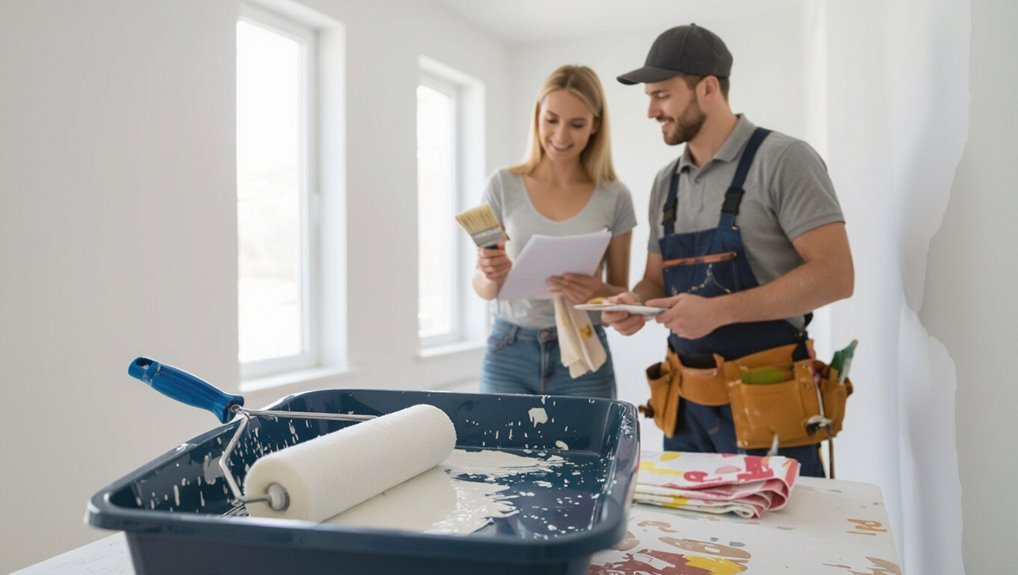
Whether you’re tackling your first bedroom or repainting a whole house, this guide helps homeowners, renters, and DIYers who want reliable, efficient results without wasted time or materials.
You’ll find clear steps aimed at painting beginners and DIY enthusiasts, practical tips on tools and prep, and troubleshooting pointers.
Use it sequentially to build skill and confidence, skipping sections if you already know them.
Quick Checklist for a Smooth, Even Paint Roll
Start with these essential checks so your roller delivers smooth, even coverage with minimal touch-ups.
Confirm surface is clean, dry, and repaired. Use quality roller nap for texture, load roller evenly, and remove excess.
Maintain wet edges and consistent pressure. Practice roller techniques on scrap.
Keep paint application thin and even, working in overlapping passes for uniform sheen and no drips.
How to Choose the Right Paint Finish for Walls
Why pick one finish over another? You’ll match paint finish types to room use: flat hides flaws in low-traffic areas, eggshell balances durability and subtle sheen, satin or semi-gloss suits trim and high-traffic walls.
Consider cleaning needs, light exposure, and desired sheen. Compare gloss levels for reflectivity; higher gloss gives durability but shows imperfections. Choose accordingly.
Choose the Right Roller for Your Wall Surface
Pick a roller with the right nap length for your wall texture — short naps for smooth walls, medium for lightly textured surfaces, and long naps for heavy texture.
Match the roller material to your paint type: synthetic covers for latex and natural for oil-based paints.
Choosing the right combo will give you even coverage and fewer touch-ups.
Nap Length Matters
The roller nap—the thickness of the fabric on the cover—controls how much paint your roller holds and how it lays down on different surfaces, so choose one that matches your wall’s texture to get even coverage and fewer touch-ups.
For smooth walls pick a short nap; slightly textured surfaces need medium nap; rough or stucco walls require a long nap to fill crevices without skipping.
Roller Material Choice
Material matters: choosing the right roller cover will affect paint pickup, release, and the final texture you see on the wall.
You’ll match roller fabric types and roller size options to surface texture and finish. Consider:
- Smooth: microfiber or foam
- Light orange peel: short nap synthetic
- Textured: long nap wool
- Trim: small foam
- Durable: woven blended fibers
Pick the Correct Roller Nap Length
1 key choice you’ll make before you start rolling is the nap length, because it determines how much paint the roller holds and how smooth the finished surface will be.
Choose a short roller nap for smooth walls and less texture variation; pick a medium or long nap for rougher surfaces to reach crevices.
Match nap to surface for even coverage and fewer touch-ups.
Prep Walls: Cleaning, Patching, and Sanding
Start by wiping down your walls with a damp cloth or sponge to remove dust, grease, and cobwebs so paint will adhere evenly.
Start by wiping walls with a damp cloth to remove dust, grease, and cobwebs for even paint adhesion.
Do a quick surface inspection to spot holes, cracks, or peeling. For efficient wall preparation, follow these steps:
- Clean with mild detergent
- Fill holes with spackle
- Sand patched areas smooth
- Remove loose paint
- Wipe dust before priming
Protect Trim, Floors, and Fixtures Quickly
Before you start rolling, cover flooring with drop cloths or rosin paper so paint can’t stain carpets or hardwood.
Use painter’s tape to seal trim edges for sharp lines and to protect baseboards and window casings.
Wrap light fixtures, doorknobs, and outlets with plastic and tape so they stay clean and functional.
Protect Flooring Quickly
Covering floors, trim, and fixtures quickly keeps paint where it belongs and saves you time on cleanup.
Use simple floor protection techniques and quick cleanup methods so you can work fast and neat. Choose durable drop cloths, secure edges, tape nonporous surfaces, protect high-traffic paths, and keep a small broom and wet wipes handy.
- Canvas drop cloth
- Plastic sheeting
- Paper runners
- Painter’s felt
- Masking film
Tape Trim Edges
Once your floors and fixtures are guarded, tape becomes your best tool for keeping paint off trim and creating clean lines.
Choose tape types for the surface—painter’s tape for delicate wood, stronger tape for rougher trim. Press edges firmly during edge preparation to prevent bleed.
Remove tape while paint’s tacky, pulling at a 45° angle for crisp, professional-looking results.
Cover Fixtures Securely
When you’re ready to paint, protect every fixture and surface you don’t want to touch by quickly covering trim, floors, outlets, and light fixtures with the right materials — drop cloths for floors, plastic sheeting for bulky items, and painter’s tape for edges — and secure them so they won’t shift while you work.
- Use drop cloths
- Tape edges tightly
- Cover switches/outlets
- Wrap light fixtures
- Anchor plastic sheeting
Use proper fixture protection and fixture coverage to prevent drips and dust during rolling.
How to Load a Roller Correctly (No Splatters, No Waste)
Start by pouring a modest amount of paint into the tray well—enough to cover the roller nap but not so much it floods the ridges—and dip the roller at a slight angle, rolling it back and forth in the tray’s textured grid until the nap’s fibers hold an even, saturated layer without dripping. Use correct roller technique and check paint consistency.
| Step | Tip |
|---|---|
| 1 | Angle roller |
| 2 | Roll slowly |
| 3 | Avoid overloading |
| 4 | Remove drips |
| 5 | Recheck nap |
Where to Start Rolling Paint for an Even Coat
Start a few inches below the ceiling so you can feather the edge before you hit the corner.
Begin at a corner edge and roll outward in consistent strokes to lock in a smooth starting line.
If there’s an outlet nearby, use its midpoint as a reference to keep your panels even across the wall.
Start Near Ceiling Line
Begin just below the ceiling line so your roller meets the wall at a crisp edge and you can blend each pass downward for an even coat.
Use this ceiling technique and master edge rolling to prevent drips and visible seams.
- Load roller evenly
- Start small sections
- Maintain light pressure
- Overlap strokes
- Check for drips immediately
Begin At Corner Edge
After you’ve established a clean line along the ceiling, move to the corner edge and position your roller so its nap meets the wall at a slight angle.
Start with short, controlled strokes toward the center, using corner techniques to avoid buildup.
Maintain light pressure for consistent coverage and focus on edge blending where the roller meets taped or trimmed areas to keep the finish seamless.
Work From Outlet Midpoint
Choose a midpoint near an electrical outlet as your rolling anchor so you can work outward in even, overlapping strokes; lining the roller up with the outlet helps you maintain consistent pressure and avoids visible seams.
You’ll use outlet positioning as your reference for painting technique and rhythm.
- Start at outlet midpoint
- Roll vertically then cross-roll
- Keep consistent pressure
- Overlap by 50%
- Feather edges gently
Use the “W” Technique to Roll Paint Evenly
Start by loading your roller evenly, then paint a loose “W” on the wall without filling it in, which gives you a consistent base and helps avoid roller marks.
Use the W technique as your rolling technique to distribute paint quickly.
Work each section by overlapping strokes lightly, blending edges with gentle passes so coverage stays uniform without reloading or pressing too hard.
Maintain a Wet Edge and Avoid Lap Marks
When you keep a wet edge, you blend each new stroke into still-wet paint so lap marks disappear; work in manageable sections and overlap each pass by a few inches while keeping a steady roller speed so the paint feathering stays seamless.
- Roll toward wet edge
- Maintain consistent pressure
- Overlap by 2–3 inches
- Reload before dry
- Smooth edges last
Use wet edge techniques and lap marks solutions to prevent streaks.
When and How to Add a Second Coat for Full Coverage
After the first coat dries, you’ll need to wait the manufacturer’s recommended time before deciding on a second coat.
Inspect the wall for thin spots or uneven sheen to choose between spot touch-ups and a full coat.
If coverage is still patchy, roll a full second coat using the same technique for an even finish.
Wait Time Between Coats
Give the first coat enough time to dry to the touch and cure slightly before you add a second one—typically 2 to 4 hours for latex and 24 hours for oil-based paints—so you don’t lift or gum up the finish.
Monitor humidity and temperature; adjust wait time for coat thickness.
Tips:
- Check tackiness
- Follow label times
- Thin heavy coats
- Sand light sheen
- Recoat evenly
Touch-Up Versus Full Coat
If a first coat already looks even and the colors match perfectly, you can often get away with spot touch-ups instead of rolling a full second coat; but for thin coverage, visible roller marks, or color shifts, plan a full, uniform recoat to guarantee consistent sheen and durability.
Use precise touch up techniques for small flaws, blending edges; apply full coat considerations when coverage or texture differs.
Assessing Coverage Needs
Wondering whether your wall needs a second coat? Do a quick coverage assessment based on wall condition and paint opacity.
If seams, stains, or uneven sheen show, add another coat after recommended drying time. Check in different light angles.
- Inspect for thin spots
- Look for color inconsistency
- Feel for texture differences
- Note previous paint type
- Confirm manufacturer’s recoat time
Spot and Fix Common Problems: Drips, Streaks, Texture
When you spot drips, streaks, or uneven texture while the paint’s still tacky, address them quickly so the finish stays smooth and professional.
Lightly roll back over drips to blend, scrape raised runs with a putty knife, and sand dry imperfections.
Use drip prevention techniques up front and apply streak removal methods—feather edges and re-roll in a wet edge—to restore uniform texture.
Must-Have Tools and Simple Upgrades for Rolling Paint
Three basic tools will make rolling paint faster and produce a better finish: a quality roller frame, the right nap roller cover for your surface, and a sturdy tray or pan.
You’ll also want practical roller accessories and extra paint trays. Consider these simple upgrades to save time and improve results:
- Extension pole
- High-quality roller covers
- Splash guard
- Tray liners
- Corner roller
Final Tips: Drying, Curing, and Preserving a Pro Finish
Before you stash your roller, give the paint time to dry and cure properly so the finish lasts.
Use proper drying techniques: ventilate, control humidity, and avoid temperature swings.
Respect curing times before rehanging items or cleaning.
Preserve the pro look by avoiding scuffs and using recommended cleaners.
Seal leftover paint for future touch-ups and follow paint storage guidelines to keep it usable.
Frequently Asked Questions
Can I Roll Paint Over Wallpaper Without Removing It?
You can, but you shouldn’t always; wallpaper removal is often best first. If wallpaper’s intact and sealed, prime for paint adhesion, repair seams and use a high-quality primer—otherwise paint may peel and adhesion will fail over time.
How Long Should I Wait Between Coats in High Humidity?
You should wait at least 24–48 hours in high humidity; humidity effects slow drying times, so you’ll watch paint feel tacky like mist on glass, and you shouldn’t recoat until it’s fully dry to the touch.
Can I Tint Leftover Paint to Refresh an Old Can?
Yes — you can tint leftover paint to refresh an old can, but you’ll want to sample first; match paint color, use precise mixing techniques, stir thoroughly, and test on a scrap to guarantee consistent shade and finish before full use.
Is It Okay to Roll Paint in Direct Sunlight?
You shouldn’t roll paint in direct sunlight; you’ll risk poor paint adhesion and visible seams. Temperature effects speed drying, causing lap marks and weak bonds. Work in shade or cooler times to guarantee proper curing and finish.
How Do I Dispose of Rollers and Excess Paint Responsibly?
Think of it as giving paint a gentle goodbye: you’ll follow local paint disposal rules, empty cans to hazardous waste sites, recycle or trash dried paint, and use roller cleaning with solvent or soap, capturing rinse water for proper disposal.
Conclusion
You’ve got the steps to roll a wall like a pro, and now it’s time to put them to work. Take your time, keep your roller loaded evenly, and watch for drips or streaks as you go — think of your wall as a canvas waiting for a steady hand. With the right tools and a little patience, you’ll get a smooth, even coat that looks like it’s always belonged there.
