
What Finish Paint for Furniture? Best Durable Options
You’ll get the longest‑lasting results by matching finish to use: choose oil‑based or conversion varnish for heavy wear, oil or alkyd polyurethane for tabletops, water‑based polyurethane or acrylic lacquer for low‑odor quick jobs, and spar/marine varnish for outdoor pieces. Chalk or milk paint need a durable topcoat or wax. Pick sheen by traffic—gloss cleans easiest, matte hides flaws. Follow prep, sanding and proper recoating for best results, and keep going to learn practical application and care tips.
Quick Answer: Best Durable Finishes by Use
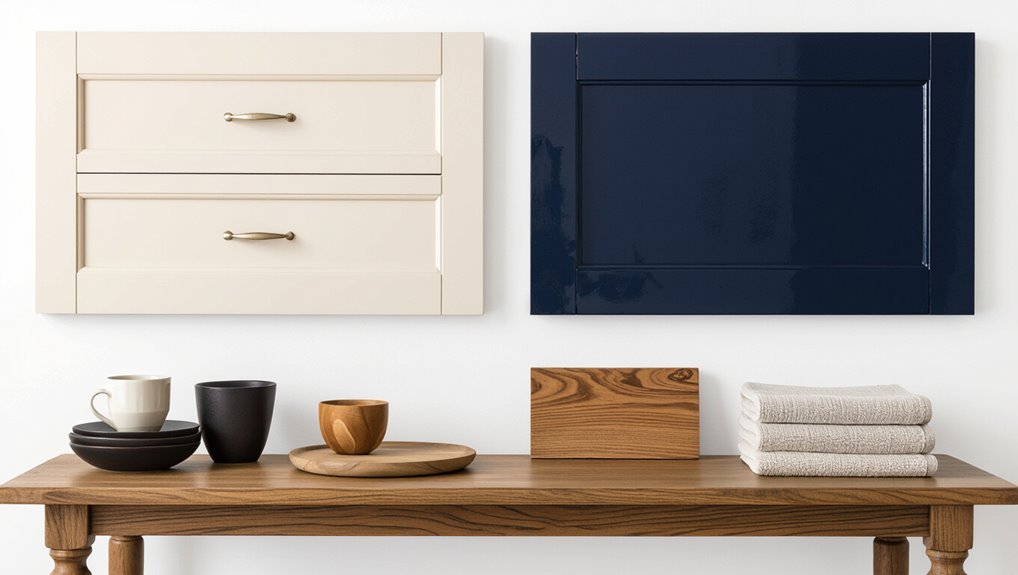
Here’s a quick rundown so you can pick the right durable finish for your furniture:
For high-traffic pieces choose polyurethane for superior finish longevity and water resistance.
Use oil-based varnish where stain compatibility matters with darker woods.
Use oil-based varnish when working with darker stained woods to ensure compatible color and lasting protection.
Consider acrylic lacquer for smooth, fast-drying results on decorative items.
For outdoor furniture pick marine or spar varnish to resist UV and moisture damage.
How to Choose a Finish: Decision Checklist
Now that you know which finishes work best for specific uses, pick one by running through a short checklist that matches the finish to the piece.
Assess wear, location, and maintenance needs.
Match finish types to furniture styles and desired sheen.
Consider prep time, drying, and compatibility with existing surfaces.
Prioritize durability, aesthetics, and ease of repair for the best long-term result.
Clear Topcoats Overview: What Protection Does Each Give
When you’re choosing a clear topcoat, think of it as the final armor for your paint or stain—each type offers a different balance of scratch resistance, UV protection, flexibility, and ease of repair.
Use Topcoat Comparisons to weigh waterborne, lacquer, shellac, and varnish.
Focus on Protection Levels: durability, yellowing, recoatability, and flexibility so you pick what matches use, climate, and maintenance.
Oil‑Based Polyurethane: Durable Finish for High‑Traffic Furniture
Although it takes longer to dry than waterborne finishes, oil-based polyurethane gives high-traffic furniture a hard, long-lasting coat that stands up to knocks, spills, and frequent cleaning.
You’ll extend furniture longevity by sanding between coats, using thin even layers, and allowing full cure.
Follow proper application techniques—brush or wipe on, avoid high humidity, and sand light coats for adhesion and smooth, durable results.
Water‑Based Polyurethane: Low‑Odor Fast‑Dry Option
If you want a durable clear finish without the strong fumes, water‑based polyurethane is a great choice because it stays low‑odor.
You’ll appreciate the fast dry times that let you sand and recoat sooner. It still gives a tough, protective layer that holds up to everyday wear.
Low Odor Benefits
Because you’re working indoors or around family, water‑based polyurethane’s low odor is a big advantage—it lets you finish furniture without the harsh smell of oil‑based finishes.
You’ll appreciate reduced fumes, easier ventilation, and quicker return to normal living spaces. The low odor also contributes to health benefits by minimizing respiratory irritation and chemical exposure for kids, pets, and sensitive occupants.
Fast Dry Times
Anyone looking to finish furniture quickly will like water‑based polyurethane’s fast dry times—many formulations go from tacky to recoatable in 1–2 hours, so you can apply multiple coats in a single day without long waits.
You’ll appreciate fast drying for tight schedules; use thin, even coats, light sanding between coats, and proper ventilation. These application techniques cut downtime and improve film build.
Durable Clear Finish
Fast dry times make projects move faster, but you still need a finish that protects and shows off your work—water‑based polyurethane fits both roles.
You’ll enjoy low odor, quick curing, and clear, non-yellowing protection. For durable finishes, sand light between coats, wipe tacky dust, and apply thin, even layers.
Proper application techniques guarantee long-lasting clarity and scratch resistance.
Alkyd Urethane: Tabletop‑Grade Hardness and Care
Alkyd urethane gives you tabletop‑grade hardness without the brittleness of some traditional finishes, combining an alkyd oil base with polyurethane crosslinking to deliver durable, abrasion‑resistant surfaces.
You’ll appreciate alkyd advantages like leveling and repairability; observe urethane differences in flexibility and chemical resistance.
Apply thin coats, sand between layers, and use mild cleaners—avoid harsh solvents to keep the finish intact and long‑lasting.
Conversion Varnish : The Pro Finish for Heirloom Pieces
If you want a factory‑quality, ultra‑durable finish for heirloom pieces, conversion varnish is the pro choice because it bonds hard and resists wear.
You’ll need proper thinning, spray application, and controlled drying to get that smooth, cured surface.
Once cured, clean gently, avoid harsh chemicals, and plan for occasional recoat to keep the finish looking like new.
Why Choose Conversion Varnish
When you want a finish that stands up to daily wear and still looks salon-smooth, conversion varnish is the pro-grade choice for heirloom furniture.
You’ll get exceptional hardness, chemical and heat resistance, and a long-lasting clear coat that preserves grain.
Professionals favor its repairability and color clarity.
Consider eco friendly options and proper application techniques to maximize durability and lifespan.
Application And Drying
1 clear coat applied correctly makes all the difference: conversion varnish needs careful surface prep, the right reducer, and controlled conditions to cure into a tough, glass-like finish.
You’ll use spray guns or quality brushes as application tools, apply thin, even coats, and follow recommended flash times.
Employ proper drying techniques—temperature, humidity, and airflow—to avoid blushing, orange peel, or soft spots.
Long-Term Care Tips
Having applied and cured your conversion varnish properly, you’ll want to protect that pro-level finish so it lasts for generations.
For furniture maintenance, use soft cloths, coasters, and felt pads to prevent scratches and moisture damage.
Adopt gentle cleaning techniques: mild soap, damp cloth, then dry immediately.
Reinspect annually, touch up minor wear with compatible varnish, and avoid harsh chemicals or prolonged sunlight exposure.
Spar Varnish and Marine Finishes for Outdoor Furniture
Spar varnish and marine finishes give outdoor furniture the flexible, UV-resistant coating it needs to survive sun, rain, and temperature swings.
You’ll choose them for spar varnish benefits and marine finish applications like decks and patio sets. They flex with wood, resist UV, and shed water.
Consider:
- Recoat schedule
- Surface prep
- Brush vs. spray
- Saltwater exposure
Acrylic & Waterborne Topcoats: Clarity and Color Retention
When you want a finish that stays clear and true to the original paint, acrylic and waterborne topcoats are excellent choices.
They dry quickly, build durable protection, and resist yellowing over time. You’ll get long-lasting color retention without a long wait between coats.
Superior Clarity Retention
Acrylic and waterborne topcoats give you the best chance of keeping furniture’s finish clear and true to its original color over time.
You’ll get superior clarity and strong clarity retention without yellowing. Choose coatings that protect pigments and resist UV.
Consider:
- UV inhibitors
- Non-yellowing resins
- Stable pigments
- Proper surface prep
Fast Drying Durability
Keeping your finish clear doesn’t mean you have to sacrifice speed of use—fast-drying acrylic and waterborne topcoats give you both quick cure times and durable protection.
You’ll apply fast drying techniques like thin coats and proper ventilation to retain clarity and color.
Expect consistent results in durability testing; these formulas resist yellowing, abrasion, and moisture while letting you finish projects faster.
Enamel Paints: Oil vs. Waterborne – When to Pick Each
Choose oil-based enamel when you need rock-solid durability and a hard, glossy finish that resists chipping, or go waterborne when you want faster drying, lower odor, and easier cleanup without sacrificing much toughness.
Consider these enamel types in a finish comparison to match use and environment:
- Oil: ultimate hardness
- Waterborne: quick dry
- Hybrid: balanced
- Application: brush vs. spray
Chalk Paint and Wax: Achieving a Rustic Look That Lasts
Texture and ease make chalk paint a favorite when you want a lived-in, rustic finish without sanding down bare wood; pair it with clear or dark wax to protect the surface, deepen color, and control sheen.
You’ll use chalk paint techniques like dry-brushing and layering, then finish with careful wax application, buffing to desired sheen for durable, touchable furniture that ages gracefully.
Milk Paint: Vintage Finish and Topcoat Protection
Milk paint gives furniture an authentic, timeworn look by flaking and revealing underlying layers, so you’ll get that sought-after vintage finish without heavy distressing.
You’ll learn milk paint benefits, application techniques, topcoat options, durability comparison, and color choices to protect and style pieces.
- Prep surface
- Mix properly
- Layer for vintage aesthetics
- Seal with durable topcoat
Choose the Right Sheen: Matte, Satin, Semi‑Gloss, Gloss
When choosing a sheen, think about how much shine and wear you’ll tolerate.
Matte gives you low shine and hides surface flaws, while gloss offers the highest durability and is easier to clean.
Pick satin or semi-gloss if you want a middle ground between appearance and toughness.
Matte For Low Shine
Matte paint gives furniture a soft, nonreflective finish that hides surface flaws and fingerprints, so it’s ideal if you want a subdued, modern look with minimal upkeep.
You’ll enjoy matte benefits like subtle texture and low shine while sacrificing little durability.
Consider these uses:
- Bedrooms
- Living rooms
- Accent pieces
- Cabinets with light traffic
Gloss For High Durability
If you want furniture that stands up to scratches, scuffs, and frequent cleaning, gloss is your best bet. You’ll choose among gloss types for impact and easy maintenance; gloss advantages include stain resistance and simple wipe-clean care. Compare finishes below to pick what suits your use and style.
| Finish | Use |
|---|---|
| High gloss | Heavy wear |
| Semi‑gloss | Trim, cabinets |
| Satin | Moderate wear |
| Matte | Low traffic |
Surface Prep That Prevents Chips and Peeling
Although you might be enthusiastic to start painting, proper surface prep is the single biggest step that prevents chips and peeling; it guarantees paint adheres and lasts.
You’ll focus on surface preparation and chip prevention by cleaning, deglossing, repairing, and sanding. Follow these steps:
- Clean grease and dust.
- Strip loose finish.
- Fill dents and sand smooth.
- Use tack cloth before priming.
Brush vs. Spray vs. Wipe‑On: Application Method Guide
When you choose a method, think about coverage, finish smoothness, and cleanup.
A brush gives control and texture, a spray offers the smoothest, fastest coats, and wipe‑on finishes are great for thin, durable layers on intricate pieces.
I’ll walk you through pros, cons, and best uses so you can pick what fits your project.
Brush Vs. Spray
Curious which application method will give your furniture the best finish and durability? You’ll choose between brush techniques and spray advantages depending on surface, control, and speed.
Consider:
- Detail work — brush techniques excel.
- Smooth, even coats — spray advantages win.
- Drying time — spray often faster.
- Cleanup and control — brushes are simpler.
Wipe‑On Finishes
Try a wipe‑on finish when you want the control of a brush but the smoothness of a spray.
You’ll apply thin coats with a lint‑free cloth or foam pad, follow wipe on techniques to avoid streaks, and sand lightly between coats.
Use application tips: work small areas, keep a wet edge, and let proper dry times guarantee an even, durable result.
How Many Coats for Lasting Protection
A few well-applied coats give your furniture the protection it needs without adding unnecessary buildup.
You’ll usually apply 2–3 coats of durable paint, then 1 coat of clear topcoat for durable protective layers.
Choose coating techniques that match paint type and use thin, even passes.
- Two coats
- Extra for high-wear
- One clear topcoat
- Inspect coverage
Sanding and Between‑Coat Tips for a Smooth, Tough Finish
Before you add the next coat, sand lightly to knock down dust nibs and high spots so each layer bonds evenly; use a fine-grit (220–320) sanding pad, a sanding sponge for contours, or 400 grit between topcoats for ultra-smoothness.
Follow simple sanding techniques, wipe with a tack cloth, and guarantee between coat preparation includes dust-free environment, proper drying time, and light scuffing for adhesion.
Troubleshooting & Maintenance: Common Problems and Fixes
Once you’ve sanded and applied your coats, you’ll want a plan for handling common issues that can still crop up—runs, orange peel, peeling, or sticky spots—and for routine upkeep that keeps the finish durable.
Use finish troubleshooting steps and basic furniture maintenance to preserve results:
- Sand and feather damaged areas.
- Clean with mild detergent.
- Recoat with compatible paint.
- Apply protective topcoat.
Frequently Asked Questions
Can I Mix Different Finish Types on One Piece of Furniture?
Yes — you can mix finishes, but you’ll need compatible products, proper preparation, and suitable finishing techniques. When layering finishes, test adhesion, sand between coats, and use appropriate sealers so the layers bond and remain durable.
Are There Finishes Safe for Children’s Toys or High-Saliva Items?
Yes — you can use non toxic options like water-based acrylics, shellac, or certified kid-safe enamel; choose products with safe certifications (AP, ASTM, or EN71), and always cure fully and seal for extra protection.
How Do Finishes Affect Reclaimed or Chemically Altered Wood?
You’ll treat reclaimed or altered wood like a scarred map: different wood treatment methods change absorption, adhesion and finish longevity effects, so you’ll test sealers, stabilize chemically altered areas, and choose finishes that bond rather than just coat.
Can Decorative Metallic or Pearlescent Paints Be Topcoated Normally?
Yes — you can normally topcoat metallic or pearlescent paints, but you’ll want to test first because clear coats can dull metallic sheen and affect pearlescent durability; use compatible, non-yellowing topcoats and light spray applications.
Will Finish Products Interfere With Future Staining or Refinishing?
Like a roadblock, some finishes will slow you down: you’ll check finish compatibility before sealing, since solvent or film-forming topcoats can prevent future refinishing. Sanding, stripping, or shellac barriers often restore future refinishing options.
Conclusion
Choosing the right finish helps your furniture look great and last—pick oil‑based polyurethane for heavy use or water‑based for low odor and quick drying. Apply the recommended number of coats, sand lightly between coats, and maintain pieces to extend life. Fun fact: properly finished furniture can extend usable life by up to 40%, saving replacement costs and waste. Follow the checklist and tips above, and your furniture will stay beautiful and durable for years.
