
Why Is Painter’s Tape Peeling Off Paint? Causes and Fixes
You’re losing paint because the tape’s adhesive is gripping the finish more than the paint bonded to the surface, often due to wrong tape type, poor surface prep, uncured or old paint, or extreme humidity and temperature. Clean, sand, and prime as needed, pick low-tack or specialty tape for delicate finishes, press and seal edges, then remove slowly at a 45° angle before full cure to avoid lifts. Keep going and you’ll find practical fixes and timing tips.
Quick Answer: Why Painter’s Tape Peels Paint
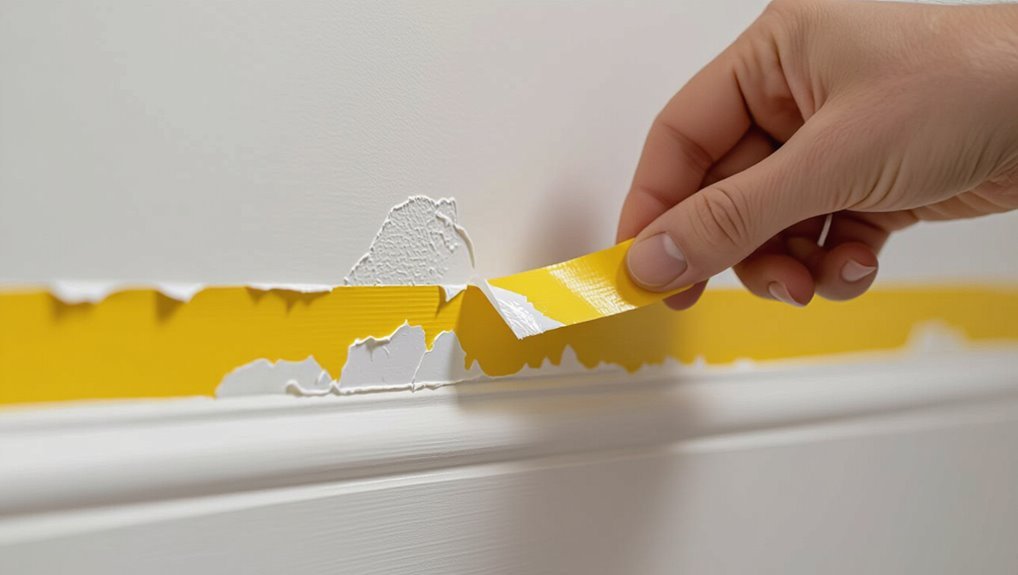
If painter’s tape pulls paint off, it’s usually because the tape’s adhesive stuck harder to the paint than the paint stuck to the surface.
You’ve got a tape adhesion issue or poor paint compatibility—old paint, improper curing, or wrong tape type.
Remove slowly at a low angle, warm the tape slightly, and choose tape matched to the paint and surface to avoid peeling.
Who This Guide Helps and Why
If you’re painting at home or managing a job site, this guide helps you avoid tape-related damage and wasted time.
You’ll find practical tips for common scenarios like fresh paint, older finishes, and quick touch-ups.
Use it before taping, while curing, or when removing tape to keep your edges clean.
Who Needs This Guide
Whether you’re a first-time DIYer masking trim or a pro painter tackling a multi-room job, this guide helps you stop tape from lifting fresh paint and wasting time. You’ll learn painters tape choices, common mistakes, surface prep, and removal timing so you avoid tears and touch-ups.
| Role | Goal | Benefit |
|---|---|---|
| DIYer | Clean edges | Fewer fixes |
| Pro | Speed | Consistent results |
Typical User Scenarios
When you’re masking for a quick weekend refresh or coordinating a multi-room repaint, knowing which tape to use and how to apply it saves you time and prevents costly touch-ups.
You’ll find this guide useful if you:
- Prep surfaces and want reliable tape application.
- Match tape to varied paint types.
- Are a DIY homeowner avoiding edge lift.
- Manage contractors needing consistent results.
When To Use It
Because peeling paint ruins a clean-edge finish, this guide helps anyone who needs reliable masking—home DIYers tackling a single room, pros coordinating large jobs, and renters doing temporary touch-ups.
You’ll learn tape application tips that fit short projects and multi-day jobs, plus how tape usage frequency affects adhesion, when to replace rolls, and when to choose delicate or heavy-duty tape for the surface.
Step-by-Step: Stop Tape From Peeling Paint
Start by prepping the surface so tape can stick without tugging at fresh paint.
Pick the right tape for your wall type and paint finish to minimize lifting.
When it’s time to remove it, pull slowly at a low angle while paint is fully set for clean lines.
Prep Surface Properly
1 clear, clean surface makes the difference between crisp paint lines and peeling tape. You’ll prep by focusing on surface cleaning to improve tape adhesion.
Do these steps:
- Wipe dust with a microfiber cloth.
- Remove grease with mild detergent.
- Sand glossy spots lightly.
- Dry thoroughly before applying tape.
This prevents lifting and guarantees cleaner edges.
Choose Right Tape
Picking the right tape matters more than you might think—use tape made for your surface and paint type to prevent peeling and razor-sharp edges.
Check tape brands for reviews on adhesion and residue, match tape thickness to the texture and edge you need, and pick specialty tapes for delicate surfaces.
Testing a short strip saves time and preserves your finish.
Remove Tape Correctly
Now that you’ve chosen the right tape, remove it correctly to keep your paint intact.
Use proper tape application techniques and follow tape removal tips to prevent peeling. Pull tape back slowly at a 45° angle, keep it close to the surface, and remove before full cure when recommended.
- Score edge
- Pull slowly
- Angle 45°
- Remove timely
How Paint Cure vs. Film Matters
Because paint goes through two separate processes—chemical cure and physical film formation—you need to think about both when taping; if the surface hasn’t developed enough cohesive strength, tape can lift wet or weakly bonded paint. You should wait for adequate paint curing and solid film formation to reduce lift.
| Stage | Risk | Action |
|---|---|---|
| Early | High | Avoid taping |
| Semi-cured | Moderate | Test adhesion |
| Fully cured | Low | Tape safely |
| Damaged | Variable | Repair first |
When to Apply Tape for Best Results
You should put tape on after priming so the surface is sealed and the primer can bond properly.
Let the primer dry to touch but wait for the paint’s film to cure enough that tape won’t lift it. If you’re unsure, err on the side of longer cure time to protect the finish.
Tape After Priming
After you’ve primed the surface and allowed the primer to dry to the touch, wait long enough for it to cure before applying tape so the adhesive won’t lift the primer or bond unevenly.
You’ll improve tape adhesion and guarantee paint compatibility by following these steps:
- Check primer label for tack time.
- Test a small tape strip.
- Use low-tack tape.
- Press edges firmly.
Wait For Cure
When the primer’s fully cured, it’ll resist lifting or tearing when you apply tape, so wait the full cure time listed on the label rather than relying on “dry to the touch.” You should time tape application to actual cure, not surface feel; humidity and temperature affect paint drying and adhesion.
| Condition | Recommended Wait |
|---|---|
| Low humidity | Full cure |
| High humidity | Extra 24–48hrs |
When to Remove Tape Without Damage
If you want clean lines, pull the tape at the right moment: wait until the paint is dry to the touch but not fully cured, so the film peels cleanly without lifting the edge.
Use these tape removal techniques and tape application tips:
- Pull tape slowly at a 45° angle.
- Score the edge if paint skins.
- Remove in cooler hours.
- Replace damaged tape immediately.
How Paint Type (Latex vs. Oil) Changes Timing
If you’re working with latex versus oil paint, timing matters because their dry and cure times differ considerably.
Latex dries to the touch quickly but keeps curing, so peeling tape too soon can lift still-soft paint.
Oil takes longer to dry and bond, so you’ll want to wait longer before removing tape to protect adhesion.
Dry Time Differences
Latex and oil-based paints dry on very different schedules, and that timing directly affects how long you should wait before removing painter’s tape. You’ll adjust timing based on drying conditions and paint thickness.
- Latex: touch dry quickly.
- Latex: full set longer in cool/humid air.
- Oil: feels tacky longer.
- Oil: needs extended wait before tape pull.
Adhesion And Cure
Because the way paint bonds and hardens differs between latex and oil-based formulas, you’ll need different wait times before removing tape to avoid peeling.
You should respect adhesion science: latex skins quicker but continues curing, while oil stays tacky longer yet bonds strongly once cured.
Time tape removal to the curing process—latex is typically 24 hours, oil often 48–72—to protect edges.
How Humidity and Temperature Affect Tape
When humidity climbs or drops sharply, tape adhesion and paint curing both change, and you’ll often see edges lift or bleeding where you expected clean lines.
You should account for humidity effects and temperature fluctuations before taping. Follow these steps:
- Wait for stable conditions.
- Use tape rated for climate.
- Allow longer cure in high humidity.
- Avoid taping during rapid swings.
Surface Issues That Cause Tape to Lift
Even with the right climate precautions, the surface itself can make tape fail—dirty, oily, or uneven substrates won’t let adhesive bite, and paint on glossy or poorly cured surfaces can peel when you pull the tape. You should focus on surface preparation to avoid adhesive failure.
| Issue | Effect | Fix |
|---|---|---|
| Dust | Weak bond | Wipe |
| Oil | Slip | Degrease |
| Texture | Gaps | Sand |
| Gloss | Peel | Scuff |
Clean and Degloss Before Taping
Start by thoroughly cleaning the surface and removing any existing gloss so the tape can stick and release cleanly.
Start by cleaning thoroughly and removing any gloss so tape adheres and releases cleanly.
You’ll improve surface preparation and use simple adhesion techniques to prevent lifting.
- Degloss with mild abrasive
- Wipe with a degreaser
- Rinse and dry completely
- Test tape on a small area before full application
Fixing Porous or Dirty Surfaces Fast
If your wall soaks up paint or the surface is dusty, you’ll need to seal and clean it before taping so the adhesive can do its job.
Use quick cleaning techniques: vacuum, tack cloth, and degreaser where needed.
For porous patches, apply a fast-drying primer or PVA sealer to stabilize the substrate.
Let it cure fully—proper surface preparation guarantees tape sticks and paint stays put.
How to Prep Trim and Baseboards
When you prep trim and baseboards properly, you’ll get crisp paint lines and fewer touch-ups later.
Use these trim preparation techniques and baseboard cleaning tips to speed prep:
Use these quick trim-prep and baseboard-cleaning tips to speed up prep and get crisp paint lines.
- Wipe with mild detergent, rinse, dry.
- Sand glossy spots and rough edges.
- Fill nail holes, let compound cure.
- Degrease and tack cloth before taping.
Choosing the Right Painter’s Tape
Now that your trim and baseboards are clean and sanded, pick painter’s tape that matches the surface and paint type to avoid peeling and bleed-through.
Check tape durability for wet-sanding, textured surfaces, or long dwell times.
Compare tape brands for adhesion consistency and residue-free removal.
Test a short strip first, press edges firmly, and remove slowly at a 45° angle for best results.
Low-Tack vs. Medium-Tack vs. High-Tack
Because tape adhesion varies by task, you’ll want to match low-, medium-, or high-tack tape to the surface and paint to prevent peeling or damage.
- Low tack benefits: gentle removal on delicate trim.
- Medium tack applications: general walls, balanced hold and release.
- High tack considerations: stubborn surfaces, risk of paint lift.
- Tape durability: choose based on exposure time and paint type.
Specialty Tapes: Delicate, Multi-Surface, Exterior
If you’re tackling a tricky surface, specialty tapes—delicate, multi-surface, and exterior—give you tailored adhesion so you don’t ruin finishes or wind up repainting.
Choose delicate surfaces tape for fragile trims, pick multi surface applications for mixed-material jobs, and rely on exterior durability for outdoor projects.
Do a tape comparison first to match tack level, UV resistance, and removal window to your task.
Why Adhesive Chemistry Matters for Paint
You need to know that different tape adhesives—rubber, acrylic, and silicone—grab and release surfaces in very different ways.
Pick an adhesive that matches your paint type and finish, because some adhesives bond too strongly to delicate or freshly cured paints.
Choosing the right chemistry reduces the risk of peeling or leaving residue.
Tape Adhesive Types
When you pick up a roll of painter’s tape, the sticky layer inside isn’t generic — it’s a carefully formulated adhesive designed to balance tack, peel strength, and residue prevention.
You should know how types affect tape longevity and adhesive strength:
- Natural rubber — high tack, shorter tape longevity.
- Acrylic — balanced strength, low residue.
- Silicone — heat resistant, lower tack.
- Specialty removables — optimized peel behavior.
Paint Surface Compatibility
Because different paints cure and adhere differently, the chemistry of a tape’s adhesive can make or break your masking job.
You should match tape to paint type—latex, oil, enamel, or specialty coatings—because solvents and flexibility interact.
Prioritize proper surface preparation, let paint fully cure, and perform adhesion testing on a hidden area. That prevents lift, residue, or coating damage during removal.
Tape Backing and Its Role in Lifting
Although tape backing might seem like just a thin layer holding the adhesive, it plays a direct role in why tape can lift paint. Its stiffness, surface texture, and how it stretches determine how much force the tape transmits to the paint when you remove it.
You’ll watch for tape composition and adhesive strength.
- Backing stiffness
- Stretchability
- Surface finish
- Tear pattern
How to Apply Tape for a Tight Seal
If you want a crisp edge and minimal peeling, press the tape down firmly along the paint line, working from the center outward so no gaps or bubbles remain.
Choose clean, dry surfaces and align tape before sticking. Use steady pressure and overlap short lengths for corners.
These tape application techniques focus on achieving tight seals that prevent paint bleed and reduce lifting during removal.
Pressing and Burnishing Without Damage
Press and burnish the tape firmly but gently to seal the edge—use a plastic putty knife, a credit card, or your fingernail to run from the center toward the edge so paint can’t seep underneath.
Press and burnish tape from the center outward with firm, even pressure—use a card or putty knife to prevent seepage.
You’ll protect paint while respecting adhesive properties and optimize tape application.
- Start center outward.
- Use firm, even pressure.
- Avoid dragging paint.
- Check adhesion before painting.
Edge Sealing With a Wet Brush or Caulk
When you need an extra barrier against bleed-through, run a damp brush or a bead of paintable caulk along the tape edge to seal it—wetting the brush slightly lets paint fill tiny gaps, while caulk creates a flexible seal that keeps paint from creeping under.
Use these edge sealing techniques sparingly, smoothing caulk application for an even line, then paint once it skins over.
Removing Tape: Correct Angle and Speed
When you pull tape, aim for a low, steady angle—about 45 degrees—to lift the tape away without yanking paint off.
Move slowly and consistently; too fast can tug loose paint while too slow can leave adhesive residue.
Keep the painted edge supported with light tension from the tape and your free hand to prevent the edge from lifting.
Ideal Peel Angle
Although it feels tempting to yank the tape off fast, you’ll get a cleaner edge by pulling it back slowly at a low angle — about 45 degrees or less — keeping the tape almost parallel to the painted surface so the adhesive peels away instead of lifting the paint.
- Choose ideal tape for your paint and surface.
- Aim for best angles near 30–45°.
- Pull consistently along the line.
- Keep tension low to prevent lifting.
Optimal Removal Speed
After you’ve set the angle, focus on pull speed: slow and steady wins the day.
You should pull the tape back slowly at a consistent pace, keeping tension gentle so paint stays put.
Practice removal techniques on scrap surfaces after proper tape application to learn the right speed for your paint type and drying time, minimizing lifts without overworking edges.
Tension And Support
If you keep steady tension and support the painted edge as you pull, the tape will lift cleanly without tugging paint away.
You’ll manage tape tension and provide surface support by pulling slowly at a 45° angle, keeping the paint flat with your free hand.
- Pull slowly
- Hold edge down
- Keep 45° angle
- Adjust speed to adhesion
What to Do If Paint Peels During Removal
When paint lifts as you pull the tape, don’t panic—you can usually fix it without repainting the whole wall.
Stop peeling, assess the damage, and try gentle paint removal techniques like soft scraping with a plastic putty knife.
Clean the edge, smooth rough spots, and follow tape application tips next time—press edges firmly and remove tape slowly at a 45° angle.
Repairing Lifted Paint Without Repainting All
You don’t always have to repaint an entire wall to fix paint that’s lifted—most blemishes can be repaired locally with a few straightforward steps.
- Scrape loose lifting paint, sand edges smooth.
- Clean area, let dry thoroughly.
- Apply primer to sealed spot.
- Feather-touch with matching paint and blend.
These repair techniques save time and keep surrounding finish intact.
Cutting Perfect Tape Lines Around Trim
Before you mask trim, make sure the surface is clean and dry so tape sticks where it should.
Use a fresh blade and steady hand to score tight edges for a crisp line, and remove the tape at the right moment—when paint is tacky but not fully cured—to avoid lifting.
Follow those steps and you’ll cut near-perfect tape lines with minimal touch-up.
Surface Prep First
Since trim’s edges are where paint failures start, get the surface spotless and dry before laying tape.
You should focus on surface cleaning and moisture control to guarantee tape adhesion. Follow these steps:
- Wipe dust and grease with a mild cleaner.
- Rinse and dry thoroughly.
- Check for damp spots for 24 hours.
- Remove loose paint and sand smooth before taping.
Sharp Cutting Technique
1 key skill for clean trim lines is a steady, intentional cutting technique: press the tape firmly along the edge, smooth it down, and run a fresh utility blade or painter’s knife at a shallow angle to slice the tape cleanly without lifting the film or paint. Use sharp edges and proper cutting tools to avoid ragged lines.
| Tool | Angle | Result |
|---|---|---|
| Utility blade | 15° | Crisp |
| Knife | 20° | Controlled |
| Razor | 10° | Precise |
Tape Removal Timing
When the paint feels dry to the touch but hasn’t fully cured, pull the tape slowly and at a sharp angle to preserve a crisp edge; you’ll avoid lifting by removing it within the paint’s tack window—typically 30 minutes to an hour for latex—rather than waiting until it hardens.
- Check tape timing.
- Test paint interaction.
- Pull at 45°–180°.
- Replace damaged tape.
Tools and Supplies That Prevent Mishaps
Keep a few key tools and supplies on hand to stop painter’s tape from pulling off paint. Use tape selection tips and surface preparation techniques: choose low-adhesion tape and clean, dry surfaces. Have a sharp utility knife, plastic scraper, microfiber cloth, and mild solvent ready to lift edges safely.
| Tool | Purpose |
|---|---|
| Utility knife | Trim edges |
| Scraper | Lift tape |
| Microfiber | Clean surface |
| Solvent | Remove residue |
Testing Tape on a Hidden Spot First
Before you tape a visible section, try the tape on a hidden spot to confirm adhesion and removability—this quick check shows whether the tape bonds too strongly, lifts existing paint, or leaves residue so you can switch products or prep the surface differently before committing.
- Choose small test areas.
- Make the tape application as you will.
- Wait recommended dwell time.
- Peel and inspect for damage.
How Finishes (Flat to Semi-Gloss) React
If your hidden-spot test showed the tape behaved well, next look at how different paint sheens handle tape removal—flat, eggshell, satin, and semi-gloss all bond and flex differently. You’ll notice flat finishes lift easier; satin holds better. Semi gloss adhesion can be strongest, risking pull. Adjust dwell time and pull angle accordingly.
| Sheen | Tape risk |
|---|---|
| Flat | High |
| Satin | Medium |
| Semi | Low |
Taping Textured or Uneven Surfaces
When you tape textured or uneven surfaces, expect gaps where the tape won’t fully contact the paint; press the tape into valleys and over peaks so the adhesive seals as much as possible.
You should:
- Clean the area for proper surface preparation.
- Use flexible, low-tack tape.
- Burnish edges with a plastic card.
- Remove slowly at an angle to avoid lifting.
Long-Term Exposure: Sun, Moisture, and Edges
When tape stays on a surface for a long time, UV rays can break down the adhesive and make it brittle.
You’ll also see moisture creep under the edges and weaken the bond, especially on damp or exterior walls.
Temperature swings further loosen adhesion, so prolonged sun, humidity, and heat cycles often spell trouble for taped edges.
UV Damage To Adhesive
Although sunlight seems harmless, prolonged UV exposure breaks down tape adhesive at a molecular level.
So you’ll notice edges lifting and diminished tack over time.
- UV exposure causes adhesive breakdown fast.
- Tape gets brittle and loses grip.
- Edges curl, letting dirt under tape.
- Replace tape sooner for outdoor jobs.
Moisture Seepage At Edges
If you leave painter’s tape in place through cycles of sun and humidity, moisture will creep under the edges and soften the adhesive, causing it to lose contact with the surface. You should inspect edges, use moisture barriers or improved edge treatments, and remove tape promptly to prevent seepage.
| Sign | Action |
|---|---|
| Soft adhesive | Replace tape |
| Lifted edge | Seal edge |
| Blistering | Dry area |
| Staining | Clean promptly |
Temperature-Driven Adhesion Loss
Because prolonged exposure to sun and fluctuating humidity makes tape and paint expand and contract at different rates, the bond weakens over time and tape can pull paint away when removed.
You’ll notice temperature effects and humidity influence accelerating edge failure. Prevent it by timing removal and choosing suitable tape:
- Remove during moderate temps
- Avoid high humidity
- Use outdoor-rated tape
- Test edges first
When to Call a Pro for Persistent Peeling
When painter’s tape keeps lifting paint no matter what tricks you try, it’s time to contemplate professional help. A pro can quickly diagnose whether the issue stems from surface preparation, incompatible materials, or a structural moisture problem and recommend the right fix.
Call for professional advice when persistent issues continue after sensible fixes; they’ll assess adhesion, humidity, and coatings and give a reliable repair plan.
Frequently Asked Questions
Can Painter’s Tape Remove Varnish or Polyurethane Finishes?
Yes — tape can lift varnish or polyurethane if adhesion issues exist; you’ll avoid problems by testing first, choosing tape rated for varnish compatibility, removing slowly at the right angle and temperature to prevent finish damage.
Will Tape Adhesives Harm Wallpaper or Removable Wallcoverings?
Yes—you’ll treat tape like a cautious gardener: some tapes protect wallpaper protection well, others cling too hard and leave adhesive residue. You’ll test small areas, use low-tack or removable tapes, and peel slowly.
Can Reused Tape Be Safely Applied for Touch-Ups?
You generally shouldn’t reuse tape for touch-ups because adhesive degrades, reducing tape longevity and risking poor surface compatibility; instead, use fresh tape for clean edges and reliable adhesion, especially on delicate or newly painted surfaces.
Does Paint Color or Pigment Affect Tape Adhesion or Peeling?
About 60% of failures tie to surface issues: yes, paint color pigments can influence adhesive properties because darker pigments often alter paint texture and drying, so tape may stick differently and sometimes peel more on varied finishes.
Is It Safe to Tape Over Recently Caulked Joints?
You shouldn’t tape over recently caulked joints; wait for full caulk drying before tape application. If you rush, the tape can pull uncured caulk, causing gaps or residue. Test a small area if unsure.
Conclusion
You can stop tape from wrecking your paint by timing and technique. For example, Lisa taped freshly painted trim the next morning and pulled tape off with a sharp 45° peel—she still ripped the finish. After she let paint cure overnight and used low-tack tape, the edge stayed crisp. Start taping only when paint has set enough, press tape edges firmly, and pull slowly at an angle. If peeling keeps happening, call a pro.
