
How to Paint Grass on a Wall for Nature-Inspired Murals
You can paint believable grass on a wall by prepping and priming the surface, blocking in a layered green base, then building texture with thin, varied strokes from background to foreground. Use mid-tone moss, warm olive and cool emerald, add yellow‑green highlights and blue‑green shadows, and vary brush pressure, length and angle for blades and clumps. Dry between layers, finish with detailing and a protective coat, and keep going to pick up tips on tools and timing.
Quick How-To: Paint Believable Grass on a Wall
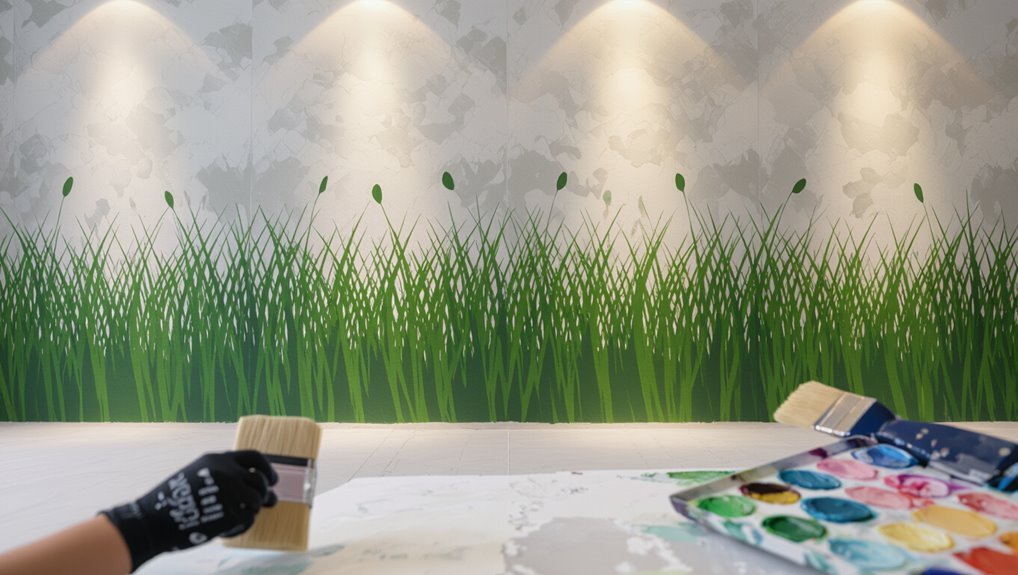
Start by prepping the wall with a smooth, primed surface—any bumps or old paint will show through the grass texture.
Start by priming the wall smooth—any bumps or old paint will show through the grass texture.
You’ll block in base tones, layer varied greens, and use thin vertical strokes for blades.
Add highlights and darker roots for depth, feathering edges for realism.
Step back frequently for scale and let mural inspiration guide rhythm, contrast, and density choices.
Materials, Time, and Skill Level at a Glance
You’ll need a short list of materials—paints, brushes, a liner or stencil, tape, and protective gear—so you can plan purchases.
Expect the project to take a few hours for a small wall or a day for larger areas, depending on drying times and layers.
This technique is beginner-friendly with basic brush skills, though more detailed effects need moderate experience.
Materials Needed
A handful of basic supplies will get you from blank wall to believable blades of grass: acrylic or latex paints in several greens (plus brown and yellow for depth), a range of brushes including a fine liner and fan brush, a small roller for base coats, painter’s tape and drop cloths, plus a palette, water jar, and rags.
Add primer, sandpaper, mixing medium, and disposable gloves.
Time Estimates
Plan for roughly three components when estimating this project: materials gathering, wall preparation and base coats, and the actual grass painting and finishing touches. You’ll budget hours per stage, use mural planning to streamline steps, and apply time saving techniques like staged drying.
| Stage | Hours | Notes |
|---|---|---|
| Prep | 2–4 | Clean, tape |
| Base | 1–3 | Primer, dry |
| Paint | 3–6 | Layers, detail |
Skill Level Required
While this project doesn’t require professional mural experience, you’ll need basic painting familiarity, steady handwork for blades and highlights, and patience for layering and drying.
You can follow beginner tips like simple brush strokes, practice sheets, and limited color palettes. As your confidence grows, try advanced techniques—dry brushing, glazing, and varied stroke widths—to add depth and realism without needing specialist training.
Choosing the Right Wall: Surface, Light, and Location
Pick a wall with a smooth, well-sealed surface so your grass strokes go on cleanly and the paint adheres.
Think about how sunlight and shadows will hit the mural—direct sun can fade colors, while a shaded spot may mute details.
Also consider the wall’s visibility and how its placement will affect scale and viewer perspective.
Surface Texture Matters
Texture makes or breaks a painted grassy mural, so choose a wall whose surface suits the look you want: smooth drywall or primed plaster for crisp blades, lightly textured stucco for a soft, impressionistic feel, and rough concrete only if you want heavy, painterly strokes that read as distance.
Use texture techniques and proper wall preparation:
- Smooth for fine detail
- Light texture for depth
- Rough for bold strokes
- Sand and prime first
- Test swatches before committing
Light And Placement
Now that you’ve considered how surface texture will affect your blades, turn your attention to how light and location will shape the mural’s mood and longevity.
Inspect natural lighting throughout the day, noting shadows and glare. Choose wall orientation that complements your design—south-facing for bright warmth, north for consistent soft light.
Consider nearby elements and maintenance access to guarantee lasting, well-placed grass.
Pick a Grass Style: Realistic, Stylized, or Abstract
Which look do you want to create: lifelike blades, simplified shapes, or bold patterns?
You’ll choose between realistic detail, stylized grass silhouettes, or abstract grass motifs. Pick one to guide brushwork, scale, and rhythm.
- realistic blades: fine strokes
- stylized grass: clean repeats
- abstract grass: shapes and negative space
- scale: match wall size
- texture: hint or emphasize
Color Palette for Painted Grass Walls
Start by picking a few base greens that match the mood you want—cool for calm, warm for sunny.
Add accent and highlight tones like yellow-greens and deep emeralds to create depth and movement.
Finish with neutrals (soft grays, browns, or off-whites) to balance the composition and ground the colors.
Choosing Base Greens
When you pick base greens for a painted grass wall, aim for a foundation that reads natural from a distance and supports highlights and shadows up close.
You’ll focus on base color selection and subtle green undertones to set mood and depth.
- Choose mid-tone moss greens
- Add warm olive variants
- Include cool emeralds sparingly
- Test mixtures on wall
- Consider lighting effects
Accent And Highlight Tones
Now that you’ve settled on base greens, pick accent and highlight tones that lift the surface and read as grass at a glance.
Choose warmer yellow-greens for sunlit tips and cooler blue-greens for shaded bases.
Use accent techniques like thin, varied strokes and layered glazes.
Apply highlight methods sparingly to suggest blade edges and sparkle without overpowering the overall foliage.
Finishing With Neutrals
Although greens will carry the scene, you’ll want neutral tones to ground the composition and prevent the wall from looking flat or overly vivid.
Use neutral color palettes and subtle earthy tones to balance vibrancy. Consider:
- Soft beige base
- Warm gray shadows
- Muted ochre accents
- Pale taupe highlights
- Faint umber washes
These choices calm contrast and add depth.
Best Paints: Latex, Acrylic, and Primers
Because the right paint and primer determine durability and finish, you’ll want to choose products that handle texture, outdoor exposure, and touch-ups without fuss.
You’ll weigh latex vs. acrylic: latex offers flexibility and easy cleanup, acrylic gives deeper pigment and weather resistance.
Always apply a quality primer for adhesion and stain blocking—primer benefits include longer life, truer color, and simpler repairs.
Tools You Need: Brushes, Rollers, Rakes, Sponges
Tools matter as much as paint when you’re creating believable grass—pick brushes, rollers, rakes, and sponges that match the scale and texture you want.
You’ll use brush techniques for fine blades and roller effects for base texture. Choose sturdy handles and washable materials so you can switch tools quickly.
- Fan brush
- Small angular brush
- Short-nap roller
- Texture rake
- Sea sponge
Preparing the Wall: Clean, Patch, and Prime
Before you paint, make sure you clean the wall thoroughly to remove dirt, grease, and loose paint so the new colors will stick.
Patch any holes or cracks with filler and sand smooth for an even surface.
Finish with a suitable primer so your grass colors stay vibrant and adhere properly.
Clean Surface Thoroughly
- You’ll clean the wall using proper cleaning techniques to guarantee solid surface preparation. Remove dirt, grease, and chalking paint so your mural will adhere.
- Dust with a microfiber cloth
- Wash with mild detergent
- Rinse thoroughly with clean water
- Allow full drying time
- Inspect for remaining contaminants
Work methodically; a spotless canvas prevents paint failure and keeps edges crisp.
Patch And Prime
Patch holes and prime the wall so your grass mural will lay down smoothly and last.
You’ll scrape loose paint, sand edges, and use proper patch techniques to fill dents and hairline cracks. After drying, apply a quality primer—understanding prime importance prevents peeling and guarantees color vibrancy.
Work in thin, even coats, let each cure, then sand lightly before painting.
Plan Your Layout: Sketches, Guides, and Masking
Start by sketching a simple layout so you know where the sod, clumps, and focal blades will sit on the wall; this keeps your work balanced and saves time when you mask and paint.
Use sketch techniques and masking tape to mark edges. Decide scale, rhythm, and focal points, then follow this checklist:
- Measure and mark guides
- Rough pencil sketches
- Masking tape edges
- Block in colors
- Refine blade shapes
Scale and Composition for Different Wall Sizes
Think about how far people will stand from your wall so you can scale blade size and detail accordingly.
Place a few focal points and use curved flow to guide the eye across the scene.
Adjust pattern density and repeat to suit the wall’s width and rhythm so the design feels balanced.
Viewing Distance And Scale
One key decision you’ll make before painting grass on a wall is how viewers will see it from different distances, because scale and composition need to change with the wall’s size and the typical viewing range.
Consider scale perception and distance impact as you plan:
- Test from close, mid, far
- Vary blade size by zone
- Use contrast for depth
- Simplify distant detail
- Step back often
Focal Points And Flow
When you place focal points and guide the flow of grass across a wall, you control where viewers’ eyes land and how they move.
So plan clusters, breaks, and directional lines that work at the wall’s designated viewing distance.
You’ll arrange focal points to create visual balance, use varied heights and angles for clear flow dynamics, and adjust spacing to maintain design harmony across sizes.
Pattern Density And Repeat
Count how often your grass motifs repeat and how tightly they sit together before you start scaling them up or down; this lets you match pattern density to the wall’s size and viewing distance.
Choose pattern variation and suggest growth stages so the scene reads natural.
- small clusters for close viewing
- wider spacing for distant walls
- mix blade heights
- repeat anchors sparingly
- test scaling on paper
Build Depth: Base Layer, Midtones, and Darks
Although you’ve sketched the layout, now you’ll build depth by layering a consistent base, adding midtones to shape volume, and placing darker values to anchor shadows—each layer should be applied with deliberate brushwork so the grass reads believable from a distance and close up.
Use layering techniques to establish form: block a flat base, add midtone strokes for tufts, then intersperse darks for shadow and depth perception.
Color Blocking Fast Backgrounds
Start by laying in large block colors to map out your light, shadow, and overall mood quickly.
Use broad brushes and rapid layer painting to cover ground fast, letting each pass dry enough to add contrast without muddying.
Soften edges with a dry brush or light glazing to blend the background into the detailed grass foreground.
Large Block Colors
When you’re laying in the background, block in large swaths of base color first to set the overall tone and speed up the process; this gives you clean, predictable areas to work from as you add texture and detail later.
Use large color fields guided by color theory.
Tips:
- Choose three base hues
- Map light direction
- Use flat rollers
- Keep edges soft
- Test value contrasts
Rapid Layer Painting
Lay down broad, fast layers to build mood and depth quickly: pick three or four dominant tones, work wet-into-wet or let thin films dry between passes, and push values rather than details so the background reads from a distance.
You’ll use layer techniques to block color efficiently, varying brush size and pressure to control painting speed while keeping foreground marks reserved for later.
Edge Softening Techniques
After you’ve established broad layers and pushed values, soften the edges to blend that blocked-in background into believable space.
Use edge blurring techniques and subtle gradient blending so foreground grass reads naturally.
- Work wet-on-wet with a soft brush
- Feather shifts with a dry brush
- Use glaze for midtones
- Scrub edges lightly
- Step back and refine contrasts
Brush Techniques for Blades and Clumps
Start by choosing the right brush and holding it like a pencil so you can make quick, varied strokes that read as individual blades or tighter clumps; a thin round or a fan brush gives crisp single blades, while a flat or dry-bristled brush helps you block in denser tufts.
Use wrist flicks for blades technique, tap and lift for clumps texture, varying pressure and paint load.
Paint Grass Movement: Angles, Curves, & Wind
When you paint grass movement, think about how individual blades and clusters tilt, bend, and overlap to suggest wind and rhythm; vary angles from upright to sweeping curves so the scene reads as a unified flow rather than repeated strokes.
- Observe grass blade dynamics in reference photos.
- Sweep curved strokes for wind effects.
- Tilt clusters, not just single blades.
- Cross overlaps for depth.
- Vary length and tension.
Add Texture With Dry-Brushing and Stippling
Start by loading very little paint on a dry brush and pulling light, feathery strokes to build the thin blades—dry-brushing gives you crisp, textured highlights.
Use stippling with a stiffer brush or sponge to add clumps, soil, and distant texture by tapping in varied sizes and pressures.
Layer these techniques from thin, subtle marks to bolder strokes so the grass reads realistic and three-dimensional.
Dry-Brushing Basics
Although it uses very little paint, dry-brushing packs a lot of texture—you’ll load a dry brush with a small amount of paint, wipe most of it off, then lightly drag or tap the bristles across the wall to pick out raised areas and create wispy blades of grass.
Use dry brushing techniques and select proper brush types:
- Choose stiff natural brushes
- Test pressure first
- Vary stroke length
- Blend subtly
- Layer sparingly
Stippling Techniques Explained
Stipple small dots and dabs with a stiff brush or sponge to build a dense, textured base that complements dry-brushed blades of grass.
You’ll use stippling brushes to add grit, vary pressure for texture variations, and employ simple layering techniques to suggest depth without overworking.
Focus on controlled blending methods at edges so marks read natural and integrate smoothly with surrounding strokes.
Layering For Realism
When you build layers with dry-brushing and stippling, you’re creating a tactile foundation that reads like real grass from a distance and up close.
Use natural textures and subtle color gradients to sell depth.
Try these steps:
- Start with a muted base
- Dry-brush midtones thinly
- Stipple highlights sparingly
- Vary stroke direction
- Step back and adjust contrasts
Layer Highlights and Shadows for Volume
Because light defines form, you’ll build volume in your grass by layering concise highlights and measured shadows that follow the blades’ direction. Use highlight techniques sparingly and plan shadow placement to suggest overlap and depth. Alternate thin bright strokes and soft darker washes.
| Technique | Effect |
|---|---|
| Thin highlights | Edge definition |
| Soft shadows | Mass and depth |
| Layering | Gradual volume |
| Directional strokes | Cohesive flow |
Paint Wild Grasses, Seed Heads, and Details
Pick good photo references so you can study the varied shapes and growth patterns of wild grasses.
Use thin, layered strokes to suggest individual blades and overlapping clumps without overworking the wall.
Add seed heads and fine details with a small brush or liner to give texture and authentic focal points.
Choosing Grass References
As you prepare to paint wild grasses, gather reference photos and real samples that show seed heads, blade shapes, and growth patterns up close.
These details will guide your brushwork and color choices so your wall reads as believable from both a distance and a few feet away.
- grass varieties to evaluate
- reference images with scale
- seed head close-ups
- natural textures documented
- mix of artistic styles
Layering Thin Strokes
Begin by loading a fine brush with thinned paint and work from background to foreground, laying in hairlike strokes that suggest blade clusters and seed-head silhouettes.
Use grass techniques that emphasize stroke variation: alternate pressure, length, and angle for depth.
Let layers dry slightly, then add midtones and delicate highlights.
Step back often to balance density and rhythm across the mural.
Painting Seed Head Details
Now add the seed heads: load a small round or rigger brush with a slightly thinned mix and paint quick, upward flicks to suggest panicles, foxtails, or oat-like clusters, varying the length, angle, and spacing so each species reads distinct and natural.
- Observe seed head styles in reference.
- Vary pressure for texture variation.
- Use lighter tones for highlights.
- Layer subtle glazes.
- Step back and adjust density.
Use Stencils and Templates to Speed Up
Stencils and templates let you cover large areas with consistent grass shapes quickly, so you’ll save time and keep your pattern uniform.
Choose stencil selection based on blade detail and durability, and vary template sizes for depth. Tape or temporary adhesive prevents slipping.
Work from background to foreground, layering slightly different stencils and sizes to suggest natural variation without freehand complexity.
Paint a Grass Border or Scalloped Edge
Once you’ve got a field of blades down with stencils or templates, outline a neat grass border or scalloped edge to give the mural a finished look.
Define edge shape, refine grass texture, and use subtle color blending for depth.
Define the edge, refine grass texture, and blend subtle tones for natural depth and a polished finish
Try these steps:
- Mark guide line
- Vary blade heights
- Feather edges
- Layer tones
- Smooth shifts
Color Tricks for Small Rooms and Nurseries
Choose light, warm greens and soft neutrals to make a small nursery feel airy and cozy.
You’ll use color psychology to expand space visually—pale greens, creamy whites, muted yellows.
Keep grass motifs low and delicate to avoid overpowering the room atmosphere.
Accent with slightly darker tips for depth, and balance with neutral textiles and soft lighting to maintain calm and scale.
Scale Grass for High Ceilings and Accent Walls
For high ceilings and bold accent walls, scale up your grass motif so the blades read clearly from across the room—taller, more spaced-out shapes with varied heights will prevent the pattern from looking cramped.
Use wall proportions and spatial awareness to keep visual balance and design flow with color harmony tied to mural themes.
- Increase blade scale for high ceiling
- Stagger heights
- Vary color tones
- Anchor base line
- Step back often
Outdoor Murals: Weatherproofing and Sealers
Shifting from indoor accent walls to exterior surfaces means you’ll need to protect your grass motif from sun, moisture, and temperature swings so it keeps its color and adhesion.
Choose weatherproof materials—exterior acrylics, UV-resistant pigments, and elastomeric primers—then apply a clear, breathable sealer for waterproofing and mildew resistance.
Proper prep, layered coatings, and periodic inspections extend mural longevity and prevent peeling.
Renters’ Options: Temporary and Removable Murals
If you’re renting and want a grass mural without risking your deposit, temporary and removable options let you get creative and reversible results.
You can layer textures and swap styles easily.
- removable wallpaper
- adhesive murals
- temporary decals
- wall stickers
- fabric panels
Combine mural kits, paint projections, and wall art accents for a bold, renter-friendly look.
Common Mistakes and How to Avoid Them
When you rush through layout or skip prep, your grass mural will look sloppy and won’t last as long as you expect.
Rushing layout or skipping prep makes your grass mural look sloppy and shortens its lifespan—take the time to do it right.
Check color selection and practice brush techniques to control pattern density and texture application.
Use thoughtful layering strategies and movement portrayal to avoid flatness.
Plan accent details, follow mural maintenance tips, learn from design inspiration, and address mistake corrections promptly.
Fix Mistakes and Blend Patches Seamlessly
You’ve already identified common slip-ups; now address them cleanly so your grass looks intentional.
Use careful mistake correction and subtle patch blending to keep strokes natural. Follow these steps:
- Feather edges with a dry brush
- Thin paint for translucent layers
- Scrape stray drips gently
- Repaint individual blades sparingly
- Step back often to judge uniformity and flow
Lighting Tips to Enhance Your Grass Mural
How will light change the mood and depth of your grass mural?
Use lighting techniques to sculpt blades with shadow effects and balance natural light with ambient lighting.
Consider color temperature to warm or cool tones, test LED options for energy-efficient control, and plan accent lighting and thoughtful spotlight placement to highlight texture without overpowering the scene.
Add Complementary Elements: Flowers, Bugs, Stones
Because small details pull a scene together, add a few complementary elements—flowers, bugs, and stones—to give your grass mural scale, color contrast, and focal points.
You’ll choose flower varieties for pops, vary bug types for activity, and mix stone textures for grounding.
Try:
- tiny daisies
- clover clusters
- ladybugs
- beetles
- smooth pebbles
Weekend Plan: Step-By-Step Timed Mural
Weekend schedule: tackle the mural in clear, timed blocks so you can finish in two days without rushing.
Weekend schedule: divide the mural into clear timed blocks to finish confidently over two relaxed days.
Day one: prep wall, sketch layout, block base greens (3–4 hours), let dry.
Day two: add grass strokes, highlights, shadows, and small accents (4–5 hours).
Follow mural inspiration references, pace breaks, and pack tools.
This plan suits quick weekend projects.
Cost Breakdown: Budget vs. Premium Approaches
You can paint a convincing grass mural on a tight budget or go premium for longer-lasting results—both work, but they change what you’ll buy and how long the job takes.
Balance budget strategies with premium choices by prioritizing supplies, time, and durability:
- basic acrylics for cost savings
- sample-grade brushes
- high-quality exterior paint
- protective clear coat
- labor vs. hire trade-offs
Where to Buy Stencils, Tutorials, and Local Help
If you chose budget-friendly materials or splurged on premium products, you’ll still want the right stencil, guide, or local help to make your grass mural look professional. Check stencil sources online, tutorial videos, and local workshops for hands-on guidance. Use suppliers, classes, or freelance muralists to match skill and budget.
| Source | Format | Tip |
|---|---|---|
| Marketplaces | Stencils | Compare sizes |
| Video sites | Tutorials | Pause and practice |
| Community | Local workshops | Bring photos |
| Pros | Hire help | Get quotes |
Frequently Asked Questions
Can Painted Grass Damage Wallpaper or Textured Finishes?
Yes — painted grass can harm wallpaper or textured finishes if paint adhesion fails or improper prep occurs. You should test first, use proper primers and masking, and apply wall protection to prevent peeling, stains, or surface damage.
How Do I Clean Grass Murals Without Removing Paint?
First, don’t panic — you can clean gently. For grass mural care, use soft brushes or microfiber cloths, mild soap diluted, and spot-test hidden areas. These cleaning techniques preserve paint while removing dirt without scrubbing.
Can Murals Be Transferred if I Move House?
Yes — you can sometimes transfer murals, but mural removal risks damage, so you’ll assess paint type and substrate first. You’ll hire pros for safe detachment, prioritizing wall preservation and patching if full transfer isn’t possible.
Are There Voc-Free Paints Suitable for Detailed Grass Work?
Think of a meadow at dawn: you’ll find VOC-free acrylics and waterbased enamels that suit detailed grass work. You’ll choose eco friendly options, practice fine brush paint application, and test adhesion and colorfastness first.
How to Match Mural Greens to Existing Furniture or Fabrics?
You’ll sample fabric and furniture colors, build a coordinated color palette, then test wall swatches under room light; tweak tones and saturation for design harmony, ensuring greens complement existing pieces and balance overall mural contrast.
Conclusion
You’ve learned the essentials to paint believable grass on a wall—materials, style choices, color mixing, and little extras that bring the scene to life. Ready to try a small test patch and let your mural grow from there? With basic tools, a weekend, and a bit of patience, you’ll turn any wall into a nature-inspired focal point that fits your space and budget. Go on—give it a try and watch it flourish.
