
How to Get Rid of Mold Naturally Using Safe Methods
You can remove household mold naturally and safely by isolating the area and ventilating it, wearing gloves and a mask, then scrubbing with white vinegar, baking soda, or 3% hydrogen peroxide on nonporous surfaces. Use tea tree oil for spot treatment and keep surfaces dry. Discard heavily contaminated materials, monitor humidity under 50%, and inspect prone areas regularly. Call a pro for widespread or structural mold, and keep going to find practical prevention and testing tips.
Quick Natural Mold-Removal Steps
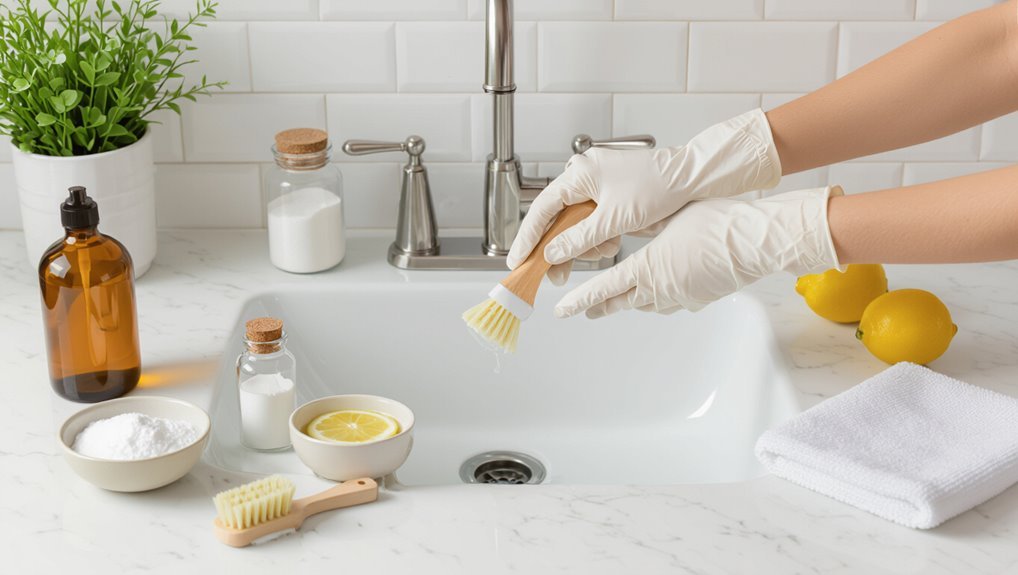
Start by isolating the area and ensuring good ventilation so spores don’t spread; open windows, turn on a fan, and close doors to other rooms.
Wearing gloves and a mask, you scrub mold with vinegar or baking soda, both natural ingredients.
Wipe dry, discard contaminated materials, and use eco-friendly solutions like tea tree oil for spot treatment.
Monitor humidity to prevent return.
When to Call a Professional
If you spot mold spreading across walls, ceilings, or multiple rooms, it’s time to call a professional.
If anyone in your household is having respiratory issues, allergic reactions, or worsening symptoms, get expert help right away.
Also contact a pro for mold in structural areas or large infestations that you can’t safely or fully remove yourself.
Visible Widespread Growth
When mold covers large areas—typically more than about 10 square feet—or shows up in multiple rooms, you should call a professional, because widespread growth often means hidden contamination, structural damage, or HVAC involvement that DIY methods won’t address safely.
A pro uses mold identification techniques, assesses mold growth factors, locates hidden colonies, and secures containment and remediation plans so you get safe, lasting results.
Health Symptoms Present
Because mold can trigger or worsen respiratory and allergic reactions, call a professional as soon as you or household members experience persistent symptoms—like coughing, wheezing, recurring sinus infections, unexplained rashes, severe headaches, or increased asthma attacks—that improve when you’re away from the home but return afterward.
- You may have mold allergies or respiratory issues needing testing.
- Persistent sinus problems, eye irritation, or skin irritation signal concern.
- Chronic fatigue or altered immune response can indicate mold toxicity.
- Get professional assessment and remediation guidance rather than self-treating serious health impacts.
Structural Or Large Areas
Noticing health symptoms linked to mold is a clear signal you may need professional help, and the same holds for significant or structural contamination.
If mold covers over 10 square feet, affects HVAC, or follows prolonged water damage, call experts. They’ll assess mold growth conditions, repair structure, and advise mold prevention tips.
You shouldn’t attempt large-scale removal alone; it’s unsafe and ineffective.
Health Risks of Mold Exposure
If you breathe in or touch mold, it can trigger a range of health problems—from mild nasal irritation to serious respiratory issues—especially if you’re sensitive or have a weakened immune system.
- Mold spores worsen mold allergies and respiratory issues.
- Skin irritation and fungal infections can occur after contact.
- Long term effects include chronic conditions from altered immune response.
- Environmental factors and poor indoor air quality increase risk.
How to Test and Interpret Results
You’ll start by choosing a sampling method—air, surface swab, or tape lift—based on where the mold is and what you need to know.
Follow kit or lab instructions carefully so your samples are valid, then compare counts and species ID to the lab’s reference ranges.
If results show high spore counts or toxigenic species, you should take remediation steps or get a professional assessment.
Sampling Methods
When you’re ready to confirm a mold problem or verify that cleanup worked, sampling gives you objective data about what and how much is present; common approaches include air, surface, and bulk sampling, each suited to different questions and environments.
- Use simple sampling techniques for suspected areas.
- Prioritize visible spots first.
- Collect control/background samples.
- Send samples for mold identification and lab analysis.
Reading Results
How do you make sense of mold test results? You’ll compare spore counts, note species from mold identification, and weigh health risks. Use repeat mold testing if results surprise you. Trust clear patterns over single outliers and act promptly when indoor counts exceed outdoors or when toxic species appear.
| Result | Action |
|---|---|
| Low | Monitor |
| Elevated | Clean |
| Toxic species | Evacuate |
| Unknown | Retest |
Primary Safety Gear for Removal
Start with the right gear and you cut risk dramatically: wear an N95 or P100 respirator, chemical-resistant gloves, and goggles that seal around your eyes so spores and cleaning agents don’t reach you.
Use disposable coveralls, safety goggles, a respirator mask, protective gloves, ventilation fans, hand sanitizers, first aid nearby, and safe storage for cleaning supplies and contaminated materials.
- Respirator mask
- Protective gloves
- Disposable coveralls
- Safety goggles
How to Document Mold Damage
Before you disturb anything, document the damage thoroughly so you’ve got a clear record for insurance or remediation decisions.
You should photograph affected areas, note locations, sizes, odors, and dates, and collect humidity and moisture readings.
Use consistent mold documentation methods and log observations in writing.
This mold damage assessment helps professionals, speeds claims, and guides safe, targeted remediation.
Simple Vinegar Treatments for Mold
You can mix plain white vinegar at full strength or dilute it to about 50–70% for gentler surfaces depending on the mold and material.
Spray or wipe the solution onto the affected area, let it sit for at least an hour, then scrub and rinse as needed using proper protective gear.
After treatment, keep the area well-ventilated until it’s fully dry to prevent regrowth.
Vinegar Solution Strength
A simple 1:1 vinegar-to-water mix works well for light surface mold, but full-strength white distilled vinegar is more effective for stubborn or porous areas; use undiluted vinegar on nonporous surfaces and diluted on materials that could be damaged.
- Check vinegar concentration for proper vinegar effectiveness and vinegar safety.
- Note vinegar odor; ventilate during vinegar application.
- Consider vinegar alternatives when needed.
- Store vinegar properly for vinegar storage and mold prevention; know vinegar versus bleach limits in cleaning solutions.
Application Techniques Explained
1 simple routine will handle most small mold patches: spray undiluted white vinegar on nonporous surfaces (or a 1:1 mix for painted or delicate areas), let it sit 10–15 minutes, then scrub with a brush or microfiber cloth and rinse or wipe dry—repeat if stains persist.
You’ll learn cleaning techniques, surface types, application safety, product recommendations, treatment comparison, solution effectiveness, eco friendly methods, natural cleaning, and maintenance practices for mold prevention.
Post-Treatment Ventilation
After you’ve scrubbed and wiped away the vinegar and visible mold, open windows and run fans to clear lingering spores and vinegar vapors—this helps dry surfaces and reduces the chance of regrowth.
- Use fans for effective air circulation.
- Monitor post treatment humidity control with a hygrometer.
- Keep airflow 24–48 hours unless surfaces stay damp.
- Seal treated areas once dry to prevent moisture return.
Kill and Prevent Mold With Baking Soda
Sprinkle baking soda on mold-prone surfaces, then scrub and rinse to remove spores and neutralize odors—it’s a simple, non-toxic method you can use around the house.
You’ll appreciate baking soda benefits: it absorbs moisture, lifts stains, and acts as a mild, natural disinfectant.
Use a paste or solution, repeat weekly, and keep surfaces dry to prevent recurrence and curb mold growth.
Use Hydrogen Peroxide on Mold
Reach for hydrogen peroxide when you need a stronger, still non-toxic way to kill mold on hard, non-porous surfaces; its oxidizing action breaks down mold cell walls and helps remove stains without harsh fumes.
- Spray 3% hydrogen peroxide directly.
- Let sit 10–15 minutes.
- Scrub with a brush, rinse, dry.
- Repeat for stubborn spots; ventilate and wear gloves for safe mold removal.
Make a Tea-Tree Mold Spray
If you want a natural, pleasant-smelling alternative to hydrogen peroxide for routine mold control, try a tea-tree oil spray.
Mix 1 teaspoon tea-tree oil with 1 cup water in a spray bottle, shake well, and mist affected areas.
You’ll enjoy tea tree benefits like antifungal action and odor control while supporting mold prevention with regular applications.
Grapefruit Seed Extract for Mold
Grapefruit seed extract (GSE) is a concentrated natural extract you can use to combat mold because it contains compounds that disrupt microbial cell membranes.
You’ll want to know how it works, how effective it’s against mold, and the proper dilution for safe use on surfaces.
Follow recommended mixes and test a small area first to avoid damage or irritation.
What Is Grapefruit Seed Extract
A concentrated herbal extract, grapefruit seed extract (GSE) comes from the seeds, pulp, and membranes of the fruit and is prized for its antimicrobial properties.
People use it as a natural option to help control mold because studies and anecdotal reports suggest it can inhibit some fungal growth.
- You’ll learn grapefruit benefits.
- You’ll see GSE’s uses.
- You’ll note safety cautions.
- You’ll consider product sources.
How It Kills Mold
When you apply grapefruit seed extract to a moldy surface, its concentrated compounds attack cell walls and disrupt fungal cell function, which can halt growth and kill spores on contact. You’ll see weakened hyphae as natural antifungals interfere with membrane integrity informed by mold biology, reducing viability and spore spread.
| Effect | Target | Result |
|---|---|---|
| Cell wall damage | Hyphae | Collapse |
| Membrane disruption | Spores | Inactivation |
| Metabolic block | Enzymes | Death |
Safe Usage And Dilution
Although it’s natural, you should dilute grapefruit seed extract before use and follow precautions to avoid skin or surface damage.
You’ll practice safe dilution and use effective ratios to treat mold without harm. Follow these steps:
- Test on a small area.
- Use 1–2% extract in water for general cleaning.
- Increase to 5% for stubborn spots.
- Rinse and ventilate well.
Effective Homemade Mold Spray Recipes
To tackle mold quickly and safely, you’ll want a few reliable homemade sprays that use common ingredients like vinegar, hydrogen peroxide, and tea tree oil.
Mix 1:1 white vinegar and water for non-porous surfaces; use 3% hydrogen peroxide undiluted in a spray bottle for grout; add a few drops of tea tree oil to water for prevention.
Label and test first.
Which Natural Method to Choose
Which natural method you should pick depends on the surface, the mold severity, and any health or sensitivity concerns you have.
Choose strategies combining natural mold prevention, moisture control methods, and eco-friendly alternatives.
Consider effective cleaning agents, safe removal techniques, alternative treatments, home remedies, cleaning frequency, air purification options, and mold-resistant materials.
- Assess surface
- Match severity
- Note sensitivities
- Plan maintenance
How to Clean Painted Walls
With surface type and severity decided, focus on painted walls next — they need gentler care than tile or wood.
Once surface and severity are assessed, treat painted walls gently—test a hidden spot, clean softly, then dry and ventilate.
You’ll test a hidden spot, note paint types and wall textures, then scrub gently with diluted vinegar or hydrogen peroxide.
Rinse, blot dry, and improve ventilation.
Repaint with mold-resistant primer if stains persist; always avoid abrasive cleaners that damage paint.
Remove Mold From Tile and Grout
Because tile grout soaks up moisture, mold often clings to the joints rather than the glazed surface, so you’ll need a targeted approach:
- Use eco friendly cleaners and tile cleaning solutions after surface preparation.
- Apply natural disinfectants (vinegar, hydrogen peroxide) for grout cleaning methods.
- Scrub with a stiff brush—proven mold removal techniques.
- Follow mold prevention strategies and home maintenance tips to keep tiles dry.
Clean Mold From Wood Surfaces
Start by evaluating the extent of the mold on the wood—surface discoloration needs a different approach than deep, porous infestation.
You’ll use gentle wood cleaning and safe scrubbing with vinegar or baking soda, then apply wood treatment or natural sealants and eco-friendly finishes for surface protection.
Focus on moisture control, mold prevention, regular inspections, and simple maintenance tips to keep wood healthy.
Treat Mold on Fabric and Upholstery
Anyone can encounter mold on fabric and upholstery, but you can remove it effectively with gentle, natural methods that safeguard fibers and finishes.
- Brush outdoors, then vacuum to dislodge spores.
- Spot-treat with vinegar or baking soda solution; test first.
- Air-dry in sunlight when possible to inhibit regrowth.
- Launder or steam-clean following manufacturer fabric care instructions; repeat mold removal techniques if needed.
Remove Mold From Carpets Naturally
Start by spotting all discolored, musty, or fuzzy patches on your carpet so you know exactly where to treat.
You’ll want to blot excess moisture and vacuum the area to remove loose spores before cleaning.
Then use natural agents like white vinegar or a baking soda paste to treat the molded spots, rinsing and drying thoroughly.
Identify Molded Areas
1 clear sign of carpet mold is a musty, damp smell that won’t go away even after cleaning, so trust your nose and inspect the areas that smell strongest first.
Use inspection techniques and detection tips to note mold types, growth conditions, surface materials, moisture sources, and environmental factors.
Check with cleaning tools and document findings to inform prevention strategies.
- Visual spots
- Texture changes
- Discoloration
- Wet patches
Use Natural Cleaning Agents
Now that you’ve identified where mold is hiding in your carpet and what’s causing it, you can begin treating the affected areas with natural cleaning agents that won’t damage fibers or fill your home with harsh chemicals.
Blot excess moisture, then use diluted vinegar or tea tree oil as natural disinfectants. Rinse lightly, dry thoroughly, and consider eco-friendly solutions like baking soda to deodorize and prevent return.
Clean Mold From Leather and Suede
Because leather and suede are delicate and porous, you’ll need a gentle, targeted approach to remove mold without damaging the material.
Because leather and suede are delicate and porous, treat mold gently with targeted, nonabrasive cleaning to avoid damage.
Use careful leather care and suede protection, mixing natural remedies with proper cleaning techniques. Focus on fabric treatment and surface restoration; choose product recommendations sparingly.
Follow steps:
- Brush mold outdoors.
- Dab vinegar solution.
- Blot, air dry.
- Condition material.
Deal With Mold on Drywall and Plaster
If mold has taken hold on your drywall or plaster, act quickly to stop it from spreading and damaging the wall structure.
Small, surface-level growths can often be treated with gentle, natural methods, while extensive infestations may need professional help.
Do a mold inspection, practice moisture control and humidity management, improve wall ventilation, follow drywall maintenance and plaster sealing guidance, choose mold-resistant paint selection, schedule surface treatment, repair techniques, and set cleaning frequency.
Safe Mold Removal From Window Sills
1 simple routine can keep mold from taking over your window sills: inspect regularly, remove visible growth promptly, and stop moisture from returning.
Know window sill materials and mold growth conditions; use natural disinfectant options and sunlight benefits.
Follow mold removal frequency and cleaning frequency guidelines. Preventive maintenance tips and seasonal inspections matter.
Use moisture control methods and effective scrubbing techniques.
- Clean weekly
- Dry thoroughly
- Disinfect naturally
- Inspect seasonally
Clean Bathroom Fixtures and Grout
When mold shows up on sinks, tubs, or grout lines, tackle it quickly with targeted cleaning and consistent drying to keep it from returning.
Act fast: clean mold on sinks, tubs, and grout, then dry thoroughly to prevent it from returning
Scrub fixtures and grout using a vinegar-water spray or baking soda paste, rinsing thoroughly.
Use a soft brush, dry surfaces, and improve ventilation.
These cleaning techniques remove spores and support mold prevention so stains won’t recur.
Treat Mold Under Sinks and Cabinets
Kitchens and bathrooms often hide mold under sinks and inside cabinets, so after cleaning visible fixtures you should check these dark, damp spots next.
Use gloves, remove items, and dry surfaces. Treat with vinegar or baking soda, then monitor.
- Fix leaks promptly
- Improve ventilation
- Use desiccants to control cabinet humidity
- Regularly inspect — mold prevention tips
Prevent Mold in Basements
To prevent mold in your basement, keep humidity below 50% with a dehumidifier and by fixing leaks promptly.
Improve ventilation by using fans, vents, or an air exchanger to move damp air out.
Those steps cut the moisture mold needs to grow.
Control Basement Humidity
Because basements stay cool and trapped, they’re prime spots for mold growth, so you’ll want to control humidity to keep spores from taking hold.
Use humidity control methods:
- Install moisture barrier installation and basement sealing solutions.
- Follow dehumidifier maintenance and use humidity monitoring tools.
- Apply temperature regulation strategies and condensation prevention techniques.
- Choose mold resistant materials and air circulation techniques.
Improve Basement Ventilation
Controlling humidity is a big step, but improving basement ventilation keeps fresh air moving and prevents damp pockets where mold likes to grow.
You should install exhaust fans, use a dehumidifier, and open vents or windows when weather permits.
These mold prevention strategies boost basement air quality, reduce condensation, and make inspections easier.
Maintain fans and filters for consistent airflow.
DIY Basement Waterproofing Tips
1 practical step you can take is sealing cracks and directing water away from your foundation; then perform a foundation inspection and improve basement drainage.
You’ll install moisture barriers, prioritize water sealing, and consider sump pumps.
Maintain gutter maintenance and use landscaping solutions to slope soil away.
Add wall insulation where needed.
- Seal cracks
- Improve drainage
- Install sump pump
- Add moisture barrier
How to Keep Crawlspaces Dry
When you keep your crawlspace dry, you cut off the most common source of indoor mold and structural damage.
You’ll install moisture barriers and crawlspace insulation, add drainage solutions and sump pumps, and improve air circulation with ventilation systems.
Schedule regular inspections, pursue foundation repairs if needed, and use mold resistant materials.
These steps support humidity control and long-term dryness.
Control Humidity to Stop Mold
To stop mold naturally, you should keep indoor humidity low by running dehumidifiers or using your HVAC system wisely.
Improve air circulation with fans and by opening windows when outdoor humidity is lower.
Place moisture absorbers in closets and other tight spaces to catch leftover dampness.
Reduce Indoor Humidity
Although mold thrives in damp, humid air, you can stop it by keeping indoor humidity low and stable; aim for 30–50% relative humidity and use dehumidifiers, exhaust fans, and ventilation to remove excess moisture from bathrooms, kitchens, basements, and laundry areas.
- Use humidity monitors and dehumidifier usage for precise humidity control.
- Install ventilation systems and air circulation improvements.
- Add moisture barriers, insulation improvements, and weatherproofing techniques.
- Consider indoor plants and seasonal adjustments to balance humidity.
Improve Air Circulation
Controlling humidity is easier when air moves freely, so improving circulation should be part of your moisture-control plan.
You can improve ventilation with ceiling fans, exhaust fans, and proper window treatments to boost airflow.
Use air purifiers and clean air filters, add indoor plants for freshening, choose natural air fresheners, and check thermal insulation to stabilize temperatures for better humidity control.
Use Moisture Absorbers
When humidity stays low, mold has a much harder time taking hold, so use moisture absorbers in closets, bathrooms, basements, and other damp spots to keep levels safe.
- Choose dehumidifier options or eco friendly solutions for moisture control.
- Use natural alternatives like silica or charcoal.
- Combine humidity monitoring with air circulation.
- Pick mold resistant materials as preventative measures for home maintenance.
Improve Ventilation to Prevent Mold
Because stale, humid air feeds mold, improving ventilation is one of the simplest and most effective defenses you can use.
Open windows when weather allows, use exhaust fans in kitchens and baths, and arrange furniture to promote airflow.
Adopt natural ventilation strategies and practical air circulation tips: cross-ventilate rooms, keep vents clear, and run ceiling fans to reduce lingering moisture and stop mold before it starts.
When and How to Use Dehumidifiers
Improving airflow helps a lot, but in persistently damp spaces you’ll want a dehumidifier to pull excess moisture from the air and keep mold from reappearing.
Improve airflow, and in persistently damp areas use a dehumidifier to remove excess moisture and prevent mold.
Use these guidelines for dehumidifier benefits, ideal settings, and maintenance tips:
- Room placement: central, elevated, near sources.
- Humidity monitoring: target 40–50% for mold prevention.
- Energy efficiency: choose ENERGY STAR models.
- Seasonal usage and moisture control improve air quality.
How to Dry Wet Areas Fast
When you need to dry wet areas fast, boost airflow by opening windows and running fans to move moisture out.
Use a wet/dry vac or mop to remove standing water quickly before it soaks into materials. Acting fast cuts the chance of mold taking hold.
Speed Up Airflow
If a spill or leak leaves surfaces damp, act fast to increase airflow so things dry before mold can take hold.
You’ll improve air circulation and support humidity control by directing moving air and opening vents.
Do these four steps quickly:
- Open windows and doors to create cross-ventilation.
- Run fans toward exits.
- Use dehumidifiers in enclosed spaces.
- Lift rugs and cushions to expose damp areas.
Remove Standing Water
Sop up standing water right away so surfaces dry before mold gets a foothold: use towels, a wet/dry vacuum, or a mop to remove as much liquid as possible, then follow with fans and a dehumidifier to speed evaporation and lower humidity. Check standing water sources, perform dampness inspection, and apply standing water removal, water drainage solutions, and moisture control methods to aid water damage prevention.
| Tool | Purpose |
|---|---|
| Towels | Absorb |
| Dehumidifier | Dry air |
Mold Prevention in Kitchens
Because kitchens are humid and see frequent spills, you need simple routines to keep mold from taking hold:
- Use mold resistant materials, keep appliance placement airy, and improve air circulation.
- Practice moisture management: prompt sink maintenance and dry spills.
- Store food properly and use natural cleaners for surfaces.
- Conduct regular inspections and adopt preventative measures to stop mold early.
Prevent Mold in Laundry Rooms
Kitchens and laundry rooms share one common risk: warmth and moisture that invite mold, so apply the same vigilance in your laundry area.
You’ll improve laundry ventilation and air circulation, practice moisture control with humidity monitoring, use proper drying techniques, follow washer maintenance, choose detergent selection wisely, apply fabric care, increase cleaning frequency, and install mold resistant materials to prevent growth.
What to Do After Flooding
After a flood, act quickly to limit mold: remove standing water, dry everything within 24–48 hours, and separate soaked items to decide what you can salvage.
After a flood, act fast: remove water, dry within 24–48 hours, and sort soaked items to salvage what you can
Follow these recovery tips to address flood damage and reduce mold growth:
- Wear PPE; document damage for insurance.
- Remove wet drywall, insulation, and porous materials.
- Use fans, dehumidifiers, and open windows.
- Disinfect surfaces with safe cleaners.
Seasonal Mold-Prevention Checklist
Once you’ve handled immediate flood damage and dried things out, set up a seasonal mold-prevention checklist to keep moisture and spores from coming back.
Schedule seasonal inspection, focus on humidity control and air circulation, use ventilation tips and moisture management strategies, adopt a simple cleaning routine and eco-friendly solutions, and pursue homeowner education to boost mold awareness and sustain effective mold prevention.
Cleaning Schedule to Prevent Recurrence
When you set a regular cleaning schedule and stick to it, you’ll cut down on the moisture and organic debris mold needs to come back.
Use practical mold prevention tips and set cleaning frequency by risk areas. Create a simple routine and record progress.
- Weekly: high-moisture spots
- Biweekly: bathrooms/kitchens
- Monthly: vents/windowsills
- Quarterly: basements/attics
Mold-Control Supplies to Keep on Hand
Think of a small, well-organized kit as your first line of defense against mold — keep a spray bottle filled with white vinegar, a soft scrub brush, disposable gloves, N95 masks, microfibre cloths, and a mildew-resistant cleaner on hand.
Add eco friendly sprays, DIY mold killers, essential oil blends, humidity monitors, and tools for moisture control.
Stock mold resistant paint, mold resistant materials, air purifiers, and follow cleaning routines.
Child- and Pet-Safe Treatments
When you’re treating mold around kids and pets, choose non-toxic cleaners like vinegar, baking soda, or hydrogen peroxide to avoid harmful fumes.
Use simple preventive measures — fix leaks, improve ventilation, and keep humidity low — so you’re reducing mold growth at the source.
Always store cleaning supplies out of reach and ventilate the area while you work.
Non-Toxic Cleaning Solutions
You don’t need harsh chemicals to tackle mold—simple, child- and pet-safe solutions like distilled white vinegar, baking soda, and hydrogen peroxide can be highly effective when used correctly.
- Use vinegar and water as natural disinfectants and plant based cleaners.
- Sprinkle baking soda, scrub, rinse for biodegradable products.
- Apply diluted hydrogen peroxide for safe cleaning.
- Try herbal remedies and homemade cleaners as green alternatives with gentle cleansers.
Preventive Home Measures
Because mold thrives in damp, poorly ventilated spots, set up simple, child- and pet-safe habits that reduce moisture and block spores before they start.
Use dehumidifiers, exhaust fans, and routine airing to keep humidity low.
Choose mold resistant materials for bathrooms and basements, fix leaks promptly, vacuum with HEPA air filtration, and store toys and fabrics dry to prevent regrowth.
Eco-Friendly Products That Help
Although commercial cleaners can feel like the easiest fix, plenty of eco-friendly products tackle mold effectively without harsh chemicals.
Look for cleaners with active ingredients like hydrogen peroxide, citric acid, or plant-based surfactants, and choose concentrated formulas and refillable packaging to reduce waste.
- Use eco-friendly cleaners for nonporous surfaces.
- Apply natural fungicides sparingly.
- Ventilate while treating.
- Rinse and dry thoroughly.
Cost-Effective Options for Renters
Renters can tackle mold without breaking the bank by focusing on a few inexpensive, high-impact strategies: inspect damp spots, use vinegar or baking soda for nonporous surfaces, improve ventilation with fans or window airing, run a dehumidifier if allowed, and document issues for your landlord.
These budget friendly solutions are simple, renter friendly strategies that limit spread and reduce recurrence without costly renovations.
Quick Visible Fixes While Planning
While you’re documenting and using inexpensive fixes, take a few quick visible steps to stop mold from spreading as you plan longer-term solutions.
You’ll focus on immediate containment and simple treatments that complement broader mold prevention strategies and natural cleaning alternatives.
- Isolate area with plastic and tape.
- Wipe small patches with vinegar.
- Improve airflow with a fan.
- Dry surfaces within 24 hours.
How to Test if Treatment Worked
Wondering if your natural treatments actually worked? Check visually for stains, smell, and surface texture after drying.
Use a home mold testing kit or swab suspicious areas to confirm mold testing results.
Compare samples before and after treatment to measure treatment effectiveness.
Repeat tests after a week to verify spores haven’t returned, and document findings for future prevention.
When to Replace Instead of Clean
If mold has deeply penetrated porous materials, don’t waste time trying to clean them—replace them.
You should do a material assessment to identify mold types and cleaning limits, then weigh replacement criteria, safety considerations, cost evaluation, and time investment.
Choose long term solutions when contamination is extensive.
- Structural wood
- Insulation
- Carpeting
- Drywall
Common Mistakes That Make Mold Worse
Don’t water houseplants so much that the soil stays soggy, because excess moisture feeds mold.
Make sure you provide proper ventilation in bathrooms and kitchens to keep humidity down.
And don’t use bleach on porous surfaces like wood or drywall — it won’t reach mold roots and can make the problem come back.
Overwatering Houseplants
One common cause of mold in homes is overwatering your houseplants; excess moisture creates the perfect breeding ground for fungal spores.
You should check overwatering signs and monitor plant health to prevent mold. Adjust watering, improve drainage, and remove soggy soil.
- Check pot drainage
- Scrape off moldy soil
- Let soil dry between waterings
- Repot with fresh, airy mix
Ignoring Ventilation Needs
Because air that doesn’t move holds moisture, poor ventilation lets mold thrive in corners, closets, and behind furniture.
You should open windows, run exhaust fans, and use a dehumidifier to reduce humidity and improve air quality.
Regularly check vents and avoid blocking airflow; these simple steps support mold prevention and stop small problems from becoming larger, harder-to-remove infestations.
Using Bleach On Porous Surfaces
Although bleach kills surface mold, using it on porous materials like wood, drywall, or fabric often makes the problem worse: bleach can’t reach mold roots embedded in pores, so it may whiten visible growth while live spores persist and later spread.
Additionally, its strong fumes can damage materials and harm your health.
- Consider porous surface challenges and surface material considerations.
- Use safe cleaning alternatives for mold growth prevention.
- Balance bleach effectiveness with bleach safety precautions.
- Prioritize long term solutions and environmental impact.
How to Spot Hidden Mold in Vents
If you suspect mold but can’t see it, start by inspecting your vents for telltale signs—musty odors, dark spots around grilles, and unusually dusty or discolored airflow are common clues.
Do a vent inspection to detect hidden mold, note moisture sources, and consider cleaning frequency.
Address ventilation systems, humidity control, and airflow improvement to limit mold spores and adopt preventative measures.
Maintain Indoor Air Quality for Mold
You’ve already checked vents for mold and addressed obvious moisture sources; now focus on overall indoor air quality to keep spores from spreading.
Use ventilation strategies, humidity control, and air purifiers. Monitor mold indicators during seasonal changes and after home inspections.
Use ventilation, control humidity, and run air purifiers; watch for mold signs after seasonal shifts and inspections.
Consider indoor plants and building materials that resist dampness.
- Improve ventilation strategies
- Use air purifiers
- Manage humidity control
- Choose moisture-resistant building materials
Educate Household Members About Mold
Teach everyone in your home to recognize common mold signs like musty smells, discoloration, and water stains so you can spot problems early.
Show them safe cleaning methods and when to wear gloves and masks or call a pro.
Teach simple habits—fix leaks, dry wet areas, and keep humidity down—to prevent future growth.
Recognize Mold Signs
Mold can start small but spread fast, so make sure everyone in your home knows what to look for—musty odors, discolored spots on walls or ceilings, peeling paint, and persistent respiratory irritation—so they report problems right away.
- Learn common mold types and typical mold locations.
- Check bathrooms, basements, kitchens, and behind appliances.
- Note water stains, fuzzy growths, or black specks.
- Report issues promptly for assessment.
Teach Safe Cleaning
Before anyone starts scrubbing, explain what’s safe to clean yourself and what needs a pro so people don’t risk exposure or make the problem worse.
Teach family education on natural alternatives and eco-friendly solutions, show safe supplies, and set cleaning routines.
Encourage indoor plants, air purifiers, moisture control, routine inspections, and proactive measures so everyone helps without creating hazards.
Prevent Future Growth
Because everyone in your home plays a role in keeping mold from coming back, explain where it grows, what conditions it needs, and simple daily habits that cut those conditions off at the source.
Teach family to use mold resistant materials, practice humidity monitoring, and act fast on leaks.
- Ventilate regularly
- Wipe spills immediately
- Fix leaks promptly
- Track humidity levels
How to Prevent Future Mold Outbreaks
When you tackle small issues quickly and keep humidity low, you’ll greatly reduce the chance of future mold outbreaks.
Use mold resistant materials, moisture barriers, and improve foundation drainage.
Make smart landscaping choices to divert water.
Schedule routine inspections, seasonal maintenance, and ventilation upgrades.
Monitor air quality with humidity monitors and adjust interior design to avoid hidden damp spots and promote airflow.
Final Checklist After Mold Removal
Before you call the job done, inspect all treated areas to make sure no hidden spots were missed.
Confirm everything is fully dry to prevent moisture from bringing mold back.
Keep monitoring the space for a few weeks so you can catch and address any recurrence early.
Inspect All Treated Areas
Even after the visible mold is gone, you’ll want to methodically inspect every treated area to confirm the job’s complete and no hidden spots were missed.
Use mold inspection techniques and common inspection tools to check odor, discoloration, and texture. Follow this final checklist:
- Visually re-scan walls and ceilings.
- Check behind furniture and fixtures.
- Smell for musty odors.
- Photograph and note any concerns.
Ensure Proper Drying
Although the visible mold is gone, you’ll need to dry every treated area thoroughly to prevent recurrence; dampness left in walls, flooring, or insulation invites new growth.
Use targeted drying techniques and appropriate drying materials for different surface types.
Improve air circulation and airflow improvement with ventilation strategies, dehumidifiers, and fans.
Monitor humidity levels, address environmental factors, and maintain moisture control to deter future mold growth.
Monitor For Recurrence
Now that the mold is gone and surfaces are dry, keep checking treated areas regularly to catch any signs of recurrence early.
You’ll use mold monitoring and routine assessments to spot recurrence signs, track humidity tracking and moisture levels, and address environmental factors affecting air quality.
Follow preventive measures with seasonal checks and focused surface inspections.
- Weekly moisture levels check
- Monthly air quality test
- Quarterly surface inspections
- Annual seasonal checks
Frequently Asked Questions
How Long After Treatment Is It Safe to Re-Enter the Room?
You can usually re-enter after treatment once surfaces are dry and ventilation’s restored; follow re entry guidelines specific to the product. Treatment duration often ranges hours to 24 hours, but check label and wait accordingly.
Can Mold Spores Spread Through HVAC Systems?
Yes — despite seeming contained, mold spores can travel through HVAC systems, so you’ll need mold prevention and regular HVAC maintenance; don’t assume vents stop them, and act quickly to clean filters and ducts to limit spread.
Will Mold Return if Humidity Is Controlled but a Leak Persists?
Yes — you’ll still get mold growth if a leak persists, even with humidity control; you’ll need to fix the leak and dry materials promptly, or mold will return and continue spreading despite stable humidity levels.
Are Natural Treatments Effective on Black Mold (Stachybotrys)?
Like pulling weeds from a dark carpet, natural remedies can weaken black mold but won’t reliably eliminate heavy infestations. You’ll need professional removal for toxic growths; use natural cleaners only for small, dry, non‑porous spots.
Can Homeowners File Insurance Claims for Mold Remediation?
You can file insurance claims for mold remediation, but coverage varies by policy and mold types; you’ll need to document damage, check exclusions, and often prove sudden water events caused it, or your claim may be denied.
Conclusion
You’ve got the tools and the know-how to tackle mold naturally, so don’t wait—act now. Clean visible spots with safe, non-toxic solutions, protect yourself, and test if you suspect hidden growth; call a pro for large or persistent infestations. Keep humidity low, fix leaks, and teach everyone to spot trouble early. Prevention is your strongest ally; like a steady heartbeat, regular checks will keep mold at bay and your home healthy.
