
How to Dry Out Paint Cans Safely for Disposal
You can safely dry leftover paint by first confirming whether it’s water- or oil-based—water-based (latex/acrylic) softens with water, oil-based won’t. For small latex cans, stir in kitty litter, sawdust, or a commercial hardener and leave lids off in a ventilated area until solid; for large cans, pour excess into smaller containers or get hazardous-waste pickup. Always wear gloves and ventilate, never pour oil-based down drains, and keep local disposal rules in mind if you want more detailed steps.
Quick Answer: Dry Paint Cans Safely for Disposal
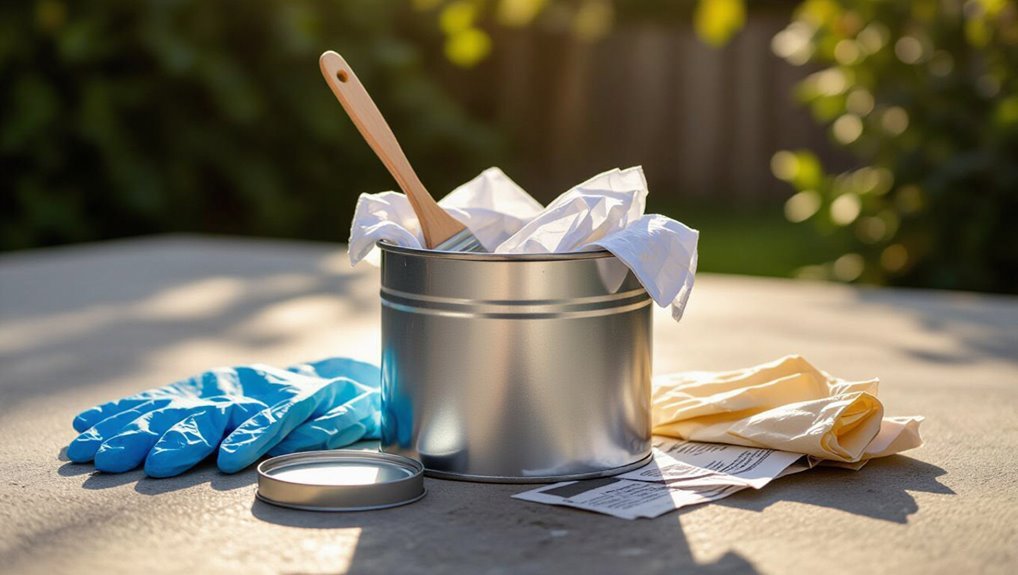
Start by checking the paint type and local rules: latex (water-based) paints can usually be dried and tossed in regular trash once solid, while oil-based paints are hazardous and need special disposal.
To dry latex, remove lid, stir in kitty litter or commercial hardener, let solidify, then seal can.
Follow paint disposal safety tips: wear gloves, ventilate area, label cans.
How to Tell Water-Based vs. Oil-Based Paint
Start by checking the paint label for keywords like “latex,” “acrylic,” or “alkyd” to identify water- versus oil-based formulas.
If the label’s missing, rub a bit on a rag and try a water test—water will soften water-based paint but won’t affect oil-based.
You can also note the smell and drying time: oil-based paints are smellier and take much longer to dry than water-based ones.
Check The Paint Label
How can you quickly tell if a paint is water-based or oil-based?
Check the label: manufacturers usually list “latex,” “acrylic,” or “water-based” for water paints, and “alkyd,” “enamel,” or “oil-based” for solvent paints.
The label also notes disposal instructions and relevant paint disposal regulations.
Follow those directions to choose eco friendly methods and comply with local rules before drying or discarding.
Perform A Water Test
One quick way to confirm whether paint is water-based or oil-based is to do a simple water test: dab a cotton swab or rag with a little water and rub a small, inconspicuous spot on the paint—if the paint softens or comes off, it’s water-based; if it stays intact, it’s likely oil-based.
- Gather supplies
- Test small area
- Observe paint consistency
- Note color transfer
- Record result
Smell And Drying Time
Because oil-based paints dry by solvent evaporation and chemical curing, you’ll notice a strong, lingering solvent smell and a much longer tacky period than with water-based paints.
You can use paint odor to identify type: solventy and strong means oil-based; faint, like latex, means water-based.
For drying tips, ventilate, keep lids off briefly, and allow extra curing time for oil formulations before disposal.
Supplies You Need Before Drying Paint Cans
Before you start drying paint cans, gather the right supplies so the job’s safe and efficient: gloves, goggles, a dust mask or respirator, a sturdy work surface or drop cloth, a ventilation fan or open windows, stirring sticks, empty cardboard boxes or absorbent cat litter for oil-based paints, and a permanent marker for labeling.
- Gloves and goggles
- Respirator or dust mask
- Drop cloth and fan
- Stirring sticks
- Marker and boxes
Follow paint disposal safety precautions and label cans. Keep ventilation, and wear protection.
Best Absorbents for Leftover Paint
Now that you’ve prepped and protected your workspace, pick the right absorbent to solidify leftover paint so disposal’s safe and compliant.
Choose kitty litter, sawdust, or commercial absorbent materials for oil- or solvent-based paints. For water-based paints, consider paper towels or rags.
Look for eco friendly options like recycled cellulose or biodegradable absorbents. Dispose once fully solidified per local rules.
Drying Small Latex (Water-Based) Paint Cans
Start by checking the can’s label to confirm it’s latex (water-based) paint.
For small cans, you’ll dry and dispose using safe, eco friendly methods and practical paint disposal tips.
Follow these steps:
- Pour into newspaper-lined tray
- Stir in cat litter or sawdust
- Let sit uncovered until solid
- Seal lid when dry
- Recycle or trash per local rules
Drying Large or Partially Full Latex Paint Cans
If you handled small cans by absorbing the paint with kitty litter or sawdust, larger or partially full latex cans need a slightly different approach to dry safely and effectively.
Pour excess paint into smaller containers for curing, or stir in commercial paint hardener per instructions.
Keep lids off in a well-ventilated area, follow local paint disposal rules, and observe safety precautions to prevent spills.
Handling and Drying Oil-Based or Solvent Paints
Oil-based and solvent paints require extra care because they’re flammable and can’t be treated the same way as latex; you’ll need to follow specific rules for evaporation, hardening, and disposal to stay safe and legal.
Oil-based and solvent paints are flammable—handle evaporation, hardening, and disposal differently than latex to stay safe and legal.
Follow these paint safety and disposal regulations steps:
- Use well-ventilated outdoor area.
- Never pour down drains.
- Accelerate curing with absorbents.
- Store sealed for hazardous pickup.
- Label cans and document disposal.
When to Keep and Store Leftover Paint Instead
Rather than disposing of every leftover can after you finish a project, consider when it makes sense to keep paint for future touch-ups or matching.
Keep small amounts of mixed or specially tinted paint, label cans with date, color and room, and seal lids tightly.
Proper paint storage in a cool, dry place extends paint longevity, saving time and money on small repairs.
How to Tell a Paint Can Is Fully Dry
You’ll want to run three quick checks to confirm a can is fully dry.
First, touch the surface to make sure it’s no longer tacky; then gently shake the can to hear if the contents still rattle.
Finally, pry the lid and try peeling or breaking a small clump—if it crumbles, it’s safe to dispose.
Surface Dryness Test
Wondering whether the paint can is truly dry? You can check surface dryness quickly using simple drying techniques and noting paint consistency. Try these steps:
- Visually inspect for sheen or stickiness
- Lightly touch a hidden spot
- Press a clean paper towel against the lid
- Smell for solvent odor
- Look for shrinkage or cracking
If all clear, it’s ready for disposal.
Can Rattle Check
After checking surface dryness, use the can rattle check to confirm the interior is solidified.
Hold the closed can near your ear and shake gently; a hollow rattle means liquid remains, while a dull thud indicates solids.
Record results, follow local paint safety guidance, and choose appropriate disposal methods if solid.
Don’t force-open cans that still slosh.
Peel And Break Test
Try peeling a bit of the dried paint from the interior edge to check its firmness.
Use a peel test, then a break test if unsure.
If paint flakes cleanly and crumbles, it’s dry.
If it’s gummy, wait more.
- Peel test first
- Look for clean edges
- Try gentle pressure
- Do break test next
- Don’t force it
Where and How to Dispose of Dried Paint Cans
When your paint cans are fully dry, you can usually treat them as regular trash, but check local rules first since disposal rules vary by city and county. You should follow recycling programs and local regulations, remove lids, and label cans as empty. If unsure, drop cans at household hazardous waste centers or municipal collection events.
| Option | Where to go |
|---|---|
| Trash | Curbside |
| Recycle | Program drop-off |
| HHW | Facility |
| Event | Collection day |
| Store | Take-back |
Top Mistakes That Cause Spills, Fires, or Fines : and How to Avoid Them
Because small mistakes with paint cans can quickly lead to spills, fires, or fines, you should follow a few clear rules:
- Know paint types and follow disposal guidelines for each.
- Seal lids tightly to aid spill prevention.
- Store away from heat sources to reduce fire hazards.
- Label cans and documentation to avoid fine penalties.
- Use approved containers and safe practices when transporting.
Troubleshooting Stubborn Wet Paint and Emergency Steps
If paint won’t dry despite following normal steps, act quickly to identify the cause and choose the safest fix. Check paint texture and paint consistency; dilute only with manufacturer-recommended solvent. If contamination or latex film persists, remove solids, absorb with kitty litter, and label for hazardous disposal. For spills, ventilate, isolate, and call local waste authority if unsure.
| Issue | Quick Fix | When to Call |
|---|---|---|
| Thick | Thin per label | If separation |
| Skin | Scoop out | If odor strong |
| Contaminated | Bag solid | If unknown |
Frequently Asked Questions
Can Dried Paint Cans Be Recycled With Household Metal Recycling?
Yes — you can often recycle dried paint cans with household metal recycling if they’re empty and dry. You’ll follow local guidelines for paint can recycling to guarantee eco friendly disposal and avoid contamination or fines.
Do Local Hazardous Waste Programs Accept Dried Oil-Based Cans?
Chances are, yes—you’ll find many local hazardous waste programs accept dried oil-based cans for paint disposal, but you’ll want to call ahead because rules vary, and they’ll guide you on handling hazardous materials properly.
Can I Donate Partially Used Paint After Drying It?
You generally shouldn’t donate partially used paint after drying it; most paint donation guidelines require usable liquid paint, but you can contact local community art projects or nonprofits to ask if they’ll accept or advise on alternatives.
How Long Should Cans Sit Before Being Considered Non-Hazardous?
You should wait until paint drying is complete—typically 24–72 hours for small cans, longer for larger amounts—before treating them as non-hazardous; follow local disposal methods, using solidification and municipal guidelines for safe pickup.
Are There Penalties for Improper Paint Can Disposal in My Area?
Like a red flag on the roadside, yes—you’ll face paint disposal regulations and local fines if you dump cans improperly. You should check your municipality’s rules; violations can trigger penalties, fees, or mandated cleanup actions.
Conclusion
You’ve learned how to tell water- from oil-based paint, gather absorbents, and dry small latex cans so you can legally and safely discard them. Like following a lighthouse to harbor, take clear steps—ventilate, solidify with kitty litter or commercial absorbers, wait until completely hard, then recycle or trash per local rules. Don’t rush; treating paint with care keeps your home, neighbors, and the planet safe—wise, simple stewardship in everyday life.
