
Can You Use Bleach on Painted Walls? Safe Cleaning Guide
You can use diluted bleach on fully cured, nonporous painted walls to disinfect and lighten surface mold or stains, but you shouldn’t on fresh, porous, flat, or “no-wash” finishes. Always ventilate, wear gloves and eye protection, test a hidden spot, and rinse thoroughly to avoid discoloration or damage. Use gentler cleaners or oxygen bleach for delicate surfaces, and call a pro for persistent mold or substrate decay — keep reading to learn safe dilutions, techniques, and alternatives.
How to Use This Guide
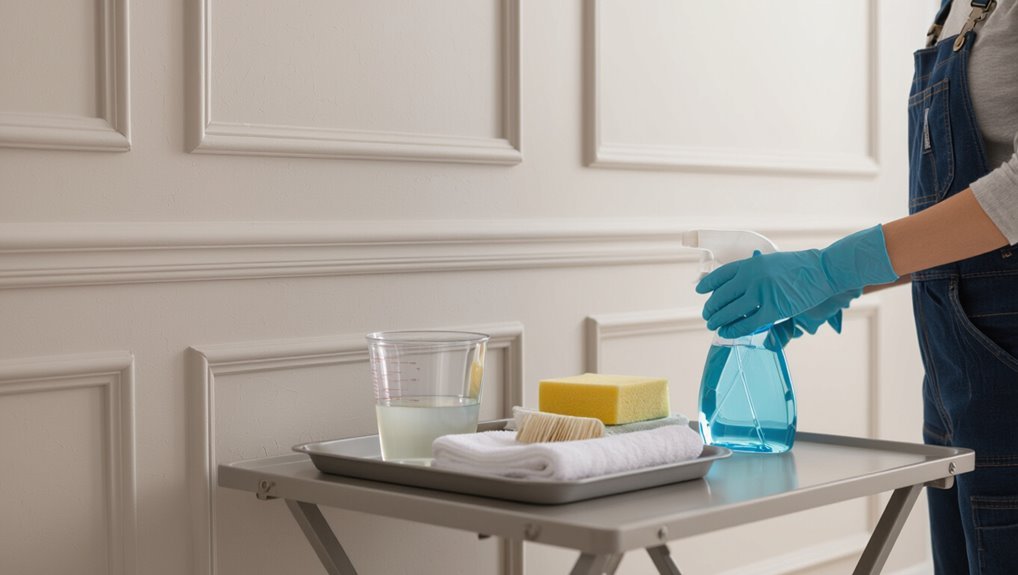
Before you start, skim the guide to get a quick sense of what’s covered and which sections apply to your paint type and stain situation.
You’ll find clear steps on how to prepare, safety notes, and testing methods. Use the checklists to pick appropriate cleaners and follow best practices for ventilation, dilution, and spot-testing so you protect finishes and avoid damage.
Quick Answer: When Bleach Is Safe (And When It Isn’t)
If the paint is fresh, porous, or damaged, you shouldn’t use bleach because it can strip color or soak in and weaken the surface.
You can use bleach safely on nonporous, fully cured paint—but always dilute it properly and test a small, hidden spot first.
Follow manufacturer dilution guidelines and rinse thoroughly to avoid long-term harm.
When Paint Is Fresh
When paint is still curing, you shouldn’t reach for bleach right away—fresh paint is more vulnerable to chemical damage, discoloration, and softening.
Wait until the manufacturer’s recommended drying time has passed before using any bleach solution.
Test a hidden spot first, use a diluted cleaner, and opt for mild soap if possible.
If unsure, wait longer to avoid ruining the finish.
Porous Or Damaged Surfaces
Because porous or damaged paint soaks up liquids, bleach can cause uneven fading, staining, or further deterioration, so you should avoid using it on those surfaces unless you take precautions.
Assess the area and consider alternatives.
Quick steps:
- Inspect for cracks or flaking.
- Avoid application on porous surfaces.
- Use gentle cleaners instead.
- Repair damaged paint before strong treatments.
Proper Dilution And Testing
Although bleach can remove mold and stains, you should only use it after proper dilution and testing to avoid damage.
You’ll mix household bleach with water following safe dilution techniques (usually 1:10 for disinfecting).
Always try testing methods on an inconspicuous spot, wait for full drying, and inspect for discoloration or peeling.
If harm appears, stop and use milder cleaners.
How Bleach Works on Stains, Mold, and Mildew
When you use bleach on mold and mildew, it oxidizes and destroys the microbial cells on the surface, whitening or removing the visible staining.
But because bleach mainly works on nonporous surfaces, it may not reach mold roots in porous paint or drywall, so regrowth can occur.
You’ll also want to know that bleach can strip or discolor some paint finishes, especially flat or water-based paints.
How Bleach Kills Mold
If you’ve ever scrubbed mold with bleach, you’ve seen it lighten stains quickly—but that visible change doesn’t tell the whole story.
Bleach kills surface mold by breaking cell walls and oxidizing pigments, but it may not reach roots in porous surfaces.
Consider mold prevention and cleaning alternatives when needed.
- Surface kill
- Oxidation
- Limited penetration
- Follow-up inspection
Bleach’s Effect On Paint
Because bleach is a powerful oxidizer, it can lighten or strip paint pigments as well as remove stains, so you should treat it cautiously on finished walls.
When you apply bleach to stains, mold, or mildew, it oxidizes organic material but can accelerate color fading and reduce paint longevity.
Test a hidden area, dilute properly, rinse thoroughly, and consider gentler cleaners first.
When Bleach Is the Right Choice for Cleaning Painted Walls
Although bleach can damage some finishes, you should consider it when you’re dealing with mold, mildew, or stubborn stains that other cleaners won’t remove.
You’ll want to confirm safe paint types and debunk cleaning myths first. Use dilute solution, ventilate, spot-test, and rinse thoroughly.
- Spot-test
- Dilute properly
- Ventilate room
- Rinse and dry
When to Avoid Bleach and Choose Another Cleaner
When your paint is flat, aged, or labeled “no-wash,” skip the bleach and pick a gentler cleaner instead, since strong oxidizers can strip pigment, cause streaks, or soften the finish.
You’ll also avoid bleach when dealing with porous surfaces, delicate trim, or recent repairs.
Choose bleach alternatives, test in an inconspicuous spot, and focus on proper surface preparation to prevent damage.
Which Paint Finishes Handle Bleach Best
You’ll find that glossier finishes stand up to bleach better because their hard, less-porous surfaces resist staining and chemical penetration.
Matte and flat paints are more porous, so they absorb solutions and can discolor or degrade more easily.
Test a small hidden spot first to see how your specific finish reacts.
Gloss And Durability
Because gloss changes how durable paint is, the finish you choose matters when you plan to use bleach for cleaning.
You’ll protect paint longevity by picking higher-gloss finishes, which resist abrasion and chemical wear better; low-gloss or flat paints show damage more easily and reveal surface texture changes.
- High gloss
- Semi-gloss
- Satin
- Flat
Porosity And Absorption
Although paint finish affects how bleach interacts with a wall, porosity and absorption determine how much of the cleaner actually soaks in. Low-porosity, harder finishes like high gloss and semi-gloss repel liquids and limit bleach penetration, while porous, flat or matte paints absorb more and risk discoloration, softening, or uneven fading.
You should check paint characteristics and stain resistance before applying bleach; test a hidden spot first.
Paint Types That Bleach Can Damage
1 common rule to remember is that bleach can harm more than it cleans—especially on certain paint finishes and formulations.
You should avoid using bleach on paints with compromised paint durability or reduced stain resistance.
Consider these vulnerable types:
- Flat/matte finishes
- Chalky or weathered exterior paint
- Low-quality latex blends
- Decorative faux or metallic paints
Bleach Concentrations Explained: Safe Ratios and Tradeoffs
When you mix household bleach for wall cleaning, common ratios like 1:10 (bleach to water) balance effectiveness against surface risk.
Stronger mixes remove stubborn stains faster but raise the chance of paint fading, etching, or releasing harsh fumes.
I’ll outline safe ratios, when to use them, and the tradeoffs so you can choose the least damaging option.
Household Bleach Ratios
Household bleach cleaners usually come in different strengths, and knowing the right ratio of bleach to water helps you clean effectively without damaging paint or risking your health.
Use these guidelines, minding cleaning safety and consider bleach alternatives for delicate finishes:
- 1:10 for disinfection
- 1:30 for general cleaning
- 1:100 for mild stains
- Spot test concentrated solutions first
Tradeoffs And Risks
Those dilution ratios give you a starting point, but you’ll need to weigh tradeoffs between cleaning power and paint safety as concentrations change.
You’ll get stronger cleaning efficacy at higher ratios, but you also raise risks: paint fading, surface etching, and respiratory irritation.
Test inconspicuous areas, ventilate well, wear PPE, and use the lowest effective concentration to balance results and preservation.
Safe Bleach-to-Water Dilution Ratios to Use
A simple, accurate dilution is key: for general cleaning and disinfecting painted walls, mix 1 part regular (5–6% sodium hypochlorite) bleach with 10 parts water (about 3/4 cup bleach per gallon of water); for tough mold or mildew, use up to a 1:3 ratio but test an inconspicuous spot first.
- Check bleach strength.
- Use measured dilution methods.
- Wear gloves and ventilate.
- Rinse after cleaning.
How to Test a Small Area Before Full Application
Want to make sure bleach won’t damage your paint? Choose a hidden spot, perform area preparation by cleaning dust and grime, then apply a diluted solution briefly.
Wait for full drying and do a surface inspection for discoloration, bubbling, or softening.
If the paint shows no harm after 24 hours, you can proceed with confidence; if it does, stop and try alternatives.
Tools and Supplies You’ll Need for Safe Bleaching
Before you begin, gather the right protective gear and cleaning supplies so you can work safely and avoid damaging the paint.
You’ll need items that support bleach safety and proper cleaning techniques.
- Household bleach (diluted)
- pH-neutral cleaner for pre-cleaning
- Soft sponge and microfiber cloths
- Plastic spray bottle and bucket for mixes
Personal Protective Gear and Ventilation Requirements
Because bleach fumes can irritate your eyes, lungs, and skin, you should wear proper protective gear and guarantee good ventilation whenever you’re cleaning painted walls.
Put on gloves, goggles, and a mask rated for chemical vapors as essential protective equipment.
Open windows and use fans to improve air circulation, avoid enclosed spaces, and take breaks outdoors if you feel dizzy or irritated.
How Do I Apply Bleach to Painted Walls, Step by Step?
Start by mixing a mild bleach solution—typically 1 part household bleach to 10 parts water—in a well-ventilated area.
Then test it on an inconspicuous spot to check for colorfastness and finish reaction before treating the whole wall.
Test a hidden area first to ensure the paint’s color and finish won’t be affected before proceeding.
Follow these steps for safe bleach application techniques and painted wall safety:
- Wear gloves and goggles.
- Sponge gently top-to-bottom.
- Rinse with clean water.
- Dry thoroughly.
How Long Should You Leave Bleach on Painted Surfaces?
How long you leave bleach on painted surfaces depends on the concentration and the paint type, but generally you should let a 1:10 bleach solution sit no more than 5–10 minutes to kill mold and disinfect without harming the finish; after that, rinse thoroughly with clean water to stop the chemical action. Limit bleach exposure to protect paint integrity.
| Surface | Time | Risk |
|---|---|---|
| Latex | 5–10 min | Low |
| Enamel | 5–10 min | Low |
| Flat | 3–7 min | Medium |
| Aged paint | 1–3 min | High |
Proper Rinsing and Neutralizing After Bleaching
While bleach kills mold and disinfects quickly, you need to remove it promptly to protect paint and your health.
Use safe rinsing techniques and approved neutralizing solutions to prevent damage and irritation.
Steps:
- Ventilate the area.
- Blot excess bleach with a damp cloth.
- Rinse with clean water.
- Apply a neutralizing solution and dry fully before repainting.
Bleach on Drywall, Plaster, and Wood
On drywall and plaster, you’ll want to be cautious because undiluted bleach can soften paper-faced drywall and strip paint or finishes.
For bare or finished wood, bleach can remove stains but may also lighten or weaken the surface, so test a small hidden area first.
Use diluted solutions, minimize soak time, and rinse thoroughly to avoid long-term damage.
Bleach Effects On Drywall
Because drywall, plaster, and wood all absorb moisture differently, using bleach on them can produce varied and sometimes damaging results—you’ll want to choose your method based on the surface.
For drywall, focus on drywall maintenance and mold prevention; dilute, spot-test, and avoid over-saturation.
- Test small area
- Use diluted solution
- Blot, don’t soak
- Repaint if stained
Bleach Use On Wood
If you’ve been cautious with drywall, remember wood behaves differently: it soaks up liquids and can discolor or warp when exposed to bleach.
Test on an inconspicuous area first. For sealed wood types, dilute bleach and rinse quickly; for raw or antique pieces, avoid bleach.
Use oxy-based cleaners or targeted stain removal products for sensitive woods to preserve finish and grain.
Cleaning Painted Trim and Baseboards With Bleach
When mildew or scuff marks crop up along trim and baseboards, you can use a diluted bleach solution to clean them safely—provided you follow the right steps and take basic precautions.
Use gloves, ventilate, test a hidden spot, and rinse thoroughly to protect trim care and baseboard maintenance.
Use gloves, ventilate, spot-test first, and rinse thoroughly to protect your trim and baseboards during cleaning.
- Ventilate room
- Wear gloves
- Spot test
- Rinse well
Dealing With Stubborn Mold Spots Without Stripping Paint
Wondering how to remove stubborn mold spots without stripping the paint?
You’ll want to spot-test a mild detergent or diluted vinegar solution first, gently scrub with a soft brush, then rinse and dry thoroughly.
Apply a mold-inhibiting primer to affected areas before repainting if needed.
Maintain ventilation and fix leaks for mold prevention; regular inspections support long-term paint maintenance.
How Bleach Interacts With Wallpaper and Textured Paint
Because bleach contains strong oxidizers, it can strip dyes and damage delicate surfaces, so you should treat wallpaper and textured paint with caution.
You’ll need to assess wallpaper durability and consider textured paint interactions before applying any solution.
- Test a hidden spot first.
- Blot, don’t rub.
- Use diluted cleaner.
- Rinse thoroughly and ventilate.
Preventing Discoloration and Fading From Bleach Use
After checking wallpaper and textured paint for sensitivity, focus on steps that prevent discoloration and fading when you use bleach on painted walls. Test small areas, dilute properly, rinse quickly, and limit exposure. These discoloration prevention and fading solutions reduce risk while cleaning; document results and avoid repeated treatments.
| Step | Action | Benefit |
|---|---|---|
| 1 | Test spot | Safety |
| 2 | Dilute | Gentle |
| 3 | Rinse | Remove residue |
| 4 | Limit time | Prevent fade |
| 5 | Record | Track results |
How to Remove Bleach Stains or Lighten Spots on Paint
1 straightforward approach to fixing bleach spots is to act quickly: blot any wet solution, rinse the area with water, and let it dry before evaluating the damage.
You can then:
- Test a hidden spot for color loss.
- Try gentle touch-up paint matching the sheen.
- Use blending techniques with fine brushes.
- Consider repainting panels for uniformity.
Use bleach alternatives and focus on stain prevention.
Safer Alternatives to Household Bleach for Painted Walls
If you’re worried about harsh bleach damaging your paint, try a gentle vinegar solution first — it cuts grease and mild mildew without stripping color.
For tougher stains, consider oxygen bleach products, which use peroxide-based formulas that’re less likely to etch or fade paint.
Test any cleaner in an inconspicuous spot before treating the whole wall.
Gentle Vinegar Solution
Though vinegar isn’t a disinfectant as strong as bleach, a diluted white vinegar solution offers a gentle, paint-safe way to remove grime, light mildew, and odors without stripping or dulling most painted finishes.
You’ll enjoy vinegar properties and cleaning effectiveness when you:
- Mix 1 cup vinegar to 1 gallon water.
- Test an inconspicuous spot.
- Wipe gently with a soft cloth.
- Rinse and dry promptly.
Oxygen Bleach Alternatives
While you’re avoiding harsh chlorine bleach, oxygen-based bleaches give you a safer, paint-friendly way to lift stains and mildew; they use peroxide-derived ingredients that break stains apart without the corrosive fumes or color-stripping power of household bleach. You’ll see oxygen bleach benefits and eco friendly options for painted walls; test first, rinse thoroughly, and avoid prolonged contact.
| Product | Use |
|---|---|
| Oxygen powder | Stain lift |
| Spray | Mildew spot |
| Paste | Tough marks |
| Soak | Removable items |
When to Use Oxygen Bleach vs. Chlorine Bleach
When should you reach for oxygen bleach and when is chlorine bleach the better choice? You’ll pick based on stain type, paint finish, ventilation, and urgency.
- Oxygen Bleach Benefits: gentle on most paints.
- Use for organic stains and mildew on durable finishes.
- Chlorine Bleach Risks: harsh, fumes, possible paint damage.
- Use only for stubborn mold with good ventilation and spot tests.
Homemade Cleaners That Are Paint-Safe and Effective
If you want a safe, effective way to clean painted walls without harsh chemicals, try simple homemade solutions that use common household ingredients. You can mix mild dish soap, baking soda paste, or diluted hydrogen peroxide as vinegar alternatives for sensitive finishes. Test first. Simple chart:
| Cleaner | Mix | Use |
|---|---|---|
| Soap | 1 tsp/1 qt | Daily grime |
| Baking soda | Paste | Scuffs |
| H2O2 | 3% dil. | Stains |
Commercial Mold Removers That Won’t Ruin Paint
Because mold can eat at both appearance and air quality, you’ll want commercial removers that kill spores without stripping paint or leaving residue.
You’ll look for products labeled paint protection and mold prevention, low-odor, and non-abrasive. Test small areas, follow directions, ventilate, and wear gloves.
Recommended features:
- EPA-registered
- pH-neutral
- No harsh solvents
- Residue-free
How Often You Can Safely Use Bleach on Painted Walls
How often you can use bleach depends on the paint type—latex and satin finishes tolerate occasional use better than flat or matte finishes.
Watch for signs of overuse like fading, peeling, or chalky residue so you can stop before damage sets in.
Stick to safe dilution intervals (for example, a 1:3 bleach-to-water mix for spot cleaning and only as needed) and wait several months between full-surface cleanings.
Frequency By Paint Type
When deciding how often to use bleach, you’ll want to match the frequency to the paint type since different finishes and formulations tolerate chemicals differently; flat and matte paints need far less exposure, while semi-gloss and oil-based paints withstand occasional bleaching more safely.
- Flat/matte: rarely to protect paint durability.
- Eggshell: sparingly.
- Semi-gloss: occasional use.
- Oil-based: infrequent but more tolerant for color retention.
Signs Of Overuse
Having matched cleaning frequency to your paint type, watch for clear signs that you’ve overused bleach on painted walls.
You’ll spot overuse indicators like fading, chalky residue, peeling, or soft spots. If colors dull or texture changes, stop and switch to milder cleaners.
Acting fast prevents avoidable damage and lets you assess touch-up needs before deterioration spreads.
Safe Dilution Intervals
Because bleach is potent, you should limit its use to occasional spot treatments rather than routine wall cleaning; for most painted surfaces, dilute bleach solutions can be used every 3–6 months for stubborn stains or mold, with gentler cleaners used in between.
Follow dilution methods and safety precautions.
- Test a hidden area.
- Ventilate well.
- Rinse thoroughly.
- Wear gloves and eye protection.
Health and Environmental Risks: Fumes and Runoff
If you use bleach on painted walls without proper ventilation and protection, you can expose yourself to strong fumes that irritate your eyes, nose, throat and lungs and can trigger asthma or other respiratory problems.
You should minimize fume exposure with ventilation and a mask, protect skin and nearby materials, and avoid creating runoff concerns that can harm plants, pets, and waterways.
Disposal and Cleanup of Bleach Solutions
Rinse and neutralize leftover bleach solutions before you dispose of them: dilute small amounts with plenty of water and add a small amount of household vinegar to neutralize any remaining chlorine (wait until bubbling stops).
Then pour the mixture down an indoor drain while running plenty of water.
Follow bleach disposal and cleanup procedures:
- Wear gloves and eye protection.
- Ventilate the area.
- Use absorbent for spills.
- Label and discard contaminated materials.
Costs and Time Estimates for a Typical Bleaching Job
After you’ve neutralized and cleared away bleach and contaminated materials, you can estimate what a typical bleaching job will cost and how long it will take.
For a small room, factor in bleach, protective gear, patching supplies, and disposal — a basic cost analysis might range $15–$75.
A realistic time estimate: 1–3 hours for prep, treatment, dwell time, rinse, and ventilation.
When to Repaint Instead of Repeatedly Bleaching
When frequent bleach treatments keep returning to the same stains or the paint’s finish is visibly breaking down, it’s time to repaint rather than keep bleaching—repainting restores protection, hides persistent discoloration, and saves you time and materials in the long run.
If bleach repeatedly fails or the finish is deteriorating, repainting restores protection and hides persistent stains.
- Assess repainting frequency based on stain recurrence.
- Check Paint type considerations for adhesion.
- Spot-prime problem areas.
- Choose mildew-resistant finishes and proper prep.
Signs the Underlying Surface Needs Professional Remediation
Red flags like persistent staining, a musty odor that won’t go away, bubbling or flaking paint, or mold that returns days after cleaning mean the problem runs deeper than surface mildew and you should call a professional; they’ll inspect for water intrusion, substrate decay, or hidden contamination that bleach alone can’t fix.
You’ll need mold identification and to discuss remediation options before DIY attempts.
How Professionals Handle Severe Mold on Painted Walls
If a pro determines the mold problem goes beyond surface growth, they’ll take steps you can’t safely or effectively do yourself: contain the area to stop spore spread, remove and test affected materials, and repair sources of moisture before restoring surfaces.
You’ll see targeted mold removal techniques and professional tools used.
Typical steps include:
- Assess contamination
- Isolate space
- Remove materials
- Remediate and verify
Troubleshooting Common Problems After Bleaching
Although bleach can kill surface mold and lighten stains, it can also leave behind discoloration, weakened paint, lingering odor, or missed spores that cause regrowth—so you’ll want to inspect treated areas carefully, note any changes in texture or color, and be ready to take follow-up steps if problems appear.
If discoloration or odor persists, consider targeted mold remediation, gentle neutralizers, and professional paint restoration to prevent recurrence.
Quick Checklist: Safe Bleach Cleaning for Painted Walls
Wondering how to bleach painted walls without causing damage? Use this quick checklist to protect paint durability and apply proper cleaning techniques:
- Test a hidden spot for colorfastness and finish changes.
- Dilute bleach per label and wear gloves.
- Work in ventilation, avoid prolonged contact.
- Rinse thoroughly with clean water and dry to prevent residue and surface degradation.
Frequently Asked Questions
Can Bleach Damage Lead-Based Paint Layers?
Yes — bleach can damage lead-based paint layers, increasing lead paint risks by causing deterioration and dust; you should avoid it and use bleach alternatives like mild detergent, trisodium phosphate alternatives, or professional lead-safe cleaners instead.
Can Bleach Affect Indoor Air Quality Long-Term?
Yes — studies show indoor bleach use can raise VOCs by up to 150%, so you should avoid frequent use; airborne toxins from prolonged or repeated use can cause respiratory irritation and other health risks with long term exposure.
Will Bleach Remove Nicotine or Smoke Residue From Paint?
Yes — bleach can help with nicotine removal and smoke stains on painted walls, but it’ll lighten paint and emit strong fumes; you’ll want ventilation, protective gear, test a small area first, and consider milder cleaners or repainting.
Can Bleach Harm HVAC or Ventilation Ducts During Cleaning?
Yes — but cautiously. You’ll risk corrosion, gasket damage, and lingering fumes if you spray bleach into ducts; follow duct maintenance guidelines, avoid strong solutions, protect components, and prioritize ventilation safety by using safer disinfectants and proper ventilation.
Are There Child- and Pet-Safe Waiting Times After Bleaching?
Yes — you should wait until surfaces and air smell neutral and are fully dry; that usually takes 1–3 hours with ventilation. For child safety and pet safety, keep them out until no bleach odor remains.
Conclusion
Think of bleach like a sunlamp for a stained shirt: it can brighten mold on painted walls but can also fade the fabric underneath. You’ll keep things safe if you test a hidden spot, wear gloves and ventilation, and follow a 1:10 bleach-water mix for visible mold (EPA suggests similar dilutions). If stains keep returning or paint peels, call a pro — it’s like patching a roof, not just sweeping leaves.
