
Should I Paint Ceiling White? Pros and Design Tips
Yes — paint the ceiling white when you want rooms to feel brighter, more open, and visually simpler; white reflects light, hides minor texture flaws, and keeps focus on furnishings and art. It can make low ceilings seem higher and balances scale with tall furniture, but may feel stark in very dark rooms and can flatten ornate ceilings. Test swatches under your light and consider a pro for large or complex jobs, and keep going to learn practical tips.
Quick Answer: Should You Paint the Ceiling White?
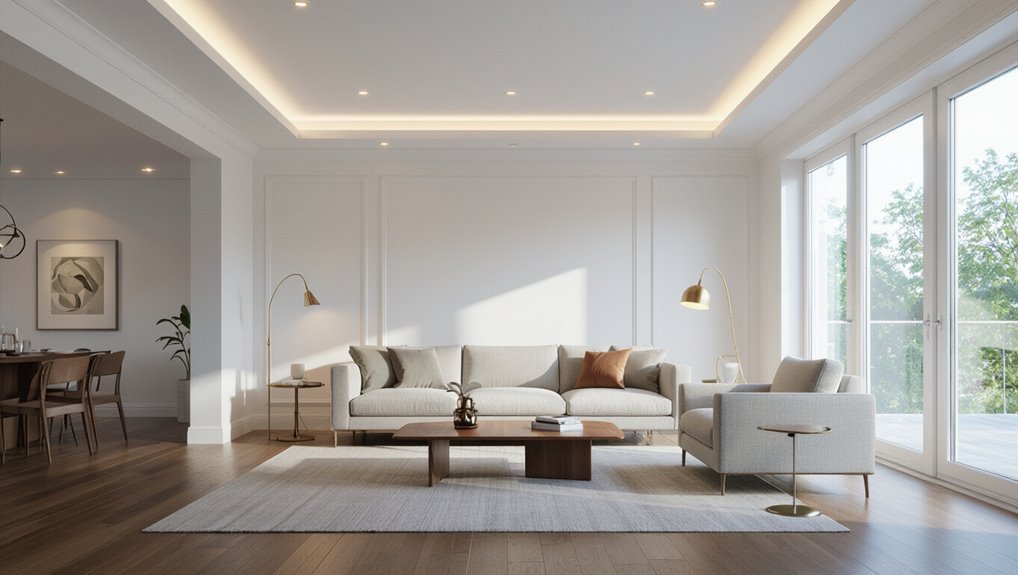
Wondering if you should paint your ceiling white? You’ll usually choose white to brighten rooms, hide imperfections, or unify décor.
Consider ceiling texture—smooth surfaces reflect differently than popcorn or knockdown.
Pick paint types carefully: flat hides flaws, satin resists stains, and matte reads modern.
If you want height and light, white’s a safe, versatile choice that seldom clashes.
Decision Checklist: Is a White Ceiling Right for You?
Think about your room’s height and scale to see if white will make the space feel taller or wash out proportions.
Consider your lighting and desired ambience—white reflects light and can brighten or flatten mood depending on fixtures and natural light.
Match the ceiling to your style and color scheme so it complements rather than competes with walls and décor.
Room Height And Scale
Low ceilings can feel lower with a dark or saturated ceiling, so painting the ceiling white is a simple way to visually lift the room and make it feel more spacious.
Consider how ceiling impacts perceived proportions: white draws the eye upward, creating height illusions that balance tall furniture and patterned walls.
Use white when you want openness and proportional harmony.
Lighting And Ambience
How will a white ceiling affect the mood and light in your room?
You’ll use lighting techniques and fixture placement to maximize natural illumination, control shadow play, and create ambient effects.
White aids light diffusion and brightness balance, so light layering and subtle color mixing boost mood enhancement.
Decide if enhanced reflectivity fits your needs before committing to white.
Style And Color Scheme
1 clear rule helps: match the ceiling to your room’s overall palette and style so the color feels intentional, not like an afterthought.
- Consider ceiling aesthetics: high gloss for drama, matte for subtlety.
- Use current color trends sparingly; timeless neutrals work safest.
- Coordinate trim, walls, and fixtures for cohesive impact.
- Test swatches under real light before committing to a bold ceiling choice.
When to Pick White: Core Benefits at a Glance
Because white reflects light and recedes visually, it’s the easiest way to make a room feel brighter and higher without changing anything structural.
You’ll enjoy white ceiling benefits like unified visuals, easier matching with decor, and masking minor blemishes.
White also keeps focus on furnishings and art. If you want different moods later, explore ceiling color alternatives without committing permanently.
When to Skip White: Common Reasons to Choose Color
If your ceiling is low, a darker or warmer color can actually make the room feel more intentional rather than cramped.
You might also skip white if you want a bold personal statement that ties the ceiling into your overall palette.
And when your architecture has strong beams, molding, or vaulted shapes, color can highlight those features better than plain white.
Low Ceilings Feel Lower
When your ceilings are already low, painting them bright white can actually draw attention to the height and make the space feel more cramped; instead, consider warmer or darker tones that visually lower the ceiling line and create a cozier, more intentional room.
- Assess low light and room purpose.
- Use color contrast to balance proportions.
- Emphasize ceiling shapes with texture effects.
- Follow design trends but honor personal preferences and visual harmony.
Bold Personal Style
Why stick with white if your home’s personality screams for color? You should choose a colored ceiling when personal expression matters more than conformity.
A bold hue ties rooms to your tastes, supports unique aesthetics, and creates intentional drama. Don’t fear contrast—colored ceilings can unify décor, highlight favorite elements, and make spaces unmistakably yours rather than muted and generic.
Architectural Interest Demands
Looking to highlight built-in beams, tray ceilings, or ornate moldings? You’ll skip white when your architectural styles call for contrast to emphasize form and preserve design balance.
Consider these options:
- Paint coffers a deeper tone to showcase depth.
- Use a complementary hue for exposed beams.
- Accent moldings with a subtle shade.
- Tie ceiling color to wall trim for cohesion.
How White Affects Perceived Ceiling Height
Although paint color alone won’t change your ceiling’s physical height, a white ceiling can make the room feel taller by bouncing more light and reducing visual boundaries between walls and ceiling.
When you choose white, you enhance perceived ceiling height through brighter, uninterrupted planes. That visual illusion minimizes contrast and draws the eye upward, subtly expanding spatial perception without altering structure.
Creating Height: White Ceilings in Low Rooms
If your room feels cramped, painting the ceiling a bright white can lift the space visually and make it feel taller.
Choose a high-gloss finish to reflect more light upward, and consider matching the trim and walls to the ceiling’s tone so shifts read seamless.
These simple choices work together to create the impression of extra height without structural changes.
Paint Ceiling Bright White
Want to make a low room feel taller? Paint ceiling bright white to reflect light and visually lift space.
Consider ceiling texture and choose a consistent paint finish to avoid uneven sheen.
Follow simple steps:
- Prep surface and repair flaws.
- Prime for uniform coverage.
- Use even roller strokes.
- Lightly blend edges to avoid banding.
Use High-Gloss Finishes
One quick way to make a low room feel taller is to paint the ceiling with a high-gloss white, which reflects more light and draws the eye upward.
You’ll notice high gloss benefits in brighter, airier spaces; it’s great for highlighting architectural details.
Consider sheen variations to control glare and maintenance: higher sheen for durability, lower gloss for subtler reflection.
Match Trim And Walls
When you paint the ceiling the same white as your trim and walls, you create a continuous visual plane that makes the room read taller and cleaner; your eye won’t catch a contrasting edge and will naturally travel upward.
- Match trim colors for design continuity and color harmony.
- Minimize contrasting elements to simplify architectural style.
- Smooth wall textures and subtle ceiling patterns boost room aesthetics.
- Balance accents to respect proportions without breaking flow.
White on Vaulted and Cathedral Ceilings
If your home has vaulted or cathedral ceilings, painting them white can open up the space and bounce light down into the room, making it feel brighter and more expansive.
You’ll enhance vaulted aesthetics and highlight cathedral charm while keeping attention on architectural lines.
White simplifies styling, pairs with exposed beams, and prevents busy ceilings from competing with focal walls or statement lighting.
How White Reflects Natural and Artificial Light
Curious how white ceilings change a room’s lighting? You’ll notice white boosts natural light and artificial light through superior light reflection, increasing brightness impact and visual clarity.
Curious how white ceilings change lighting? White reflects natural and artificial light, boosting brightness and visual clarity.
It also alters color contrast and space perception, supporting mood enhancement. Consider these effects:
- Amplifies daylight and warm bulbs
- Reduces harsh shadows
- Enhances color contrast accuracy
- Expands perceived space and mood
How Light Direction Changes Your White Choice
Think about where your lights sit and how they hit the ceiling, because fixtures placed along walls, in the center, or recessed will change how white reads.
Also consider bulb color temperature—cool light can make white feel stark while warm light softens it.
Finally, note that light angle creates shadows and depth that will either flatten or reveal ceiling texture, so pick a white that works with those effects.
Light Source Positioning
Light direction changes how a white ceiling reads more than you might expect: north-facing rooms keep whites cool and muted, while south-facing spaces warm them up.
You’ll choose whites based on fixture placement and window angles to manage light reflection and room atmosphere.
Consider these practical cues:
- Downlighting concentrates glare.
- Side lighting reveals texture.
- Backlighting softens edges.
- Skylights boost even wash.
Color Temperature Effects
Where your fixtures and windows sit also changes the temperature you should pick for a white ceiling: cool, bluish daylight coming from a north exposure will make most whites feel sterner, while warm, southern sun or incandescent downlights will push them toward creamy tones.
Consider how color perception shifts with bulb choice and angle; test swatches under actual light to see how light diffusion alters undertones.
Shadow And Depth
Because shadows sculpt a room, the direction your light comes from will change how white reads on ceiling planes and in corners.
You’ll notice shadow play alters tone and affects depth perception, so pick whites that suit light angles.
Consider these actions:
- Test swatches under morning light.
- Observe evenings for warm casts.
- Use matte to soften shadows.
- Reserve bright white where depth matters.
Which Rooms Benefit Most From White Ceilings
Which rooms benefit most from a white ceiling? You’ll favor kitchens, bathrooms, small bedrooms, and basements where light reflection and space perception matter.
Consider ceiling textures and room acoustics for function. Let color psychology and mood enhancement guide choices; prioritize room functionality, design cohesiveness, and ceiling height.
Balance personal preferences with practical needs to maximize brightness, comfort, and visual continuity.
Rooms That Might Suffer From a White Ceiling
If your ceiling is low or the room is already dark, a stark white ceiling can make the space feel cramped or cold.
You might also lose the character of a highly decorative ceiling or undermine the cozy, warm mood you want in intimate spaces.
Consider alternatives if you value height illusion, richer tones, or preserved detailing.
Low Ceilings, Dark Rooms
Wondering whether a white ceiling will help a low, dark room? You’ll need low ceiling solutions and dark room strategies that balance brightness without emphasizing height issues.
Consider:
- Use warm off-white to avoid glare.
- Add layered lighting to lift shadows.
- Paint walls a lighter tone than the ceiling.
- Introduce vertical accents to draw the eye upward.
Highly Decorative Ceilings
When a room sports an ornate ceiling—think carved plaster, exposed beams, patterned tin, or bold paintwork—painting it plain white can flatten the character you’ve worked to create. Preserve ornate plaster details and ceiling murals by choosing complementary hues or clear varnish to highlight texture and color.
| Feature | Choice |
|---|---|
| Carved plaster | Accent tone |
| Tin | Metallic finish |
| Beams | Stain |
| Murals | Protective glaze |
| Texture | Contrast color |
Warm, Intimate Spaces
Because warm, intimate rooms aim to cocoon rather than reflect light, a stark white ceiling can break the mood and make the space feel colder or more clinical than you intend.
- Choose a soft tonal ceiling to enhance a cozy atmosphere.
- Use warm lighting to keep depth and softness.
- Match ceiling hue to textiles for unity.
- Reserve white for contrast, not dominance.
Bedrooms: Balancing Coziness and Brightness
How bright do you want your bedroom to feel? You’ll balance cozy accents and mood lighting with white ceilings, use texture contrasts and floor textures to add depth, choose color pairings and fabric choices, hang wall art, and pick window treatments tied to decor styles. Consider subtle ceiling patterns for interest.
| Element | Tip | Impact |
|---|---|---|
| Lighting | Layered lamps | Warmth |
| Textiles | Mixed textures | Depth |
| Walls | Accent color | Focus |
| Floors | Rugs | Comfort |
| Windows | Blackout | Calm |
Living Rooms & Open Plans: White Strategies
If your living room has high ceilings, painting them white will emphasize that vertical space and keep the room feeling airy.
In bright rooms, white ceilings bounce light and reduce the need for extra fixtures.
For open-plan layouts, a consistent white ceiling helps create a seamless flow between zones.
High Ceilings, Bright Rooms
When you’re working with high ceilings and a bright, open living area, white can enhance the sense of airiness without flattening the space; choose a white with a subtle warm or cool undertone to complement natural light and nearby finishes so the room feels intentional rather than clinical.
- Use white to amplify high ceiling benefits.
- Pick undertones that match furnishings.
- Layer texture to avoid sterility.
- Monitor bright room perception throughout the day.
Seamless Flow With White
Moving from high, light-filled ceilings to open living plans, white becomes a tool for creating visual continuity across connected spaces. You’ll use white to craft seamless shifts between rooms, unifying furniture zones and sightlines. In open spaces, white ceilings reduce visual clutter and emphasize flow.
| Area | Benefit |
|---|---|
| Ceiling | Brightness |
| Walls | Continuity |
| Trim | Definition |
| Floors | Balance |
Kitchens: Pros, Cleaning, and Durability Tips
Because kitchens see more steam, grease, and frequent scrubbing than other rooms, painting the ceiling white can keep the space feeling bright while making stains and yellowing easier to spot and address.
- Choose white to contrast your kitchen color and reflect light.
- Pick washable, durable finishes for grease resistance.
- Smooth ceiling textures resist grime better than heavy popcorn.
- Repaint high-use areas regularly to maintain brightness and durability.
Bathrooms: Moisture, Mildew, and White Paint
In bathrooms you’ll want to prevent moisture stains by wiping splashes quickly and using semi-gloss or satin finishes that resist water.
Choose mildew-resistant or antimicrobial ceiling paints to limit fungal growth.
Also make sure you have good ventilation—an exhaust fan and routine airing will keep ceilings dry and paint lasting.
Preventing Moisture Stains
If your bathroom doesn’t get proper ventilation, moisture will settle on the ceiling and leave stains, peeling paint, or mildew.
You should focus on moisture control and stain prevention by improving airflow, wiping damp surfaces, and using exhaust fans correctly.
Follow these steps:
- Run the fan during and after showers.
- Open a window briefly.
- Wipe the ceiling edges.
- Fix plumbing leaks promptly.
Mildew-Resistant Paint Options
When you’re dealing with frequent humidity, choose paints formulated to resist mildew—the right product both prevents growth and holds up longer than standard bathroom paint.
Look for mildew-resistant latex or acrylic blends with EPA-registered mildewcides and a semi-gloss or satin finish for easy cleaning.
Prioritize mildew prevention and paint durability labels, and follow manufacturer prep and application instructions for best results.
Proper Ventilation Practices
Although bathrooms are small, inadequate ventilation quickly lets moisture linger and encourages mildew on white ceilings and walls, so you need a clear strategy to move humid air out.
- Install and run exhaust fans to improve air circulation and lower humidity levels.
- Use ventilation systems with timers for consistent moisture control.
- Promote natural airflow with windows and vents.
- Make seasonal adjustments to maintain air quality and prevent mildew.
Choosing the Right Shade of White for Ceilings
Because ceilings sit between your walls and the light, the exact white you choose can change how a room reads—bright and crisp, warm and cozy, or soft and airy.
You’ll weigh ceiling textures, warm whites, cool whites and trendy whites alongside undertone considerations and paint finishes.
Consider ceiling height, color matching, light reflection and style coherence to guarantee the white complements the room.
Warm vs Cool Whites: How Undertones Shape Mood
Undertones steer how a white ceiling feels: yellow or peach undertones make a room feel warm and inviting, while blue or gray undertones create a crisp, cooler atmosphere.
- Consider warm undertones for cozy mood influence and psychological effects.
- Choose cool undertones for clarity and altered color perception.
- Balance lighting interaction to preserve design harmony.
- Weigh personal preference against desired ambiance.
Matching White Ceilings With Light-Colored Walls
When you pair a white ceiling with light-colored walls, aim for subtle contrast so the room feels unified without looking flat.
You’ll use ceiling color psychology to influence perceived height and brightness—choose warmer whites with warm walls, cooler whites with cool tones.
Maintain wall ceiling harmony by testing swatches together under real light and keeping trim slightly brighter for a crisp, finished look.
Matching White Ceilings With Dark-Colored Walls
If your walls are dark, a white ceiling will brighten the room by creating strong visual contrast that keeps the space from feeling closed in.
It also helps define proportions, making low ceilings appear higher and wide rooms feel more balanced.
Coordinate the white with trim and accents so the ceiling ties into the overall palette instead of floating apart.
Brighten Visual Contrast
Because a white ceiling reflects light differently than a dark wall, it sharpens the visual boundary and makes colors pop.
So pairing white ceilings with deep-hued walls creates striking contrast that feels intentional rather than jarring.
- Use white for visual brightness and contrast enhancement.
- Keep trim crisp to define edges.
- Add focused lighting to boost highlights.
- Balance with warm accents to prevent coldness.
Define Room Proportions
1 key way to define a room’s proportions is to pair a white ceiling with dark walls, which visually lifts the overhead plane and prevents deep hues from feeling heavy or claustrophobic.
You’ll assess room dimensions to decide how bright the ceiling color should be; in low ceilings, pure white opens space, while in taller rooms a softer white still balances drama without shrinking the volume.
Coordinate Trim And Accents
Pairing a white ceiling with dark walls sets a bold stage, and your trim and accents will make that pairing feel finished rather than stark.
- Use crisp trim contrast—bright white moldings to define edges.
- Match baseboards to the ceiling for cohesion.
- Introduce accent colors sparingly in pillows or art.
- Repeat a single accent color in small decor to tie walls, trim contrast, and ceiling together.
Coordinating Ceiling White With Flooring Tones
When you choose a ceiling white, think about how it will sit against your floor’s undertones and value—cool whites can sharpen pale gray or ash floors, while warm whites soften honey or reddish wood. Use ceiling color psychology and consider flooring material compatibility to balance warmth and contrast. Pick a white that complements rather than competes.
| Floor Tone | Recommended White |
|---|---|
| Cool gray | Cool white |
| Ash | Neutral white |
| Honey | Warm white |
| Red wood | Creamy white |
Matching White to Cabinetry and Built-Ins
Although it might seem subtle, the white you pick for the ceiling should harmonize with your cabinetry and built‑ins so the room feels intentional rather than patchwork.
You’ll want cabinetry contrast or gentle alignment for built in harmony.
Consider:
- Match undertones between ceiling and cabinets.
- Test swatches near built‑ins.
- Use slightly warmer whites for wood cabinets.
- Keep cool whites with painted cabinetry.
Using Trim, Beams, and Coffers to Break Large Whites
You can define trim profiles to give a white ceiling clear edges and architectural interest.
Consider accenting with ceiling beams to add warmth and visual rhythm without changing the overall white scheme.
Use coffers strategically to break up large expanses and draw the eye to key areas.
Define Trim Profiles
Trim profiles give your ceiling structure and scale, breaking up an expanse of white with intentional lines and shadows.
You’ll choose trim styles and moldings options to add decorative details and guarantee visual continuity.
Consider trim materials, color contrasts, design coherence, and installation techniques as you plan.
- Simple cove
- Crown molding
- Picture-frame coffers
- Beveled bands
Accent With Ceiling Beams
One or two well-placed beams can instantly break up a vast white ceiling and add depth without overwhelming the room.
So consider how scale, spacing, and finish will work with your existing trim and coffers.
You’ll use beams contrast to define zones, complement trim profiles, and play with ceiling texture—painted or stained beams give rhythm while keeping the ceiling visually lighter.
Design Coffers Strategically
When rooms feel like endless white planes, adding a strategic grid of coffers can define scale and bring warmth without darkening the space.
You can use trim, beams, and coffered ceilings with strategic placement to create interest.
Consider these approaches:
- Align coffers with windows and furniture.
- Vary coffer depth for subtle shadow.
- Use narrow trim for modern lines.
- Paint interiors slightly warmer.
Accent Ceilings: When to Paint Only Part White
If you want to add visual interest without committing to a full painted ceiling, consider accenting only part of it—around a tray, over a seating area, or within coffered panels—to draw the eye and define a space while keeping the rest bright and airy.
Choose accent color choices that complement furniture and trim; partial white ceilings maintain lightness while framing focal zones.
Bold Accent Walls Plus a White Ceiling: Balancing Tips
If you pair bold accent walls with a white ceiling, offset the drama by choosing neutral trim so the room feels grounded.
Consider a slightly warmer or softer white on the ceiling to bridge the contrast without stealing attention.
Finally, balance the effect with layered lighting—ambient, task, and accent—to keep the space inviting and well-proportioned.
Offset With Neutral Trim
Pair a bold accent wall with crisp, neutral trim and a white ceiling to keep the room grounded and visually clean; the trim acts as a buffer, softening the shift between strong color and bright overhead white.
- Choose neutral colors for trim styles that enhance color harmony.
- Use texture contrast to add visual interest.
- Consider ceiling heights and architectural features for room flow.
- Maximize light reflection for design balance.
Use Lighter Ceiling Shade
When you paint bold accent walls, choosing a lighter ceiling shade than pure white can still maintain brightness while softening contrast and making the room feel more cohesive.
Pick a warm off-white or pale tint to create a subtle luminous effect and unify color shifts. That choice keeps the space airy atmosphere without stark edges, letting walls pop while ceilings recede gently.
Balance With Room Lighting
How will your lighting affect the look of bold walls under a white ceiling?
Balance room warmth and light reflection to maintain design cohesion and color harmony.
Consider:
- Directional lamps for mood settings and atmosphere enhancement.
- Diffused fixtures to improve light diffusion and visual continuity.
- Up-lighting to boost ceiling height and space perception.
- Dimmers to tweak room warmth and preserve color harmony.
White Ceilings in Small Rooms: Avoid Feeling Stark
Although white ceilings can make a small room feel airier, they can also read as stark and flat if you rely on them alone; introduce texture, soft trim colors, or a warm wall palette to keep the space inviting without sacrificing brightness. Use small space strategies and explore ceiling color alternatives to add depth.
| Texture | Effect |
|---|---|
| Beadboard | Cozy |
| Matte white | Soft light |
| Pale taupe | Warmth |
White Ceilings in Large Rooms: Keep Them Cozy
If you want a large room to feel cozy without losing the openness white provides, balance bright ceilings with layered lighting, warm textiles, and a few grounding colors on the walls or floor.
Use cozy textures and ceiling contrasts, plus warm tones and strategic accent features to anchor the space.
Layer soft textures and contrasting ceilings with warm tones and key accents to anchor and cozy a bright room.
- Area rugs
- Drapes
- Wood furnishings
- Statement lighting
Gloss Level: Flat, Eggshell, Satin, or Semi-Gloss
Wondering which sheen to choose for your ceiling?
You’ll pick flat for a non-reflective, forgiving surface that hides flaws.
Eggshell adds slight warmth with minimal gloss finish, while satin gives a touch more durability for cleaning.
Semi-gloss boosts durability and shows texture more.
Choose based on maintenance needs and desired subtlety, balancing appearance without overemphasizing imperfections.
How Sheen Affects Light Bounce and Imperfections
Sheen changes how light plays across your ceiling and how obvious any bumps or repairs will look. You’ll weigh sheen types for subtle light diffusion or stronger bounce.
Choose lower sheen to hide flaws; higher sheen boosts reflection but reveals texture. Consider finish versus room use and lighting.
- Flat – masks imperfections
- Eggshell – soft diffusion
- Satin – noticeable reflection
- Semi-gloss – high bounce
When Textured Ceilings Work With White Paint
When you pair white paint with a textured ceiling, you can soften shadows and keep the room feeling bright without spotlighting every imperfection.
You’ll choose textured patterns that suit ceiling styles—subtle knockdown for casual rooms, pronounced popcorn for retro charm.
White unifies varied surfaces, letting design contrasts read intentional.
Pick compatible paint finishes to balance sheen and hide flaws while preserving depth.
Test-Swatches: Sampling White on Your Actual Ceiling
Curious how a white will actually read overhead? You’ll want to try test swatch techniques on your actual ceiling to compare ceiling paint options under real light.
Curious how a white will read overhead? Test swatches on your actual ceiling to compare colors under real light.
Apply small samples, observe at different times, and note undertones.
- Tape swatches in corners
- Use varied paint sheens
- Check daytime vs. evening light
- Photograph from standing position
Prep and Priming Tips for a Flawless White Ceiling
Before you roll, clear and prime the surface so your white looks crisp and lasts — patch holes, sand rough spots, and remove dust or grease.
Follow preparation steps that consider ceiling texture and lighting effects; choose paint types and finish options for desired visual impact.
Use DIY methods and proper tool selection, plan color combinations, and set simple maintenance strategies to keep results lasting.
Best Tools: Rollers, Brushes, and Sprayers
With the surface prepped and primed, pick the right tools so your white ceiling goes on smoothly and evenly.
- Choose roller types for texture and paint thickness; use extension poles.
- Match brush sizes for trim; keep masking tape neat.
- Consider sprayer options for large rooms; check finish durability.
- Gather cleaning tools, drop cloths, safety gear, and review application techniques.
Painting Technique: Cutting In and Avoiding Lap Marks
Start by cutting in a crisp border where the ceiling meets walls and trim. Then work outward with your roller so wet edges overlap and blend.
Use steady cutting techniques with a quality angled brush, maintain a wet edge, and roll in consistent strokes.
For lap mark prevention, reload the roller frequently and feather overlaps; don’t let sections dry before blending adjacent passes.
Touch-Up and Maintenance for White Ceilings
Keep a small touch-up kit on hand so you can quickly fix smudges, nail pops, or yellowing spots before they become obvious.
Use these concise maintenance tips and repair strategies to preserve paint durability and combat color fading on varied ceiling texture.
- Spot-clean with mild cleaning solutions.
- Match paint for touch up techniques.
- Sand and prime small repairs.
- Schedule upkeep frequency reviews.
Budget and Time: DIY vs Pro Cost Comparison
Although tackling a ceiling yourself can save you money, you should weigh the trade-offs in time, skill, and potential rework: DIYs often cut labor costs but take longer and risk imperfect results that can eat into savings.
On the other hand, hiring a pro costs more upfront but delivers faster, cleaner finishes and warranty-backed work.
Balance DIY Budgeting, Professional Estimates, Cost Breakdown, Time Management, Labor Considerations, Material Costs, Project Duration, DIY Resources, Hiring Tips, and Expense Tracking.
Hiring a Pro vs DIY: When to Call a Contractor
When you’re weighing whether to paint your ceiling yourself or call in a contractor, consider the scope, your skill level, and the hidden costs that can turn a weekend project into a headache—complex repairs, high ceilings, textured surfaces, or intricate trim usually mean it’s worth hiring a pro.
- Check contractor qualifications and references.
- Compare project timelines and availability.
- Estimate total costs vs your time.
- DIY if skills, tools, and schedule align.
Common Mistakes When Choosing White for Ceilings
After deciding whether to hire a pro or tackle the job yourself, you’ll still face a key choice: which white to use.
Don’t ignore ceiling texture—flat, popcorn, or smooth surfaces reflect light differently.
Avoid picking a white solely by name; test for white undertones in your room’s lighting.
Skipping samples or clashing with trim and walls are common, costly mistakes.
Design Examples: Rooms That Benefit Most From White
If you want a space to feel brighter and more open, white ceilings are a simple, effective choice—especially in small rooms, hallways, and basements where they bounce light and reduce visual clutter.
- Kitchens: complement modern design trends, reflect task lighting.
- Small bedrooms: make ceilings feel higher.
- Home offices: boost focus with clean backdrop.
- Entryways: unify varied ceiling textures and finishes.
Final Decision Checklist: Should You Paint Your Ceiling White?
Because the ceiling sets the room’s tone, use this quick checklist to decide whether white is the right choice: consider light levels, ceiling height, architectural details, and how white will interact with your wall color and fixtures.
Evaluate ceiling texture, paint finish, room function, color psychology, atmosphere impact and visual perception.
Factor maintenance tips, cost analysis and current design trends before you commit.
Frequently Asked Questions
Will a White Ceiling Show Smoke or Cooking Odors Over Time?
Yes — over time you’ll notice smoke stains and some odor absorption on white ceilings; they’ll yellow and trap cooking smells unless you ventilate, use stain-blocking primer, or choose washable, low-porosity paints to resist buildup.
Can I Use Ceiling-White Paint Outdoors on Covered Porches?
Yes—you can use ceiling-white paint on covered porches if it has outdoor durability and proper paint finish; choose a moisture-resistant, exterior-grade formulation with satin or semi-gloss for easier cleaning and longevity, and prep surfaces thoroughly first.
How Does a White Ceiling Affect HVAC Temperature Perception?
You’ll feel about 3°F cooler in rooms with bright white ceilings because high reflectance increases perceived brightness. That temperature contrast leverages color psychology, making spaces seem airier and cooler even if actual HVAC output’s unchanged.
Are There Eco-Friendly or Low-Voc White Ceiling Paint Options?
Yes — you can choose eco friendly paints and low voc options for ceilings; you’ll find water-based, zero-VOC formulas from reputable brands, natural lime or clay alternatives, and certifications like GreenGuard that reduce indoor toxins and odors.
Will White Ceilings Highlight Structural Imperfections or Settling Cracks?
Yes—you’ll often notice imperfections more on white ceilings because their light reflection and higher perceived ceiling height spotlight textures and settling cracks; you can soften visibility with flatter finishes, subtle tinting, or targeted lighting adjustments.
Conclusion
You’ll want white if you’re after brightness, breathability, and a clean backdrop; you might skip it if you crave drama, cohesion with bold walls, or architectural warmth. Choose white to amplify light, simplify styling, and make spaces feel taller; avoid white to highlight texture, anchor color schemes, or create cozy intimacy. Hire a pro for tricky finishes, do it yourself for simple rooms, and test samples first—then decide with confidence and clarity.
