
How to Scrape Paint Off a Ceiling Safely and Effectively
If you need to remove flaking ceiling paint, first identify whether it’s latex, oil, or potentially lead-based and test if the home is pre-1978. Seal the room, wear a respirator, and mist the surface to reduce dust. Use a shallow-angle scraper or chemical stripper for stubborn areas, capture debris with a HEPA vacuum, and patch and sand before priming. Bag and dispose of waste per local rules, and proceed carefully to learn detailed steps and safety measures.
Quick: Should You Scrape Your Ceiling?
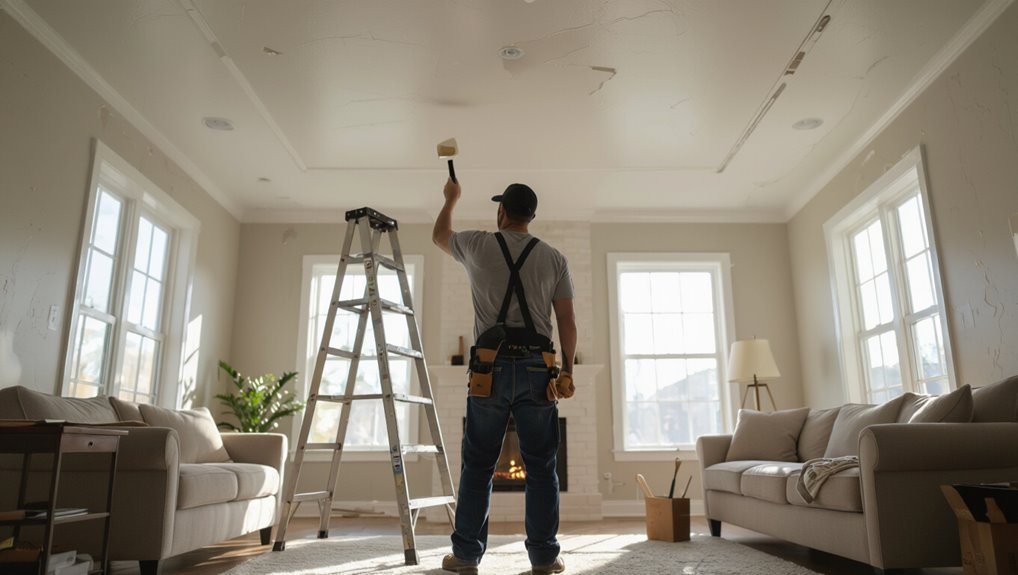
Wondering if you should scrape your ceiling? You’ll weigh damage, peeling, and current ceiling maintenance needs before starting.
If paint finishes are intact and adhesion is good, don’t scrape—clean and repaint instead.
If the ceiling paint is firmly bonded, skip scraping—clean it thoroughly and apply a fresh coat instead.
Scrape only when paint is flaking, bubbling, or uneven, and after confirming safe conditions.
You’ll plan containment, ventilation, and proper tools to avoid harm.
Identify the Paint Type: Latex, Oil, or Lead
Before you scrape, you’ll want to identify whether the ceiling paint is latex, oil, or potentially lead-based.
Test a small area with a solvent and feel the texture to tell water-based from oil-based coatings.
If the home was built before 1978 or you suspect lead, treat it as hazardous and follow proper safety and testing procedures.
Test With Solvent
How can you tell what kind of paint you’re dealing with? Test small areas with solvent types: water for latex, mineral spirits for oil, and a certified lead test kit for suspected lead. Use gentle application methods with a cotton swab. Observe removal: smears (latex), softened film (oil), or disturbance indicating lead—stop and follow safety protocols if lead is likely.
| Solvent | Expected result |
|---|---|
| Water | Smear/dissolve |
| Mineral spirits | Softens film |
Check Paint Texture
Sometimes a quick feel and look will tell you more than a chemical test, so run your hand (gently) over a cleaned, inconspicuous spot and inspect the paint’s surface: latex usually feels slightly tacky or flexible and shows fine brush or roller texture.
Oil has a harder, smoother, almost enamel-like finish with visible brush strokes or leveling, and old lead-based paints often appear chalky, brittle, or layered with multiple coats.
- Note paint characteristics and flexibility.
- Compare sheen and brush marks against ceiling textures.
- Record appearance before scraping to guide method choice.
Consider Lead Risk
After you note the paint’s texture and flexibility, think about whether it might contain lead—especially in homes built before 1978.
You should test suspect paint with a kit or hire a pro. If lead’s present, follow lead safety protocols: contain dust, use a HEPA vacuum, wear appropriate PPE, and avoid sanding.
Prioritize health precautions and professional abatement for heavy contamination.
Test for Lead and Follow Legal Steps
Because older paint can contain lead, you should test for it before you start scraping; this protects you, your family, and anyone who’ll work on the job.
Test older paint for lead before scraping to protect your family and workers.
You’ll use certified lead testing, follow local legal compliance, and stop work if positive. Arrange licensed abatement or safe containment, notify occupants, and keep records.
- Use certified lead testing kits
- Follow legal compliance steps
- Hire licensed abatement professionals
Check Your Ceiling Material: Drywall, Plaster, Wood, Textured
Once you know whether lead is present and have any required abatement in place, identify what your ceiling’s made of — drywall, plaster, wood, or a textured finish — because each material scrapes and repairs differently.
For accurate ceiling assessment, note material characteristics: drywall scores and sands easily, plaster resists gouging, wood may chip or require stripping, and textures need delicate removal to avoid damage.
Estimate Time, Cost, and Manpower for the Job
Start by sizing the job: measure the ceiling area, note the material and texture, and list any repairs, lead-abatement steps, or scaffolding you’ll need—these factors drive time, cost, and crew size.
Use time estimates, a clear cost breakdown, manpower requirements, and project scheduling to plan labor and budget.
- Small room: 1–2 days
- Medium: 2–4 days
- Large/complex: quote needed
Essential PPE: Respirators, Goggles, and Coveralls
After you size the job and plan time, cost, and crew, put personal protective equipment at the top of your checklist—scraping paint throws up dust, chips, and fumes that can harm your lungs, eyes, and skin. Choose respirator selection by filter rating, fit, and reuse. Wear protective goggles and disposable coveralls to block particles.
| Item | Purpose |
|---|---|
| N95/HEPA | Respiratory protection |
| Goggles | Eye seal and splash protection |
| Coveralls | Skin and clothing barrier |
Set Up Containment to Cut Dust and Mess
Before you start scraping, seal off doorways with plastic sheeting and tape to keep dust contained.
Lay drop cloths or plastic on floors and cover furniture, then tape edges so chips won’t slip underneath.
Set up a box fan and open a window or use an exhaust fan to direct dust out and keep airflow controlled.
Seal Off Doorways
1 simple barrier can save you hours of cleanup: seal off doorways to confine dust and paint chips to the work area.
Use doorway barriers and simple sealing techniques so debris stays contained while you work. Quickly create a tight boundary, monitor vents, and keep traffic out.
- Tape plastic sheeting securely
- Add a zipper door for access
- Check seal edges frequently
Protect Floors And Furniture
With doorways sealed, focus on protecting floors and furniture so dust and paint chips don’t turn into a bigger cleanup job.
Lay heavy-duty floor coverings—plastic sheeting plus contractor paper—taping seams. Move small items out; wrap remaining pieces with drop cloths for furniture protection.
Use weighted tape at edges to prevent tripping, and keep a designated trash bin nearby to contain debris as you work.
Control Airflow And Ventilation
When you set up containment, you’ll minimize dust spread and make cleanup far easier—start by isolating the work zone with plastic sheeting taped tightly around door frames and vents.
Control airflow to protect air quality and use practical ventilation methods. Seal off HVAC, run a HEPA fan toward a window, and keep doors closed.
- Block vents
- Use exhaust fan
- Monitor air quality
Protect Floors, Furniture, and Fixtures Efficiently
Start by clearing as much open space as you can and lay heavy-duty drop cloths over floors, tents of furniture, and any fixtures you can’t move; tape the edges to baseboards so paint chips and dust don’t sneak underneath.
Add layered floor coverings in high-traffic spots, use plastic sheeting for furniture protection, and secure cords and vents.
Dispose of debris promptly to avoid tracking.
Essential and Optional Tools for Ceiling Paint Removal
Now that your floors and furnishings are protected, gather the right tools before you climb the ladder so the job goes smoothly and safely.
Before climbing the ladder, protect floors and furnishings and gather the right tools for a safe, smooth job.
You’ll need essential tools and can choose optional tools to make work easier. Bring safety gear, scrapers, and sanding supplies.
Pick optional tools if desired for speed or finish.
- Mask, goggles, respirator
- Wide scraper, putty knives
- Pole sander, vacuum attachment
When to Use Chemical Stripper vs Scraping
If the paint’s thick, layered, or peeling in stubborn patches, reach for a chemical stripper; if it’s a single thin coat or already flaking, scraping and sanding will usually do the job.
You’ll weigh chemical stripper advantages—speed, less elbow work—against mess and prep.
Use proper scraping techniques for thin coats: hold blade shallow, work in sections, and finish with light sanding for a smooth ceiling.
Safe Use of Chemical Strippers on Ceilings
Pick a stripper rated for ceilings and the type of paint you’re removing so you won’t damage the substrate.
Protect floors, fixtures, and vents with drop cloths and tape to catch drips and runoff.
Open windows, run fans, and wear a respirator so fumes don’t build up while you work.
Choosing The Right Stripper
Choosing the right chemical stripper matters because ceilings demand more care than floors—you’re working overhead, near light fixtures, and often around ventilation.
You should prioritize low-odor, low-VOC eco friendly options and check brand comparisons for effectiveness and safety.
Pick a gel for control, verify compatibility with ceiling material, and follow label PPE guidance.
- Gel vs liquid
- VOC level
- Material compatibility
Protecting Surrounding Surfaces
Now that you’ve selected a stripper suited for ceilings, protect everything around your work area before you apply it: cover floors, tape off walls, wrap light fixtures and vents, and seal nearby furniture with heavy-duty plastic. Focus on surface preparation and protective coverings to prevent damage and chemical spread.
| Area | Action |
|---|---|
| Floors | Plastic/drop cloths |
| Walls | Painter’s tape |
| Fixtures | Wrap/cover |
| Furniture | Seal bags |
| Vents | Masking |
Ensuring Proper Ventilation
Because chemical strippers release strong fumes, make sure you ventilate the room thoroughly before and while you work: open windows and exterior doors, run box or window fans to push contaminated air outside, and use a properly rated respirator if the label recommends it.
You’ll protect yourself by choosing ventilation methods that maintain good air quality and by monitoring conditions.
- Place fans for crossflow
- Seal off other rooms
- Use carbon/HEPA filters
Using Heat Guns Safely on Ceiling Surfaces
When you use a heat gun on a ceiling, control and caution are essential: keep the nozzle moving, maintain a safe distance to avoid scorching or igniting materials, and work in short bursts to prevent overheating the substrate.
Adjust heat settings for paint type, wear PPE, protect nearby surfaces, and monitor smoke or odours.
Follow safety precautions, keep a fire extinguisher nearby, and never leave the tool unattended.
Prepare the Ceiling Before You Scrape
Before you scrape, clear the room and protect everything: move furniture out or to the center, cover floors and fixtures with drop cloths or plastic sheeting, and tape edges tightly to keep dust and paint chips contained.
Before scraping, clear and protect the room—move furniture, cover surfaces, and tape edges to contain dust.
Do a quick ceiling inspection and mark loose paint; complete surface preparation by cleaning, sanding, and repairing cracks.
- Remove dust and cobwebs
- Wash greasy spots
- Score peeling edges
Ladder and Scaffold Setup for Overhead Work
Set up your ladder or scaffold on a firm, level surface and lock all braces and safety latches before you climb, so you’re working from a stable platform when you reach overhead areas. Check ladder stability, tie off scaffolds, wear fall protection, and keep tools secured to maintain scaffold safety.
| Item | Check | Action |
|---|---|---|
| Ladder | Feet | Level |
| Scaffold | Braces | Locked |
| Tools | Secure | Tether |
| PPE | Fit | Worn |
Scraping Technique: Angles, Pressure, and Motion
You’ll want to hold the scraper at a shallow, consistent angle so the blade lifts paint without gouging the ceiling.
Keep steady, even pressure and small, overlapping strokes to avoid missed spots or surface damage.
If the paint resists, adjust angle and pressure incrementally rather than forcing the blade.
Optimal Scraping Angle
When scraping paint from a ceiling, keep your blade at a shallow 30–45° angle to the surface so you lift paint instead of gouging the drywall or plaster; you’ll use effective scraping techniques and choose ideal tool selection for clean edges.
Adjust angle slightly for stubborn spots, keeping motion controlled.
- Use a sharp putty knife
- Tilt, don’t dig
- Check blade catch frequently
Consistent Pressure And Motion
Keep a steady, even pressure as you work across the ceiling so the blade lifts paint consistently without gouging the substrate.
Move in smooth, overlapping strokes, maintaining the same angle and tempo.
Vary pressure application subtly for stubborn spots, but don’t jab.
These scraping techniques reduce fatigue, prevent damage, and deliver an even surface ready for sanding or priming.
Wet-Scraping and HEPA Vacuums to Minimize Dust
Although dry scraping speeds things up, wet-scraping paired with a HEPA-equipped vacuum keeps dust down and cleanup manageable: mist the ceiling lightly to soften paint, scrape gently with a broad scraper, and run the HEPA vacuum nozzle just behind the blade to capture airborne particles as you work.
Mist, wait, scrape gently — keep a HEPA vacuum just behind the blade to control dust and simplify cleanup.
Use wet scraping techniques and note HEPA vacuum benefits:
- Mist, wait, scrape slowly.
- Vacuum immediately behind blade.
- Replace filters and empty debris.
Handling Popcorn and Textured Ceilings Safely
Popcorn and other textured ceilings demand a different approach than flat surfaces.
So after wet-scraping and running your HEPA vacuum, change tactics to protect yourself and your home.
Wear PPE, seal vents and doorways, and work in small sections.
Use a soft-bristled scraper or wet sponge to avoid damaging the textured ceiling.
Bag debris promptly.
For popcorn removal, test for asbestos before disturbing older surfaces.
Removing Stubborn or Multiple Paint Layers
Start by checking how many paint layers are on your ceiling and whether any are oil-based, since that affects your approach.
If layers are thick or stubborn, you can try a suitable chemical stripper—follow the product instructions and ventilate the room.
Protect yourself with gloves, goggles, and a respirator, and test a small area before treating the whole ceiling.
Assess Paint Layers
Before you plunge into it, take a close look at the ceiling to determine how many paint layers you’re dealing with and how stubborn they are; this quick assessment will shape your approach and save time.
Check for paint adhesion, layer thickness, and damage so you can plan tools and effort.
- Tap small areas to test bond
- Scrape a hidden patch
- Note areas needing primer or repair
Use Chemical Strippers
Reach for a chemical stripper when scraping won’t budge multiple or stubborn paint layers—these products soften old finishes so you can remove them with less scraping and less risk of gouging the substrate.
You’ll follow label instructions, ventilate, wear PPE, and contain drips.
Prioritize chemical safety during stripper application, test a small area, work systematically, and neutralize residues before sanding or repainting.
Repairing Gouges, Cracks, and Substrate Damage
When you find gouges, cracks, or damaged substrate after stripping paint, don’t skip repairing them—fixing these issues now prevents paint failure and keeps your ceiling smooth.
You’ll do gouge repair and crack filling before priming. Use appropriate patching compound, follow drying times, and inspect for adhesion.
- Apply compound smoothly
- Feather edges to blend
- Recheck for voids and reapply
Sanding and Dust Control After Paint Removal
After you’ve repaired gouges and allowed compounds to dry, sand the ceiling to a uniform, feathered profile while minimizing dust spread—use a long‑handled sanding pole with fine-grit sandpaper or a drywall sanding block.
Work lightly across repaired areas, and keep the tool moving to avoid gouging.
Wear a respirator, goggles, and drop cloths; use a vacuum with HEPA and negative‑pressure techniques for dust management; follow safety protocols.
Clean the Ceiling for Primer and Repainting
You’ll start by wiping away all dust and loose debris with a microfiber cloth or soft broom so primer can stick properly.
Next, you’ll degrease any kitchen or smoke-stained areas with a trisodium phosphate (TSP) solution or a mild degreaser, rinsing thoroughly.
Treat stubborn stains with a stain-blocking primer before you repaint.
Dust And Debris Removal
Before priming, remove all loose dust and debris from the ceiling so the primer can bond properly; start by vacuuming with a soft-brush attachment or sweeping gently with a clean, dry microfiber mop to lift particles without abrading the surface.
You’ll practice dust containment and debris management, then wipe with a tack cloth.
- Vacuum high corners
- Microfiber mop across panels
- Collect fallout in sealed bags
Degrease And Stain Treatment
1 step you shouldn’t skip is degreasing and treating stains so primer and paint adhere evenly; use a trisodium phosphate (TSP) substitute or a mild degreaser, spot-treat grease and nicotine with a stronger solution, then rinse thoroughly and let the ceiling dry completely before priming.
You’ll use targeted degreasing techniques and stain removal methods, working top-down, testing cleaners, rinsing, and allowing full drying before priming.
Choose Primer and Paint for Ceilings After Removal
Pick a primer and paint that suit the condition of your ceiling and the room’s moisture and light levels.
You’ll complete ceiling preparation, confirm paint compatibility, and choose stain-blocking primer for repairs. Match sheen to hiding needs and humidity.
- Use shellac or oil primer for stains.
- Choose latex primer for drywall.
- Pick flat or low-sheen acrylic for ceilings.
Dispose of Paint Chips, Stripper Residue, and Waste
When you’ve removed paint or used a chemical stripper, gather all chips, dust, and residue in heavy-duty plastic bags or a sealed container to prevent contamination, and label them if you suspect they contain lead or hazardous chemicals.
Check local paint disposal methods, follow hazardous-waste guidelines, and don’t mix residues with regular trash.
Wear gloves, wipe surfaces with damp disposable cloths, seal waste tightly, and arrange proper disposal for safe waste management.
When to Stop and Call a Professional: Common Problems
If paint is peeling heavily, you keep hitting hidden damage, or you notice potential lead or mold, stop and call a professional—these are signs the job goes beyond routine scraping and could risk your health or the structure.
You should know when to call based on visible signs of damage, odors, or structural issues.
Know when to call a pro: visible damage, unusual odors, or signs of structural problems.
- Extensive flaking or soft drywall
- Musty smell or mold growth
- Suspected lead-based paint
Frequently Asked Questions
Can I Scrape Ceilings With Active HVAC Running in the House?
You shouldn’t; you’ll run HVAC precautions to protect air quality by shutting systems or isolating vents, using filters, and running exhaust fans. Wear respirators, seal rooms, and only restart HVAC after thorough cleanup to avoid contamination.
How Do Pets and Plants Need to Be Protected During Scraping?
Seal pets in a quiet room and shelter plants under plastic; I once moved my cat and fern during scraping, keeping a fan outside and HEPA filter inside. You’ll guarantee pet safety and proper plant care throughout.
Will Scraping Affect Existing Ceiling Insulation or Vapor Barrier?
Yes — you can damage ceiling insulation or a vapor barrier if you scrape aggressively; you should work gently, avoid tearing membranes, patch any rips, and inspect afterward for displaced insulation or compromised vapor barrier that needs repair.
Can Ceiling Paint Removal Trigger Home Insurance or Warranty Issues?
I once saw a small leak spiral into a claim; yes, you can trigger insurance claims or void warranty coverage if removal damages structure or hides defects. You’ll want documented proof, cautious methods, and insurer notice.
Are There Seasonal/Weather Considerations for Indoor Ceiling Scraping?
Yes — you should consider humidity levels and temperature fluctuations because they affect paint adhesion and drying; you’ll work best in stable, moderate conditions, avoid high humidity or freezing temps, and ventilate to control moisture and drying speed.
Conclusion
You’ve learned how to identify paint, test for lead, and pick the right method for drywall, plaster, wood, or texture—now it’s time to act. Proceed carefully: prep the room, strip or sand using the safest option, clean thoroughly, prime, and repaint, disposing of waste responsibly. If lead appears, or the ceiling crumbles like stale bread, stop and call a pro. Stay patient and safe; a refreshed ceiling is worth the effort.
