
How to Paint a Room Fast Without Sacrificing Quality
Decide whether you need a quick refresh or a full repaint, then prep efficiently: move furniture, tape edges, patch holes, and scuff glossy spots. Measure walls, pick a high‑coverage, fast‑dry paint (or primer+paint where needed), and work top to bottom—ceiling, trim, then walls—using steady cutting‑in and the “X and Fill” rolling method to keep wet edges. Use a sprayer or quality roller and overlap tasks while coats dry, and you’ll save time without skimping on finish; keep going for pro tips.
Decide: Quick Refresh Or Full Repaint?
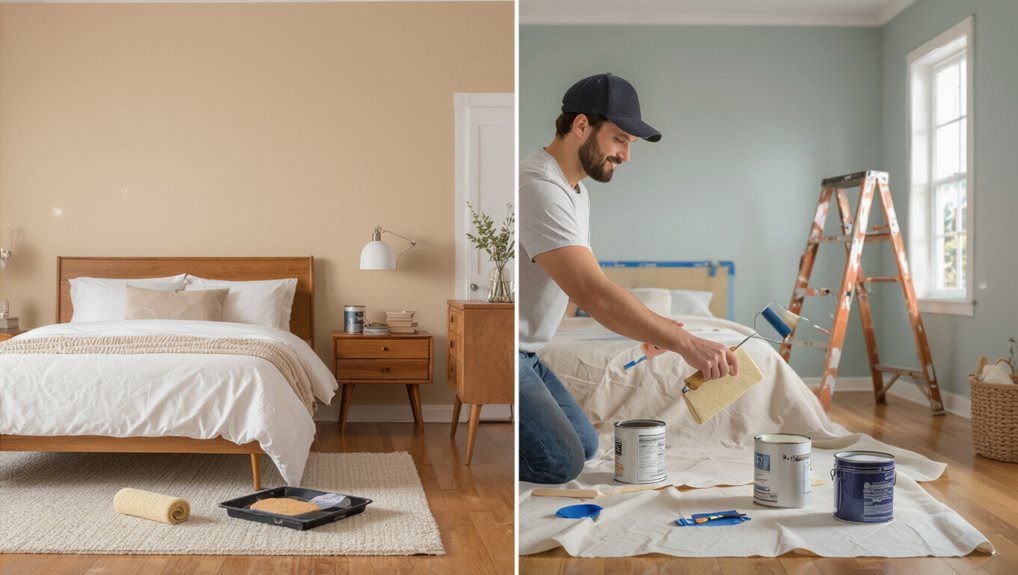
Before you grab a brush, decide whether you need a quick refresh or a full repaint.
If walls only need touchups, plan a quick refresh: spot repairs, light sanding, and one coat.
If colors, stains, or damage are extensive, choose a full repaint: primer, patched surfaces, and two coats.
That choice saves time and prevents rework.
One‑Day Plan To Paint A Room Fast
You’ll start by prepping fast and smart—move furniture, tape edges, and patch holes so paint goes on smoothly.
Follow an efficient painting sequence: cut in, roll walls in sections, then tackle trim and touch-ups.
Finish with a quick cleanup strategy so brushes, rollers, and drop cloths are ready for next time.
Prep Fast And Smart
If you want to finish painting in a single day, prep smart: clear a path, protect surfaces, and set up your tools so nothing slows you down.
Choose paint colors and paint brands, gather painter’s tools and cleaning supplies, assess wall textures and surface treatments, note lighting effects and wall patterns, apply painter’s tape, map drying times, plan project timelines, factor color psychology, budget planning, and room accessories.
Efficient Painting Sequence
Once you’ve prepped the room, follow a tight, logical sequence so everything dries and gets finished within a day: start with ceilings, then trim, then walls, working top to bottom and keeping wet edges consistent.
Use efficient color selection to minimize coats and strategic lighting choices to spot missed areas.
Pace yourself—work in zones, let each coat dry per label, and finish within daylight.
Quick Cleanup Strategy
When the last brushstroke’s dry, move quickly through a one‑day cleanup routine that keeps tools reusable and the room livable by evening.
Start by wiping drips, sealing cans, and rinsing brushes into a bucket.
Use quick cleanup techniques: 30-minute wash, roll covers into foil, and hang brushes to dry.
Label and use efficient storage—stackable totes for paints and taped lids.
Measure Room Size For Paint/Time
Start by measuring the room’s length, width, and height so you can calculate square footage and estimate paint and time needs accurately.
Use measurement tools to record room dimensions and map the space layout.
Perform a surface assessment to note doors, windows, and texture.
Enter figures into a paint calculator for ideal coverage and realistic time estimates, improving paint efficiency and scheduling.
Calculate Paint Needs And Waste
To figure how much paint you actually need, add up the total square footage of walls and ceilings, subtract doors and windows, then divide by the paint’s coverage per gallon; that gives a baseline.
You should then add a waste allowance (typically 10–15%) for cutting in, texture, and touch-ups.
Use paint calculators, factor cost estimation, waste reduction, paint recycling, and project planning.
- Color selection and paint brands
- Surface preparation tips
- Application techniques reminder
- Finish durability considerations
Pick High‑Coverage Paint To Cut Coats
If you choose a high‑coverage paint, you’ll often need one fewer coat, which saves time and reduces waste.
Pick a brand known for high coverage benefits so you can skip repeat rounds. Test a small wall to confirm tone and adhesion, then streamline paint application with a quality roller and steady technique.
Fewer coats mean faster completion and less cleanup.
Choose A Finish For Speed And Durability
Pick a sheen that speeds the job—flatter paints hide imperfections so you can skip touchups, while satin or semi-gloss rolls on smoothly and shows less wear.
If durability matters, choose a tougher finish even if it costs a bit more upfront, since you’ll save time on repairs later.
For busy rooms, use an easy-clean formula so stains wipe away without repainting.
Sheen Effects On Speed
Different sheens change how fast you can paint and how long the finish holds up, so choose one that balances speed with durability.
You’ll weigh sheen impact and gloss effects, noting light reflection and texture influence on aesthetic appeal and surface interactions.
Use finish selection and application techniques for a quick speed comparison.
- Flat
- Eggshell
- Satin
- Semi-gloss
Durable vs Fast Options
Now that you’ve compared sheens for speed and appearance, it helps to decide how much durability you’re willing to trade for faster application.
You’ll weigh durability comparisons between paint types and finish choices, balancing speed trade offs, application methods, and surface preparation.
Prioritize time efficiency if short on schedule, but factor cost implications—higher durability often means more prep or pricier products for lasting results.
Easy-Clean Finishes
1 practical way to balance speed and longevity is to choose an easy-clean finish—these paints let you wipe scuffs and stains away without scrubbing or repainting.
You’ll focus on surface preparation, pick finish options with stain resistance, and apply easy clean techniques to boost paint durability and simplify maintenance strategies.
- Satin for washability
- Semi-gloss for high traffic
- Scrubbable matte blends
- Durable commercial enamel
Use Fast‑Drying Paint Formulations
Choosing a fast‑drying paint is one of the smartest ways to cut total project time, because these formulations let you sand, tape, and apply additional coats much sooner than standard paints.
Assess fast drying benefits for your room: lower tack time, quicker recoat windows, and reduced dust pickup.
In paint selection, match sheen and durability to traffic, and follow manufacturer recoat times precisely.
Primer Vs Paint‑And‑Primer: When To Use
When you’re choosing between a separate primer and a paint‑and‑primer combo, think about the surface condition—bare drywall, stains, or repairs usually need a dedicated primer.
Also weigh your time and budget: combos save a step but might cost more or need extra coats.
Finally, match your choice to coverage needs; high‑hide primers can cut total coats on tricky colors.
Surface Condition Matters
Even if you’re short on time, the surface’s condition decides whether you need a separate primer or a paint‑and‑primer combo. A clean, uniform surface can usually take a combined product, but patched drywall, stains, drastic color changes, or glossy finishes call for a dedicated primer to guarantee adhesion and true color coverage.
- Inspect surface texture and damage assessment.
- Prioritize wall preparation and moisture control.
- Match color selection and finish choice.
- Optimize lighting impact, tool efficiency, paint application, drying conditions.
Time And Budget
If you’re trying to save time or stick to a budget, deciding between a dedicated primer and a paint‑and‑primer combo comes down to the surface needs and how many coats you’ll actually avoid. A combo can cut labor and drying time on clean, same‑tone walls, but a true primer will save you work (and repainting) on stains, repairs, or drastic color changes.
Use budget friendly options, time management tips, and prioritization techniques; plan resource allocation, efficient scheduling, expense tracking, cost saving strategies, and basic financial planning.
Paint Coverage Needs
Choose primer or paint‑and‑primer based on the surface condition and the results you want: use a dedicated primer for bare drywall, stained or repaired areas, drastic color changes, or glossy surfaces.
Pick a paint‑and‑primer combo for clean, same‑tone walls where saving a coat matters.
- Assess surface preparation and paint types.
- Compare coverage comparisons and paint opacity.
- Match application tools and layering methods.
- Balance color saturation, finish variability, drying times, coverage techniques.
Spot‑Patching Before Painting
Before you roll paint, walk the room and mark every ding, hole, and crack — spot‑patching fixes small flaws that show through even the best paint job.
You’ll do a surface assessment, gather prep materials and patch tools, choose repair methods and patch techniques, guarantee patch drying and texture matching, then do paint blending and color correction so patched areas disappear into the wall.
Quick Fixes For Glossy Surfaces
Glossy surfaces show every imperfection, so you’ll need fast, targeted fixes to get a smooth, even sheen. Focus on glossy surface preparation and quick cleaning techniques before paint.
Do these steps quickly and precisely:
- Degrease with a trisodium cleaner and wipe dry.
- Lightly scuff with fine sandpaper.
- Fill chips with fast-setting filler.
- Wipe tack cloth, then prime for adhesion.
Gather Time‑Saving Tools First
Grab a few key time‑saving tools that will shave hours off the job: a good synthetic roller and tray, angled sash brush for cutting in, extension pole, quality painter’s tape, a 5‑in‑1 tool for scraping and spreading, and a drop cloth or plastic sheeting to protect floors.
| Tool | Purpose | Care |
|---|---|---|
| Roller | fast coverage | equipment maintenance |
| Tape | clean edges | paint storage |
| 5‑in‑1 | prep & scrape | surface preparation |
Use tool organization, project planning, time management, task prioritization, efficiency techniques, and color selection.
Best Roller Nap For Fast Coverage
Now that your tools are ready, pick the right roller nap to speed up coverage without sacrificing finish.
Choose based on surface texture and paint type; consider roller thickness options and nap length considerations to maximize speed and uniformity.
- Smooth walls: short nap
- Slightly textured: 3/8″ nap
- Rough surfaces: 3/4″–1″ nap
- High‑pile for heavies
Use Angled Brushes For Clean Cut‑Ins
Pick an angled brush that matches the corner or trim width you’re cutting in so you don’t fight the edge.
Keep a steady wrist and move the brush with smooth, controlled strokes to prevent drips and uneven lines.
With the right angle and technique you’ll cut in faster and cleaner.
Choose The Right Angle
Choosing the right angled brush makes clean cut‑ins much easier, because the slanted bristles let you push paint into corners and control the edge as you move along trim and ceilings.
You’ll pick angles based on trim width, paint color contrast, lighting effects, and access.
Practice on scrap trim to see coverage and control before starting the wall.
- 1/2″ angle
- 1″ angle
- 1.5″ angle
- 2.5″ angle
Steady Wrist Technique
When you steady your wrist and let the angled brush do the work, your cut‑ins come out sharp and consistent; keep your elbow anchored and move from the shoulder so the wrist guides the last few degrees of the stroke.
You develop a steady hand through precision technique: wrist stability, muscle control, painting posture, grip strength.
Use focus training, practice drills, steadying methods and wrist exercises daily.
Roller Frames And Extension Poles
A sturdy roller frame and the right extension pole make cutting your painting time in half by letting you cover large walls and ceilings without climbing a ladder.
Choose roller frame types and roller cover materials for surface texture; match roller frame compatibility with extension pole features.
Consider extension pole length, extension pole grips, extension pole storage, and simple roller frame maintenance.
- Pick materials
- Match lengths
- Check compatibility
- Plan storage
Paint Edgers, Pads, And Tools To Speed Corners
When you’re cutting in, the right paint edger and corner pad will shave minutes off each wall.
Pick edgers with consistent release, corner painting pads that fit your angles, and quick-change tips so you swap tools without slowing down.
We’ll compare the best models and show when to use each.
Best Paint Edgers
Saving time on trim and corners makes the whole room paint job feel faster, and the right paint edger will help you cut crisp lines without constant taping.
Consider paint edger types, edger benefits, best brands and user reviews when choosing. Purchase tips, maintenance advice and usage techniques boost edge precision; alternative tools appear in any buying guide.
- Pad edger
- Wheel edger
- Roller edger
- Brush edger
Corner Painting Pads
Corner painting pads speed up cutting into tight angles by letting you press paint directly into corners without constant brushes or tape.
You’ll master corner painting techniques quickly: hold the pad at a consistent angle, feather edges, and work top-to-bottom.
The corner pad advantages include speed, reduced drips, and cleaner lines, so you’ll finish trim faster and blend into roller strokes with minimal touch-ups.
Quick-Change Tool Tips
Swap tips and adapters fast to keep your momentum while cutting in: quick-change edgers and interchangeable pads let you move from tight trim to flat walls without stopping to reload or tape.
Use tools that support color psychology and paint trends, texture techniques, lighting effects, wall decals, eco friendly options, accent walls, seasonal colors, design inspiration, and color pairing.
- Corner pad
- Foam edger
- Narrow brush
- Extension adapter
Drop Cloths And Reusable Masking Supplies
Before you open a can of paint, lay down proper drop cloths and reusable masking supplies to protect floors, trim, and furniture.
Choose drop cloth options with durable materials and eco friendly choices; pair with masking tape types suited to surfaces.
Use reusable supplies for surface protection, practice precise tape application, plan efficient storage for tools, enable quick repairs, and follow simple cleanup methods.
Efficient Masking: Tape Windows And Trim
Pick a tape suited to your surface—low-tack for fresh paint and stronger adhesive for textured trim—so it pulls cleanly.
Clean and dry the frames and trim first, removing dust and grease so the tape sticks.
Press the tape down firmly along edges to seal and prevent bleed-through.
Choose The Right Tape
Choosing the right tape makes masking windows and trim quick and clean, so pick a product that matches the surface and paint you’re using.
Use painter’s tape rated for surface compatibility and tape durability. Consider tape types, adhesive strength, tape width, and color selection to guarantee clean edges and easy tape removal.
Apply consistent tape application for reliable results.
- Choose tape by surface
- Check adhesive strength
- Match tape width
- Test removal timing
Prep Surfaces Thoroughly
Gather your supplies and inspect every surface so masking goes fast and holds tight.
You’ll do surface cleaning, damage inspection, and simple repair techniques on trim and windows.
Assess texture, moisture control, and wall preparation to guarantee paint adhesion and correct color matching.
Decide finish selection and perform surface priming where needed before taping, keeping edges neat for quick, durable results.
Apply Clean, Firm Seals
Once surfaces are primed and dry, apply painter’s tape in long, continuous strips so you get a clean, firm seal that prevents bleed and speeds cleanup.
You’ll focus on surface preparation, tool selection, edge precision, and sealant types to protect trim and windows. Proper masking aids paint adhesion, paint application, finish durability, color matching, texture effects, and respects drying times.
- Tape choice
- Press edges
- Remove hot
- Inspect edges
Protect Outlets, Switches, And Fixtures Quickly
Before you start cutting in, cover outlets, switches, and light fixtures so paint doesn’t seep behind plates or into wiring — it’s quick and prevents a lot of cleanup.
Use outlet covers and switch guards, employ simple masking techniques for fixture protection, and keep tools tidy for tool organization.
Prioritize electrical safety to boost prep efficiency and save time with good time management.
Remove Or Loosen Stuck Fixtures Safely
Before you touch any fixtures, turn off the power at the breaker so you don’t risk a shock.
If a plate or screw is stuck, apply a little penetrating lubricant and let it soak before trying again.
Use the right screwdriver or wrench and gentle, steady pressure to avoid stripping screws or breaking parts.
Turn Off Power
1 simple, essential step is to cut power to the room so you can remove or loosen stuck fixtures safely; flip the circuit breaker for that room (or switch off the main if you’re unsure) and confirm the power’s off with a non-contact voltage tester or by trying the fixture’s switch.
Follow these safety precautions:
- Turn off circuit breakers near electrical outlets.
- Unplug extension cords and secure power tools.
- Note lighting considerations and ventilation needs.
- Keep workspace safety clear and labeled.
Apply Lubricant Carefully
Spray a small amount of penetrating lubricant on stubborn screws, hinges, or fixture bases and let it sit a few minutes so the product can work into tight threads and corrosion.
Then, test movement gently, reapplying if needed.
Choose lubricant types suited for indoors and electronics-safe areas, and follow careful application techniques to avoid drips, excess residue, and damage to surrounding paint or finishes.
Use Proper Tools
Grab the right tools and you’ll save time—and avoid damage—when removing or loosening stuck fixtures. Use proper pry bars, adjustable wrenches, and lubricant; match brush types and roller sizes to surface types.
Consider masking techniques, ventilation needs, and cleanup supplies. Keep paint brands, color selections, drying times, and paint storage in mind to prevent delays.
- Use pry bars
- Fit wrenches
- Apply lubricant
- Protect surrounds
Clear And Stage The Room For Access
Before you open a can of paint, clear the room so you can move freely and reach every wall without obstructions.
Assess room layout and access points, then adjust furniture arrangement to create clear movement flow.
Assess the room and rearrange furniture to create clear pathways for smooth, efficient painting.
Use staging items and decluttering techniques to remove distractions, apply protective coverings only where needed, and optimize space for efficient work.
You’ll paint faster with safer, unobstructed access.
Move Or Protect Furniture To Save Cleanup
Once the room’s cleared and staged, decide which pieces you can move out and which should stay—then protect the ones that stay to cut cleanup time.
You’ll speed work with smart furniture relocation and furniture protection, improving space optimization and room accessibility.
Follow these quick steps:
- Cover with drop cloths
- Move small items to center
- Elevate on blocks
- Tape edges tightly
Organize A Compact Painting Kit
1 kit can keep you efficient: assemble a compact painting kit that fits in a tote or bucket so you can move it room to room.
Pack compact supplies and essential tools—rollers, brushes, tray, tape, scrub pad—using portable storage for quick access.
Prioritize color selection swatches, budget considerations, and efficient packing to maintain an organized workspace and streamline touchups.
Cutting‑In Fast Without Sloppy Edges
If you want crisp edges without slowing down, master a steady cutting‑in rhythm:
- Use proper brush selection for cutting techniques and line control.
- Keep paint application light, steady, and focus on edge precision.
- Employ visual tricks like slightly overlapping color contrast for forgiving shifts.
- Maintain detail focus: steady wrist, single confident strokes, and wipe excess to avoid sloppy edges.
Rolling Techniques To Avoid Lap Marks
Start by keeping a wet edge and working quickly so each roller pass blends into the next—this is the key to avoiding lap marks. Use a consistent roller technique: steady roller speed, consistent pressure, and even paint thickness. Match surface texture, maintain edge control, and use a blending technique as you overlap. Follow this rolling method for uniform paint application.
| Step | Focus | Tip |
|---|---|---|
| 1 | Wet edge | Work fast |
| 2 | Pressure | Even pressure |
| 3 | Speed | Moderate rolls |
| 4 | Thickness | Thin coats |
| 5 | Texture | Match nap |
Use The “X And Fill” Rolling Method
Begin by rolling an X on the wall to lay down a crisscross base.
You’ll fill in with even passes, balancing paint application and roller technique for uniform coverage.
Consider paint absorption and texture impact, adjust for room lighting and color selection.
Factor in surface absorption and texture; tweak technique for lighting and color to ensure even, true-to-tone results.
Include trim painting after walls. Mind drying time.
Guarantee wall preparation first for best coverage strategy.
- Crisscross
- Fill
- Blend
- Inspect
Work In Consistent Sections For Speed
Start by dividing the room into clear zones so you can focus on one manageable area at a time.
Keep a wet edge as you roll so layers blend smoothly and you avoid lap marks.
Aim to finish one wall before moving on to maintain rhythm and speed.
Divide Space Into Zones
Divide the room into clear zones—walls, trim, ceiling, and any feature areas—so you can focus on one type of task at a time and keep a steady rhythm.
Consider color psychology, space functionality, texture contrasts, lighting effects, furniture arrangement, accent walls, room flow, decorative elements, personal style, and ambiance creation to plan zones.
- Walls
- Trim
- Ceiling
- Features
Maintain Wet Edge
When you keep a wet edge, paint blends seamlessly and you avoid lap marks that slow you down later. Work in consistent sections, using wet edge techniques and maintaining moisture by overlapping strokes and timing your passes. Move steadily, don’t chase drying edges, and trust your rhythm.
| Calm | Confident |
|---|---|
| Focused | Efficient |
| Smooth | Fast |
| Proud | Relaxed |
Finish One Wall
Tackle one wall at a time and work it from top to bottom in consistent sections so you keep a wet edge and move steadily without backtracking.
You’ll control wall color, texture techniques, lighting effects and wall patterns while considering furniture placement and accent features.
Use color psychology for mood enhancement, place wall art for personal style, and finish cleanly.
- Plan
- Cut in
- Roll
- Inspect
When To Use A Sprayer For Coverage
If you’re covering large, uninterrupted surfaces or need to finish quickly, use a sprayer—it’s much faster than rollers and keeps texture consistent across walls and ceilings.
Choose sprayer types suited to your paint, adjust coverage techniques for even layers, thin for ideal paint consistency, and follow sprayer maintenance after each job.
You’ll save time while maintaining professional-looking, uniform coverage.
Blend Sprayed Areas With Rollers/Brushes
Although a sprayer gets most of the job done fast, you’ll want to follow up with rollers and brushes to blend edges and match texture so the finish looks seamless.
Use spray blending techniques and spray pattern adjustments, then apply roller smoothing methods and brush blending tricks.
Remember finish compatibility considerations and surface preparation essentials for color cohesion strategies and texture matching techniques.
- Feather edges
- Light roller passes
- Brush touch-ups
- Match nap and paint
Speed‑Drying Tips Between Coats
1 quick step you can take is to control the drying environment: increase air circulation with fans, raise the temperature a few degrees, and lower humidity with a dehumidifier so each coat sets faster and more evenly.
For speed drying, focus on humidity control, fan placement, and heat application.
Combine proper surface preparation and compatible paint additives to shorten drying times without compromising finish.
Plan Coat Timing To Overlap Tasks
Plan your coat timing so tasks overlap: while one section of paint is drying you can tape trim, move furniture, sand touch-ups, or clean rollers so nothing sits idle.
Use coat scheduling and overlap timing for paint layering; apply task prioritization and workflow management.
Use coat scheduling and overlap timing to layer paint efficiently, prioritizing tasks and managing workflow for steady progress
Practice strategic planning, efficiency optimization, and productivity techniques to sequence steps and keep momentum.
- Prep
- Paint
- Touch-up
- Clean
Save Time On Trim Without Losing Edges
You can save time on trim by taping smart and fast so you don’t have to touch up later.
Use an angled brush for clean lines where the tape won’t reach, and keep your brush strokes steady.
Roll right up to the trim edge with a small roller to cover quickly without losing sharp edges.
Tape Smart And Fast
Start by applying painter’s tape with firm, even pressure along the trim so paint won’t bleed under the edge, and press a putty knife or a credit card over the tape to seal it quickly.
Use tape placement, tape adhesion, and tape precision for fast results.
Consider tape alternatives briefly, then plan tape layering and tape removal as part of your tape strategy and tape techniques.
- Prep surface
- Seal edges
- Layer when needed
- Remove soon
Use Angled Brushes
When cutting in along trim, an angled sash brush lets you work faster and keep a crisp edge by matching the bristle angle to the line you’re painting; hold it like a pencil, load only the tip, and use short, controlled strokes so you won’t need touch-ups later. You’ll gain brush techniques, edge control, paint precision, angle adjustments, tool variety, paint quality, surface prep, color selection, brush maintenance, visual impact.
| Benefit | Action |
|---|---|
| Precision | Use tip-only loading |
| Control | Pencil grip, short strokes |
Roll Close To Trim
After you’ve cut a clean line with your angled brush, roll right up to the trim to speed the job without sacrificing sharp edges.
Use a tight roller technique for trim blending and edge precision, matching paint consistency and finish selection to avoid color contrast.
Let brush strokes meet roller marks; consider wall texture and paint quality for true clean lines.
- Control pressure
- Load evenly
- Match finish
- Blend edges
Fast Fixes For Problem Walls
Although you’re aiming to move quickly, don’t skip a quick inspection — patching cracks, sanding rough spots, and filling nail holes up front saves time and gives a smooth finish.
You’ll choose texture techniques or texture alternatives, pick wall treatments and wall patterns, consider color psychology and lighting effects, plan surface preparation and paint layering, explore eco friendly options, and reserve wall murals for flawless walls.
When You Can Skip Primer Safely
If your walls are in good shape and you’re switching between similar paint sheens and colors, you can often skip primer without sacrificing coverage.
You should still assess stains, raw drywall or drastic color change. Use primer alternatives only for minor touchups, and reserve full primer for when necessary to seal or block.
Consider these quick checks:
- Smooth, intact surface
- No stains or odors
- Light color shift
- Quality topcoat
Use Sample Pots To Confirm Color
When you’re choosing a paint color, grab sample pots and try them on your walls — small swatches look very different in real light than they do online or on a chip. Use paint swatches for sample comparisons, note lighting effects and color psychology, test finish testing and application techniques, check texture considerations and color pairings for visual impact and mood enhancement.
| Sample | Light | Finish |
|---|---|---|
| A | Warm | Matte |
| B | Cool | Satin |
| C | Neutral | Gloss |
Pick Colors That Hide Flaws
When you’re trying to hide imperfections, pick midtone neutrals that don’t spotlight bumps or patches.
Favor warm undertones to soften shadows and create a more forgiving look.
Then use patterned accents to distract the eye from any remaining flaws.
Choose Midtone Neutrals
Because midtone neutrals sit between light and dark, they mask minor wall imperfections while keeping a room feeling balanced.
You’ll leverage neutral color psychology and midtone lightness to hide texture without dulling the space. Choose shades that read warm or cool to match furniture.
Use:
- Beige-gray
- Greige
- Soft taupe
- Muted clay
Use Warm Undertones
If you want walls that hide dings and uneven texture, choose paint with warm undertones—they visually soften shadows and make flaws recede.
You’ll favor creams, soft terracotta, or muted golds; warm color psychology boosts comfort while masking imperfections.
Prioritize undertone selection over exact hue, test samples under room light, and pick midtones that blur texture without calling attention to walls.
Add Patterned Accents
You’ve picked warm undertones to mask wall imperfections; now add patterned accents to further disguise uneven texture and scuffs.
Use smart pattern selection and strategic accent placement to hide flaws without busying the room. Consider scale, color contrast, and focal points.
- Large-scale geometrics
- Subtle tone-on-tone florals
- Striped feature wall
- Textured stencils
Keep Steady Paint Consistency For Speed
When you keep paint at a steady consistency, your brush and roller glide predictably and you cut down on drips, thin spots, and rework.
You’ll mix only what you’ll use, strain lumps, and test on scrap. Use consistency tools like a viscosity cup, paddle mixer, and a roller grid to guarantee steady application.
Work methodically for uniform coverage and fewer touchups.
Two‑Person Workflow That Halves Time
Get one person to handle prep and protection while the other rolls—this split keeps you from wasting time switching tasks.
You’ll tape, cover floors and move furniture quickly, then the roller follows with steady passes.
With clear roles you’ll finish walls in about half the time.
Prep And Protect
If one of you focuses on taping and trimming while the other tackles furniture, drop cloths, and moving large items, you’ll cut prep time roughly in half.
Coordinate paint color decisions, surface preparation, and surface cleaning. Wear protective gear. Check lighting conditions and ventilation importance for moisture control and paint adhesion.
Prioritize furniture relocation and note wall texture.
- Tape edges
- Cover floors
- Clean walls
- Ventilate
One Painter, One Roller
With the room prepped, split the work so one person handles cutting in and detail while the other keeps a loaded roller moving across large surfaces; you’ll cover walls faster and keep a wet edge for smoother blends. You’ll boost painter efficiency using consistent roller techniques, timed swaps, and clear communication to avoid overlap and drips.
| Role | Task |
|---|---|
| Painter A | Cut in |
| Painter B | Roll |
| Both | Inspect |
| Swap | Every 20 min |
| Finish | Touch-ups |
Solo‑Painter Hacks To Stay Precise
1 simple setup will keep your edges sharp and your pace steady: tape the trim, roll the bulk, and cut in strategically so you only handle detail once.
- Plan color selection and finish types for fewer passes.
- Use brush techniques that boost edge precision.
- Organize tools for efficient paint layering and quick drying.
- Note wall textures, drying times, and maintenance tips.
Avoid Prep Mistakes That Waste Time
Don’t over-tape; you’ll spend more time peeling and fixing than you save.
Clean surfaces first so paint adheres and you’re not sanding or redoing later.
A few smart, well-placed strips and a quick wipe will keep your prep fast and effective.
Tape Smartly, Not Excessively
Tape smartly, not excessively: you want clean edges without spending hours on unnecessary masking.
Use targeted tape placement and quick tape techniques to save time. Choose tape brands with reliable tape adhesion for tape precision, and consider tape alternatives where practical.
Remove tape promptly for clean tape removal and maintain tape efficiency throughout.
- Plan placement
- Pick quality tape
- Limit coverage
- Remove timely
Clean Surfaces First
Start by wiping down walls, trim, and baseboards so paint will stick the first time; skipping this step leads to drips, peeling, and wasted touch-ups.
For surface preparation, use effective tools and cleaning products for thorough wiping, dust removal, and removing adhesive residues.
Perform surface inspection, apply cleaning techniques, and allow ideal drying.
Confirm surface compatibility before priming to save time and touch-ups.
Monitor Humidity And Temperature To Avoid Delays
Someone painting a room can get stalled by high humidity or low temperatures, so check both before you mix paint or roll the first coat.
High humidity or low temperatures can stall a paint job—check both before you mix or brush the first coat.
You’ll monitor humidity control and temperature regulation to optimize drying time and paint adhesion, consider weather conditions and paint storage, and assess moisture levels and surface preparation.
Remember ventilation importance for quick drying.
- Use a hygrometer.
- Time coats.
- Adjust HVAC.
- Store properly.
Clean As You Go: Quick Habits
Keep a small trash bin and a damp rag within arm’s reach so you can toss scraps and wipe drips the moment they happen; doing a bit of cleanup after each stage keeps the job moving and prevents time-consuming messes later.
Use cleaning techniques and quick tools, organizing supplies into manageable tasks.
Adopt efficient habits and daily routines for space optimization, time management, and painting strategies with effective methods.
Store Partial Cans Between Sessions
After you tidy brushes and wipe spills, store any partial paint cans properly so you can pick up the job later without fuss. You’ll extend paint longevity and prevent paint separation by following smart paint storage and can preservation steps.
- Clean rim, apply paint sealing.
- Label can and date for session organization.
- Control temperature and humidity management.
- Choose dry storage solutions for can preservation.
Remove Painter’s Tape Without Damage
Wait until the paint’s dry to the touch, then gently pull the tape back on itself at a 45-degree angle to avoid lifting fresh paint. Use slow, steady tape removal techniques and keep a utility knife handy for stubborn edges. For damage prevention tips, warm tape with a hairdryer and peel slowly.
| Step | Tool | Tip |
|---|---|---|
| 1 | Tape | Peel 45° |
| 2 | Hairdryer | Warm |
| 3 | Knife | Score |
| 4 | Cloth | Wipe |
| 5 | Patience | Slow |
Assess Walls Fast For Missed Spots
When the paint’s mostly dry, walk the room with a bright light held at a low angle to spot missed patches and thin coverage quickly.
You’ll do a quick walkthrough for a spot check and wall inspection, using lighting evaluation to reveal missed areas via color contrast, surface reflection, and texture analysis.
- Scan walls slowly
- Tilt light low
- Mark flaws
- Reinspect once more
Quick Touch‑Ups That Hide Mistakes
If you spot thin patches or tiny drips, tackle them immediately with small, targeted moves to blend repairs into the surrounding finish.
Use precise touch up techniques: a fine brush for tiny spots, feathering strokes to avoid hard edges, and a dab of full‑strength paint for coverage.
Check color matching under actual light, and cure repairs before evaluating final appearance.
Cost Vs Time: Where To Spend More
Choosing where to spend more comes down to balancing what matters most to you: faster completion, longer-lasting results, or a flawless finish.
You’ll use cost analysis and time management to guide budget allocation and material selection. Focus on quality standards, labor efficiency, and resource optimization.
Prioritize project prioritization, speed assessment, and investment trade offs.
- Prep
- Paint
- Tools
- Labor
Safety Shortcuts That Still Protect
Because you’re racing the clock, you can still keep safety simple and effective by focusing on a handful of smart shortcuts: prioritize safety equipment and protective gear, use ventilation strategies for chemical handling, perform quick hazard identification, enforce tool safety and ladder safety, maintain workspace organization, follow basic electrical precautions, and review emergency procedures so you and helpers respond fast if something goes wrong.
Schedule Multi‑Room Jobs Efficiently
When you’re tackling multiple rooms, map the work so you paint continuously without backtracking: Plan a clear multi room strategy, group rooms by color and finish, and set realistic time allocation per space.
Prioritize high-traffic areas, prep while paint cures, and rotate crews efficiently.
- Sequence rooms logically
- Batch prep tasks
- Stagger painting crews
- Track time allocation
Maintenance Tips To Keep Finishes Fresh
To keep painted surfaces looking new, set up a simple maintenance routine you can stick to: dust trim and walls weekly, spot-clean marks as they appear with mild soap and water, and touch up chips promptly with saved paint.
Use paint maintenance plans emphasizing surface care and touch up techniques to boost finish longevity, color preservation, wear resistance, and aesthetic renewal with practical upkeep strategies.
Frequently Asked Questions
Will Low-Voc Paints Affect Drying Speed or Coat Count?
Yes — low-VOC paints can dry slightly slower and sometimes need an extra coat, but you’ll speed things up with proper drying techniques, choose modern paint formulas designed for faster cure, ventilate well, and use thinner coats.
Can I Paint Over Wallpaper Instead of Removing It?
Yes, you can paint over wallpaper sometimes, but you’ll need proper wallpaper preparation to guarantee paint adhesion: repair loose seams, clean, prime with a high-adhesion primer, and expect possible texture show-through or eventual peeling.
How Do I Handle Lead Paint Safely in an Old Home?
Treat lead paint like a wilted flag: you protect the house’s future. You should use testing methods, follow safety precautions, and hire pros for removal techniques if needed; don’t sand or DIY without proper containment.
Are There Smartphone Apps to Map Paint and Estimate Time?
Yes — you can use apps that do color matching and project planning, and they’ll map walls, estimate paint quantities and time, let you save photos, and sync schedules so you’ll plan efficiently and avoid costly mistakes.
Can I Use Leftover Mixed Colors for Touch-Ups Later?
Yes — you can use leftover mixed colors for touch-ups, but expect slight variations; prioritize color consistency. Store leftovers in airtight cans, label with date and mix info, and keep upright in a cool, dark place for best results.
Conclusion
You’ll finish fast by planning smart, by prepping well, and by choosing the right paint. You’ll save time by measuring accurately, by cutting coats with high‑coverage formulas, and by spending a little more where it matters. You’ll stay safe by using simple protections, and you’ll keep results fresh with quick maintenance. Do the work with intention, do the work with quality, and you’ll have a room that looks finished without the usual fuss.
