
Can You Use Interior Paint for Exterior – Risks, Durability Issues & Better Alternatives
You can use leftover interior paint outdoors for very short, low‑exposure jobs, but it won’t last like exterior paint and will fade, chalk, crack, or peel faster because it lacks UV blockers, flexible binders, and mildew resistance. It’s okay for temporary props, covered porches, or test patches if you prep and seal the surface, but avoid high‑sun or moisture‑prone areas; keep an eye for early failure and consider exterior paint or primers for anything you want to last — more options and tips follow.
Can You Use Interior Paint Outside?
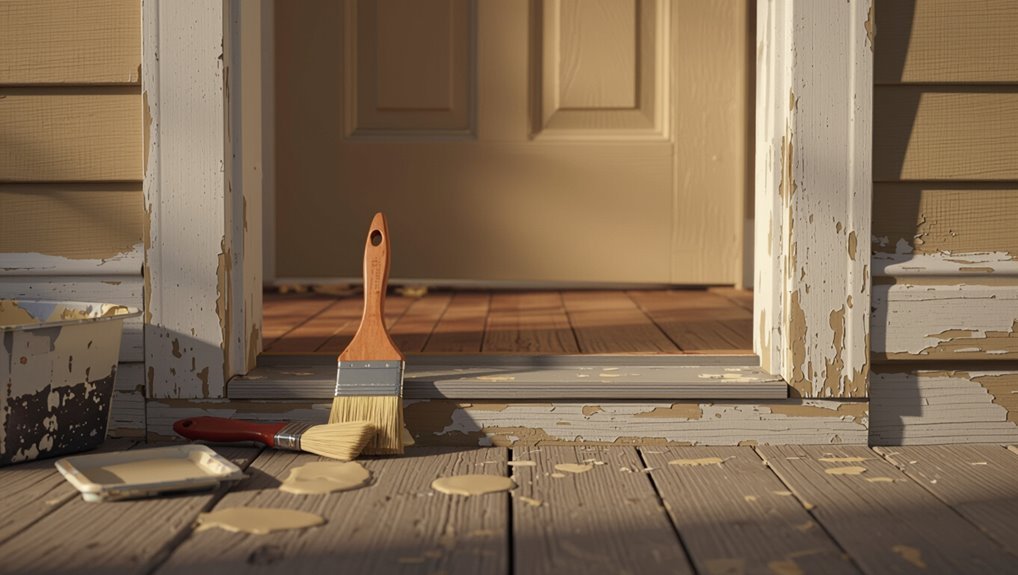
Can you use interior paint outside? You can, but you’ll likely face poor paint performance and faster breakdown.
You can, but interior paint will fade and fail faster outdoors—test first, but use exterior paint for lasting results
You’ll need to evaluate material compatibility—interior formulas often lack UV, mildew, and flex resistance needed outdoors.
If you insist, test on a small, similar surface and monitor adhesion and weathering.
For lasting results, choose products designed for exterior conditions.
Quick Decision Checklist: Use Leftover Paint Or Buy Exterior?
Wondering whether to use leftover interior paint or buy an exterior can? Ask: will the surface face weather, moisture, or heavy wear?
Check labels, remaining quantity, and color match.
Prioritize paint longevity and cost effectiveness—if longevity suffers, buying exterior pays off.
If conditions are mild and you save considerably, using leftovers can be acceptable for short-term, low-exposure spots.
Why Exterior Paint Is Formulated Differently
When you use paint outdoors, it has to resist weather-driven chemistry like moisture, temperature swings, and mildew.
Exterior formulas include UV-blocking additives to protect color and binders engineered for flexibility and film strength so the coating won’t crack or chalk.
That’s why interior paints, which lack those components, won’t hold up on siding or trim.
Weather Resistance Chemistry
Because exterior surfaces face sun, rain, and temperature swings, paint for outdoors uses different chemistry than interior formulas.
You’ll notice its chemical composition emphasizes flexible resins, tougher binders, and moisture-repellent pigments to boost weather resistance.
These changes let coatings expand and contract, shed water, and resist chalking or mildew.
Don’t expect interior paint to handle those stresses reliably.
UV Protection Additives
If you leave interior paint out in the sun, you’ll quickly see why exterior coatings include UV-blocking ingredients: ultraviolet light breaks down binders and fades pigments, so manufacturers add stabilizers, absorbers, and reflective particles to slow that damage.
You’ll want UV protection for colorfastness and film integrity; additive benefits include slowed chalking, reduced pigment loss, and extended maintenance intervals, improving long-term performance.
Flexibility And Film Strength
Although you mightn’t notice it from a can, exterior paint needs to flex and hold up far better than interior formulas.
So manufacturers boost film strength and elasticity to withstand temperature swings, moisture, and building movement.
You’ll rely on flexibility testing and lab-rated film strength to pick coatings that resist cracking, peeling, and substrate stress, ensuring long-lasting protection and fewer repairs.
How UV And Sun Exposure Break Down Interior Paint
When you use interior paint outside, sunlight quickly causes pigments to fade and colors to lose their vibrancy.
UV rays also attack the paint’s binder, making the film brittle and prone to cracking or chalking.
Over time, that combination means the finish will look washed out and fail far sooner than exterior-specific coatings.
Fade And Color Loss
Because interior paints aren’t formulated to handle direct sunlight, UV rays quickly break down their pigments and binders, causing colors to fade, yellow, or chalk over time.
You’ll see poor color retention and weakened pigment stability outdoors.
Imagine this:
- Sun-bleached siding
- Pale trim edges
- Uneven patchy panels
- Chalky, washed-out finish
Binder Breakdown
Exposure wears down the paint’s binder — the invisible glue that holds pigment and film together — and sunlight speeds that collapse.
You’ll see cracking, chalking, and loss of adhesion as binder types designed for indoor use break down under UV.
Since binder performance dictates durability, interior formulas won’t hold up outdoors; choose exterior-grade binders engineered for UV resistance to avoid premature failure.
How Moisture And Temperature Swings Cause Peeling
If you apply interior paint outside, you’ll quickly see how moisture and temperature swings force the coating to fail: wet substrates swell and dry ones shrink, and those repeated movements break the paint’s bond to the surface.
You’ll notice moisture impact and temperature fluctuations causing:
- Tiny cracks forming
- Edges lifting
- Blisters popping
- Large flakes shedding
Act before peeling worsens.
Why Mold And Mildew Form On Interior Paint Outdoors
When you leave interior paint on an exterior wall, its lack of mildew inhibitors and poor moisture resistance makes it an easy target for mold and mildew.
Spores settle on damp paint, feed on organic binders or surface dust, and quickly form visible growth in shaded, humid areas.
You’ll see stains and odor because interior formulas lack mold prevention additives and adequate mildew resistance for outdoor exposure.
How Exterior Binders, Adhesion, And Flexibility Differ
Because exterior paint must handle temperature swings, UV light, and moisture, manufacturers use tougher binders that stick better and stay flexible so the film won’t crack or peel.
You notice a clear flexibility comparison and stronger adhesion properties when you compare formulas:
- Rubberized binders
- Acrylic emulsions
- UV-resistant resins
- Elastic modifiers
Real‑World Lifespan: Interior Vs. Exterior Paint
Although both interior and exterior paints look similar on a swatch, you’ll see big differences in how long they last once they’re applied: exterior paints are formulated to resist UV, moisture, and temperature swings, so they commonly last 5–15 years on siding and trim, while interior paints—shielded from the elements—tend to stay serviceable for 7–10 years depending on wear and cleaning.
In real world comparisons, expect exterior coatings to meet tougher lifespan expectations; using interior paint outside shortens service life and increases maintenance.
Surfaces Where Interior Paint Might “Work” (And The Risks)
The lifespan gap between interior and exterior paints makes you think twice about using indoor formulas outside, but there are a few sheltered scenarios where interior paint can perform acceptably.
You might risk faster wear on exposed outdoor surfaces, yet in limited, protected spots it can work short-term:
- Covered porch ceiling
- Enclosed sunroom walls
- Garage interior facing yard
- Under-deck storage walls
Use caution with moisture.
Surfaces You Should Never Paint With Interior Paint
If you’re tempted to save money by using interior paint outside, don’t—some surfaces will fail quickly and can cause safety, structural, or warranty problems. You should never paint these with interior paint due to interior paint limitations and surface compatibility issues.
| Surface | Risk | Why |
|---|---|---|
| Roofing | Leak/wear | UV, moisture |
| Decks | Slip/peel | Foot traffic |
| Metal | Rust | Adhesion failure |
| Stucco | Cracks | Breathability problems |
When Leftover Interior Paint Is Acceptable Short‑Term
You won’t want to use leftover interior paint on the problem surfaces above, but there are short-term, low-risk situations where it can work.
You can use it for temporary projects where exposure is minimal and paint aesthetics matter briefly.
Great for short-term projects where exposure is limited and appearance only needs to last briefly.
Examples:
- Garden party props
- Indoor-outdoor art
- Covered porch décor
- Short-term signage
How To Test Leftover Interior Paint Before Using It Outside
1 simple test can save you a lot of time and money: sample the leftover interior paint on the exact surface and expose it to the same outdoor conditions you expect, then inspect adhesion, flexibility, and color stability over a few days.
Check paint consistency, stir thoroughly, and note any separation.
Compare the dried swatch to your planned color matching and watch for cracking, peeling, or fading before applying more.
Prep Steps For Temporary Exterior Use Of Interior Paint
A clean, dry surface makes temporary exterior painting with interior paint far less risky, so start by washing the area with a mild detergent, rinsing thoroughly, and letting it fully dry.
Then follow basic paint preparation steps and accept these are temporary solutions:
- Remove loose paint
- Sand glossy spots
- Prime bare wood/metal
- Mask edges and trim
Application Tips To Improve Short‑Term Performance
With the surface cleaned, sanded, and primed, it’s time to apply the paint in ways that stretch its short-term durability.
Use thin, even coats, allow full dry times, and avoid painting in extreme heat or humidity.
Roll or brush with care, overlap wet edges, and add a clear acrylic sealer for temporary solutions and performance enhancement.
Recoat only when fully cured.
Early‑Failure Signs To Watch For After Painting
If you used interior paint outside, watch closely for fast-appearing problems that signal it’s failing: chalky powdering, rapid fading, blistering, peeling at edges, or tacky spots that never fully dry.
You’ll spot clear paint performance failures and see moisture impact signs.
Typical visuals:
- Flaking seams
- Discolored patches
- Bubbling surface
- Sticky areas that attract dirt
Cost Comparison: Touch‑Up With Leftover Paint Vs. Buying Exterior
1 key decision is whether you’ll patch chips and small areas with leftover interior paint or buy proper exterior paint for a full touch-up.
That choice comes down to cost, coverage, and longevity. Using leftovers can boost short-term cost effectiveness and reduce waste, lowering environmental impact, but you risk faster failure.
Buying exterior paint costs more up front yet saves time, materials, and rework.
Affordable Exterior Paint Options For Budget Projects
When you’re on a tight budget, you can still get durable, attractive exterior paint by focusing on value-grade brands, smaller-format specialty lines, and smart prep work that stretches every gallon.
You’ll find affordable paint and budget solutions by choosing stripped-down formulas, buying on sale, and prepping properly:
- Clean surfaces
- Patch cracks
- Use primers
- Apply thin coats
When To Choose Acrylic‑Latex Vs. Oil‑Based Exterior Paint
Think about the surface you’re painting—acrylic‑latex bonds well to masonry, vinyl, and most siding, while oil‑based paints stick better to metal and weathered wood.
Consider your climate and how long you need the finish to last: acrylic‑latex handles temperature swings and UV exposure better, whereas oil‑based formulas can offer a harder, longer‑lasting film in stable, dry conditions.
Use that tradeoff—surface compatibility versus durability under local weather—to choose the right exterior paint.
Surface Type Compatibility
Choosing the right exterior paint depends largely on the surface you’re covering and the conditions it faces, so you’ll want to match material, porosity, and movement to either acrylic‑latex or oil‑based formulas.
Use proper surface preparation techniques to beat paint adhesion challenges.
Picture specifics:
- Smooth metal — oil for adhesion
- Fiber cement — acrylic‑latex
- Trim/doors — oil for durability
- Siding — flexible acrylic
Climate And Longevity
Because your local climate dictates how paint expands, contracts, and resists moisture, you should match acrylic‑latex or oil‑based formulas to the weather stresses your exterior will face. Consider climate impact and longevity factors: acrylic‑latex handles freeze/thaw and UV better; oil resists chalking in dry heat. Compare conditions quickly:
| Condition | Acrylic‑Latex | Oil‑Based |
|---|---|---|
| Humid | Best | OK |
| Hot/Dry | Good | Best |
Alternatives: Primers, Sealers, And Protective Coatings
When you need better durability or adhesion than interior paint can provide, primers, sealers, and specialized protective coatings give you targeted solutions for exterior surfaces.
For exterior surfaces, primers, sealers, and protective coatings provide superior adhesion and durability where interior paint falls short.
You’ll choose Primer types for substrate bonding, assess Sealer benefits for moisture and stain blocking, compare Coating options like elastomeric or polyurethane, and prioritize Surface preparation to guarantee long-term performance.
- Bonding
- Moisture barrier
- UV resistance
- Flexibility
How To Dispose Of Or Repurpose Leftover Interior Paint Responsibly
After you’ve prepped surfaces and picked primers or protective coatings for exterior work, you’ll likely end up with leftover interior paint you don’t want to waste.
Donate usable cans to community centers, schools, or theater groups.
Label partial cans for future touch-ups, consolidate similar colors, and store properly.
For unusable paint, follow local paint recycling programs and hazardous-waste guidelines for safe disposal.
Frequently Asked Questions
Can Interior Paint Harm Outdoor Plants or Soil Nearby?
Yes — it can. If interior paint flakes or washes off, it can cause plant toxicity and soil contamination, so you should avoid runoff, cover nearby vegetation, and use appropriate exterior-safe coatings to protect plants and soil.
Will Interior Paint Off-Gas Dangerously When Used Outside?
Yes — you might still notice off gassing effects outdoors, especially shortly after application; VOC emissions can persist in warm, calm conditions, so you’ll want low‑VOC or exterior-rated paints to minimize lingering fumes and risks.
Can I Spray Interior Paint on Exterior Metal Surfaces?
Like dressing metal in a summer shirt, you can’t reliably spray interior paint on exterior metal surfaces. It’ll lack adhesion, weather resistance and corrosion protection; use coatings formulated for spray application on metal instead.
Does Interior Paint Affect the Colorfastness Under Exterior Lighting?
Yes — interior paint will often fade faster outdoors, so you’ll notice poorer color performance under harsh lighting conditions; you’ll want exterior-grade coatings designed for UV resistance to maintain consistent colorfastness and longevity.
Are There Warranty or Insurance Issues Using Interior Paint Outdoors?
About 60% of manufacturers void coverage if product misuse occurs; yes, you’ll likely face warranty limitations and potential insurance implications if you use interior paint outdoors, so don’t expect claim support for weather-related failures.
Conclusion
You can’t reliably use interior paint outside without risking big problems—peeling, fading, and moisture damage will show up faster than you can say “bad idea.” If the job’s small and temporary, leftover interior paint plus a proper exterior primer might work, but for lasting results pick exterior-grade paint formulated for UV, moisture, and temperature swings. When in doubt, choose acrylic‑latex for most projects, or consult a pro; dispose or repurpose leftover paint responsibly.
