
How to Paint a Wall to Look Like Stone: Faux Finish Guide
You can make a wall look like real stone by layering a neutral base coat, adding textured highlights with sponges and dry-brushing, and painting crisp mortar lines for depth. Start with a warm taupe primer, experiment with glazes to mix warm and cool tones, and build raised texture with joint compound where needed. Seal with a clear acrylic for durability and gentle cleaning. Follow the step-by-step guide below and you’ll get pro-looking results.
Quick Answer: Can a Painted Wall Pass for Real Stone?
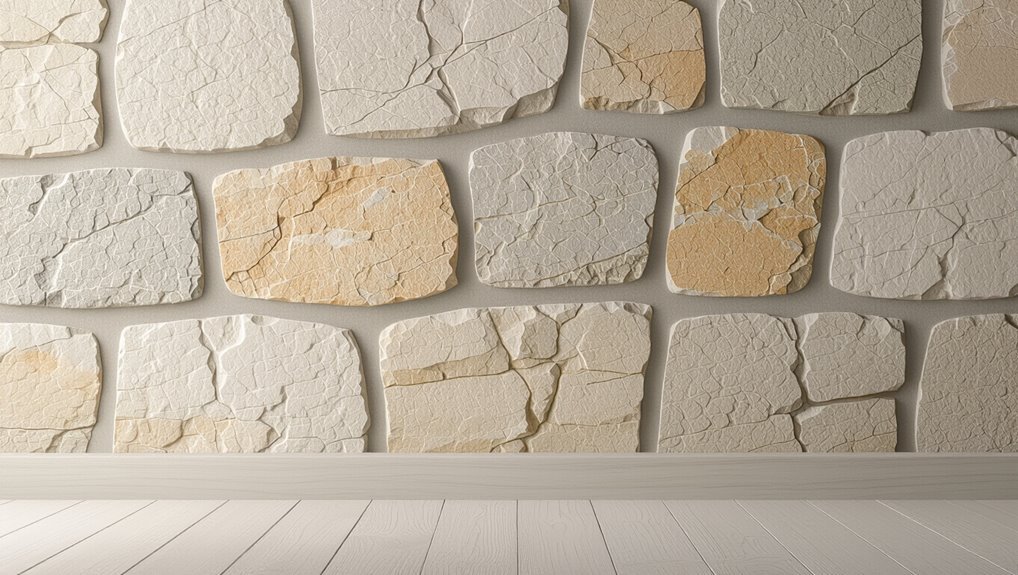
Wondering if a painted wall can really pass for stone? You can achieve convincing results using faux techniques, careful color blending, and texture simulation on painted surfaces.
With solid project planning and realistic design inspiration, your wall will mimic real stone from a distance and close up.
Follow maintenance tips to preserve the effect, and you’ll enjoy durable, budget-friendly stone aesthetics.
Intro: Who This Faux Stone Guide Is For
If you want the look of stone without the cost, weight, or installation hassle, this faux stone guide is for you; it walks DIYers, renters, and budget-conscious homeowners through techniques that create convincing stone finishes using paint, texture, and simple tools.
You’ll get clear faux stone techniques, step-by-step tips, and design inspiration so you can plan, prep, and execute a realistic result with confidence.
Which Faux Stone Styles Can You Realistically Paint at Home
You can tackle several convincing faux stone looks at home, from irregular fieldstone and smooth riverrock to classic brick-and-mortar and sleek stacked slate panels.
Each style uses similar base techniques but varies in texture, brushwork, and color layering.
I’ll walk you through what’s easiest, what takes more practice, and which tools you’ll need for each.
Fieldstone And Riverrock
Fieldstone and riverrock offer two of the most achievable faux-stone looks for DIY painters, since their irregular shapes and mixed colors let you mask imperfect technique and still get convincing texture.
You’ll use fieldstone techniques like varied stenciling and layered glazing to mimic rough faces, while riverrock patterns rely on smooth oval shapes, soft highlights, and shadow washes to create natural, polished stones.
Brick And Mortar
Moving from the irregular shapes of fieldstone and riverrock, brick-and-mortar effects call for tighter lines and more consistent patterns—making them a bit more demanding but still within a DIYer’s reach. You can recreate brick patterns and mortar textures with careful ruling, sponging, and washes. Practice on board, use level guides, and vary tones for realism.
| Technique | Purpose |
|---|---|
| Ruling | Straight joints |
| Sponging | Texture |
| Washes | Tone variation |
| Taping | Clean edges |
Stacked Slate Panels
Stacked slate panels offer a sleek, linear look you can mimic at home with careful layering and sharp edge work.
You’ll focus on stacked slate patterns, color variations, and texture techniques to create depth.
Follow wall preparation steps, choose appropriate application methods, and use blending strategies for realistic seams.
For longevity, apply maintenance tips, and draw on design inspirations to match your space.
Decide Between Weathered, Fieldstone, and Limestone Looks
When you pick a stone style, think about the mood you want: weathered offers rustic charm with worn edges and muted tones, fieldstone gives a rugged, irregular look with varied shapes and colors, and limestone reads as smooth, refined, and often lighter in hue.
- Compare weathered textures and stone variations
- Choose color palettes
- Plan surface treatments
- Pick application methods and aging techniques
- Note maintenance tips
Tools You’ll Need for a Faux Stone Wall
Now that you’ve chosen the stone style and colors, gather the right tools so your vision becomes reality.
You’ll need quality brushes (various sizes), rollers, foam pads, sponges, and stiff bristle brushes for texture techniques.
Have a palette of paints informed by color theory, mixing trays, rags, buckets, a putty knife for faux mortar, and a small spray bottle to blend edges and soften shifts.
Masking, Drop Cloths, and Surface Protection for Faux Stone Projects
Before you lay down paint, protect everything you don’t want faux stone on: tape off trim, baseboards, windows, and outlets with painter’s tape, cover floors and furniture with heavyweight drop cloths or plastic sheeting, and mask adjacent walls or ceilings to keep clean edges.
Use proper masking techniques and secure drop cloths to prevent slips.
- Seal gaps with tape
- Layer plastic over cloths
- Protect hardware
- Create clean seams
- Label covered areas
Paint Types: Latex, Acrylic, and Faux-Finish Glazes
Choice matters: pick paints and glazes that work together so your faux stone looks realistic and lasts.
You’ll choose latex vs acrylic based on adhesion, flexibility, and sheen. Latex is forgiving on interior walls; acrylic gives tougher durability.
Use dedicated faux-finish glazes to blend layers, glaze, and scumble techniques.
Test combinations on a scrap panel to confirm compatibility before full faux finish applications.
Choosing Pigments and Color Mixes for Realistic Stone Tones
Start by choosing a base tone that matches the stone you’re imitating—think warm beige for sandstone, cool gray for slate, or mottled tan for limestone.
Mix small batches and test them on scrap to fine-tune undertones before committing to the wall.
Then plan subtle highlights and veining with lighter and darker glazes to add depth and natural variation.
Base Tone Selection
Tone matters: pick a base that matches the stone you’re imitating—warm beige for sandstone, cool gray for slate, or an earthy taupe for limestone—so your subsequent glazes and veining sit naturally.
Choose a base coat using simple color theory, test small mixes, and adjust pigments until the undertone reads right.
- Sample swatches
- Neutral undertones
- Low-sheen finish
- Thin glaze compatibility
- Natural variation testing
Highlight And Veining
With your base established, you’ll layer highlights and veins that give the wall its stone identity.
Choose pigments a shade lighter for subtle contrast and a darker mix for veins.
Use varied highlight techniques—dry-brushing, glazing, sponging—to mimic depth.
Draw organic veining patterns with a fine brush, softening edges with a damp sponge.
Step back often to adjust realism and balance.
Selecting Brushes, Rollers, Sponges, and Rags for Texture
Choosing the right tools makes the difference between a believable stone finish and a muddled mess, so pick brushes, rollers, sponges, and rags that match the texture you want to create.
The right brushes, rollers, sponges, and rags turn stone finishes from sloppy to striking—match tools to texture.
Use brush types for crisp edges, rollers for base coats, sponges and rags for texture techniques. Focus on application methods, finish options, layering effects, color blending, tool selection, and surface preparation.
- Stiff-bristle angle brush
- Dense nap roller
- Natural sea sponge
- Crumpled cotton rags
- Dry-brush stencil brush
Assessing Your Wall: Plaster, Drywall, or Painted Surface?
Wondering whether your wall will take a faux-stone treatment? You’ll perform a quick Surface Assessment: check plaster for smoothness, drywall for paper damage, and painted surfaces for adhesion.
Lightly feel the Wall Texture—rough, glossy, or patched areas will affect primer choice and technique. Note moisture, stability, and existing finishes so you can choose compatible primers and application methods.
How to Repair Cracks and Holes Before Faux Stone Painting
Before you start layering textures and paints, fix any cracks, holes, or loose material so your faux-stone finish bonds and looks convincing.
You’ll perform wall assessment, choose repair techniques for crack sealing and hole filling, sand for texture smoothing, and respect drying times to guarantee paint adhesion.
- Inspect and mark defects
- Remove loose material
- Apply filler or patch
- Sand smooth
- Clean before painting
Priming Options and When to Use a Bonding Primer
When you’re ready to seal and unify the repaired surface, pick a primer that matches the substrate and the texture you’ll build.
For smooth drywall use latex; for glossy surfaces or patched areas consider a bonding primer.
Understand bonding primer benefits: better adhesion, stain blocking, and reduced peeling.
Good surface preparation—cleaning, sanding, and dust removal—ensures the primer performs as planned.
Choose a Base Coat Color That Anchors Your Stone Look
Pick a warm neutral base coat to anchor the stone effect and give the surface a natural, cohesive tone.
You’ll use that foundation to create contrast with lighter highlights and darker shadow glazes.
That balance of contrast and depth makes the faux stone read as three-dimensional, not flat.
Warm Neutral Anchors
Start with a warm neutral base coat that acts like the mortar between stones—your foundation for depth and cohesion.
You’ll use warm neutrals to unify varied tones, guided by color psychology to set mood, warmth, and perceived texture. Layer subtly, keep edges soft, and let the base anchor subsequent glazes.
- Choose taupe or beige
- Test in different light
- Prefer matte finish
- Warm undertones unify
- Keep it subtle
Contrast And Depth
Choose a base coat that anchors your stone look by providing contrast and depth—think a mid-tone warm gray or muted greige that sits between your darkest veining and the lighter highlights.
You’ll layer glazes and sponges to introduce color variation and subtle highlights, then add darker washes in crevices for texture contrast.
Step back often to balance tones and depth.
Plan Stone Shapes and Mortar Lines on the Wall
Before you mark anything, study the wall and decide how the stone shapes and mortar lines will flow—horizontal courses, irregular clusters, or a mix—so the pattern complements the room and hides seams or imperfections.
Study the wall first; plan stone shapes and mortar lines to flow with the room and conceal imperfections.
You’ll plan stone shape patterns and mortar line spacing for balance, scale, and visual rhythm before you start painting.
- Vary stone sizes
- Keep consistent spacing
- Use focal clusters
- Avoid repetitive grids
- Match room scale
Drawing Guides: Using Chalk, Stencils, or Templates
Start by snapping chalk lines to mark major mortar joints and keep your layout straight.
Use stencils to repeat stone shapes consistently, and shift them as you work to avoid a patterned look.
For irregular stones, trace template edges with a pencil or chalk before painting to save time and maintain shape.
Chalk Line Layouts
A simple chalk line layout gives you the straight, repeatable guides you need to map out stone courses and grout lines before you paint; you’ll use chalk techniques for layout planning, guarantee measurement accuracy, and focus on wall preparation while keeping design inspiration in mind.
- Snap straight course lines
- Mark grout widths
- Check level and plumb
- Outline random stones
- Protect adjacent surfaces
Stencil Pattern Placement
Templates and stencils help you translate your chalk lines into repeatable stone shapes, so lay them out in sections that match your course lines and grout widths before you paint.
Position each stencil using simple stencil alignment techniques—but vary rotation and offset to create natural pattern variations.
Work row by row, secure templates, and check joints frequently so the layout stays consistent without tracing edges yet to be painted.
Template Edge Tracing
Trace each template edge with steady pressure so your chalk or pencil gives a clear guide for painting; you’ll work faster and cleaner if you mark the outlines right after positioning each stencil.
Use consistent strokes, align template design, and switch edge tools as needed for crisp lines. Follow these tips:
- Hold stencil firmly
- Use soft chalk or graphite
- Trace in one motion
- Clean templates often
- Label alignment marks
Apply the Base Coat for Even Coverage and Depth
Start by rolling on a neutral mid-tone base coat evenly across the wall; this layer sets the depth and guarantees your stone effects read true. Use Base coat techniques to achieve Even coverage with a roller, cutting in edges, and light cross-rolling for consistency.
| Step | Tip |
|---|---|
| 1 | Choose neutral mid-tone |
| 2 | Roll in sections |
| 3 | Cut in edges |
| 4 | Check for streaks |
Build Color With Layered Glaze Washes
Once your base coat’s dry, build depth by glazing in thin, translucent washes so each layer subtly shifts the tone and reads like natural stone.
You’ll use layered techniques and careful glaze application, working wet-over-dry to control contrast and warmth, blending edges for realism.
- Mix glaze thinly
- Work in small sections
- Vary color temperature
- Feather edges gently
- Let layers cure between coats
Sponging Techniques to Mimic Stone Veins and Mineral Streaks
Now you’ll use a natural sea or cellulose sponge to add light veining that suggests cracks and fissures without overpowering the base.
Tap and drag thin, slightly thinned glaze in quick, varied strokes to create subtle veins, then layer mineral-toned glazes to build faint streaks and depth.
Keep each layer translucent and cure slightly between passes so the veins read as natural mineral deposits.
Light Veining Techniques
Although subtle, light veining brings the mineralized character of real stone to life, and you’ll achieve it by layering thin, translucent marks with a sponge or fine brush.
Use light layering and texture variations to suggest depth without heavy contrast.
- Work with diluted paint
- Drag gently with a sponge
- Vary pressure and direction
- Soften edges with a dry brush
- Step back often to assess
Mineral Streak Layering
Light veining set the tone; mineral streak layering builds the more pronounced, irregular lines and patches that give stone its geological story.
You’ll sponge thin washes, lift paint, and dab concentrated pigment to form mineral streaks. Vary pressure, overlap colors, and step back frequently.
Use glazing and subtle contrast in layering techniques to keep veins believable without overpowering the base.
Stippling and Dry-Brushing for Surface Irregularities
Start by thinking of stippling and dry-brushing as your texture toolkit: stippling layers small, controlled dots and short dabs to build subtle, mottled depth, while dry-brushing drags nearly-dry paint across high points to pick out edges and create highlights.
Use textured techniques and color blending to simulate stone irregularities.
Use texture techniques and subtle color blending to recreate the irregularities and natural depth of stone surfaces.
- Work in thin layers
- Vary pressure
- Blend while wet
- Use natural tones
- Step back often
Create Raised Texture for Rustic Stone Surfaces
To get a rustic stone look, you’ll need the right tools and materials — joint compound or heavy texture paint, trowels, putty knives, and a variety of brushes and sponges.
Use application techniques like troweling on thick ridges, stippling with a stiff brush, and feathering edges to mimic natural stone contours.
Practice your strokes on scrap board so you can control the height and shape of the raised texture before working on the wall.
Tools And Materials
Before you lay texture, gather the right tools and materials so the process goes smoothly: a heavy-duty joint compound or textured plaster, a range of trowels and putty knives (including a narrow tuckpoint tool for crevices), a hawk or mixing pan, coarse sand for grit, a mixing drill with paddle, sturdy drop cloths, painter’s tape, a sponge or natural sea sponge for stippling, and protective gear like gloves and a dust mask.
- Joint compound and sand
- Trowels, knives, tuckpoint tool
- Mixing drill with paddle
- Sponges for stippling
- Drop cloths and tape
Plan for color mixing and texture variation before you start.
Application Techniques
Begin by pressing a generous bead of joint compound onto the wall and using a trowel or putty knife to push and lift the compound into irregular, raised shapes that mimic natural stone; vary pressure and angle to create high and low points, and leave some edges rough for a rustic look.
After drying, refine with sanding, then apply texture techniques and layering methods using glazes and washes to age and unify the surface.
Using Joint Compound and Texture Paste for Relief Effects
One key step in creating convincing stone relief is applying joint compound or texture paste to build raised shapes and surface irregularities that catch light like real rock.
You’ll focus on Surface preparation and Mixing mediums, use Painting tools for Texture techniques, and sculpt Relief patterns to enhance Visual effects in Faux finishes with proper Joint compound handling.
- Trowel
- Stiff brush
- Palette knife
- Sanding block
- Mixing paddle
Painting Grout Lines That Read Like Real Mortar
You’ll start by picking mortar colors that match the era and stone you’re imitating, mixing warm and cool tones for depth.
Then you’ll paint the joints with a steady hand or a narrow brush, keeping edges crisp and widths consistent.
Small variations in color and texture will sell the illusion of real mortar.
Choosing Mortar Colors
Picking the right mortar color can make painted grout read as convincing stone instead of obvious paint; think about the wall’s overall tone, the stone hue, and the contrast you want between stone and grout.
Use mortar color selection and simple color mixing techniques to match texture and age.
- Sample on scrap
- Aim subtle contrast
- Blend warm or cool tints
- Test under light
- Let dry and reassess
Painting Realistic Joints
When you paint the joints, treat them like mortar—define consistent widths, keep edges slightly irregular, and build up thin layers so the grout reads as depth rather than flat paint.
Use a fine brush or foam tool to carve crisp joint definition, feathered at the edges.
Layer washes and tinted glazes to suggest age and shadow, creating realistic textures that anchor the stonework.
Age and Distress Your Painted Stone for Realism
Although a fresh faux-stone finish looks impressive, adding age and distress will make it believable. You’ll want to introduce subtle wear, discoloration, and surface variation.
Use aging techniques and distressing methods to target edges, grout, and high spots; glaze, scumble, and light sanding add authenticity.
- Light sanding on edges
- Thin glazes in crevices
- Scumble with dry brush
- Random surface chips
- Soft color washes
Add Lichen, Moss, and Natural Weather Stains
Now add mossy textures and lichen patterns to sell the illusion of age.
Use stippling, sponges, and dry-brushing to build raised moss areas and soft, irregular lichen shapes.
Focus stains and darker washes where moisture would naturally collect so the effects read as believable.
Applying Moss Textures
Since real stone often wears lichen, moss, and dark streaks from water, you’ll add those subtle organic touches to make your painted wall believable.
Use sponge dabbing for moss application, varying green tones and pressure for texture variation. Blend edges and add thin brown washes for stains. Keep it random and sparse.
- Sponge dab
- Dry-brush highlights
- Thin washes
- Layer greens
- Feather edges
Simulating Lichen Patterns
Want to make the stone look truly lived-in? Tap diluted green, gray, and pale yellow with a sponge to suggest lichen color variations.
Work irregular clusters, then soften edges with a dry brush for subtle lichen texture.
Add thin washes of brown and dark green for moss and weather stains.
Step back often; less is more to keep it natural.
Lighting and Shadow Tricks to Sell the Illusion
When you paint a wall to look like stone, believable lighting and shadows make the pattern read as three-dimensional instead of flat. You’ll use shadow play and subtle lighting effects to mimic depth, choosing a consistent light direction and exaggerating edge shadows sparingly.
- pick a single light direction
- deepen grout shadows
- highlight protruding edges
- soften connections
- test at different times of day
Sealing and Protective Finishes for Faux Stone Walls
Now that your lighting and shadow work makes the stones read as real, you need to lock that finish in with the right sealers and protective coats. Choose sealing options and protective coatings for finish durability. Follow application methods and product recommendations below; include basic maintenance tips without deep cleaning details.
| Type | Benefit |
|---|---|
| Acrylic | Fast-dry, clear |
| Polyurethane | Tough, long-lasting |
How to Maintain and Clean a Painted Faux Stone Surface
Keep a regular dusting routine with a soft brush or microfiber to prevent grit from scratching the finish.
For spills or marks, gently spot clean with a mild soap and a damp cloth, testing an inconspicuous area first.
Check your sealant periodically for wear and reapply as needed to protect the paint.
Regular Dusting Routine
Although faux stone finishes are durable, they’ll still collect dust and grime over time, so you should establish a simple, regular dusting routine to keep the texture and colors looking fresh.
Use gentle dusting techniques and follow maintenance tips to prevent buildup and protect paint.
- Dust weekly with a soft microfiber cloth
- Use a long-handled duster for high areas
- Vacuum crevices with brush attachment
- Rotate directions to reach texture
- Inspect for wear while dusting
Gentle Spot Cleaning
Tackle small marks promptly with a gentle, targeted approach so dirt doesn’t embed in the textured paint.
For spot cleaning, blot stains with a soft microfiber cloth and mild soap diluted in water, testing an inconspicuous area first.
Use gentle techniques like dabbing, not scrubbing, and rinse with a damp cloth.
Dry area thoroughly to prevent water spots or paint lift.
Periodic Sealant Inspection
Because sealant is your painted faux stone’s first defense against moisture and wear, inspect it regularly—at least twice a year and after severe weather—to catch cracks, peeling, or thin spots early.
Note sealant types and set an inspection frequency. Do simple repairs or recoat promptly to prevent damage.
- Check seams and edges
- Look for clouding
- Test adhesion
- Clean before touch-up
- Record dates and actions
Adapting Faux Stone Techniques for Interior vs. Exterior Walls
When you’re deciding whether to use the same faux stone approach inside or out, remember the environment changes what materials and finishes will hold up and look right.
Interior projects let you focus on texture and detail, while exterior work demands weatherproofing and durability.
You should adapt interior techniques and exterior techniques by considering stone textures, color variations, durability differences, weather considerations, surface preparation, and application methods.
Scale the Effect for Small Accent Walls
For a small accent wall, you’ll want to choose a stone scale that won’t overwhelm the space.
Keep color contrast subtle so the pattern reads as natural, and blend the edges seamlessly into the surrounding paint to avoid a harsh cutoff.
With those tweaks you’ll get a convincing stone look that complements the room.
Choose Appropriate Stone Scale
Scale matters: pick a stone pattern that fits the size and purpose of your accent wall so the result reads as intentional, not overwhelmed.
You’ll match stone texture with room scale, adjust scale proportions for visual balance, and plan grout lines and focal stones.
Keep patterns simple on small walls; test a mockup before committing.
- Small stones
- Medium stones
- Large stones
- Random mix
- Repeating motif
Adjust Color Contrast
After picking the right stone size, you’ll want to tame the contrast so the pattern reads well on a small accent wall.
Use softer midtones and mute highlights so color harmony stays intact. Reduce extreme shadows to avoid overwhelm.
Test swatches at different lighting angles, then scale contrast until you achieve visual balance that reads like stone without dominating the room.
Blend Edges Seamlessly
When you’re working on a small accent wall, blend each stone edge with soft feathering so the pattern reads natural without looking pasted on.
Use subtle blending techniques and small tools to create seamless shifts that scale down well.
- Work in small sections
- Use a dry brush for feathering
- Blend colors while wet
- Step back often
- Soften hard lines immediately
Design Tips for a Full-Room Stone Look Without Overpowering
Although a full-room stone look can feel dramatic, you can keep it balanced by mixing textures, tones, and focal points so the effect reads intentional rather than overwhelming.
Use texture variety—combine smoother faux stone with rougher accents—and plan color coordination across walls, furniture, and textiles.
Anchor the room with one focal wall, add warm lighting, and leave some plain surfaces to breathe.
Painting Faux Stone Around Windows, Doors, and Trim
Moving from room-wide balance to the edges, painting faux stone around windows, doors, and trim takes a steady hand and some planning to look natural.
Moving from broad balance to edges, faux stone around windows and trim needs steady planning for a natural look
You’ll match stone edges to window framing, add subtle door accents, and keep trim detailing crisp while maintaining color coordination with the wall.
Use painter’s tape, small brushes, sponges, feathered blends, and step back often.
- Painter’s tape
- Small brushes
- Sponges
- Feathered blends
- Step back often
Working Around Outlets, Switches, and Electrical Plates
Turn the power off at the breaker before you start so you can safely remove covers and work around outlets and switches.
Mask plates and edges carefully with painter’s tape or remove the plates and tape the openings to keep paint out of the box.
When the paint’s dry, reinstall plates and do small touchups to blend edges and restore a realistic stone look.
Power Off Before Painting
1 important safety step before you paint is to shut power to any outlets, switches, and electrical plates you’ll be working around; that prevents shocks, accidental shorting, and paint damage to components.
You should verify circuits, label breakers, and follow safety precautions and electrical considerations before touching hardware.
- Turn off breaker
- Test with voltage tester
- Label circuits
- Remove plates safely
- Keep a flashlight nearby
Masking Plates And Edges
Before you paint, remove or carefully mask every outlet, switch, and plate to prevent paint from seeping into openings or staining hardware; use a voltage tester first, then peel off plates with a screwdriver or cover them tightly with painter’s tape and a plastic bag.
Use precise masking techniques, tuck tape edges for solid edge protection, and cut neat openings so patterns meet plates cleanly.
Reinstalling And Touchups
After the paint’s fully dry, reinstall your outlets, switches, and plates carefully so your stone finish looks seamless and professional.
Work slowly to avoid chips, using precise touch up techniques and color matching for invisible repairs.
Follow these steps:
- Turn off power and remove covers
- Clean edges before seating plates
- Apply minimal paint for touchups
- Blend with a small brush
- Reinstall and test switches
How to Match New Faux Stone to Existing Stonework
When you’re adding new faux stone next to existing stonework, your goal is to make the join look intentional: match color tones, texture, and mortar lines so the eye reads a single surface.
Compare samples in natural light, adjust pigments for color matching, and feather edges for subtle texture blending.
Recreate mortar width and weathering, step back often, and tweak until connections feel seamless.
Common Mistakes That Make Faux Stone Look Fake
Watch for uneven mortar lines and an overly uniform color, because those two errors instantly give away a faux finish.
If your grout is inconsistent or your stones all match too closely, the wall will read as painted instead of natural.
Fixing mortar rhythm and adding subtle color variation will make your faux stone believable.
Uneven Mortar Lines
One common mistake that immediately gives faux stone away is uneven mortar lines, because inconsistent width, depth, or color draws the eye and shatters the illusion.
You should mimic real mortar texture and account for uneven surfaces so joints read natural, not sloppy.
- Measure joint width
- Keep depth consistent
- Match mortar color
- Tool edges cleanly
- Blend changes subtly
Overly Uniform Color
Because real stone varies in tone and undertone across each piece, painting everything the same flat shade will make your faux stone read as fake; you should layer multiple hues and glazes so stones show subtle shifts, highlights, and shadow.
Don’t let overly uniform color flatten texture—work in contrast, add warm and cool undertones, and blend edges to boost faux stone realism and depth.
Troubleshooting Color Banding and Unnatural Repetition
If your faux-stone wall shows obvious color bands or repeating patches, don’t panic—you can fix it by breaking up the pattern and blending changes.
Address color variation and texture inconsistency by varying glaze mixes, dabbing with different tools, feathering edges, stepping back often, and randomizing strokes.
- Vary glaze ratios
- Use sponges and rags
- Feather shifts
- Step back frequently
- Randomize stroke direction
Fix Peeling, Cracking, or Flaking Texture
Even with careful blending, you might still find areas where the faux-stone finish peels, cracks, or flakes away. You’ll need to address these defects before repainting to secure the new texture bonds and looks natural.
Scrape loose bits, sand feathered edges, and clean dust. Patch with a compatible compound, sand smooth, and prime. Proper surface preparation guarantees lasting texture repair and seamless blending.
How Much Time and Paint to Budget for a Typical Accent Wall
Plan on spending a weekend and buying about a gallon of paint plus a pint or two of specialty colors for a typical 10×12 accent wall—time and materials shift with wall size, surface condition, and how many layers or faux techniques you use.
Use paint coverage and time estimation to guide budget planning so you buy enough and schedule realistic work sessions.
- Measure wall area
- Check surface prep
- Estimate coats needed
- Buy base + specialty pints
- Allow drying and touchups
Cost: DIY Faux Paint vs. Buying Manufactured Stone Veneer
After you’ve estimated time and materials for a faux-stone paint job, weigh the cost trade-offs between doing it yourself and buying manufactured stone veneer.
For a cost comparison, DIY saves on materials and labor but costs more time and skill; veneer has higher upfront price yet offers durability and instant realism.
Factor installation, maintenance, and budget considerations to choose what fits your project.
Best Paint Brands and Glazes for Faux Stone Results
Choosing the right paints and glazes makes the difference between a convincing faux-stone finish and something that looks painted on.
Choosing the right paints and glazes turns a flat surface into a convincing, textured faux-stone finish.
You’ll want premium paint selections and proper tools to apply essential glaze techniques for depth and texture. Pick durable acrylics, tintable bases, and quality glazes to layer tones realistically.
- Benjamin Moore Regal
- Sherwin-Williams ProClassic
- Behr Marquee
- General Finishes Glaze
- Faux Effects Glaze
How to Practice Faux Stone Techniques Before Committing to a Wall
How will you know a technique works for your space without testing it first? You should use scrap boards and small wall patches as test surfaces for faux stone practice. Try colors, glazing, and texture tools; note drying times and effects under room light. Adjust mixtures and application methods until satisfied, then scale up confidently.
| Material | Purpose |
|---|---|
| Scrap board | Color trials |
| Foam | Texture tests |
| Glaze | Layering |
| Light | Final check |
| Notes | Record results |
Step-by-Step Mini Project: Convert a Square Patch to Fieldstone
Start by marking a square patch that you’ll transform into a convincing fieldstone section; you’ll work in manageable steps so you can control texture, color, and grout lines as you go.
Start by marking a square patch; gradually build texture, color, and grout for a convincing fieldstone section.
You’ll sketch stones, build texture, basecoat, use color blending, and glaze grout. Follow this mini workflow:
- Sketch irregular stone shapes
- Apply texture compound
- Basecoat tones
- Layer color blending glazes
- Paint grout lines precisely
Variations: Smooth Limestone, Stacked Stone, and Cobblestone Looks
Now that you’ve converted a patch into fieldstone, you can adapt the same steps to create three distinct looks: smooth limestone, stacked stone, and cobblestone.
For smooth limestone techniques, thin glazes and soft blending create flat, subtle veining.
For stacked stone, emphasize sharp edges and varied heights with grout lines.
For cobblestone patterns, round shapes and darker joint shading sell age and depth.
Combine Faux Stone With Other Finishes (Wood, Metal)
When you pair faux stone with wood or metal finishes, think about contrast and shift so each material enhances the other; warm woods soften the stone’s texture while metal accents add a modern edge.
You’ll balance faux stone aesthetics through scale, color, and texture for strong mixed materials integration.
- Choose complementary tones
- Vary textures subtly
- Repeat metal accents
- Use trim to bridge materials
- Maintain consistent scale
Safety Tips for Working at Height and With Chemical Glazes
Because you’ll often be working on ladders or scaffolding and handling chemical glazes, take a few moments to plan each task so you reduce fall and exposure risks: Wear proper safety gear, follow fall prevention steps, practice safe chemical handling, and guarantee ventilation practices are in place.
| Task | Action |
|---|---|
| Ladder check | Stable, level |
| PPE | Gloves, goggles, mask |
| Glaze storage | Sealed, labeled |
| Ventilation | Fans, windows |
| Cleanup | Dispose per label |
When to Hire a Pro Versus DIY Faux Stone Painting
If you’re comfortable with basic painting and can follow detailed steps, you can tackle a faux stone finish yourself; hire a pro when the job involves complex surfaces, high-reach work, tight deadlines, or finishes that must match existing stone precisely.
Assess skill assessment, DIY techniques, material selection, time investment, cost comparisons, finish options, aesthetic goals, project planning, and maintenance tips.
- Pro painting for complex jobs
- DIY techniques for simple walls
- Compare costs and time
- Plan materials and finishes
- Match aesthetic and upkeep
How to Document Your Color Mixes and Techniques for Repeatability
Once you decide between DIY and a pro, keep a careful record of every color mix and technique so you can reproduce the look later.
Note brand, base tint, pigment ratios, batch size, tool type, and application order. Photograph steps and wet samples.
Use dated logs for color documentation and test panels to guarantee mix consistency, tweaking notes until results match repeatable standards.
Eco-Friendly Materials and Low-VOC Alternatives for Faux Stone
When you want a realistic faux-stone finish without harming indoor air quality, choose low-VOC paints, natural pigments, and water-based sealers that deliver the same depth and durability as conventional products.
You’ll prefer eco friendly options and sustainable materials to reduce fumes and waste while achieving texture and color.
- Low-VOC acrylic paints
- Natural earth pigments
- Plant-based binders
- Water-based sealers
- Reclaimed stone accents
Inspiration Sources and Reference Photos to Copy Accurately
After choosing eco-friendly paints and materials, look to strong visual references to guide your faux-stone design and color mixing. Create inspiration boards with high-res reference images showing stone textures and dominant color palettes. Study grout lines, weathering, and scale so you can copy accurately.
| Photo Type | Notes |
|---|---|
| Quarry stone | Rough texture, warm tones |
| Limestone | Smooth veining, cool palettes |
Next Steps: Quick Checklist to Start Your Faux Stone Project
Start by gathering tools, paints, and safety gear so you can work efficiently: drop cloths, primer, base and glaze colors, rollers and brushes of varying stiffness, sponges or stamps for texture, painter’s tape, mixing cups, rags, and gloves; don’t forget a respirator and eye protection if you’re using solvents.
Plan steps, test faux stone techniques and creative color combinations, then follow this checklist:
- Prep and mask surfaces
- Prime and apply base
- Layer glazes for depth
- Add texture and seams
- Seal and inspect
Frequently Asked Questions
How Long Does Faux Stone Paint Last Before Needing Touch-Ups?
You’ll typically get 5–10 years of faux stone durability before visible wear needs touch-ups, depending on exposure; follow maintenance tips like sealing, gentle cleaning, and prompt repairs to extend lifespan and keep the finish looking fresh.
Can Faux Stone Techniques Be Applied Over Wallpaper?
Yes — but you’ll need proper wallpaper preparation first: remove loose sections, secure seams, and prime. Then you can proceed with texture application using bonding primer and flexible texture compounds so the faux stone finish adheres and lasts.
Will Faux Stone Painting Affect Home Resale Value?
Yes — tasteful faux stone benefits can enhance curb appeal and resale value, but don’t overdo it. You’ll want neutral tones, professional finish, and easy reversibility so buyers see style, not a permanent quirk.
Can You Safely Paint Faux Stone on a Fireplace Surround?
Yes — you can safely paint faux stone on a fireplace surround if you use heat-resistant primers and paints; you’ll enhance fireplace aesthetics while ensuring paint durability, but test small areas and follow manufacturer heat and ventilation guidelines.
Are There Insurance Concerns for Altering Exterior Masonry Appearance?
Yes — you can, but don’t assume it’s risk-free: you’ll face liability issues and possible changes to maintenance requirements. Check your policy, get permits if needed, and document professional work to limit disputes.
Conclusion
You can absolutely make a painted wall pass for stone if you plan carefully and practice your technique. Pick a realistic style—weathered, fieldstone, or limestone—gather the right tools and low‑VOC paints, and document your color mixes so you can recreate the look. Study reference photos and work in layers, letting each dry. With patience and a steady hand, you’ll fool the eye; once you start, you’ll find yourself learning the ropes and getting better fast.
