
The Best Paint Finish for Wainscoting That Holds Up Over Time
You’ll want a durable, mid- to high-sheen acrylic-latex finish—satin to semi-gloss—for wainscoting so it resists scuffs, cleans easily, and stands up in humid or high-traffic rooms. Satin gives a softer, elegant look with decent washability; semi-gloss offers the best cleanability and impact resistance but shows imperfections more. Prime bare or patched wood, use thin even coats, and spot-touch as needed for longevity—keep going to get specific prep, product picks, and application tips.
Quick Answer Best Paint Finish for Wainscoting That Holds Up Over Time
For high-traffic areas like hallways and kid zones, go with semi-gloss for its scuff resistance and easy cleaning.
In dining rooms and living rooms, you can choose satin for a softer look that still wipes down well.
For low-traffic bedrooms or formal spaces, eggshell gives a refined finish while holding up if you spot-clean occasionally.
Short recommendation by room and traffic level
Choose finishes based on room use and traffic: high-traffic areas like hallways and mudrooms do best with a semi-gloss for scuff resistance and easy cleaning.
Dining rooms and kitchens benefit from an eggshell to satin balance that hides flaws but wipes clean.
Low-traffic spaces such as bedrooms or formal living rooms can look best in an eggshell or satin for a softer, refined appearance.
For what paint finish for wainscoting, pick semi-gloss for durability, satin for balance, and eggshell for low wear.
Why Finish Matters for Wainscoting
You’ll want a finish that stands up to scuffs, is easy to wipe clean, and resists occasional moisture in high-traffic areas.
At the same time, the sheen and color depth shape how rich and high-quality your wainscoting looks.
Balancing those functional and aesthetic goals helps you pick a finish that performs and flatters.
Functional goals: durability, cleanability, moisture resistance
Three practical goals should guide your wainscoting finish: durability to resist bumps and scrapes, cleanability so spills and fingerprints wipe away easily, and moisture resistance to prevent warping or paint failure in humid areas.
Choose a tough, washable finish that stands up to daily wear, resists stains, and seals against dampness. That combination minimizes maintenance and prolongs appearance.
Aesthetic goals: sheen, color depth, perceived quality
Durability and cleanability matter, but appearance shapes how your wainscoting reads in a room — sheen, color depth, and perceived quality tell a story at a glance.
You’ll choose satin or semi-gloss for subtle reflection and easy cleaning, or high-gloss for trim highlights. Deeper pigments hide imperfections and feel richer; lighter, flatter tones read softer.
Match finish to style and light.
Basic Paint Finish Options Explained
You’ll want to weigh the pros and cons of each finish—flat/matte, eggshell/satin, semi-gloss, and high-gloss—because they differ in durability, sheen, and how they hide imperfections.
Also consider alkyd versus latex (water-based) options, since alkyds offer toughness and levelling while latex is easier to clean and lower in odor.
Below I’ll compare how each finish performs on wainscoting so you can pick what’s right for your room.
Flat/Matte pros and cons
Although flat (or matte) paint gives wainscoting a smooth, low-sheen look that hides surface imperfections, it comes with trade-offs you should know.
You’ll appreciate its sophisticated, non-reflective finish and easy touch-ups, but it’s less durable and stains more easily than glossier options.
Use flat on low-traffic panels or historic rooms where authenticity matters, not where frequent cleaning’s required.
Eggshell/Satin pros and cons
Eggshell or satin finishes give wainscoting a soft, low-luster sheen that balances subtle elegance with practical durability.
You’ll get easier cleaning than flat paint and less shine than semi-gloss, so imperfections stay muted while scuffs resist.
They’re great for dining rooms and hallways, but expect slightly lower moisture resistance than higher-gloss options and occasional touch-ups in high-traffic spots.
Semi-gloss pros and cons
Because semi-gloss reflects more light, it makes wainscoting look crisp and polished while standing up well to scrubbing and moisture.
You’ll appreciate its durability in high-traffic areas and ease of cleaning. It highlights trim detail, resists stains, and recoats well.
Downsides: it can reveal surface flaws and shows brush marks more than lower sheens, so prep and technique matter.
High-gloss pros and cons
High-gloss paint gives wainscoting a mirror-like shine that makes trim pop and really amps up durability for areas you clean often.
You’ll get exceptional scuff resistance and easy wipeability, so fingerprints and spills vanish.
It highlights imperfections and shows brush strokes, so prep and smooth application matter.
Use it where you want maximum durability and a bold, reflective look.
Alkyd vs. Latex (water-based) finishes
If you like the durability of high-gloss but want different handling and cleanup, you’ll need to weigh alkyd and latex finishes.
Alkyd gives tougher, smoother surfaces and self-levels, but smells strongly and needs mineral spirits.
Latex cleans with water, dries faster, resists yellowing, and has lower VOCs, though it can show brush marks more.
Choose based on durability, odor, and cleanup.
Recommended Finishes by Use Case
When choosing a finish, think about how each room gets used and pick accordingly.
For high-traffic areas and mudrooms you’ll want something durable and washable, while moisture-prone bathrooms and kitchens need a finish that resists humidity and stains.
For formal rooms or trim-focused spaces, opt for a smoother, more satin or semi-gloss look to highlight detail.
High-traffic areas (hallways, stairs)
Because hallways and stairs get constant traffic and scuffs, you’ll want a paint that stands up to wear and cleans easily—satin or semi-gloss are usually the best bets.
They resist abrasion, hide minor imperfections, and wipe clean without dulling quickly.
Pick a durable acrylic or alkyd formula, apply proper prep, and use two coats for even coverage and long-lasting protection.
Moisture-prone rooms (bathrooms, kitchens)
In moisture-prone rooms like bathrooms and kitchens, you’ll want a finish that resists humidity, mold, and frequent cleaning without peeling or yellowing.
Choose semi-gloss or satin acrylic latex for wainscoting—they shed moisture, clean easily, and resist mildew.
For extra protection, use a mildew-resistant primer and guarantee proper ventilation.
Avoid flat finishes that trap moisture and stain more readily.
Formal rooms and trim-focused spaces (dining room, living room)
Though formal rooms demand a polished look, you don’t have to sacrifice durability; choose a paint that highlights trim details while standing up to occasional scuffs and cleaning.
For dining and living rooms, use an eggshell or low-sheen satin on walls with semi-gloss on wainscoting and moldings. This combo offers refined depth, easy wipeability, and crisp edges for a tailored, long-lasting finish.
Children’s rooms and mudrooms
Kids’ rooms and mudrooms get heavy use, so you’ll want finishes that resist stains, stand up to scrubbing, and still look good.
Choose semi-gloss or high-gloss for easy cleaning and durable impact resistance. For softer looks, use an eggshell with a washable enamel topcoat.
Pick washable, low-VOC paints and consider a darker color at lower panels to hide scuffs and dirt.
Step-by-Step Guide to Choosing and Applying a Durable Finish
Start by evaluating the substrate and any existing finish so you know what repairs or prep are needed.
Then pick the paint type and sheen that match the room’s use, and follow a clear prep routine—cleaning, sanding, caulking, and priming—before you paint.
Finish with proper application techniques and respect drying, curing, and recoating times for a smooth, durable coat.
Step 1 Assess substrate and existing condition
Before you choose paint or primer, inspect the wainscoting’s substrate and current condition so you know what the finish must handle.
Look for damage, moisture, adhesion, and previous coatings. Then plan repairs and prep.
Consider:
- Rot, cracks, or loose joints
- Signs of mold or water intrusion
- Flaking or peeling paint
- Surface hardness and porosity
Step 2 Choose paint type and sheen based on use case
Once you’ve assessed the substrate, pick the paint type and sheen that match the room’s use and traffic so the finish lasts and looks right.
For high-traffic areas choose a durable acrylic latex with semi-gloss or satin for easy cleaning.
For low-traffic, eggshell or satin on wood adds warmth.
Use enamel for trim where impact resistance matters.
Step 3 Prep: cleaning, sanding, caulking, priming
With paint type and sheen chosen, prep becomes the work that actually makes the finish last: clean the surface, sand for adhesion, fill gaps with caulk, and prime where needed.
You’ll tackle dirt, loose paint, and joints so topcoat adhesion and durability improve. Follow these steps:
- Wash and degrease panels
- Sand lightly for tooth
- Caulk seams and nail holes
- Prime exposed wood or repairs
Step 4 Application techniques for a smooth, long-lasting coat
Start by laying out your tools and planning each coat so you work efficiently and avoid mistakes—good technique matters more than speed.
You’ll cut in carefully, maintain a wet edge, and use thin, even coats. Roll with high-density foam for panels and a fine brush for crevices.
Key tips:
- Work top to bottom
- Use light pressure
- Keep consistent strokes
- Blend seams immediately
Step 5 Drying, curing, and recoating timing
Although paint may feel dry to the touch within hours, it isn’t fully cured, so you’ll need to wait the manufacturer’s recommended recoat and cure times before handling or applying another coat.
Temperature, humidity, and ventilation affect drying; cooler or humid conditions lengthen cure time.
Lightly sand between coats once tack-free, follow recoat windows to avoid adhesion issues, and allow full cure before heavy use.
Comparison Table of Finishes and Performance Metrics
To help you pick the best paint finish for wainscoting, this comparison table lays out key performance metrics — durability, scuff resistance, sheen level, ease of cleaning, and touch-up friendliness — so you can weigh trade-offs quickly and confidently.
| Finish | Quick Notes |
|---|---|
| Eggshell | Moderate durability, low sheen, easy cleaning |
| Satin | High durability, good scuff resistance, easy touch-ups |
| Semi-gloss | Very durable, high sheen, easiest to clean |
Common Mistakes That Reduce Wainscoting Durability
You’ll shorten your wainscoting’s life if you pick the wrong sheen for the room or skip primer and proper surface prep.
Applying coats that are too thick or too thin and ignoring curing times will also cause peeling, uneven wear, and weak adhesion.
Stay mindful of those errors to keep your finish durable and easy to maintain.
Using the wrong sheen for the room
If you pick a paint sheen that doesn’t suit the room, the wainscoting can look out of place and wear faster than it should.
Choose a sheen that matches traffic and light: higher sheens resist scuffs in hallways and kitchens, while lower sheens hide imperfections in formal rooms.
Match sheen to function to maintain appearance and longevity without overglossing.
Skipping primer or poor surface prep
Switching to the wrong sheen can leave wainscoting vulnerable, but skipping primer or doing sloppy surface prep will undermine any finish you choose.
You’ll face peeling, poor adhesion, and visible stains if you don’t sand, fill gaps, and clean properly.
Use a quality primer for bare wood or patched areas, let it dry fully, and inspect before painting to guarantee lasting results.
Applying too-thick or too-thin coats
When paint goes on too thick, it runs and wrinkles; when it’s too thin, it won’t hide flaws or build a durable film.
You should apply even, moderate coats with quality brushes or a fine-tip roller, sanding lightly between layers. Thin coats dry evenly and bond better; thick coats trap solvents and sag.
Aim for two to three controlled coats for consistent protection and appearance.
Ignoring proper curing times
Because paint needs time to develop full hardness and adhesion, rushing the process by handling or recoating too soon undermines durability.
You’ll risk dents, peeling, and poor bonding if you ignore manufacturer cure times. Follow recommended drying and full-cure intervals, control temperature and humidity, and avoid heavy use until fully cured.
Patience prevents touch-ups and prolongs the finish’s lifespan.
Best Practices and Maintenance Tips to Extend Finish Life
Keep your wainscoting looking fresh by using cleaning methods suited to the finish—mild soap and water for satin or semi-gloss, and gentler dusting for flat or eggshell.
When chips or scuffs appear, you can often touch them up with matching paint or a small amount of clear coat rather than refinishing the whole panel.
I’ll also cover how to decide whether a full repaint or a refinish is worth the time and cost.
Routine cleaning methods by finish type
Different paint finishes need different care, so know what’s on your wainscoting before you clean it. You’ll use gentle soap and water for satin and eggshell, stronger cleaners sparingly for semi-gloss, and mild wipes for matte to avoid sheen loss.
Dry promptly to prevent water marks.
- Matte: soft cloth, minimal moisture
- Eggshell: damp cloth, mild soap
- Satin: gentle cleaner, dry fast
- Semi-gloss: non-abrasive cleaner, rinse
Touch-up techniques for chips and scuffs
After cleaning your wainscoting, you’ll want to address chips and scuffs before they worsen; timely touch-ups both restore appearance and help the finish last longer.
Lightly sand damaged spots, remove dust, and apply matching paint with a small brush or touch-up pen.
Feather edges into surrounding finish, let cures fully, then buff gently.
Repeat for stubborn areas.
When to repaint vs. when to refinish
When wear is limited to surface dulling, small chips, or fading, you can usually refresh wainscoting with a simple repaint.
If you’re seeing deep gouges, widespread finish failure, or wood that’s discolored or swollen from moisture, a full refinish is the safer choice.
Inspect trim, corners, and joints.
Repaint for cosmetic issues; refinish when structural integrity, adhesion, or moisture damage compromise the substrate.
Cost and Longevity Considerations
You’ll want to weigh price versus performance when choosing a finish, since satin and semi-gloss cost a bit more but resist scuffs better than flat.
Expect semi-gloss to last 8–12 years with regular cleaning and touch-ups, satin around 6–10 years, and flat closer to 3–5 years before repainting.
Those lifespans assume typical household wear and basic maintenance like gentle washing and prompt spot repairs.
Price vs. performance of common options
Although glossy finishes tend to cost more up front, they often justify the price by resisting scuffs and cleaning easily.
Matte and eggshell options are cheaper but may show wear sooner and require touch-ups.
You’ll pay more for durability and easier maintenance; mid-priced satin balances cost and performance.
Consider traffic level, cleaning frequency, and repainting willingness when choosing the best value.
Expected lifespan by finish with typical maintenance
After weighing upfront cost against maintenance in the last section, let’s look at how long each finish will actually last under typical care.
Satin and semi-gloss usually endure 8–12 years with regular cleaning and occasional touch-ups. High-gloss and polyurethane-topped finishes can last 12–20 years.
Flat or eggshell need repainting every 4–6 years. Proper prep and moisture control extend all lifespans.
Product Recommendations and What to Look For
When choosing paint for wainscoting, you’ll want to check technical specs like sheen percentage, VOC levels, and washability to match durability and indoor air quality.
Pair a stain-blocking or bonding primer with a semi-gloss or satin topcoat for easy cleaning and scuff resistance.
Look for product types such as water-based alkyds, high-quality acrylics, and durable enamel finishes from reputable manufacturers rather than specific brands.
Key technical specs: sheen percentage, VOCs, washability
If you want your wainscoting to look crisp and hold up to daily wear, pay close attention to three specs: sheen percentage, VOC levels, and washability.
Choose 35–50% sheen for durability and easy cleaning without glaring reflection.
Pick low-VOC formulas for healthier indoor air.
Verify washability ratings—scrubbable or ASTM D6578 classifications—to guarantee scuffs and stains come off without degrading the finish.
Types of primers and topcoats to pair
Because the right primer and topcoat work together, you’ll get a durable, easy-to-clean wainscoting finish that also looks professional.
Choose a high-adhesion primer for bare wood or patched areas and a stain-blocking primer where tannins or repairs show.
Pair with a waterborne or alkyd enamel topcoat rated for trim—both offer hard, washable surfaces.
Look for low-VOC, quick-dry formulas for faster recoats.
Quick shortlist of reputable product types (no brand endorsements)
Pick from a short list of product types that reliably deliver durable, easy-to-clean wainscoting finishes:
- high-adhesion primers for bare or patched wood,
- stain-blocking primers for tannins or repairs,
- waterborne enamel topcoats for fast drying and low odor,
- and alkyd enamel topcoats for extra hardness and flow.
Choose semi-gloss or satin sheen for scrubbability, pick stain-resistant formulations, and match primer chemistry to your topcoat.
FAQ
Got questions about sheen, coatings, coats, or upkeep for your wainscoting?
You’ll learn which gloss works best in bathrooms, whether you can put oil over latex, how many coats give lasting coverage, if higher gloss highlights flaws, and how to care for high-traffic areas.
Read on and get clear, practical answers.
What sheen is best for bathroom wainscoting?
Which sheen works best for bathroom wainscoting depends on how much moisture and scrubbing it’ll face: semi-gloss or satin are usually the sweet spots because they resist moisture, clean easily, and still hide minor imperfections better than high-gloss.
Choose semi-gloss for heavy-duty areas needing frequent washing; pick satin for a softer look with adequate durability.
Use proper primer and ventilation.
Can I use oil-based paint over latex on wainscoting?
Yes—you can apply oil-based paint over existing latex on wainscoting, but you’ll need to prep the surface properly so the new coat adheres and lasts.
Scuff-sand glossy latex until dull, clean off dust and grease, then prime with a high-adhesion bonding primer designed for oil over latex.
Work in thin, even layers and allow full drying between steps for a durable, smooth finish.
How many coats do I need for durable coverage?
While paint type, color, and surface condition affect coverage, most wainscoting needs two coats for durable, even protection. The first coat seals and evens out the surface, and the second builds film thickness and hides brush or roller marks.
Prime bare wood or patched areas first, then apply two thin, even coats. Add a third only for deep colors, heavy wear, or poor coverage.
Will a higher gloss show imperfections more?
If you pick a higher-gloss finish, expect it to highlight dents, brush marks, and uneven surfaces because glossy paints reflect more light and make texture more obvious.
You should prep thoroughly: sand smooth, fill imperfections, and use proper priming.
When applied evenly, gloss gives durable, wipeable protection, but imperfect prep will leave flaws highly visible compared with satin or eggshell.
How do I care for painted wainscoting in high-traffic zones?
1 smart routine keeps painted wainscoting in high-traffic areas looking fresh: wipe scuffs and spills promptly with a soft cloth and mild soapy water, dry the surface, and touch up chips with matching paint to prevent further damage.
Vacuum or dust weekly, avoid abrasive cleaners, use felt pads on furniture, and apply a fresh topcoat every few years to maintain durability and sheen.
Visual Guides and Reference Images
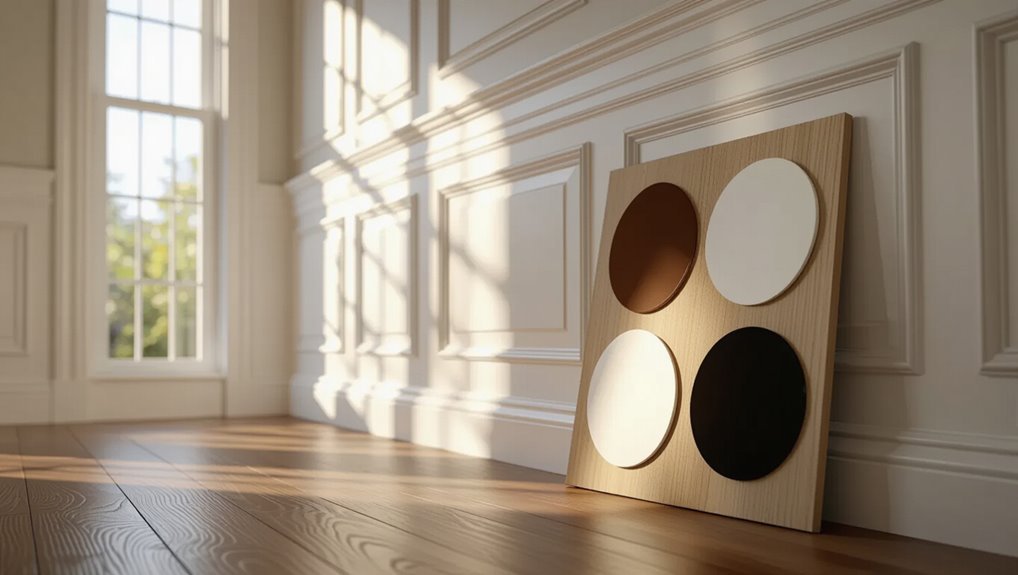
Good reference images make choosing a paint finish for your wainscoting much easier, so look for clear photos that show close-ups of sheen, lighting conditions, and different wall colors together.
Use before-and-after shots to judge durability and scuffs. Seek annotated examples noting finish type (eggshell, satin, semi-gloss), application tips, and cleaning results so you can match aesthetics and performance confidently.
