
Is Stain or Paint Better for Exterior Wood? A Straight Answer
If you want natural grain, easier spot upkeep, and a rustic look, pick stain; if you need a solid, long-lasting color, thicker moisture and UV protection, and a smooth finish for trim or high-exposure siding, pick paint. Stain soaks in and usually needs refreshes every few years; paint sits on the surface and can last a decade or more with proper prep. Keep your exposure, look, and maintenance willingness in mind—more details follow below.
Quick Answer Stain or Paint for Exterior Wood
Quick answer: stain preserves the wood’s natural look and lets grain show, while paint offers more color options and thicker surface protection.
Choose stain when you want a low-maintenance, natural finish or to emphasize wood texture.
Choose paint when you need uniform color, extra UV and moisture protection, or to cover imperfections.
One-sentence verdict
If you want long-lasting protection with low maintenance and a natural wood look, choose stain; if you prefer maximum color variety and the smoothest, most durable opaque finish, go with paint.
For most exterior wood projects, ask yourself: is stain or paint better for exterior wood?
Pick stain for texture and ease, paint for color control and full surface sealing.
When to choose stain vs when to choose paint
When do you pick stain over paint? Use stain when you want natural wood grain, easier maintenance, and breathable protection.
Choose paint when you need color uniformity, stronger UV and moisture barrier, or to cover blemishes.
- Stain: highlights grain, low maintenance.
- Paint: hides flaws, durable finish.
- Consider lifespan, style, and upkeep.
Understanding the Basics
You’ll first want to know that exterior wood stain soaks into the grain to protect and show the wood’s natural texture, while exterior paint forms a surface coating that hides grain but adds a uniform color.
They differ in composition—stains are thinner and pigment/lightfast oils or waterborne blends, paints have binders, pigments, and fillers that build a film.
Those differences affect appearance, longevity, and how you’ll maintain the wood.
What is exterior wood stain?
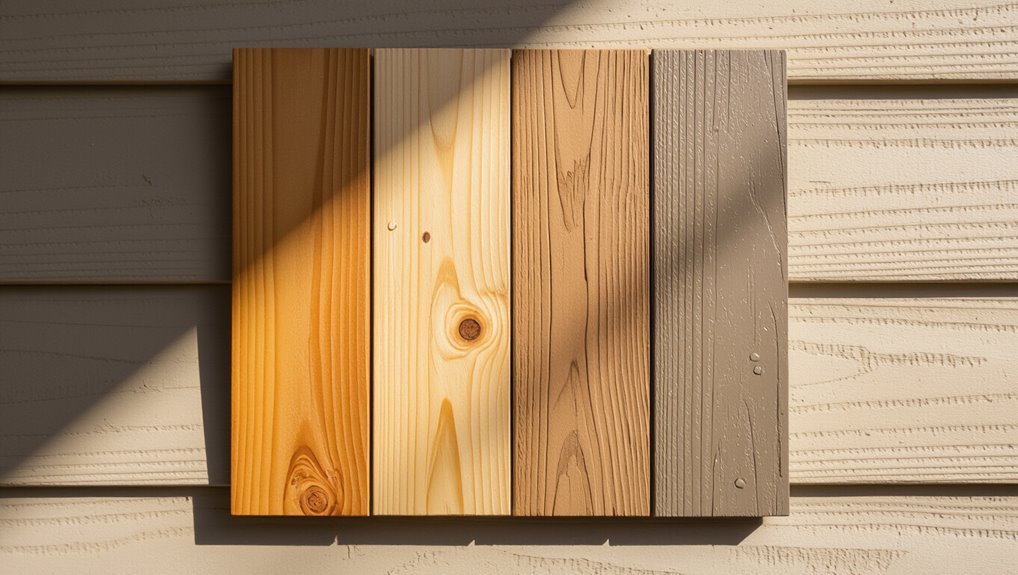
Think of exterior wood stain as a protective finish that soaks into timber rather than sitting on top like paint. You’ll get color and UV defense while preserving grain, with formulations ranging from transparent to solid.
Stains penetrate to repel moisture, reduce cracking and mildew, and require periodic reapplication. They won’t form a thick film, so maintenance and substrate condition guide longevity.
What is exterior paint?
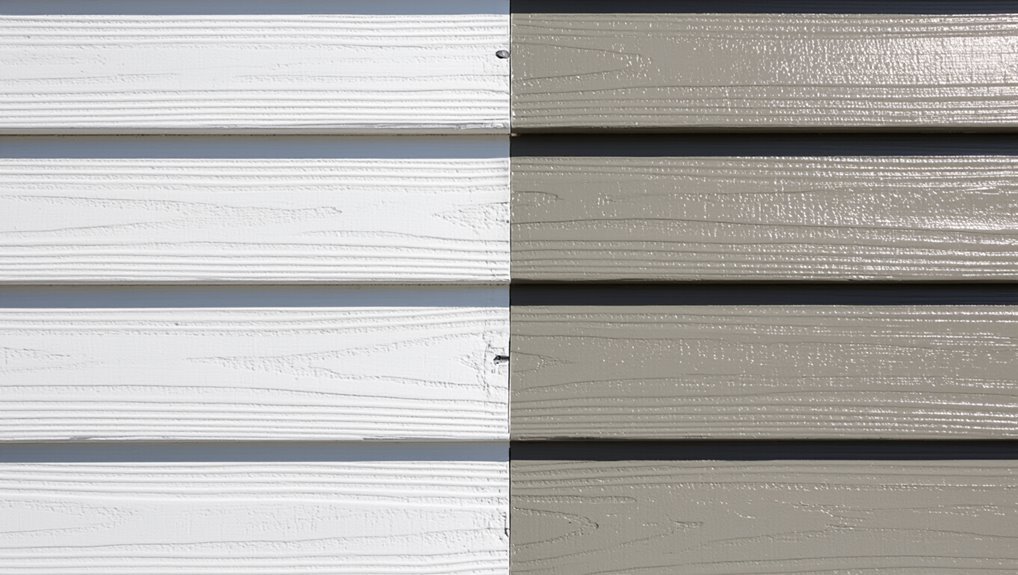
Paint is a durable coating that forms a continuous film on exterior wood, sealing the surface and hiding the grain while providing color and weather protection.
You’ll apply paint to protect wood from moisture, UV, and wear while achieving a uniform look.
It requires surface prep, primer on bare wood, and periodic repainting to maintain adhesion and appearance over time.
Key differences in composition and finish
Now that you know what exterior paint does, let’s compare how paint and stain differ in makeup and finish. You’ll see paint forms an opaque film, hiding grain and offering thicker protection. Stain penetrates, showing texture and requiring less scraping. Choose based on look and maintenance needs.
| Paint | Stain |
|---|---|
| Opaque film | Penetrates wood |
| Hides grain | Shows grain |
| Thicker barrier | Easier touch-ups |
Performance Comparison: Durability, Protection, and Maintenance
When you compare stain and paint, focus on how each handles weather, UV exposure, and moisture to keep wood sound.
Consider resistance to mold and how well the finish stands up to wear and abrasion over time.
Finally, weigh typical lifespans and how often you’ll need to recoat to keep the wood protected.
Weather resistance and UV protection
Because exterior coatings take the hardest hit from sun, rain, and temperature swings, you’ll want to weigh how each option shields wood from moisture and UV damage.
Paint forms a film that blocks sunlight and slows fading, needing periodic repainting.
Penetrating stains absorb into fibers, offering UV filtering but less surface barrier.
Choose based on desired appearance and maintenance frequency.
Moisture penetration and mold resistance
Sun and UV protection matter, but you’re also fighting water—how coatings handle moisture and mold determines long-term performance.
You’ll find paint forms a thicker barrier that blocks moisture and resists mildew if properly sealed and maintained.
Stain soaks in, shedding water less effectively and needing biocidal additives or frequent reapplication to prevent mold.
Choose based on exposure and maintenance willingness.
Wear and abrasion over time
Although both paint and stain protect wood, they do so in different ways that affect how they handle wear and abrasion over time.
You’ll find paint forms a thicker surface film that resists scratches and scuffs but can chip or peel under heavy impact.
Stain soaks in, hiding minor abrasion and wearing more evenly, though it offers less surface impact protection than paint.
Typical lifespan and recoat frequency
When you compare typical lifespans, paint and stain follow different schedules: a quality exterior paint job usually lasts 7–15 years before a full repaint is needed, while semi-transparent stains often require reapplication every 2–5 years and solid-color stains fall somewhere between stain and paint at about 5–7 years.
| Finish | Lifespan | Recoat |
|---|---|---|
| Paint | 7–15 yrs | 7–15 |
| Solid stain | 5–7 yrs | 5–7 |
| Semi‑transparent | 2–5 yrs | 2–5 |
Appearance and Aesthetics
Think about how color choices and fading will shape your home’s look over time, since paints offer a wider palette but stains age more naturally.
Consider whether you want the wood grain to show—stains enhance texture while paint hides it.
Match the finish to your home’s style and curb appeal to guarantee the result fits the architecture.
Color options and fading behavior
Curious how long that rich hue will last? You’ll find paint offers the widest palette and resists UV better, so colors stay truer longer, though chalking and peeling can occur.
Stain gives fewer solid shades but lets natural tones show and fades more evenly. Expect recoat frequency: stains sooner, paints less often—both depend on quality, exposure, and maintenance.
Grain visibility and texture effects
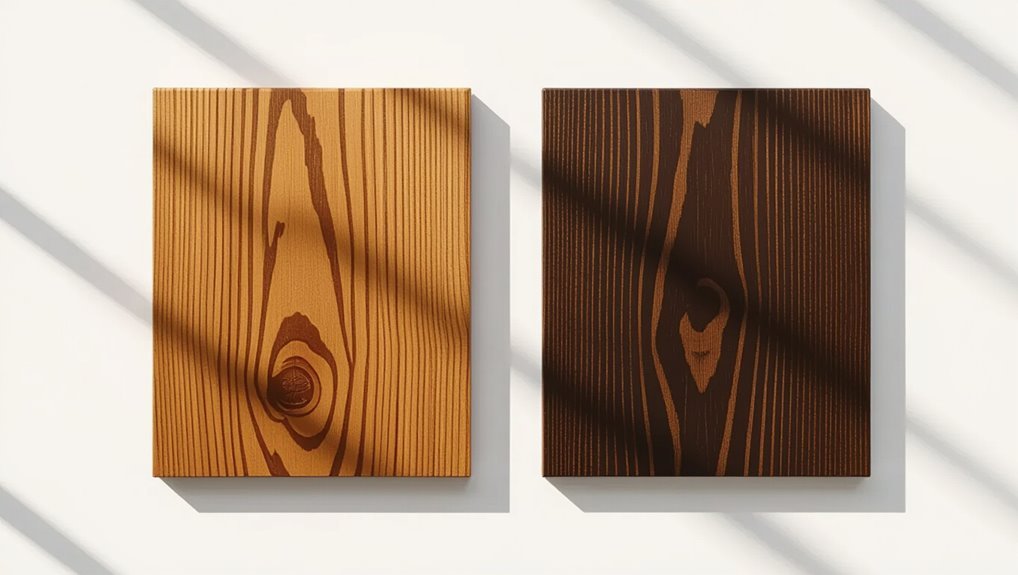
How visible do you want the wood’s grain and texture to be?
You’ll preserve natural patterns with translucent or clear stains that highlight knots and grain depth.
Semi-transparent stains soften contrast but keep texture tactile.
Opaque paint hides grain entirely, giving a smooth, uniform look.
Choose based on whether you want natural character or a clean, consistent surface appearance.
Suitability for architectural styles and curb appeal
Which look do you want to achieve for your home’s exterior: historic charm, modern minimalism, or something in between?
You’ll pick stain or paint based on style goals and curb appeal. Consider:
- Stain: highlights wood, suits Craftsman, rustic, historic homes.
- Paint: offers bold color, fits Victorian, colonial, contemporary designs.
- Hybrid: stained accents with painted trim for tailored contrast.
Surface Preparation and Application Requirements
Before you choose stain or paint, you’ll need to prepare the wood differently: staining usually requires cleaning, sanding, and thorough drying, while painting calls for priming, filling cracks, and sealing.
You’ll also want to pick the right application method—brush, roller, or sprayer—since stains penetrate while paints sit on the surface.
Proper prep and tools are what make either finish last.
Preparing wood for stain: cleaning, sanding, and drying
Start by thoroughly cleaning, sanding, and drying the wood so the stain can penetrate evenly and last longer.
- Remove dirt, mildew, and old loose finish with a mild cleaner and scrub.
- Sand with progressive grit to smooth fibers and open pores for absorption.
- Let wood dry completely (24–72 hours depending on species and weather) before staining to prevent blotching and poor adhesion.
Preparing wood for paint: priming, filling, and sealing
If you’ve prepped the wood for staining, you’ll find paint needs a different kind of attention: paint sits on the surface rather than soaking in, so you must prime, fill, and seal to get a smooth, durable finish.
- Clean and sand; remove loose fibers.
- Apply quality primer to block tannins and improve adhesion.
- Fill cracks, then seal with exterior-grade caulk or sealant before painting.
Application methods and tools for stain vs paint
Whether you’re staining or painting, the tools and techniques you choose determine how well the finish penetrates, adheres, and resists weather.
Stains soak in and need brushes, rollers, or sprayers that open the grain and work quickly, while paint sits on the surface and benefits from primers, high-quality brushes, rollers with the right nap, and careful back-brushing or tip-rolling to eliminate lap marks.
- Use appropriate applicator
- Follow temperature/humidity limits
- Maintain wet edges
Cost Comparison and Long-term Value
You’ll want to weigh upfront material and labor costs against how often coatings need redoing.
Consider long-term maintenance, repair or replacement cycles and what those expenses add up to over time.
Finally, think about return on investment and how your choice affects curb appeal and resale value.
Upfront material and labor costs
Because upfront costs often drive project choices, comparing stain and paint starts with materials and labor: stains generally cost less per gallon and soak into wood, so prep and application can be quicker.
In contrast, paint requires more primer, higher-quality brushes or sprayers, and often more labor for surface prep and multiple coats.
You’ll often pay less initially for stain; paint premiums cover durability and color options.
Long-term maintenance costs and replacement cycles
When you look beyond upfront prices, ongoing maintenance and replacement cycles determine the true cost of stain versus paint: stains typically need reapplication every 2–5 years depending on exposure and pigment, while high-quality exterior paint can last 7–15 years but often requires more intensive prep and occasional spot repairs in between.
You’ll spend less time redoing stain but more frequent touchups; paint saves reapplications yet raises prep and repair labor.
Return on investment and resale considerations
How will your choice between stain and paint affect your home’s resale appeal and long-term return on investment? You’ll weigh upfront cost, longevity, curb appeal, and buyer preferences. Paint can boost perceived value with classic looks; stain sells durability and low upkeep. Choose what matches neighborhood expectations and maintenance willingness to maximize ROI.
| Factor | Impact |
|---|---|
| Upfront cost | Paint higher |
| Maintenance | Stain lower |
| Curb appeal | Paint variable |
| Longevity | Stain often longer |
| Buyer preference | Market-dependent |
Best Use Cases and Wood Types
When you’re choosing between stain and paint, think about the job: stains work best on decks, fences, and natural sidings where you want grain and easy upkeep, while paint shines on trim, formal siding, and historic homes that need crisp color and protection.
Also consider the wood species and its condition—hardwoods and well-sealed boards can take stain beautifully, while soft or weathered wood may need paint or more prep to get a durable finish.
With those factors in mind, you can pick the finish that matches the piece’s use and longevity goals.
Best scenarios for choosing stain (decks, fences, sidings)
Pick stain for exterior wood where you want to highlight grain, allow the material to breathe, and simplify maintenance—think decks, fences, and many sidings.
You’ll prefer stain on weathered or textured species like cedar, redwood, and treated pine.
Stain soaks in, reduces peeling, and eases spot repairs.
Choose transparent, semi-transparent, or solid stains based on desired protection and visible grain.
Best scenarios for choosing paint (trim, siding, historic homes)
Although stain’s great for showing grain, paint is the better choice where color stability, uniform coverage, and maximum surface protection matter—think trim, smooth siding, and historic homes where you want crisp lines and faithful reproduction of period colors.
You’ll choose paint for window casings, decorative trim, porches, and clapboard that need durable, opaque coverage, easy color matching, and long-lasting protection against weather and UV.
How wood species and condition affect the choice
Because different woods absorb and weather differently, the species and condition of your exterior lumber will often dictate whether stain or paint works best.
You’ll consider grain, softness, and damage:
- Softwoods (pine, fir): stain soaks in, but primer plus paint hides knots.
- Hardwoods (cedar, redwood): natural stain highlights grain and resists rot.
- Weathered or damaged: repair then paint for a uniform finish.
Common Problems and Mistakes to Avoid
When you choose stain or paint for exterior wood, common mistakes like skipping proper preparation or using the wrong product can shorten the finish’s life.
You’ll also run into adhesion, peeling, and discoloration if you ignore moisture, old coatings, or incompatible primers and topcoats.
Next, we’ll cover how to spot these problems and the straightforward fixes to restore durable, attractive results.
Mistakes when staining exterior wood
If you rush preparation or skip steps, you’ll likely end up with a finish that peels, blisters, or looks uneven.
Don’t apply stain over dirty, wet, or mildewed wood. Avoid using the wrong oil vs. water-based product or overthinning.
Don’t coat new wood without testing absorption. Don’t leave laps by working in poor light or letting edges dry.
Follow dry-time and temp guidelines.
Mistakes when painting exterior wood
Just as poor prep ruins a stain, the same shortcuts wreck paint jobs—sometimes faster and more visibly.
You’ll mess up if you skip cleaning, sanding, or priming; paint over damp or milled wood; use wrong exterior formulas or cheap brushes; apply in extreme heat or cold; or ignore manufacturer recoat windows.
Those choices cause premature failure, uneven coverage, and wasted time and money.
How to recognize and fix adhesion, peeling, and discoloration issues
How can you tell a paint or stain job is failing, and what should you do about it? Check these signs and fix them fast:
- Peeling/flake: scrape, sand to sound wood, prime, repaint or restain.
- Poor adhesion: remove loose finish, clean, etch if needed, use compatible primer.
- Discoloration/mold: clean with detergent or mildew wash, dry, spot-treat, refinish.
Maintenance, Repair, and Recoating Strategies
You should set different upkeep routines for stained and painted wood—stain often needs a light refresh every 2–4 years while paint typically requires a full repaint every 5–10 years depending on exposure.
Inspect annually for peeling, chalking, or moisture damage and make small repairs promptly to extend the finish.
When refinishing, re-stain if the wood looks faded but intact, and repaint if the coating is failing, heavily peeling, or you want a color or opacity change.
Routine maintenance schedules for stained wood
Because stained wood weathers predictably, setting a simple, regular maintenance schedule will keep your exterior looking its best and extend the finish’s life.
Inspect annually for fading, mildew, or raised grain. Clean gently with a mild detergent or wood cleaner every 1–2 years.
Reapply a transparent or semi-transparent stain every 2–5 years depending on exposure, replacing any damaged boards as needed.
Routine maintenance schedules for painted wood
While painted wood can offer longer periods between full recoats than some stains, it still needs regular checks and timely touch-ups to stay sound and attractive.
Inspect annually for cracking, peeling, or blistering; address small defects immediately.
Clean surfaces every 1–2 years, remove mildew, and spot-prime exposed bare wood.
Plan full repainting every 5–10 years depending on exposure and paint quality.
How to refinish: when to re-stain vs when to repaint
When should you re-stain instead of repainting? You’ll choose re-staining when wood is sound, the old finish is a penetrating stain, and you want natural grain.
Repaint when paint is peeling, you need color change, or wood needs heavier protection.
- Re-stain: intact wood, visible grain, light wear
- Repaint: peeling, color change, heavy wear
- Prep: clean, sand, prime as needed
Environmental, Health, and Sustainability Considerations
Consider VOC levels when choosing between stain and paint, since low-VOC or water-based options reduce indoor and outdoor air impacts and are easier to handle.
Look for eco-friendly formulations and proper disposal methods to limit environmental harm and legal headaches.
Also weigh how each finish affects wood longevity—longer-lasting coatings can conserve resources by cutting the need for frequent refinishing.
VOCs, eco-friendly product options, and disposal
Because the chemicals in many paints and stains can off-gas for weeks, you should weigh VOC content and disposal requirements before you buy, not after.
Choose low-VOC or water-based formulations, look for Green Seal or VOC-compliant labels, and consider plant-based stains.
Store leftovers sealed, follow local hazardous-waste rules, and never pour solvents down drains—proper disposal keeps you, neighbors, and the environment safer.
Impact on wood longevity and resource use
Low-VOC choices and proper disposal cut indoor pollution, but they’re only part of the picture: the coating you pick also affects how long the wood lasts and how many resources you’ll use over time.
- Stain soaks in, reducing peeling and repaint cycles.
- Paint seals and can extend life but needs stripping/recoating.
- Maintenance frequency determines total material and energy use.
Decision Guide: How to Choose for Your Project
Use this quick checklist to weigh durability, look, maintenance, and budget so you can pick stain or paint with confidence.
Ask your contractor or supplier about surface prep, product lifespan, and warranty to avoid surprises.
Then compare a few example scenarios—like a high-traffic porch vs. a decorative trim—to see which option fits your project.
Quick checklist to decide between stain and paint
Need a quick way to choose? Use this checklist to decide fast:
- Assess exposure: pick paint for high weather exposure, stain for moderate protection and wood grain.
- Desired look: choose stain to show grain, paint for full color change.
- Maintenance willingness: paint needs more upkeep; stain often requires simpler reapplication.
Follow these, and you’ll pick the right finish for your exterior wood.
Questions to ask your contractor or supplier
What should you ask your contractor or supplier before they start work?
Ask which finish they recommend and why, expected lifespan, maintenance needs, and warranty details.
Confirm surface preparation, products and brands, application method, number of coats, and drying times.
Request references or photos of similar jobs, a written estimate, and a clear timeline.
Clarify cleanup and touch-up policies.
Example decision scenarios (case-based)
Now that you’ve got the right questions to ask a contractor or supplier, let’s look at concrete decision scenarios that show how those answers guide a choice between stain and paint.
- Historic trim: you want authenticity and will refinish often — choose stain.
- High-traffic siding: you need color uniformity and years between coats — choose paint.
- Sun-exposed deck: prioritize UV resistance and easy refresh — choose semi-transparent stain.
FAQ
You’ll want quick answers to common concerns like whether you can stain over paint or paint over stain and which finish holds up better on horizontal versus vertical surfaces.
We’ll cover which option stands up to harsh climates, how often decks, fences, and siding need attention, and whether hybrid stain-sealer or translucent paint products exist.
If you’ve got a specific surface or climate in mind, ask and I’ll tailor the answers.
Can you stain over paint or paint over stain?
Curious whether you can stain over paint or paint over stain?
You can paint over dried stain if you properly clean, sand, and prime to guarantee adhesion.
Staining over paint is trickier—stain needs raw wood to penetrate, so you’d have to strip or sand to expose wood.
Test a small area first and choose compatible products for best results.
Which lasts longer on horizontal vs vertical surfaces?
How long a finish lasts depends a lot on whether the surface is horizontal or vertical—horizontal surfaces get far more sun, water pooling, and foot traffic, so finishes break down faster.
You’ll find paint can chip and peel sooner on decks and rail tops, while penetrating stains wear from abrasion but hide wear better.
On vertical siding, both last longer; maintenance intervals stretch out.
Is one option better for harsh climates?
If your project faces a harsh climate—think intense sun, heavy rain, frequent freeze-thaw cycles, or salty coastal air—you’ll want to pick a finish that stands up to those specific stresses.
Solid-color paint gives the best barrier against UV and moisture but can crack on movement.
High-quality penetrating stain with water repellents works well on porous wood and flexes with expansion, needing more frequent reapplication.
How often will my deck/fence/siding need attention?
Wondering how often your deck, fence, or siding will need attention? Expect maintenance every 1–5 years depending on finish, exposure, and wood type.
Stains generally need refreshes sooner—often every 1–3 years for high-traffic decks, 2–4 for fences.
Paint can last 4–7 years but may chip or peel sooner if moisture or sun damage occurs.
Inspect yearly and touch up as needed.
Are there hybrid products (stain + sealer/paint with translucent options)?
You’ve already seen how maintenance frequency varies by finish and exposure, and that makes hybrid products worth considering.
You can buy stain-sealer blends and translucent paint-like coatings that add pigment while sealing. They offer UV protection and water repellency with less film-build than opaque paint.
Expect easier touch-ups and moderate durability; longevity depends on formulation, application, and sun/moisture exposure.
