
Best Paints for Covering Dark Walls in One or Two Coats
You can cover dark walls in one or two coats by choosing high-hide, high-build 100% acrylic or hybrid paints labeled “one-coat” and pairing them with a quality primer for stained or bare surfaces. Use dense foam or microfiber rollers (or a one-coat sprayer) and flatter sheens like matte or eggshell to mask old tones. Prep surfaces well and consider high-coverage extenders for opacity. Keep going and you’ll learn specific products, tools, and techniques to guarantee success.
Quick Answer: Best Paints to Hide Dark Walls in 1–2 Coats
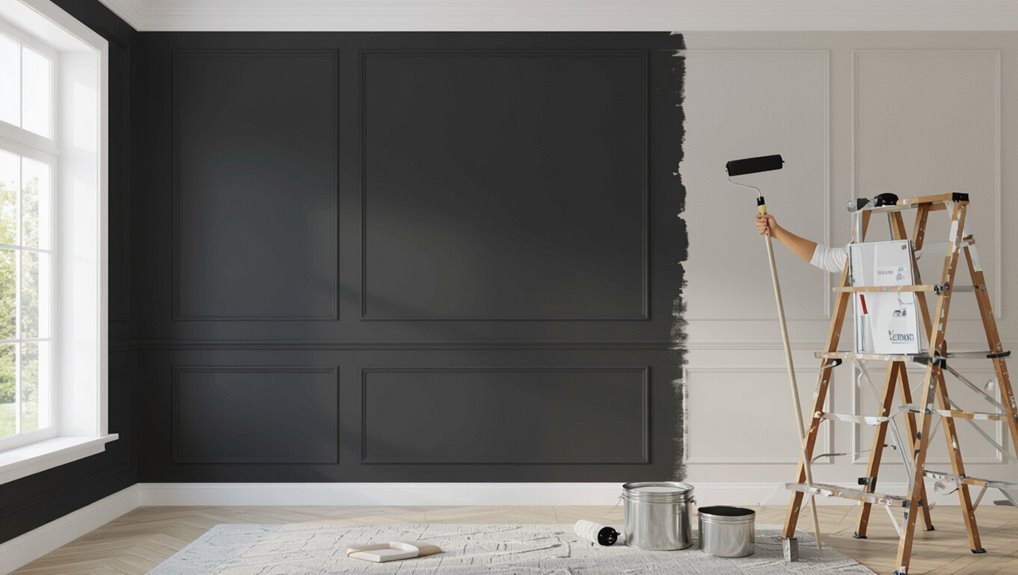
If you need to cover dark walls quickly, pick high-hide, high-build paints—specifically 100% acrylic or hybrid primers and full‑coverage paints labeled “high hide” or “one‑coat.”
You’ll choose products marketed for dark wall solutions, test a small area, and use paint application techniques like thick nap rollers and back-rolling to guarantee even coverage.
Let coats dry fully before evaluating finish.
Why One- or Two-Coat Coverage Matters
When a paint covers in one or two coats, you’ll finish the job much faster and with less effort.
That speed also cuts down on drying time and the chance of visible overlap marks.
Plus, strong coverage keeps the color even so your dark wall looks consistent from every angle.
Coverage Speed Advantages
Because darker shades often need more pigment to hide previous colors, choosing a paint that delivers one- or two-coat coverage saves you time and prevents patchiness. You’ll finish faster, reduce drying waits, and cut labor. Use coverage techniques and smart application strategies to speed up work while keeping quality.
| Speed | Ease | Efficiency |
|---|---|---|
| High | Low effort | Fewer coats |
Color Consistency Benefits
Along with saving time, one- or two-coat coverage keeps your dark walls looking uniform from every angle.
You’ll get reliable color accuracy so tones don’t shift with lighting or brush marks. Fewer coats mean you reduce lap lines and patchy sheen, improving coverage uniformity across surfaces.
That consistency helps final results match swatches and expectations without extra touch-ups.
How High-Hide Paint Hides Dark Colors
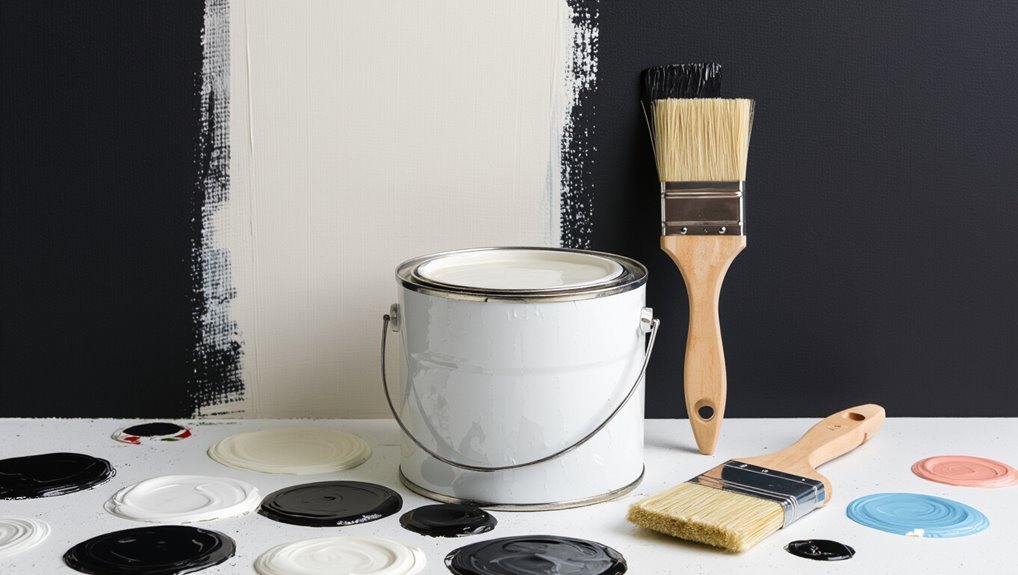
If you’ve ever tried covering a deep navy or rich charcoal, you know a single coat of regular paint usually won’t cut it; high-hide paints work by packing more and larger hiding pigments and opaque fillers into each coat, so they block the old color rather than letting it show through.
You’ll find color theory informs pigment choices, while modern paint technology adjusts binder and opacity for efficient coverage.
Which Finishes Hide Old Colors Best
When you’re covering an old color, matte and eggshell finishes behave differently—matte hides flaws and previous hues better, while eggshell gives a bit more sheen and washability.
Don’t skip primer; it evens absorption and boosts coverage so paint needs fewer coats.
Also consider pigment concentration: higher-pigment paints cover dark tones more effectively than low-pigment formulas.
Matte Vs. Eggshell
Although both matte and eggshell finishes can conceal previous hues, matte paint generally does a better job of masking stubborn stains, patchwork, and darker underlying colors because it absorbs light instead of reflecting it.
You’ll find a matte finish hides flaws; an eggshell finish gives subtle sheen. Choose based on mood and traffic.
- Relief: imperfections disappear
- Confidence: walls feel renewed
- Calm: soft, even look
Primer Versus Paint
Because paint can only cover so much, you’ll usually need a primer to block out deep or dark underlying colors—primers seal stains, improve adhesion, and prevent bleed-through so a single topcoat looks true to shade.
You’ll choose primer benefits over extra coats when hiding strong pigments; select primer based on surface and then match paint types (high-hide latex or oil) for best coverage and durability.
Pigment Concentration Effects
If you want dark or stubborn colors to disappear beneath a new coat, pay attention to pigment concentration and finish: higher pigment load and flatter sheens hide underlying colors best.
You’ll choose paints with strong pigment concentration and high paint opacity so fewer coats cover. Flat and eggshell minimize shine that betrays old hues; satin and gloss may need primer.
- Relief: calm confidence
- Surprise: instant transformation
- Pride: room reborn
Pigments vs. Binders: What Drives Coverage
When you’re choosing paint for dark walls, remember that pigments and binders play distinct roles: pigments provide the color and hiding power, while binders glue those pigments to the surface and determine film strength, sheen, and durability.
You’ll assess pigment types for opacity and lightfastness, and consider binder roles for adhesion, flexibility, and buildup; both determine how many coats you’ll need.
Tint Bases and Their Effect on Hiding Power
Although tint bases look like a simple starting point, they strongly affect how many coats you’ll need and how well a dark color hides the old surface. Lighter bases need more pigment to reach opacity, while deeper bases allow richer, more opaque results with fewer coats.
Tint bases may seem simple, but they determine coverage: lighter bases need more coats, deeper ones hide better.
You’ll choose base types by tint strength and planned opacity.
- Excitement at quick coverage
- Relief from fewer coats
- Confidence in final depth
When You Can Skip Primer (And When You Can’t)
If your walls are already a similar dark shade and are clean with no stains, you can often skip primer and go straight to paint.
You’ll need primer when covering lighter colors, repairing drywall, or blocking stains and tannins to get true, even coverage.
Knowing when primer’s essential saves time and prevents costly rework.
When Primer Is Optional
Because dark paints can be so forgiving with coverage, you can skip primer in some straightforward situations—like repainting a similar deep color or covering minor imperfections on a clean, previously painted surface.
You’ll save time using primer alternatives and smart dark wall techniques when adhesion is good and stains aren’t present.
- Relief: quicker refresh, less mess
- Confidence: bold color, minimal fuss
- Joy: room transforms fast
When Primer Is Essential
When you’re covering bare drywall, repairing water stains, or switching from a light shade to a deep, saturated color, you’ll want primer—it’s the step that guarantees adhesion, hides flaws, and prevents bleed-through so your dark paint looks even and lasts.
Use stain-blocking or high-build primer types for knots, smoke, or tannin bleed.
Skip primer only with quality primer alternatives or self-priming paints on sound surfaces.
How to Test Paint Coverage Before You Buy
Wondering how a paint will cover your dark walls before you commit to a whole can? You’ll try paint testing methods and simple coverage comparison techniques: brush a small swatch, wait to dry, and compare coats.
This lets you judge opacity, sheen, and true color so you won’t be surprised by patchiness or extra coats.
- Relief at a confident choice
- Pride in a smart test
- Joy in a perfect finish
Tools and Rollers That Improve Single-Coat Coverage
When you want better single-coat coverage on dark walls, choosing the right tools matters.
Use high-nap roller covers to hold more paint and reach textured surfaces evenly.
Pair them with high-coverage paint extenders to improve leveling and hide through one pass.
High-Nap Roller Covers
A high-nap roller cover can cut your work time and boost coverage on dark walls by holding more paint and smoothing texture irregularities in a single pass.
You’ll notice high nap roller benefits immediately if you use proper application techniques: load evenly, maintain a W pattern, and finish with light cross-rolling for uniformity.
- Joy at fast progress
- Relief from fewer touch-ups
- Pride in flawless results
High-Coverage Paint Extenders
If you want dark walls to cover in one coat, reach for high-coverage paint extenders—additives and specialty rollers that boost opacity and flow so your paint lays down thicker and more evenly.
You’ll use paint additives and high coverage formulations to improve leveling, reduce spatter, and fill minor texture.
Choose a dense foam or microfibre roller and mix extenders per label for best single-coat results.
Application Tips to Maximize Hide in 1–2 Coats
Because dark pigments demand more coverage, you’ll want to focus on surface prep, the right tools, and application rhythm to hit full hide in one or two coats.
Use precise application techniques and proper roller selection: load evenly, maintain a wet edge, and apply consistent pressure.
- Feel confident as color transforms
- Experience smooth, even coverage fast
- Enjoy fewer touch-ups and less stress
Surface Prep: What to Fix Before Painting
Before you paint, tackle any surface issues that will show through dark colors: fill holes and cracks, sand glossy spots, and wash away dirt or grease so the primer and paint can bond properly.
Inspect for surface imperfections and perform necessary wall repairs—patch, sand, and prime repaired areas.
Smooth, clean surfaces help your chosen paint hide evenly and cut down on coats needed.
Dealing With Stains and Bleed-Through on Dark Walls
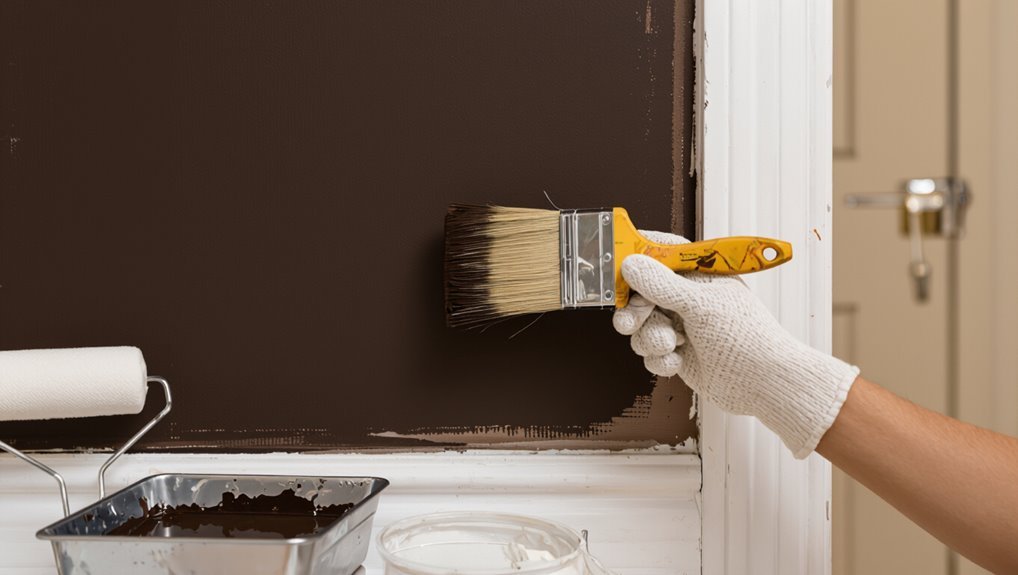
When stains or tannin bleed-through show up on dark walls, you’ll need targeted products and steps to stop discoloration from ruining your finish. Ordinary primer often won’t block deep-set stains, so use a stain-blocking sealer or a shellac-based primer on affected areas.
Tackle tannin bleed-through with a shellac-based stain blocker, then feather in primer for an even, lasting repaint.
Let it cure fully, and then feather in regular primer before repainting to guarantee an even, long-lasting result.
- Frustration eased
- Confidence restored
- Pride in finish
Use proper stain removal and bleed-through prevention techniques to secure a flawless repaint.
Color Choices That Minimize Coats Needed
Choose pigment-rich base colors to get stronger coverage with fewer coats, since deep, concentrated pigments hide previous layers better.
If you want accents, pick high-contrast options sparingly so they don’t need multiple touch-ups to pop against the dark base.
With those two strategies you’ll cut down on coats and speed up the whole project.
Pigment-Rich Base Colors
If you want dark walls to cover quickly and evenly, start with pigment-rich base colors designed to deliver deep, saturated tones without multiple coats.
You’ll prioritize pigment density and color saturation, so a single pass hides darkness and boosts depth. Choose formulations that promise coverage and durability; they streamline work and reassure you of rich, lasting results.
- Embrace warmth that comforts.
- Choose depth that empowers.
- Opt for hues that inspire.
High-Contrast Accent Options
Pairing dark walls with high-contrast accents lets you get bold results with fewer coats, so pick colors with strong opacity and clean undertones that layer quickly over deep bases.
You’ll choose high contrast colors like crisp whites, warm creams, or saturated jewel tones as a bold accent.
Test swatches, favor paints labeled high-hide, and use a quality brush or roller for even, one- or two-coat coverage.
Fast Real-World Test: Comparing 5 Paints on a Dark Wall
Curious how these top contenders actually perform on a true dark wall? You’ll test five paints side-by-side, noting coverage, drying, and smell while considering paint formulas and color theories.
You’ll see which cover in one coat, which need two, and which hide bleed-through stubbornly.
- Relief when a single coat works
- Frustration at patchy blends
- Delight with smooth, opaque finish
Top Budget Paints That Can Hide Dark Walls
Budget-friendly paints can still block dark colors without forcing you into a primer-first marathon; you’ll want formulas labeled “high-hide” or “one-coat coverage” and a thicker pigment load to mask deep tones quickly.
Best Mid-Range Paints for One- or Two-Coat Coverage
When you want reliable coverage without splurging, mid-range paints give the best balance of tint strength and value; they’re formulated to deliver one- or two-coat coverage on dark walls so you spend less time repainting and more time enjoying the result.
You’ll find mid-range options from trusted paint brands that blend hide, durability, and color accuracy.
- Relief: a quick, clean finish
- Confidence: consistent coverage
- Pride: room transformed fast
Premium Paints That Reliably Hide Dark Colors
When you’re covering dark walls with premium paint, look for high-hide formulations that mask old color without multiple coats.
You’ll want products labeled for one-coat coverage that deliver dense, even pigment.
Picking paints with durable pigment density saves time and keeps your finish true over years.
High Hide Formulations
Coverage matters most when you’re covering a deep, saturated color, and high-hide formulations are engineered to do just that.
You’ll appreciate the high hide formulation benefits: denser pigments, better opacity, and smoother application so you can trust fewer coats. These paints cut time, frustration, and guesswork.
- Relief when dark tones vanish
- Confidence in consistent results
- Pride in a flawless finish
One-Coat Coverage
One coat can be enough—if you pick a premium paint formulated for one-coat coverage, you’ll save time and avoid the patchy, uneven look that dark colors often reveal.
Choose brands with proven paint opacity and follow proper application techniques: roll in a W pattern, maintain a wet edge, and use quality brushes for trim.
That combo delivers uniform coverage and minimizes touch-ups.
Durable Pigment Density
If you want dark walls that stay rich and even over years, look for paints with high pigment density—these premium formulas pack more color particles per gallon so they mask previous shades and resist fading.
You’ll appreciate superior pigment formulation and deep color saturation that cover in fewer coats and stay true.
- Revel in instant transformation.
- Feel confident and calm.
- Treasure lasting beauty.
Best Paints for High-Traffic Rooms and Durability
Because high-traffic rooms see constant contact, scuffs, and frequent cleaning, you’ll want paints that stand up to wear and still keep a rich, dark finish.
Choose premium latex or acrylic blends proven in durability testing for high traffic applications. Look for scrubbable, stain-resistant formulas with washable sheens like satin or semi-gloss.
They’ll resist abrasion, hide scuffs, and simplify maintenance.
Low-VOC and Eco-Friendly Paints That Still Hide Well
Durable, washable paints are great for busy rooms, but you don’t have to sacrifice air quality or the environment to get strong coverage on dark walls.
You can choose eco friendly options and low voc formulations that still block deep pigments, dry evenly, and keep odors low so your space feels fresh as soon as you finish.
- Relief when paint doesn’t overpower your home
- Pride in greener choices
- Calm knowing coverage is reliable
Paint-and-Primer-in-One: Which Products Actually Work
A few paint-and-primer-in-one formulas really do the heavy lifting on dark walls, letting you skip a separate primer for many projects and save time without sacrificing hide.
You’ll want to prioritize paint quality and test small patches, since sheen and surface texture affect coverage.
For best results, choose eggshell or flat sheens on smooth surfaces, and plan a touch-up coat if texture absorbs more paint.
Brands With the Most Consistent Tinting and Opacity
When you need predictable results on dark walls, pick brands known for consistent tinting and strong opacity—these manufacturers mix color accurately across batches and use higher-loading pigments so you won’t chase shade variations or need extra coats.
You’ll appreciate reliable tint accuracy and high opacity levels that cut work and stress.
- Relief when the first coat covers
- Confidence in true color
- Calm during touch-ups
Cost Per Sq Ft: Fastest and Most Economical Options
Consistent tinting and high opacity save time, but you’ll also want to know how much you’re paying per square foot so you can balance speed with budget.
Do a cost comparison of premium high-hide options versus economy paints: factor coverage, labor, and primer needs.
For clear budget planning, calculate total square footage, coats required, and choose the paint that minimizes total cost and time.
Common Mistakes That Force Extra Coats
If you skip proper surface prep or use the wrong primer, you’ll almost always end up brushing on extra coats to hide flaws or uneven absorption.
You must control paint application, drying times, and layer thickness. These common pitfalls waste time and money and sap your patience.
- Frustration at streaks and patchy coverage
- Anxiety over wasted paint and effort
- Regret for rushed prepping
When to Call a Pro for Repainting Dark Walls
Those extra coats and endless touch-ups can make you rethink handling the whole job yourself, so it helps to know when calling a pro will save time and money.
Look for signs for professionals: visible stains, heavy texture, or stubborn dark pigments.
If coverage remains uneven after proper priming, that’s when to hire—save frustration, guarantee even finish, and protect surfaces.
Quick Buying Checklist: Pick Paint for 1–2 Coat Coverage
Pick paints that promise high hide and smooth application so you can finish dark walls in one or two coats; look for labels like “one-coat coverage” or “high-hiding” and check for high pigment load in product specs.
Consider paint finish options and color theory basics when choosing sheen and undertone.
- Feel confident with bold choices
- Skip endless retouching frustration
- Save time and energy
Frequently Asked Questions
Will Paint Color Temperature Affect Hide on Dark Walls?
Yes — color temperature affects hide on dark walls: you’ll notice warm or cool hues interact differently due to color theory, and paint formulation (pigment strength, opacity, binder) determines how well the temperature masks underlying darkness.
Do Primers Alter Sheen or Finish Appearance?
About 60% of pros say primers can slightly change final sheen, so you’ll notice primer types affect sheen variations; you’ll want compatible primers because they can mute or enhance gloss, and you’ll test before full application.
Can Colored Primers Outperform Gray/White Primers?
Yes—you’ll often find colored primer benefits beat gray/white primers for dark wall coverage, because they neutralize deep hues, reduce coats needed, improve color fidelity, and cut repaint time, especially with strong contrast or saturated colors.
How Long Should I Wait Between Coats in Humid Climates?
You should wait longer between coats in humid climates—typically 24 to 48 hours—because drying times slow; humidity effects extend tackiness and absorption, so you’ll guarantee proper adhesion and finish by letting paint fully dry before recoating.
Does Application Temperature Change Hiding Performance?
Yes — temperature effects matter: if it’s too cold or hot, paint’s hiding drops and drying’s altered. You should adjust application techniques, slow drying in heat, avoid low temps, and apply consistent thin, overlapping coats.
