
What Paint to Use on Exterior Metal for Long-Lasting Protection
For long-lasting protection on exterior metal you’ll use a three-step system: a metal-specific primer, a durable topcoat, and an optional clear sealer for extra UV and chemical resistance. Match products to metal type—epoxy/urethane or zinc-rich primers for steel, etch or adhesion primers for aluminum, and zinc-etch or cold-gal primers for galvanized surfaces—and choose oil-based enamel for toughness or waterborne acrylic for flexibility and fast drying. Follow careful prep and you’ll avoid common failures; keep going to get the full how-to.
Best Paint Systems for Exterior Metal : Quick Recommendation
For most exterior metal projects you’ll want a three-step system: a compatible primer, a high-quality topcoat formulated for metal, and an optional clear sealer for extra UV and chemical resistance.
You’ll pick primers by adhesion and corrosion protection, choose topcoats by color selection and weatherproofing, and decide finish types—matte, satin, gloss—based on durability, maintenance, and aesthetic goals.
How Metal Type (Steel, Aluminum, Galvanized, Wrought Iron) Changes the Choice
Different metals demand different paint choices because their surface chemistry and corrosion risks vary—steel rusts, aluminum oxidizes to a dull film, galvanized steel has a zinc coating that resists some primers, and wrought iron needs rust-inhibiting prep.
You’ll choose coatings and primers tailored to metal corrosion tendencies: epoxy/urethane for steel, adhesion-promoting primers for aluminum, specialized zinc-etch or cold-gal primers for galvanized, and rust-converting primers plus durable finishing techniques for wrought iron.
Surface Prep for Metal: Cleaning, Rust Removal, and Profile for Adhesion
When you’re prepping metal for paint, thorough cleaning and establishing the right surface profile are non-negotiable because paint only sticks to a clean, mechanically keyed substrate; remove oils, dirt, and loose corrosion, and create a slight texture so primers can bite.
Use degreasing, wire brushing, or power tools to remove surface contaminants and rust. Finish with solvent wipe and adhesion testing before coating.
Primers for Bare Steel, Galvanized Metal, and Aluminum (What to Use)
Although each metal needs a primer tailored to its chemistry and coating goals, you should always choose primers that chemically bond to the substrate and block corrosion.
For bare steel use zinc-rich or epoxy primers; for galvanized metal pick a specialized etch or acrylic adhesion primer; for aluminum select etch primers or conversion coatings.
Confirm metal compatibility before primer application and follow dry-times for lasting protection.
Oil-Based Enamel vs Waterborne Acrylic: When to Choose Which
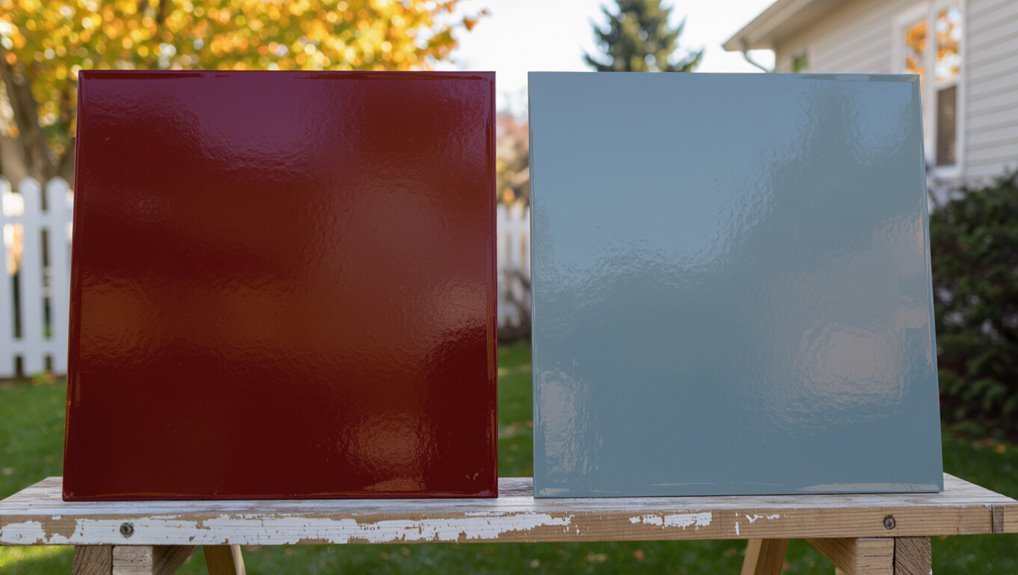
After you’ve picked the right primer for your metal, choosing the topcoat becomes the next big decision: oil-based enamel or waterborne acrylic.
You’ll pick oil-based enamel for hard, glossy surfaces and long wear where oil based benefits like toughness and chemical resistance matter.
Choose waterborne acrylic when you need quick dry times, easier cleanup, and acrylic flexibility for thermal movement and adhesion.
When to Use Epoxy Primers and Coatings Outdoors
If you need exceptional corrosion resistance and a tough, impermeable barrier on outdoor metal, epoxy primers and coatings are the go-to choice; they bond well to bare or properly prepared steel and resist moisture, salts, and solvents that would quickly degrade lesser products.
Use epoxies when you want epoxy advantages and proven outdoor durability:
- Structural steel and welds
- Marine hardware and bridges
- High-abrasion, salt-exposed areas
Polyurethane & Aliphatic Topcoats: UV, Gloss, and Durability Benefits
When you top exterior metal with polyurethane or aliphatic coatings, you get strong UV resistance that helps prevent chalking and color fade.
These topcoats also hold their gloss longer than many alternatives, keeping surfaces looking newer for years.
That combination means less frequent repainting and better long-term protection for your metal.
UV Resistance Benefits
Sunlight deals a steady dose of UV that breaks down conventional paints, but polyurethane and aliphatic topcoats are formulated to resist that damage, keeping color and gloss longer.
You get clear UV protection and enhanced paint longevity when you choose them.
Consider benefits:
- Shields pigments from fading.
- Prevents binder breakdown.
- Reduces maintenance frequency, saving time and cost.
Long-Lasting Gloss
Because exterior metal faces constant weathering, choosing polyurethane or aliphatic topcoats keeps your finish glossy and true for years.
You’ll get a long lasting sheen that resists UV fade, chalking, and abrasion. Apply per manufacturer instructions, guarantee proper curing, and use gentle cleaning.
For longevity, inspect annually, touch up chips promptly, and follow simple maintenance tips to preserve appearance and protection.
Coatings for Coastal and High-Humidity Environments
When you’re painting metal near the coast or in humid climates, choose marine-grade protective primers to block moisture and salt from reaching bare metal.
Follow with corrosion-resistant topcoats designed for constant exposure, and pick finishes that maintain adhesion under salt spray.
Plan regular maintenance coatings after inspections to replace worn zones before corrosion spreads.
Marine-Grade Protective Primers
If you work or live near salt air or persistent humidity, marine-grade protective primers are what you reach for to stop corrosion before it starts. They suit marine grade applications and account for environmental considerations.
You’ll select primers that bond to metal, resist salt, and dry reliably.
Consider:
- Surface prep
- Primer compatibility
- Application method and cure time
Corrosion-Resistant Topcoats
Though salt-laden air attacks metal relentlessly, you can protect surfaces with corrosion-resistant topcoats formulated for coastal and high-humidity environments. You’ll choose durable polymers, UV-stable pigments, and disciplined topcoat application to maximize corrosion resistance and longevity.
| Feature | Benefit |
|---|---|
| Epoxy/Polyurethane | Tough barrier |
| UV Stabilizers | Color retention |
| Flexible Film | Crack prevention |
| Fast Cure | Quick service |
Salt Spray Maintenance Coatings
Because coastal air carries salt that accelerates rust, you’ll need maintenance coatings specifically designed to fend off constant salt spray and humidity.
You should choose products meeting marine-grade standards, apply corrosion-inhibiting primers, and schedule inspections.
Recommended steps:
- Clean and remove salt deposits regularly.
- Use epoxy or polyurethane maintenance coatings.
- Touch up chips immediately to prevent undercutting by salt spray.
Color, Sheen, and Heat Absorption: Effects on Longevity
When you pick a color and sheen for exterior metal, you’re shaping how the surface handles sunlight, heat, and wear over time.
Choosing color and sheen for exterior metal steers sunlight, heat, and long-term wear on the surface.
You’ll use color psychology to balance aesthetics and thermal behavior—lighter hues reflect heat, darker absorb it.
Consider sheen impact: gloss sheds water and resists dirt, matte hides imperfections but may retain grime.
Choose based on climate and maintenance.
Step-by-Step Painting Process for Outdoor Metal
Start by planning the job and gathering the right tools so you won’t be interrupted midway: you’ll need cleaners and rust removers, sandpaper or a wire brush, primer formulated for metal, exterior-grade paint, brushes/rollers or a sprayer, masking tape, drop cloths, and proper PPE.
Clean, remove rust, sand.
Prime, paint with proper brush techniques; mind weather considerations.
- Prep
- Prime
- Paint
Costs & Lifespan: DIY vs Professional Coating Systems
If you’re weighing DIY painting against hiring a pro, cost and expected lifespan are the two biggest trade-offs to contemplate: You’ll balance DIY Cost savings against Professional Benefits like warranties and longer-lasting systems. Choose DIY for lower upfront expense; pick pros for durability.
| Option | Upfront Cost | Expected Lifespan |
|---|---|---|
| DIY | Low | 3–7 yrs |
| Pro | High | 10–20 yrs |
Common Problems (Peeling, Rust Bleed, Chalking) and How to Fix Them
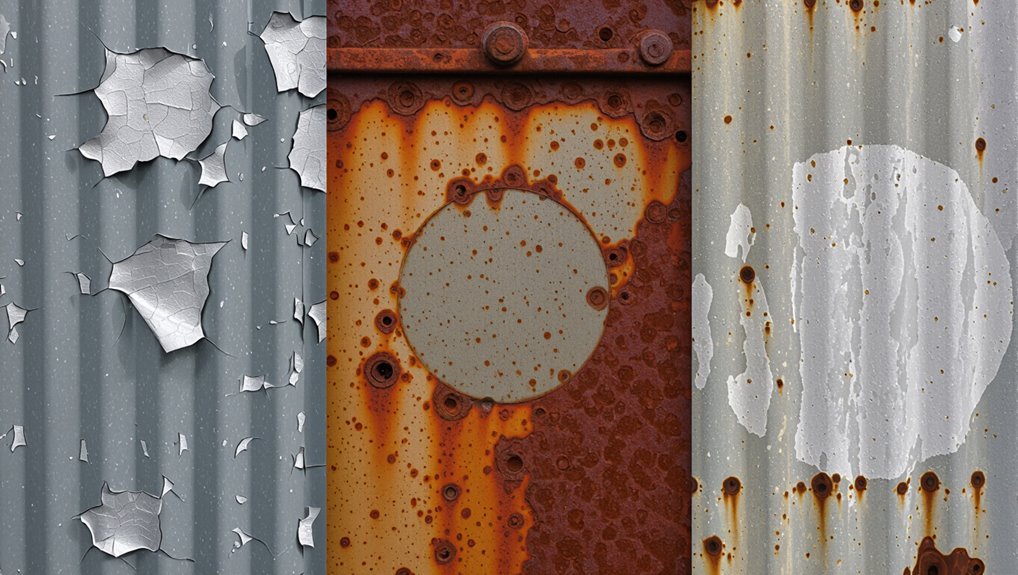
Choosing between DIY and professional coating systems also means you’ll face different maintenance and failure risks.
You should inspect and act fast: proper surface preparation stops peeling solutions and enables rust prevention.
Follow this focused repair checklist:
- Remove loose paint, sand to bare metal.
- Treat rust, use rust-inhibiting primer.
- Apply durable topcoat and address chalking remedies with regular washes.
Quick Buying Checklist: Paints, Primers, Tools, and PPE
Before you start, check compatible paint and primer types for metal—look for rust-inhibiting primers and coatings rated for exterior metal.
Gather essential tools like brushes, rollers, sandpaper, a wire brush, and a reliable respirator, plus gloves and eye protection.
With the right materials and PPE on hand, you’ll save time and avoid common mistakes.
Paint And Primer Types
Paint and primer types determine how well your exterior metal job resists corrosion, sticks to the surface, and holds color over time.
You’ll choose primers (etching, zinc, or epoxy) and paints (acrylic, alkyd, or polyurethane) based on substrate and exposure, considering paint finishes and application techniques.
Prioritize adhesion, flexibility, and rust inhibition.
- Primer choice
- Paint chemistry
- Finish durability
Essential Tools And PPE
A compact checklist will save you time and prevent costly mistakes when prepping for an exterior metal job.
Gather rust converter, metal primer, exterior metal paint, brushes, rollers, and a sprayer suited to your paint application.
Include sandpaper, wire brush, drop cloths, and solvent.
For PPE, buy respirator masks, chemical-resistant gloves, eye protection, and coveralls—follow safety precautions at every step.
Frequently Asked Questions
Can I Spray-Paint Metal With Regular Interior Paint in a Pinch?
You can, but you shouldn’t: spray paint with interior paint in a pinch will stick temporarily, but it won’t resist weather, rust, or abrasion. You’ll need proper metal primer and outdoor-rated spray paint soon after.
How Soon After Painting Can Metal Be Exposed to Rain?
Like a race against the clock, you shouldn’t expose painted metal to rain until it’s fully cured; check drying times for your product and local weather conditions—usually 24–72 hours for dry touch, weeks for full cure depending on conditions.
Are Rust Converters Safe Over Old Lead-Based Coatings?
You can use rust converters over old lead-based coatings cautiously; they’re effective at stabilizing rust but won’t remove lead hazards. You’ll need lead paint safety measures—testing, containment, and PPE—because converters don’t eliminate lead risks.
Can I Paint Hot Metal Surfaces or Just Cooled Ones?
You can’t paint blazing-hot metal — unless you enjoy peeling, bubbled paint. You’ll wait for cooled surfaces, do proper surface preparation, and choose heat resistance coatings; otherwise the finish won’t stick and won’t survive.
Do Powder Coatings Require Different Surface Prep Than Liquid Paints?
Yes — you’ll need different surface preparation: powder requires cleaner, often blasted or chemically treated, then electrostatically applied and baked for superior coating durability, while liquid paints tolerate milder prep and air-dry, affecting long-term protection.
