
What Paint Is Good for Walls? A Room-by-Room Breakdown
Pick low- or zero-VOC latex for most walls—it’s quick-drying, easy to clean, and comes in durable satin for kitchens and baths, eggshell or matte for living areas, and flat or matte for ceilings. Use semi-gloss on trim and high-touch surfaces, and mildew-resistant or epoxy formulas in damp basements or heavy-use mudrooms. For bedrooms choose calming matte finishes; for home offices pick muted, low-sheen tones to reduce glare. Keep going and you’ll get room-by-room picks, finishes, and pro tips.
How to Use This Guide : Quick Answer First
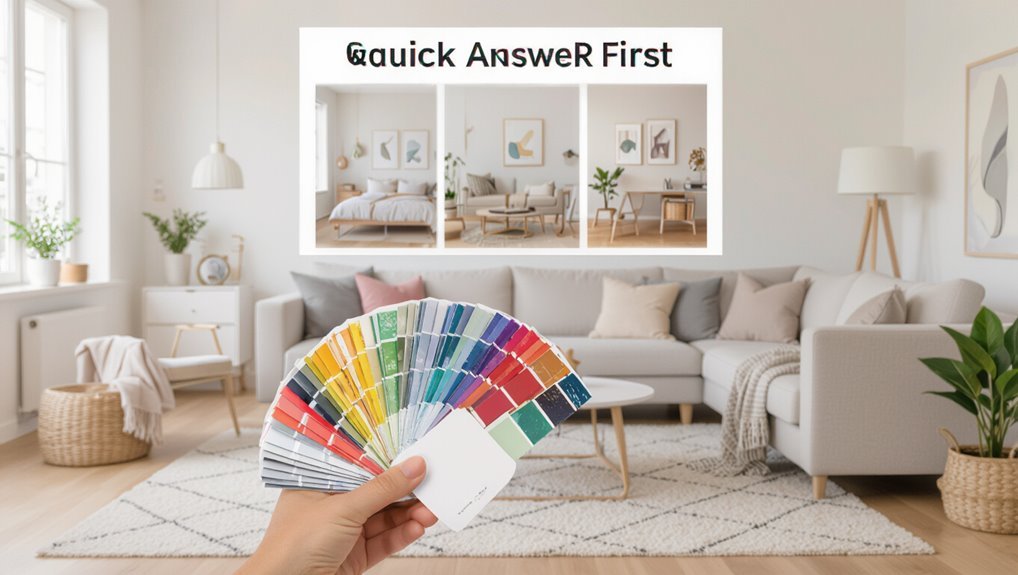
Wondering where to start? You’ll get a quick answer first: scan room atmosphere, function, and desired paint color families before diving deeper.
Use the summary to pick a shortlist—consider durability and sheen—then read the room-by-room sections for specifics. This order saves time and prevents second-guessing, letting you move from big-picture choices to precise products confidently.
Quick Answer: Best Paint by Room
For each room, focus on the combination of color family, durability, and sheen that matches its use and mood—then pick a product rated for that environment.
For bedrooms, choose calming hues and matte finishes; living rooms suit warm paint color trends with washable eggshell; kitchens and baths need scrubbable satin and mildew resistance; trim demands semi-gloss.
Consider eco friendly options for low VOCs and indoor air quality.
How to Decide Paint Based on Room Function
How will the room be used day to day? Consider traffic, activity, and who uses it.
Match color selection to function: calming tones for bedrooms, energizing hues for home offices or gyms, durable-looking neutrals for entryways.
Think about lighting and furnishings so the room atmosphere supports purpose.
Prioritize practicality and mood over trends to guarantee paint enhances everyday use.
Six Paint Properties That Affect Durability and Cleanability
When you pick paint, know that its finish, binder quality, pigment load, thickness, stain resistance, and washability all shape how well it stands up to daily life; together these six properties determine whether a wall resists scuffs, wipes clean, and keeps looking fresh.
Evaluate durability factors like abrasion and film hardness, and compare cleanability standards (scrubbability, stain removal) to match traffic and maintenance needs.
Latex vs Oil vs Epoxy Paints: Pros and Cons
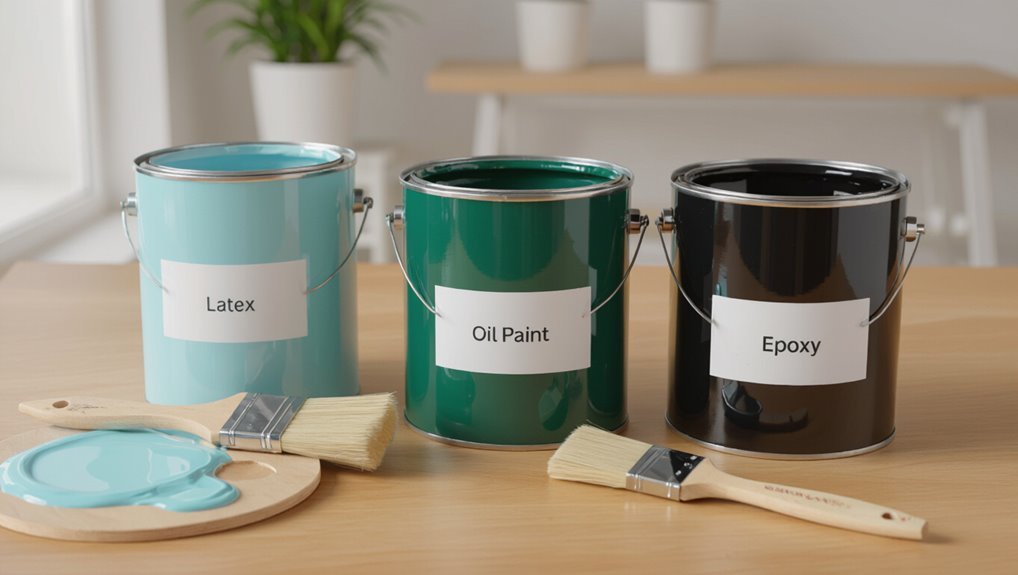
Although each type handles wear and cleaning differently, you’ll usually choose latex for ease and flexibility, oil for tough, glossy finishes, or epoxy for extreme durability in industrial or high-moisture settings.
You’ll weigh latex paint benefits like quick paint curing time and simple paint application techniques against oil paint drawbacks such as longer curing and stronger solvents.
Consider epoxy paint uses and environmental impact before deciding.
Paint Finishes : How They Affect Performance
Paint finish matters as much as paint type because it directly affects durability, cleanability, and how light interacts with your walls.
You’ll choose finishes based on traffic, moisture, and desired lifespan; tougher finishes resist scuffs and simplify finish maintenance.
Proper paint application guarantees uniform protection and easier cleaning.
Match finish performance to room use so you don’t repaint prematurely.
Sheen Guide: Flat to Gloss (What to Pick)
You’ll choose flat for low-traffic areas where you want to hide imperfections and avoid shine.
Eggshell and satin give a soft glow with better washability for living rooms and bedrooms.
Reserve semi-gloss to high-gloss for trim, kitchens, and bathrooms where durability and moisture resistance matter.
Flat: When To Use
Flat finish works best when you want walls to hide flaws and create a soft, muted backdrop; it absorbs light instead of reflecting it, so imperfections and touch-ups blend in.
Use flat paint applications in low-traffic rooms, ceilings, and textured walls where sheen would highlight defects.
You’ll appreciate flat paint advantages for a calm, uniform look, though it’s less durable and harder to clean.
Eggshell And Satin Benefits
While still soft and understated, eggshell and satin finishes give your walls a subtle sheen that hides imperfections better than semi-gloss while cleaning up easier than flat.
You’ll appreciate eggshell advantages in living rooms and bedrooms for low-reflective elegance, while satin durability suits hallways, nurseries, and kitchens where scuffs and frequent cleaning demand tougher, moisture-resistant surfaces without glaring shine.
Semi-Gloss To High-Gloss
Because gloss level affects both look and performance, choosing semi-gloss to high-gloss is about balancing shine with durability and ease of cleaning.
You’ll pick semi-gloss durability for trim, kitchens, and bathrooms where scuffs and moisture occur.
Use high gloss applications on cabinets, doors, and accents when you want maximum washability and striking reflection, but expect to show surface imperfections more readily.
How VOCs and Odor Affect Indoor Air Quality
You’ll want to understand VOC levels because they directly influence indoor air quality and long-term health.
Choose low- or zero-VOC paints and use ventilation to reduce off-gassing and lingering smells.
I’ll also cover practical odor mitigation strategies like airing out rooms, using carbon or charcoal absorbers, and timing painting to minimize exposure.
VOC Levels Explained
When you pick a paint, its VOC level tells you how much it can affect indoor air quality—high-VOC paints release more volatile organic compounds that can cause odors, irritation, and longer-term health risks, especially in poorly ventilated spaces.
Know VOC regulations, safety standards, and health impacts; choose low emission options and paint alternatives that reflect sustainable practices and address environmental concerns.
- You’ll worry.
- You’ll act.
- You’ll breathe easier.
Odor Mitigation Strategies
If you’re concerned about lingering smells and the health effects of VOCs, start by choosing low-odor or zero-VOC paints and planning ventilation during and after painting.
You should use odor neutralizing techniques like activated charcoal, baking soda, and air purifiers, avoid strong scent enhancing additives that mask problems, and allow extended airing time to reduce pollutants and protect indoor air quality for occupants.
When to Pick Low-VOC or Zero-VOC Paints (Health vs Performance)
Because indoor air quality and paint performance both matter, choosing low-VOC or zero-VOC paints comes down to balancing health concerns with the finish you want.
Balancing indoor air quality with paint performance means choosing low- or zero-VOC options that protect health without sacrificing finish.
You’ll weigh VOC Regulations, Health Considerations, Performance Trade offs, and Eco Friendly Options to decide.
- Protect vulnerable family members emotionally and physically.
- Choose cleaner air to feel relief.
- Accept minor sheen limits for peace of mind.
How Paint Durability Is Measured
Although durability might seem abstract, you can measure it with clear, standardized tests and real‑world observations that tell you how long a paint will resist wear, stains, fading, and moisture.
You’ll look at abrasion, scrub and adhesion ratings plus UV and moisture exposure. Those metrics predict paint lifespan and guide your choice; pair results with recommended cleaning methods to maintain performance.
Stain Resistance and How to Clean Painted Walls
When choosing paint, think about stain resistance—how well a finish stands up to spills, grease, marker, and everyday grime—because that determines how often you’ll need to clean or touch up walls.
You want washable finishes and sensible stain removal techniques. Use gentle cleaning tools and mild solutions to protect paint.
- Relief: quick wipe saves panic.
- Pride: spotless walls boost calm.
- Ease: durable finishes reduce chore.
Moisture Resistance and Mildew Protection Basics
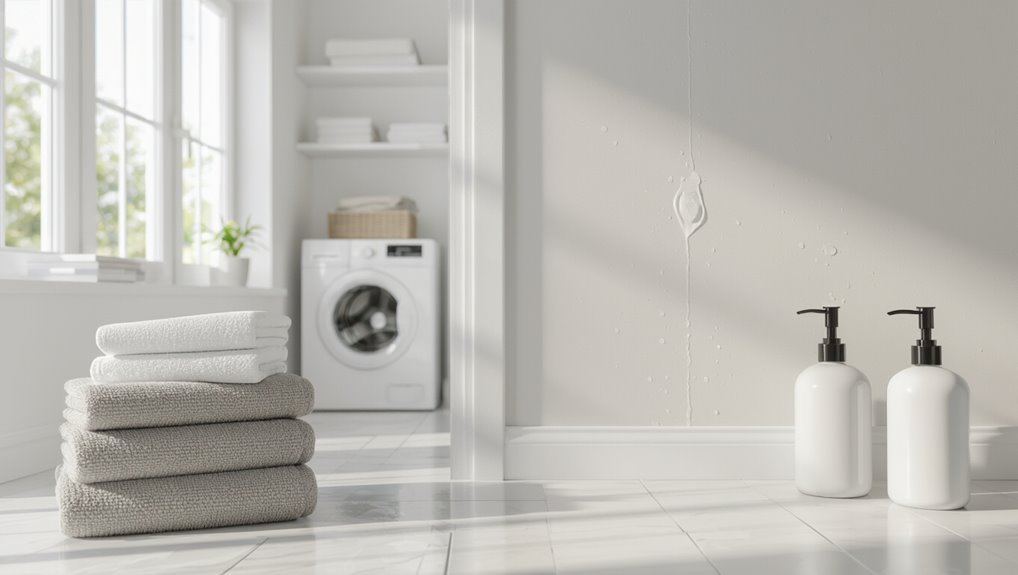
If you’re painting rooms that face humidity—bathrooms, kitchens, basements—pick finishes and formulations that resist moisture and deter mildew so your walls stay healthy and stain-free.
Use paints labeled for moisture management and mildew prevention, often acrylic or mold-resistant latex.
Guarantee proper ventilation, seal gaps, and prime porous surfaces.
Regularly inspect for damp spots and address leaks promptly to protect finishes and indoor air quality.
Choosing Paint for High-Traffic Areas
For high-traffic rooms you’ll want a finish that stands up to bumps and scrapes, like satin or semi-gloss.
Choose easy-clean formulations so spills and fingerprints wipe away without damaging the paint. That combination keeps walls looking fresh with minimal touch-ups.
Durable Finish Options
Because high-traffic areas take more wear and tear, you’ll want finishes that resist scuffs, clean easily, and keep their color over time.
Choose paints meeting durability standards and prioritize finish longevity. Look for higher-sheen options (satin, semi-gloss) for resilience and touch-up ease.
Pick a reputable formula so your walls stay proud, not shabby.
- Satin
- Semi-gloss
- Eggshell
Easy-Clean Formulations
When you’re choosing paint for high-traffic areas, pick an easy-clean formulation so stains and fingerprints wipe away without damaging the finish. These paints use tougher binders and special additives to resist staining, allow repeated cleaning, and maintain color over time.
You’ll appreciate easy care benefits, cleanability features, finish durability, maintenance tips, product comparisons, and user reviews to guide your selection.
Choosing Paint for Low-Traffic Decorative Rooms
A gallery wall lets you treat low-traffic decorative rooms as a place to experiment, so pick paints that prioritize color depth and finish over extreme durability.
You can explore decorative styles and bold color palettes, choosing matte for warmth or satin for subtle sheen.
Pick hues that reflect mood and lighting.
- Choose rich tones.
- Embrace texture.
- Match mood to finish.
Best Paint for Kitchens : Performance Priorities
Low-traffic decorative rooms let you play with rich color and texture, but kitchens demand a different set of priorities: you’ll want paints that stand up to moisture, grease, frequent cleaning, and heavy wear.
Choose a durable, washable formula that resists stains and fading.
Prioritize true kitchen color samples and select a paint texture that hides imperfections while allowing easy maintenance for busy cooking spaces.
Kitchen Paint Finishes and Cleanup Tips
Because kitchens see spills, steam, and constant handling, choosing the right paint finish matters: satin and semi-gloss are easiest to wipe clean and resist stains, while flat and matte hide imperfections but can be harder to maintain.
Pick finishes that match kitchen color trends and use simple cleaning hacks.
- Feel relief.
- Save time.
- Love your space.
Best Paint for Bathrooms and Mold-Prone Areas
When moisture and steam are constant, you’ll want paint that resists mold, mildew, and frequent cleaning without losing color or sheen.
Choose mildew-resistant formulas focused on moisture control and mold prevention.
Prioritize thorough surface preparation before paint application.
Balance color selection with durable finishes.
Improve bathroom ventilation to complement the paint’s protection.
Follow manufacturer instructions for lasting results.
Bathroom Paint Finishes and Ventilation Tips
Many homeowners underestimate how much finish and ventilation affect a bathroom’s durability.
You should pick semi-gloss or satin for easy cleaning and moisture resistance, and use mildew-resistant primers to aid mold prevention.
Manage bathroom humidity with a good exhaust fan and timed runs. Feel empowered to protect surfaces and health.
- Choose finishes that resist stains.
- Ventilate consistently.
- Inspect for dampness.
Best Paint for Bedrooms for Comfort and Sleep
If you want your bedroom to promote rest, pick paints that reduce glare, mute noise, and create a calming atmosphere—soft, low-sheen finishes in warm neutrals or cool, gentle hues work best.
Choose low-VOC formulas to improve air quality and favor muted pigments that support bedroom tranquility.
Apply color consistently, limit contrasting accents, and layer textiles to reinforce calming colors and sound absorption for better sleep.
Bedroom Sheen and Calming Color Tips
You’ve already chosen low-VOC, muted colors and soft textiles to calm the room; now think about sheen and precise color choices to complete the effect.
Aim for satin or eggshell for subtle reflectivity that keeps bedroom ambiance gentle, and pick hues with color harmony to soothe.
- Soft satin for warmth and depth.
- Low-sheen eggshell for cozy matte feel.
- Pale, cool tones to relax.
Best Paint for Living Rooms and Family Rooms
Wondering which paint will make your living and family rooms feel inviting yet durable? Choose warm, balanced hues to shape living room ambiance and soft neutrals that reflect light.
Opt for eggshell or satin sheen for easy cleaning without glare, and pick low-VOC formulas for health.
Prioritize colors and finishes that support family room functionality while keeping the space cozy and welcoming.
Living-Area Finishes: Balance of Durability and Looks
When you pick finishes for living areas, think about sheen levels that stand up to traffic without shouting shine.
Choose stain-resistant formulas so accidents wipe away cleanly and paint stays fresh.
Also pick colors and pigments known for good colorfastness to keep walls looking true over time.
Durable Sheen Choices
While looks matter, choosing a sheen for living areas means balancing appearance with how well the finish stands up to daily life.
You’ll want something that hides imperfections, cleans easily, and still reads as homey rather than glossy.
Consider durability factors and subtle sheen effects when picking between matte, eggshell, and satin.
- Matte: cozy, forgiving.
- Eggshell: warm, resilient.
- Satin: sleek, durable.
Stain-Resistant Formulas
Often overlooked, stain-resistant wall paints let you live freely without constant worry about smudges and spills; they repel common household stains and clean up with just a damp cloth.
You’ll pick formulations with stain resistant technologies that balance matte or eggshell looks and durability.
Follow simple cleaning techniques—gentle soap, soft cloth, blot not scrub—to preserve finish without harming paint.
Color Longevity Tips
Because sunlight, cleaning, and everyday contact all wear on paint, choose finishes and pigments that preserve color without sacrificing living-room comfort.
You’ll want high paint durability and UV-resistant pigments to minimize color fading. Pick satin or eggshell for easy cleaning and subtle sheen.
Focus on quality primer and topcoat for lasting tone.
- Choose durable formulas
- Block UV exposure
- Recoat strategically
Best Paint for Hallways and Entryways
Hallways and entryways take a lot of traffic and first impressions, so pick paint that’s durable, easy to clean, and flattering in narrow or passage spaces.
Choose mid-tone hallway colors to widen sightlines; warm neutrals and soft contrasts work well.
Favor washable, stain-resistant formulas and consider subtle entryway textures for depth without visual clutter—balance durability with a welcoming finish.
Hallway Sheens That Hide Scuffs and Fingerprints
Sheen choice matters when you want paint that hides scuffs and fingerprints without looking glossy; pick finishes that mask minor marks while staying easy to clean.
You’ll prefer eggshell or satin for scuff resistance and subtle fingerprint concealment. Choose durable formulas and warm tones to soothe traffic stress.
- Comfort: feels homey and resilient.
- Pride: looks cared for.
- Relief: less touch-up hassle.
Best Paint for Children’s Rooms and Nurseries
If you’ve picked an eggshell or satin for high-traffic areas, you’ll want a different approach for children’s rooms and nurseries where safety, air quality, and easy cleaning matter most.
Choose calming color themes that grow with your child and pick paint with clear safety features listed.
Go neutral or soft pastels, and plan accents for personality without overwhelming the room.
Safe Paints and Easy-Clean Finishes for Kids
Because kids spend so much time playing near walls, you’ll want paints that prioritize low emissions and simple clean-up, not just color.
Choose child safe pigments and finishes offering durable, washable surfaces so messes vanish with a wipe.
Think about odor, certification, and finish sheen to balance safety and practicality.
- Reassuring
- Practical
- Protective
Best Paint for Home Offices and Study Spaces
For home offices and study spaces, you’ll want a low- to eggshell-sheen that cuts glare while staying durable for occasional cleaning.
Pick colors that boost focus—muted blues and greens calm the mind, while soft neutrals and warm greys reduce distraction.
Combine the right sheen and color to support concentration and comfortable lighting throughout the day.
Paint Sheen Recommendations
Sheen matters when you want a productive, comfortable home office—matte and eggshell finishes reduce glare and hide wall imperfections, while satin offers a bit more durability without reflecting too much light.
Understand sheen types and sheen impact so you’ll choose what feels right.
- Matte: cozy, forgiving.
- Eggshell: balanced, calm.
- Satin: crisp, resilient.
Color Psychology Effects
Along with choosing the right finish, the color you pick will shape focus, mood, and productivity in your home office.
Use cool blues or soft greens to boost concentration; muted yellows and warm neutrals can inspire creativity without distraction.
Consider color symbolism and its emotional resonance for tasks: choose hues that support alertness for work or calm for deep thinking, then test samples under real light.
Paint Choices That Reduce Glare and Boost Focus
When you pick wall paint to cut glare and help you focus, choose low-reflective finishes and muted tones that minimize eye strain and distractions.
You’ll get glare reduction and focus enhancement with colors like soft greys, warm beiges, or dusty blues.
Pick matte or eggshell sheens, avoid high-gloss, and test samples under your room’s lighting before committing.
- Soft grey calm
- Warm beige comfort
- Dusty blue clarity
Best Paint for Basements and Damp Rooms
When you’re painting a basement or a damp room, choose moisture-resistant paints like epoxy or high-quality acrylics to limit water absorption.
Look for mold-inhibiting formulas that contain antimicrobial agents to keep mildew from taking hold.
Always prime and seal masonry or porous surfaces first to create a stable, long-lasting barrier.
Moisture-Resistant Paint Types
Because damp spaces invite mold and peeling, you’ll want paint formulated specifically to resist moisture and block mildew.
Choose coatings that offer moisture barriers and mildew resistance, consider paint additives, and address humidity levels with proper surface preparation and ventilation strategies.
- Waterproof primers — calm your worry.
- Acrylic latex emulsions — restore confidence.
- Epoxy or elastomeric coats — feel secure.
Mold-Inhibiting Paint Options
If your basement or damp room tends to stay clammy, pick paints formulated to inhibit mold growth so you won’t be repainting every few years.
You should choose mold resistant coatings labeled for high-humidity spaces and look for moisture blocking additives that reduce water penetration.
Use washable, mildew-resistant finishes and follow application instructions closely to guarantee long-lasting protection and easier maintenance in damp environments.
Primer And Sealers
Moisture-blocking primers and sealers form the foundation of any durable paint job in basements and damp rooms, so you’ll want products specifically formulated to resist water vapor and efflorescence.
You’ll get primer benefits like adhesion, stain blocking, and mold resistance; sealer applications stop damp migration.
Choose oil- or epoxy-based formulas for stubborn moisture.
- Relief
- Confidence
- Protection
Primers & Moisture-Blocking Products for Basements
Basements demand primers and specialized sealers that stop water vapor and efflorescence before you paint, so you’ll want products formulated for below-grade conditions.
Choose a high-penetration masonry primer and a moisture-control sealer to protect concrete and block salts.
Apply after fixing leaks and consider basement insulation placement so vapor barriers work.
Recoat only when surfaces are fully dry to guarantee adhesion.
Best Paint for Ceilings and Trim
Ceilings and trim need paints formulated for their different roles: ceilings benefit from flat or matte paints that hide imperfections and minimize glare, while trim calls for a tougher, glossier finish that resists scuffs and cleans easily.
You’ll choose ceiling colors to brighten rooms and trim styles to define lines. Consider mood, contrast, and maintenance.
- Inspire
- Calm
- Confident
When to Use Ceiling Paint and Trim Gloss Levels
Having picked finishes that hide flaws on the ceiling and stand up to wear on trim, you’ll next decide where to use flat, eggshell, satin, or high-gloss based on room function and durability needs.
For low ceilings or textured ceiling types, choose flat for concealment. Use satin for bathrooms and kitchens for moisture resistance. Reserve high-gloss for durable trim materials that need frequent cleaning.
Best Paint for Accent Walls and Focal Areas
When you want a wall to draw the eye, pick a finish and sheen that enhance color depth without making imperfections obvious.
You’ll choose accent wall colors that create mood and use focal area textures—matte for velvet richness, satin for subtle glow, or eggshell for warmth.
Trust your instinct; contrast and tactile interest make the space sing.
- Evoke drama
- Invite comfort
- Highlight purpose
How to Pick Finish and Color for an Accent Wall
You’ve picked the mood and texture—now match finish and hue so the accent wall actually reads the way you want.
Choose satin or eggshell for subtle sheen, semi-gloss for trim-like pop. Balance bold shades with neutral surroundings using color pairing tips.
Use one focal wall, consistent lighting, and accent wall techniques like vertical stripes or textured paint to control contrast and depth.
Paint for Mudrooms and Garage-Adjacent Interior Walls
Because mudrooms and garage-adjacent walls take more wear, pick paints that resist scuffs, moisture, and frequent cleaning while still looking good.
Choose mudroom colors that hide dirt, boost light, and match your home’s flow with garage functionality in mind.
Consider:
- Warm neutrals for calm and practicality
- Deep tones for drama and disguise
- Pale hues to brighten and refresh
Tough, Washable Paints for Entry and Mud Areas
For entryways and mud areas you’ll want a finish that takes knocks and wipes clean, so consider durable high-gloss options where scuffs are most common.
If you prefer less sheen, mildew-resistant eggshell coatings give easier maintenance without looking shiny.
Both choices make cleanup simple and keep those high-traffic walls looking fresh.
Durable High-Gloss Finishes
When family members track in mud or pets rub against walls, high-gloss, durable paints stand up to scrubbing and frequent contact without losing their finish.
You’ll appreciate high gloss durability in entryways; it resists scuffs and brightens tight spaces. Use gentle cleaners and spot-clean often—cleaning tips matter.
- Pride — your home looks cared for.
- Relief — stains wipe away.
- Confidence — finishes last.
Mildew-Resistant Eggshell Coatings
High-gloss holds up to scrubbing, but eggshell gives you a softer look with the same practical benefits—mildew-resistant eggshell coatings handle damp entryways and mudroom traffic while keeping walls easy to wipe.
You’ll get washable durability, stain resistance, and subtle eggshell texture that hides imperfections. Choose formulations labeled mildew prevention and cleanable finish so you can maintain high-traffic zones without frequent repainting.
Specialist Paints: Washable, Scrubbable, and Antimicrobial Options
Choosing the right specialist paint can make maintenance far easier—washable and scrubbable finishes stand up to stains and repeated cleaning, while antimicrobial paints add a layer of protection against bacteria and mold.
You’ll pick specialist paint types based on room use and follow simple application techniques for best results.
- Relief: clean walls feel fresh.
- Pride: durable finishes showcase care.
- Safety: antimicrobial peace of mind.
When to Prime: Types of Primers and Uses
You’ll want to prime when you’re covering stains, switching from oil to latex, or painting bare or porous surfaces.
Different primers—latex, oil-based, shellac, and stain-blocking formulas—work better for specific problems.
Match the primer to the surface (drywall, wood, metal, or plaster) to guarantee adhesion and a uniform finish.
When To Prime
Because primer bonds paint to surfaces and evens out porosity, you should prime whenever the surface is bare, stained, repaired, or drastically different from the new paint color.
Using proper primer types delivers primer benefits like adhesion, stain blocking, and uniform sheen so your finish lasts.
Prime when needed to prevent problems, save time, and protect investment.
- Relief
- Confidence
- Satisfaction
Primer Types Explained
Primers come in several types—latex (water-based), oil-based (alkyd), shellac, and specialty formulations—and each one’s designed for specific surfaces and problems, so pick the right type to get adhesion, stain blocking, or moisture resistance.
You’ll choose primer types based on paint compatibility, odor tolerance, and drying time.
Consider primer applications like sealing, stain blocking, and bonding before you buy.
Primer Uses By Surface
Surface matters when deciding whether to prime and which primer to use, since different substrates demand specific adhesion, sealing, or stain-blocking properties.
You’ll match primer types to surfaces, consider primer characteristics, and follow primer preparation steps.
Primer selection affects primer applications and primer benefits like durability and stain control. Choose confidently.
- Wood — bond, seal, protect.
- Drywall — hide, smooth, grip.
- Metal — rust-block, adhere, endure.
How Color Affects Perceived Size and Warmth
When you pick wall colors, they do more than please the eye—they change how roomy and cozy a space feels.
You’ll use color perception and color psychology to create spatial illusion: light, cool tones increase perceived size via light reflection, while warm hues deliver warmth effects and an intimate emotional response.
Choose hues deliberately to shape mood and scale.
Match Sheen to Texture and Wall Imperfections
Although a higher sheen gives you a more durable, washable finish, it also highlights bumps and brush marks.
So choose sheen to flatter your wall’s texture and hide imperfections. You’ll balance texture compatibility, damage concealment, finish longevity, and aesthetic balance by picking low sheen for rough walls or higher for smooth ones.
- Comfort
- Confidence
- Pride
Cost vs Performance: Budget Paint Strategies
You don’t have to buy the most expensive gallon to get good results, but smart choices matter: prioritize paint for the room’s use, pick mid-grade for high-traffic areas, and save on primer or trim where a budget option will do.
Do a performance analysis and cost comparison, weigh paint longevity, brand reputation, maintenance costs, application techniques, color selection, finish durability, and environmental impact.
Painting Tips to Prolong Your Finish
To keep your paint looking fresh, start with proper surface preparation so the finish adheres and lasts.
Use high-quality brushes and rollers to get an even coat with fewer touch-ups.
Finally, maintain the walls with regular gentle cleaning to prevent grime buildup and premature wear.
Proper Surface Preparation
Proper surface preparation is the foundation of any long-lasting paint job, so start by cleaning, repairing, and smoothing walls before you open a brush or roller.
You’ll love the results when you focus on surface cleaning and correct wall priming to guarantee adhesion and durability.
- Remove dirt, grease, and loose paint — feel relief.
- Patch holes and sand — breathe easier.
- Prime problem spots — gain confidence.
Use High-Quality Tools
Invest in high-quality brushes, rollers, and tape so your finish goes on smoothly and lasts longer.
Choose synthetic paint brushes for water-based paints and natural-hair for oil-based jobs. Match roller types to texture—smooth nap for flat walls, thicker nap for textured surfaces.
Use good painter’s tape, keep tools clean between coats, and replace worn rollers or frayed brushes to maintain a professional-looking finish.
Maintain Regular Cleaning
Once you’ve got the right tools and a smooth application, keep the paint looking fresh by cleaning regularly and correctly. You’ll extend life with simple wall maintenance and sensible cleaning schedules.
Tackle marks gently, spot-clean spills, and avoid abrasive scrubbing.
- Wipe smudges with mild soap — relief.
- Schedule quarterly touch-ins — confidence.
- Deep-clean annually — pride.
How to Test Paint Samples in Your Room
How do you know a color will look right in your space?
Tape several paint swatches on different walls and observe them at morning, midday, and evening to note lighting effects.
Paint 12×12″ sample patches where furniture and trim meet.
Live with samples for a few days, checking undertones in natural and artificial light before committing.
When to Hire a Pro vs DIY Painting
After you’ve lived with your sample patches and know how colors behave in your light, decide whether you’ll tackle the full job yourself or call in a pro.
Consider skill, time, and scale honestly. Pro painting saves stress; DIY painting saves money if you’re careful.
- Pride: you’ll love a job done yourself.
- Relief: pros handle complexity.
- Savings: weigh cost vs. time.
Trouble Signs: When Paint Is Failing and Fixes
If your walls start showing bubbles, cracks, peeling, mold, or uneven sheen, don’t ignore them—those are clear signs paint’s failing and that you need to diagnose the cause before repainting.
Inspect for moisture, adhesion loss, or poor prep. Address underlying leaks, treat mold, sand and prime as needed.
Choose appropriate repair options, then repaint with suitable primer and finish to prevent recurrence.
Eco-Friendly Paint Options and Certifications to Look For
When you pick paint, look for low‑VOC or zero‑VOC formulas to cut indoor air pollution and odors.
Check for third‑party eco certifications like Green Seal or GREENGUARD to verify health and environmental claims.
Also consider natural or mineral paints — such as clay, lime, or silicate — if you want minimal synthetic chemicals.
Low‑VOC And Zero‑VOC
Because indoor air quality matters as much as color choice, you’ll want to contemplate low‑VOC and zero‑VOC paints for healthier rooms and fewer chemical odors.
You’ll find eco friendly options that reduce fumes and offer clear health benefits. Choose water‑based formulas, ventilate during application, and prioritize finishes suited to each room:
- Relief
- Comfort
- Peace
Third‑Party Eco Certifications
You’ve already narrowed options by choosing low‑ or zero‑VOC formulas; now look for third‑party eco certifications to confirm a paint’s environmental and health claims.
Check labels like Green Seal, ECOLOGO, or GREENGUARD to verify low emissions, ingredient transparency, and lifecycle impacts.
These eco certifications signal adherence to recognized sustainability standards so you can trust performance, durability, and reduced indoor pollution.
Natural And Mineral Paints
Natural and mineral paints offer a genuinely low-impact alternative to conventional acrylics, using plant oils, clay, lime, or mineral pigments that cut synthetic additives and off‑gassing.
You’ll appreciate natural pigment benefits and varied mineral paint applications for calm, breathable rooms.
Choose certified brands and test samples to guarantee coverage and durability.
Quick Checklist to Choose the Right Paint for Each Room
Start by listing each room’s function, traffic level, and light exposure so you can match finish and durability to real needs; this quick checklist helps you pick washable, appropriate-sheen paints for kitchens, bathrooms, hallways, bedrooms, and living spaces without overthinking color or performance.
Then note moisture, cleanability, and desired sheen; choose paint types and prioritize color selection, VOCs, and primer needs.
Frequently Asked Questions
Can Paint Affect Wi-Fi or Wireless Signals in My Home?
Yes — certain paints can affect wireless performance by causing signal interference; metallic or conductive pigments and coatings reflect or absorb radio waves, so you’ll want to avoid those in areas where reliable Wi‑Fi matters.
How Long Before I Can Rehang Pictures After Painting?
You can usually rehang pictures after 24–48 hours; drying time varies by paint and humidity, so wait until walls feel fully dry. For heavier frames, wait a week and use sturdy picture hooks rated for the weight.
Does Paint Color Fade Faster Near Windows or Direct Sunlight?
Yes — paint color fades faster near windows and in direct sunlight; you’ll see quicker fading with heavy sunlight exposure. To boost color longevity, pick UV-resistant paints, lighter pigments, and window treatments to reduce sun intensity.
Can I Paint Over Wallpaper Without Removing It First?
Yes, you can—if smooth, primed, and secure. You’ll risk bubbling, peeling, and poor paint adhesion without proper prep; you’ll get better results by addressing wallpaper removal or using a high-quality primer designed for wallpaper.
Will a Smart Thermostat or Sensors Be Affected by Paint Fumes?
Yes — paint fume effects can temporarily interfere with sensors, but they rarely harm smart thermostat durability long-term. You should avoid heavy fumes during installation, ventilate well, and wait until odors dissipate before mounting or calibrating.
