
How to Dispose of Wall Paint Safely and Legally
You should first identify if your paint is water‑based (latex) or oil‑based, then follow local rules: don’t pour paint down drains or toss oil‑based cans in the trash. Let small amounts of latex dry (use kitty litter or spread thin on cardboard) and then dispose curbside if allowed; take oil‑based, solvent‑thinned, or lead‑containing paint to a household hazardous waste drop‑off or event. Keep cans labeled and sealed for transport — learn more about prepping, transport, and legal options.
Quick Answer: How to Dispose of Wall Paint Safely and Legally
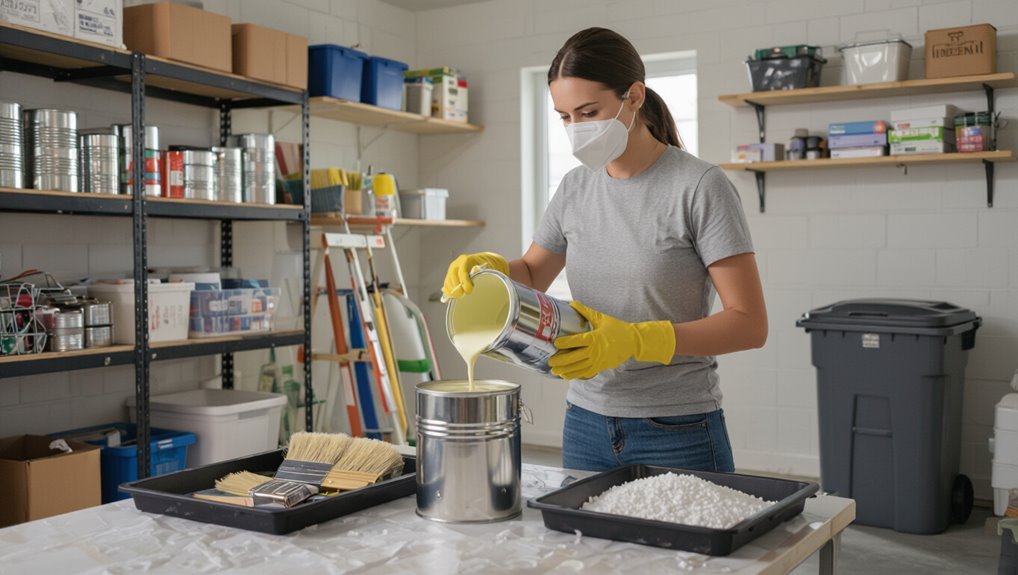
If you’ve got leftover wall paint, don’t pour it down the drain or toss it in the trash—local rules and safety concerns make proper disposal essential.
You’ll follow paint safety practices: let latex paint dry, reuse or donate usable cans, and take hazardous oil-based paint to a collection site.
Check municipal disposal methods, label cans, and transport them sealed for safe, legal handling.
What to Know First: Quick Steps Versus the Full Guide
Before you act, decide whether you need a quick, practical fix or the full, detailed process—quick steps get you safe, legal disposal fast; the full guide explains why each step matters, plus alternatives and local rules you might otherwise miss.
If you want speed, follow concise paint disposal methods now.
If you care about environmental impact and compliance, read the full guide before proceeding.
Identify Paint Type: Water‑Based (Latex) vs Oil‑Based Paints
Start by determining whether your paint is water‑based (latex) or oil‑based — that decides disposal options.
Check the can’s label for words like “latex,” “acrylic,” or “alkyd” and scan the ingredients for solvents or water as the main carrier.
If the label’s missing, test a small scrape with rubbing alcohol: it softens water‑based paint but won’t affect oil‑based.
Determine Paint Base
Knowing whether a paint is water‑based (latex) or oil‑based makes disposal and cleanup much easier and safer.
You can test small amounts: water and soap dissolve latex, while mineral spirits break down oil‑based. Note paint properties like drying time and smell to confirm.
Once identified, follow appropriate disposal methods for hazardous (oil) or nonhazardous (latex) waste per local rules.
Check Label Ingredients
Want to be sure whether your paint is latex or oil‑based? Check the label ingredients first: water or acrylic indicates latex; alkyd, mineral spirits, or solvent means oil‑based.
That guides disposal, safety precautions, and recycling options. If label’s missing, do a small solvent test.
Choose eco friendly alternatives next time—low‑VOC or water‑based—to simplify future disposal and reduce hazards.
Why Paint Type Matters for Disposal and Recycling
Because water-based and oil-based paints have different chemical properties and treatment needs, the type you have determines safe disposal and recycling options. You should consider paint toxicity and recycling benefits when sorting; water-based is less toxic and easier to recycle, oil-based often needs hazardous-waste handling.
| Type | Risk | Option |
|---|---|---|
| Water | Low | Recycle |
| Oil | High | Hazard disposal |
Read the Can: How to Interpret Labels and Hazard Warnings
Before you toss a can, check the label for hazard icons so you know if the paint is flammable, corrosive, or toxic.
Pay attention to VOC levels to understand environmental and disposal restrictions.
Finally, follow any disposal instructions on the can—those directions tell you whether the paint can be dried for curbside trash, taken to a hazardous waste site, or recycled.
Read The Hazard Icons
How do you quickly tell what’s risky on a paint can? Scan for hazard symbols—skull, flame, exclamation mark—and read their brief meanings.
They tell you required safety precautions like ventilation, gloves, or no open flame.
Note disposal icons and local collection instructions. If labels confuse you, contact the manufacturer or local waste authority before discarding.
Understand VOC Levels
Those hazard icons give you immediate safety cues, but the fine print on VOC levels tells you about longer-term air quality and disposal rules.
You should check VOC emissions to assess health impacts and indoor air quality, consider paint formulation choices, follow regulatory guidelines, and adopt sustainable practices.
Stay aware of environmental concerns and watch for future innovations that reduce toxicity and simplify safe disposal.
Note Disposal Instructions
When you pick up a paint can, read the label closely—manufacturers are required to list disposal instructions, hazard warnings, and local-recycling recommendations so you can handle leftovers safely. Follow listed paint disposal methods, heed hazard symbols, and choose safe recycling or hazardous-waste drop-off when indicated. Check drying, donation, and community programs if permitted.
| Instruction | Symbol | Action |
|---|---|---|
| Drying | ⚠ | Solidify |
| Donate | ♻ | Offer |
| Hazardous | ☣ | Drop-off |
How to Check If Leftover Paint Is Still Usable
Before you toss a can, inspect it: open the lid, stir the paint, and look for separation, skinning, or an odd smell that suggests contamination.
For paint quality evaluation, test a small patch on cardboard to check adhesion, color and finish after drying. If it spreads smoothly and dries properly, follow paint usage tips: strain thickened paint, label the can, and store upright for future touch-ups.
Three‑Step Disposal Workflow: Identify, Prepare, Choose Disposal
If you’re unsure where to start, follow a simple three-step workflow: identify the paint type and condition, prepare it safely for disposal, then choose the proper disposal method.
You’ll assess latex vs oil, separate hazardous cans, and use eco friendly methods when possible.
Assess latex vs. oil, set aside hazardous cans, and favor eco-friendly disposal whenever possible.
Consider paint recycling or municipal programs.
- Identify type
- Prepare safely
- Choose disposal method
Consolidate Partial Paint Cans for Storage or Disposal

Gather partial cans of the same paint color and type so you can combine them into fewer, usable containers.
Pour carefully through a strainer into a clean, labeled can; seal lids tightly and clean rims.
Use paint can consolidation to reduce waste and choose appropriate storage solutions like sturdy, upright shelving in a cool, ventilated area.
Record date and contents for disposal planning.
How to Safely Dry Small Amounts of Latex Paint for Trash
Once you’ve consolidated or emptied cans that you’ll keep, you can safely dry small leftover latex paint so it’s acceptable for regular trash pickup.
Use absorbents and safe, eco friendly methods; follow local rules.
Quick paint drying techniques:
- Stir in cat litter or sawdust until paste.
- Spread thinly on cardboard to cure.
- Let lids off to finish drying, then trash.
Why You Should Never Pour Paint Down Drains or Storm Sewers
Because drains and storm sewers lead directly to treatment systems or natural waterways, you shouldn’t pour paint down them — even small amounts can clog pipes, harm aquatic life, and contaminate drinking-water sources. You’ll face environmental impact and possible legal consequences; instead, use proper disposal or take paint to a collection site.
| Risk | Result |
|---|---|
| Clogs | Blockages |
| Wildlife harm | Toxicity |
| Water contamination | Health risk |
| Fines | Penalties |
When Paint Is Household Hazardous Waste (HHW) and What That Means
Some leftover paints are classified as household hazardous waste (HHW) because they contain flammable solvents, heavy metals, or high levels of VOCs, and you’ll need to treat them differently than water-based latex.
Know that oil-based, lead-containing, and certain specialty coatings are common HHW types, while clean, dried latex is usually not.
That classification affects your legal disposal options—you’ll have to use HHW collection events, hazardous waste facilities, or approved take-back programs rather than curbside trash.
When Paint Is Hazardous
If paint contains high levels of volatile organic compounds (VOCs), heavy metals like lead, or other toxic additives, it’s considered household hazardous waste (HHW) and needs special handling; you can’t just toss it in the trash or pour it down the drain.
You should learn paint toxicity, ignore disposal myths, and act responsibly.
- Identify hazards
- Use HHW programs
- Label and store securely
Types Of HHW Paint
When you’re sorting leftover paint, recognize that not all paints are equal: oil-based, solvent-thinned, lead-containing, and certain specialty coatings each pose different hazards and disposal requirements.
You should label cans, keep lids sealed, and treat these as HHW.
Water-based latex is less hazardous; consider eco-friendly alternatives or paint recycling for usable leftovers instead of disposal.
Legal Disposal Options
Because certain paints—like oil-based, solvent-thinned, and lead-containing coatings—are classified as household hazardous waste (HHW), you must follow specific legal disposal routes rather than tossing them in the trash or pouring them down drains.
Follow local rules, use authorized drop-offs, and join recycling programs or community initiatives to stay compliant.
Key actions:
- Use HHW collection sites.
- Attend community events.
- Hire certified hazardous haulers.
How to Prepare Paint for Transport to a Disposal Site
Gather the right supplies and stabilize your cans before you leave so the paint arrives safely.
Use sturdy boxes, absorbent pads, and secure lids to follow paint transport guidelines and guarantee paint container safety.
Pack paint in sturdy boxes with absorbent pads and tightly secured lids to ensure safe transport.
Label cans with type and color, tape lids, and upright pack to prevent spills.
Keep containers in a ventilated vehicle area, avoid heat, and drive carefully to the disposal site.
Find Local Hazardous‑Waste Collection Programs and Events

Looking for a convenient place to drop off leftover paint?
Check your city or county website for local recycling and hazardous waste program details, schedules, and eligibility.
Sign up for collection events, confirm container rules, and ask about drop‑off limits.
- Search municipal recycling pages
- Call your local hazardous waste hotline
- RSVP for community collection days
How Curbside Pickup Rules Typically Handle Paint
When you plan to use curbside collection, check your hauler’s rules first—many services won’t pick up liquid paint, accept only dried-out cans, or require paint be solidified in recyclable containers.
You should follow curbside guidelines and local regulations: dry small amounts, label cans, bundle lids, and place accepted containers with regular trash only if permitted.
Call your hauler for specifics.
How Paint Take‑Back and Reblend Centers Work
If you have leftover paint, take-back centers let you drop it off for proper sorting and storage.
They’ll test and separate usable cans for reblending, which involves tinting and filtering to create fresh, matched colors.
The rest is recycled or disposed of safely so you don’t have to worry about hazardous waste.
How Take‑Back Works
Because communities and retailers partner to collect leftover paint, you can drop off cans at designated take‑back or reblend centers instead of throwing them away.
You’ll hand over labeled cans, staff will sort usable from hazardous, and you’ll get guidance on paint recycling and eco friendly options.
Follow center rules, bring ID if required, and keep lids secure.
- Sort by type
- Follow limits
- Ask staff
Reblend And Reuse Processes
Bring leftover paint to a reblend center and you’ll see it turned into usable product instead of waste. You’ll watch paint remixing and color blending revive cans: technicians sort, filter, remix, and test reclaimed paint so you can pick affordable, sustainable options.
| Emotion | Action | Result |
|---|---|---|
| Hope | Donate | New life |
| Pride | Choose | Less waste |
| Trust | Test | Safe color |
How to Donate Usable Paint to Charities and Nonprofits
Many charities and community groups welcome leftover, unopened, or gently used paint for projects like shelter repairs, neighborhood murals, and low-income home improvements.
You should follow paint donation guidelines: label cans, confirm usable condition, and contact local charity paint programs before dropping off.
Donate by:
- Calling to verify needs
- Preparing labeled, sealed cans
- Scheduling drop-off or pickup
How to Sell or Swap Leftover Paint Safely Online
If charities don’t need your leftover paint or you want to recoup some cost, selling or swapping online is a practical option.
List color, sheen, brand, and remaining volume, and include clear photos. Use reputable paint marketplace sites or local community swaps, set a fair price or trade, meet in safe public spots, and disclose any imperfections so buyers know exactly what they’re getting.
How to Label and Store Leftover Paint for Future Use
1 simple habit will save you time and money: label and store leftover paint correctly so it’s ready for touch-ups and future projects.
Seal cans, note color name, date, and room on the lid. Keep upright in a cool, dry place.
Follow these paint storage tips for future project uses:
- Clean rim and reseal tightly
- Store away from heat or freezing
- Keep an inventory list
How to Reduce Waste Before You Buy Paint
Before you buy paint, take a few minutes to measure the area and sample colors so you only purchase what you’ll use. Accurate measurements and test swatches cut waste, save money, and prevent leftover cans.
Choose neutral shades, buy multipurpose finishes, and consider paint purchasing strategies like sharing unopened cans with neighbors.
Look for eco-friendly options and low-VOC labels to minimize environmental impact.
How to Estimate How Much Paint You Need Accurately
Now that you’ve narrowed colors and measured surfaces to cut waste, the next step is calculating how much paint you’ll actually need so you don’t end up with extra cans.
Use paint calculators and careful estimating coverage per coat. Measure area, subtract windows/doors, then:
Use paint calculators, estimate coverage per coat, measure areas and subtract windows/doors for accurate paint needs.
- Calculate square footage
- Check manufacturer coverage
- Add 10% for mistakes and texture
How to Use Leftover Paint for Touch‑Ups and Small Projects
Before you use leftover paint for touch-ups or small repairs, you should prep the area and test the color on a scrap of cardboard to make sure it matches.
Stir the paint well and thin it if needed so it applies smoothly.
Use small brushes or a foam roller for patching scuffs, trim, or furniture to extend the life of the can.
Prep And Test Paint
If you’ve got leftover paint, you can turn it into quick touch-ups or small projects by checking, prepping, and testing it first.
You’ll do paint preparation and simple paint testing to confirm color and consistency. Stir, strain if needed, and test on scrap.
Follow these steps:
- Stir thoroughly.
- Strain to remove clumps.
- Test on a hidden patch.
Use For Small Repairs
Once you’ve confirmed the paint’s color and consistency, put that leftover to work on small repairs and touch-ups around your home.
Keep a labeled sample jar for matching, clean brushes and rollers immediately, and use painter’s tape for crisp edges.
For paint touch ups, feather strokes outward, blend into surrounding areas, and store remaining paint sealed and upright for future small repairs.
How to Repurpose Paint for Non‑Wall Uses Around the Home
Think creatively about leftover wall paint: you can turn small quantities into useful solutions around the house instead of tossing them.
Think creatively with leftover wall paint—small amounts become handy touch-ups, stencils, or simple craft projects.
Use creative paint uses for tags, furniture touch-ups, or stenciling.
Try paint art projects for coasters or canvas accents.
Save and label small jars, dilute for craft brushes, or seal mixed samples for later.
- Furniture touch-ups
- Stenciling accents
- Craft coasters
How to Mix Leftover Colors Into a Custom Shade Responsibly
Because mixing leftovers can stretch your supplies and cut waste, you should approach blending with a plan: test small batches, note proportions, and work on a neutral base so you don’t accidentally create mud.
For custom color blending, label jars, mix thoroughly, and record ratios.
Practice responsible mixing by using clean tools, avoiding contamination, and saving samples to guarantee consistent results before committing larger quantities.
How to Dispose of Paint‑Soaked Rags and Brushes Safely
Before you toss them, let paint‑soaked rags and brushes dry out completely in a well‑ventilated, fire‑safe area to prevent unexpected combustion.
Once they’re dry, follow your local disposal rules—some areas treat them as hazardous waste while others allow sealed disposal.
Check municipal guidelines or call your local waste authority if you’re unsure.
Let Rags Dry Completely
Let the rags and brushes dry completely before you dispose of them—wet paint on fabric or bristles can self‑heat and ignite, especially with oil‑based products.
Follow paint drying safety precautions: air rags flat outdoors or in a well‑ventilated area, separate items to speed drying, and check for complete dryness before bagging.
- Spread items out
- Use ventilation
- Verify dryness
Dispose According To LocalRules
When you’re finished, follow your local rules for disposing of paint‑soaked rags and brushes to avoid fines and fire hazards.
Municipalities and waste haulers set different requirements for oil‑ and water‑based products. Check local disposal methods—some require sealed containers or drop‑offs, others accept dried rags with household trash.
Contact community recycling programs or hazardous waste facilities for guidance, and never burn solvent‑soaked materials.
How to Handle Partially Full Aerosol Paint Cans
If you’ve got partially full aerosol paint cans, don’t toss them in the trash or pour their contents down a drain; you need to treat them as hazardous waste and handle them carefully to prevent leaks, fires, and environmental harm.
Follow local aerosol can disposal rules and seek paint can recycling or hazardous-waste events.
- Store upright, capped, ventilated.
- Label and separate.
- Use certified drop-off.
How to Manage Oil‑Based Paint and Solvent Disposal
Because oil‑based paints and the solvents used to thin or clean them are flammable and toxic, you should handle and dispose of them as hazardous materials rather than tossing them in the trash or down drains.
Keep oil based paint separated, label containers, and never mix with household waste.
Use approved hazardous waste collection sites, follow solvent safety guidelines, and transport materials in sealed, upright containers.
How to Deal With Paint Containing Lead or Other Toxins
If your home was built before 1978, you should assume paint may contain lead and test it with a certified kit or call a professional for confirmation.
If lead or other toxins are present, don’t sand or scrape without proper containment and a HEPA respirator—hire licensed abatement contractors for removal.
Follow local hazardous-waste rules for disposal and never throw contaminated debris in regular trash.
Identifying Lead Paint
When you’re dealing with older homes, assume paint could contain lead until you’ve confirmed otherwise. Lead was common in household paints before the late 1970s and can pose serious health risks if disturbed.
You should use lead detection kits or professional paint testing to confirm hazards.
- Buy EPA-approved kit
- Hire certified tester
- Isolate suspect areas
Safe Removal Methods
Start by treating any confirmed or suspected lead- or toxin-containing paint as hazardous and plan removal accordingly. You should hire certified abatement or use HEPA containment, wet methods, and proper PPE. Explore eco friendly options and check community resources for disposal or assistance. Follow regulations, bag debris, and never burn or dump. Contact local hazardous waste programs for guidance.
| Method | PPE | Disposal |
|---|---|---|
| Certified abatement | Full | Hazard facility |
| DIY wet stripping | Mask+gloves | Hazard bag |
| HEPA vacuuming | Respirator | Facility |
| Chemical stripper | Gloves | Hazard center |
Follow State Paint‑Disposal Laws: How to Find and Comply
Wondering what your state requires for paint disposal? You should check state regulations, use official websites, and contact local waste agencies to find specific rules and compliance resources.
Check your state’s regulations—use official websites and local waste agencies to learn paint disposal rules and stay compliant
Follow instructions to avoid fines and hazards.
- Search your state environmental agency site.
- Call local hazardous-waste or recycling centers.
- Keep records of drop‑offs or permits.
Follow EU/UK Paint‑Disposal Guidance: Where to Look
If you live in the EU or UK, check official government and environmental agency sites for national rules, producer responsibility schemes, and local household hazardous waste guidance so you’ll know exactly how to dispose of paint legally and safely.
Use EU regulations and UK guidelines to find approved disposal locations, recycling options and licensed collectors.
Tap community resources to minimize environmental impact and follow local instructions precisely.
Documenting Paint Disposal for Landlords and Contractors (What to Record)
When you’re responsible for a property or a job site, keep clear records of paint disposal to protect tenants, clients and yourself; concise documentation shows compliance, aids auditing and helps resolve disputes.
Keep clear paint-disposal records to protect tenants and clients—concise documentation proves compliance, aids audits, and resolves disputes.
You should record date, volume, waste codes, disposal method and receipts, reflecting landlord responsibilities and contractor documentation.
- Date, volume, waste code
- Disposal method and site
- Receipts and signatures
How Much Paint Disposal Can Cost and Who Pays for It
Keeping accurate disposal records helps you track costs and assign responsibility.
So next you should look at what paint disposal actually costs and who ends up paying. You’ll encounter fees for hazardous versus nonhazardous paint, drop‑off charges, and transport.
Calculate disposal costs per gallon and labor. Clarify payment responsibilities upfront—tenant, contractor, or owner—so billing disputes don’t delay proper disposal.
How to Work With Professional Hazardous‑Waste Haulers
When you’re ready to hire a hazardous‑waste hauler, pick a licensed, insured company and ask for their EPA or state ID number.
You’ll need to prepare your paint by separating latex from oil‑based and keeping cans sealed or labeled as instructed.
Confirm pickup procedures and any prep requirements so the crew can handle disposal safely and legally.
Choose Licensed Haulers
Because leftover paint can pose environmental and health risks if mishandled, you should hire a licensed hazardous‑waste hauler to guarantee proper collection, transport, and disposal.
Choose firms with licensed disposal services and knowledge of local environmental regulations. Check credentials, insurance, and reviews.
- Verify licensing
- Confirm compliance
- Get a written manifest
Prepare Paint Properly
Sort and secure your paint before the hauler arrives to make pickup safer and faster.
You should seal lids, group compatible types, and avoid leaks. Use clear paint labeling with contents, color, and date.
Follow hauler instructions for paint storage zones and placement. Keep lids tight and containers upright for transport.
Ask questions about paperwork and any special prep they require.
How to Avoid Common Legal and Environmental Violations
If you want to steer clear of fines and environmental harm, follow local hazardous-waste rules, separate latex from oil-based paint, and never pour leftovers down drains or onto soil.
You should learn legal consequences, minimize environmental impact, and pick approved disposal options. Use community resources for drop-offs, schedule pickups, and document transfers.
- Find local rules
- Use approved sites
- Keep records
How to Respond If Paint Spills During Storage or Transport
Act quickly and keep safety foremost: stop the leak, isolate the area, and ventilate the space to reduce fumes.
Wear gloves and a respirator, contain runoff with absorbent pads, and transfer undamaged cans into secure storage solutions.
Document the incident, notify your transporter or local waste authority if regulated, and review spill prevention practices to prevent recurrence during future storage or transport.
How to Safely Clean Up Small Paint Spills at Home
If you spill a small amount of paint, act fast to contain the area and blot up excess with paper towels or a clean cloth so it doesn’t spread.
Use the right cleaning materials—water and mild soap for water-based paint, and a recommended solvent or commercial remover for oil-based paints—wearing gloves and ventilating the room.
Dispose of used towels and any solvent-soaked rags according to local hazardous-waste rules to avoid fire or contamination.
Contain And Blot Immediately
When a small paint spill happens, stop the paint from spreading and blot the area right away to keep cleanup simple and prevent stains.
Act fast, use absorbent cloths or paper towels, and avoid rubbing so the stain won’t spread. Follow basic cleanup techniques to limit damage and contain waste.
- Blot outward from edges
- Replace saturated cloths
- Dispose of materials safely
Use Appropriate Cleaning Materials
Reach for the right supplies before you start cleaning so the spill comes up quickly and safely.
Use absorbent cloths, plastic scrapers, and mild detergent for water-based paint; mineral spirits and gloves for oil-based.
Try eco-friendly options like citrus-based removers and vinegar solutions when suitable.
Follow tested cleaning techniques: blot, lift, rinse, and ventilate to minimize residue and fumes.
How to Choose Eco‑Friendly Low‑VOC Paints Next Time
Because choosing the right paint changes both your home’s air quality and the planet’s footprint, start by looking for certified low‑VOC or zero‑VOC labels and trusted eco‑certifications (like Green Seal or GREENGUARD).
You want eco friendly options that balance performance and paint sustainability. Consider:
- Water‑based, zero‑VOC formulations.
- Durable finishes to avoid frequent repainting.
- Local brands with transparent ingredient lists.
How Paint Stewardship and Manufacturer Take‑Back Programs Work
You can use paint stewardship programs to responsibly get rid of leftover cans—these community-run systems collect, sort, and either recycle or safely dispose of paint.
Manufacturer take-back programs often let you return unused or partially used paint to the brand or retailer for reuse or proper handling.
Check local program rules and accepted brands so you know where to bring your paint.
How Stewardship Programs Work
When local governments and manufacturers set up paint stewardship programs, they create an organized system for collecting, recycling, and safely disposing of leftover paint so you don’t have to guess what to do with it.
You’ll find stewardship benefits and program examples in local guides; you can drop off usable paint, get recycling info, or attend collection events.
- Drop-off
- Recycling
- Education
Manufacturer Take‑Back Details
If manufacturers run take‑back programs, they’ll accept leftover cans at designated stores or collection events, track returned volumes, and either recycle usable paint or guarantee unusable material’s safe disposal. You’ll use these services to reduce waste, benefit from manufacturer incentives, and support paint sustainability through proper sorting and reuse.
| Benefit | Action |
|---|---|
| Reduced waste | Return cans |
| Reuse | Redistribute usable paint |
| Compliance | Document returns |
| Incentives | Discounts or credits |
| Sustainability | Recycle or safe disposal |
Compare Recycling Versus Landfill Disposal: Costs, Impact, and Convenience
Although recycling and landfill disposal both get paint out of your home, they differ sharply in cost, environmental impact, and convenience.
You’ll weigh recycling benefits against landfill impacts: recycling often costs less long-term, cuts pollution, and may require drop‑offs; landfills can charge fees and pose contamination risks.
Consider these tradeoffs:
- Cost vs. fees
- Environmental harm vs. recovery
- Convenience vs. access
How to Create a Simple Household Paint Disposal Checklist
Start with a short, actionable checklist so you can quickly decide what to do with each can of paint: sort by type (latex vs. oil-based), check can condition and label, note remaining volume, choose recycling/drop-off or disposal, and mark any special handling (hazardous, dried, or contaminated).
Then list steps: contain spills, dry small latex cans, locate paint recycling options, consider eco friendly alternatives, and record pickup or drop-off details.
How to Prepare for Seasonal Hazardous‑Waste Collection Events
When you’ve sorted cans and noted which need special handling, plan ahead for seasonal hazardous‑waste collection events so you can drop off oil‑based paints, solvents, and other regulated items safely and without last‑minute scrambling.
Plan ahead for hazardous‑waste collection events to safely drop off oil‑based paints, solvents, and other regulated items.
Check schedules, preregister if required, and follow local disposal tips. Pack cans upright and sealed, label unknowns, and bring ID.
- Confirm dates
- Prep items
- Follow rules
How to Verify Final Disposal and Keep Records for Compliance
To guarantee your hazardous paint and solvent drop-off actually reached an approved facility, get and keep a written or electronic chain-of-custody or receipt showing the date, items accepted, and the receiving organization’s name; you’ll need this documentation for regulatory compliance and future audits.
Verify transport manifests, request final disposal confirmation, store disposal documentation securely, and retain records per local retention rules to prove compliance.
Frequently Asked Questions
Can You Paint Over Old Lead‑Containing Paint Instead of Removing It?
You can paint over lead paint if it’s intact, but don’t assume that solves risk—take safety precautions: clean, prime with a sealed encapsulant, avoid sanding, use HEPA protection, and consult local regulations before proceeding.
Are Spray‑Painted Surfaces Considered Hazardous for Disposal?
Spray‑painted surfaces themselves aren’t usually hazardous for disposal, but you should check spray paint regulations because leftover cans and contaminated materials can be classified as hazardous waste, so handle and dispose of them per local rules.
How Should Contractors Document Bulk Paint Disposal for Clients?
Like clockwork, you’ll record paint disposal details: quantity, type, date, disposal method, transporter, and facility. You’ll keep documentation practices consistent, provide clients copies, retain records per regulations, and note signatures and manifests.
Do Rental Property Owners Need Receipts for DIY Paint Drops?
Yes — you should keep receipts for DIY paint drops at rental property jobs; they prove proper paint disposal, support tax or repair claims, and protect you against disputes or regulatory questions, so store them with other maintenance records.
What Penalties Exist for Illegal Commercial Paint Dumping?
“An ounce of prevention is worth a pound of cure.” You’ll face fines, cleanup costs, license revocation, criminal charges and civil suits; illegal dumping consequences include heavy penalties and remediation orders due to severe environmental impact, reputational and business losses.
