
Does Black Exterior Paint Fade Faster? What Homeowners Need to Know
Yes—black exterior paint can show fading and wear sooner than lighter colors, but it’s not inevitable if you choose wisely. You’ll want high‑quality, UV‑resistant formulations, proper surface prep, and a good primer to prevent binder breakdown and pigment loss from heat and sunlight. Regular cleaning and prompt touchups will help maintain color depth. Cheap paint, skipped primer, or poor application will hasten fading, and the rest of this guide explains what to do next.
Quick Answer: Does Black Exterior Paint Fade Faster?
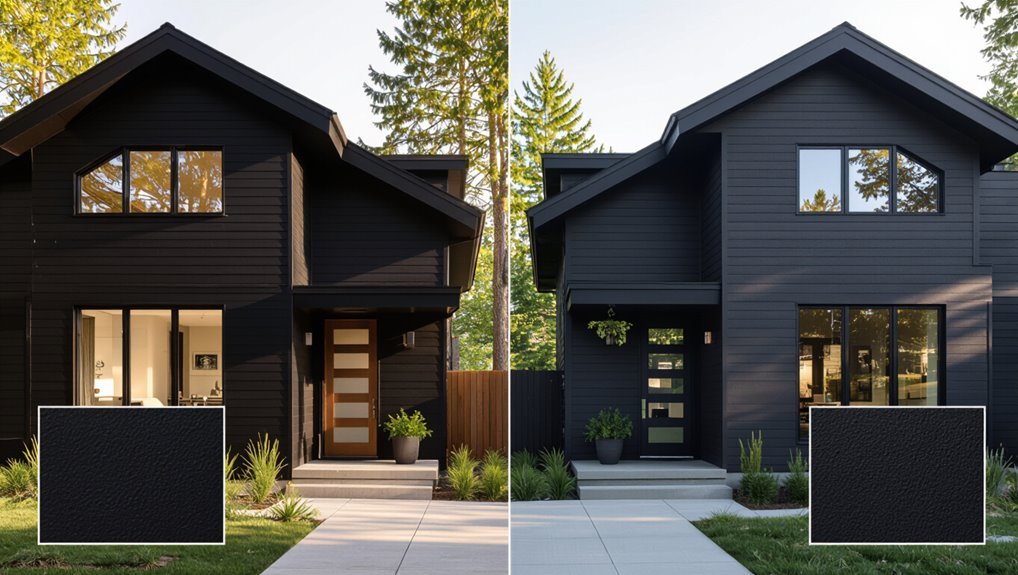
Wondering if black exterior paint fades faster? You’ll find black paint durability depends on quality, finish, and maintenance more than color alone.
You should factor environmental impacts like pollution and moisture, which strain coatings. Choose high-grade formulations and regular upkeep to preserve depth.
In short, black isn’t doomed to fade quickly if you prioritize proper products and care.
How UV and Heat Make Black Paint Fade
Because black absorbs more sunlight than lighter colors, UV rays and heat work together to break down the paint’s binder and pigments faster, causing chalking, loss of gloss, and visible fading over time. You’ll notice reduced color saturation and quicker decline in paint longevity from UV exposure and heat retention. Use maintenance strategies to counter environmental factors.
| Factor | Effect |
|---|---|
| UV exposure | Pigment breakdown |
| Heat retention | Binder degradation |
| Environmental factors | Accelerated wear |
| Maintenance strategies | Slows fading |
| Color saturation | Loss over time |
Why Pigment and Formulation Matter for Blacks
You’ll notice not all black paints age the same, because pigment lightfastness determines how well the color resists UV-induced fading.
The type and quality of resin or binder also control how pigments stay locked in and how the film handles heat and weather.
Understanding both pigment and formulation helps you choose a black that keeps its depth longer.
Pigment Lightfastness
How long a black paint stays true often comes down to the pigments and how the paint’s made. You’ll want pigments with proven pigment stability to resist UV breakdown and preserve color retention.
Choose formulations labeled lightfast or UV-resistant and follow maintenance guidance to extend life.
- Check pigment origin
- Prefer lightfast ratings
- Inspect manufacturer data
- Ask about accelerated testing
Resin And Binder
While pigments give black paint its color, the resin and binder determine how well that color holds up over time; they lock pigments in place, control film flexibility, and govern resistance to UV, moisture, and abrasion.
You should compare resin types—acrylic, alkyd, silicone—because binder functions affect adhesion, chalking, and gloss retention.
Choose formulations designed for exterior durability and UV stability.
Surface Prep and Primer for Lasting Black Paint
Before you paint, clean and repair the surface thoroughly so dirt, peeling, and gaps don’t undermine the finish.
Choose a primer formulated for exterior use and compatible with your black topcoat, then apply it evenly for good adhesion.
Make sure the substrate is dry and consider a moisture-blocking primer where needed so the paint can cure properly and last longer.
Surface Cleaning And Repair
Because black shows every imperfection, start surface prep by thoroughly cleaning and repairing the substrate so your paint can adhere and look uniform.
You’ll focus on surface cleaning and targeted repair techniques to remove dirt, mildew, loose paint and rust, and to fill cracks before painting.
- Pressure wash and detergent clean
- Scrape and sand flaking areas
- Treat and neutralize rust
- Use epoxy filler for gaps
Primer Selection And Application
Now that you’ve cleaned and repaired the surface, pick the right primer to lock in adhesion and color depth for black paint.
Choose primer types—bonding, stain-blocking, or high-build—based on substrate.
Follow proper application techniques: thin even coats, recommended drying times, and light sanding between coats.
That guarantees uniform sheen, strong adhesion, and deeper, longer-lasting black color without early failure.
Moisture Barrier And Drying
One critical step you can’t skip is creating an effective moisture barrier and ensuring proper drying before you paint black exteriors, since trapped moisture will dull color, lift primer, and accelerate fading.
You should reduce moisture retention with correct flashing, sealants, and breathable membranes, and use proven drying techniques before priming.
- Inspect and repair leaks
- Use vapor-permeable barriers
- Promote airflow and sun exposure
- Verify substrate dryness
Sun, Shade, and Microclimates: Exposure Effects
When your black exterior sits in direct sun for hours, UV radiation and heat accelerate pigment breakdown and clearcoat degradation, so surfaces fade and chalk faster than in shaded areas. You’ll notice sun exposure reducing color retention; shade impact, microclimate variations, environmental factors, seasonal changes and geographic differences all shape paint longevity.
| Zone | Effect |
|---|---|
| South | Intense UV |
| North | Cooler |
| Coastal | Salt haze |
| Urban | Heat island |
Maintain Black Exterior Paint: Cleaning and Touch-Ups
Keep your black exterior looking sharp by washing it gently every few months with a mild detergent and a soft brush to remove dirt and pollutants.
Inspect the surface after cleaning and do small, targeted touch-ups where chips or thin spots appear to prevent bigger peeling later.
Regular gentle cleaning plus prompt touch-ups will slow visible fading and keep the finish even.
Regular Gentle Cleaning
Because black shows dirt and streaks more readily, you should clean your exterior gently and regularly to preserve color and finish.
Use gentle techniques and suitable cleaning materials to avoid abrasion or stripping of protection. Rinse before washing, and dry to prevent water spots.
- Choose soft brushes or microfiber cloths
- Test cleaners on hidden areas
- Use low-pressure rinsing
- Schedule seasonal cleanings
Targeted Paint Touch-Ups
If small chips or scratches happen, address them quickly with targeted touch-ups to prevent rust, further peeling, and noticeable contrast on black surfaces.
You’ll clean the area, sand edges lightly, apply primer if bare metal or wood shows, then feather in matching black paint.
Regular targeted touch ups are an essential part of paint maintenance to keep finishes uniform and extend protective life.
Choose the Best Black Exterior Paint and Finish
When picking a black exterior paint and finish, focus on durability, UV resistance, and the sheen that suits your home’s style and maintenance preferences.
You’ll want options that maximize color longevity, match surface compatibility, and consider environmental impact while comparing paint brands and finish types; use proper application techniques for best results.
- Choose durable finish types
- Match surface compatibility
- Prioritize color longevity
- Mind environmental impact
Cost vs. Durability: Budget vs. Premium Paints
Although you can save upfront by choosing budget black exterior paint, you’ll usually sacrifice durability, UV resistance, and longer-term color retention compared with premium formulations; think regarding lifecycle cost rather than initial price alone.
Do a cost analysis: compare coverage, maintenance frequency, and warranty.
You’ll often pay more initially for premium paints but gain better paint longevity, fewer touch-ups, and lower total repainting costs over time.
When to Call a Pro for Repainting or Repairs
Picking a higher-quality black paint can cut down on maintenance, but you’ll still face moments where professional help makes sense.
Know when to seek a professional assessment to evaluate damage, substrate issues, or uneven fading that affects repainting frequency and warranty.
Call a pro if you spot:
- Large peeling or blistering
- Structural wood rot
- Persistent moisture stains
- Cracked, chalking surfaces
Common Homeowner Mistakes That Speed Fading
If you skip proper prep, you’ll speed up fading and force more frequent repainting—issues like failing to remove old loose paint, not sanding glossy surfaces, or ignoring primer let the sun and moisture break down the finish faster. You’ll also hurt color selection and longevity by using cheap paint, skipping maintenance tips, or applying in poor weather.
| Mistake | Effect | Fix |
|---|---|---|
| No sanding | Poor adhesion | Sand first |
| No primer | Peeling | Prime |
| Cheap paint | Fast fade | Choose quality |
| Bad timing | Blistering | Paint in mild weather |
| No cleaning | Dirt buildup | Wash before paint |
Summary: Keep Dark Exteriors Looking Sharp
When you want dark exteriors to stay crisp and vibrant, focus on proper prep, quality materials, and regular maintenance—clean surfaces, sand and prime where needed, use UV-resistant topcoats, and touch up chips promptly to prevent accelerated fading.
You’ll preserve color psychology impact and extend life with seasonal maintenance.
Preserve the color’s psychological impact and extend its life with routine, seasonal maintenance.
- Inspect for damage
- Clean and wash yearly
- Recoat with UV protection
- Touch up chips quickly
Frequently Asked Questions
Will Black Trim Fade Faster Than Black Siding?
Yes — black trim can fade faster than black siding if it faces more sun, weather, or abrasion. You’ll boost black trim durability by choosing high‑quality coatings, UV additives, and managing color retention factors like exposure and maintenance.
Can a Clear Coat Protect Black Exterior Paint?
Yes — a clear coat can protect black exterior paint. You’ll get clear coat benefits like UV shielding, moisture resistance and easier cleaning, which boost paint longevity and help maintain color depth and reduce premature fading.
Do Dark Colors Increase Cooling Costs in Summer?
“An ounce of prevention saves nine.” You’ll notice dark color absorption raises summer heat retention, so your cooling costs can climb; you’ll want lighter shades, reflective coatings, or improved insulation to keep energy use and bills down.
Is Black Paint More Prone to Chalking Over Time?
Yes — black paint can chalk more over time because heavy UV exposure breaks binders; you’ll want high chalk resistance and quality pigments, plus proper prep and UV-protective topcoats to slow surface degradation and maintain appearance.
Can Algae or Mold Make Black Paint Look Faded?
Yes — but listen: you might not notice at first, then dark streaks and dullness appear. You’ll need black paint maintenance and algae prevention measures, because algae or mold can make black paint look faded.
