
Can You Use Satin Paint on Ceilings? The Honest Answer
Yes — you can use satin on ceilings, and it’s a smart choice when you want durability and easier cleaning than flat paint. Satin gives a subtle sheen that looks more polished but will reveal texture and flaws more than flat finishes. It can cause glare under direct lighting, so test samples and adjust lighting or use diffused fixtures. Satin works well in kitchens, baths, and high-traffic areas. Keep going to see prep, application, and touch-up tips.
Should You Use Satin on Your Ceiling?

If you’re weighing satin for your ceiling, consider how much light and traffic the room gets: satin has a subtle sheen that highlights imperfections but also wipes clean more easily than flat.
You’ll enjoy satin benefits in bathrooms, kitchens, and hallways where moisture or scuffs occur.
Choose satin when you want added durability without sacrificing aesthetic appeal, but prep surfaces to minimize visible flaws.
Satin on Ceilings vs. Flat and Eggshell
When you compare satin to flat, you’ll notice satin reflects more light and hides flaws less effectively.
So ceilings with imperfections usually fare better with flat.
Against eggshell, satin gives a bit more sheen and is easier to wipe clean, making it a practical choice for high-traffic or moisture-prone rooms.
We’ll weigh the trade-offs of appearance, durability, and maintenance to help you pick the right finish.
Satin Versus Flat
Although satin and flat finishes both work on ceilings, they behave differently in sheen, durability, and how they hide imperfections, so you’ll want to choose based on the room’s needs and lighting. Satin offers satin durability benefits and stronger ceiling aesthetic impact, while flat hides flaws better.
| Feature | Notes |
|---|---|
| Sheen | Satin shinier |
| Durability | Satin tougher |
| Imperfections | Flat conceals |
| Cleaning | Satin easier |
| Use | Bedrooms vs. kitchens |
Satin Versus Eggshell
Wondering whether satin or eggshell makes a better ceiling choice?
You’ll like satin finish benefits: light reflectivity and easier cleaning, ideal for kitchens or bathrooms.
Eggshell durability wins in low-traffic rooms, hiding imperfections with subtle sheen.
Choose satin where moisture or stains occur; pick eggshell for muted look and resilience.
Both work, so match finish to room function.
How Lighting Changes Satin’s Look (Glare, Shadows, Hotspots)
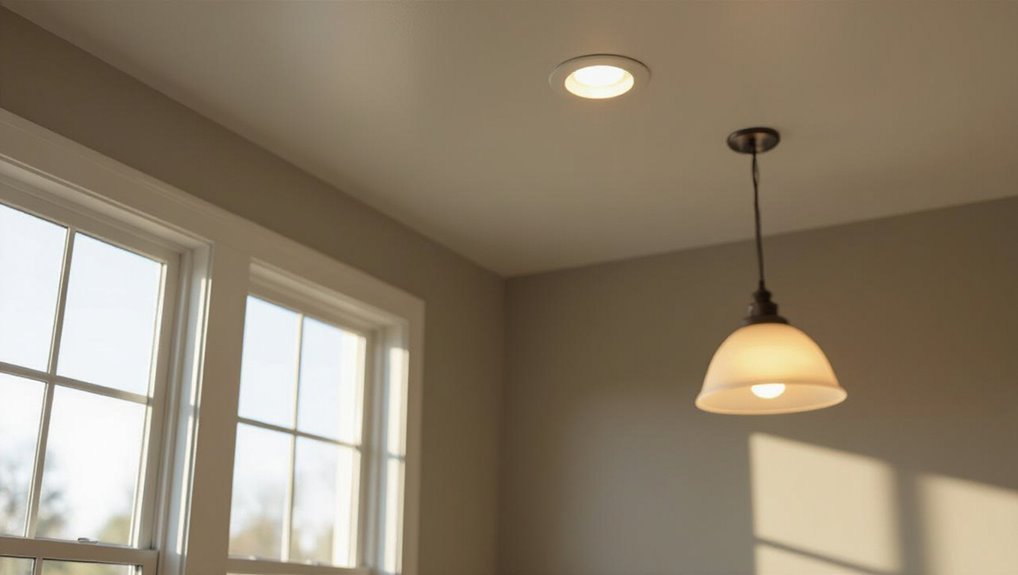
When you use satin on a ceiling, light can create noticeable surface glare that draws the eye.
That sheen also tends to highlight imperfections and brush marks more than flatter finishes.
And depending on the light direction you’ll get hotspots and stronger shadows that change how the room reads.
Increased Surface Glare
If you put satin paint on a ceiling, the way light hits it will make its sheen much more obvious than on matte finishes.
You’ll notice increased surface glare under direct fixtures and windows, creating hotspots and shifting shadows.
Consider glare reduction through diffused lighting and bulb choice, and weigh how that sheen aligns with your aesthetic preferences before committing to satin for ceilings.
Highlighted Imperfections
Because satin reflects more light than flat finishes, it tends to pick up and emphasize every bump, brushstroke, and patch on your ceiling, making imperfections far more visible under directional lighting.
You’ll notice satin finish concerns especially where ceiling texture varies; glare and shadow contrast outline flaws.
Inspect lighting angles first, because they’ll reveal unevenness you might otherwise miss before committing to satin.
Directional Hotspot Effects
While satin can brighten a room, its slight sheen also creates directional hotspots where light hits more intensely.
So you’ll see glare and sharper shadows depending on fixture placement and natural light angles. You’ll want to test samples under your directional lighting to check for hotspots and uneven reflections.
Consider aesthetic considerations: adjust fixture angles, diffuse bulbs, or choose flatter finishes if glare distracts from the space.
Texture Types That Satin Will Highlight (Smooth, Knockdown, Popcorn)
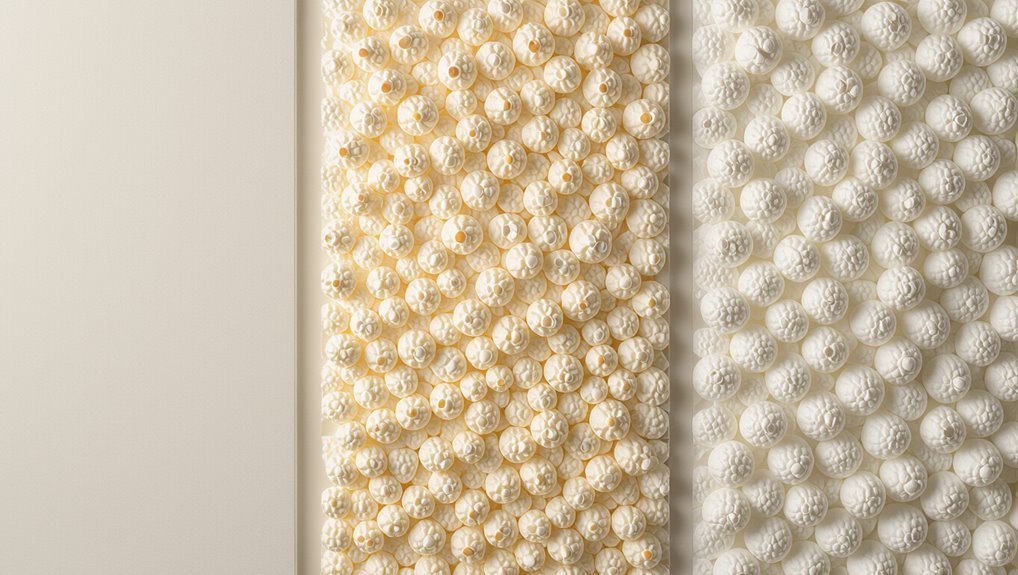
When you choose satin for a ceiling, be aware that its subtle sheen will make any texture more noticeable—smooth surfaces look slightly glossier, knockdown shows shallow highlights along the raised edges, and popcorn will pick up light unevenly, emphasizing bumps and shadows.
You’ll appreciate satin finish benefits for durability, but expect stronger texture visibility effects; inspect surfaces and prep accordingly before painting.
When to Choose Satin: Bathrooms, Kitchens, and Washable Ceilings
Noting how satin magnifies texture will help you decide where its practicality outweighs the increased visibility.
In bathrooms and kitchens, you’ll value satin advantages like moisture resistance and easier cleaning.
Choose satin for washable ceilings near showers, stoves, or high-traffic areas where ceiling durability matters.
You’ll accept slightly more visible texture for long-term maintenance benefits and stain resistance.
When Not to Choose Satin: Open Plans, Low Ceilings, and Showrooms
If your home has an open plan, satin on the ceiling can pick up and reflect activity from the whole space, making inconsistencies more noticeable.
In rooms with low ceilings, that slight sheen can create glare and draw the eye upward, shortening the feel of the room.
For showrooms or spaces where uniform, non-reflective presentation matters, you’ll usually want to skip satin and choose a flatter finish.
Open Plan Visibility
Because satin reflects more light than flat finishes, it can highlight seams, texture variations, and angled sightlines across open-plan spaces, making ceilings more noticeable than you might want.
In open space aesthetics, you’ll draw attention to changes and fixtures; consider ceiling height considerations before choosing satin.
If you want subtlety and cohesion in a wide, connected room, opt for a flatter finish.
Low Ceiling Glare
How will satin paint behave in rooms where the ceiling sits close to eye level? You’ll notice glare magnifies imperfections and can feel oppressive in tight spaces. For low ceiling aesthetics, choose flatter sheens. Satin still offers ceiling paint durability, but tradeoff is shine. Compare options below:
| Situation | Recommendation |
|---|---|
| Very low ceilings | Flat or matte |
| Showrooms/open plans | Satin only if flawless |
| Durability needed | Satin for cleaning |
Preparing Ceilings for Satin: Cleaning, Priming, and Repairs
Before you roll on satin paint, take time to clean, prime, and repair the ceiling so the finish lays down smoothly and lasts.
You’ll use effective cleaning techniques—degreasing, dusting, and spot washing—then address cracks, nail pops, and textured inconsistencies.
Choose appropriate priming methods for stains or porous surfaces, allow full curing, and sand repairs lightly so the satin topcoat adheres evenly.
Application Tips to Avoid Roller Marks and Sheen Variation
When you roll satin on a ceiling, work in consistent, overlapping passes and keep a wet edge so the sheen stays uniform and you won’t get lap marks.
Use steady pressure, maintain a rhythmic pace, and load the roller evenly to prevent streaks.
Employ roller techniques that minimize reworking; finish each section before it skins to preserve sheen consistency across the entire surface.
Best Rollers, Brushes, and Tools for Satin Ceilings
Tools matter: pick a medium-nap roller (3/8″ to 1/2″) for smooth ceilings and a 3/4″ nap for lightly textured surfaces.
For roller selection choose a high-density woven cover to reduce lint and stipple.
Use angled sash brushes and a 2–3″ synthetic brush for cutting in.
Have extension poles, a quality tray, and painter’s tape handy to finish clean, consistent satin ceilings.
How Many Coats of Satin You’ll Really Need?
Most ceilings will need two coats of satin for full, even coverage, though you might get away with one on a freshly primed, light-colored surface.
You’ll assess substrate porosity and color contrast to decide coats needed.
Allow proper drying between layers, maintain consistent nap direction, and use recommended application techniques to avoid uneven sheen while achieving durable, washable results.
Troubleshooting Streaks, Flashing, and Brush Marks
If you spot streaks or flashing on a satin-painted ceiling, you’ll want to identify whether they come from uneven thinning, poor lighting, or inconsistent overlap.
Fixing brush and roller marks usually means sanding light ridges, feathering edges, and maintaining a wet edge as you work.
Use the right roller nap and a good-quality brush to reduce marks on your next coat.
Identifying Streak Causes
When you notice streaks, flashing, or brush marks on a freshly painted ceiling, start by inspecting the application and drying conditions to pinpoint the cause.
Check streak patterns to see if they follow brush or roller direction. Note sheen variations that reveal uneven drying or inconsistent thinning.
Also assess lighting, overlap timing, and surface prep to identify where corrective steps are needed.
Fixing Brush And Roller Marks
Because brush and roller marks usually come from technique or drying issues, you can fix them without ripping out the ceiling—start by identifying whether the marks are surface film, thin spots, or texture differences.
Lightly sand glossy filming, feather in thin spots with matching satin durability coat, and re-roll seams to blend. Match sheen so your paint finish looks uniform.
How to Touch Up Satin Ceilings Without Visible Seams
Start by evaluating the existing finish and matching the satin sheen and color—get a sample of the paint used or bring a chip to the store for an exact match—so your touch-up blends in.
Use satin ceiling techniques like feathering edges, thin coats, and identical tools.
Work fast while paint is wet, blend into surrounding surface, and avoid overlap to achieve seamless touch ups without obvious seams.
Cost and Maintenance: Satin vs. Flat/Eggshell
If you pick satin over flat or eggshell, you’ll pay a bit more up front but save time and effort on upkeep—satin’s smoother, slightly reflective surface resists dirt and wipes clean more easily, while flat and eggshell hide imperfections better but demand more frequent repainting or careful spot repairs.
For a clear cost comparison, weigh higher initial price against lower maintenance frequency and touch-up time.
Real-World Room Examples: Where We’d Use Satin (And Why)
Anywhere you need durability without a high-gloss look, satin is a smart choice.
Use it in kitchens, bathrooms, hallways and kids’ rooms where moisture or scuffs happen. You’ll pick satin color choices that hide imperfections and still reflect light.
It cleans easier than flat, so follow basic ceiling maintenance tips: gentle washing, spot touch-ups, and avoiding abrasive scrubbers to preserve finish.
Quick Checklist Before You Roll: Decision and Prep Items
Before you load the roller, make a quick, focused checklist so you won’t be stuck mid-job deciding what you need; confirm the satin sheen, calculate paint quantity, check ceiling condition for repairs, gather drop cloths and ladders, and choose appropriate tools like an extension pole and a good nap roller.
| Item | Why | Action |
|---|---|---|
| Ceiling preparation | Surface readiness | Patch, sand |
| Tools | Efficient application | Roller, pole |
| Paint durability | Longevity | Pick quality satin |
Frequently Asked Questions
Can Satin Paint Be Tinted to Match Trim or Wall Colors Exactly?
Yes — you can tint satin to match trim or walls exactly. Think of the paint as a key revealing harmony; you’ll use color matching, compare finish options, and fine-tune undertones until the fit feels perfect.
Will Satin on Ceilings Hide Smoke or Nicotine Stains Long-Term?
No — satin can hide smoke or nicotine stains short-term, but you’ll need stain-blocking primer and regular cleaning; long term durability against yellowing and seepage isn’t guaranteed, so expect touch-ups or specialized coatings.
Can You Spray Satin on Vaulted or Angled Ceilings Safely?
Yes — you can, though don’t pretend it’s a gravity-defying miracle: you’ll need safety precautions like goggles, respirator, drop cloths and secure ladders, plus proper application techniques — controlled passes, overlap, and thinning for even coverage.
Does Satin Affect Room Acoustics or Echo Compared to Flat?
No, satin won’t noticeably change acoustic absorption; you’ll hear similar echo levels. You’ll get slightly more sound reflection from satin than flat, but the difference is minimal—ceiling texture and furnishings matter far more.
Are There Eco-Friendly Low-Voc Satin Options for Ceilings?
Yes — you can choose eco-friendly low-VOC options for ceilings; you’ll enjoy eco friendly benefits like improved indoor air quality, reduced odors, and safer application while still getting the durability and easy cleaning satin finishes provide.
