
30 Attic Bedroom Storage Ideas to Maximize Space
You can reclaim awkward attic angles by adding built-ins like eave drawers and knee-wall cabinets, plus under-bed pull-outs and rolling bins for seasonal items. Fit a lofted bed to free floor space and install pull-out wardrobes in tight alcoves for hanging and shoes. Add LED-lit display shelves and maximize the attic access door with hidden storage. Stack and label uniform boxes, then map zones for safety and ease—keep going to uncover specific layouts and installation tips.
Use Under-Bed Drawers and Rolling Storage Bins
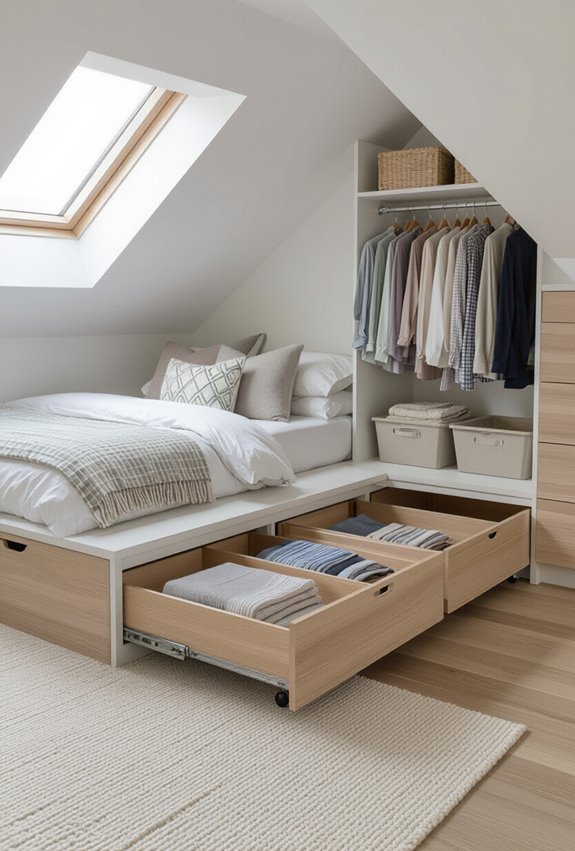
A few slim drawers or rolling bins under your bed can reclaim dozens of square feet without changing the room’s layout.
You can install smooth Drawer Slides for easy access to seasonal clothes, linens, or shoe boxes.
Choose clear Rolling Bins on casters for visibility and mobility, label each container, and measure clearance so everything glides without scraping the floor or blocking airflow.
Add a Lofted Bed to Free Floor Space
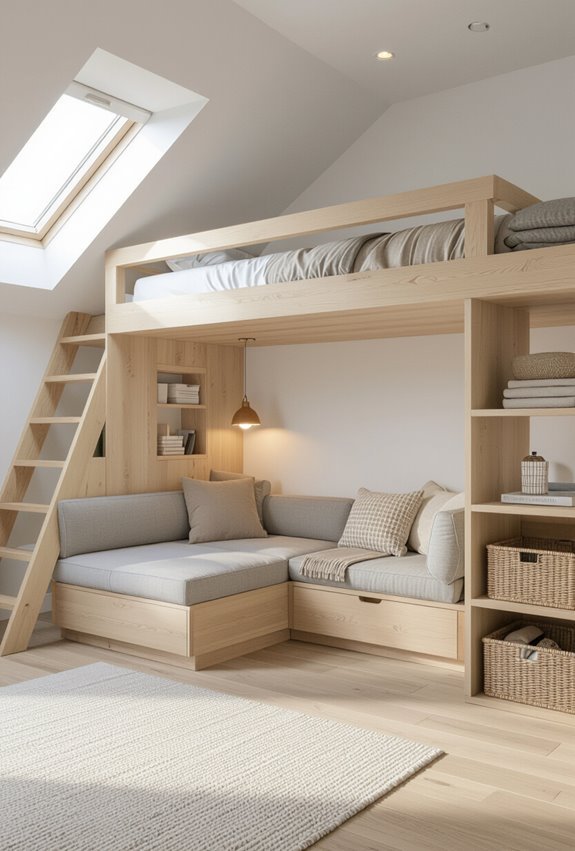
Once you’ve reclaimed storage under the bed, consider lifting the whole sleeping area to open up much more usable floor space.
A lofted bed gives you room for a seating nook or storage below; access it with a compact vertical ladder.
Mount a suspended desk beneath to create a workspace without eating floor area, and add shelves or cubbies for organized, reachable storage.
Fit Pull-Out Wardrobe Units in Tight Alcoves

Turn narrow, awkward alcoves into efficient storage by fitting slim pull-out wardrobe units that slide out for full access and tuck away when you don’t need them.
You can customize slim wardrobes with hanging rails, drawers, and shoe racks to match clothing needs.
Use alcove organizers with soft-close runners for smooth operation, maximizing vertical space without intruding into the room’s flow.
Create Recessed Shelving in Dormer Walls

If your dormer walls leave shallow voids, carve recessed shelving into them to gain storage without stealing floor space.
You’ll create neat built in niches for books, plants, and bedside items, and use angled cubbies where the roof slope narrows.
Frame, drywall, and finish flush for a tailored look, then add lighting or trim to make each niche both functional and decorative.
Build Custom Cubbies Into the Roof Pitch
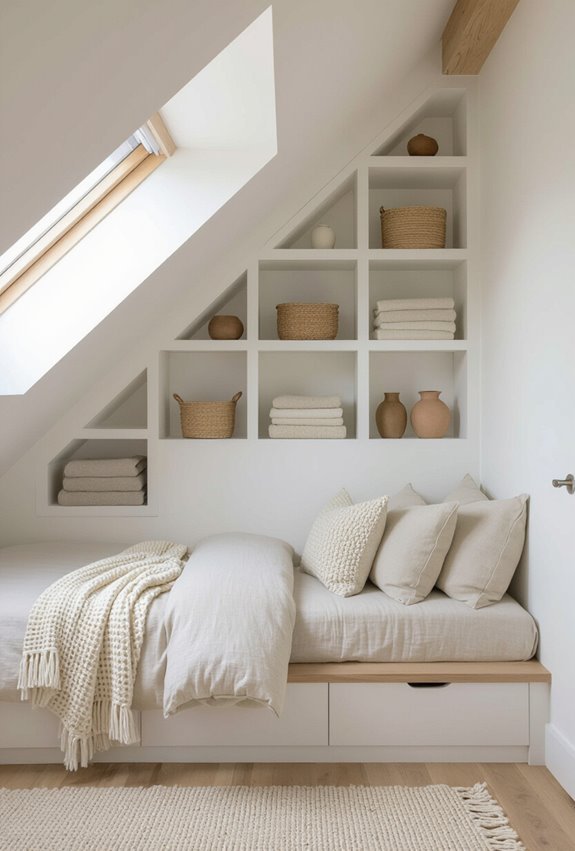
Carve usable storage out of awkward sloped spaces by building custom cubbies into the roof pitch, so every inch under the eaves works for you. Fit angled cubbyheads flush with rafters to create neat, accessible niches.
Use pitched alcoves for books, baskets, and folded linens, adding doors or pull-out drawers for a finished look that hides clutter while matching attic lines.
Use Wedge-Shaped Storage for Slanted Corners
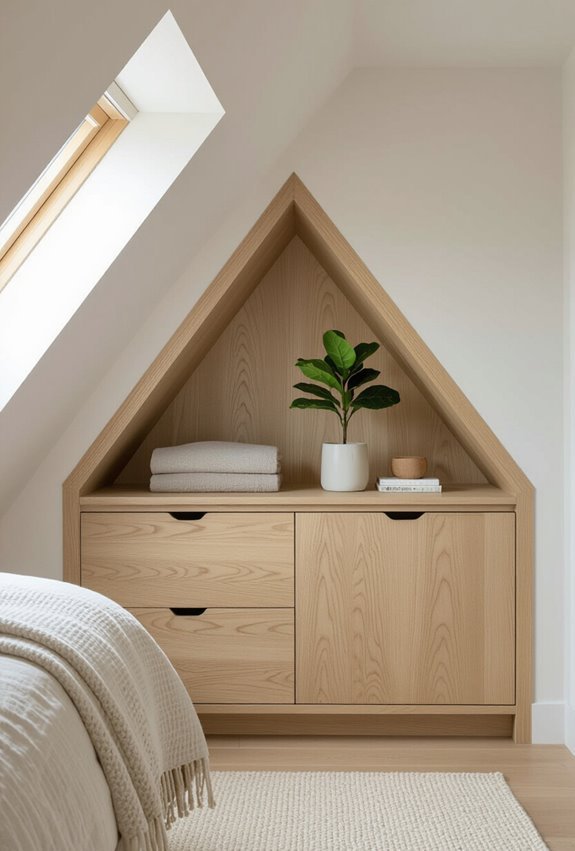
When your attic walls slope into tight, awkward corners, you can reclaim that space with wedge-shaped storage that fits the angle precisely.
You’ll design slim units that tuck into the slope, creating corner cubbies for linens, shoes, or books. Include angled drawers to maximize depth and access, and finish with matching fronts so the storage reads as intentional architecture, not clutter.
Install Floating Nightstands to Save Floor Area

Mount floating nightstands to free up floor space and give your attic bedroom a lighter, airier feel.
You can mount floating shelves at varying heights to hold lamps, books, and chargers while keeping the floor clear. Install bedside cubbies beneath for hidden storage of glasses, remotes, or journals.
Choose slim, sturdy designs to maximize circulation and maintain a neat, open look.
Mount Pegboards for Flexible Small-Item Storage
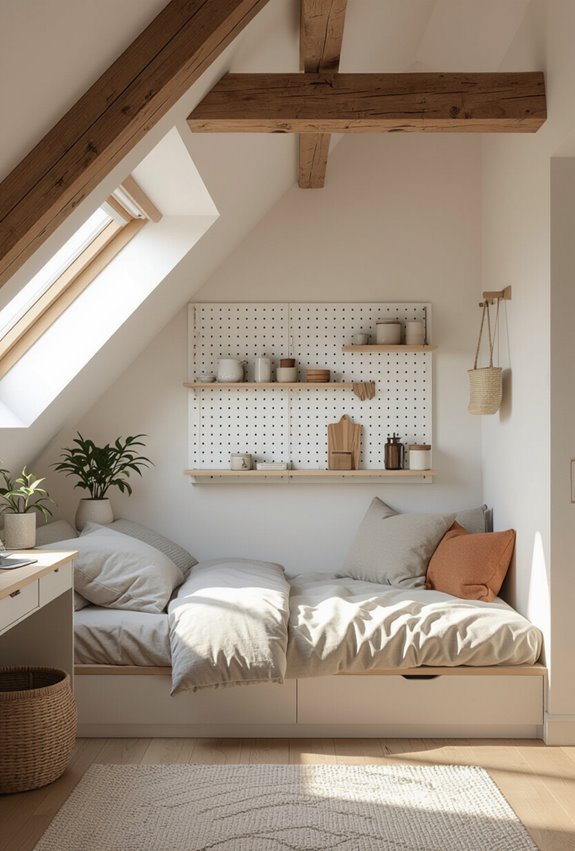
If you liked how floating nightstands opened up floor space, pegboards offer the same roomy feel on vertical surfaces while keeping small items organized and within reach.
Mount a pegboard above your desk or dresser, mix hooks, pegboard baskets and magnetic strips for tools, jewelry and chargers, and rearrange as needs change so every item has an easy-access spot without cluttering counters.
Use Vertical Ladder Shelving Against Taller Walls
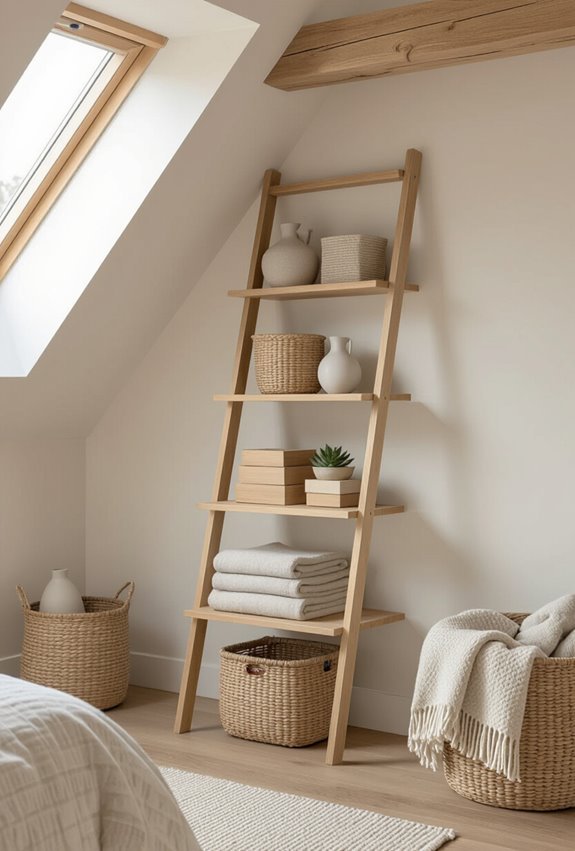
Lean a slim ladder shelf against a taller wall to capitalize on vertical space without crowding the floor.
You’ll choose a tall narrow unit that fits eaves and slopes, using ladder integrated shelving to stack books, baskets, and decor.
Position shelves at varied heights for easy reach, secure the top to a stud, and keep pathways clear while boosting storage and visual height.
Install Ceiling-Mounted Bike and Gear Racks
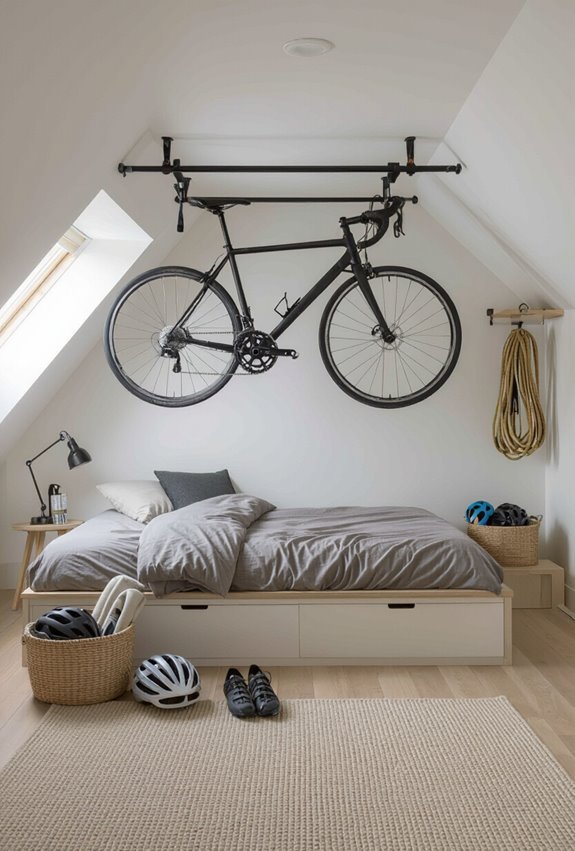
Maximize overhead space by installing ceiling-mounted bike and gear racks that keep bulky items out of your way while freeing up floor area for living or storage.
You can use an overhead bike hang system or ceiling pulleys to lift bikes and helmets up and out.
Pick sturdy anchors, measure joist placement, and arrange racks to leave clear pathways and easy access when you lower gear.
Create a Built-In Window Seat With Hidden Storage

Positioned beneath a dormer or angled roof, a built‑in window seat gives you a cozy perch and clever hidden storage without eating into floor space.
You’ll plan internal compartments for linens and seasonal items, fit a bench hinge for smooth access, and use a cushion lift to keep the lid stable.
Choose slim profiles and stain to match trim for a seamless, space-saving finish.
Use Modular Cube Systems That Adapt to Angles
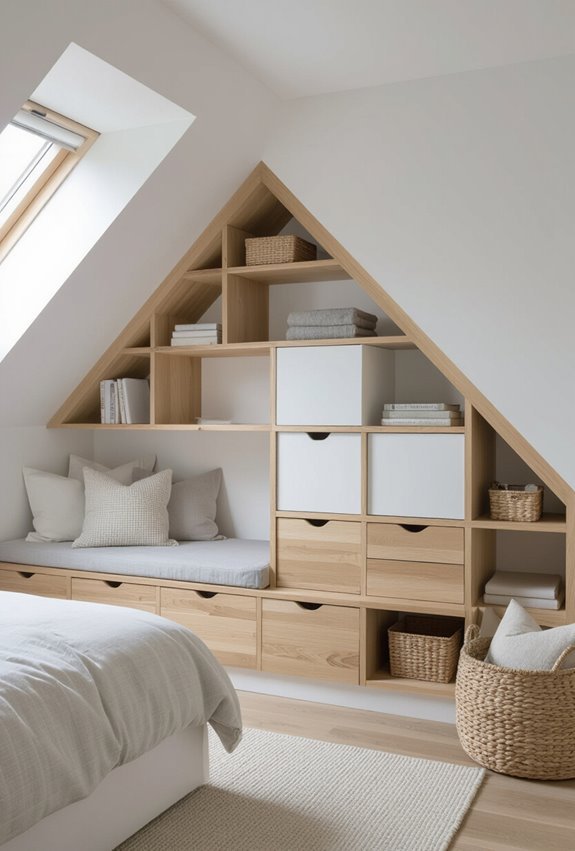
When your attic’s sloped walls and odd corners make standard shelving impractical, modular cube systems give you flexible, customizable storage that fits the angles.
You’ll position angled cubes to follow rafters, mix open and closed modules, and secure units with adaptive joints for stability.
This lets you tailor height, depth, and layout, keeping clothing, books, and bins accessible without wasted space.
Convert Attic Rafters Into Clothing Rails
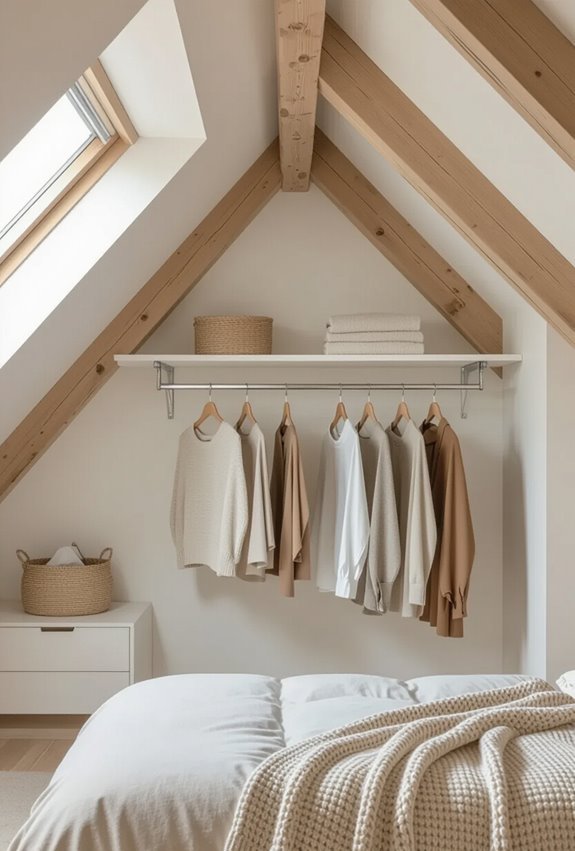
Convert attic rafters into clothing rails to create instant, low-profile hanging space that follows your roofline.
You can mount sloped rod systems directly between rafters using exposed joist hangers for a sturdy, industrial look.
Measure slope and garment lengths, install rods at varying heights, and leave clearance for folding or access.
This keeps clothes visible, ventilated, and easy to rotate without bulky wardrobes.
Store Seasonal Items in Labeled Vacuum Bags
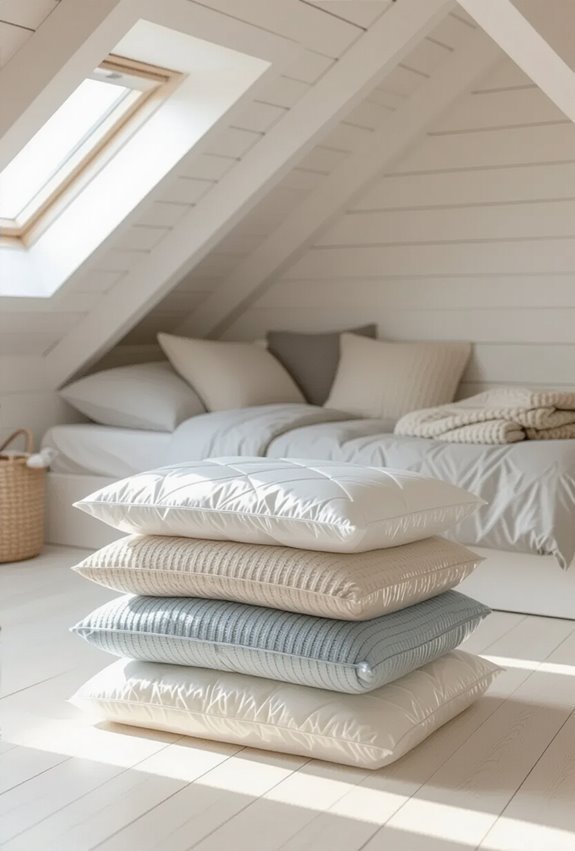
Once you’ve freed up hanging room along the rafters, make the most of every other inch by packing out-of-season clothing and bulky items into labeled vacuum bags.
Choose fabric selection carefully—delicate wool or leather needs breathable options.
Seal and compress to save space, then store with clear label maintenance routines so you can rotate seasons easily and prevent forgotten contents or damage.
Use Clear Plastic Bins on Low Shelves for Visibility

Pull clear plastic bins onto low shelves so you can see contents at a glance and grab what you need without rummaging.
Use transparent totes for linens, shoes, and hobby supplies, arranging by frequency of use.
Apply shelf labels to front edges for quick identification, and keep heavier items low for safety.
Rotate contents seasonally and maintain a tidy, accessible attic bedroom storage system.
Add Corner Shelves to Use Awkward Spaces

If clear bins keep frequently used items visible, corner shelves help you reclaim awkward angles that would otherwise go unused.
You can install floating corner units to hold books, plants, or baskets without floor clutter. Triangular shelving fits tight rooflines and makes organizing accessible. Choose sturdy brackets and consistent spacing so your attic’s odd nooks become neat, usable storage.
Fit a Compact Dresser With a Narrow Footprint
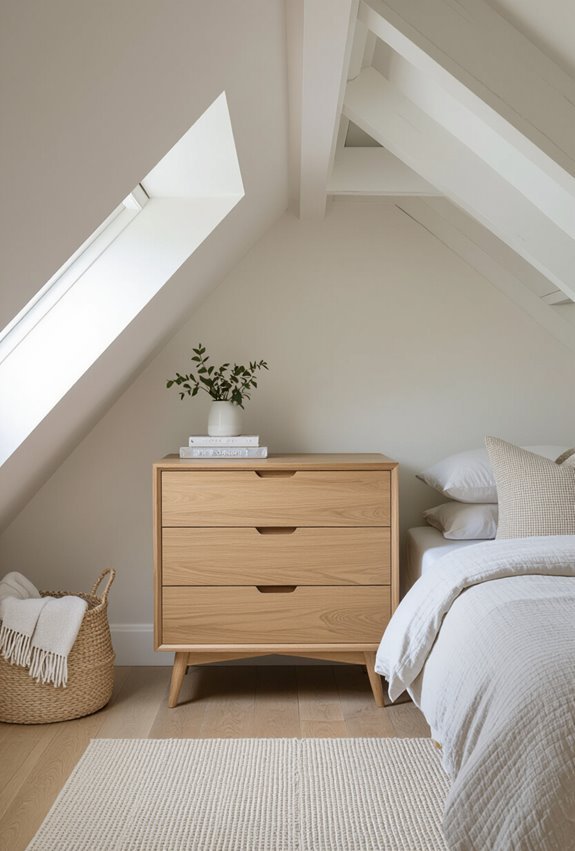
Fit a compact dresser with a narrow footprint to maximize storage without crowding your attic bedroom’s limited floor space.
Choose a narrow dresser that tucks beside sloped walls, balancing height and stability. Use vertical drawers to store folded clothes and accessories, label drawers for quick access, and anchor the unit. This keeps circulation open while boosting organized storage in tight attic corners.
Build Drawers Into a Platform Bed Frame
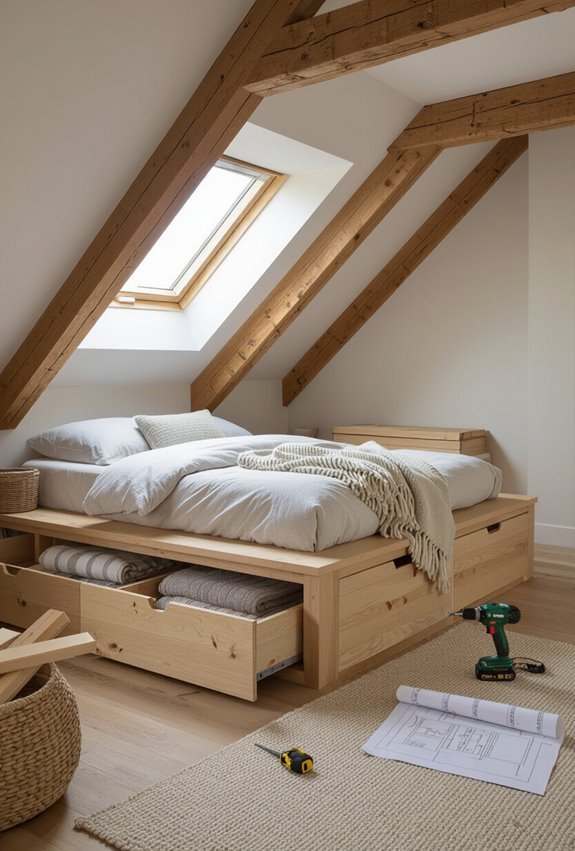
Build drawers into your platform bed frame to add substantial, hidden storage without sacrificing style. You’ll tailor drawer sizes for linens, clothes, and seasonal items, keeping frequently used things accessible.
Add integrated charging in a side compartment for devices and make certain airflow under a vented mattress by leaving clearance or vents in drawer fronts. Choose soft-close slides to protect contents and quiet operation.
Install Under-Eave Hooks for Coats and Bags
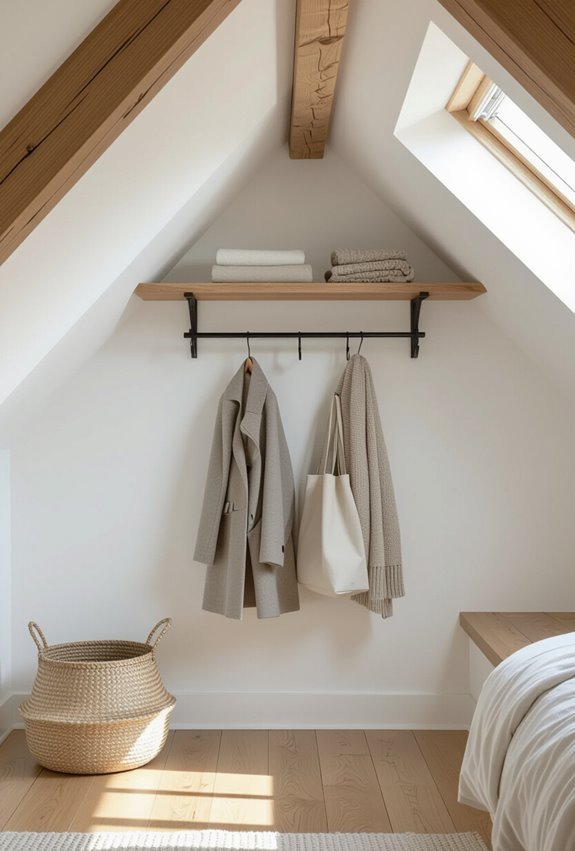
Tuck a row of sturdy hooks under the eaves to reclaim otherwise wasted wall space for coats, bags, and hats. Mount a low-profile Coat Carousel for rotating access and mix fixed hooks with small Bag Valets for straps.
You’ll keep pathways clear, front items reachable, and seasonal pieces visible without crowding floor or furniture—simple, tidy, and tailored to sloped ceilings.
Incorporate Hidden Compartments in the Headboard

Create clever storage by integrating hidden compartments into your headboard so you get easy access without sacrificing style.
You can build a secret headboard with shallow cubbies, a flip-up top, or slim drawers to stash books, chargers, and valuables.
A drawer headboard keeps items organized and out of sight, preserving your attic bedroom’s clean lines while maximizing usable space.
Use Multi-Functional Furniture (Desk + Storage)
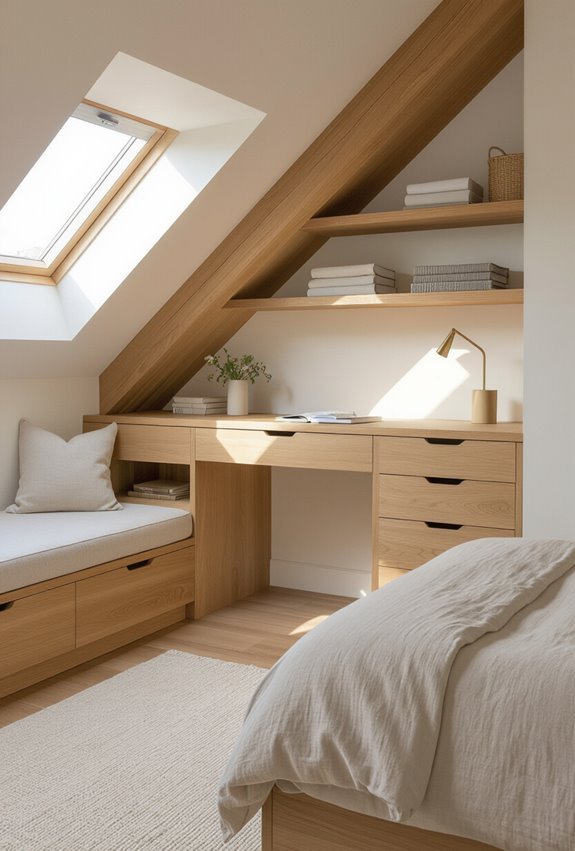
When space is tight, combine a desk with built-in storage so you can work, store, and declutter without adding extra furniture.
Choose a fold down desk that tucks away when not in use, pair it with concealed shelving for papers and gadgets, and add drawers or cubbies for linens.
This keeps your attic bedroom functional, tidy, and uncluttered.
Add LED-Lit Display Shelves for Small Decor Items

A narrow wall shelf with integrated LEDs lets you show off keepsakes without cluttering your attic bedroom; the slim lighting highlights small decor and adds soft ambient glow so your space feels curated and cozy.
Install shallow LED niches along a sloped wall to display ceramics or photos.
You’ll use accent lighting to create focal points, save floor space, and keep surfaces tidy.
Choose Stackable, Labeled Storage for Attic Boxes
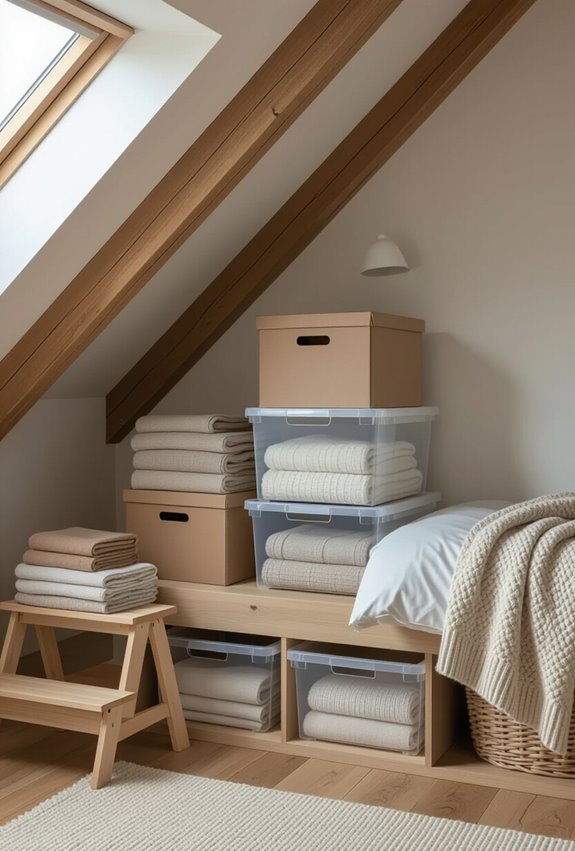
Several clear, stackable bins will transform a messy attic into an organized storage system—pick uniform sizes so they nest securely and make the most of vertical space.
You’ll group items by type, use stackable crates for heavy goods, and seal boxes with labelled lids for quick retrieval.
Keep fragile things low, seasonal items higher, and maintain an aisle for safe access.
Optimize Layout With a Simple Storage Zoning Plan

When you sketch a simple zoning plan, you’ll divide the attic into clear-use areas—seasonal storage, everyday access, fragile items, and a maintenance aisle—so everything has a logical place and you cut search time.
Map a zoning diagram to set traffic flow, mark focal points for easy retrieval, and plan light placement for safety. Label zones and keep pathways clear.
Use Decorative Baskets for Clutter Management
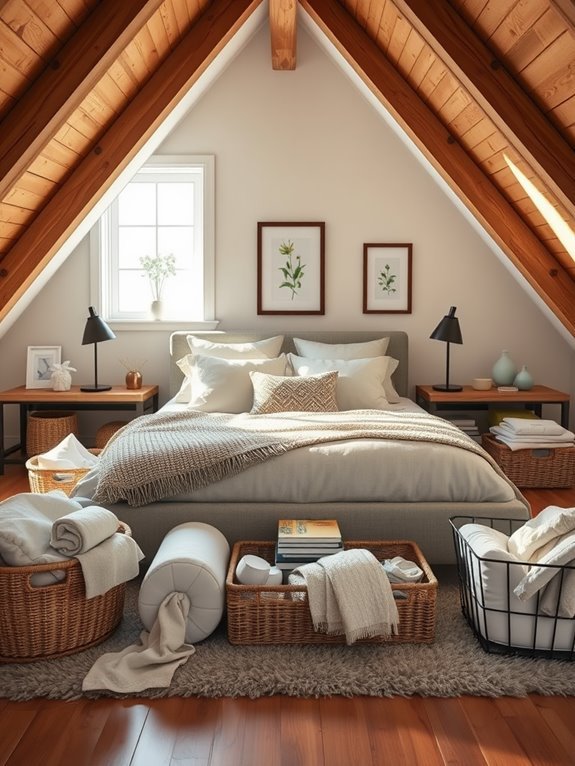
Although attics often face challenges with limited space, using decorative baskets can be an effective solution for managing clutter.
These stylish containers not only keep your belongings organized but also add a touch of charm to your room.
Place them on shelves, under beds, or in corners to maximize storage.
You’ll find it easier to access items without sacrificing aesthetics.
Install a Lofted Bed for Additional Floor Space
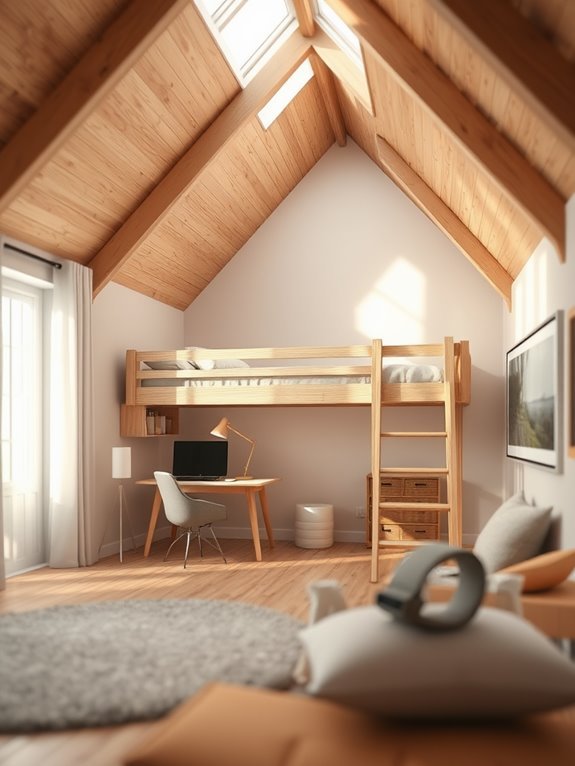
If you’re looking to maximize floor space in your attic bedroom after organizing with decorative baskets, consider installing a lofted bed.
This clever solution elevates your sleeping area, freeing up valuable floor space for other uses.
- Create a cozy reading nook underneath.
- Set up a desk for work or study.
- Add storage bins for seasonal items.
- Incorporate shelves for books and decor.
Use Multi-Functional Furniture
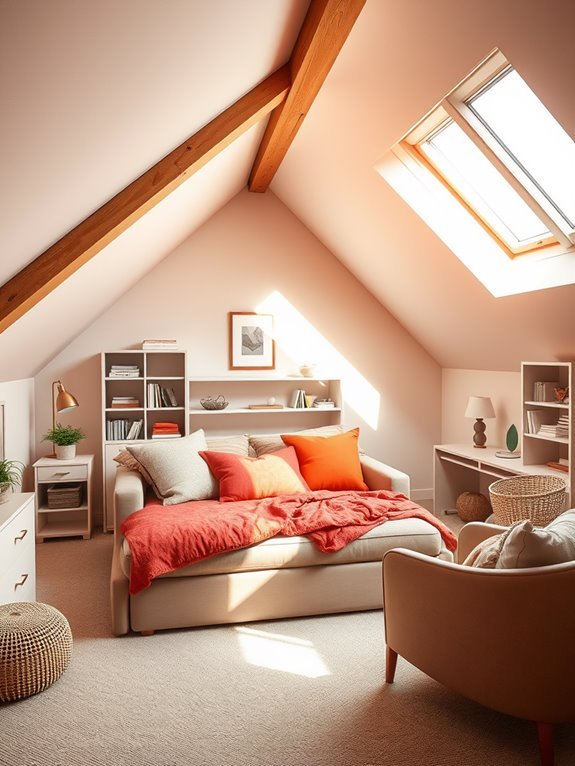
Choosing multi-functional furniture can greatly enhance your attic bedroom’s usability, especially when space is limited.
Consider these smart options:
- A bed with built-in drawers for extra storage.
- An ottoman that doubles as a seat and storage unit.
- A desk that folds up when not in use.
- A bookshelf that can act as a room divider.
These choices maximize both function and style!
Create a Storage Wall With Cabinets
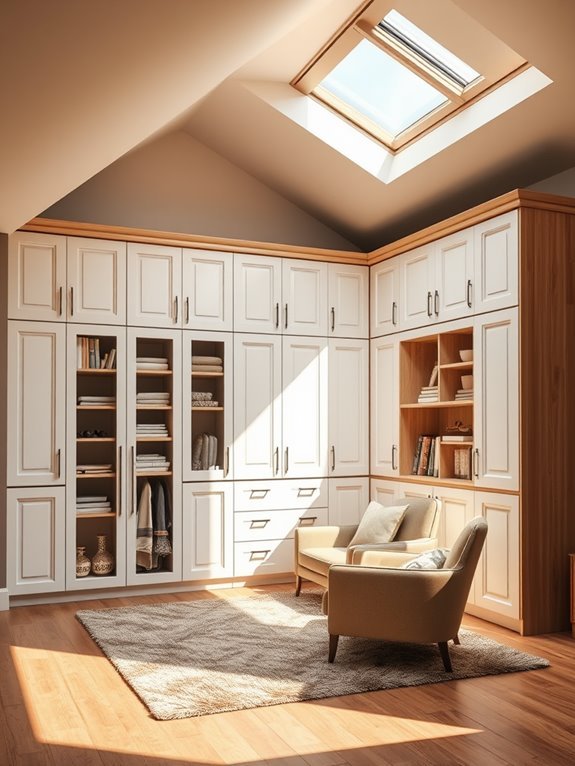
Creating a storage wall with cabinets can dramatically maximize the functionality of your attic bedroom.
This approach not only organizes your space but also enhances aesthetics.
Consider these options for your cabinets:
- Tall cabinets for seasonal clothing
- Shallow cabinets for books and decor
- Corner cabinets to utilize awkward spaces
- Open shelving for easy access to everyday items
Transform your attic into a stylish, functional retreat!
Design Custom Drawer Units
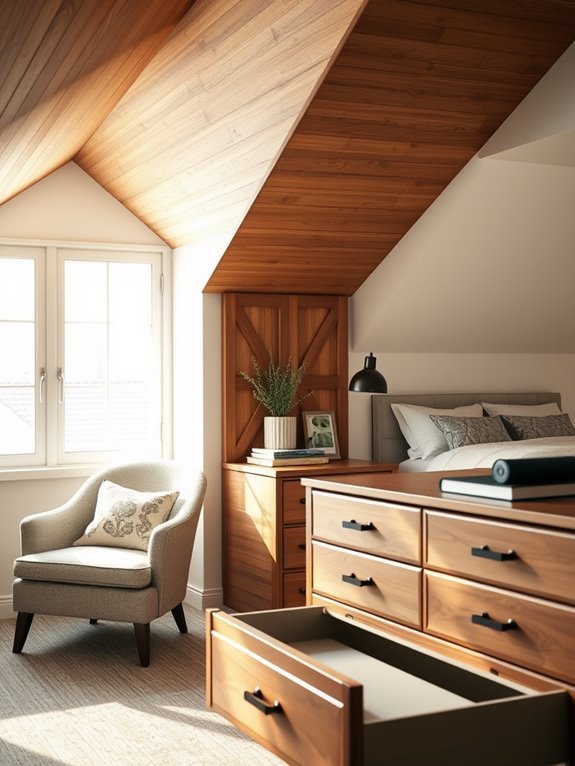
Custom drawer units can transform your attic bedroom into a more organized and functional space.
By tailoring these units to your needs, you can maximize storage efficiently.
Consider incorporating:
- Deep drawers for bulky items.
- Shallow drawers for accessories.
- Dividers for easy organization.
- Built-in lighting for visibility.
These elements not only enhance functionality but also elevate the overall aesthetic of your attic sanctuary.
Optimize Corner Spaces With Curved Shelving
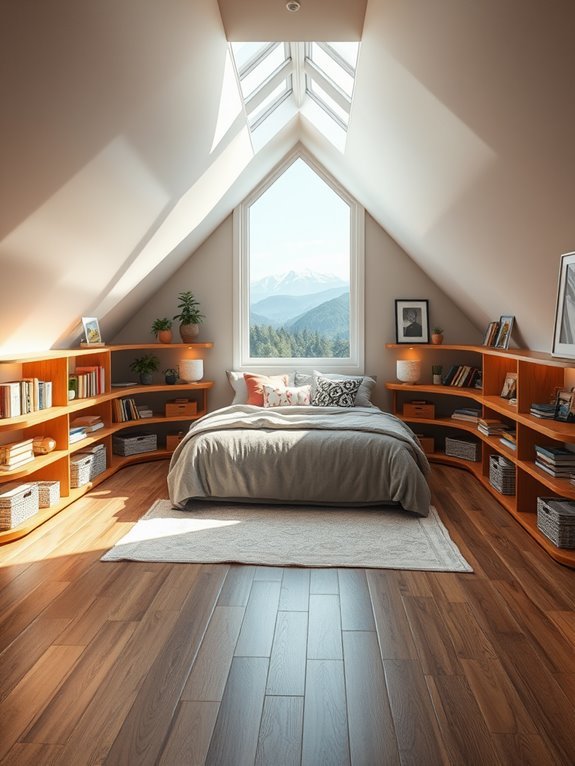
Maximizing every inch of your attic bedroom is key to achieving both style and functionality.
Curved shelving is a perfect solution for those tricky corner spaces. It seamlessly fits into the room’s architecture while providing ample storage for books, decor, or personal items.
This design not only enhances the visual appeal but also makes every corner work harder for you.
Conclusion
By implementing these smart storage ideas, you can transform your attic bedroom into a functional and stylish space. For instance, imagine converting a neglected corner into a cozy reading nook with built-in shelving and hidden storage for books and blankets. This not only maximizes your space but also creates a welcoming atmosphere. With a bit of creativity, you can easily keep clutter at bay while enhancing the charm of your attic retreat.
