
30 ADA-Compliant Bathroom Ideas for Accessible Comfort
You can create an accessible, comfortable bathroom by prioritizing clear pathways with at least 60-inch turning space and installing grab bars near toilets and showers for safety. Choose a comfort-height, elongated toilet and add adjustable vanities and storage within reach. Incorporate roll-in showers with fold-down seats and thermostatic controls for water safety. Use motion-sensor lighting and push-plate entry for ease of use. With thoughtful planning and future-proof features, your bathroom will meet ADA standards and provide lasting comfort and convenience. Explore these ideas further to enhance accessibility and style.
Install Grab Bars for Safety and Support
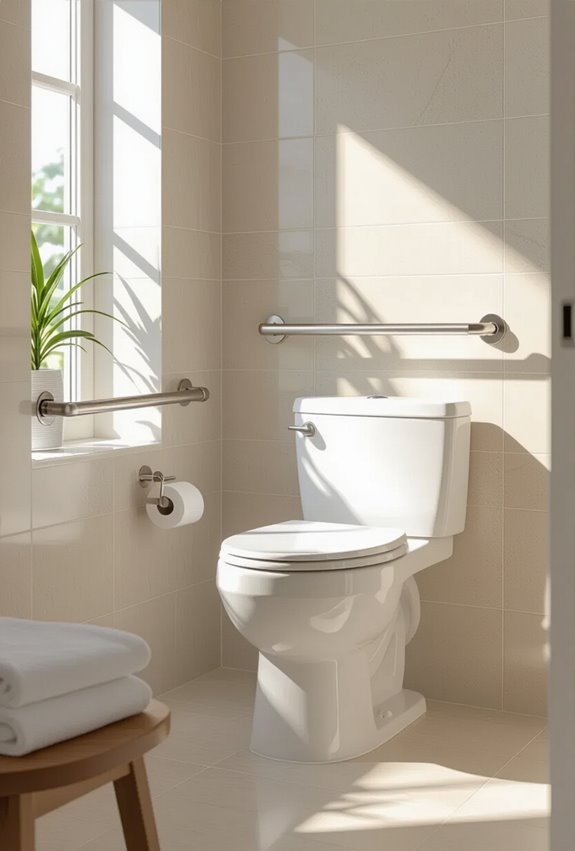
Install grab bars strategically to enhance safety and provide essential support in your ADA-compliant bathroom. Position them near the shower, toilet, and bathtub to assist with bathroom transfer smoothly.
Choose grab bars with durable grip textures to prevent slipping, ensuring confident, secure holds. Proper installation boosts independence and reduces fall risks, making your bathroom safer and more accessible.
Select an Accessible ADA Toilet Model
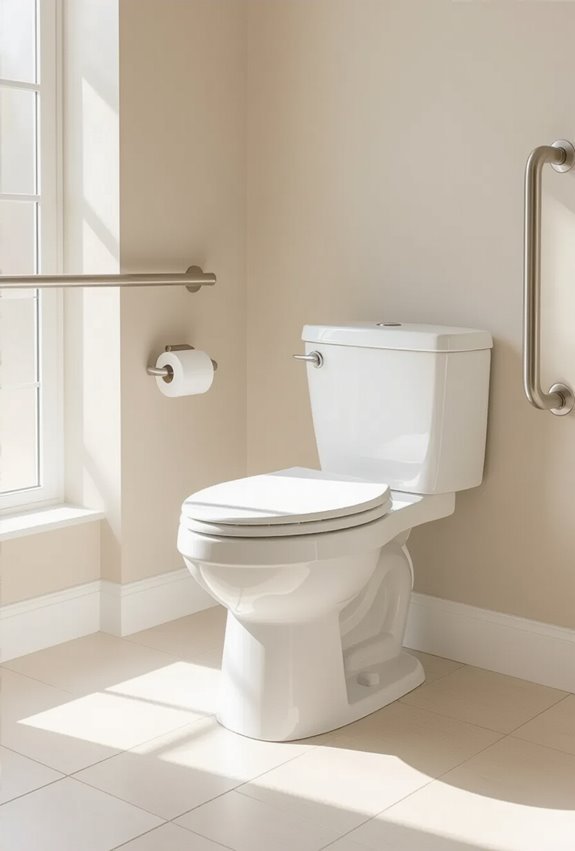
Adding grab bars improves safety, but choosing the right toilet model plays an equally important role in making your bathroom ADA-compliant.
Opt for a floor mounted toilet with a concealed tank to maximize space and ease of access. These designs offer stability and a clean look, ensuring comfort while meeting ADA guidelines for accessibility and functionality in your bathroom.
Incorporate Roll-In Shower Designs
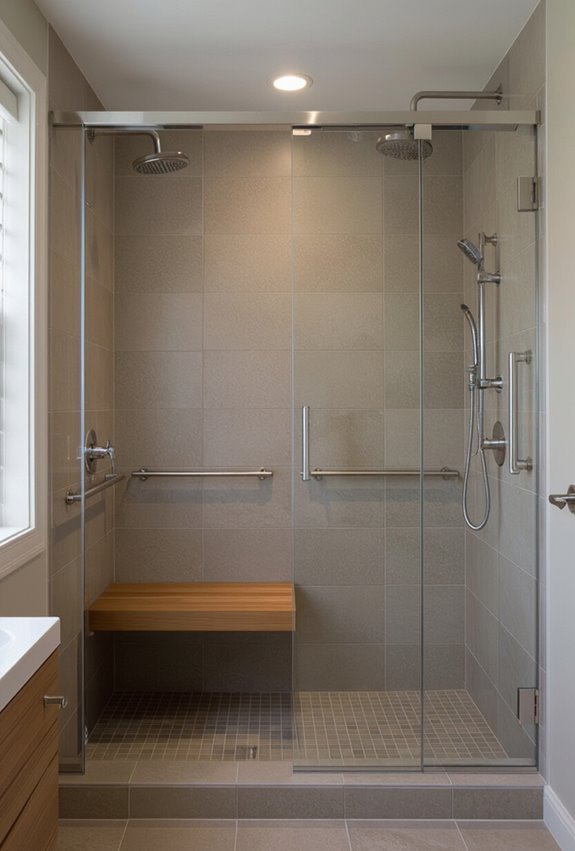
When planning your bathroom layout, incorporating a roll-in shower design can greatly improve accessibility and convenience.
Include a weatherproof bench for comfortable seating and a textured grabbar for secure support. These features help prevent slips and provide stability, making your shower safer and easier to use for everyone, especially those with mobility challenges.
Add a Fold-Down Shower Seat
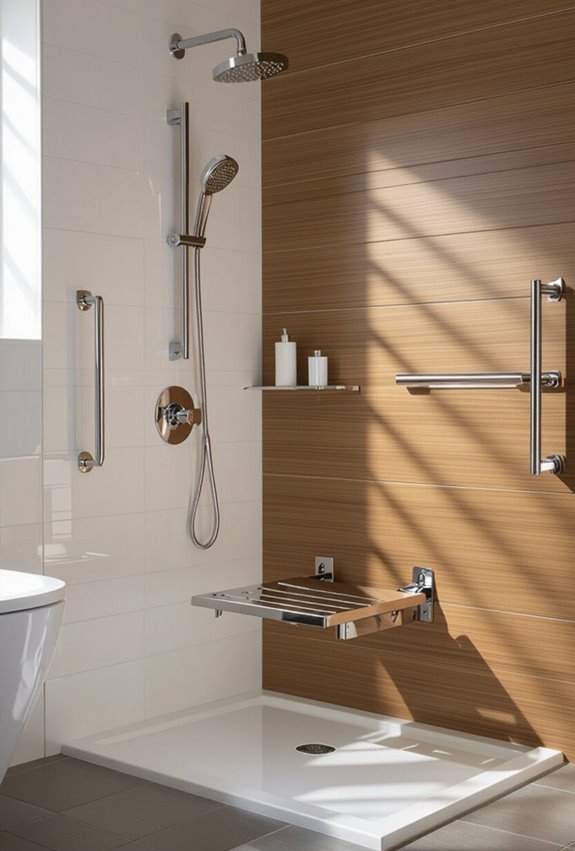
Install a fold-down shower seat to maximize space without sacrificing comfort or safety. Choose a portable folding seat made from durable materials like heated teak for warmth and style. These seats fold up neatly when not in use, giving you flexibility and accessibility. A heated teak seat also adds a touch of luxury while ensuring ADA-compliant support in your bathroom.
Use a Handheld Showerhead With Adjustable Height
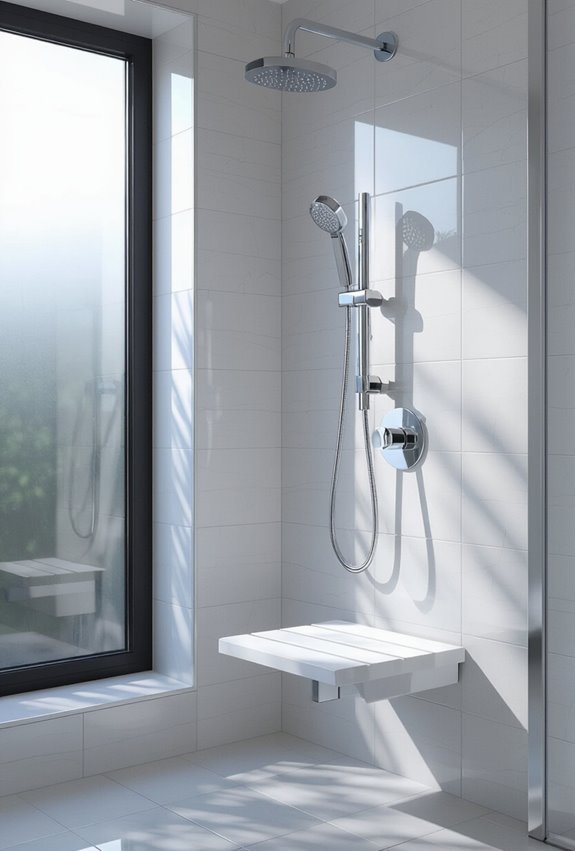
Enhance your shower’s accessibility by adding a handheld showerhead with adjustable height. This feature improves handheld ergonomics, allowing you to position the showerhead comfortably whether seated or standing.
Height adjustability mechanisms guarantee easy customization, accommodating different users and mobility needs. Installing one boosts convenience and safety, making your bathroom truly ADA-compliant and user-friendly without compromising style or function.
Choose a Curbless Shower Entry
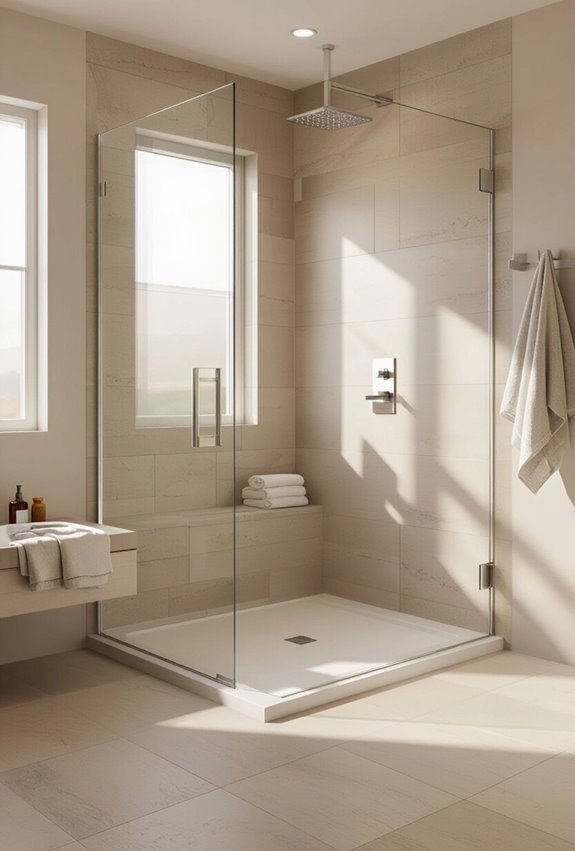
Because stepping over a threshold can be challenging, choosing a curbless shower entry makes your bathroom safer and more accessible.
A zero threshold and seamless entry eliminate barriers, allowing easy wheelchair or walker access.
Incorporate a sloped floor to guide water toward a linear drain, ensuring efficient drainage without disrupting the smooth, barrier-free design you need for comfort and safety.
Place Non-Slip Flooring for Secure Footing
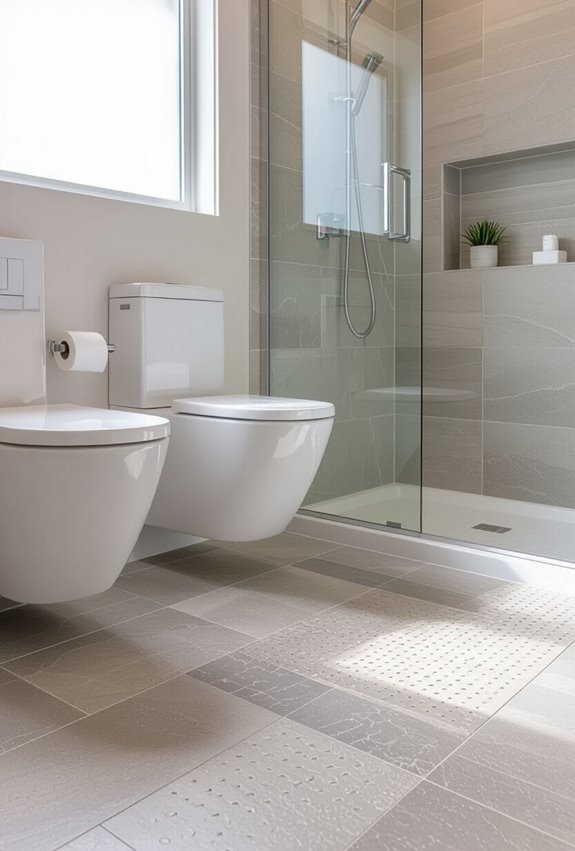
Every step in your bathroom should feel safe, so choosing non-slip flooring is essential for secure footing.
Incorporate textured mats to prevent slips, especially near wet areas.
Heated tiles not only add comfort but also reduce moisture buildup, improving traction.
Together, they create a safer environment that supports accessibility and confidence in every movement you make.
Install Lever-Style Faucet Handles
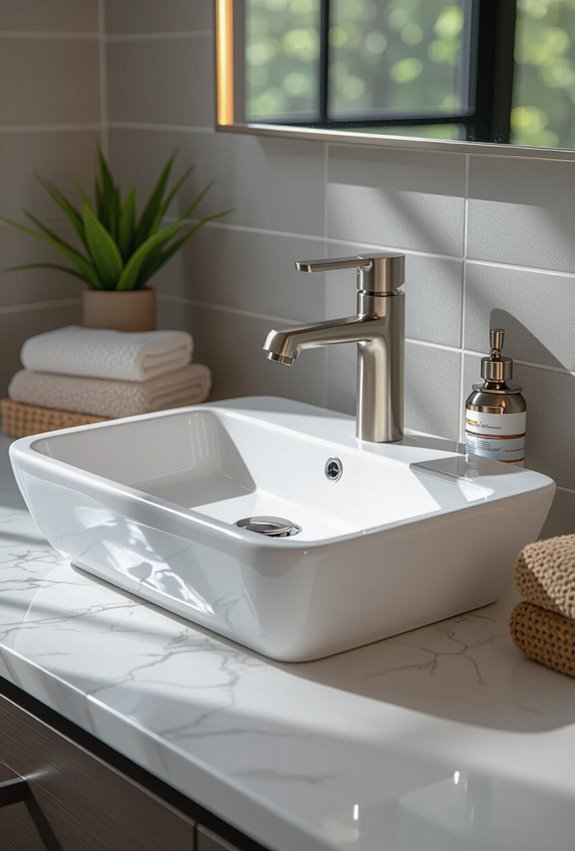
Choose lever-style faucet handles to make your bathroom more accessible and user-friendly. Lever hardware offers easy operation, especially for those with limited hand strength or dexterity.
Prioritize handle ergonomics to guarantee smooth, effortless control without twisting or gripping tightly. Installing these faucets improves comfort and independence, aligning with ADA standards for accessible design while enhancing your bathroom’s overall functionality.
Use Wall-Mounted Sinks With Knee Clearance
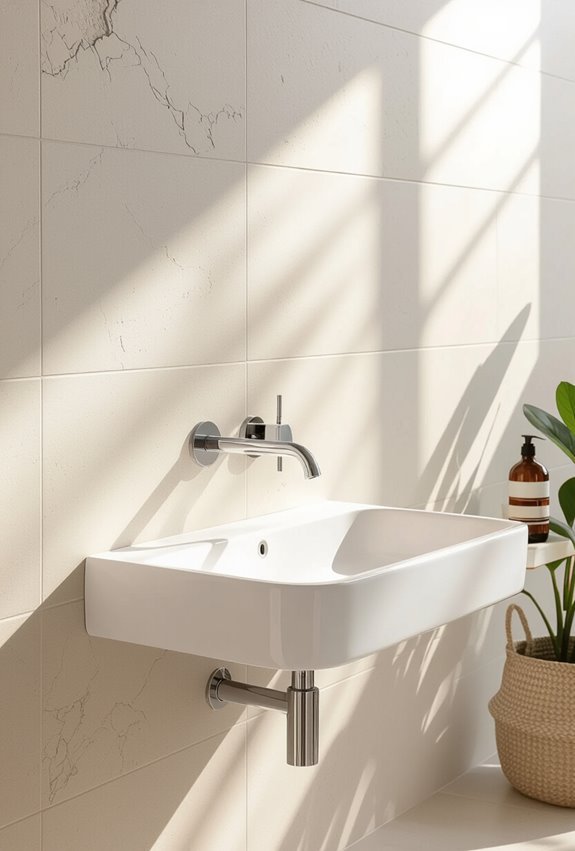
When you install wall-mounted sinks with ample knee clearance, you create a more accessible space that accommodates wheelchair users and those with limited mobility.
A floating basin design maximizes knee space beneath the sink, letting users roll in comfortably. This setup also improves overall bathroom usability without bulky cabinetry, ensuring ease of access while maintaining a sleek, modern look.
Ensure Adequate Turning Space for Wheelchairs
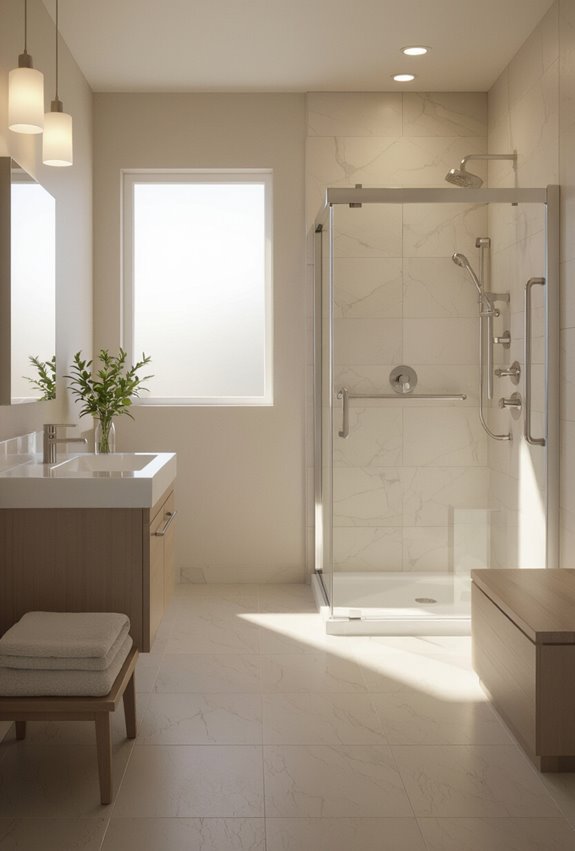
In designing an ADA-compliant bathroom, providing enough turning space for wheelchairs is essential. You should make certain at least a 60-inch diameter maneuvering clearance to allow smooth movement.
Use turning templates to visualize and confirm the available space meets requirements. This careful planning prevents tight spots, making your bathroom truly accessible and comfortable for wheelchair users.
Add Accessible Storage Within Reach
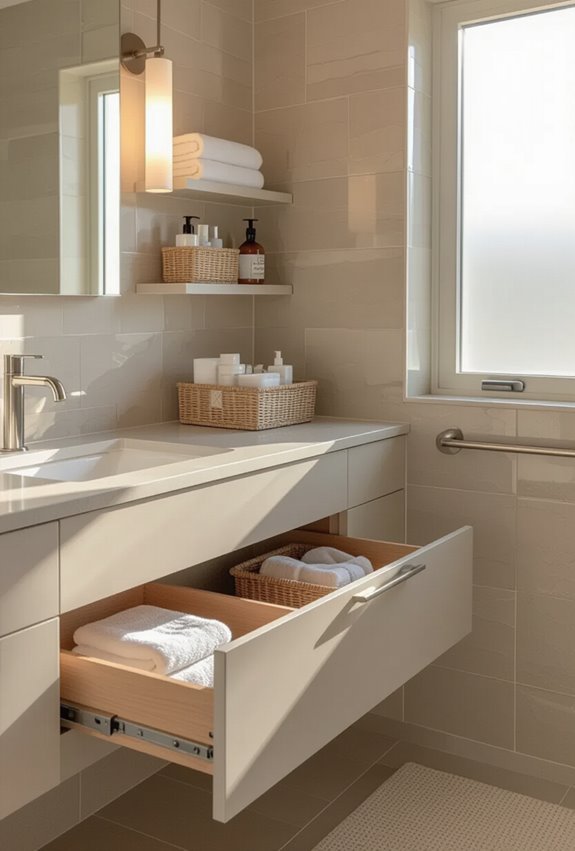
Placing accessible storage within easy reach makes a huge difference for bathroom users with mobility challenges.
You can install pull down cabinetry to bring items closer without stretching.
Rotating shelves inside cabinets also help you access toiletries conveniently.
These solutions keep essentials within arm’s reach, promoting independence and safety while maximizing your bathroom’s functionality.
Install ADA-Compliant Bathroom Mirrors
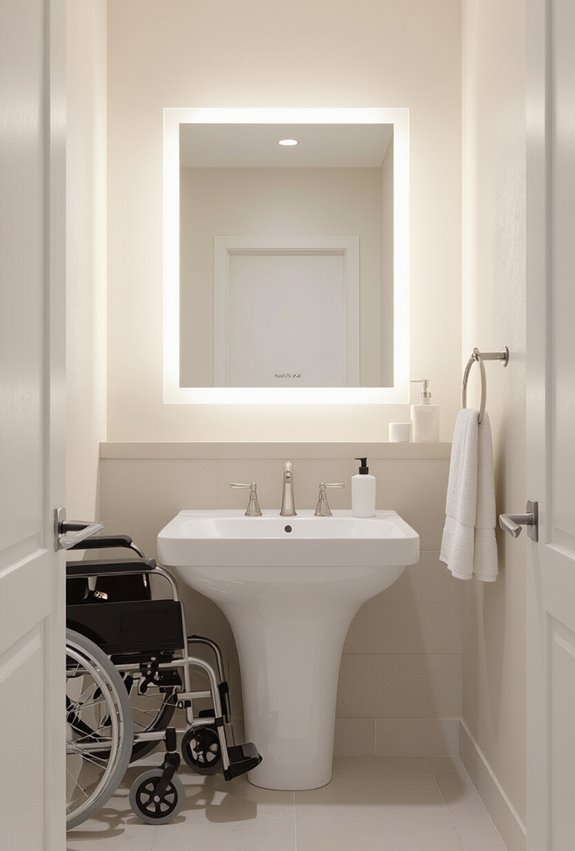
Choose ADA-compliant bathroom mirrors that offer clear visibility at various heights to accommodate all users. Install mirrors with tilted mounting to reduce glare and guarantee easy viewing from seated or standing positions. Opt for mirrors featuring anti fog coating to maintain clarity in humid conditions. These thoughtful choices enhance comfort and accessibility, making your bathroom safer and more user-friendly for everyone.
Use Touchless or Sensor-Activated Faucets
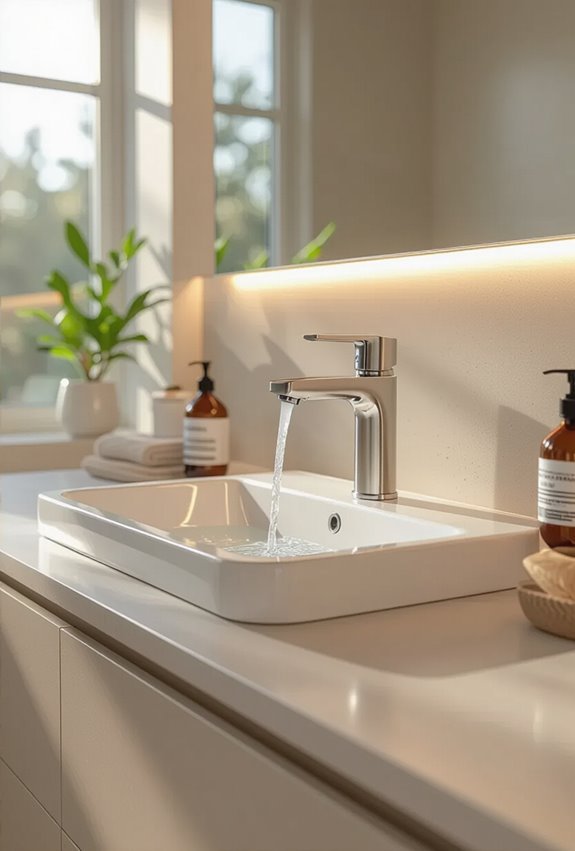
Mirrors that accommodate different heights improve usability, but the fixtures you choose also play a pivotal role in accessibility. Installing a proximity faucet with an infrared sensor offers hands-free convenience, reducing contamination risks.
A motion activated spout combined with touchless temperature controls lets you adjust water flow and warmth effortlessly, enhancing comfort and hygiene in your ADA-compliant bathroom.
Use Clear Floor Space Under Sinks and Counters
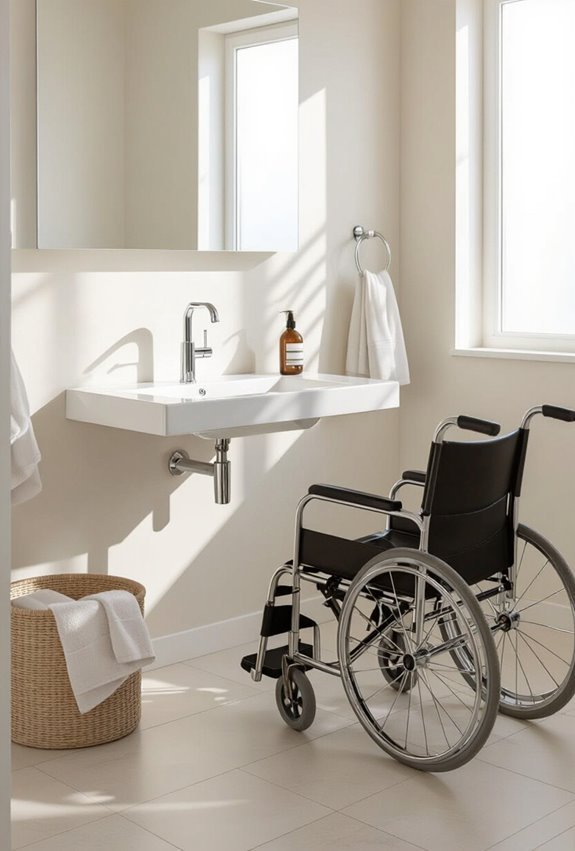
By leaving clear floor space under sinks and counters, you create easier access for wheelchair users and those who need extra room to maneuver.
Opt for open under sink storage or wall-mounted shelves to keep essentials accessible. Don’t forget pipe insulation to prevent burns and maintain safety.
This approach maximizes comfort while meeting ADA standards effectively.
Incorporate Visual and Tactile Signage
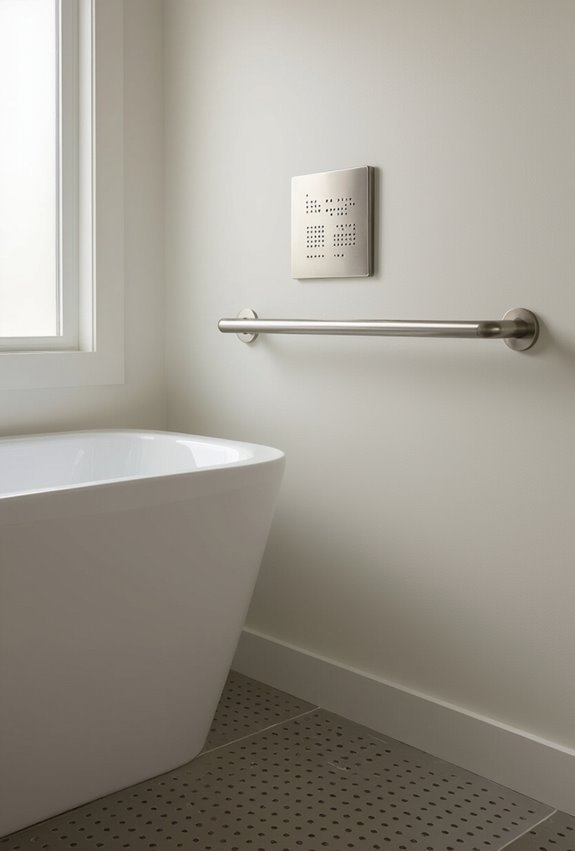
When you incorporate visual and tactile signage in your bathroom, you make navigation easier for everyone, including people with visual impairments.
Use high contrast tactile signs combined with braille wayfinding to clearly mark fixtures and exits.
This guarantees users can identify locations confidently and independently, enhancing overall accessibility without confusion or delay.
Choose Easy-to-Use Door Handles and Locks
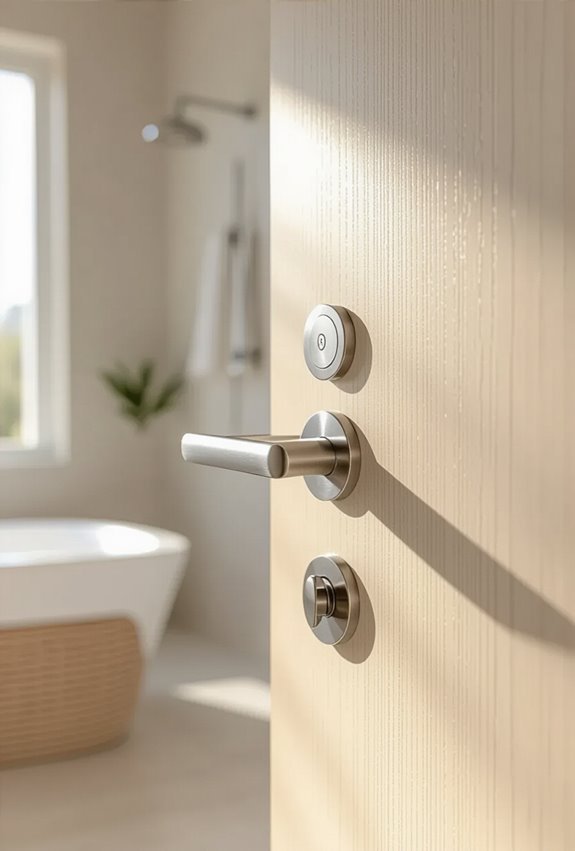
Picking easy-to-use door handles and locks can make a big difference in bathroom accessibility. Choose lever locks instead of knobs, as they require less grip strength and are easier to operate.
Push plates are another great option, allowing hands-free entry for those with limited mobility. These choices guarantee everyone can enter and exit the bathroom comfortably and independently.
Add Proper Lighting for Visibility and Safety
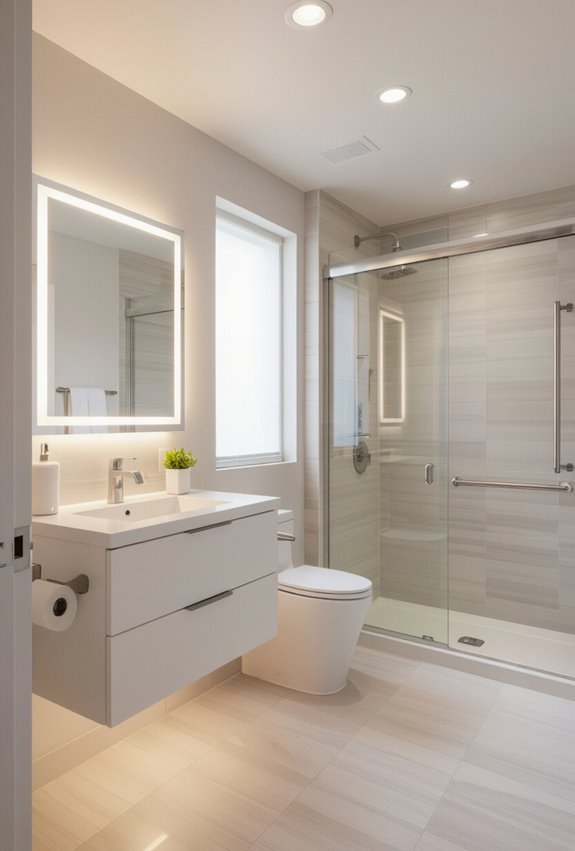
Enhance your bathroom’s safety and usability by installing proper lighting that guarantees clear visibility.
Use task lighting around mirrors and sinks for detailed activities like shaving or applying makeup.
Incorporate motion sensors to automatically brighten the space when you enter, reducing the risk of falls.
This combination makes certain your bathroom remains accessible, safe, and convenient at all times.
Ensure Accessible Electrical Outlets at Proper Height
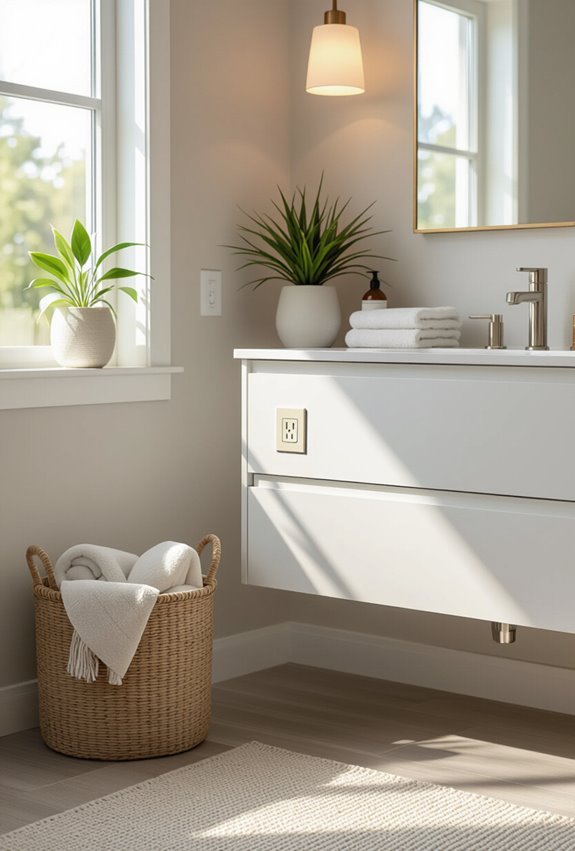
Make sure you position electrical outlets within easy reach to improve both accessibility and safety in your bathroom.
Install recessed outlets at a proper height to prevent cords from sticking out, reducing tripping hazards.
Choose tamper resistant outlets to protect against accidental shocks, especially if children use the space.
These small adjustments enhance usability without compromising safety or design.
Use Water Temperature Controls to Prevent Scalding
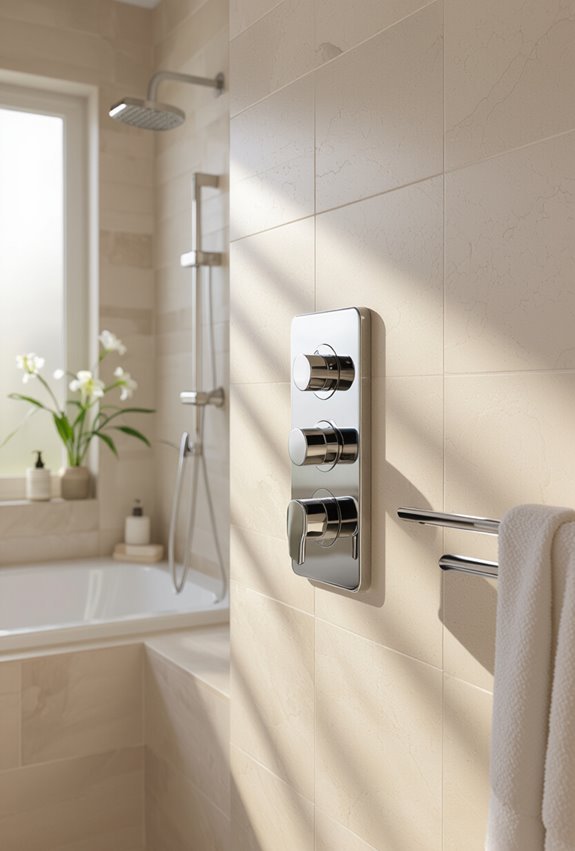
Although water temperature might seem like a minor detail, controlling it properly can prevent serious scalding injuries in your bathroom.
Install thermostatic controls to maintain a safe, consistent temperature, and use scald guards on faucets and showerheads to protect against sudden hot water surges.
These measures guarantee a safer, more comfortable environment for everyone, especially those with limited mobility or sensitivity.
Install Emergency Call Buttons or Alarms
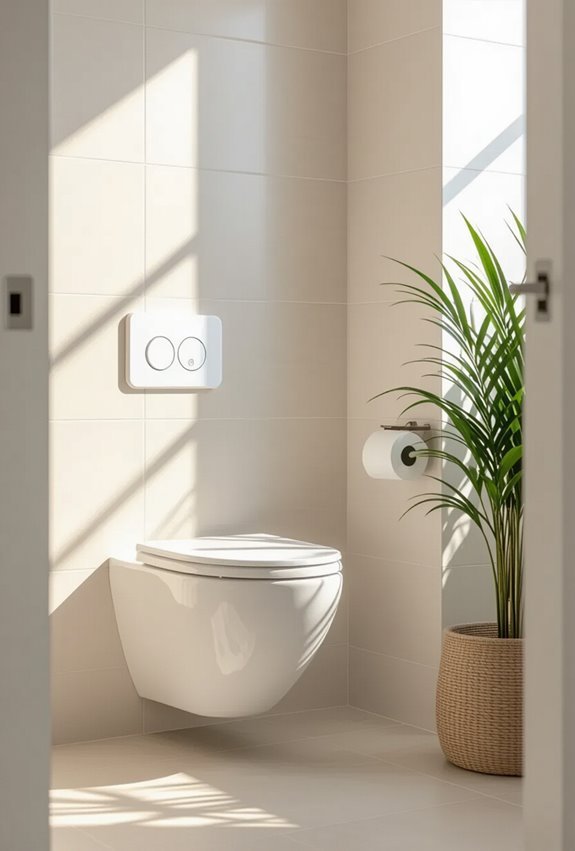
Controlling water temperature helps reduce risks, but accidents can still happen.
To guarantee safety, install panic buttons within easy reach to quickly summon help if needed.
Consider vibration alerts for those with hearing impairments, providing discreet notifications during emergencies.
These features enhance accessibility and peace of mind, making your bathroom safer and more comfortable for everyone.
Plan for Adequate Ventilation and Airflow
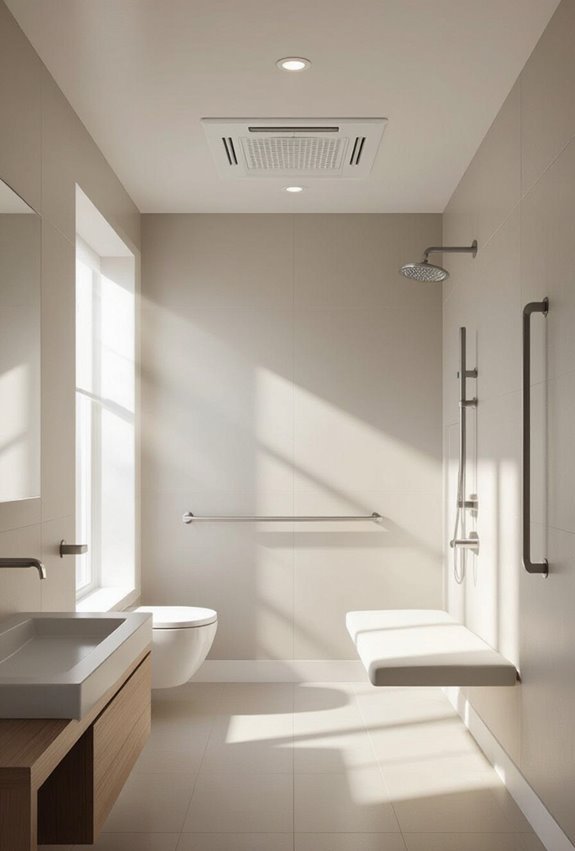
Proper ventilation and airflow play a crucial role in maintaining comfort and safety in your ADA-compliant bathroom. You should install mechanical ventilation systems to guarantee continuous air exchange and reduce moisture buildup.
Incorporating humidity sensors can automatically control ventilation, preventing mold and mildew. Additionally, consider passive stack ventilation to promote natural airflow, enhancing overall air quality without extra energy consumption.
Choose Accessible Soap and Towel Dispensers
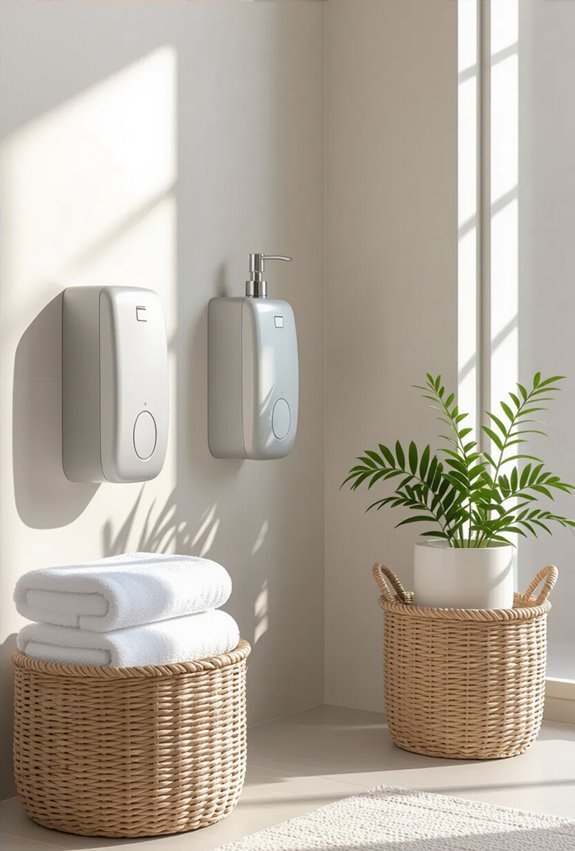
Many users rely on soap and towel dispensers that are easy to reach and operate without strain. Choose wall mounted dispensers installed at accessible heights to guarantee convenience.
Look for models with braille labeling to support visually impaired users. These thoughtful features help everyone use the bathroom independently and comfortably, meeting ADA standards effectively.
Add Adjustable Height Vanity and Shelves
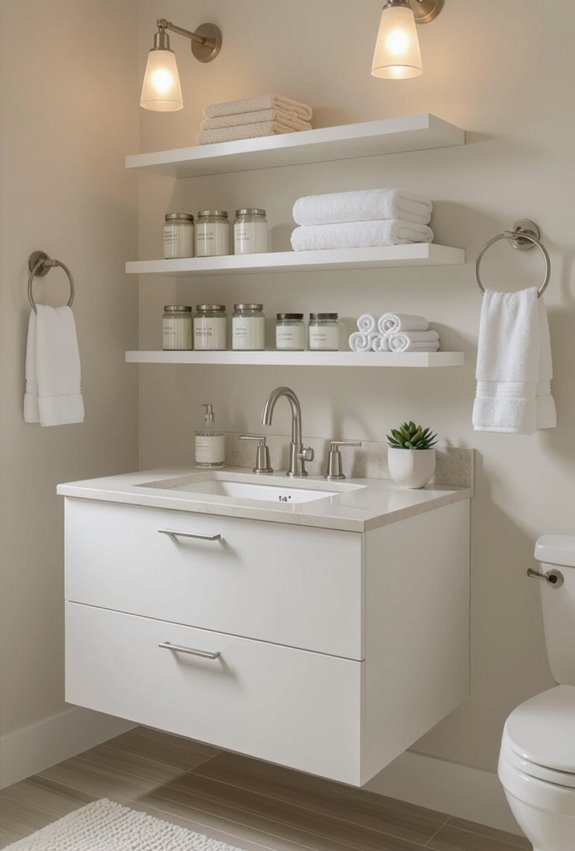
Incorporate adjustable height vanities and shelves to create a bathroom space that adapts to different needs. An adjustable vanity lets you tailor sink height for comfort and accessibility, while shelf customization guarantees essential items stay within easy reach.
These features enhance usability and independence, making your bathroom more functional and welcoming for everyone.
Design for Future Adaptability and Upgrades
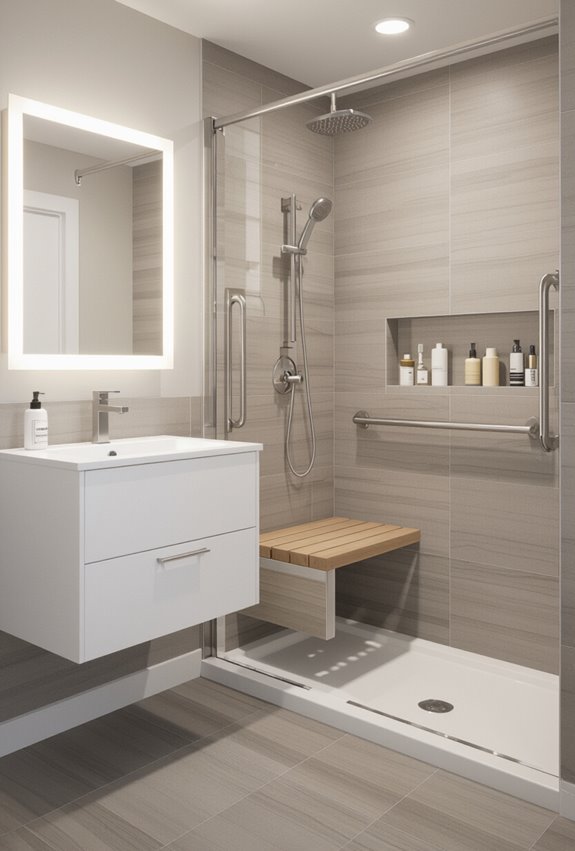
While planning your ADA-compliant bathroom, think ahead to how your needs might change over time. Install futureproof plumbing to easily accommodate new fixtures or grab bars.
Choose modular cabinetry that you can adjust or replace without major renovations. This approach saves time and money while ensuring your bathroom remains accessible and comfortable as your requirements evolve.
Zero-Entry Showers
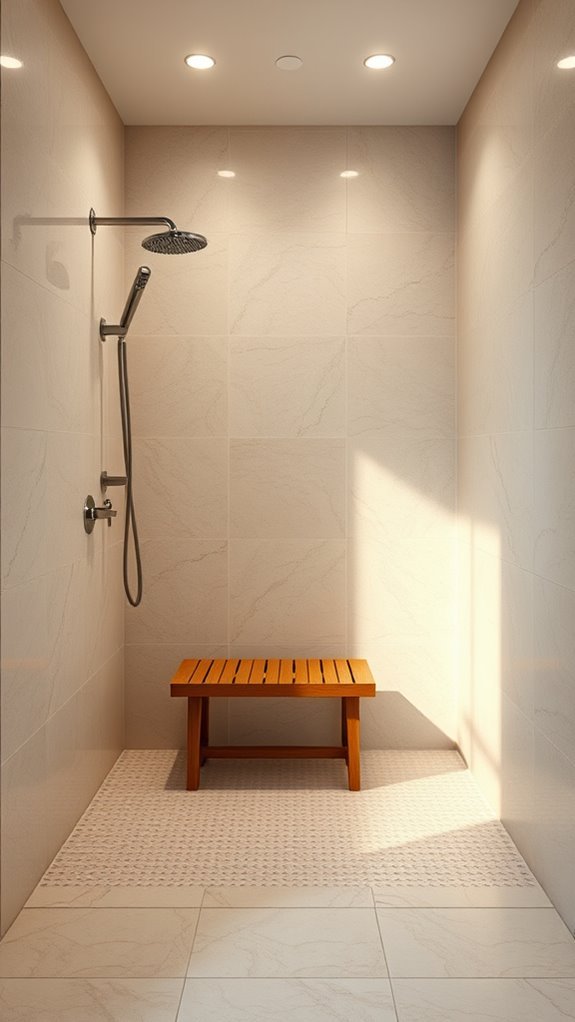
When designing an ADA-compliant bathroom, consider incorporating a zero-entry shower, as it offers easy access for individuals with mobility challenges. This type of shower eliminates barriers, allowing users to step directly in without obstacles.
Focus on shower safety by ensuring non-slip surfaces to prevent falls. Additionally, proper water drainage is essential; install a sloped floor to direct water away, keeping the area safe and dry.
You’ll want to choose materials that resist mold and mildew, enhancing hygiene. A zero-entry shower not only promotes independence but also creates a welcoming, functional space for everyone, regardless of their mobility needs.
Raised Toilet Seats
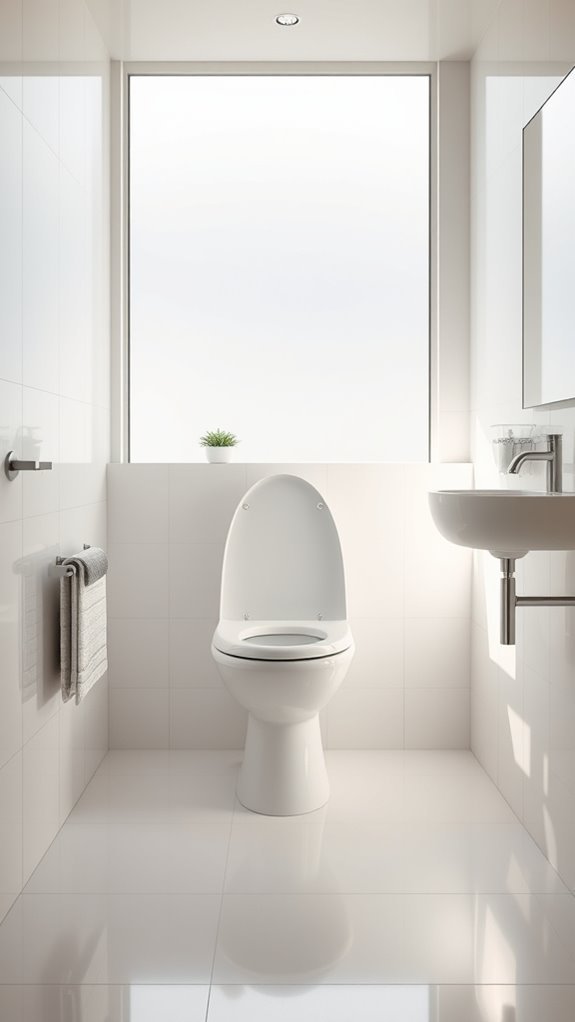
Raised toilet seats are a practical solution for enhancing bathroom accessibility and comfort. By improving toilet seat ergonomics, they make sitting and standing easier for those with mobility challenges.
Here are three raised seat benefits to take into account:
- Reduced Strain: Elevated seats decrease the effort needed to sit down or get up.
- Increased Safety: They lower the risk of falls by providing better support.
- Enhanced Independence: Users can manage their bathroom needs with less assistance.
Installing a raised toilet seat can greatly improve your bathroom experience, ensuring comfort and security for everyone.
Curbless Shower Designs

Curbless shower designs not only enhance accessibility but also create a seamless shift between your bathroom floor and shower area. You’ll appreciate how easy it’s to enter and exit, making daily routines more comfortable.
When planning your curbless shower, consider various shower drainage options to guarantee effective water management. Proper drainage prevents water from pooling and maintains a safe, slip-resistant environment.
Additionally, using waterproof materials is essential to keep your bathroom looking great and functioning well over time. With the right choices, your curbless shower can be both stylish and practical, meeting all your accessibility needs.
Wall-Mounted Soap Dispensers
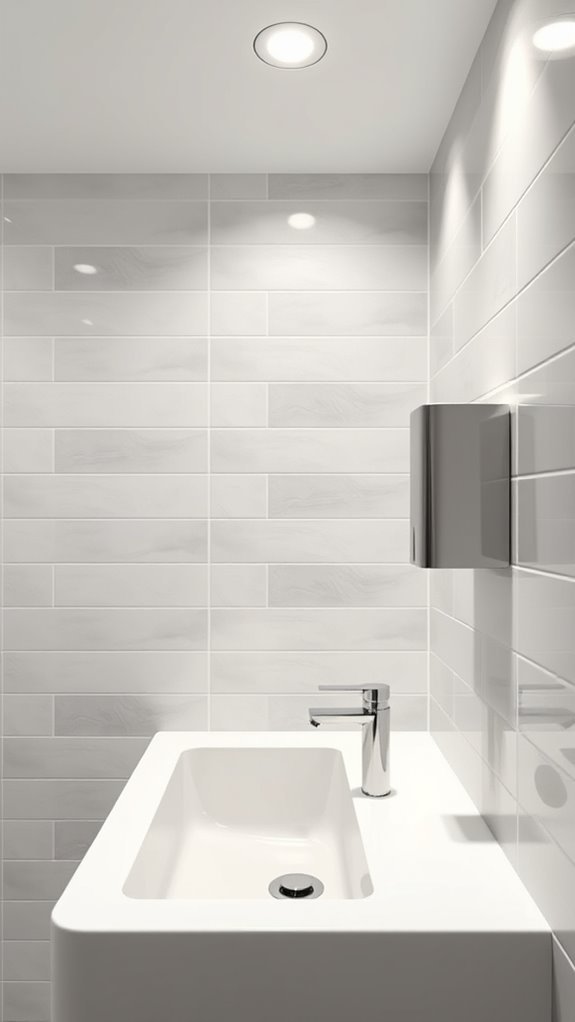
Installing wall-mounted soap dispensers is a smart choice for any accessible bathroom design. These dispensers improve hygiene and accessibility, making them ideal for everyone.
Here are three important points to take into account:
- Soap Dispenser Types: Choose between manual, touchless, or push-button models based on user needs.
- Height Placement: Make certain the dispenser’s height is within reach for individuals using wheelchairs or those with limited mobility.
- Installation Guidelines: Follow manufacturer instructions for secure mounting and take into account wall reinforcements to prevent damage.
Incorporating these elements will enhance comfort and accessibility in your bathroom, creating a welcoming environment for all.
Integrated Lighting in Mirrors

When you incorporate integrated lighting in mirrors, you enhance both functionality and aesthetics in an ADA compliant bathroom. This feature not only improves visibility but also adds a modern touch.
Here are three benefits:
- Smart Mirror Technology: You can find mirrors that offer features like touch controls and Bluetooth connectivity, making your routine easier.
- Ambient Lighting Design: Soft, adjustable lighting creates a calming atmosphere, perfect for relaxation.
- Accessibility: Integrated lighting guarantees that everyone, regardless of ability, can see clearly while using the bathroom, promoting independence and safety.
Color Contrast for Visibility
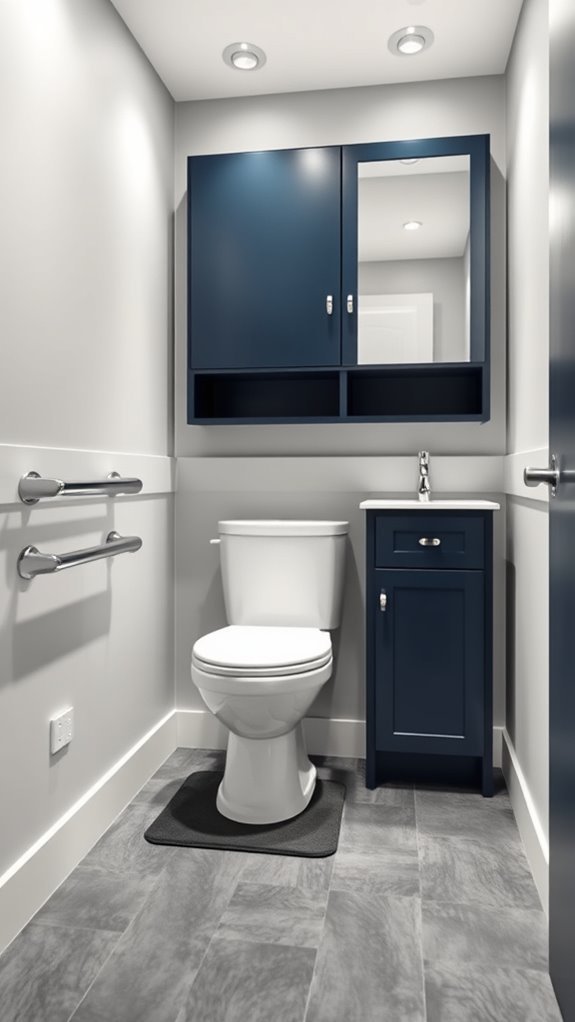
Color contrast plays a crucial role in enhancing visibility within an ADA-compliant bathroom.
By carefully considering your color palette selection, you can create a space that’s not only functional but also safe and inviting.
Here are three key tips for effective color contrast:
- Choose high-contrast colors: Pair light fixtures with dark surfaces for maximum visibility enhancement.
- Highlight key features: Use contrasting colors for grab bars and other safety features to make them easily identifiable.
- Consider floor and wall colors: Confirm the floor color contrasts with the walls to help prevent accidents.
These strategies will make your bathroom both accessible and stylish.
Heating Options for Comfort
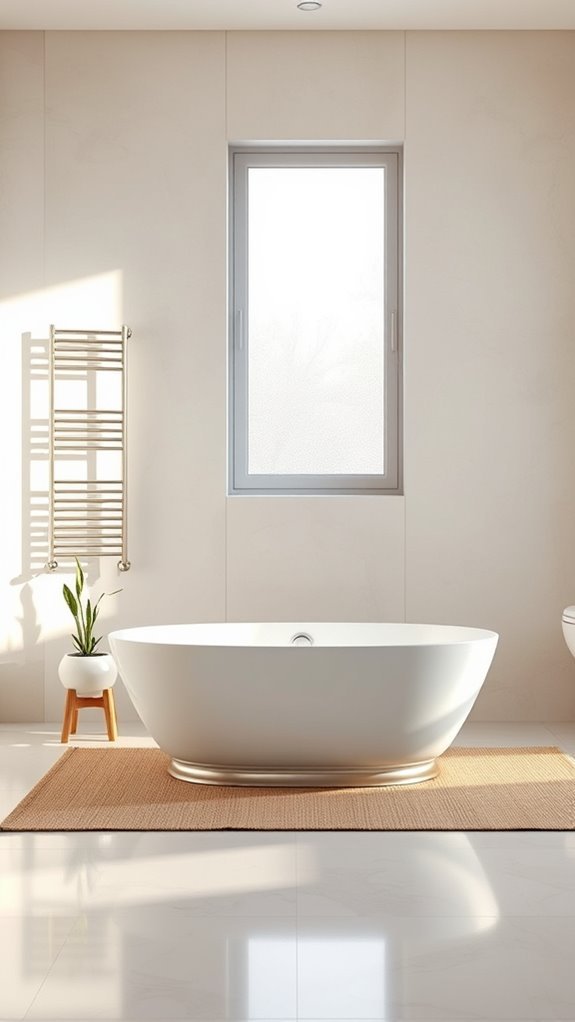
When designing an ADA-compliant bathroom, incorporating effective heating options can greatly enhance comfort and usability.
Radiant floor heating is an excellent choice, providing consistent warmth underfoot, minimizing slip hazards, and ensuring a cozy environment. This option is especially beneficial during colder months, making your bathroom feel inviting.
Additionally, installing heated towel racks not only keeps your towels warm and dry but also adds a touch of luxury.
These features can make daily routines more enjoyable and accessible, ensuring you’re comfortable and safe in your bathroom space.
Prioritize these heating options for an enhanced, user-friendly experience.
Conclusion
Incorporating ADA-compliant features into your bathroom design not only enhances accessibility but also boosts safety and comfort for everyone. Did you know that nearly 60 million Americans live with a disability? By implementing thoughtful changes like zero-entry showers and grab bars, you’re creating an inviting space that meets diverse needs. Embrace these design ideas to make your bathroom a sanctuary for all, ensuring everyone can enjoy a safe and comfortable experience.
