
Can I Put Painters Tape on Freshly Painted Walls? Timing Guide
You can put painter’s tape on fresh paint, but don’t rush it: wait until the surface loses tackiness so the tape won’t lift, peel, or gouge the finish. For latex, that’s typically 24–48 hours; for oil/enamel, plan on 24+ hours and often longer for high-gloss or thick coats. Use low‑tack tape on delicate surfaces and test a small patch first. Follow proper removal angles and timing for clean lines, and keep going to learn timing by paint type and finish.
Quick Answer: Can You Tape Freshly Painted Walls?
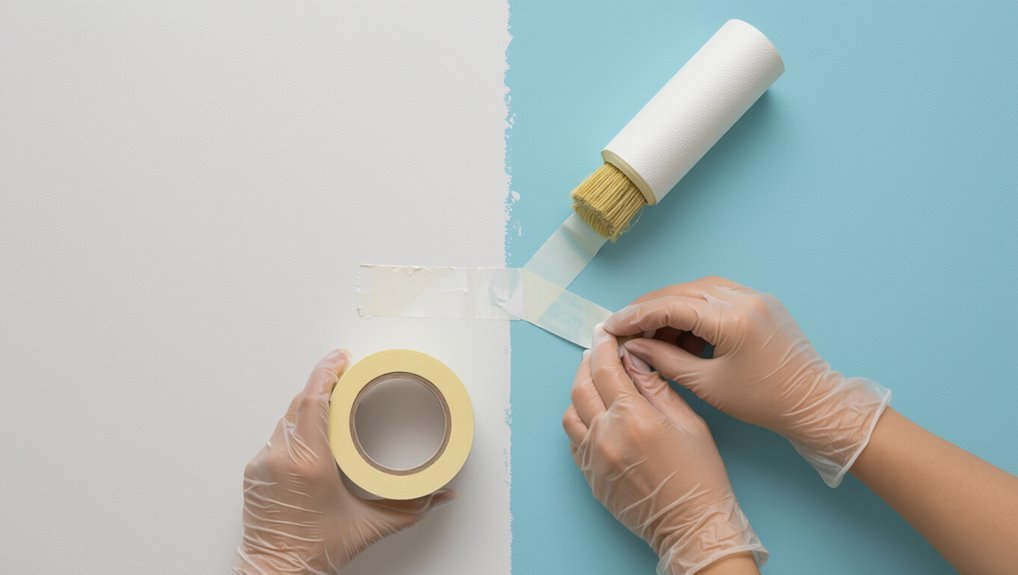
Wondering if you can put painter’s tape on newly painted walls? You can, but you should wait until the paint’s tackiness lessens enough for careful tape application without risking paint lifting.
Test a small corner first: apply and remove after a short interval to check paint bonding. If paint peels, wait longer—proper patience prevents damage and preserves clean lines.
Dry to the Touch vs. Fully Cured: What’s the Difference?
How long should you wait—until paint feels dry or until it’s fully cured?
You’ll notice “dry to the touch” means surface solvents evaporated; it’s safe to handle but not ready for stress.
Full cure takes days to weeks as polymers crosslink, ensuring maximum paint adhesion.
Use proper drying techniques—ventilation, temperature control—to speed curing without compromising finish or durability.
How Long to Wait Before Taping Latex (Water‑Based) Paint
You should wait until latex paint is more than just dry to the touch—ideally 24–48 hours or longer for light traffic—because cure time affects how well tape sticks and peels.
Match the tape to the paint and surface—low‑tack painter’s tape for fresh latex, or specialty tapes for delicate finishes—to avoid lifting.
Use edge protection techniques like burnishing the tape and removing it at a 45° angle while the paint is slightly tacky to preserve crisp lines.
Cure Time Vs Dry Time
Curious about when it’s safe to tape newly painted latex walls?
You need to distinguish dry time from cure time: dry conditions let paint feel dry in hours, but cure factors — temperature, humidity, and coat thickness — determine full cure, which can take days to weeks.
Wait at least 24–48 hours for light taping; for perfect results, allow full cure when possible.
Tape Type Compatibility
Because different tapes grip and remove differently, choosing the right tape determines how long you should wait before taping freshly applied latex paint. You’ll wait 24–48 hours for most tapes to verify paint compatibility and surface finish. Consider tape adhesion, surface preparation, tape durability, and careful tape removal to avoid lift.
| Tape Type | Wait Time | Notes |
|---|---|---|
| Painter’s | 24–48 hrs | Balanced adhesion |
| Low-tack | 12–24 hrs | Safer on fresh coats |
| High-tack | 48+ hrs | For rough surfaces |
Edge Protection Techniques
Edge protection matters when you’re taping latex (water‑based) paint—wait just long enough for the paint’s surface skin to form so the tape won’t pull wet film or leave adhesive behind.
You’ll practice proper edge sealing and careful tape application to avoid damage. Follow these quick steps:
- Test a small patch before full tape application.
- Press edges firmly for a seal.
- Remove tape slowly after paint cures.
How Long to Wait Before Taping Oil‑Based Paint
How long should you wait before taping over an oil‑based paint job?
You should wait until oil based drying is complete to touch — typically 24–48 hours for recoat, but full cure can take up to 7 days.
Proper tape adhesion improves after surface is dry to the touch and firm; test a small corner before committing to avoid peeling or lifting the finish.
Taping Time for High‑Gloss vs. Matte Finishes
If you just waited the proper time for oil‑based paint, remember that sheen changes how tape behaves: high‑gloss surfaces tend to stay tacky longer and show any lifting, so you should wait longer—often 48–72 hours—before applying tape, while matte finishes dry to a non‑tacky state sooner and can usually be taped after 24 hours.
- Prioritize surface preparation for tape adhesion.
- Match tape to paint compatibility and application techniques.
- Consider finish durability: gloss finishes need gentler removal.
How Humidity and Temperature Affect Drying and Taping Times
Because paint cures through a chemical and physical process, humidity and temperature have a big impact on how long you should wait before applying painter’s tape.
You’ll notice humidity effects slow solvent evaporation, prolong tackiness, and raise risk of adhesive lift.
Likewise, temperature impact speeds or retards curing—cold slows, heat speeds—so adjust waiting times accordingly and test a small tape strip before committing.
How Coat Thickness and Count Change Taping Wait Times
If you apply a thicker coat, it takes longer to dry and you shouldn’t tape as soon.
Multiple coats also extend the overall curing time, so plan your taping around the last coat’s dry time.
Check each layer for surface dryness and tack before you press on tape.
Coat Thickness Effects
When you change how thick each coat is or how many coats you apply, you also change how long you should wait before taping; thicker or multiple coats trap more solvents and stay softer longer, increasing the risk of paint lifting.
You should watch coat thickness and paint adhesion to judge tackiness before applying tape.
- Thicker coats slow solvent release.
- Softer surface reduces paint adhesion.
- Wait longer for firm cure.
Number Of Coats
Adding more coats or making each coat thicker increases how long you should wait before taping, because additional layers trap solvents and keep the surface softer and more prone to lifting.
If you apply multiple coats, you’ll slow paint absorption and extend curing.
Wait longer between taping and the final coat to protect coat durability; thin, even coats reduce risk and shorten necessary wait times.
Which Painter’s Tapes Are Safe for Freshly Painted Surfaces?
Which painter’s tapes won’t damage fresh paint depends on the tape’s adhesive formulation and how long the paint’s cured.
You’ll choose tapes with balanced tape adhesion and proven paint compatibility to avoid lift or residue.
- Low-tack painter’s tape for delicate finishes
- Medium-tack for semi-cured latex or enamel
- Masking tape labeled “safe for fresh paint” for short-term use
When to Use Delicate‑Surface Tape vs. Standard Tape
Decide based on how sensitive the surface is, how long the paint has had to cure, and how gently you’ll remove the tape.
If the wall is delicate, the paint isn’t fully cured, or you plan to pull slowly at an angle, you’ll want delicate‑surface tape.
For tougher, fully cured finishes you can use standard tape for stronger adhesion.
Surface Sensitivity Level
When you’re choosing tape for freshly painted walls, match the tape’s adhesion level to the surface sensitivity so you don’t pull paint off later.
Consider tape adhesion and proper surface preparation before applying any tape.
Pick delicate‑surface tape for fragile or newly painted areas; use standard tape for durable finishes.
- Delicate: light adhesion, minimal risk
- Standard: stronger grip, for cured paint
- Test: small patch first
Paint Cure Time
Paint needs time to cure before you trust it with standard tape; delicate‑surface tape can usually be applied sooner because it has lower adhesion and reduces the risk of lifting still‑soft paint.
Check manufacturer cure times and test a small inconspicuous area, since paint finish and wall texture affect adhesion.
Use delicate tape on semi‑gloss or textured walls until full cure.
Tape Removal Technique
Use delicate‑surface tape whenever paint is still curing, the finish is glossy, or the wall has texture that raises the risk of lifting.
You’ll choose tape based on tape adhesion needs and surface preparation quality.
Remove tape slowly at a low angle, keeping tape warm if paint’s tacky.
- Test a small corner first
- Pull back parallel to surface
- Replace standard tape when fully cured
How to Test Paint Readiness Before Applying Tape
How do you know the paint’s dry enough to take tape?
Do a simple surface testing routine: press a fingertip lightly in an inconspicuous spot, then try a small piece of tape for a few minutes.
Test the paint first: press lightly in an inconspicuous spot, then apply tape briefly to check for tack or lifting.
Check paint adhesion and look for lift, tackiness, or smudging.
If the paint resists and the tape peels cleanly, it’s safe to proceed.
Prep Edges for Crisp Lines Without Damaging Paint
Before you tape, follow wait time guidelines so the paint’s cured enough to hold without lifting.
When you remove tape, pull it back slowly at a 45-degree angle while the paint is still tacky enough to slice cleanly.
Those two steps help you get crisp lines without damaging the finish.
Wait Time Guidelines
While fresh paint can look dry to the touch within an hour, you should wait until it’s fully cured before applying painter’s tape to avoid peeling or lifting the finish.
You’ll guarantee proper tape adhesion by confirming cure times and focusing on surface preparation. Follow timing guidelines based on paint type:
- Latex: 24–72 hours
- Oil-based: 48–7 days
- Low-VOC: manufacturer times
Tape Removal Technique
Peel the tape back slowly at a 45-degree angle, keeping it close to the painted surface so you don’t lift the edge—this gives you the sharpest line and minimizes the chance of pulling off cured or semi-cured paint.
If paint resists, score the edge with a utility knife. Work steadily; high temperatures weaken adhesive strength, while cool conditions improve tape longevity—plan removals accordingly.
How Long to Leave Tape On for Different Scenarios
When you’ve just finished painting, the time you leave painter’s tape on depends on the paint type, temperature and humidity, and the level of adhesion you need; different scenarios call for different removal windows to avoid tearing or bleeding.
Match tape adhesion and paint compatibility to conditions, then choose timing:
- Latex indoors: remove after 1–2 hours (or within 24).
- Oil/enamel: wait 24 hours.
- High humidity/cool: extend to 48 hours.
Remove Tape Without Peeling Fresh Paint
When it’s time to pull the tape, try to remove it while the paint is still slightly damp so the edge lifts cleanly.
Peel the tape back slowly at a low angle to reduce stress on the paint film.
If any edges stay stuck, run a razor gently along the seam before peeling to prevent peeling.
Remove Tape While Damp
Remove the tape while the paint’s still slightly tacky to minimize the chance of lifting the finish—wait too long and the adhesive bonds to the cured paint, too soon and wet paint can smear.
You’ll balance tape adhesion factors with proper paint surface preparation. Pull slowly and evenly, keeping the edge close to the wall.
- Check tack before peeling
- Use steady, slow motion
- Support adjacent paint with your other hand
Peel Tape At Angle
Tilt the tape back on itself at a 45-degree angle and pull slowly to keep the adhesive from lifting the paint film.
You’ll protect fresh paint by maintaining shallow tension during tape application and removal.
Work steadily along edges, watching for any resistance that signals poor paint adhesion.
If you feel tugging, pause, press the paint back gently, then continue at the same angle.
Use Razor For Edges
After you’ve pulled the tape back at a 45-degree angle, use a razor blade to protect the paint film along the edge before the adhesive can lift it.
You’ll score lightly, keep the blade shallow, and follow the line for clean results. Practice razor blade techniques for precise edge finishing.
- Score gently
- Keep shallow angle
- Follow the paint line
Use Heat or Slow Removal to Protect Paint Edges
When you need to lift tape without ripping fresh paint, apply gentle heat or pull it off slowly to keep edges crisp.
Use a hair dryer or heat gun on low for brief heat application to soften adhesive, then practice slow peeling at a 45° angle.
Move steadily, watch for lifting paint, and stop to reheat any stubborn sections to protect edges.
Masking Multi‑Color Accents: Sequence and Timing
Before taping for multiple accent colors, check that each base coat is fully dry to the touch and cured enough to resist lifting.
Plan your sequence so you paint from lightest to darkest (or from least likely to show flaws to most), masking each area only when the previous color is stable.
Remove tape while the topcoat is slightly tacky or just dry to the touch to get the cleanest edge without peeling.
Paint Dryness Check
How dry does the paint need to be before you lay down tape for a second color?
Check surface tackiness and verify paint texture looks uniform; poor paint adhesion causes lifting. Wait recommended cure times, then test discreetly.
- Light touch test: no tack, smooth texture
- Gentle peel: tape won’t pull finish
- Edge inspection: firm adhesion and no smearing
Sequential Color Ordering
Although it may seem tempting to tape and paint randomly, you should plan the order of colors to prevent smudging, bleeding, and extra sanding.
Start with lighter base tones, mask edges, then apply darker accents so touchups stay minimal.
Consider color combinations that balance contrast and paint aesthetics.
Sequence steps to let each layer cure adequately before re-taping adjacent areas.
Tape Removal Timing
Once you’ve planned color order and let each layer set, you need to time tape removal carefully to keep crisp lines between accents. You’ll balance drying time, tape adhesion, and paint compatibility to avoid lifts or smears.
Peel at a 45° angle when paint’s dry-to-touch but not fully cured.
- Remove tape after skin-forming
- Test a small corner first
- Replace tape if adhesive weakens
Touch‑Ups After Tape Removal: Quick Fixes That Hide Mistakes
If tape pulls paint or leaves a ragged edge, don’t panic—grab a small artist’s brush or a foam roller and make targeted touch‑ups before the finish fully cures.
Use precise touch up techniques: thin coats, feathered edges, and matching sheen.
Sand tiny nicks lightly, wipe dust, then recoat.
Learn common mistakes—overloading the brush or rushing—to keep repairs invisible and smooth.
How Adhesive Residue Forms : And How to Remove It Safely
When tape sticks to paint, it’s usually because the adhesive chemically bonds to the surface or pulls loose paint particles as it cures.
You can prevent most residue by removing tape at the right time and angle, but if some adhesive stays behind you’ll want to use gentle methods like a soft cloth with warm soapy water, rubbing alcohol, or a commercial adhesive remover made for painted surfaces.
Test any cleaner on an inconspicuous spot first and rub lightly to avoid damaging the finish.
Why Residue Forms
Although painter’s tape seems temporary, its adhesive can bond with paint and leave residue when removed too soon or at the wrong angle.
You’ll notice residue because adhesive properties change with temperature, paint cure time, and surface prep. Proper surface preparation matters to prevent bonding.
- Adhesive chemistry interacts with uncured paint.
- Humidity and heat accelerate sticking.
- Rough or oily surfaces trap adhesive.
Safe Removal Methods
Start by loosening the bond between tape adhesive and paint so you don’t pull off fresh finish or leave a sticky film.
Gently heat the tape edge with a hairdryer to soften tape adhesion, peel at a low angle, and keep steady tension.
If residue remains, use a damp cloth with mild soap or rubbing alcohol, testing paint compatibility first to avoid damage.
When to Recoat After Taping: Timing and Order
Wondering how long to wait before recoating after you tape off freshly painted walls? You’ll balance taping techniques with smart timing strategies to avoid lift and uneven coats.
Wait for initial tack-free time, use gentle adhesion, and plan order of panels.
- Check tack-free time before second coat
- Remove tape slowly between coats if recommended
- Recoat smaller sections first
Taping Painted Trim vs. Painted Drywall: Key Differences
After you’ve timed your recoats and handled tape removal carefully, you’ll want to treat painted trim and painted drywall differently when taping—each surface demands a distinct approach because of texture, paint type, and edge durability.
For trim, use low-profile tape and firm burnishing; for drywall, choose tape that honors flatter sheen and fragile edges.
Prioritize surface preparation, clean adhesion, and tailored taping techniques to prevent lifts.
Taping Textured or Porous Surfaces: Special Considerations
When you’re dealing with textured or porous surfaces, you can’t treat them like smooth drywall—tape must conform to irregularities and bond without pulling paint or leaving gaps.
You should focus on surface preparation and choose tape for paint types and porous materials to avoid adhesion issues. Consider careful tape application and gentle removal techniques.
- Test adhesion on a small area
- Use flexible, low-tack tape
- Wait for full cure
Signs Tape Already Damaged Your Paint : And What to Do
How can you tell if tape has already harmed your freshly painted wall? Look for peeling, lifted edges, uneven sheen, or sections where paint pulls away when tape’s removed.
Sticky residue and color differences also signal tape damage.
To fix it, gently sand loose bits, clean residue, spot-prime, then perform paint repair with matching paint.
Work carefully to blend edges.
Contractor‑Recommended Tapes and Timing for Pros
Pros use specific tapes and strict timing because getting those two things right prevents paint damage and saves touch‑ups.
Pros pick the right tape and timing—get both right to avoid paint damage and extra touch‑ups.
You’ll follow contractor tips for surface preparation, match tape recommendations to paint types, and use timing strategies that respect cure times and humidity.
- Choose low‑tack for delicate finishes.
- Use 60‑minute release for latex.
- Wait full cure for oil.
When Expensive Tape Is Worth the Cost
You’ll often find that a mid‑range painter’s tape handles routine interior jobs fine, but there are cases where shelling out for a premium tape actually saves time and prevents costly fixes.
You’ll want expensive tape benefits when working with delicate finishes, prolonged UV exposure, or textured surfaces.
Check tape brand comparisons for adhesion longevity, clean removal, and edge-seal performance so you pick the right product.
Quick Checklist: Tape a Freshly Painted Wall Safely
When you need to tape a wall that’s just been painted, follow a short, practical checklist to protect the finish and guarantee clean lines:
- Wait recommended cure time to preserve paint finish and avoid lift, then test tape adhesion on a hidden spot.
- Use low-tack tape and press edges firmly with a plastic card for even adhesion.
- Remove tape slowly at a 45° angle after paint sets.
Common Taping Mistakes and How to Fix Them
Ever wonder why your crisp paint lines sometimes peel, bleed, or leave residue? Check tape age and surface prep first.
Use proper taping techniques: press edges firmly, remove at a 45° angle while paint’s tacky-but-not-wet, and avoid stretching tape.
Match tape adhesive to paint compatibility—low‑tack for fresh coats, stronger for cured surfaces.
Fix mistakes by slowly lifting and re-taping small sections.
Final Troubleshooting: Last‑Minute Taping Problems Answered
Fixing common taping errors gets you most of the way there, but last‑minute problems still pop up right before the job’s done.
You’ll want quick tape application tips and troubleshooting techniques to salvage edges, prevent bleed, and keep finishes crisp.
- Repress edges with a plastic card to seal.
- Remove tape slowly at 45° for clean lines.
- Score dried paint for perfect separation.
Frequently Asked Questions
Can Painter’s Tape Damage Wallpaper Seams?
Yes — tape can damage wallpaper seams if its tape adhesion is too strong or you pull it improperly. You should test a small area first, use low-adhesion tape, and prioritize wallpaper protection during removal.
Can Tape Be Used on Freshly Painted Metal or Cabinets?
Yes — you can, but wait until paint cures properly; tape adhesion improves with full cure. You’ll speed success by ensuring surface preparation: clean, degrease, and lightly sand cabinets or metal so tape sticks without lifting or peeling paint.
Does UV Exposure Affect Tape Adhesion on Fresh Paint?
Yes — UV can weaken tape adhesion on fresh paint; it’s like sun baking glue into brittle shreds. You’ll reduce tape longevity by prolonged exposure, so consider shorter dwell times and select products rated for UV and adhesion factors.
Can Painters Tape Be Reused Safely After Initial Use?
You generally shouldn’t reuse painters tape for best results; adhesive degrades with use, reducing tape longevity and risking poor lines. If you do, clean and roll it sticky-side-in, store flat in a cool, dry place to aid tape storage.
Will Tape Stick to Freshly Painted Exterior Surfaces in Rain?
No, tape usually won’t stick well to freshly painted exterior surfaces in rain. You’ll need to take into account tape adhesion factors like surface cure, humidity, and weather conditions; wait for full cure or use marine-grade, waterproof tape.
Conclusion
You can tape freshly painted walls—but timing matters. Wait until paint is dry to the touch, and preferably closer to fully cured: latex usually needs 24–72 hours, oil-based 72+ hours; high‑gloss takes longer. Use premium painters’ tape for delicate surfaces; it reduces peeling risk by up to 70% versus cheap tape. Quick checklist: test a corner, press edges firmly, remove slowly at 45°. If paint peels, recoat and wait longer next time.
