
Can I Use Cabinet Paint on Walls? Pros and Cons Explained
Yes — you can use cabinet paint on walls when you want a tougher, cleaner finish than standard wall paint. It gives superior scratch, stain, and cleaning resistance, so high-traffic rooms like kitchens or hallways hold up better. Expect higher material cost, more prep (sanding/priming), and potential sheen or texture differences on large surfaces. Choose waterborne alkyds or acrylic urethanes for best results, test a small area first, and keep going to learn application and upkeep tips.
Short Answer: Can I Use Cabinet Paint on Walls?
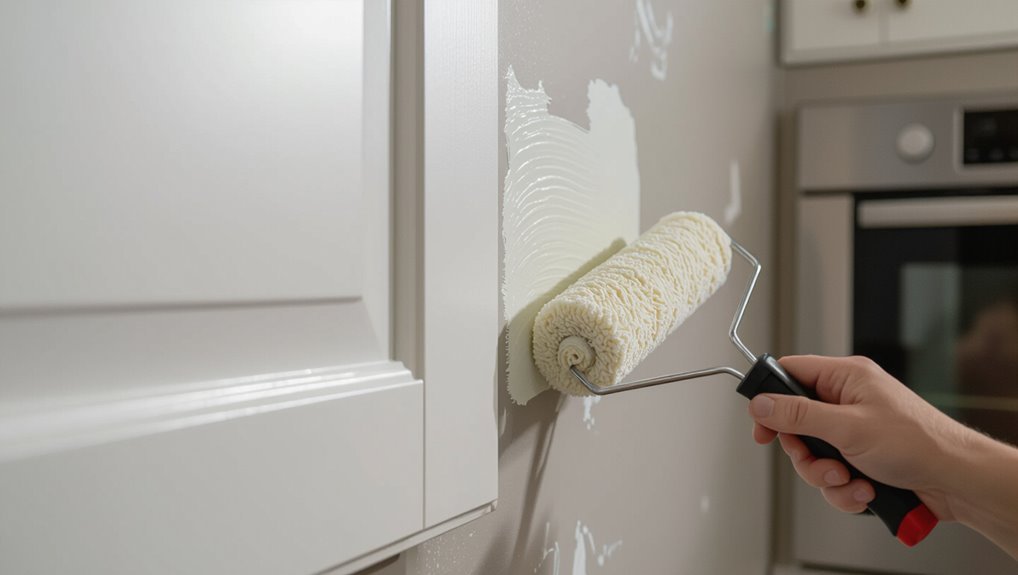
Short answer: yes — you can use cabinet paint on walls, but it isn’t always the best choice.
You’ll get durable, smooth finishes useful in high-traffic areas, but weigh cabinet paint applications against cost and sheen.
Durable, smooth finishes make cabinet paint great for high-traffic walls — just consider cost and gloss level.
Check wall surface considerations like texture and porosity; some walls need sanding, priming, or leveling first.
Choose based on room function and desired look.
Why Homeowners Consider Cabinet Paint for Walls
Because cabinet paint’s tough, low-porosity finish resists scuffs and cleans easily, many homeowners pick it when they want long-lasting walls in busy rooms like kitchens, hallways, or kids’ spaces. You’ll appreciate cabinet paint benefits for durability and enhanced wall aesthetics, though you’ll weigh sheen and prep needs.
| Benefit | Impact |
|---|---|
| Durability | Longer-lasting finish |
| Cleanability | Easier maintenance |
| Appearance | Crisp wall aesthetics |
| Investment | Reduced touch-ups |
Cabinet Paint vs. Wall Paint: Quick Comparison
When you compare cabinet paint to wall paint, you’ll notice cabinet formulas usually give a harder, glossier finish that resists scuffs better.
Wall paints are formulated to go on faster and dry quicker, making application over large areas easier.
Consider those trade-offs for your space: durability versus speed of application and drying time.
Durability And Finish
Finish and durability matter most if you want paint that stands up to daily use—cabinet paints are formulated harder and glossier to resist scratches, stains, and frequent cleaning, while wall paints prioritize hide, texture, and ease of roll-on application. You’ll weigh durability factors and finish options for traffic level, cleaning, sheen, and longevity.
| Type | Durability | Typical Sheen |
|---|---|---|
| Cabinet | High | Semi-gloss |
| Wall | Medium | Matte/Satin |
| Hybrid | Variable | Satin |
Application And Drying
Although cabinet and wall paints share ingredients, they apply and dry very differently, so you should plan your prep and timing accordingly.
You’ll notice thicker viscosity and different application techniques; expect varied drying times.
Consider:
- Sand and prime for adhesion.
- Use a high-density foam roller or brush for smooth coats.
- Allow longer cure than wall paint for handling and topcoat.
Types of Cabinet Paint : Which Work Best on Walls
When you’re choosing a cabinet paint for walls, consider oil-based enamels for their hardness and stain resistance.
You’ll also see waterborne alkyds that give similar durability with lower odor and easier cleanup.
For a faster-drying, flexible option, acrylic urethanes can be a good alternative.
Oil-Based Enamel Options
If you want a hard, durable surface that resists chipping and cleans easily, oil-based enamel is one of the strongest options for painting walls with cabinet-grade paint.
You’ll get oil based advantages and superior enamel durability, though fumes and longer cure matter.
Consider:
- Longevity and chip resistance
- Smooth, high-gloss finish
- Tough cleaning performance
Waterborne Alkyd Benefits
Because waterborne alkyds blend alkyd resilience with low-VOC water cleanup, they give you many of the durable, hard-surface benefits of oil-based enamel without the heavy fumes and long cure times.
You’ll get waterborne advantages like quicker drying, easier cleanup, and lower odor, while alkyd characteristics deliver toughness, chip resistance, and smooth leveling—making them practical for walls where durability matters.
Acrylic Urethane Alternatives
Waterborne alkyds give you oil-like toughness without the fumes, but acrylic urethane blends offer another route for wall durability where you want even greater abrasion and chemical resistance.
You’ll weigh acrylic advantages against urethane alternatives based on room traffic, cleanability, and sheen preference.
- Durability: high
- Maintenance: easy
- Finish: smooth, hard
Paint Sheen: Appearance and Durability on Large Wall Areas
When you pick a sheen for large wall areas, you’re choosing how much light the surface will reflect and how durable it will be over time. You’ll weigh sheen comparison and durability factors: flatter sheens hide flaws, glossier ones clean easier. Choose based on traffic and lighting.
| Sheen | Use |
|---|---|
| Flat | Low traffic |
| Eggshell | Living rooms |
| Satin | Kitchens |
| Semi-gloss | Trim |
How Adhesion to Drywall and Plaster Compares to Wood
When you use cabinet paint on drywall or plaster you’ll notice adhesion behaves differently than on wood because those surfaces are more porous and can absorb paint unevenly.
You’ll usually need a specific primer for drywall or plaster to seal the surface, while wood often just needs a sanding and a stain-blocking or bonding primer.
Also keep in mind that drywall and plaster can be less flexible than wood, so you might see cracking or peeling over time if the finish doesn’t accommodate minor movement.
Adhesion Differences: Porosity
Because surface porosity controls how paint bonds, you’ll notice cabinet paint behaves differently on drywall or plaster than on wood.
You’ll face adhesion challenges that demand specific surface preparation.
Consider porosity effects:
- Drywall: highly porous, so paint soaks and grips unevenly.
- Plaster: variable porosity, needs careful smoothing.
- Wood: denser, bonds predictably after sanding and cleaning.
Primer Needs: Surface Type
Although drywall and plaster soak primer differently than wood does, you’ll need a more tailored priming strategy for each surface to get reliable adhesion.
You should adjust surface preparation: sand gloss, fill holes, and choose a high-penetration primer for porous plaster or drywall.
For wood, use a bonding primer.
Also consider texture compatibility—smooth primers on smooth wood, de-sensitizing primers for textured plaster.
Longevity: Flexibility & Cracking
If you expect painted cabinets to last without hairline cracks, you’ll need to match the paint’s flexibility and adhesion to the substrate: drywall and plaster tend to flex and micro-move differently than wood.
So a coating that bonds well to rigid wood may craze or peel on more compliant wall surfaces.
- Choose paints rated for flexibility concerns.
- Use proper primers to improve adhesion.
- Inspect for cracking issues and repair movement sources.
When Cabinet Paint on Walls Is a Good Choice
When you’re working with a limited budget or want a quick, cohesive refresh, using the same cabinet paint on adjacent walls can be a smart move; it simplifies color choices, hides minor wall imperfections, and creates a unified, spacious feel that smaller rooms especially benefit from. You’ll enjoy improved color coordination and controlled texture variations.
| Benefit | Notes |
|---|---|
| Budget | Saves on paint types |
| Cohesion | Unified look |
When You Should Stick With Regular Wall Paint
If you’re covering a lot of wall area, regular wall paint is usually the smarter choice because it’s formulated for large-surface application and spreads faster.
You’ll also save money—the specialty finishes used for cabinets tend to cost more per gallon and take longer to apply.
Finally, consider the finish tradeoffs: wall paint gives the look and durability you need for walls without the high-gloss sheen or extra prep cabinet paint requires.
Large Surface Coverage
Covering large wall areas with cabinet paint rarely makes sense — it’s formulated for small, hard surfaces and you’ll pay more and work harder for less coverage.
You should choose wall paint when you want efficient surface preparation and predictable finish durability.
Consider:
- Coverage speed
- Ease of touch-ups
- Roller/sprayer compatibility
These factors favor wall paint for big rooms.
Cost And Finish Tradeoffs
Budget and finish matter: you’ll usually save money and get a more predictable look by using regular wall paint rather than cabinet paint for whole rooms.
If you’re covering lots of square footage, the cost benefits and faster application favor wall paint.
Cabinet paints offer superior finish quality for trim or focal walls, but they’re pricier and slower—stick with wall paint for broad areas.
How Surface Prep Differs for Cabinet Paint on Walls
When you paint walls with cabinet-grade paint, your surface prep shifts from light cleaning and touch-ups to more rigorous sanding, deglossing, and repair so the paint can adhere and look smooth over a larger area.
Walls demand consistent feathering of patched spots, removal of grease or texture irregularities, and careful priming to prevent lap marks and sheen differences that are less forgiving on expansive surfaces.
- Focused sanding and deglossing for adhesion challenges.
- Consistent patch feathering and skim repairs.
- Thorough cleaning to support advanced surface preparation techniques.
Primers That Work Best Under Cabinet Paint on Drywall
When you’re painting drywall with cabinet-grade coatings, picking the right primer makes a big difference.
Use an oil-based bonding primer for maximum adhesion over tricky spots and a high-build latex primer when you need to fill minor imperfections and create a smoother topcoat.
I’ll compare their pros, drying times, and best-use cases so you can choose the right one for your wall project.
Oil-Based Bonding Primer
Although oil-based bonding primers take longer to dry than water-based options, they give exceptional adhesion and stain-blocking on drywall under cabinet paint.
You’ll get clear bonding benefits and learn how primer types affect durability.
Consider these priorities:
- Adhesion — bonds glossy or problematic surfaces.
- Stain blocking — seals tannins, smoke, water marks.
- Sandability — smooths for topcoat grip.
High-Build Latex Primer
1 effective choice for drywall under cabinet paint is a high-build latex primer, which levels minor imperfections and creates a thicker base coat that improves topcoat coverage and durability.
You’ll appreciate high build benefits: smoother surface, reduced sanding, and better hiding.
For best results, follow proper primer application—apply thin, even coats, allow full dry time, and sand lightly before cabinet paint.
Recommended Tools and Application Methods for Walls
Because cabinet paint is thicker and smoother than typical wall paint, you’ll need the right tools and techniques to get a durable, even finish on walls.
Use recommended tools and proper application techniques to avoid lap marks and drips.
- Quality angled brush for edges
- Microfiber roller (short nap) for flats
- Nylon sanding block between coats
Spray vs. Brush vs. Roller: What Works for Cabinet Paint on Walls?
If you want ultra-smooth coverage, spraying gives the cleanest finish but takes more prep and ventilation.
Use a brush for trim and tight spots where control matters.
Rollers are your best bet for quickly covering large wall areas with consistent texture.
Spray For Smooth Coverage
When you want an ultra-smooth, factory-like finish on walls treated with cabinet paint, spraying usually gives the best and fastest results compared with brushing or rolling.
You’ll favor the spray technique for a smooth finish, but prep, ventilation, and practice matter.
Consider:
- Even thin coats
- Less texture
- Faster coverage with masking and cleanup
Brush For Detailed Areas
1 tight, angled brush will get into trim, corners, and recessed details that a sprayer or roller can’t reach, so you’ll want to keep one handy for touch-ups and edges.
Use detailed brush techniques to feather edges, control drips, and maintain smooth laydown.
For precision painting on cabinetry-style walls, work in short strokes, keep a damp rag nearby, and reload sparingly for even coverage.
Roller For Large Surfaces
After you’ve handled edges and details with a tight angled brush, reach for a roller to cover broad wall expanses quickly and evenly.
You’ll use appropriate roller types and roller techniques to match sheen and texture. Apply fast, even strokes, avoid overloads, and back-roll for uniformity.
- Nap choice
- Coverage speed
- Finish consistency
Drying vs. Curing: What to Expect
Although the paint may feel dry to the touch within hours, you’ll need to understand that drying and curing are different processes: drying is solvent evaporation and makes the surface hard enough to handle, while curing is a chemical change that gives the finish its full hardness and durability.
Expect limited drying time in hours but a curing process that can take days to weeks; avoid heavy use until cured.
How Cabinet Paint Affects Indoor Air Quality and VOCs
While the paint may feel dry and look finished, the solvents and additives released during drying and curing can affect the air you breathe for hours to days afterward.
You should consider indoor air quality, VOC emissions, paint toxicity, health considerations, environmental impact, and ventilation needs.
- Choose low-VOC or water-based formulas.
- Increase ventilation during curing.
- Limit exposure for sensitive people.
Cost: Cabinet Paint vs. Wall Paint (Per Room)
When you compare cabinet paint to wall paint per room, the upfront material costs can be surprisingly different—cabinet-grade paints and primers usually cost more.
You’ll also pay more in labor and preparation for cabinets since they need sanding, priming, and finer application compared with typical wall prep.
Consider both material and labor when you’re budgeting, because the total cost gap often outweighs the paint price alone.
Upfront Material Costs
A typical room’s paint budget shifts a lot depending on whether you’re painting cabinets or walls: cabinet paint usually costs more per square foot because it requires higher-quality, durable finishes and more primer, while wall paint is cheaper and sold in larger, economy-sized cans.
You’ll weigh upfront expenses and initial investment:
- Cabinet paint: higher cost per sq ft.
- Primer/topcoat: added expense.
- Wall paint: lower unit price.
Labor And Preparation
Beyond material costs, labor and prep drive the biggest gap between cabinet and wall painting per room.
You’ll spend more time on cabinets: detailed labor techniques like sanding, priming, and spraying take precision.
Walls need simpler rolling and patching.
Preparation essentials—masking, hardware removal, and surface cleaning—are stricter for cabinets, so expect higher hourly labor and longer prep windows.
Durability and Cleanability: Cabinet Paint vs. Wall Paint
Because cabinet surfaces get handled far more than most walls, you’ll want paint that stands up to scuffs, grease, and frequent cleaning.
In a durability comparison, cabinet formulas resist wear better; consider cleanability factors like wipeability and stain resistance.
Ask yourself:
- How often will you clean?
- Will grease contact occur?
- Is abrasion likely?
Choose accordingly.
Color and Sheen Selection for Large Wall Areas
When you move from thinking about durability to covering large wall expanses, color choice and sheen start shaping how a room feels and how imperfections show.
You’ll use color psychology to set mood—soft neutrals calm, saturated hues energize.
Use color psychology to set mood: soft neutrals soothe, while richer, saturated hues invigorate the space.
Pick lower sheens to hide flaws; higher sheens reflect light and emphasize texture.
Balance sheen effects with room lighting and traffic.
Common Problems When Using Cabinet Paint on Walls
Although cabinet paint gives walls a durable, smooth finish, you’ll run into a few common problems if you don’t adjust your prep and application techniques.
You may face adhesion issues, poor surface compatibility, and finish problems. Consider:
- Primer choice affecting bond
- Porous vs. glossy substrates
- Humidity causing curing delays
Address these early to avoid costly rework.
How to Fix Brush Marks, Orange Peel, or Sagging on Walls
Fixing brush marks, orange peel, or sagging starts with diagnosing the root cause so you can choose the right remedy—sand and recoat for brush marks, thin and back-roll for orange peel, and level or remove excess for sags.
Then follow with proper drying and light sanding before reapplication. Use targeted brush mark remedies, orange peel solutions, and sagging fixes; emphasize thorough surface preparation, correct thinning, and even technique.
Will Cabinet Paint Stick to My Existing Wall Coating?
Wondering if cabinet paint will bond to the wall coating you already have?
You’ll need quick checks and prep to guarantee adhesion testing and surface compatibility.
Try this:
- Clean and degrease, then tape a small patch.
- Apply paint sample; wait 24–48 hours.
- Perform a peel test; sand or prime if it lifts.
Follow results to decide on full application.
Best Use-Case Projects: Accent Walls, High-Traffic Zones, and Trim
If your peel test went well, you can confidently pick projects where cabinet paint performs best: accent walls, high-traffic zones, and trim.
You’ll focus on accent walls for bold color choices, trim applications for crisp edges, and high traffic zones where durability concerns matter.
Prioritize surface preparation, weigh finish differences for wear and sheen, and factor cost considerations before committing.
When to Hire a Pro Versus DIY for Cabinet-Paint-on-Wall Jobs
When should you tackle a cabinet-paint-on-wall job yourself and when should you call a pro?
You’ll weigh cabinet paint benefits against time, skill, and damage risk.
Consider:
- Small accent walls with good wall preparation — DIY.
- Large rooms or complex trim — hire a pro.
- Imperfect surfaces or structural issues — always pro.
Environmental and Safety Tips for Using Cabinet Paint Indoors
Because cabinet paint often contains strong solvents and pigments, you’ll want to prioritize ventilation, proper personal protective equipment, and careful disposal to protect your health and the environment.
Prioritize ventilation, PPE, and proper disposal when painting cabinets to protect your health and the environment.
Follow safety precautions: wear gloves, eye protection, and an N95 or respirator for low-VOC tolerance.
Observe ventilation considerations by opening windows, using fans, and avoiding HVAC recirculation.
Collect and dispose of waste per local rules.
How to Test Cabinet Paint on a Wall Before Committing
Although cabinet paint can look perfect in a chip or online photo, you’ll want to test it on an actual wall patch to check color, sheen, and adhesion under your room’s light and conditions.
Use clear test techniques and a small sample application. Try these steps:
- Clean, prime, paint.
- Observe in different light.
- Check adhesion after 48 hours.
Maintenance and Touch-Up Guidelines for Cabinet-Painted Walls
If you want your cabinet-painted walls to stay fresh, inspect them regularly for chips, scuffs, and stains so you can address small issues before they spread. Use gentle cleaners, keep a small touch-up kit, and follow maintenance tips for longevity. Learn simple touch up techniques: feather edges, match sheen, and sand lightly.
| Issue | Fix |
|---|---|
| Chip | Fill & paint |
| Scuff | Clean & buff |
| Stain | Spot clean |
| Edge wear | Sand & blend |
| Gloss mismatch | Recoat |
Product Recommendations and What to Look for on the Label
Choosing the right products makes touch-ups and long-term care much easier, so look for paints and finishes formulated for high-traffic surfaces that list durability and washability on the label.
You’ll want to check label features and compare product types. Consider:
- Hard-wearing acrylic enamel
- Waterborne alkyd for smooth finish
- Extra-matte or satin sealer for scuff resistance
Quick Decision Checklist: Should You Use Cabinet Paint on Your Walls?
After checking labels and weighing finish types, you can quickly decide whether cabinet paint suits your walls by asking a few practical questions:
Will the room see heavy wear or frequent cleaning? Consider durability, sheen, and odor; test adhesion on a small patch.
Use quick tips: pick semi-gloss for trim, matte for texture.
Balance longevity with your design ideas and maintenance willingness.
Frequently Asked Questions
Can Cabinet Paint Yellow or Fade Differently on Walls Over Time?
Yes — cabinet paint can yellow or fade differently on walls over time; you’ll face durability concerns and uneven color retention if the formulation, sheen, or surface prep aren’t right, so test samples and use UV-resistant topcoat.
Will Cabinet Paint Affect My Insurance or Home Resale Value?
Think of paint as a guest: you won’t lose coverage merely for using cabinet paint, but you should check policy details. You’ll want to note insurance implications and resale considerations to avoid surprises and preserve buyer appeal.
How Long Should I Wait Between Coats on a Large Wall Area?
You should wait the paint’s recommended drying time—usually 2–4 hours for touch, 24 hours for full cure—between coats on a large wall. Use proper application techniques: thin even coats, good ventilation, and light sanding if needed.
Can I Mix Cabinet Paint Brands or Colors for Better Coverage?
Yes — you can mix cabinet paint brands or colors, but you’ll need to test color compatibility first; you’ll also use coverage techniques like thinning slightly, thorough stirring, and sample panels to guarantee uniform finish and adhesion.
Are There Fire-Retardant or Mold-Resistant Cabinet Paints for Bathrooms?
I found a rusted toolbox once that survived a flood—yes, some cabinet paints offer mold-resistant and fire-retardant formulas. You’ll boost bathroom durability and fire safety, but check labels and certified ratings before trusting them fully.
Conclusion
Yes — you can use cabinet paint on walls, but it’s a trade-off. If you want a tough, washable surface in a high-traffic room, cabinet paint (especially waterborne alkyd or high-quality acrylic with a satin/eggshell sheen) delivers durability and easy cleaning. For a relaxed, forgiving finish or large walls where cost matters, standard wall paint is smarter. For example, Sarah painted her laundry room with waterborne alkyd cabinet paint and loved the scrubbable, chip-resistant finish, but she wouldn’t use it on her entire living room due to cost and slight sheen differences.
