
Can You Apply Wallpaper to Textured Walls: What You Need to Know
You can wallpaper textured walls, but you’ll need to assess the texture, prep heavy areas, and pick the right paper and adhesive for a lasting finish. Light orange peel and fine knockdown usually work with heavy or embossed papers and strong paste, while deep knockdown and popcorn often need skim-coating or removal. Test adhesion with a scrap, fix moisture or mold first, and plan for seams and pattern match — keep going for step‑by‑step prep, product picks, and fixes.
What This Guide Covers
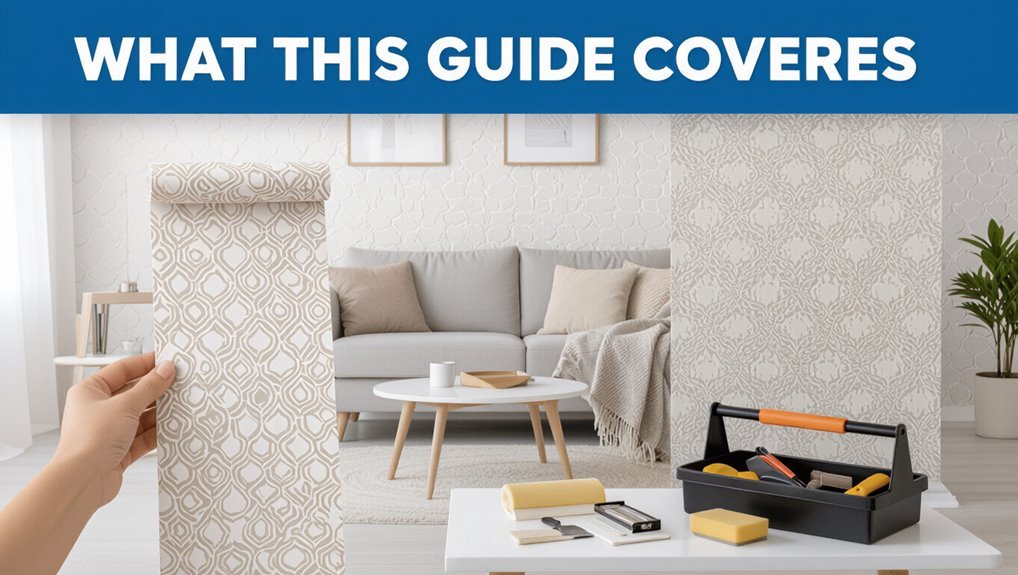
Before you pick a pattern or prep your paste, this guide shows exactly how to assess your textured walls, choose compatible wallpaper types and adhesives, prepare surfaces, and apply paper so seams and edges look smooth.
You’ll learn concise wall preparation steps, how to identify texture types, decisions on smoothing versus skim-coating, adhesive selection, and practical application tips so your final finish looks professional and durable.
Quick Answer: Can You Wallpaper Over Textured Walls?
You’ve learned how to assess and prepare textured walls; now let’s answer the simple question: yes—you can wallpaper over many textured surfaces, but the approach depends on the texture’s depth and pattern. You’ll get textured benefits like saved time; expect wallpaper challenges such as adhesion and visible seams.
| Texture | Expectation |
|---|---|
| Light orange peel | Good |
| Sand | Moderate |
| Deep knockdown | Difficult |
| Heavy popcorn | Not recommended |
Should You Wallpaper or Smooth First? A Decision Checklist
If your textured walls vary in depth or you care about a flawless finish, decide whether to smooth or wallpaper by weighing texture severity, wallpaper type, and your skill level.
Inspect texture, test adhesion with your chosen wallpaper types, and consider paintable or strippable options.
Factor time, cost, and required surface preparation.
Smooth if seams matter; wallpaper if texture is mild and you’re confident.
Which Textures Are Easiest to Wallpaper
You’ll find that light orange peel is one of the easiest textures to paper over because its shallow, consistent bumps don’t show through most wallpapers.
Smooth sand knockdown is also forgiving—its low-profile texture can often be covered without heavy prep.
Both let you focus more on pattern matching and less on hiding wall imperfections.
Light Orange Peel
Light orange peel texture is one of the easiest surfaces to wallpaper because its shallow, fine bumps create minimal shadowing and allow adhesive to sit evenly.
You can apply most wallpapers directly after cleaning and priming; seams align smoothly and patterns remain true.
For best results, use a high-quality adhesive and press firmly with a smoothing tool to eliminate trapped air and guarantee long-lasting adhesion.
Smooth Sand Knockdown
Smooth sand knockdown combines a fine, slightly raised texture with flattened peaks that make it one of the easiest wall finishes to wallpaper.
You’ll find smooth application straightforward: prep by cleaning and lightly sanding high spots, use a heavy-duty adhesive, and press seams carefully.
Its gentle profile guarantees excellent texture compatibility with most papers, reducing telegraphing and simplifying alignment for a professional result.
Which Textures Usually Need Smoothing First
Because wallpaper needs a flat, consistent surface to adhere and look right, certain textured finishes should be smoothed before you hang it.
You’ll assess texture types and choose appropriate smoothing techniques to avoid bumps and poor adhesion.
- Orange peel — skim and sand for uniformity.
- Heavy knockdown — fill low spots, skim coat.
- Stomped or popcorn — fully level with joint compound.
How Texture Height Affects Adhesion and Paper Choice
When surface peaks rise more than about 1/16 inch, they’ll reduce adhesive contact and increase the risk of bubbling or premature peel. You should measure texture height and match it to either a heavier adhesive and thicker vinyl-backed paper or plan to skim the wall to create a flatter substrate.
Consider texture impact on seams. Choose papers rated for uneven surfaces, and weigh adhesion factors before proceeding.
How to Test Your Textured Wall for Wallpaper Readiness
Before you hang anything, check the surface texture to see if bumps or ridges will show through or prevent good contact.
Do a small adhesion test by applying a scrap of the wallpaper with your chosen adhesive and leaving it 24–48 hours to see if it peels off or bubbles.
Also inspect for moisture and mold—use a moisture meter and treat any damp spots or mildew before proceeding.
Surface Texture Assessment
Texture matters—you’ll need to know how pronounced your wall’s bumps and patterns are before you pick or apply wallpaper.
Inspect texture types and note peaks, valleys, and repeat patterns to plan wall preparation.
Then:
- Run a fingertip rub to feel severity.
- Shine a light across the surface to reveal shadows.
- Measure repeat size to match wallpaper pattern and smoothing needs.
Adhesion Test Procedure
Although your wall may look sound, you should run a quick adhesion test to confirm the wallpaper will stick.
Tape a 4×4-inch sample of the paper with proper paste to the textured area, press firmly, wait 24 hours, then peel at a 45° angle.
Note failure points, try alternate adhesion techniques, and judge wallpaper durability before committing to full installation.
Moisture And Mold Check
Because trapped moisture and hidden mold will ruin wallpaper and your wall, you should inspect textured surfaces carefully before you paste anything up.
Do a moisture assessment and follow mold prevention steps:
- Use a moisture meter across high and low spots.
- Tape plastic for 24–48 hours to spot condensation.
- Scrape small areas; treat any discoloration with appropriate cleaner and allow full drying.
Tools and Materials for Textured-Wall Jobs
Start by gathering the right tools and materials so you won’t get slowed down mid-job: heavy-duty wallpaper paste, a paste brush or roller, a strong seam roller, a sharp utility knife with extra blades, a plumb line, a smoothing brush or plastic scraper, a sturdy ladder, and drop cloths to protect floors.
Choose adhesive selection suited for textured surfaces, guarantee thorough wall preparation, and have spares for mistakes.
How to Measure and Plan Wallpaper for Textured Walls
Measure each wall height and width precisely, then add 10–15% for matching patterns and trimming so you don’t run short mid-strip.
Measure each wall precisely, then add 10–15% for pattern matching and trimming to avoid shortages.
Use measuring tools like a laser level, tape measure, and plumb line while planning layout from corners to focal points.
Consider seams, obstacles, and repeat alignment.
- Calculate total rolls needed.
- Mark starting lines.
- Note pattern repeats and waste.
Prep-and-Cover vs. Skim-Coat: When to Choose Each
Once you’ve laid out your strips and accounted for repeats and waste, decide whether to hide texture with a cover coat or flatten it with a skim-coat before hanging wallpaper.
Use texture assessment to choose prep techniques and covering methods.
Consider adhesive options for different wallpaper patterns, weigh removal strategies, and apply DIY tips—or call professional help if surfaces are severe or time’s tight.
How to Sand Orange‑Peel and Knockdown Safely
Sand orange‑peel and knockdown textures carefully to reduce dust, avoid damaging drywall, and create a smooth surface that accepts wallpaper adhesive.
You’ll follow safety guidelines: wear a respirator, eye protection, and use plastic sheeting.
Choose appropriate sandpaper types (120–220 grit) and a pole sander. Work gently, check progress often, and vacuum dust frequently.
Use 120–220 grit sandpaper and a pole sander; sand gently, check progress, and vacuum dust often.
- Prep area
- Use proper PPE
- Sand progressively
Skim-Coat: How to Hide Texture
If sanding doesn’t remove the texture completely or you’d rather avoid aggressive abrasion, skim-coating gives you a smooth, paintable surface that accepts wallpaper.
You’ll mix joint compound, apply thin coats with a wide drywall knife, and feather edges for an even finish.
Use proper skim coat techniques to achieve texture concealing results, allow full drying, then light sand before hanging wallpaper.
When to Use a Drywall Primer‑Sealer Before Wallpapering
Before you hang wallpaper on textured drywall, know when priming matters: if the surface is porous, patched, or has uneven sheen, you should prime first.
Choose a sealer when stains, heavy joint compound, or high-absorbency areas are present, and use a primer when you mainly need uniform adhesion and sheen.
Apply primer-sealer after repairs and once the wall is fully dry, and avoid wallpapering in high humidity or before new compound has cured.
When To Prime
When your textured drywall has fresh patches, stains, or bare paper-faced gypsum showing through, you should apply a drywall primer-sealer before wallpapering to guarantee even adhesion and hide inconsistencies.
You’ll prime before hanging, after repairs and when surfaces vary in porosity. Choose primer types and priming techniques suited to texture and paper.
- Patch readiness
- Stain blocking
- Porosity equalizing
Sealer Vs. Primer
Although both products help prepare drywall for wallpaper, a sealer and a primer-sealer serve different jobs you shouldn’t confuse: use a stain‑blocking sealer to lock down tannins, water marks, or heavy texture that might bleed through.
Choose a drywall primer‑sealer to even out porosity and create a consistent surface for adhesive to grab.
Know sealer benefits and compare primer types before you start.
Timing And Conditions
You’ve picked the right product; now decide the timing and conditions for applying a drywall primer‑sealer so your wallpaper performs well.
You should seal before papering when surfaces are porous, repaired, or stained.
Consider timing considerations and environmental conditions for adhesion and drying.
- Apply after repairs and sanding, before any texture hides flaws.
- Prime in stable humidity and 50–75°F.
- Wait full cure per label.
Best Primers for Textured Surfaces
A good primer makes all the difference on textured walls, so pick one formulated for high-traction, porous surfaces to guarantee proper adhesion and even coverage.
You’ll want primers that seal pores, level slightly, and accept paste without peeling.
Research best primer brands and match product specs to your textured wall types — popcorn, knockdown, or heavy orange peel — for durable, smooth wallpaper bonding.
Wallpaper Types That Hide Wall Imperfections
Texture-tolerant wallpapers help you disguise dents, seams, and uneven plaster without costly repairs.
Texture-tolerant wallpapers conceal dents, seams, and uneven plaster, offering an affordable cosmetic fix with style.
You’ll choose options emphasizing pattern selection and texture compatibility to mask flaws while keeping visual interest.
Consider these types to match your wall’s character and hiding needs:
- Grasscloth or woven papers for organic texture that camouflages pits.
- Heavy embossed papers adding depth.
- Fabric-backed papers for durability and smoother adhesion.
Vinyl Wallpaper Options for Bumpy Walls
If your walls have bumps or minor imperfections, vinyl wallpaper can be one of the easiest fixes because it’s durable, forgiving, and comes in several formats that mask uneven surfaces. You’ll choose embossed vinyl for strong vinyl texture or smooth vinyl for subtle coverage; both offer excellent wallpaper durability.
| Type | Best for |
|---|---|
| Embossed | Hiding bumps |
| Smooth | Light texture |
Non‑Woven and Fabric‑Backed Papers That Tolerate Texture
When walls are uneven but you want something more refined than vinyl, non‑woven and fabric‑backed wallpapers give you strength and stretch that handle minor bumps without sagging or bubbling.
You’ll appreciate non woven benefits and fabric backed durability for longer wear.
Consider application tips:
- Use clear adhesive suitable for non‑woven.
- Smooth seams with a seam roller.
- Match patterns carefully for texture hide.
Can Peel‑and‑Stick Wallpaper Work on Textured Walls?
Wondering whether peel-and-stick wallpaper will stick to your textured walls? You can, but success depends on peel and stick performance and textured wall compatibility. Smooth, low- to medium-texture often works; heavy texture may cause gaps or bubbling. Test a small roll, press seams firmly, and expect more trimming. Use this quick comparison:
| Texture | Likely Result | Tip |
|---|---|---|
| Smooth | Good | Standard application |
| Orange peel | Fair | Test first |
| Heavy knockdown | Poor | Avoid |
How Adhesive Choice Changes With Wall Texture
Because wall texture affects contact area, you’ll want to match adhesive type and application to the surface: smooth walls allow thinner, pressure-sensitive adhesives that bond across the whole backing, while medium textures may need stronger, repositionable adhesives or added edge sealing.
Heavy textures often require wet paste or specialty adhesives that can bridge gaps and grip irregularities.
- Assess texture compatibility first.
- Choose adhesive types accordingly.
- Test small area for bond and repositioning.
Paste‑the‑Wall vs. Paste‑the‑Paper on Textured Walls
If your walls have noticeable texture, you’ll usually get better results by pasting the wall rather than the paper.
You’ll find paste‑the‑wall allows smoother adhesion over bumps when you use proper wall preparation techniques and adjust adhesive selection strategies for coverage.
Paste‑the‑wall reduces bubbling, speeds alignment, and lets you work seams more easily—especially on moderately rough or lightly textured surfaces.
Recommended High‑Tack Adhesives for Rough Surfaces
Adhesive choice makes the difference on rough walls, so pick a high‑tack paste formulated for heavy‑duty bonding and open time to let you press into crevices and smooth seams.
For rough walls, use a high‑tack, heavy‑duty paste with extra open time to press into crevices.
You’ll want high performance adhesives and tested rough surface options that resist slip and shear.
- Solvent‑resistant polymer paste
- Heavy‑duty vinyl adhesive
- Extra‑open‑time, mortar‑grade paste
How to Prepare Seams to Prevent Shadowing
When seams meet textured surfaces, you’ll want to prep them so light won’t reveal every bump and gap; press a thin, even bead of high‑tack paste into the joint, work it into crevices with a flexible seam roller or brush, then wipe away excess before it skins to leave a flush, uniform surface that won’t shadow after drying.
Align edges precisely for seam alignment and guarantee consistent shadow prevention.
Matching Patterns on Textured Walls: Tips
Because textures distort pattern placement, you’ll need to plan layout and match repeats more deliberately than on smooth walls.
You’ll check pattern alignment across uneven surfaces and keep wallpaper seams tight to hide misalignment.
Follow these focused steps:
- Start with a full-strip mockup to verify alignment.
- Shift subsequent strips to match motifs, not texture highs.
- Use light adhesive adjustments to ease seams.
Cutting and Trimming at Textured Edges and Corners
As you approach textured edges and corners, cut and trim with deliberate, small adjustments so the paper sits flush without tearing or gaping.
Use precise cutting techniques and sharp wallpaper tools to follow contours, easing seams into corners.
For neat edge finishing, score and fold excess, then trim incrementally.
Take your time with corner trimming to prevent gaps and maintain pattern alignment.
Step‑by‑Step: How to Hang Wallpaper on Textured Walls
Start by preparing the room and your materials so you’ll have everything at hand: clear furniture away, protect floors and trim, smooth any loose texture, and measure and cut your first strips with a little extra length for matching and trimming.
Prepare the room and materials first: clear furniture, protect surfaces, smooth loose texture, and cut strips with extra length.
Then follow these steps, choosing adhesive types suited to texture compatibility:
- Apply adhesive evenly.
- Position and smooth strips.
- Trim seams and clean excess.
Working Around Outlets and Switches on Textured Walls
Before you start, turn off the power at the breaker and test the outlet or switch to make sure it’s dead.
Remove the cover plates and cut the wallpaper neatly around the fixtures, trimming back to the box for a snug fit.
Reattach plates after the paste has dried and the edges are secure.
Turn Off Power
Because you’ll be cutting and fitting paper around electrical fixtures, turn off the power at the breaker first and confirm the circuit is dead with a non-contact tester or outlet tester.
Follow safety precautions before you work; don’t use power tools on live circuits.
- Label breakers.
- Test twice.
- Keep covers and hardware in a safe container.
Trim Around Fixtures
With the power off and outlets confirmed dead, you can safely trim wallpaper around switches and receptacles on textured walls.
Use a sharp blade and straightedge, cutting slightly larger holes to accommodate texture.
Test fixture compatibility, reinstall plates carefully, and press edges flat into texture with a seam roller or smoothing tool.
Patch gaps with matching paste and trim techniques for a neat, safe finish.
Finishing Baseboards and Trim After Wallpapering
Trim the wallpaper carefully along the baseboards and around trim so you get a clean, professional edge that hides seams and protects the paper.
Trim wallpaper neatly along baseboards and trim for a clean, professional edge that conceals seams.
You’ll choose baseboard finishing and trim options that match style and durability, then seal edges and caulk gaps.
Follow these steps:
- Clean and prime surfaces.
- Butt paper to trim, trim excess.
- Caulk, paint, or add shoe molding.
How Long to Wait After Skim‑Coating Before Papering or Painting
After skim‑coating, you’ll usually wait 24–72 hours for the compound to dry depending on thickness and humidity.
Check the surface by touching and using a moisture meter or press a piece of tape—no dampness should remain.
Once dry, apply an appropriate primer or sealer to lock in any remaining alkalinity and create a uniform surface for paint or wallpaper.
Drying Time Guidelines
When you skim‑coat textured walls, you’ll need to let the compound fully cure before wallpapering or painting—typically 24 to 72 hours depending on thickness, temperature, and humidity.
Use proper drying techniques to speed curing; monitor humidity impact to avoid delays.
- Increase airflow with fans.
- Use dehumidifiers in damp rooms.
- Keep temperatures steady for even drying.
Surface Moisture Check
Although skim coat may look dry, you should verify the surface moisture level before papering or painting to avoid adhesion failures and bubbling.
Use a moisture detection meter or hold a plastic sheet for 24 hours to spot trapped dampness. Wait until readings match ambient humidity and the skim coat feels uniformly dry.
Proper wall preparation prevents failures and guarantees wallpaper or paint bonds correctly.
Primer And Sealers
Timing matters: you should let skim coat fully cure before applying primers or sealers so they bond properly and don’t trap moisture.
Wait 5–7 days typically, longer in humid conditions. Choose primer types suited to drywall and consider a test patch.
Consider sealer application only after dryness.
- Check moisture with meter.
- Use bonding primer.
- Apply sealer thinly and evenly.
How Humidity and Temperature Affect Wallpaper Adhesion
Because moisture and heat change how adhesives behave, you’ll need to control both humidity and temperature before you hang wallpaper on textured walls.
Monitor humidity effects and avoid temperature fluctuations during prep and drying. Keep the room within manufacturer-recommended ranges, ventilate if needed, and use a dehumidifier or heater to stabilize conditions so adhesive cures evenly and the wallpaper bonds properly to textured surfaces.
How to Spot and Stop Bubbling During Installation
Watch for raised areas and trapped air as you smooth each strip so you can spot bubbles early and figure out whether they’re from poor adhesion, dust, or uneven texture.
For small bubbles, you can prick them with a pin, press out the air toward the prick, and add a touch of adhesive under the paper if needed.
To prevent future bubbling, keep surfaces clean and dry, apply adhesive evenly, and work in consistent temperatures and humidity.
Identify Bubble Causes
If you spot small pockets of air under the paper as you smooth each strip, don’t ignore them—those bubbles reveal where the adhesive didn’t fully contact the wall or where trapped dust and texture prevented a flat bond.
Identify likely causes so you can prevent bubble formation and adhesive failure.
- Dust or debris on wall
- Heavy texture peaks
- Uneven paste application
Fix Small Bubbles
Catch small bubbles early and deal with them immediately so they don’t become permanent blisters. When you spot one, gently peel the seam, smooth toward the edge with a plastic smoother, and reapply a thin line of adhesive or try approved adhesive alternatives like repositionable paste.
For tiny pinholes, prick with a needle, press out air, and flatten; wipe excess glue promptly for clean bubble prevention.
Prevent Future Bubbling
Now that you’ve handled small bubbles as they appear, prevent new ones by spotting causes early and stopping them during installation.
You should watch seams, adhesion, and wall prep to guarantee bubbling prevention and improve wallpaper longevity.
- Clean and prime textured walls thoroughly.
- Use proper paste and apply evenly.
- Smooth from center to edges, checking seams as you go.
Fixing Bubbling or Lifting After the Paper Is Hung
Notice bubbling or edges lifting after the paper’s up? Act quickly: peel back a small section, apply wallpaper adhesive or seam cement with a syringe for precise bubble repair, smooth with a seam roller, and wipe excess.
For lifting prevention afterward, keep humidity low and avoid direct heat.
If bubbles persist, puncture tiny pinholes, press out air, and reglue beneath the paper.
How to Prevent Texture “Show‑Through” Through Wallpaper
To stop textured walls from showing through, you’ll want to smooth the surface first—fill and sand any high spots or heavy orange peel.
Choose a high-loft or textured wallpaper that’s designed to mask imperfections, and consider heavier backing options.
Finally, prime the wall with a skim-coat leveler or a high-build primer to create an even base before you hang the paper.
Smooth the Surface
If you’re covering textured walls, you can’t just slap wallpaper over bumps and expect a flawless finish; you’ll need to smooth the surface first to keep the texture from telegraphing through.
Start with surface preparation and a careful texture evaluation, then follow steps to flatten and prime.
- Sand or skim coat
- Apply joint compound
- Prime and sand smooth
Use High‑Loft Wallpaper
Choose a high‑loft or textured backing wallpaper to help hide remaining wall irregularities; its thicker, cushioned surface reduces the chance of bumps and seams telegraphing through.
You’ll enjoy high loft benefits like improved masking and durability.
Apply with careful smoothing, overlapping seams slightly, and using recommended adhesives.
Follow application techniques for tension-free hanging and trim precisely to prevent lifting at edges.
Prime With Leveler
After hanging high‑loft paper, you’ll still want to seal the wall so remaining texture doesn’t press through; a proper primer/leveler evens porosity and fills minor peaks without adding bulk.
You should use careful primer application and proven leveling techniques to minimize show‑through.
Follow these steps:
- Clean and repair surface.
- Roll on bonding primer/leveler.
- Sand light high spots, then recoat.
When Lining Paper (Double‑Lining) Is Worth It
When your walls show heavy texture, curling seams, or multiple coats of paint, lining paper (and sometimes a second layer) can make the difference between a flat, long‑lasting finish and a wallpaper job that reveals every bump; it stabilizes the surface, evens out irregularities, and gives the adhesive a uniform base so your pattern hangs true. Use lining paper benefits and double lining techniques to prep properly.
| Step | Purpose |
|---|---|
| 1 | Clean |
| 2 | Level |
| 3 | Paste |
| 4 | Apply |
| 5 | Trim |
Pros and Cons of Removing Texture Before Papering
If you strip textured walls before papering, you’ll get a smooth, predictable surface that makes alignment and seam hiding much easier.
However, you’ll also add time, dust, and potentially costly repairs to the project—so weigh improved final appearance and easier wallpaper application against the labor, mess, and any need to replaster or skimcoat.
- texture removal benefits: cleaner seams, truer pattern match.
- texture removal challenges: extra labor, dust, repair costs.
- Decide based on wallpaper type, budget, and tolerance for prep work.
How to Remove Textured Finishes Safely (No Sandblasting)
Start by identifying the texture type so you know whether it’s skim-coatable or needs removal.
Use gentle methods like scoring, steaming, or chemical strippers rather than aggressive mechanical blasting.
After stripping, patch and sand low spots until the surface is smooth and ready for primer.
Assess Texture Type
Before you try removing any textured finish, identify exactly what you’re dealing with so you can choose a safe method that won’t damage the wall.
You’ll perform a quick texture assessment and plan wall preparation accordingly. Inspect adhesion, thickness, and composition; test a small area.
Use appropriate protective gear and document findings before proceeding.
- Adhesion
- Thickness
- Composition
Gentle Removal Methods
Work slowly and you’ll preserve the drywall while removing textured finishes—this section covers low-impact techniques like scoring and softening compounds, wet scraping, chemical strippers formulated for interior use, and using a hand-held scraper or sanding sponge with light pressure. Use gentle removal techniques and wallpaper removal tips to minimize damage.
| Task | Tool | Tip |
|---|---|---|
| Score | Utility knife | Light passes |
| Soften | Solution | Wait time |
| Scrape | Hand scraper | Low angle |
Repair And Smooth
Patch and sand the wall carefully to restore a smooth surface without blasting away drywall.
You’ll use repair techniques that avoid dust and damage, applying joint compound, feathering edges, and priming for adhesion. Finish with sanding blocks and a liquid skim coat for smooth finishes.
- Apply joint compound evenly.
- Feather and sand seams.
- Prime before wallpapering.
When Hiring a Pro Makes Sense for Textured Walls
If your textured walls are deeply uneven or you’re aiming for a high-end finish, hiring a pro makes sense because they’ll assess the texture, recommend the right backing or skim-coat technique, and guarantee the wallpaper lays flat without visible seams.
You’ll benefit from textured wall benefits like lasting adhesion, precise pattern matching, and fewer callbacks—professional installation saves time, prevents mistakes, and preserves your investment.
Typical Cost Differences: Textured vs. Smooth Walls
Expect to pay more for wallpapering textured walls than smooth ones, because you’ll often need extra prep like skimming, backing, or specialized adhesives that add labor and materials.
For a clear cost comparison, factor in installation challenges and potential waste; you’ll budget higher for pros or specialty supplies.
- Prep: skim/backup adds labor.
- Materials: stronger adhesives, backing.
- Labor: slower, skilled installers.
DIY Time Estimates for Textured-Wall Wallpapering
Before you start, expect extra prep and repair time to smooth or patch textured surfaces so the paper will sit flat.
Plan the actual hanging by the hour—measure, cut, match patterns, and paste usually takes longer on textured walls than on smooth ones.
Finally, factor in drying and curing time before trimming edges or moving furniture back so seams set properly.
Prep And Repair Time
Prep and repair work for textured walls usually takes longer than for smooth surfaces, so plan on spending several extra hours—or a weekend—on stripping loose texture, filling gouges, and sanding for a flat surface that will hold wallpaper.
You’ll choose repair techniques and prep materials, work systematically, and expect curing time before priming.
- Remove loose texture
- Fill and sand
- Prime and dry
Hanging Wallpaper Duration
Measure time realistically: hanging wallpaper on textured walls takes longer than on smooth ones because you’ll work more slowly to match seams and smooth paste over irregularities.
Plan per strip: measuring, cutting, applying adhesive, smoothing with specialized hanging techniques takes 20–40 minutes depending on texture compatibility and pattern repeat.
Allow extra time for tricky corners, trims, and aligning patterns to avoid rushed mistakes.
Drying And Curing Time
Once your strips are matched and smoothed, expect drying and curing to add significant time before the room is fully usable.
You’ll need patience: textured walls trap moisture, so use proper drying techniques and monitor seams. Follow recommended curing methods for adhesive and paint compatibility.
- Airflow and dehumidifier
- Gentle heat, avoid hotspots
- Wait 24–72 hours depending on texture and adhesive
Common DIY Mistakes on Textured Walls and How to Avoid Them
Because textured walls hide mistakes, you’ll want to tackle the job methodically to avoid wasted time and materials.
Learn common pitfalls like poor surface cleaning, mismatched texture types and wrong wallpaper choices.
Address adhesion challenges with proper primers, smoothing or heavy-duty paste.
Follow clear preparation tips and DIY strategies: test a small area, use appropriate tools, and don’t rush alignment or drying.
Choosing Patterns That Hide Imperfections
If you want wallpaper to disguise bumps and uneven patches, pick patterns that break up the eye with variation—busy prints, irregular geometrics, and textured or mottled designs work best.
Choose busy, irregular, or textured wallpapers to break the eye and hide bumps and uneven patches.
You’ll focus on pattern selection and wall camouflage, choosing scale and contrast to distract from flaws.
Tips:
- Small-scale repeats
- High-contrast motifs
- Subtle texture illusion
How to Test a Small Area Before Committing to a Whole Room
Before you cover the whole room, test a small patch to make sure the adhesive bonds well to the textured surface.
Pay attention to whether the paste holds without lifting at the edges and if the texture creates any gaps or bubbles.
If the sample stays secure and looks smooth after 24 hours, you can confidently proceed.
Check Adhesion On Patch
Start by testing a small, inconspicuous section—about a 1-foot square—so you can see how the wallpaper adhesive and your textured wall interact without committing to the whole room.
For adhesion testing and patch evaluation, apply a scrap, let dry, then check hold and seam behavior.
- Apply adhesive
- Wait 24–48 hours
- Peel corner, inspect adhesion
Inspect Texture Compatibility
Pick a small, representative spot—about a 1-foot square—in a low-visibility area and run a quick wallpaper test so you can judge how the texture and adhesive behave together.
Try different texture types (orange peel, knockdown, popcorn) and your chosen wallpaper materials. Press, smooth, and let dry; check for bubbling, gaps, or pattern distortion.
Adjust prep or choose a different material if needed.
Cleaning and Maintenance for Wallpaper on Textured Walls
1 practical routine will keep wallpaper on textured walls looking its best: gentle, regular care that respects both the paper and the surface beneath it.
Use proper cleaning techniques and follow clear maintenance tips to avoid damage. Perform weekly light dusting, spot-clean stains with a damp cloth, and inspect seams for lifting to address issues early.
- Dust weekly
- Spot-clean stains
- Check seams regularly
Signs Wallpaper Will Fail on a Textured Wall
Keeping up with weekly dusting and quick spot-cleaning helps a lot, but you should also watch for early warning signs that wallpaper on a textured wall is about to fail.
Look for bubbling, persistent peeling at seams or edges, and visible gaps where texture prevents adhesion.
Cracking, pattern misalignment, and rapid edge lifting indicate poor wallpaper compatibility and unresolved texture challenges—address issues before they worsen.
Preparing Rental Walls for Temporary Wallpaper
Before you apply temporary wallpaper in a rental, check your lease and inspect the walls for damage or heavy texture that could prevent adhesion.
You’ll follow careful wall preparation to avoid deposit disputes and respect rental agreements.
Prep steps:
- Clean and lightly sand glossy or dirty spots.
- Patch holes with removable filler.
- Use smooth-backed temporary wallpaper or paste designed for textured surfaces.
Low‑VOC and Sustainable Products for Textured-Wall Jobs
Choosing low‑VOC and sustainable products for textured‑wall jobs helps you improve indoor air quality and reduce environmental impact without sacrificing performance.
You’ll find eco friendly options like recycled‑fiber papers, water‑based primers, and low‑odor paints.
Choose sustainable adhesives formulated for textured surfaces; they bond well and peel cleanly.
Read labels for certifications, test adhesion on a small area, and ventilate while working.
Case Studies: Small Room, Large Room, Bathroom
When you tackle wallpaper on different textured walls, room size and function change your approach—small rooms demand pattern scale and seamless seams, large rooms need matched repeats and extra adhesive planning, and bathrooms call for moisture‑resistant materials and careful sealing.
The following case studies show practical choices, steps, and pitfalls for each situation.
- Use small room strategies: low-contrast patterns, texture compatibility factors.
- Apply large room techniques: matched repeats, extra adhesive, staging.
- Follow bathroom considerations: vinyl or coated papers, sealed edges, ventilation.
Quick Pre-Hang Checklist for Textured Walls
Those case studies show how room type, pattern scale, and moisture change your approach; now you’ll want a short, practical checklist to get textured walls ready for hanging.
Inspect texture compatibility, measure unevenness, and note high-moisture zones. Clean and degrease, repair major bumps, and sand shallow peaks.
Prime with a suitable sealer to improve wallpaper adhesion, let dry fully, then align panels carefully.
Troubleshooting Quick Reference and Product Picks
Run into trouble? You can fix common issues fast with the right product picks and simple techniques.
Consider adhesive alternatives for problem areas and choose wallpaper patterns that mask texture.
Troubleshooting checklist:
- Bubbles or gaps — use seam roller, reposition, try stronger adhesive alternatives.
- Visible texture — pick bold wallpaper patterns or add a thin skim coat.
- Peeling edges — apply primer, then adhesive.
Frequently Asked Questions
Will Wallpaper Removal Damage Textured Drywall Surfaces?
Yes — wallpaper removal can damage textured drywall surfaces, but you can minimize harm by using gentle removal techniques, solvents, and patience; you’ll often need drywall repair afterward to restore texture and smooth seams.
Can Texture Be Modified With Adhesive Techniques Instead of Skim-Coating?
Yes — you can alter texture with adhesive options instead of skim-coating, but don’t expect perfection; you’ll need to test texture compatibility, use heavy-duty adhesives or liners, and smooth carefully to avoid visible seams.
Are There Health Risks From Sanding Textured Plaster Before Wallpapering?
Yes — sanding textured plaster can release silica and old paint dust, so you’ll need proper sanding techniques and health precautions: wear an N95/respirator, use HEPA vacuum attachment, wet-sanding when possible, and ventilate the area well.
How Do Radiant-Heated Walls Affect Wallpaper Adhesion on Textured Surfaces?
Radiant-heated walls can weaken adhesion on textured surfaces, so you’ll choose heat-resistant adhesive types, guarantee thorough wall preparation, and use primers or membrane systems to stabilize texture and prevent premature peeling or bubbling.
Can Wallpaper Be Applied Over Paneling That Has Textured Paint?
Yes — you can apply wallpaper over paneling with textured paint if you handle paneling preparation and choose proper adhesive options. You’ll sand, fill seams, prime, and use a strong vinyl or extra-tacky adhesive for reliable bonding.
Conclusion
You’ve weighed the pros and cons, tested the texture, and picked your adhesive — now comes the reveal. Imagine peeling back the drop cloth, sunlight tracing the new pattern, the room holding its breath. If seams vanish and lines read smooth, you nailed it; if shadows and bumps linger, smoothing’s your next scene. Either way, you’ve learned enough to decide confidently — and the transformation waiting behind that door is worth the choice.
