
Can You Mud Over Painted Walls? Repair Tips Explained
Yes — you can mud over painted walls, but only if the paint’s clean, sound, and lightly abraded so the compound can bond. Scuff glossy finishes, remove loose or chalky paint, and clean off dust or grease before you apply joint compound. Use thin coats, sand between layers, and prime porous or repaired areas before painting. Don’t mud over flaking or poorly adhered paint without stripping or priming first, and keep going to learn step‑by‑step repair and skim‑coat techniques.
Quick Start: Should You Mud Over Painted Walls?
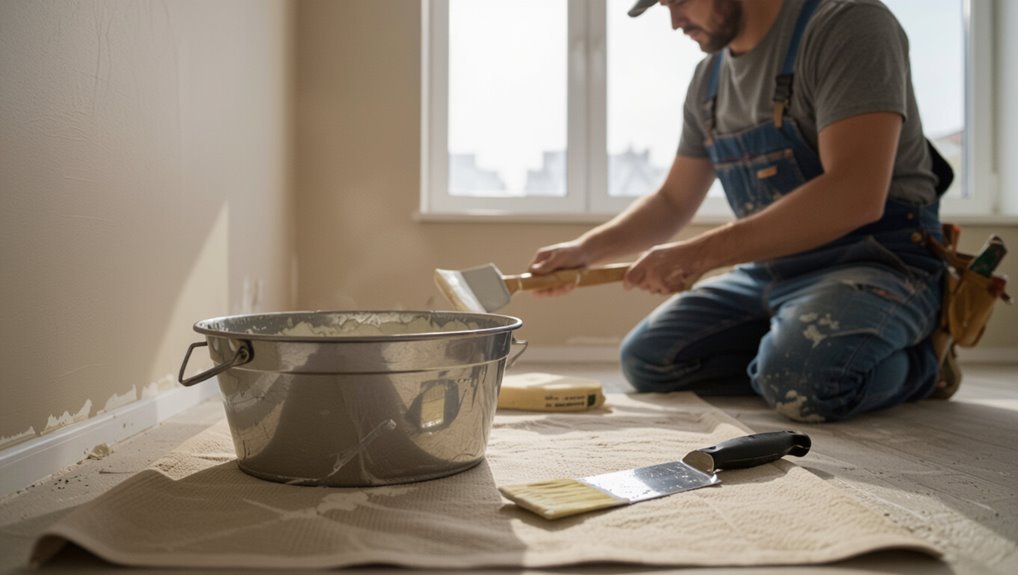
Wondering whether you can mud over painted walls? You can, but it depends on paint surface preparation and the damage.
Scuff, clean, and sand glossy coatings, then prime bare spots.
Choose mud application techniques that match defect size—thin coats for hairline cracks, fuller fills for gouges—allowing proper drying and sanding between layers so your repairs bond and stay smooth.
Short Answer: When Mud Works – And When It Doesn’t
You’ll have success mudding when the old paint is clean, sound, and lightly abraded so the compound can grip.
It won’t work when paint is chalky, glossy, or peeling—those surfaces stop the mud from bonding and cause future failures.
Check adhesion first and don’t try to cover up unstable paint without proper prep.
When Mud Bonds
When mud bonds to painted walls, it usually means the paint is sound, clean, and has enough tooth for the joint compound to grab. If the paint is glossy, chalky, or peeling, the mud won’t adhere well and you’ll get cracking or delamination.
You’ll achieve reliable mud adhesion with simple wall preparation: scuff sanding, cleaning, and using a primer or bonding agent before applying compound.
When Mud Fails
Although joint compound can seem like a magic fix, it only works when surface conditions and technique match its limitations; otherwise mud will crack, separate, or never stick at all. You’ll face mud adhesion challenges when paint surface compatibility is poor, glossy, or peeling. Assess, sand, prime, or remove paint first.
| Condition | Risk | Fix |
|---|---|---|
| Glossy | Poor bond | Sand/prime |
| Flaking | Separation | Strip/repair |
| Latex over oil | Delaminate | Prime/etch |
When Mud Over Paint Is a Good Option
If you’re dealing with small surface imperfections like nail pops, hairline cracks, or minor dents, mud can be a quick fix.
Use mud only when the existing paint is firmly adhered and not flaking or peeling.
When the paint’s secure, you can skim, sand, and repaint without stripping the whole wall.
Small Surface Imperfections
Small dings, nail pops, and light texture inconsistencies are perfect candidates for applying joint compound over existing paint because you can fix them quickly without stripping or repainting the entire wall.
You’ll perform a quick imperfection assessment, pre mud cleaning, and wall surface preparation.
Do surface adhesion testing, consider paint type considerations, choose repair material selection, and follow small crack repair and wall texture evaluation steps.
Paint Is Secure
When the paint is firmly bonded to the wall, you can confidently apply joint compound without stripping or re-priming; check for secure adhesion by scraping a fingernail or using a putty knife across several spots, and only proceed if the paint doesn’t lift, flake, or powder.
If adhesion’s good, sand lightly, clean dust, and guarantee wall preparation supports paint durability before mudding and finishing.
When You Should Not Mud Over Painted Walls
Though mudding over painted walls can seem like a quick fix, you shouldn’t do it when the paint is peeling, glossy, or has been stained by smoke or mold, because the joint compound won’t adhere properly and the repair will fail.
You must consider mud adhesion, painted surfaces, repair techniques, surface preparation, compound selection, wall textures, paint types, adhesion testing, gloss levels, and primer options before proceeding.
How Paint Type Affects Mud Adhesion
You’ll notice mud sticks differently depending on the paint’s surface porosity—bare eggshell or flat absorbs more than slick enamel.
High-gloss finishes repel compound and often need sanding to create grab, while low-gloss paints give you better initial adhesion.
Also check whether the wall was primed with a bonding primer or a stain-blocking one, since primer chemistry can help or hinder mud adhesion.
Surface Porosity Differences
Paint finish matters because its porosity directly affects how joint compound bonds to a wall.
You should assess paint types and surface texture, then plan paint preparation and surface treatment for material compatibility.
Consider adhesion science, moisture impact, and bonding agents when choosing compound selection to guarantee repair longevity.
- Test porosity and texture first
- Match compound to paint types
- Use bonding agents if needed
Paint Gloss Impact
High-gloss and semi-gloss finishes repel joint compound more than flat paints, so you’ll need to take extra steps to confirm mud bonds well.
You should assess paint gloss effects before starting, roughen shiny surfaces with sanding to improve mechanical bite, and remove dust.
Combine careful surface prep with proven adhesion techniques like light abrasion and cleaning to ensure compound stays put without using primer discussion.
Primer Compatibility Issues
After roughing and cleaning shiny surfaces to improve bite, check what primer—if any—is on the wall and what kind of paint lies beneath, because primer chemistry can either help or hinder joint compound adhesion.
You’ll assess primer types, paint compatibility, and perform surface testing. Adjust preparation steps, use bonding agents, choose repair materials, plan application techniques, mind drying times, and expect adhesion challenges affecting finish quality.
- Test small areas first to verify adhesion.
- Use appropriate bonding agents when primers resist mud.
- Match application techniques to primer types and repair materials.
Which Surface Problems Stop Mud From Sticking
If the substrate is dusty, greasy, slick, or crumbling, the joint compound won’t bond and will eventually peel or fall off.
You’ll face adhesion challenges on glossy paint, chalky surfaces, oil-based coatings, or flaking plaster.
Poor surface preparation—unclean, uneven, or damp walls—prevents proper bite.
Remove contaminants, sand gloss, and stabilize loose material before you apply mud to guarantee lasting adhesion.
How to Test Adhesion Before You Mud
Before you mud, check the surface for dust, grease, or loose paint so the compound has a clean base to stick to.
Use a strong adhesive tape pressed down and ripped off to see if paint flakes or powder come away.
Finally, run a knife or fingernail along edges and seams to spot any peeling that needs scraping or priming first.
Surface Cleanliness Check
How can you be sure the paint will hold the joint compound? Check surface preparation and paint adhesion by inspecting wall texture, paint compatibility, and signs of dust or grease.
Good cleaning methods and surface inspection help drywall maintenance and successful repair techniques.
- Wipe with appropriate cleaner and microfiber.
- Scrape loose paint and sand glossy spots.
- Note texture inconsistencies before mudding.
Adhesion Tape Test
When you want to confirm the wall will accept joint compound, perform a simple adhesion tape test: press a strip of strong painter’s or masking tape onto the painted surface, smooth it down, then pull it off sharply to see if any paint lifts or crumbles.
You’ll repeat this across spots, recording results to compare adhesion methods and test techniques, then decide if sanding or primer is needed.
Edge Peel Inspection
After the tape test, check the painted surface edges for peeling by gently running your fingernail or a putty knife along baseboards, window casings, and any cracked paint lines to see if flakes lift easily.
If edges lift, you’ll address poor edge adhesion before mudding. Consider paint compatibility and substrate cleanliness.
- Remove loose flakes
- Sand feathered edges
- Prime incompatible areas
Tools and Materials to Mud Over Painted Walls
Tools and materials make the job go smoothly, so gather them before you start: you’ll need joint compound, a hawk, 6″ and 12″ knives, a sanding block, sponge, drop cloths, primer, and quality brushes.
Learn mud application techniques and follow paint preparation methods like cleaning, scuffing, and deglossing.
Keep tools clean, mix compound to a creamy consistency, and protect floors and trim.
Which Joint Compound Bonds to Painted Walls
You’ve prepped the surface and gathered your gear, so next you’ll pick the right joint compound for sticking to painted walls.
Consider joint compound types, paint compatibility and adhesion factors; follow preparation steps like surface cleaning and primer selection to avoid bonding issues.
Match surface texture and paint types to repair techniques for best results.
- Match texture and compound
- Clean, prime, test adhesion
- Address bonding issues early
Spackle vs. Joint Compound: Pick the Right Fix
You’ll want to choose spackle for small holes and quick touch-ups, and joint compound (mud) for larger repairs or when you need to skim a whole wall.
Spackle dries faster and sands smoother in tiny spots, while mud handles deeper gaps and blends better over taped seams.
We’ll compare their best use cases so you can pick the right fix.
Spackle Vs. Mud
When you’re deciding between spackle and joint compound, think about the size and type of the repair: spackle works best for small holes and quick fixes, while joint compound (mud) handles larger repairs, seams, and skim-coating.
You’ll choose based on texture, drying time, and sanding needs; review spackle applications and joint compound comparisons to match material to task.
- Small holes, quick fixes
- Large patches, seams
- Sanding and finish considerations
Best Use Cases
Pick the right product by matching the repair to the job: use spackle for small nail holes, dings, and quick spot fixes, and choose joint compound (mud) for larger patches, taped seams, or full skim coats where you need build-up and feathering.
For best scenarios consider surface considerations, preparation techniques, environmental factors, ideal products, potential challenges, alternative methods, project planning, and professional advice.
When to Use Setting Compound vs. Drying Compound
Choosing the right compound matters because it affects drying time, crack resistance, and the number of coats you’ll need.
You’ll pick setting compound when you need fast cure, stronger filling, and long-lasting repairs; use drying compound for feathering and easy sanding.
Know setting compound benefits and drying compound differences to match job speed and finish.
- Fast structural fills
- Smooth feathering work
- Match cure to schedule
Choosing a Primer for Mud Over Paint
Because you’re applying joint compound over existing paint, you’ll need a primer that promotes adhesion and balances surface absorbency; otherwise the mud can fail to bond, dry unevenly, or show through.
Choose primer types based on paint compatibility and cost considerations, include bonding agents for tough surfaces, perform adhesion testing, follow surface preparation and application techniques, note drying times, and plan repair maintenance and finish options.
Best Sandpaper Grits for Prep
Start with a medium grit to remove gloss and rough spots—120–150 grit works well for painted walls—then step up to finer grits (180–220) to smooth the surface before applying mud.
You’ll use proven sanding techniques and thoughtful grit selection to guarantee adhesion and feather edges.
- Open pores for primer
- Reduce visible scratches
- Create a uniform key for mud
How to Clean Painted Walls Before Mudding
Before you apply mud, clean the painted surface thoroughly so the compound bonds properly and you don’t trap dirt under the repair.
Use mild cleaning solutions—dish soap and water or trisodium phosphate for tough grime—wiping from top down. Rinse, let dry completely, and remove loose paint.
These wall preparation techniques guarantee the mud adheres and your patch stays secure.
How to Scuff Glossy Paint for a Better Bond
If your walls have a glossy finish, you’ll need to scuff them so joint compound will stick.
Lightly sand with fine-grit paper or use a deglossing liquid, wiping away residue afterward.
Both methods create a key for the mud to bond without stripping the entire finish.
Sanding Glossy Surfaces
Scuffing glossy paint gives mud a mechanical key to grip the surface, so you’ll want to abrade the sheen evenly without removing all the finish.
Use light sanding techniques with 120–220 grit, keep pressure steady, and clean dust thoroughly for proper surface preparation.
Avoid deep gouges; inspect for glossy spots and repeat gently.
- Even abrasion
- Consistent pressure
- Dust-free finish
Using Deglossing Liquid
When glossy paint won’t accept mud despite light sanding, reach for a deglossing liquid to chemically dull the surface and create a reliable bond.
You’ll apply per manufacturer directions, wipe away residue, and let it dry. This deglossing method complements mechanical scuffing, improving adhesion during surface preparation.
Wear gloves, ventilate, and test a small area before committing to the whole wall.
Remove Loose or Peeling Paint First : How Much?
Start by removing all loose or flaking paint until you reach a firmly adhered edge; you’ll typically strip back to solid, tightly bonded paint and bare substrate in the immediate area of failure.
You’ll assess paint adhesion, clean edges, and apply proper repair techniques before mudding.
Check for:
- Firm feathered boundary
- Exposed substrate condition
- Nearby failing paint beyond visual area
How to Feather Edges for Invisible Blends
You’ll want to smooth the painted shift so the patch fades into the surrounding wall.
Work out from the repair with thin, feathered coats of joint compound so each layer tapers and you don’t build ridges.
Let each coat dry and sand lightly before the next so the blend becomes invisible.
Smooth the Painted Transition
Feathering the edges is how you make a repair vanish into the surrounding paint—lightly taper the fresh mud so the new surface blends in rather than creating a sharp ridge.
Use smoothing techniques and focus on gradation blending as you sand and refine. You’ll check from multiple angles to catch high spots and guarantee invisible joins.
- Sand progressively finer
- Blend edges outward
- Inspect under raking light
Feather With Thin Coats
1 thin coat applied and feathered correctly makes the next layers disappear into the wall, so work in light, even passes and keep each layer as slim as possible.
You’ll use feathering techniques to blend edges: apply thin mud application, drag your knife outward, wipe excess, sand lightly between coats, and repeat.
That disciplined approach hides seams without buildup or visible ridges.
Filling Small Nail Holes and Pinholes
Small nail holes and pinholes are easy to fix and won’t slow your project—grab a lightweight spackle, a putty knife, and a damp cloth.
You’ll press spackle into each nail hole, smooth flush, wipe excess, and let dry. For pinhole repair, sand lightly and touch up paint.
- Work quickly for neat results
- Use minimal product
- Sand very gently
Repairing Dents and Shallow Gouges
Start by checking how deep the dent or gouge goes so you know whether surface mud will suffice or if you need backing.
For shallow damage, you’ll want a lightweight joint compound that spreads easily and sands fine. Apply thin layers, let each dry, then sand smooth before priming and repainting.
Assess Damage Depth
Before you pick up mud or sandpaper, take a close look and decide how deep the dent or gouge goes so you know what repair approach to use.
You’ll perform a damage assessment and surface evaluation to choose filling depth, adhesion needs, and whether primer’s required.
- Tiny paint-surface depressions
- Partial-thickness gouges into paper
- Full-depth holes reaching drywall core
Use Lightweight Joint Compound
When dents and shallow gouges don’t penetrate the drywall core, use a lightweight joint compound to fill and blend the damage quickly and cleanly; it’s easy to spread, sands smooth, and shrinks less than heavier mixes so you won’t need multiple heavy coats.
Apply a thin layer with a flexible knife, feather edges, sand lightly, and repeat only if needed. This lightweight compound saves time when your application technique is precise.
Leveling Orange Peel and Small Texture Bumps
Tackle orange peel and small texture bumps by first identifying whether the texture is uniform or isolated — that tells you whether to skim the whole wall or spot-repair.
You’ll focus on texture smoothing, surface preparation, and application techniques. Consider paint compatibility, primer selection, adhesion factors, moisture considerations, repair strategies, finish blending, and repair tools.
- Prep and clean
- Feather thin coats
- Sand, prime, paint
Reduce Heavy Texture Without Full Removal
When you need to tame heavy texture, start by feathering down the high ridges with a wide knife so edges blend smoothly.
Then apply thin skim-coat layers, letting each set before sanding to build a flat surface without stripping the whole wall.
This approach saves time and keeps the existing paint intact while producing a repair-ready finish.
Feathering Down High Ridges
If heavy ridges from old texture are making your walls look uneven, you don’t have to remove everything — you can feather them down to blend with the surrounding surface.
You’ll use feathering techniques and ridge smoothing to taper compound edges, sanding between coats and keeping tools flat. Work patiently to avoid gouges and match existing contours.
- Use a wide taping knife
- Sand lightly after drying
- Blend with thin passes
Skim Coating Thin Layers
Once you’ve feathered down pronounced ridges, skim coating thin layers lets you reduce remaining texture without stripping the whole wall.
You’ll gain skim coat benefits like smoother finish and improved repair durability if you follow surface preparation, proper application techniques, and heed drying time.
Avoid common mistakes, consider texture matching, paint compatibility, finishing touches, and cost considerations to get professional results.
Patching Hairline Cracks and Splits
Even small hairline cracks and splits can let moisture and dirt get behind your paint, so you’ll want to address them before they widen.
Even tiny hairline cracks invite moisture and dirt behind paint—repair them promptly to prevent further damage.
Start by cleaning the area, removing loose paint, and widening the crack slightly with a utility knife or scraper so patching mud will adhere.
Use hairline crack repair techniques and split sealing, then sand and prime.
- Apply thin mud layers
- Feather edges smoothly
- Prime before repainting
Repairing Drywall Joints on Painted Walls
When drywall joints show gaps or raised tape on a painted wall, you’ll want to remove loose compound, scrape back glossy paint, and expose the joint so new mud will bond properly; prepping carefully prevents future splits and visible seams.
For drywall repair on painted surfaces, press fresh joint compound into the gap, embed tape if needed, feather edges, sand smooth, and prime before repainting to guarantee a seamless finish.
How and When to Apply Multiple Coats
If the first coat doesn’t fully fill low spots or feather to a smooth edge, plan on at least one additional coat so you can build thickness gradually and avoid cracking.
You’ll use multiple coat techniques, watch drying time considerations, and layer thinly. Apply each coat where needed, check for continuity, and avoid overbuilding.
Use multiple thin coats, allow proper drying, and focus each layer on problem areas—avoid overbuilding.
- Layer thin for strength
- Respect drying time
- Target problem areas only
Sanding Between Coats Without Ruining Paint
When you sand between coats, use light pressure and small, circular motions to knock down ridges without cutting through the paint.
Choose paint-friendly abrasives like fine-grit sandpaper or sanding pads designed for painted surfaces to prevent scratches.
Test your technique on a scrap piece first so you can confirm the finish stays smooth and intact.
Light Sanding Techniques
Start with a fine, 220–320 grit sanding block and work lightly across the dried mud to knock down high spots and feather edges without cutting into the underlying paint.
You’ll use light sanding, evaluate the surface, and employ proper sanding tools and methods for finish smoothing and texture blending.
Prioritize sanding safety and thorough dust removal.
- surface preparation and evaluation
- sanding techniques and tools
- sanding safety and dust removal
Paint-Friendly Abrasives
1 key to sanding between coats without damaging existing paint is choosing abrasives that cut just enough to scuff the surface and promote adhesion without gouging the film.
You’ll select grits that aid paint adhesion, support surface preparation, and protect bonding agents.
Combine surface cleaning, correct compound selection, application methods, and texture matching to maintain wall textures and guarantee repair techniques yield consistent finish quality.
Common Mud Mistakes and How to Avoid Them
You’ll save time and get better results by recognizing the most common mud mistakes up front: overmixing that thins compound, applying coats too thickly, and skipping proper drying between layers.
You’ll avoid common misconceptions by following solid preparation techniques: clean, sand, and prime as needed.
- Feather edges for seamless blends
- Wait full dry times between coats
- Sand lightly, not aggressively
How Paint Sheen Affects the Final Finish
Although sheen might seem like a minor choice, it changes how your repaired area looks and reveals imperfections, so pick it with purpose.
You’ll weigh sheen impact against finish quality, texture variation, and wall conditions. Good surface preparation boosts adhesion strength and paint durability.
Check paint compatibility with existing coats to avoid failures, and choose a sheen that masks defects while matching surrounding surfaces.
Priming Mud Repairs Before Repainting
Now that you’ve chosen the right sheen and prepared the surface, prime the repaired area before repainting to guarantee uniform absorption and adhesion.
Use proper priming techniques after mud application has fully dried and sanded so paint bonds and sheen matches. Seal porous patch edges, spot-prime with stain-blocking primer, then repaint.
After mud has fully dried and been sanded, seal edges and spot-prime with stain-blocking primer before repainting.
- Prevent bleed-through
- Secure adhesion
- Promote uniform sheen
Match Repaired Texture to the Existing Finish
Once the patch is sanded and primed, match the repaired texture to the surrounding finish before you repaint so the repair blends seamlessly.
Study the existing pattern, then use appropriate tools — sponge, brush, trowel or spray — and compatible compound.
Practice texture matching on scrap, apply thin layers, adjust pressure and angle, and evaluate repair techniques until the patched area visually disappears.
Feathering Tricks for Invisible Patches
Start by spreading thin, even coats of mud and feathering the edges outward so each layer thins into the surrounding paint.
Blend joint edges by scoring down any ridges and smoothing connections with a wide taping knife, then let the compound cure.
Finish by sanding lightly with fine-grit paper until the patch disappears against the wall.
Feathering Technique Basics
Feathering your joint compound means tapering the edges of the patch so it blends seamlessly with the surrounding paint and texture.
You’ll use proper feathering techniques, light passes, and gradual pressure to avoid feathering mistakes that show after paint. Practice control, sand lightly, and inspect under raking light.
- Use wide knives for thin edges
- Thin layers, multiple coats
- Sand between coats for smoothness
Blending Joint Edges
When you taper the joint compound correctly, the patch will disappear under paint and texture; aim for a gradual slope that vanishes into the surrounding wall.
You’ll use blending techniques to feather the mud outward, pressing less pressure as you move away from the seam.
Focus on edge smoothing with a slightly wider knife, keep layers thin, and let each pass merge cleanly into the surrounding surface.
Sanding For Seamlessness
After you’ve blended the joint edges and let each thin layer dry, sanding is what makes the repair vanish under paint and texture.
You’ll use proper sanding techniques, equipment selection, and dust management. Focus on surface preparation, finish smoothing, texture matching, correct mud application, repair timing, adhesion testing, and safety precautions to create invisible, durable patches.
- Feather edges smoothly
- Control airborne dust
- Test adhesion before painting
What to Do If Your Mud Cracks or Peels
If your joint compound starts to crack or peel away from painted drywall, don’t panic—you can usually fix it without replacing the whole patch.
Start by removing loose mud, clean the area, and sand feathered edges. Apply a bonding primer, then reapply thin coats of compound, sanding between layers.
Focus on crack prevention and peeling solutions: control moisture, avoid thick fills, and allow proper drying time.
Fixing Adhesion Failures After Mud Application
Because adhesion problems usually come from surface issues, start by evaluating what caused the mud to separate so you can choose the right fix.
Check for contamination, loose paint, or trapped moisture.
Use appropriate repair techniques:
- Clean and scuff glossy paint to improve bond
- Remove loose material and feather edges before re-mudding
- Use bonding primer or additives for stubborn adhesion issues
When to Strip Paint and Start Fresh
When repeated prep—cleaning, scuffing, and priming—fails to restore reliable adhesion, you should strip the paint and start over.
Do a surface assessment and damage evaluation to judge wall conditions and paint layers. Choose paint stripping and paint removal methods suited to those findings.
Plan surface preparation and repair techniques to guarantee repair readiness, then execute a clear repair strategy before reapplying mud.
Working Over Oil-Based vs. Latex Paints
Although both oil-based and latex paints can be covered with joint compound, you’ll need different prep steps: oil-based finishes require thorough sanding and a solvent wipe or a bonding primer to guarantee adhesion, while latex surfaces often only need scuffing and a quality primer before you apply mud.
Use these repair strategies and consider texture matching, joint compound types, and finish options:
- Assess oil based considerations and paint removal needs.
- Follow adhesion techniques and bonding methods for stability.
- Confirm latex compatibility and surface preparation before mud.
Using Bonding Primers on Problem Paint
If your existing paint repels joint compound or you’re unsure about adhesion, a bonding primer gives you a reliable foundation by chemically and mechanically linking the new mud to slick or glossy finishes.
You’ll clean and scuff surfaces, choose primer selection suited to oil or glossy latex, apply per instructions, and use proven bonding techniques to guarantee durable adhesion before taping, mudding, and sanding.
Safe DIY Shortcuts : When to Skip Them
Bonding primer can save a tricky repair, but it doesn’t make every shortcut safe — and knowing which shortcuts to skip will save you time and money.
Bonding primer can rescue a tough repair, but it won’t turn every shortcut into a safe solution.
You’ll avoid DIY pitfalls and repair myths by focusing on surface preparation, paint types, and adhesion issues; don’t sacrifice finish quality with poor tool selection or lazy repair techniques.
- Rushed sanding causes common mistakes
- Wrong primer hides shortcut dangers
- Cheap tools worsen adhesion issues
Cost and Time Estimate for Common Repairs
When you’re planning a repair, realistic cost and time estimates keep the project from dragging on and blowing your budget.
Do a quick cost analysis and itemize material expenses, labor considerations, and resource allocation.
Use time management and time-saving techniques in project planning, track expenses with simple expense tracking, and apply repair budgeting and efficiency tips so you finish on schedule and within budget.
When to Call a Pro for Painted‑Wall Repairs
You’ve estimated costs and scheduled time, but some problems are better left to professionals.
Know when complex paint types, severe wall conditions, persistent adhesion issues, or unclear repair techniques demand professional advice rather than DIY tips.
When paint types, wall damage, or adhesion problems get complex, seek professional guidance rather than DIY fixes.
Avoid common mistakes that raise repair costs or ruin finishing touches; call a pro for structural concerns, mold, or widespread damage.
- Structural instability
- Mold or moisture
- Extensive surface damage
Preparing Surface for Repainting After Mud Repairs
If the patched area looks smooth and solid, take a few quick steps to make certain the new paint will stick and blend: perform a repair assessment and damage evaluation, clean dust from mud application, sand lightly for texture matching, confirm wall conditions and finish compatibility, choose primer selection based on repair techniques and paint adhesion, and wipe surface before repainting to guarantee consistent results.
Best Paints and Primers to Cover Mud Repairs
Although not every primer or paint hides mud repairs equally, choosing products designed for drywall and high-adhesion situations will save you time and improve results.
You’ll want primer selection that boosts paint adhesion after proper surface preparation and mud application. Match paint compatibility to wall textures to preserve finish quality and follow repair techniques and repair methods for best DIY tips.
- High-adhesion primers
- Smooth-finish paints
- Texture-matching topcoats
Maintenance Tips to Prevent Future Damage
To keep mud repairs from cracking or staining again, check for and address moisture, structural movement, and surface wear on a regular schedule.
You’ll use preventive maintenance and regular inspections to spot issues early, combine moisture control and proper ventilation, perform paint upkeep and wall cleaning, make seasonal adjustments for environmental factors, and do timely repairs while adding surface protection where needed.
Eco‑Friendly Low‑VOC Mud and Primer Options
Keeping your repaired walls in good shape also means choosing materials that won’t harm indoor air quality or the environment.
You should pick eco friendly materials and low VOC options to support sustainable practices and green construction for healthy interiors.
Use safe alternatives and non toxic solutions during responsible renovations.
- Plant‑based joint compound
- Low‑VOC primer sealers
- Recycled‑content drywall tape
Small Repair Walkthrough: Nail Hole to Paint
Start by clearing dust from the hole and surrounding area so the patching compound will adhere properly.
For nail hole repair, perform surface cleaning and adhesion testing by lightly sanding and checking paint types.
Apply joint compound with thin mud application, let dry, sand smooth.
Match texture, then prime if needed and paint.
Follow simple repair techniques and DIY tips for neat, lasting results.
Skim‑Coat a Large Painted Wall: Step‑By‑Step
If you’ve handled small nail‑hole patches, you’ll find skim‑coating a full wall uses the same principles but on a larger scale and with more attention to blending and working speed.
You’ll prep thoroughly, choose mixes, and work in sections. Focus on skim coat techniques and solid wall preparation before applying broad coats.
- Feather edges for invisible joins
- Work wet‑to‑dry consistently
- Sand lightly between coats
Final Checklist: Can You Mud Over Your Painted Wall?
Wondering whether you can mud over that painted wall? Check adhesion challenges first: scrape loose paint, test with tape, and sand glossy finishes.
Establish surface preparation: clean grease, fill holes, and prime bare spots. Use a bonding primer if needed.
Apply thin mud layers, sand between coats, and inspect for cracks. If adhesion’s doubtful, remove paint before mudding.
Frequently Asked Questions
Can Mudding Over Painted Cabinets Damage Existing Finishes?
Yes — you can, but you’ll damage finishes if you skip proper cabinet preparation and ignore finish compatibility. You’ll need to sand, degloss, clean, and test patches so mud adheres without peeling or staining existing surfaces.
Will Mudding Over Wallpapered Walls Work?
About 60% of DIYers fail when skipping prep: you shouldn’t mud over wallpaper unless you strip or sand it first. You’ll need thorough wall preparation because adhesive strength varies, or joint compound won’t bond reliably.
How Long After Painting Should You Wait to Mud a Wall?
You should wait at least 24–48 hours after painting before you mud, though full drying time can be up to 7 days; guarantee paint adhesion is solid and the surface feels dry to touch so the mud bonds properly.
Can You Texture-Match Mud Repairs to Popcorn Ceilings?
Yes—you can. Surprisingly, by contrasting smooth patches with stippled ridges, you’ll blend texture techniques to match popcorn ceilings; you’ll feather compound, use popcorn mix or spray, then sand and touch up for seamless ceiling repairs.
Are There Health Risks From Sanding Mud on Painted Walls?
Yes — sanding mud on painted walls can pose risks, especially if old paint contains lead; use proper sanding techniques, wear an N95 or respirator, ventilate, contain dust, and follow health precautions to minimize exposure and cleanup.
Conclusion
Think of your painted wall like an old path: if the surface’s steady and clean, you can lay fresh soil (mud) and seed new life; if it’s slick or crumbling, you’ll need to clear and prep first. By checking paint type, adhesion, and patch size, you’ll know whether to skim, spot-repair, or start fresh. Take the time to prep right—what looks quick can become a garden that lasts.
