
Can You Paint Just 2 Walls in a Room? Design Rules to Follow
You can absolutely paint just two walls to create focus, depth, and mood without overwhelming the space. Pick walls that align with your room’s natural focal points—opposite walls for strong axes or adjacent corners to anchor seating or a view. Use bold contrast for drama or tonal variations for subtlety, and test swatches against light, trim, and furnishings. Prep carefully and decide if you’ll DIY or hire pros. Keep going and you’ll find practical placement, color, and prep tips.
Can You Paint Just 2 Walls in a Room? Quick Answer
Yes—you can paint just two walls, and it works best when those walls are opposite or form a focal corner and the color complements the room’s lighting and furnishings.
It doesn’t work as well if your space is tiny, oddly shaped, or if the chosen contrast creates visual imbalance.
At a glance, two painted walls can sharpen the room’s focus and add depth without overwhelming the space.
Direct answer summary (when it works and when it doesn’t)
If your room has a clear focal wall or strong architectural lines, painting just two walls can work really well; it draws attention without overwhelming the space.
You’ll succeed when the two painted walls balance sightlines, lighting, and furniture.
Avoid it in small, oddly shaped rooms or where color interrupts flow.
Ask: can you paint 2 walls in a room to enhance, not fragment, the layout?
Visual impact at a glance
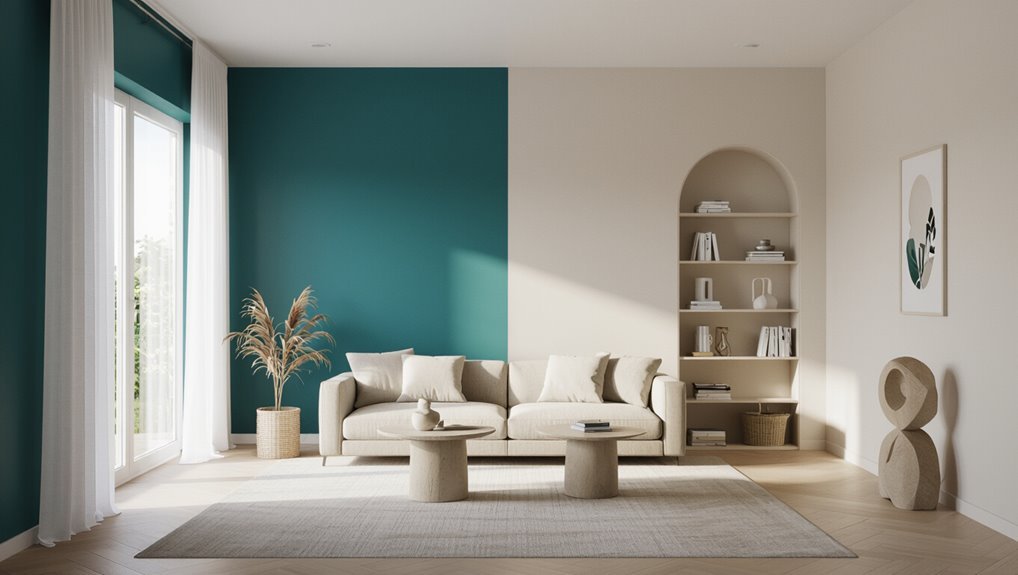
You’ve already seen when two painted walls make sense; now look at the visual impact at a glance.
Two painted walls create a clear focal plane, add depth, and guide sightlines. They can energize or calm a room depending on color contrast.
Use them to highlight architectural features or anchor furniture; avoid disrupting flow by keeping tones cohesive with adjoining surfaces.
Why Painting Only Two Walls Is a Design Choice
When you paint two walls, you’re using color to shape how a room feels—creating a focal point, adding depth, or restoring balance.
That choice can make a space seem larger, cozier, or more dynamic depending on placement and hue.
You’ll often pick two walls instead of one or all four when you want a strong visual anchor without overwhelming the room.
Psychological and spatial effects of accent walls
Because our brains read color and contrast as cues, painting two walls instead of all four can reshape how you feel and move through a room: accent walls draw attention, create focal points, and can make a space seem deeper, cozier, or more dynamic without overwhelming the senses.
You’ll influence perceived scale, guide circulation, and evoke mood—calming, energizing, or intimate—by choosing hue, saturation, and placement.
Common goals: focal point, depth, color balance
To translate those psychological cues into practical outcomes, think about what you want the room to do: draw the eye, feel deeper, or balance competing colors.
Choose two walls that create a clear focal point—behind a bed, fireplace, or sofa. Use a darker or warmer hue to add depth, or pick a neutral plus a bold tone to harmonize furnishings and trim without overwhelming the space.
When two walls are better than one or all four
If you want to make a strategic design statement without overwhelming the room, painting just two walls gives you control over mood, scale, and emphasis.
You’ll highlight architectural features, anchor furniture, or create a focal axis without closing the space. Choose opposite or adjacent walls depending on flow; use contrast or tonal variation to balance light and sightlines while preserving flexibility.
How to Choose Which Two Walls to Paint
Start by evaluating your room’s layout to identify natural focal points like a fireplace, TV wall, or the view from the entrance.
Factor in natural light and wall orientation, then check architectural details and furniture placement to see which walls will best showcase the color.
Finally, test paint samples and finishes on the candidate walls before you commit.
Step 1 Assess room layout and focal points
Begin by walking the room and noting which walls naturally draw your eye—the ones behind the bed, fireplace, TV, or main seating area—and consider how those focal points guide traffic and sightlines.
Then pick two walls that reinforce function and balance.
- Choose walls that anchor seating or sleeping areas
- Avoid painting opposing walls that break visual flow
- Prioritize continuity with existing furniture
Step 2 Consider natural light and wall orientation
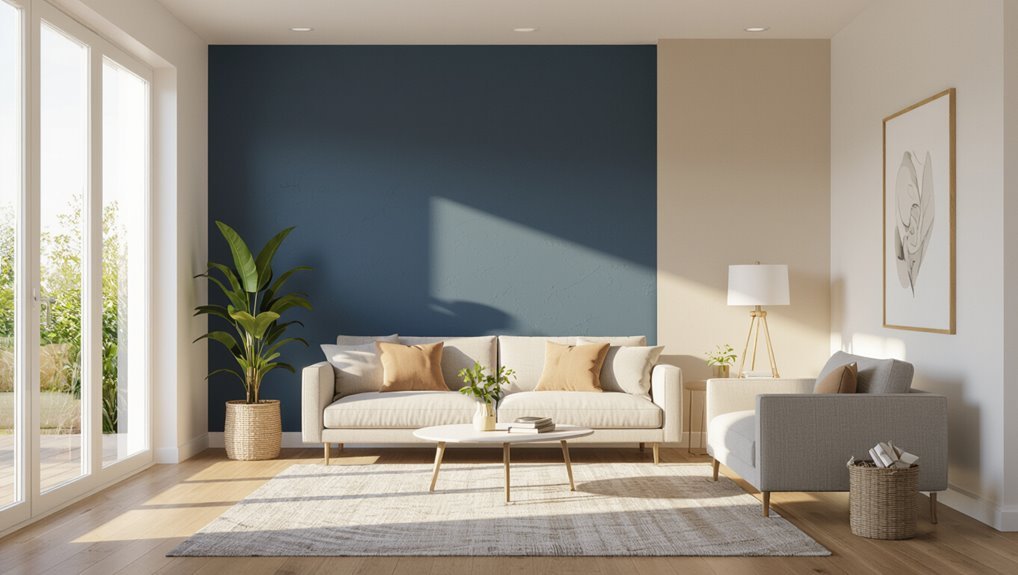
Because light changes how color reads, look at each wall at different times of day before you choose two to paint.
Note how north, south, east, and west exposures warm or cool tones.
Pick walls that receive light that flatters your chosen hue—bright morning sun will energize color, dim northern light mutes it.
Prioritize balance so painted walls feel intentional.
Step 3 Evaluate architectural features and furniture placement
When you evaluate architectural features and furniture placement, think about which walls will naturally become focal points and how painted surfaces will interact with built-in elements and major pieces.
Choose walls that highlight mantels, alcoves, windows, or shelving. Paint behind seating or a bed to anchor the arrangement, avoid cutting off trim details, and guarantee the color complements, not competes with, large furniture.
Step 4 Test color samples and finishes before committing
Now that you’ve identified which architectural elements and furniture will anchor the room, it’s time to test paint samples and finishes so you can see how colors behave in the actual space.
Apply large swatches to both candidate walls, view them at different times and light, and try finish variations.
Live with samples for a few days before choosing the hue and sheen.
Color Selection Strategies
You can choose bold contrast to make the two walls pop or go with tonal variations for a subtler, layered look.
Think about warm colors to make the space feel cozier and cool colors to open it up, then balance those choices with your trim, ceiling, and flooring.
Coordinate undertones so the painted walls and surrounding finishes feel intentional rather than clashing.
Using contrast vs. tonal variations
Curious how two painted walls can change a room’s mood?
Choose high contrast when you want drama and clear definition—pair a deep accent with a neutral to anchor furniture and highlight architectural lines.
Opt for tonal variations to create harmony and subtle depth by selecting shades within the same hue family.
Both approaches guide focus; pick based on whether you want bold separation or gentle unity.
Warm vs. cool colors: effect on perceived space
Contrast or tonal variation sets the room’s mood, but whether those colors feel warm or cool will change how big or cozy the space appears.
Choose warm hues on two walls to pull the room in, creating intimacy, while cool hues recede, opening sightlines.
You’ll balance perceived depth by placing warmer tones on closer or focal walls and cooler ones on distant planes.
Coordinating painted walls with trim, ceiling, and flooring
When coordinating two painted walls with trim, ceiling, and flooring, think of each surface as a member of a visual team and choose colors that let one or two elements lead while the others support.
You’ll balance contrast, harmony, and texture so the room reads cohesive. Pick dominant wall color, trim tone, and floor undertone to reinforce mood.
- Choose contrast for definition
- Use subtle harmonies
- Match undertones
Placement Options and Visual Outcomes
Think about whether you want to paint opposite walls or adjacent ones, since each choice changes balance, depth, and flow.
You can pick the window wall or the fireplace wall to either highlight a view or anchor the room.
Use paint to create a visual pathway or frame a focal point so the layout guides how the space feels.
Opposite walls painted: pros and cons
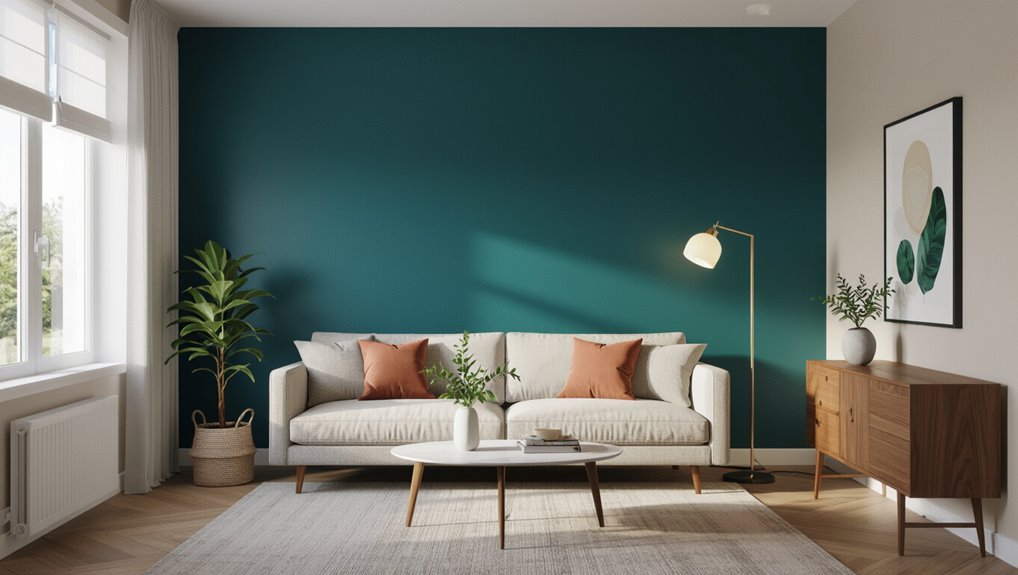
If you paint the two opposite walls in a room, you’ll create a strong visual axis that can either widen or shorten the space depending on color choice and finish.
Use lighter hues to push walls back and expand a narrow room; darker tones bring intimacy and focus.
Align the painted walls with furniture or a feature wall to reinforce balance and sightlines.
Adjacent walls painted: pros and cons
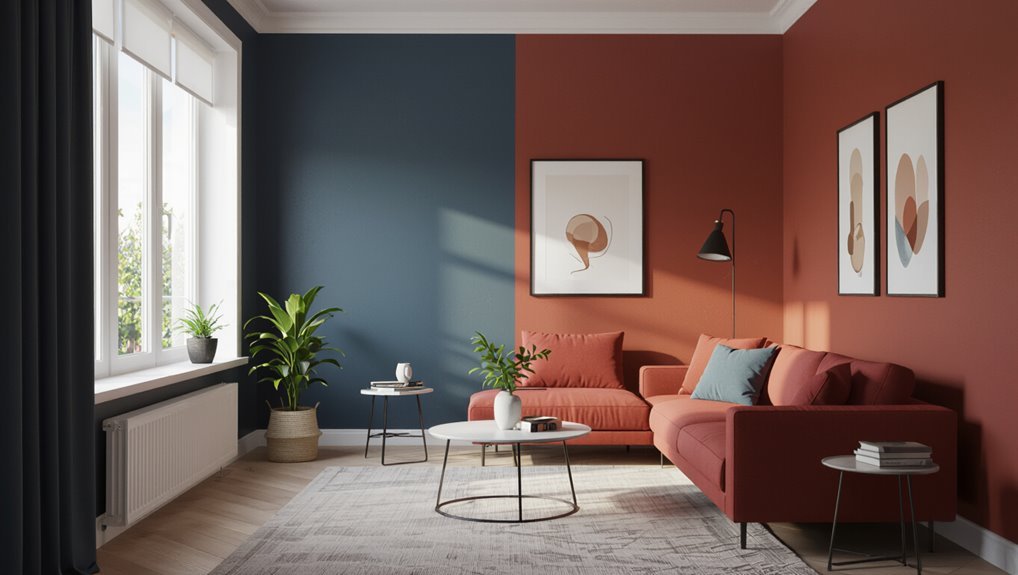
Although painting two adjacent walls can feel bolder than a single accent, it gives you flexible ways to shape a room’s mood and flow.
You’ll create a cozy corner, emphasize architectural angles, or define a seating area without overwhelming the space. Adjacent color anchors furniture and guides sightlines, but pick tones carefully to avoid visual heaviness or disrupting natural light balance.
Painting the wall with the window or the wall with the fireplace
After anchoring adjacent walls you’ll face a choice: paint the wall with the window or the one with the fireplace, and each option reshapes light, focal balance, and perceived room size.
Choose the window wall to emphasize brightness and expand sightlines, or pick the fireplace wall to create a strong focal anchor and cozy depth.
Consider contrast, trim color, and furniture placement.
Creating a visual pathway or framing a view
When you paint two walls to create a visual pathway or frame a view, you guide the eye and set the room’s circulation without rearranging furniture.
Choose the walls that lead toward an entry, hallway, window, or focal art. Use a slightly darker or contrasting hue to suggest movement, then balance with trim and accessories so the painted pair feels intentional, not overpowering.
Paint Types, Finishes, and Practical Considerations
When you pick paint for two walls, consider finish options—matte and eggshell hide imperfections while satin and semi-gloss offer more durability and easier cleaning.
Think about how often the walls will need wiping and choose a finish that balances look with maintenance.
Use quality brushes, a good angled cutting-in brush, painter’s tape, and the right roller nap to get crisp lines and even coverage.
Finish choices: matte, eggshell, satin, semi-gloss
Although finish choice might seem minor, it changes how paint looks and performs in a room, so pick deliberately.
Matte hides imperfections and gives a soft, modern feel; eggshell offers low sheen with subtle depth; satin adds gentle luster and livens color; semi-gloss reflects more light, sharpening details and trim.
Match finish to style, lighting, and the mood you want to create.
Durability, cleaning, and maintenance concerns
Finish affects more than looks; it also dictates how your walls hold up and how easy they’re to keep clean.
Choose finishes based on traffic: satin or semi-gloss resist scuffs and wipe clean, while matte hides imperfections but stains more easily.
For accent walls, pick a durable paint where children, pets, or frequent contact occur, and expect occasional touch-ups to maintain a crisp appearance.
Tools and products recommended for crisp lines and even coverage
1 essential rule for crisp lines and even coverage is to match the right tools and paint to the job: high-quality brushes and rollers, painter’s tape designed for clean edges, a good angled sash brush for cutting in, and a roller nap suited to your wall texture will make the difference.
Choosing the appropriate paint type and finish (e.g., an acrylic latex for interiors, satin or semi-gloss for high-contact areas, matte for low-traffic walls) guarantees smooth application and consistent appearance.
- Use a 2–3″ angled brush for precision
- Pick a short-nap roller for smooth walls, longer for textured
- Choose acrylic latex in satin/semi-gloss for durability
Common Mistakes When Painting Only Two Walls
Watch out for color choices that clash with your furniture, floors, or fixtures, because mismatched hues can make the room feel disjointed.
Don’t paint the wrong two walls and upset the room’s balance or traffic flow, and be careful with edges and changes to avoid sloppy seams.
Also consider scale and proportion so the accent walls enhance the space instead of overwhelming it.
Choosing colors that clash with existing elements
When you pick two accent walls, don’t let bold choices clash with the room’s fixed elements—like flooring, built-ins, large rugs, or an oversized sofa—because mismatched tones will make the space feel disjointed rather than intentional.
Test swatches against these anchors at different times of day, coordinate undertones, and choose hues that complement patterns and metals so the accents enhance, not fight, the existing palette.
Painting walls that disrupt room balance or traffic flow
Picking colors that play nicely with fixed elements is only one part of a successful two-wall scheme; you also need to think about how those painted walls affect the room’s visual balance and how people move through the space.
Paint two adjacent or opposite walls to anchor seating or sightlines; avoid painting a wall that draws attention toward tight circulation paths or blocks natural focal points, which can make movement feel awkward.
Poor edge treatment and sloppy transitions
If you rush the edges or let paint bleed into adjacent surfaces, your two-tone scheme will look amateurish no matter how good the colors are.
Tape cleanly, press down edges, and remove tape at the right time. Feather shifts with a brush and roll away from taped lines.
Match sheen and finish so borders read intentional, not messy or unfinished.
Ignoring scale and proportion
A common mistake is treating wall color like wallpaper—applying the same bold accent to tiny nooks or sprawling expanses without considering scale and proportion.
You should match color intensity to wall size: small alcoves need softer accents, large blank walls can handle deeper hues.
Measure sightlines, furniture scale, and natural light so your two-painted walls feel balanced, intentional, and harmonious.
Best Practices and Design Tips
When you paint just two walls, balance that color with textiles and accessories so the room feels cohesive rather than lopsided.
Use artwork, mirrors, and strategic lighting to amplify the painted walls and guide the eye across an open-plan space.
Consider stripes, color blocking, or a mural on the second wall when you want to add rhythm, anchor a zone, or create a focal point.
Balancing painted walls with textiles and accessories
Color anchors how a room feels, so balance two painted walls with textiles and accessories that either echo or soften that impact.
Choose fabrics, rugs, and pillows to pull the hue through the space or mute it with neutrals. Keep scale and texture consistent, and repeat accents sparingly to avoid clutter.
- Coordinate one dominant textile color
- Introduce varied textures
- Repeat accents in pairs
Using artwork, mirrors, and lighting to enhance the effect
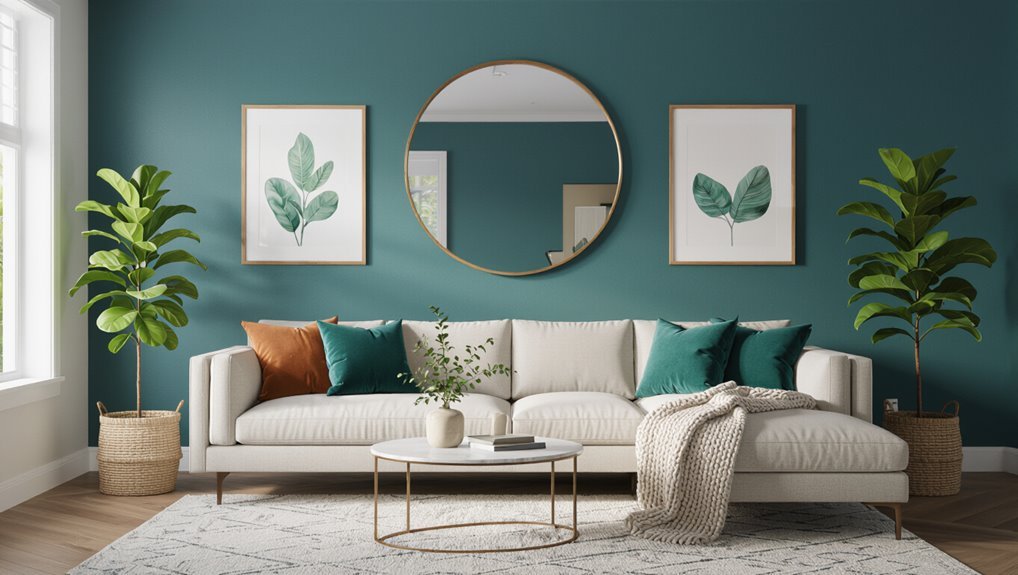
Although two painted walls already set a mood, you can amplify or soften that effect with artwork, mirrors, and lighting that work together as a curated trio.
Hang art to echo or contrast color, place mirrors to bounce light and expand perceived space, and layer lighting—ambient, task, accent—to highlight focal pieces.
Balance scale and placement for cohesion and visual flow.
How to blend two painted walls into an open-plan space
If you’re working in an open-plan space, anchor the painted walls by defining functional zones—use the two-color treatment to mark the living area and dining or kitchen space so sightlines feel intentional rather than fragmented.
Balance hues by repeating accent colors in textiles, rugs, or furniture. Maintain a consistent trim or ceiling color, and use lighting to create cohesion without blocking flow between areas.
When to use stripes, color blocking, or murals on the second wall
When you pick a treatment for the second wall—stripes, color blocking, or a mural—match the technique to the room’s scale, purpose, and the statement you want to make:
Use vertical stripes to heighten low ceilings, horizontal to widen narrow rooms, and subtle color blocks for modern, low-commitment accents.
Choose a mural for focal drama in living areas or entryways, keeping patterns proportional and color palettes cohesive.
Cost, Time, and DIY vs Professional Considerations
You can usually paint two walls yourself in an afternoon or over a weekend, with costs mostly for paint, tape, and drop cloths.
Consider hiring a pro if the job involves complex trims, specialty finishes, or extensive prep like drywall repair.
Before you start, make a quick checklist for patching holes, priming stained areas, and protecting floors and furniture.
Estimated time and budget for DIY two-wall paint job
Tackling a two-wall paint job yourself usually takes a weekend—about 4 to 8 hours for a small-to-medium room—depending on prep needs, paint type, and your experience. Expect supplies and paint $40–$150; labor is free. Plan primer for porous walls and add drying time.
| Item | Estimate |
|---|---|
| Paint & primer | $40–$100 |
| Supplies | $10–$50 |
| Time | 4–8 hrs |
| Contingency | $0–$50 |
When to hire a pro: complexity, finishes, and prep work
Although a DIY two-wall paint job works for many homeowners, call a pro if the scope includes complex prep, specialty finishes, or tight timelines—these factors quickly raise costs and time beyond a weekend project.
You should also hire pros for high ceilings, intricate trim, color-matching, or warranty-backed work.
Professionals reduce downtime, deliver consistent results, and handle unforeseen issues efficiently, often saving money long term.
Prep checklist: patching, priming, and protecting surfaces
A solid prep checklist cuts rework and hidden costs, so start by evaluating holes, stains, and trim before painting two walls.
You’ll decide DIY vs pro by scope: small patches and primer cost little; large repairs or textured walls need pros.
Protect floors and furniture, allow drying time, and factor labor into your budget.
- Patch and sand damaged areas
- Prime stained or new drywall
- Mask and cover adjacent surfaces
Real-Life Scenarios and Case Examples
Think about a small bedroom where painting two opposite walls in a light, cool shade can make the space feel larger—contrast that with a before-and-after snapshot to see the effect.
In a living room, you can paint two adjacent walls to anchor a conversation zone and highlight seating.
For open-plan spaces, use the same two-wall strategy on different planes to visually tie distinct zones together.
Small bedroom: making it feel larger (before/after concepts)
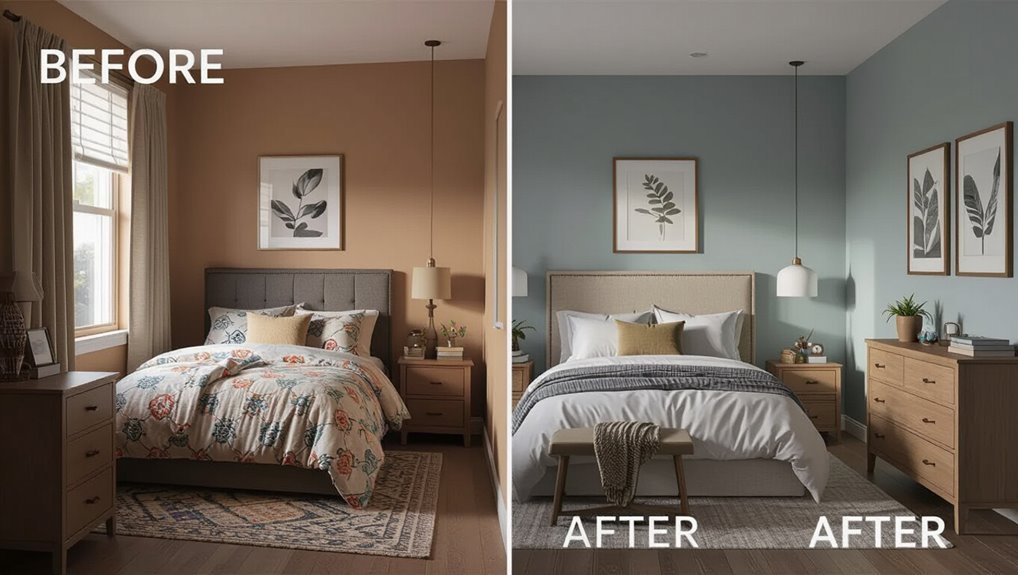
When you paint two walls in a small bedroom instead of all four, you can visually expand the space by creating depth and focus.
Try painting the far wall a lighter, cooler shade and the adjacent wall a slightly darker accent to draw the eye outward while keeping the room grounded.
Pair with light bedding, slim furniture, and mirrored or glossy accents to amplify brightness and perceived space.
Living room: creating a conversation zone
If you want to carve out a lively conversation zone in your living room, paint two adjacent walls to frame the seating area—use a warm, inviting accent on the wall behind the sofa and a complementary, slightly lighter shade on the side wall to create intimacy and flow.
Add a rug, matched cushions, and layered lighting to anchor the space; keep other walls neutral to avoid visual clutter.
Open-plan spaces: tying zones together with two walls
Moving from creating a cozy conversation zone, you can use two painted walls to visually link different functions in open-plan spaces without building physical barriers.
Choose a shared accent hue or complementary tones to unify kitchen, dining, and living areas.
Paint walls facing each other or adjacent walls that frame each zone.
Keep finishes consistent and balance patterns to maintain flow.
Frequently Asked Questions
You probably have a few quick questions about how two painted walls will change your room’s scale, contrast, and flow.
We’ll cover whether adjacent or opposite walls create a stronger effect, if the colors should match, how to shift to wallpaper or paneling, and how permanent the look is.
Read on for clear, practical answers you can use right away.
Will painting two walls make my room look smaller or bigger?
Curious whether painting two walls will change how big your room feels? It can. Darker or saturated colors tend to make walls recede visually, creating coziness and perceived shrinkage, while lighter hues open space.
Use color contrast, natural light, and trim color to influence depth. Placing the painted walls thoughtfully affects perceived proportions without needing to repaint the entire room.
Is it better to paint adjacent or opposite walls for a dramatic effect?
Which layout gives the biggest punch—adjacent or opposite walls? You’ll choose based on focus: adjacent walls create a cozy, enveloping drama that highlights a corner or seating area; opposite walls boost contrast, drawing the eye across the room and emphasizing depth.
Pick adjacent for intimacy and staging, opposite for bold symmetry and visual tension.
Consider furniture and light when deciding.
Can I paint two walls different colors or should they match?
Wondering whether two walls should match or differ? You can choose either. Different colors add contrast and focal interest; matching hues create cohesion and calm.
Consider room size, light, and furniture: darker shades recede in large, bright rooms but can overwhelm small spaces.
Test swatches, pick one dominant color and a complementary accent, and guarantee finishes and undertones harmonize for a polished look.
How do I transition between painted walls and wallpaper or wood paneling?
If you’ve decided to mix paint with wallpaper or wood paneling, you’ll want clean, intentional joins so the different surfaces look like a designed choice rather than an afterthought.
Use trim, a narrow molding, or a crisp painted edge to separate textures. Match tones or contrast deliberately, align patterns at sightlines, and seal edges to prevent peeling for a polished, cohesive separation.
How permanent is the effect how easy is it to change later?
How long will the look last and how easy is it to undo?
Painting two walls is semi-permanent: high-quality paint lasts years, but you can change it anytime.
Prep makes removal easier—clean, sand, and prime patched areas. If you pick bold or textured finishes, expect more effort to repaint.
Stripping wallpaper or heavy textures requires extra steps, but overall repainting is straightforward.
