
Can You Paint Enamel Over Latex Paint? Compatibility Guide
Yes — you can paint enamel over latex if you prep properly and pick the right primer. Clean the surface, sand glossy latex to a dull sheen, and use a bonding or shellac-based primer to guarantee adhesion. Apply thin, even coats, sand between layers, and allow full dry times; avoid fresh, peeling, or chalky latex and flexible trims. With correct prep you’ll get a durable, hard finish — keep going and you’ll learn detailed steps and troubleshooting.
Can You Paint Enamel Over Latex Paint? Quick Answer and Decision Guide
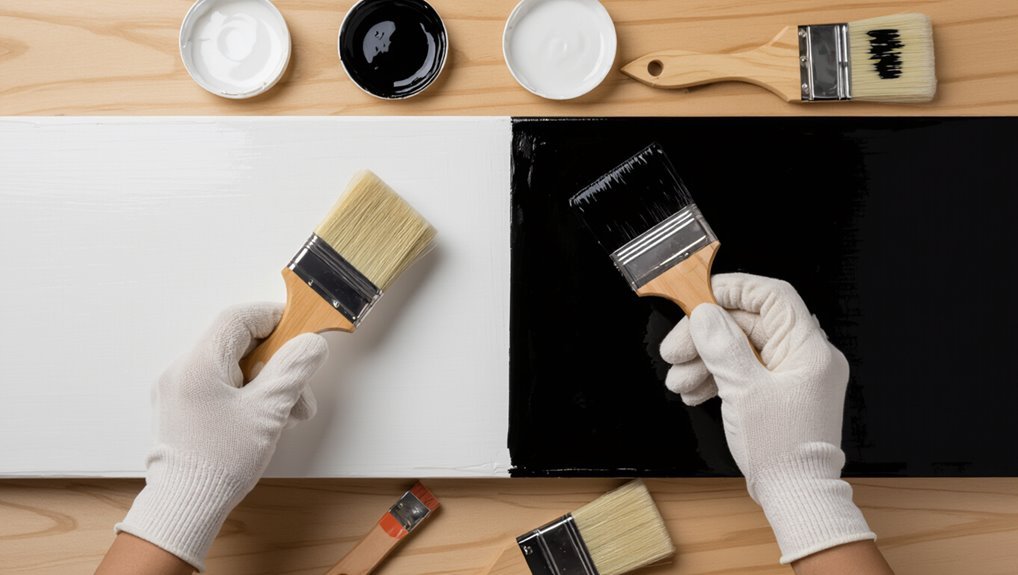
Wondering whether you can put enamel over latex paint? You can, but success depends on surface prep, primer, and product choice.
Guarantee strong enamel adhesion by cleaning, sanding glossy latex, and applying a bonding primer when latex compatibility is uncertain.
Test a small area first. If you follow those steps, you’ll get a durable finish without bubbles, peeling, or adhesion failures.
When Enamel Over Latex Makes Sense
When you’re after a hard, durable finish—like on trim, kitchen cabinets, or high-touch furniture—putting enamel over existing latex often makes sense.
You’ll benefit from enamel characteristics like scratch resistance and glossy durability while leveraging existing latex properties for adhesion.
Clean, sand, and prime glossy latex first. This combo gives long-lasting protection and easy cleaning without stripping, if substrates are sound.
When You Should Not Paint Enamel Over Latex
Although enamel can upgrade many latex surfaces, you shouldn’t apply it over latex in certain situations where adhesion, flexibility, or underlying problems will cause failure.
Don’t top fresh or peeling latex, chalky or glossy finishes, or flexible trims with enamel.
These enamel compatibility issues arise from latex paint limitations like poor adhesion, ongoing curing, or substrate movement—address prep, repair, or use compatible primers first.
Key Differences: Latex Vs Oil-Based Enamel
Because they cure and behave differently, latex and oil-based enamel suit different tasks and surfaces.
Latex and oil-based enamels cure and perform differently, so choose based on surface, durability, and finish needs.
You’ll notice latex durability with flexible, quick-drying coats, while oil-based enamel gives harder finish and higher enamel sheen.
Consider these contrasts:
- Drying time: latex faster, oil slower
- Flexibility: latex more forgiving
- Hardness: enamel tougher
- Cleanup: latex water-based
- Yellowing: more in oil-based enamel
How Finish Type Affects Adhesion (Flat, Satin, Gloss)
If you want paint to stick well, the finish matters: flat, satin, and gloss vary in sheen and surface texture, and those differences change how well layers bond and how forgiving a surface is to prep. You’ll assess finish types, adhesion challenges, surface profiles, and paint interactions before you paint.
| Finish | Effect |
|---|---|
| Flat | Matte, porous |
| Satin | Slight sheen, smoother |
| Gloss | Smooth, slick |
| Prep tip | Sand, clean |
How the Age and Condition of Latex Affect Your Project
If the latex underneath is old it can become brittle and crack, which weakens adhesion for any new enamel topcoat.
You’ll often see loose or flaking layers that must be scraped and sanded before you paint.
Proper prep—removing failing paint and cleaning the surface—gives enamel the best chance to bond.
Age-Related Surface Brittleness
Over time, latex paint loses flexibility and becomes brittle, and that change can seriously affect adhesion and longevity when you apply an enamel topcoat.
You’ll notice surface deterioration from aging effects; brittleness issues change paint interaction and require inspection before coating.
- Cracks along brush strokes
- Powdery, chalky finish
- Flaking at edges
- Reduced substrate grip
- Faster enamel cracking
Paint Adhesion Issues
Because latex hardens and loses its grip with age, you’ll often face adhesion problems when topping it with enamel.
Old latex can become brittle, chalky, or smooth, reducing paint compatibility and making enamel peel or bubble.
You should assess surface age, test a small area, and choose proper primers or bonding agents to restore adhesion before applying enamel for a durable finish.
Prep For Flaking Layers
When you find old latex that’s starting to flake, don’t assume a quick topcoat will fix it—age and condition determine how much prep you’ll need.
You’ll assess surface integrity, remove loose flaking paint, and decide if sanding, priming, or full strip is required before enamel goes on.
- Scrape loose flakes
- Sand to sound edges
- Clean dust and grease
- Apply bonding primer
- Spot-repair damaged substrate
How to Test Compatibility With a Spot Test?
Before you commit to painting an entire wall, do a small spot test to make sure the enamel and latex will play nice together. You’ll perform a spot test as a quick compatibility check: clean a tiny area, apply primer if desired, let enamel dry, then inspect for adhesion, bubbling, or cracking over 24–48 hours.
| Step | Action | What to look for |
|---|---|---|
| 1 | Clean | No residue |
| 2 | Apply enamel | Smooth coverage |
| 3 | Inspect | No peeling |
Tools and Materials for Painting Enamel Over Latex
Before you start, gather the necessary prep tools like sandpaper, tack cloths, primer, and rags so surfaces are clean and key edges are smoothed.
You’ll also want recommended paint supplies — a quality enamel primer, enamel paint, appropriate brushes or rollers, and safety gear such as gloves and a respirator.
Having the right materials on hand makes the enamel-over-latex process smoother and reduces the chance of problems.
Necessary Prep Tools
You’ll need a compact set of reliable tools and materials to prep latex-painted surfaces for enamel: a degreaser or trisodium phosphate (TSP) substitute, fine and medium grit sandpaper (220 and 120), a sanding block, clean rags, tack cloth, a good-quality primer compatible with enamel, painter’s tape, drop cloths, and appropriate brushes or a foam roller rated for enamel.
Focus on surface preparation, primer selection, adhesion testing, paint compatibility, environmental factors, application techniques, finish types, drying times, equipment cleaning, maintenance strategies.
- Degreaser/TSP substitute
- Sandpaper and sanding block
- Tack cloth and clean rags
- Primer compatible with enamel
- Painter’s tape and drop cloths
Recommended Paint Supplies
After prepping the surface and picking the right primer, gather the specific supplies you’ll need to apply enamel over latex: high-quality enamel, a compatible latex primer, angled brushes, foam rollers for smooth finishes, 220-grit sandpaper, tack cloths, painter’s tape, and respirator.
Match tools to paint types and consider surface textures—use nap rollers for rough surfaces and foam for glossy, smooth results.
Cleaning a Latex-Painted Surface Before Enamel
Clean the latex-painted surface thoroughly so the enamel will adhere evenly and look smooth.
Use proper surface preparation and cleaning techniques before priming. Follow these quick steps:
- Dust and vacuum to remove loose particles
- Wash with mild detergent and water
- Rinse and let dry completely
- Lightly sand gloss or uneven spots
- Wipe with a tack cloth before priming
Removing Grease, Wax, and Silicone
While grease, wax, and silicone might seem minor, they’ll wreck enamel adhesion and cause fish-eyes, peeling, or clouded finish—so remove them thoroughly before priming.
For grease removal and wax elimination, use effective degreasing with a cleaner application and surface cleaning pad.
For silicone breakdown, apply targeted chemical solvents and rub until you see no residue.
Rinse, dry, and inspect for complete residue removal.
How to Sand Latex Paint for Better Enamel Bonding
With contaminants removed and the surface dry, prepare the latex paint for sanding so the enamel primer and topcoat will bite properly.
You’ll use proper sanding techniques for adhesion improvement:
- Start with 120–150 grit for dulling
- Feather edges of any gloss
- Use a sanding block for even pressure
- Clean dust thoroughly
- Finish with 220 grit before priming
When to Strip Failing or Peeling Latex First
If the existing latex is flaking, bubbling, or lifting off the substrate, you should strip those areas down to sound material before priming so the enamel can adhere reliably.
During project assessment, watch for failure signs and peeling issues.
During assessment, inspect carefully for signs of failure and peeling to prevent future paint problems.
Choose stripping methods that suit substrate and use repair techniques to restore surface preparation.
Address adhesion challenges and compatibility concerns before repainting to avoid repeat failure.
Best Primers to Help Enamel Stick to Latex
Because enamel needs a reliable bond, choosing the right primer is essential to bridge latex’s flexible surface and enamel’s harder finish.
You’ll want primers that address primer types and adhesion factors so enamel won’t peel.
Consider these options to prep surfaces effectively:
- Bonding primer for tough adhesion
- Shellac-based for stain blocking
- High-build for filling
- Sandable primer for smoothness
- Specialized adhesion promoters
Choosing Between Oil-Based and Water-Based Primers
After picking a primer type to improve adhesion, you’ll face the choice between oil-based and water-based formulas—each brings different bonding behavior, dry times, odor, and cleanup requirements that affect how enamel performs over latex.
You’ll choose oil-based for stronger initial bite and oil-based advantages like stain blocking, but expect longer cure and solvent cleanup.
Water-based disadvantages include weaker adhesion and sensitivity to moisture.
Using a Bonding Primer: Step-by-Step
When you’re ready to bond latex paint to enamel, start by preparing the surface so the primer can grab properly; clean off grease, sand gloss to a dull sheen, and remove dust with a tack cloth.
Then follow these bonding techniques and select suitable primer types:
- Choose a bonding primer rated for enamel-over-latex
- Apply thin, even coats
- Respect manufacturer dry times
- Sand between coats if needed
- Clean tools promptly
Shellac Primer Vs Epoxy Primer: Which to Use
If you’ve prepped the surface and picked a bonding primer, you’ll next choose between shellac and epoxy primers—each offers different strengths for sealing and adhesion.
You’ll favor shellac advantages like fast drying, excellent odor and stain blocking, and strong adhesion to tricky substrates.
Choose epoxy when you need chemical and abrasion resistance, but note epoxy disadvantages: longer cure, tougher cleanup, and sensitivity to moisture during application.
How to Apply Primer for a Smooth, Uniform Base
Start by working on a clean, dry surface so the primer can form an even, well-adhered base; remove dust, grease, loose paint, and any glossy sheen by sanding or using a suitable cleaner.
Then follow careful primer application to guarantee a smooth finish:
- Choose compatible primer type
- Mask and protect surrounding areas
- Stir primer thoroughly
- Apply even, thin coats
- Sand light between coats
How Many Primer Coats Do You Need?
How many primer coats you need depends on the surface, the primer type, and the color change you’re making; typically one coat suffices for light color changes on smooth, porous surfaces, but two coats are recommended for repaired areas, drastic color shifts, or nonporous substrates to guarantee full adhesion and uniform coverage.
Assess adhesion, use appropriate Primer Types, and vary Application Techniques—thin even coats, dry fully—before topcoating.
Prep Steps by Substrate: Metal, Wood, Drywall
Before you apply primer or paint, prepare each substrate to promote adhesion and a smooth finish: remove rust and mill scale from metal, sand and fill defects on wood, and repair joint compound or drywall damage so surfaces are clean, dry, and dust-free.
- Clean the metal surface, degrease, and scuff for adhesion challenges.
- Sand for wood preparation and seal exposed grain.
- Patch drywall techniques and sand smooth.
- Remove dust thoroughly.
- Consider substrate considerations for finish durability.
Best Enamel Paints for Covering Latex Finishes
When you need a durable, glossy finish over existing latex, pick a true alkyd or a modern water-based enamel formulated for repainting—these offer the adhesion and hardness required to resist chipping and yellowing.
You’ll want to choose among best brands like Benjamin Moore, Sherwin-Williams, and Rust-Oleum, comparing sheens and color options.
Test samples for adhesion and final appearance before committing.
Water-Based Enamel Vs Alkyd Enamel: Pros and Cons
When choosing between water-based and alkyd enamels, you’ll want to weigh the benefits of water-based formulas—faster drying, lower odor, and easier cleanup—against the trade-offs of alkyds, like stronger durability and a smoother leveling finish.
You’ll find water-based enamels kinder to indoor air quality and quicker to recoat.
If ultimate hardness and flow are your priority, alkyds may be worth the extra ventilation and longer cure time.
Water-Based Enamel Benefits
Although both enamel types give a hard, durable finish, water-based enamels bring distinct benefits you’ll notice right away: faster drying, lower odor and VOCs, easier cleanup with soap and water, and better color retention with less yellowing over time.
- Improves enamel durability without heavy solvents
- Works over latex with fewer adhesion worries
- Resists chipping and scuffing
- Lowers indoor air impact
- Cleans up quickly with soap and water
Alkyd Enamel Trade-Offs
If you’re weighing water-based enamel against traditional alkyd, you’ll find the trade-offs are mostly about performance versus convenience: alkyds cure harder and resist wear better, but they dry slower, smell stronger, and require solvents for cleanup.
You’ll appreciate alkyd enamel benefits for durability and smooth leveling, yet alkyd enamel drawbacks include longer recoat times, stronger fumes, and tougher cleanup, affecting project speed.
How to Thin and Mix Enamel Correctly
Getting the consistency right matters: you’ll thin enamel to improve flow, reduce brush marks, and make spray application possible without weakening the finish.
Getting enamel consistency right matters — thin for better flow, fewer brush marks, and smooth sprayable finishes.
Use mixing techniques, proper ratios, and enamel solvents; check enamel viscosity against latex preparation and perform compatibility testing before full application.
- Choose mixing tools for steady motion
- Measure solvent-to-enamel ratios
- Stir slowly to avoid bubbles
- Test viscosity on scrap
- Note solvent evaporation rate
Brush Vs Roller Vs Spray: Choosing Application Method
When you pick between a brush, roller, or spray, think about the finish you want and the paint type you’re using.
Brushes give control for trim and detail, rollers speed coverage on flat areas, and sprayers produce the smoothest, fastest coats but need masking and thinning.
Also account for surface prep differences—sanding and masking are more critical with spray, while rollers can hide minor imperfections.
Brush Versus Roller
Choosing between a brush and a roller comes down to the surface, the paint type, and the finish you want; both tools work well with enamel and latex, but they produce different textures and require different techniques.
You’ll use brush techniques for edges and trim, and enjoy roller advantages on flats.
- Precision with brushes
- Speed with rollers
- Less splatter with careful rolling
- Control on trim
- Even coverage on walls
Spray Application Benefits
Although brushes and rollers suit trim and walls, a paint sprayer can dramatically cut application time and give a smooth, factory-like finish on large, uninterrupted surfaces.
You’ll appreciate spray gun advantages when covering cabinets, doors, or wainscoting quickly.
Spraying reduces brush marks and roller texture, producing a smooth finish that’s hard to match by hand.
You’ll still control overspray and technique for best results.
Surface Prep Differences
Because each application method lays paint differently, you’ll need to prep surfaces in specific ways to get the best result: clean, sand, and degrease for reliable surface preparation and paint compatibility.
Follow these targeted steps:
- Sand glossy latex for adhesion
- Remove dust after sanding
- Use primer on problem spots
- Tackle edges before rolling
- Mask and ventilate for spraying
How to Avoid Brush Marks and Orange Peel
When you want a smooth finish, control your brushwork and paint consistency: load the brush evenly, apply long, overlapping strokes, and keep a wet edge to blend each pass.
Use proper brush techniques, avoid overworking, and thin enamel slightly if manufacturer allows.
Sand between coats for surface smoothing, remove dust, and use quality brushes or foam rollers to minimize marks and orange peel.
Drying and Recoat Times When Painting Over Latex
When you paint over latex, drying time depends on factors like film thickness, solvent type, and surface temperature.
You’ll want to know the difference between when the paint is touch-dry and when it’s ready for a recoat, because recoating too soon can cause lifting or blistering.
Keep in mind that humidity and ventilation greatly change both touch and recoat windows.
Drying Time Factors
If you’re painting enamel over existing latex, you’ll find drying and recoat times depend on several key factors: the latex’s sheen and age, surface porosity, ambient temperature and humidity, and the enamel’s formulation.
Consider how drying conditions and temperature effects change timing:
- surface prep and cleanliness
- primer use and compatibility
- humidity level during cure
- ventilation and airflow
- manufacturer’s recommended recoat interval
Touchable Versus Recoat
Although the surface may feel dry to the touch within a few hours, you shouldn’t assume it’s ready for handling or a recoat; touchable time refers to when paint no longer transfers or dents easily, while recoat time is when it’s cured enough to accept another layer without lifting or adhesion problems.
You should follow recommended recoat timing, test small areas, and use gentle touch up techniques to avoid damage.
Environmental Influences
You might’ve followed recoat times on the can, but temperature, humidity, and airflow will still change how latex behaves under a new enamel coat.
You’ll need to adjust based on climate effects and humidity impact to avoid adhesion problems or longer curing.
- Cooler temps slow drying
- High humidity delays cure
- Poor airflow traps moisture
- Direct sun speeds surface skinning
- Warm, dry rooms are ideal
How Temperature and Humidity Affect Enamel Curing
When you’re painting with enamel, temperature and humidity directly control how the coating cures: higher heat speeds solvent evaporation and chemical crosslinking, while excessive humidity can slow drying, cause blushing, or interfere with adhesion.
You should monitor temperature effects and humidity impacts: work in moderate warmth, avoid painting during high relative humidity, and allow longer cure times when conditions are cool or damp to prevent surface defects.
How to Inspect Adhesion Before Finishing
Before you finish, check the surface for dirt, grease, or chalking and wipe or sand any contaminants away.
Try a few small adhesion test spots with your chosen enamel over the latex to see if it bonds or lifts.
If the substrate is flexible, bend or flex a taped test area to confirm the coating won’t crack or peel.
Surface Cleanliness Check
Although the paint looks dry, check surface cleanliness and adhesion carefully before you finish—dust, oils, or loose enamel will cause visible failures later.
Use Surface preparation basics and Cleaning techniques for Contamination removal, then apply quick Inspection methods and Surface assessment to guide Adhesion testing readiness.
- Wipe with solvent
- Scotch-brite scuff
- Lint-free dry
- Visual inspection
- Finger-pressure check
Adhesion Test Spots
Start by marking several small, representative test spots across the project—pick areas that include edges, flat faces, and any troubled zones you noticed during the cleanliness check. You’ll run simple test methods: scuff, prime, apply enamel, then wait. Check for adhesion challenges, peeling, or fish-eyes. Record results in this table:
| Spot | Result |
|---|---|
| Edge | Pass/Fail |
| Flat | Pass/Fail |
Flexible Substrate Check
When you’re working with flexible materials like vinyl, rubber, or thin metals, check small areas for movement and paint adhesion before you finish the whole piece. Bend and flex each test spot after curing to reveal any cracking, lifting, or stress lines that wouldn’t show up on a static surface.
You’ll confirm surface flexibility and compatibility by testing adhesion, curing, and durability.
- Clean test area
- Apply thin coat
- Cure fully
- Bend gently
- Inspect for failure
Fixing Bubbling, Cracking, or Peeling Enamel Over Latex
If you’re dealing with bubbling, cracking, or peeling enamel applied over latex, don’t panic — these failures usually come from poor adhesion or trapped moisture and can be repaired with the right prep.
You’ll address bubbling issues and cracking solutions by removing loose paint, drying substrate, and correcting latex problems.
Follow surface preparation and paint compatibility checks, use appropriate repair techniques, and consider finish durability for project considerations.
How to Sand Between Coats for a Smooth Finish
After you’ve repaired any bubbling, cracking, or peeling and primed the surface, sanding between coats will give you the smooth, factory-like finish you want.
You’ll use proper sanding techniques to level imperfections without cutting through. Lightly sand after each enamel coat, clean dust, then recoat.
Use gentle sanding between enamel coats to level imperfections, remove dust, then recoat for a smooth finish.
- Use 220–320 grit
- Sand with the grain
- Apply light pressure
- Wipe with tack cloth
- Inspect for flaws
When and How to Apply Topcoats or Clear Protectors
When you’re ready to add a topcoat, wait the manufacturer’s recommended drying time between coats so the layers bond properly.
Prep the surface by sanding lightly, wiping away dust, and ensuring it’s clean and dry before you apply any clear protector.
Pick a topcoat that’s chemically compatible with your base—water-based clear for latex, solvent-based or specifically labeled products for enamel—to avoid clouding or adhesion problems.
Timing Between Coats
Timing your topcoat correctly prevents wrinkling, poor adhesion, or an uneven finish, so you’ll want to follow the paint manufacturer’s recoat window and check surface tackiness before sealing.
Use proper drying techniques and respect recoat intervals to avoid trapping solvents.
- Wait full recommended recoat intervals
- Test tack before applying
- Allow humidity to drop
- Use fans for gentle airflow
- Apply thin, even coats
Surface Preparation Steps
Because proper surface prep determines how well a topcoat or clear protector bonds and wears, you should clean, sand, and degrease thoroughly before you ever pick up a brush or sprayer. Do surface inspection, use sanding techniques, perform adhesion testing, and confirm paint compatibility. Plan primer selection and application methods during project planning.
| Step | Action | Purpose |
|---|---|---|
| 1 | Clean | Remove contaminants |
| 2 | Sand | Promote mechanical grip |
| 3 | Prime | Seal and bond |
Choosing Compatible Topcoats
Now that your surface is clean, sanded, and primed, you’ll need to pick a topcoat or clear protector that matches the primer and the planned use.
Choose compatible finishes and follow topcoat selection guidelines so paint adheres and resists wear.
Consider these factors:
- Durability needs
- Sheen preference
- Solvent compatibility
- Drying time
- Application method
Safety: Ventilation, PPE, and Solvent Exposure Limits
When you’re working with enamel or latex, prioritize ventilation and proper personal protective equipment to cut inhalation and skin exposure to solvent vapors and aerosols.
Use ventilation methods like cross-vent and exhaust fans, follow PPE requirements (respirator, gloves, eye protection), learn solvent safety and exposure limits, and plan workspace preparation to maximize air circulation.
Monitor symptoms and stop if irritation occurs.
Cleanup Tips for Brushes and Equipment After Enamel
1 simple routine will save your brushes and gear: remove excess enamel, work solvent through the bristles, and reshape before drying.
You’ll protect brush cleaning and equipment maintenance by acting fast, using appropriate solvent, and storing properly.
- Wipe excess on newspaper
- Rinse with solvent
- Use brush comb
- Wash with soap and water
- Air dry bristles upright
Estimating Paint Quantity and Cost for Enamel Over Latex
Estimating how much enamel you’ll need to cover existing latex—and what it will cost—starts with measuring the surface area, checking the enamel’s coverage per gallon, and factoring in primer and waste; doing this early prevents surprises and overruns. You’ll use quantity estimation and straightforward cost analysis to total gallons, primer, and labor.
| Item | Quantity | Estimated Cost |
|---|---|---|
| Enamel (gallons) | 2 | $80 |
| Primer | 1 | $20 |
| Labor | 5 hrs | $75 |
Maintenance Tips to Keep Enamel Over Latex Looking New
Because enamel sits on top of latex, you’ll want a simple routine to preserve gloss and adhesion: keep surfaces clean, address chips promptly, and avoid abrasive cleaners that can dull the finish.
- Perform routine inspections for chips and wear (Routine inspections)
- Use gentle cleaning techniques and pH-neutral cleansers (Cleaning techniques)
- Apply surface protection and preventive care like mats (Surface protection, Preventive care)
- Keep touch up methods and color maintenance supplies ready
- Consider environmental considerations like humidity and UV exposure
Real-World Project Examples and Realistic Timelines
Think about common projects like trim, cabinetry, and metal fixtures so you can match surface needs and paint choices.
Plan prep steps and time—sanding, priming, and cleaning—before you pick products.
Expect realistic drying windows for enamel over latex and schedule recoat and use accordingly.
Project Types And Surfaces
When you match paint type to the surface and scale the job realistically, projects finish cleaner and faster.
For example, a small wood trim refresh with latex can be done in a weekend, while a metal staircase recoated with enamel needs more prep and several days for primer, multiple enamel coats, and cure time.
You’ll consider project surfaces and application techniques.
- Interior walls (latex)
- Exterior trim (enamel)
- Wood furniture (latex or enamel)
- Metal fixtures (enamel)
- Cabinets (hybrid systems)
Prep Time And Steps
If you want accurate timelines, start by breaking the job into prep, priming, painting, and cure stages so you know where time will be spent.
For typical rooms, allocate hours for surface preparation: cleaning, sanding, and repairing.
Plan a short adhesion testing phase after priming.
Count application time per coat and include buffer for touch-ups and ventilation to guarantee proper cure.
Realistic Drying Timelines
With prep, priming, and adhesion checks accounted for, you’ll want firm expectations for how long enamel and latex actually take to dry and cure in real conditions.
Consider typical drying stages and variable drying conditions for planning.
- Latex tack-free: 1–2 hours
- Latex recoat: 4–6 hours
- Enamel tack-free: 6–8 hours
- Enamel recoat: 16–24 hours
- Full cure (both): weeks depending on conditions
When to Hire a Pro Instead of DIY
Although you can tackle many enamel-versus-latex jobs yourself, call a pro when the project involves complex surfaces, extensive prep, hazardous materials, or work that affects structural integrity or resale value.
You should hire pros for tricky adhesion issues, large square footage, or tight timelines. Ask for a cost comparison and clear estimate of project scope, licenses, and insurance before committing.
Common Myths About Painting Enamel Over Latex
Wondering whether you can just slap enamel over latex and call it a day? You shouldn’t assume compatibility—enamel misconceptions and latex myths persist. Know the facts before you paint.
- Enamel always adheres: false
- Latex needs no prep: false
- Sanding is optional: false
- Primer wastes time: false
- Finish differences don’t matter: false
Follow proper prep and product guidance.
Quick Troubleshooting Checklist Before You Start
Pre-paint checklist: before you open a can, run through a quick troubleshooting list so you catch adhesion, compatibility, and surface issues early—check that the latex is fully cured, test for glossiness that might block bonding, look for chalking or flaking, verify the surface is clean and dry, and confirm your chosen enamel and primer are compatible with the substrate.
Use troubleshooting tips for surface preparation, scuff glossy areas, patch defects, and spot-prime problem zones.
Frequently Asked Questions
Can Enamel Over Latex Be Used on Exterior Surfaces Exposed to Sunlight?
Yes — you can, but you’ll face sunlight exposure and durability concerns; choose a high-quality exterior enamel or a UV-resistant topcoat, prep and prime the latex properly, and expect better longevity with proper maintenance.
Will Enamel Over Latex Change the Color or Sheen Noticeably?
Brightly beware: you’ll likely see slight sheen variations and occasional color stability shifts when you apply enamel over latex, but proper priming and matching formulas usually minimize noticeable change, so you won’t dramatically alter appearance.
Can I Apply Enamel Directly Over Latex-Painted Cabinets Hardware Attached?
You shouldn’t; you’ll struggle with finish and edges if you paint enamel over latex with hardware attached. Remove knobs, do cabinet preparation, scuff, clean, prime, and use adhesion techniques for lasting, smooth results.
How Long Before Light Use After Enamel Cures Over Latex?
Don’t worry — you can use cabinets gently after about 24–48 hours, though full enamel curing time is 7–30 days; leathering tasks risk latex paint adhesion issues, so wait a week for reliable light use.
Does Enamel Over Latex Affect Fire Resistance or VOC Levels Indoors?
Enamel over latex generally won’t change fire safety much, but it can slightly alter flame spread; it can worsen indoor air quality while curing due to higher VOCs, so ventilate and choose low-VOC enamel to reduce risks.
Conclusion
You can paint enamel over latex, but you’ll want to prep right — sand, clean, and prime if the surface is glossy. Think of it like fitting a speedboat onto a lake: one homeowner I know slapped enamel on satin walls without sanding and watched chips appear within weeks; after proper sanding and a bonding primer, the same boat stayed steady for years. Do the prep, test a small area, and you’ll get a durable finish.
