
Can You Use Flat Ceiling Paint in a Bathroom Safely?
Yes — you can use flat ceiling paint in a bathroom if you’re careful. It works well on ceilings and hides imperfections, but flat finishes trap moisture and aren’t as washable as satin or semi‑gloss. Make sure the room has strong ventilation, pick a mildew‑resistant or bathroom‑rated flat formula, and avoid direct shower spray or poorly ventilated tubs. Prep, prime, and ventilate thoroughly, and keep an eye on problem spots — more tips follow below.
Quick Answer Can You Use Flat Ceiling Paint in a Bathroom?
Yes—you can use flat ceiling paint in a bathroom for low-moisture ceilings or powder rooms where steam is minimal.
Avoid it in showers or poorly ventilated bathrooms because flat finishes trap moisture and stain more easily.
If you must use flat, guarantee excellent ventilation and spot-treat or seal high-risk areas first.
Short direct recommendation
If your bathroom has good ventilation and you keep humidity low, you can use flat ceiling paint, but it’s not ideal for areas that get regular steam or splashes.
Flat paint resists sheen but can stain and hold moisture more than satin or semi-gloss finishes, so choose a mildew-resistant flat formula and expect to touch up more often.
For most rooms, though, consider satin or semi-gloss.
When it may be acceptable and when it’s not
You can use flat ceiling paint in a bathroom when moisture is minimal and ventilation works well, but it’s not a good choice for showers, tub surrounds, or any wall that gets regular steam or splashes.
Use it on ceilings or low-humidity powder rooms. Avoid flat on external walls prone to condensation.
For damp areas, pick semi-gloss or satin for durability and easy cleaning.
Basic Understanding What Is Flat Ceiling Paint?
Flat ceiling paint is a low-sheen, non-reflective coating formulated to hide imperfections and reduce glare on overhead surfaces.
You’ll notice it’s much less shiny and easier to touch up than satin, semi-gloss, or gloss finishes, which offer more moisture resistance and scrubbability.
Most ceiling paints are water-based latex or acrylic blends made for quick application, fast drying, and minimal splatter.
Definition and typical properties
A flat ceiling paint is a low-sheen interior coating formulated to hide imperfections and reduce glare on overhead surfaces.
You’ll find it’s thicker, has higher pigment load, and dries to a matte finish that masks texture.
It typically offers moderate hide and touch-up ease but lower scrubbability and moisture resistance than higher-sheen paints, so consider ventilation and surface prep.
How flat paint differs from satin, semi-gloss, and gloss
When you compare sheens, the biggest trade-offs are durability and reflectivity: flat paint sacrifices washability and moisture resistance to hide flaws and cut glare, while satin, semi-gloss, and gloss increase sheen and toughness but make imperfections and reflections more noticeable.
You’ll find flat hides texture and scuffs, satin balances appearance and cleanability, semi-gloss and gloss resist moisture best but highlight every flaw.
Common formulations for ceilings
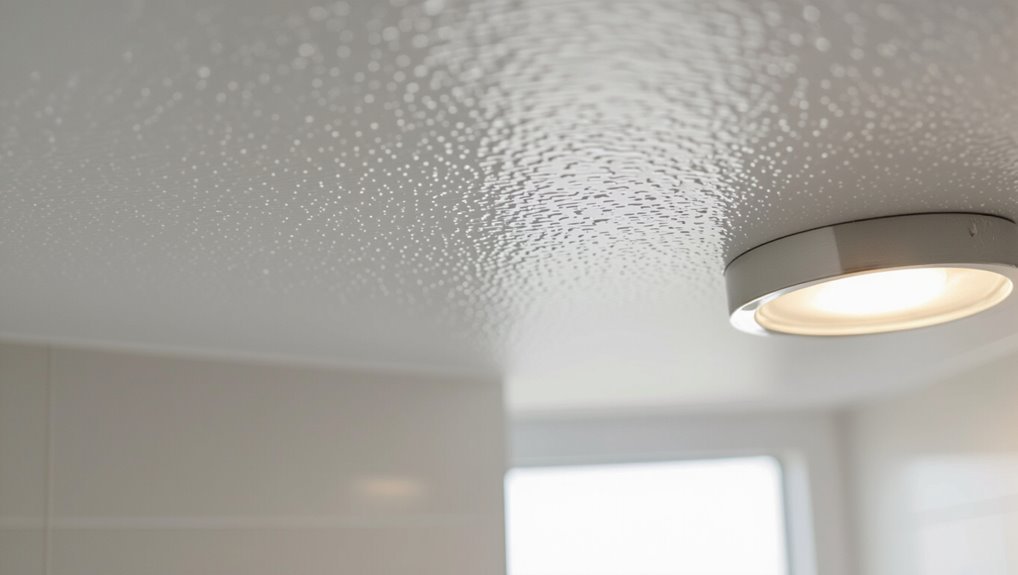
Because ceilings see different stresses than walls, manufacturers formulate ceiling paint to prioritize hide and ease of application over high gloss and extreme durability.
You’ll find water-based flat acrylics for quick drying and low odor, vinyl-acrylic blends for affordability, and mildew-resistant formulations for bathrooms.
Choose a paint labeled “ceiling” or “mildew-resistant” to guarantee better coverage and easier touch-ups.
Why Paint Choice Matters in Bathrooms
You’ll want to pick paint that stands up to humidity and condensation so it won’t peel or blister over time.
Choosing the right sheen can help resist mildew and mold growth on bathroom surfaces.
Also consider durability and how easily the finish wipes clean, since bathrooms need more frequent maintenance than other rooms.
Effects of humidity and condensation on paint
If your bathroom traps steam and stays damp, humidity and condensation will stress paint films by softening binders and encouraging mildew growth.
You’ll notice reduced adhesion, blistering, and premature peeling as moisture repeatedly wets the surface.
Choosing moisture-tolerant formulations and proper ventilation helps paint resist repeated condensation cycles, prevents early failure, and maintains finish integrity without relying on heavy cleaning or frequent repainting.
Mildew and mold risk related to paint sheen
When bathrooms stay damp, low-sheen flat paints trap moisture in their porous surface and give mildew an easier place to take hold.
You’ll find mold spores cling to that texture faster than to satin or semi-gloss finishes. Choosing a higher-sheen, moisture-resistant paint and ensuring ventilation reduces microbial growth risk.
Inspect and address any staining promptly to prevent spread and structural damage.
Durability and cleanability requirements in bathrooms
Beyond moisture and mildew concerns, durability and cleanability become top priorities in bathroom paint selection.
You need a finish that resists scuffs, frequent wiping, and cleaning chemicals without degrading. Flat ceiling paint often lacks that resilience, so choose semi-gloss or satin for walls and trim.
They tolerate scrubbing, repel stains better, and maintain appearance longer in high-traffic, humid spaces.
Can Flat Ceiling Paint Withstand Bathroom Conditions? Detailed Analysis
You’ll want to weigh how flat ceiling paint handles typical bathroom stresses like constant moisture and steam.
Consider its breathability and vapor permeability, along with how well it resists scrubbing, stains, and the wear that affects longevity and maintenance.
That comparison will help you decide if flat paint is practical or if a more moisture-resistant finish is needed.
Moisture resistance of flat paints
Flat ceiling paints can handle some bathroom moisture, but they’re not as resilient as semi-gloss or satin finishes.
You’ll find flat formulas absorb humidity, soften under prolonged dampness, and stain more easily.
In low-traffic, well-ventilated bathrooms they can work, but you should expect more frequent touch-ups and be cautious about direct water exposure to avoid peeling and mold-prone spots.
Breathability and vapor permeability
While flat ceiling paints can look great, they don’t breathe as well as some other finishes.
You should understand how vapor permeability affects performance in bathrooms. Low permeability traps moisture within substrates, raising mold risk and peeling.
Choose higher-vapor-permeable primers or allow better ventilation (exhaust fans, windows) so moisture escapes and the flat finish lasts without hidden damage.
Resistance to scrubbing and stains
Because bathrooms see frequent splashes, steam, and the occasional accidental scrub, you should know how well flat ceiling paint stands up to cleaning and stains.
Flat finishes resist mild smudges but scrub poorly; vigorous cleaning can abrade pigment and texture.
You’ll find stubborn soap scum or mold staining more likely, so plan gentle cleaning and spot treatments rather than heavy scrubbing.
Longevity and maintenance considerations
Given that flat ceiling paint doesn’t take heavy scrubbing well, you’ll want to contemplate how long it will hold up where humidity, temperature swings, and occasional splashes are routine.
Expect faster wear, potential discoloration, and occasional peeling in high-moisture zones.
To extend life, guarantee excellent ventilation, spot-treat stains gently, and consider semi-gloss or mildew-resistant alternatives for zones exposed to frequent moisture.
When It’s Acceptable to Use Flat Paint in a Bathroom
You can use flat ceiling paint in bathrooms that see only light, occasional moisture—think half-baths and guest powder rooms.
It works best when the space has proper ventilation, like a working exhaust fan or an operable window.
For extra protection, choose mold-resistant flat formulations or add approved antimicrobial additives.
Low-moisture bathrooms (e.g., half-baths, guest powder rooms)
Bathrooms that see little direct moisture—think half-baths and guest powder rooms—are usually safe for flat ceiling paint as long as you control humidity and ventilate well.
In these spaces you can prioritize matte aesthetics because splashing and steam are minimal.
Choose a quality flat paint with mildew-resistant additives, wipe any occasional spots promptly, and inspect periodically for peeling or staining to stay ahead of problems.
Proper ventilation scenarios (exhaust fan, window)
If you keep humidity under control with an effective exhaust fan or an operable window, a flat ceiling paint can work in many bathrooms without sacrificing durability.
You should guarantee steady air exchange, run fans during and after showers, and avoid prolonged dampness.
Consider these practices:
- Run exhaust fan 15–30 minutes after showering
- Use a window to cross-ventilate when possible
- Guarantee fan capacity matches room size
- Keep vents and windows unobstructed
Using mold-resistant flat formulations or additives
When moisture’s going to be present despite good ventilation, choose a flat paint formulated with mildewcide or add a proven antimicrobial additive to help keep mold at bay.
You’ll still prep surfaces, prime where needed, and apply per manufacturer instructions. These products reduce fungal growth risk but don’t replace ventilation or repairs; use them as part of a broader moisture-control strategy.
When You Should Avoid Flat Paint in a Bathroom
You shouldn’t use flat paint in areas that stay wet or get direct water, like inside showers, over tubs, or on unvented baths.
Skip flat finishes in bathrooms with poor ventilation or heavy daily use because they’ll absorb moisture and stain more easily.
Also avoid flat paint if your home has recurring mold or chronic humidity problems, since it won’t hold up or resist growth.
High-moisture areas (showers, tubs, unvented baths)
Because high-moisture zones like showers, tubs, and unvented baths trap steam and stay damp for long stretches, flat paint isn’t a good choice there.
It’ll absorb moisture, stain, and peel faster than satin or semi-gloss. You’ll invite mildew and frequent repainting.
Use moisture-resistant, washable finishes on ceilings and walls in those areas to guarantee durability and easier cleaning.
Poor ventilation or high-traffic bathrooms
If a bathroom stays damp from poor ventilation or sees constant use, don’t pick flat paint for ceilings or walls — it won’t stand up to repeated moisture, scrubbing, or the grease and soap scum that build up in high-traffic spaces.
You’ll want a paint with higher sheen and washable finish so stains wipe off, maintenance’s easier, and touch-ups last longer.
Homes prone to mold or with chronic humidity issues
When a home battles chronic humidity or regular mold growth, flat paint won’t give you the resistance you need; its porous, matte finish traps moisture and makes mold easier to hide and harder to clean.
How to Prepare and Apply Flat Ceiling Paint Safely in a Bathroom
Before you start, check the bathroom’s humidity and ventilation so you know if additional fans or dehumidifiers are needed.
Pick a mildew-resistant, bathroom-rated flat paint, then clean, repair, and prime the ceiling to remove mold and guarantee adhesion.
Use proper tools, apply recommended coats with correct drying times, and keep the room ventilated while the paint cures.
Step 1 Assess room humidity and ventilation
Because moisture and airflow determine whether flat ceiling paint will hold up in a bathroom, start by measuring humidity and checking ventilation before you touch a brush.
Use a hygrometer during and after showers to note peak RH. Inspect exhaust fans for proper CFM, confirm vents exhaust outdoors, and look for stagnant corners or condensation.
Fix ventilation issues or limit moisture before painting.
Step 2 Choose the right flat paint (mildew-resistant, bathroom-rated)
If your bathroom gets regular steam, pick a flat ceiling paint formulated for high-humidity spaces—look for labels like “bathroom-rated” or “mildew-resistant” so the finish resists staining and microbial growth.
Choose low-VOC formulas and check coverage. Consider satin alternatives if needed.
Compare:
- Mildew-resistant additives
- Moisture-rated warranties
- Low-VOC/odor labels
- Coverage and recoat times
Step 3 Prep surfaces (cleaning, mold remediation, priming)
Start by giving the ceiling a thorough inspection and cleaning so paint will adhere and any health hazards are addressed.
Scrub grease, soap scum, and mildew with a bleach or EPA-approved cleaner, rinse, and dry.
Repair cracks, remove loose paint, and treat visible mold with a fungicidal solution.
Prime stained or porous areas with a mildew-resistant primer before painting.
Step 4 Application best practices (tools, coats, drying times)
Now that the ceiling’s prepped, gather the right tools—an angled brush for corners, a 9–12-inch nap roller for flat areas, a sturdy extension pole, quality drop cloths, and mildew-resistant flat ceiling paint—and plan to work in even, overlapping passes.
Cut in edges first, roll main sections with light, consistent pressure, apply two thin coats for uniform coverage, and respect manufacturer drying times between coats.
Step 5 Post-paint ventilation and curing tips
1 important step after painting is to ventilate the bathroom thoroughly to speed curing and reduce fumes; open windows, run an exhaust fan continuously for at least 24–48 hours, and keep the door ajar to promote cross-ventilation.
Continue airflow until paint smells fade and finish feels dry to the touch.
Avoid steam, showers, or heavy humidity for 72 hours to prevent blistering and uneven cure.
Comparison Flat Paint vs. Higher Sheen Paints for Bathrooms
You’ll want to weigh moisture resistance, cleanability, and looks when choosing flat vs. higher-sheen paints for a bathroom. Below is a quick comparison of typical performance and recommended scenarios to help you decide. Use flat on low-traffic ceilings where imperfections matter less, and higher sheens on walls or trim that need scrubbing or extra moisture protection.
| Criteria / Scenario | Flat Paint |
|---|---|
| Moisture resistance | Lower; can be more prone to staining in humid areas |
| Cleanability | Poorer; wipes can remove paint or leave marks |
| Aesthetics | Hides surface flaws, offers matte finish |
| Recommended use | Bathroom ceilings with low contact |
| When to pick higher sheen | Walls, shower surrounds, or trim needing durability |
Key performance criteria (moisture resistance, cleanability, aesthetics)
Performance matters most in a bathroom, so you should weigh moisture resistance, cleanability, and aesthetics when choosing between flat and higher-sheen paints.
Flat paint hides imperfections and reads matte but absorbs moisture and stains more easily.
Higher-sheen finishes repel moisture, wipe clean, and resist mildew, though they highlight flaws.
Balance durability and look based on ventilation and maintenance willingness.
Typical scenarios where each sheen is recommended
When you’re deciding between flat and higher-sheen paints, think about the room’s ventilation, traffic level, and how much cleaning you’ll do.
Flat works well in low-traffic, well-ventilated powder rooms or ceilings where you want to hide imperfections, while satin, semi-gloss, or gloss are better for shower surrounds, high-traffic family baths, and any space that gets regular wiping or long steam exposure.
Choose flat for ceilings and guest powder rooms; use satin for walls in moderately used baths; pick semi-gloss or gloss for tub and shower enclosures, trim, and areas needing frequent scrubbing or heavy moisture resistance.
Common Mistakes and Problems When Using Flat Paint in Bathrooms
You’ll run into problems if you ignore bathroom ventilation, skip primer or mold-killing prep, or use standard interior flat paint instead of a mildew-resistant formula.
Watch for early signs of failure—peeling, staining, or musty odors—and you can usually stop them with targeted fixes like re-priming, switching to a mildew-resistant paint, and improving airflow.
Addressing these steps early will save time and keep your ceiling looking good longer.
Mistake 1 Ignoring ventilation needs
Even though flat paint looks great, it traps moisture and won’t forgive poor ventilation—so if your bathroom lacks an exhaust fan or a window that opens, you’ll invite peeling, mildew, and staining much faster than with higher-sheen finishes.
You should guarantee continuous airflow during and after showers, run a properly sized fan, and allow surfaces to dry fully before repainting to prevent accelerated deterioration.
Mistake 2 Skipping primer or mold-killing prep
If you skip primer or any mold-killing prep, flat paint will cling to dirt and allow mildew to take hold faster than you expect.
You should clean surfaces with a mildew remover, repair water stains, and apply a proper primer that seals and blocks stains.
Doing so improves adhesion, reduces moisture penetration, and gives you a fighting chance against recurring mold.
Mistake 3 Using standard interior flat paint instead of mildew-resistant formulas
Cleaning, priming, and treating stains helps, but choosing the wrong paint can still undo your work.
If you use standard interior flat paint, it won’t resist mildew in humid bathrooms. You should pick a mildew-resistant or bathroom-grade flat formula with biocides and better moisture tolerance.
That prevents recurring black spots, reduces repainting, and protects drywall and ceilings from long-term damage.
How to identify and fix early signs of paint failure
Spotting early paint failure can save you time and money, so check your bathroom ceiling every few months for telltale signs like peeling edges, soft or swollen drywall, and small black or gray specks of mildew.
If you see damage, dry the area, remove loose paint, treat mildew with a bleach solution, repair or replace damaged drywall, then prime and repaint with mildew-resistant, water-tolerant paint.
Prevention and Best Practices
To avoid the common issues, you’ll want to upgrade ventilation, control humidity, and keep a regular maintenance schedule so mold and peeling never get a foothold.
Clean regularly with mild cleaners and address any early signs of mildew, and plan when to repaint based on wear rather than guesswork.
Also consider alternative finishes—semi-gloss for trims or eggshell for ceilings—as hybrid solutions that balance durability with the look you want.
Ventilation upgrades and humidity control strategies
When you upgrade ventilation and control humidity, you’re addressing the root causes that make flat-ceiling paint peel, stain, or grow mold in bathrooms.
You should:
- Install a higher-capacity exhaust fan vented outside.
- Use a timer or humidity-sensing switch.
- Add passive vents or a window for cross-ventilation.
- Run dehumidifiers if necessary to keep RH below 50%.
These steps protect paint and indoor air quality.
Routine cleaning and mold prevention
Because moisture and organic residue invite mold, you should make routine cleaning a habit and focus on areas where water lingers—ceilings above showers, corners, and grout lines—and use mild cleaners, non-abrasive scrubbing, and quick-dry techniques to keep surfaces dry and inhospitable to spores.
Wipe down after use, tackle soap scum promptly, launder bath mats, clean vents and fans, and inspect hidden seams for early signs.
Maintenance schedule and when to repaint
If you keep up with regular cleaning and ventilation, you’ll spot issues early and extend the life of a flat-ceiling paint job in a bathroom.
Set a simple maintenance schedule—monthly quick checks and a yearly deep inspection—to catch discoloration, peeling, or musty spots before they worsen.
Replace caulk or address leaks promptly, spot-treat stains, and plan repainting every 3–7 years depending on wear and moisture exposure.
Alternative finishes and hybrid solutions (semi-gloss trims, eggshell ceilings)
Keeping up with cleaning and inspections helps you spot problems early, but choosing the right finishes can prevent many issues in the first place.
You can pair a flat ceiling with semi-gloss trims to resist moisture on mold-prone edges, and choose eggshell for walls where sheen helps wipeability without glare.
These hybrid choices balance aesthetics, durability, and easier maintenance in humid bathrooms.
Product Selection Guide and Buying Tips
When choosing flat ceiling paint for your bathroom, check labels for mildew-resistant, bathroom-rated products and low VOCs so you know what performance to expect.
Pick higher-durability formulas for busy or steamy baths and more economical options for lightly used powder rooms.
Balance cost against longevity and maintenance—spending a bit more often saves touch-ups and recoat work.
What to look for on labels (mildew-resistant, bathroom-rated, VOCs)
Labels tell you what a paint can actually do in a damp bathroom, so learn to read them before you buy.
Check for “mildew-resistant” or “mildew/mold inhibitor” wording, and a specific “bathroom” or “high-humidity” rating.
Note VOC levels—choose low- or zero-VOC for indoor air quality.
Also confirm adhesion and washability ratings so the finish resists moisture and cleans easily.
Recommended product types for different bathroom types
Because bathrooms vary so much in size, ventilation and wear, you should match paint type to the room: choose a durable, mildew-resistant flat or matte formulated for high-humidity spaces in small, poorly ventilated bathrooms;
pick a low-sheen eggshell or satin with stronger washability for family baths and kids’ rooms;
and use higher-performance semi-gloss or trim coatings around tubs, showers and trim where scrubbing and water contact are frequent.
- Ventilation-limited: mildew-resistant flat/matte
- Family baths: washable eggshell/satin
- High-contact areas: semi-gloss/trim enamel
- Ceilings: moisture-rated flat for minimal splatter
Cost vs. performance considerations
Budgeting for bathroom paint means balancing upfront price with long-term performance—you’ll pay more for mildew-resistant, washability, and durability, but those features cut repainting and maintenance costs.
Choose higher-quality semi-gloss or satin for humid zones; reserve flatter, cheaper ceiling paints for low-splash areas.
Factor labor, primer needs, and warranty; smart investment saves time and keeps finishes looking better longer.
FAQs Common Questions About Flat Paint in Bathrooms
You’ll likely want straight answers about mold risk, mildew additives, and how flat finishes hide flaws compared with satin or semi-gloss.
I’ll cover whether you can add a mold inhibitor, how effective it is, expected repainting frequency for ceilings, and whether flat paint is suitable for walls as well.
Read on for concise guidance so you can choose and maintain the right finish for your bathroom.
Is flat paint more likely to grow mold than satin or semi-gloss?
How likely is flat paint to encourage mold compared with satin or semi-gloss?
You’ll find flat finishes absorb more moisture and dry slower, creating a slightly higher mold risk in humid bathrooms.
Satin and semi-gloss resist moisture, clean easier, and discourage spores.
Proper ventilation and cleaning matter most; finish choice helps but won’t override poor humidity control.
Can you add mold inhibitor to flat paint, and is it effective?
Wondering whether you can add a mold inhibitor to flat paint—and if it actually works?
You can add EPA-registered anti-mildew additives to many flat paints; follow manufacturer directions and measure precisely. They slow surface mold but don’t replace ventilation or moisture control.
For heavy-moisture bathrooms, choose mold-resistant primers or paints and fix humidity sources for lasting protection.
Will flat paint hide ceiling imperfections better than higher sheens?
Because flat paint reflects very little light, it’s much better at hiding bumps, hairline cracks, and texture inconsistencies on a ceiling than satin or semi-gloss finishes are.
You’ll notice imperfections less with flat because it doesn’t highlight shadows or sheen. If visual flaws bother you, flat’s matte surface masks them effectively, though it won’t fix structural issues—those still need repair.
How often will a flat-painted bathroom ceiling need repainting?
Typically, you’ll need to repaint a flat-painted bathroom ceiling every 3 to 5 years, though humidity, ventilation, and staining can shorten that interval.
If your fan runs regularly and steam disperses, paint lasts longer. Watch for peeling, discoloration, or mold; spot-treat and clean promptly.
High-moisture bathrooms may demand repainting closer to every 2–3 years to maintain appearance and prevent damage.
Can I use flat paint on bathroom walls as well as ceilings?
Can you use flat paint on bathroom walls as well as ceilings? You can, but it’s not ideal in high-moisture zones.
Flat finish hides imperfections and looks smooth, yet it resists scrubbing and moisture poorly.
Use flat in low-traffic, well-ventilated bathrooms or above wainscoting; choose satin or semi-gloss for shower walls, trim, and areas needing regular cleaning.
Conclusion Practical Recommendations and Quick Checklist
In short, you can use flat ceiling paint in a bathroom if you control moisture and prep the surface properly.
Before you paint, run through a quick checklist: fix leaks, clean and dry the ceiling, sand and prime any stains, and guarantee good ventilation.
Follow those steps and you’ll get a durable, low-gloss finish that hides imperfections.
One-paragraph summary recommendation
If you’re set on using flat ceiling paint in a bathroom, take practical steps to minimize moisture problems: guarantee excellent ventilation, fix leaks, use a high-quality flat paint with mildew resistance, apply proper priming, and allow full drying between coats.
Expect more frequent touch-ups than with satin finishes, and monitor for peeling or mold so you can address issues promptly.
Quick checklist before painting a bathroom ceiling
Before you open a can, run through a short checklist to cut risks and save time:
- Confirm ceiling is dry, mold-free, and primed.
- Choose a mildew-resistant flat or semi-gloss paint for bathrooms.
- Verify ventilation: fan working or windows open during and after painting.
- Use proper brushes/rollers and allow full cure before steam exposure.
