
How Can I Clean an Oil Painting: Safe Art Restoration Tips
You can clean an oil painting yourself if you’re cautious: work in a dust-free, well-lit area, document the condition, and test solvents (like mineral spirits or odorless turpentine) on an inconspicuous corner with cotton swabs. Waft away loose dust, start top-down, limit solvent dwell time, and stop at any flaking, softness, or color change. Keep treatments minimal and reversible, photograph every step, and call a conservator for structural or varnish problems — continue for practical techniques and vetting tips.
Why This Guide Helps You Clean an Oil Painting
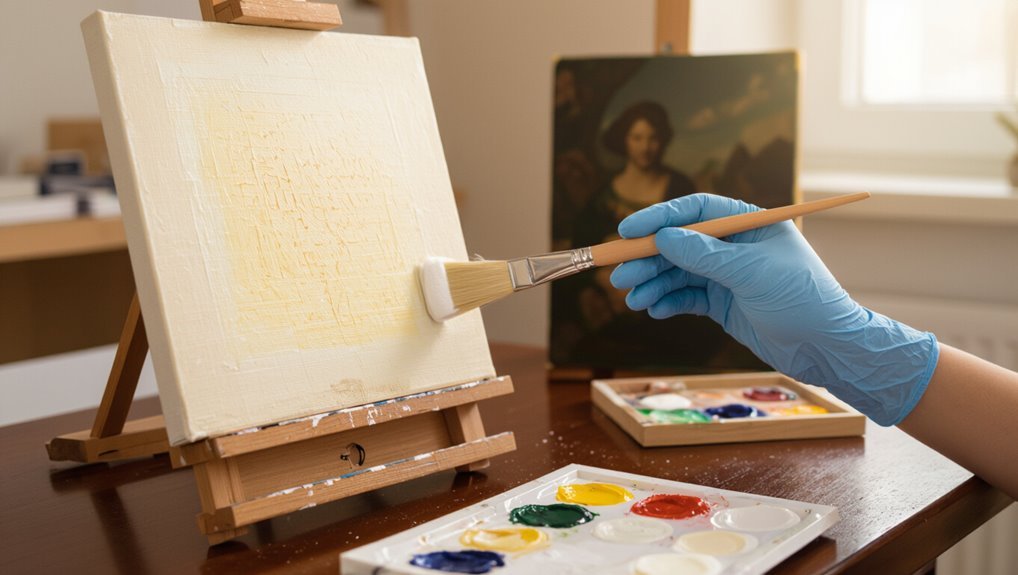
Because cleaning an oil painting can permanently alter its appearance, this guide helps you make safe, informed choices by focusing on practical, tested steps and clear decision points.
You’ll learn basic art cleaning techniques, how to assess grime versus damage, and when to pause.
Follow concise oil painting care instructions, use recommended materials, and decide confidently whether to proceed or seek professional help.
Who Should Attempt Cleaning an Oil Painting
Now that you can tell grime from structural damage and know when to pause, decide whether you should clean the painting yourself.
You’ll weigh Art Owner Responsibilities: documenting condition, testing a tiny area, and stopping if unsure.
If you lack steady hands, proper materials, or training, DIY Cleaning Risks rise quickly.
Only proceed when confident and prepared to accept potential harm.
When to Call a Professional Conservator
If a painting shows flaking paint, a weakened paint layer, or active fading, call a professional conservator—these issues need techniques and materials you shouldn’t attempt at home.
You should also consult one for structural damage, severe varnish degradation, or complex restoration challenges beyond surface dirt.
A conservator uses professional techniques, assesses condition, documents treatment, and minimizes risk so your artwork receives appropriate, reversible care.
Quick Safe-Clean Checklist for Oil Paintings
When you’re ready to freshen an oil painting, follow a short checklist that prioritizes safety: inspect for loose or flaking paint, test a small, inconspicuous spot with a dry-soft brush, guarantee the work is dry and stable, avoid solvents or water unless you’re trained, and stop immediately if anything seems fragile—consult a conservator for anything beyond light surface dusting.
Then record cleaning frequency, damage assessment, preferred cleaning techniques, safe practices, and needed restoration supplies; postpone varnish removal and complex conservation methods to professionals focused on art preservation.
How to Assess Age, Provenance, and Value
How can you tell an oil painting’s age, provenance, and value without guessing? You inspect signatures, materials, and labels, document condition, and pursue provenance research. For value determination, consult auction records and appraisers. Keep notes and photos before any cleaning.
| Evidence | Source | Action |
|---|---|---|
| Signature | Label | Verify |
| Materials | Lab report | Date |
How to Check Paint Stability and Flaking
Start by doing a careful visual surface inspection to spot cracking, powdery areas, or loss of adhesion.
Then lightly perform a gentle touch test—using a clean fingertip or cotton swab—to see if any paint lifts or rubs off.
Finally, check the edges and ground where flaking often begins, noting any separation between layers.
Visual Surface Inspection
Curious whether the paint is secure or ready to flake, you should examine the surface closely under good light and with magnification if possible.
Note visual cues: hairline cracks, lifting edges, irregular gloss or matte patches.
Check surface clarity for dirt vs. varnish discoloration, and map areas of concern.
Photograph findings for reference and avoid touching fragile spots until you consult a conservator.
Gentle Touch Test
Before touching the paint, put on clean nitrile gloves and gather a soft sable brush or a cotton swab to use as a probe; you’ll be feeling for stability, not cleaning.
Lightly tap and roll the probe across small areas, watching for loose flakes or powder.
Use gentle techniques and safe methods—avoid pressure, test multiple spots, and stop if any lifting occurs to prevent further damage.
Edge And Ground Check
How do the edges and ground hold up around your painting? Inspect corners and stretcher lines for lifting, flaking, or brittle ground.
Gently probe suspicious areas with a soft brush; don’t touch loose paint. Note any compromised edge treatment or ground stability before cleaning.
If you see lifting, stop and consult a conservator—stabilization is required prior to any surface cleaning.
Can the Paint Handle Cleaning? Simple Stability Tests
Can the paint stand up to cleaning? You’ll test paint durability and paint adhesion before proceeding, since cleaning methods and material compatibility affect restoration risks. Check surface protection, cleaning frequency tolerance, and environmental factors. Use simple swabs in hidden spots, note lifting or solubility, and record results.
| Test | Observation |
|---|---|
| Solvent swab | |
| Mechanical touch | |
| Humidity change |
How to Photograph the Painting Before Any Work
Now that you’ve recorded the paint tests and noted any lifting or solubility, photograph the painting to document condition and guide cleaning choices.
Use stable tripod-mounted shots, consistent framing, and include scale and color reference.
Vary exposures and angles to capture varnish, craquelure, and losses.
Apply basic photographic techniques and lighting considerations to produce clear, repeatable records before you begin work.
How to Set Up a Clean, Well-Lit Workspace
Before you start cleaning, set up a workspace with strong, even lighting so you can spot varnish, grime, and surface damage clearly.
Clear and wipe down a large, dust-free table and cover it with a lint-free cloth to prevent particles from settling on the painting.
Position your work area to minimize drafts and keep all tools within easy reach.
Lighting And Visibility
Good lighting makes safe, accurate cleaning possible, so set up a workspace where you can see details clearly without glare.
Position adjustable daylight-balanced lamps to minimize shadows and color shifts. Use a magnifier or loupe for fine inspection.
Keep lighting consistent to evaluate artistic techniques and test cleaning tools. Avoid harsh overhead fluorescents; indirect, adjustable illumination gives the best control and visibility.
Dust-Free Surface Preparation
Although dust seems harmless, it can abrade paint and trap solvents, so you should prepare a clean, well-lit workspace that minimizes airborne particles and surface contamination.
Clear clutter, wipe surfaces with a lint-free cloth, and use a HEPA-filter fan to reduce dust.
Practice gentle dust removal techniques with soft brushes and vacuum attachments, and apply surface protection methods like clean drop cloths and covered trays for tools.
What Tools and Supplies You’ll Need for Gentle Cleaning
Gather the right tools and you’ll make gentle cleaning safe and effective: soft natural-hair brushes, a range of lint-free cotton swabs and microfibre cloths, distilled water and mild solvents or conservation-grade cleaning solutions, blotting paper, a soft palette knife for lifting flaky dirt, nitrile gloves, and a bright, adjustable light source.
| Tool | Purpose | Notes |
|---|---|---|
| Brushes | dust removal | tool selection |
| Swabs | surface inspection | cleaning techniques |
| Solvents | safe solvents | restoration supplies, protective gear, drying methods, cleaning frequency, art preservation |
How to Perform a Small Spot Test Safely
Pick an inconspicuous test area, like the reverse edge or a corner, so you won’t mar the visible surface.
Apply a tiny amount of the mildest solvent you have on a cotton swab, working from weakest to stronger only if needed.
Watch closely for any softening, color change, or lifting of the paint and stop immediately if you see a reaction.
Choose Test Area
Before you start cleaning, identify a tiny, inconspicuous spot—like the reverse edge or an area behind a stretcher bar—where a small test won’t be visible.
You’ll confirm paint stability and practice cleaning precautions with minimal risk.
- Choose a hidden corner for test area selection.
- Use minimal pressure and dilute agents.
- Observe color, gloss, and tack over 24–48 hours.
Select Mild Solvent
Now that you’ve confirmed paint stability in your test spot, it’s time to select a mild solvent for the small spot test safely.
Choose among mild solvent types like mineral spirits, odorless turpentine, or a diluted solvent mix.
Use cotton swabs for controlled solvent application, working outward from the test center.
Keep notes and limit dwell time to avoid overexposure.
Monitor Paint Reaction
Once you apply the solvent, watch the spot closely for changes in color, gloss, softness, or crawling—these are the signs that paint or varnish is reacting.
You’ll note paint interaction and solvent effects immediately; stop if you see damage. Test a tiny corner, document timing, and compare.
- Check color shift
- Feel surface softness
- Note gloss change and crawling
Which Household Materials Are Safe to Try First
Start with the gentlest options you likely already have: distilled water, soft white cotton cloths or cotton balls, and a clean, soft-bristled brush (like a hake or natural-hair paintbrush).
Test a tiny, inconspicuous area first. Use minimal moisture, blot don’t rub, and rely on common household supplies for safe cleaning.
If dirt persists, stop and consult a conservator.
Remove Loose Dust Without Touching Paint
Gently waft loose dust off the painting without touching the painted surface: hold a soft-haired brush or a blower a few inches away and sweep or puff air across the frame and varnish, working from top to bottom so particles fall away.
Use careful dust removal techniques and choose safe brushes to avoid damage.
- Start at the top
- Move downward steadily
- Inspect with low-angle light
Use Soft Brushes for Surface Cleaning
After you’ve removed loose dust, pick a soft, natural-hair brush—like squirrel or goat—or a high-quality synthetic alternative to sweep the surface; these brushes hold dust without scratching varnish or paint. You’ll learn soft brush types and gentle cleaning techniques: work with light strokes, keep brushes clean, and test a small corner first.
| Brush | Hair | Use |
|---|---|---|
| Squirrel | Very soft | Fine dust |
| Goat | Soft | General |
| Synthetic | Durable | Sensitive paint |
| Strokes | Light | Safe cleaning |
| Test | Small area | Check reaction |
Micro-Vacuum Framed Works Safely
Before you vacuum a framed painting, check whether the frame and backing allow airflow so you won’t trap dust or disturb the paint layer.
Use a micro-vacuum with a low-suction setting and a soft brush attachment to gently lift surface particles without stressing the canvas.
If venting is poor or the painting seems fragile, stop and consult a conservator.
Assess Frame Venting
When you plan to micro-vacuum a framed oil painting, check how the frame vents air and dust so you don’t accidentally create suction that pulls on the canvas or backing.
Inspect frame materials, frame hardware, and joints for gaps or sealed areas affecting frame preservation and frame restoration outcomes.
- Note frame style and ventilation paths.
- Consider frame cleaning access for repairs.
- Preserve frame aesthetics while opening vents.
Use Low-Suction Tools
With frame vents confirmed, choose low-suction tools so your micro-vacuum won’t pull fabric or lift paint layers.
You should test suction on a cotton swab edge, adjust to the gentlest effective setting, and combine low suction vacuuming with gentle brush techniques to dislodge surface dust.
Move slowly, keep nozzle off paint, and pause frequently to inspect for any lifting or residue changes.
How to Clean the Stretcher and Frame Without Risk
Start by moving the painting to a clean, well-lit work area and laying it face down on a padded surface so you can inspect the stretcher and frame without stressing the canvas; you’ll want clear access and steady hands for the delicate work ahead.
- Check stretcher materials for loose joints; tighten gently.
- Dust frame types with a soft brush; avoid solvents.
- Use cotton swabs and minimal dampness on wood only; dry immediately.
Remove Grime From Oil-Painting Varnish With Distilled Water
Although varnish can look uniformly dull, you can often lift surface grime safely using only distilled water and soft cotton swabs. This approach reduces the risk of dissolving the varnish or underlying paint.
Dampen a swab, work small areas, and frequently switch to clean swabs. For grime removal and varnish care, stop if residue won’t budge and consult a conservator.
Use Cotton Swabs Safely on Varnished Areas
After lifting loose grime with distilled water, you can begin gentle spot-cleaning with cotton swabs on the varnish.
Use careful cotton swab techniques and observe varnish cleaning precautions to avoid abrasion or solvent contact with paint. Work small areas, rotate swabs, and stop if varnish softens.
- Light pressure, single direction
- Change swabs frequently
- Test edges first
Which Mild Solvents to Consider for Varnish Removal
Before using any solvent, test it on a small corner to see how the paint and varnish react.
Choose solvents with appropriate volatility—faster evaporating ones reduce soak time, slower ones give more control—and note that each affects drying differently.
Check a resin compatibility guide so you pick solvents that won’t dissolve the original varnish or attack the paint layers.
Test Solvents On Corner
Start by testing solvents on a small, inconspicuous corner so you can see how each mild solvent affects the varnish and paint without risking the whole painting.
You’ll perform corner testing to compare test solvent types, noting softness, tack, and color shift. Try solvents in order, wait between applications, and record results to choose the gentlest effective option.
- Mineral spirits
- Odorless solvent
- Conservation-grade solvent
Solvent Volatility Levels
When you choose a solvent for removing old varnish, understand its volatility—how quickly it evaporates—because that determines contact time with paint and the risk of lifting delicate layers.
You’ll compare solvent types by evaporation rates: fast (low contact, quick flash), medium (controlled removal), slow (longer action, higher risk).
Always test small areas, work in ventilation, and proceed gradually to protect original paint.
Resin Compatibility Guide
If you’re removing varnish, match the solvent’s chemistry to the varnish resin so you reduce risk to the paint film; natural resins like dammar and mastic respond to mild esters and ketones.
Synthetic acrylic or polyurethane varnishes need gentler alcohol- or glycol-based mixtures, and shellac dissolves readily in denatured alcohol.
Perform compatibility testing, consider drying times and resin durability, and prioritize surface protection and restoration ethics.
- Choose cleaning solvents by resin types and environmental factors.
- Test application methods on inconspicuous areas.
- Monitor drying times and document compatibility testing.
How to Prepare Solvent Mixtures and Dilutions
Because solvents vary in strength and effect, you’ll want to measure and mix them carefully rather than guessing by feel.
Identify solvent types and their hazards, label containers, and work in a ventilated area.
Start with mild dilution ratios—test on swabs—then increase strength incrementally.
Record each mixture, noting proportions and results, so you can replicate or reverse your cleaning safely.
How to Use Solvent Gels to Control Contact
Solvent gels give you precise control over how long and where a solvent contacts the paint layer, so you can soften dirt or old varnish without flooding the surface.
You’ll choose solvent types based on sensitivity, test small areas, and limit exposure. Use careful gel application to localize action and lift residues with cotton swabs, repeating tests until satisfied.
- Match gel strength to paint stability
- Apply thin, even layers
- Blot gently, don’t rub
Can You Tell Original Varnish From Later Overpaint?
How can you tell original varnish from later overpaint? You’ll examine surface texture, gloss differences, and edge shifts under magnification.
Use raking light and ultraviolet inspection to reveal fluorescing retouches.
Solvent tests by a conservator can confirm solubility contrasts without risking paint.
Photographic documentation supports overpaint identification and helps decide whether cleaning or targeted removal is appropriate.
How to Remove Discolored Varnish in Thin Layers
Start by testing small, inconspicuous areas to determine how the discolored varnish responds to mild cleaning; you’ll save the painting by proceeding slowly and observing each change.
Begin with tiny, hidden tests—clean gently, observe changes, and proceed slowly to preserve the painting.
- Use cotton swabs with solvent blends, moving in thin passes to control varnish removal.
- Note varnish removal techniques and document each solvent and reaction.
- Challenge cleaning misconceptions: if paint softens, stop and reassess with a conservator.
Avoid Lifting Paint Near Edges and Corners
Because edges and corners bear stress from stretching, handling, and framing, you should avoid vigorous rubbing or aggressive solvent action in those areas to prevent flaking or loss. You’ll focus on paint edge considerations and corner protection: test solvents away from edges, use soft brushes, and work inward from safe zones.
| Area | Risk | Action |
|---|---|---|
| Edge | High | Gentle swab |
| Corner | Very high | Padding |
Treat Localized Stains and Spots Safely
After protecting edges and corners, focus on individual stains and spots with targeted, gentle methods.
You’ll assess the stain, test solvents on an inconspicuous area, and work slowly with minimal moisture. Use localized stain removal and safe cleaning techniques to avoid damage.
- Blot lightly with distilled water and cotton swab.
- Test mild solvent on varnish-free spot.
- Rinse and dry each area thoroughly.
How to Deal With Nicotine and Smoke Residues
First evaluate how deeply smoke and nicotine have penetrated the varnish and paint so you know whether surface cleaning will suffice.
Test the surface solubility in an inconspicuous area to confirm cleaners won’t lift paint or varnish.
If the layer is only superficial, start with gentle dry cleaning methods like soft brushes and vulcanized rubber sponges before considering solvents.
Assess Smoke Damage Level
How badly is smoke affecting your painting? You’ll visually inspect discoloration, surface tack, and odor to gauge smoke residue before any restoration techniques begin.
- Note yellowing, soot patches, or matte haze.
- Check varnish and paint layers for penetration.
- Record odor strength and affected areas.
Decide if cleaning is minor, requires professional care, or needs conservation to prevent further damage.
Test Surface Solubility
Why does surface solubility matter when treating nicotine and smoke residue? You should test material in an inconspicuous spot to observe solubility effects before wet cleaning. Note results, proceeding only if paint and varnish are stable.
| Test area | Expected result |
|---|---|
| Canvas edge | No color lift |
| Varnish | Slight swelling |
| Paint layer | No solubilization |
| Backing | Stable |
Use Gentle Dry Cleaning
Once you’ve confirmed the paint and varnish won’t dissolve, begin with dry cleaning to remove loose nicotine and soot before any wet work.
You’ll use gentle dry cleaning techniques and safe materials, working lightly to avoid abrasion. Follow a steady pattern:
- Soft natural-bristle brush to lift particles
- Vulcanized rubber sponge for soot removal
- Microfiber cloths for final dusting
Test and Treat Water Damage Marks
Before you apply any cleaning solution, test a small, inconspicuous area to see how the paint and ground react; you don’t want to risk lifting or staining the original finish.
If water damage appears, document spots, then try mild, dampened cotton swabs with distilled water or conservation-grade solvents.
Work slowly, evaluate treatment options, and stop if paint softens—consult a conservator for stubborn stains.
Reduce Yellowing Without Stripping Original Intent
Although yellowing can make a painting look tired, you can reduce it without stripping varnish or altering the artist’s intent by using reversible, minimally invasive approaches.
Test any method first, keep records of your steps, and stop if the surface reacts. You’ll address yellowing causes with careful cleaning, controlled light, and appropriate preservation techniques:
- Surface-safe solvent swabs
- Controlled humidity and light
- Reversible conservation varnish
Identify and Reduce Surface Haze From Old Varnish
Start by closely evaluating the varnish to see if it’s discolored, hazy, or lifting.
Test a small, inconspicuous area with appropriate solvents to confirm compatibility before proceeding.
If the test goes well, use gentle, controlled cleaning techniques to reduce haze without harming the paint.
Assess Varnish Condition
How cloudy does the surface look when you view the painting at different angles and under raking light?
You’ll inspect varnish types, sheen variation, and trapped grime to judge whether haze is varnish-related.
Note adhesion, discoloration, and surface texture before any action.
- Check gloss and matte differences
- Photograph under raking light
- Record spots needing specific cleaning techniques
Test Solvent Compatibility
Before applying any solvent, you’ll run small, controlled tests to identify what cleans the varnish without harming paint — and to reduce the surface haze safely.
Select solvent types from mild to stronger (solvent gels, mineral spirits, or proprietary blends). Work on inconspicuous spots, observe reactions, document results, and stop if paint softens.
Always follow safety precautions: gloves, ventilation, and eye protection.
Gentle Cleaning Techniques
With your spot tests complete and a safe solvent identified, you can begin gently reducing the hazy varnish that dulls the painting.
Work slowly, using controlled swabs and minimal solvent so original paint isn’t disturbed. Use appropriate gentle solutions and clean, lint-free cleaning materials.
- Swab small areas, roll don’t drag.
- Rinse swabs often, watch reaction.
- Stop if paint softens, reassess.
How to Remove Surface Mold and Mildew Safely
If you spot fuzzy spots or dark patches on the paint surface, act quickly but calmly to prevent spores from spreading and staining further; you’ll want to isolate the painting and work in a well-ventilated area wearing gloves and a mask.
Gently brush loose spores with a soft brush, vacuum through a HEPA filter, and swab tiny areas with diluted ethanol.
Prioritize mold removal and mildew prevention; consult a conservator.
Handling Canvas Tension and Sagging (When to Act)
If the canvas is loose or shows visible waves, you’ll want to contemplate re-stretching before paint and varnish crack.
Look for buckling at the edges, sagging between stretcher bars, or persistent slack when you gently press the painted surface.
Acting early prevents stress on the paint layer and makes cleaning safer and more effective.
When To Re-stretch
Although slight slack in a canvas can sometimes be corrected by adjusting the stretcher keys, you should re-stretch when sagging becomes visible across the paint surface, when paint begins to crack or flake at the edges, or when the tension change causes distortion of composition lines.
You’ll follow restoration principles and canvas care to preserve structural integrity.
- Use careful stretching techniques.
- Prioritize tension adjustments and frame considerations.
- Coordinate with conservators for paint handling and conservation practices.
Signs Of Structural Sagging
After you decide re-stretching is necessary, look closely for clear signs that the canvas itself has lost structural tension.
You’ll note looseness, waviness, or buckling of canvas support compromising painting integrity.
Perform a structural evaluation to identify sagging causes, then choose appropriate restoration techniques.
Make cautious tension adjustments or consult conservation methods to protect paint layers.
Regular painting care prevents recurrence.
Inspect Small Tears and Simple Home Repairs
When you inspect small tears, work under good light and with the painting flat so you can see both surface cracks and canvas splits clearly.
You’ll do a careful tear assessment, gently clean edges, and choose simple repair techniques like patching or adhesive tacking.
Follow safe steps, avoid stretching, and test materials on a hidden area first.
- Assess tear size and direction
- Clean edges gently
- Apply reversible patch
When to Avoid Repairing Structural Damage Yourself
If you spot visible frame warping, deep canvas tears, or a loose or broken strainer, don’t try major fixes on your own.
Those issues can worsen without the right tools and experience.
Call a conservator or experienced framer to assess and repair the structural damage.
Visible Frame Warping
Because a visibly warped frame can compromise a painting’s tension, alignment, and long-term stability, you should think twice before trying DIY fixes.
You should perform a careful warp assessment and consider frame stability, frame materials, and appropriate restoration techniques before touching the piece.
- Don’t force adjustments on delicate joinery.
- Avoid crude clamps on brittle moulding.
- Consult a conservator for professional repair.
Deep Canvas Tears
Large, jagged tears that split the canvas fibers signal structural damage you shouldn’t try to fix on your own.
If paint sits on separated or missing support, don’t attempt DIY canvas repair; improper patches or adhesives can worsen paint loss.
Contact a conservator for professional tear stabilization and backing, so the painting’s surface and original tension are protected while proper structural repair is planned.
Loose Or Broken Strainer
When the wooden strainer that holds your canvas becomes loose or breaks, don’t try to fix it yourself—repairing or replacing a compromised support can shift tension, crack paint, or misalign the image.
You should consult a conservator for strainer repair and canvas support issues. They’ll assess stability, avoid further paint loss, and use proper materials.
- Consult a conservator
- Prevent paint cracking
- Preserve original tension
How to Handle Flaking or Cupped Paint Gently
If paint is flaking or cupping, handle the area very gently to avoid losing more pigment; don’t touch the loose fragments with bare fingers or press down on the surface.
Use a soft brush to remove dust and support the canvas from behind while working.
Limit movement, keep the painting flat, document damage, and consult a conservator promptly for flaking paint or cupped paint issues.
How to Consolidate Lifting Paint With Adhesives
Start by stabilizing the lifted paint with a suitable adhesive applied carefully to the paint-to-ground interface so you don’t trap dirt or alter the surface sheen.
You’ll choose adhesive types suited to original materials, use fine tools, and test solvent sensitivity. Controlled application techniques help seat flakes without over-wetting.
- use minimal adhesive
- press with soft tools
- remove excess promptly
Match Varnish Sheen When Revarnishing
Before you revarnish, assess the original varnish sheen under consistent lighting so you know whether it was matte, satin, or glossy.
Choose a varnish with the same sheen rating or a controllable finish, and compare labels or swatches to confirm a match.
Always test the varnish on a small, inconspicuous area and adjust by thinning or layering until the sheen blends with the surrounding surface.
Assess Original Varnish Sheen
Want the restored painting to look authentic? You’ll perform a varnish sheen assessment to match original varnish types and surface character before revarnishing.
Examine under raking light, note gloss level, and test tiny areas with solvent swabs to reveal original finish. Then plan restoration to preserve that sheen.
- Raking light inspection
- Gloss level notes
- Tiny solvent swabs
Choose Matching Varnish
When you revarnish, pick a varnish that matches the original sheen so the painting reads as the artist envisioned; test small, inconspicuous areas with trial swatches to compare gloss levels and color shift under both normal and raking light.
Choose among varnish types (retouching, removable, synthetic) based on aging and compatibility, and plan careful varnish application to avoid pooling, brush marks, or uneven coverage.
Test And Adjust Sheen
Although the varnish you choose sets the baseline, you’ll need to test and adjust sheen so the finished surface matches the artist’s intent and the surrounding finish.
You assess gloss with controlled light, note differences, then plan sheen adjustment using additives or alternate varnish. Test small areas before committing.
- Do a sheen assessment under angled light.
- Try incremental varnish mixes.
- Recheck and document results.
Choose a Removable Retouch Varnish
Because you’ll be protecting and evaluating the paint surface, pick a removable retouch varnish that’s stable, non-yellowing, and clearly labeled as reversible; this lets you temporarily even out gloss and saturation without committing to a permanent coating.
You’ll apply it sparingly to test areas, observe color shifts, and plan retouch techniques.
Choose a product with clear removal instructions and compatibility notes.
Apply an Isolation (Retouching) Layer Correctly
Once you’ve chosen a removable retouch varnish that’s compatible with your paint layers, you’ll prepare a clean, dust-free workspace.
You’ll apply thin, even coats with a soft brush or spray, allowing each layer to dry thoroughly before adding the next.
Follow precise technique steps—test a small area first, maintain consistent stroke direction, and avoid over-thinning to guarantee a protective, reversible isolation layer.
Choosing Proper Varnish
Before you choose a varnish, apply a thin isolation (retouching) layer to protect the paint and make future removal easier.
You’ll then assess varnish types and varnish compatibility, considering varnish sheens and varnish finishes for appearance and varnish drying times.
Keep notes for varnish removal and varnish restoration, plan varnish layering, and schedule varnish maintenance.
- Choose reversible varnish applications.
- Test gloss and matte.
- Record drying behavior.
Application Technique Steps
Begin by preparing a clean, well-lit workspace and gather only the materials you’ll need: a stable varnish-mixing surface, a soft sable or synthetic retouching brush (size 0–2), distilled solvent or appropriate retouching medium, and a small glass or porcelain dish.
Test the medium on an inconspicuous area, apply thin, even isolation layers, let each dry fully, and use precise application techniques that complement prior cleaning methods.
Minimal Inpainting for Small Losses
Although small paint losses might seem insignificant, you’ll want to approach inpainting conservatively so you don’t alter the original artist’s intent.
Use minimal inpainting techniques guided by conservation ethics, matching texture and tone only where needed. Work gradually, testing color and adhesion.
- Spot-size fills, thin layers
- Match surrounding brushwork sparingly
- Document steps and materials used
Choosing Reversible Pigments and Media
When retouching after cleaning, you’ll want to pick binding media that stay removable so future conservators can reverse your work.
Use stable, inert pigments that won’t shift color or react with the original paint over time. These choices protect the painting’s longevity and make future treatments safer.
Choose Removable Binding Mediums
If you want future cleanings to be safe and predictable, choose binding media and pigments that are reversible and soluble in mild, controlled solvents.
You’ll favor removable mediums with known binding properties so conservators can remove varnish or overpaint without harming original layers.
- Test small samples for solubility.
- Record materials and layers clearly.
- Use reversible varnishes and adhesives.
Prefer Stable, Inert Pigments
Because stable pigments resist chemical change, you’ll make future cleanings safer by choosing inert, well-documented colorants and media.
You should favor stable pigments and inert materials with known aging behavior, avoiding fugitive dyes or reactive lakes.
Document every pigment and medium used, test small areas before treatment, and consult conservation references so solvents or cleaners won’t trigger unexpected discoloration or deterioration.
Test Color Matches Under Different Lighting
Want to be sure a patched area truly blends? You’ll test color matches under different lighting to account for color perception and lighting effects.
Move the painting between light sources, note shifts, and adjust mixes until consistent.
Shift the artwork between lights, observe color shifts, and tweak mixes until the match holds steady.
- Check daylight (north light)
- Inspect under warm indoor bulbs
- View in cooler fluorescent or LED lighting
How to Apply a Final Varnish Safely
Before varnishing, you’ll choose a varnish that matches your painting’s gloss and long-term needs—removable synthetic varnishes are a safe, reversible option.
Work in a dust-free space and apply thin, even coats with a clean, wide brush or spray, letting each coat fully dry before the next.
Test your method on a small, inconspicuous area or a test patch to confirm appearance and adhesion.
Choosing The Right Varnish
When you’re ready to seal your cleaned painting, picking the right varnish matters—it’s the final layer that protects the paint, evens gloss, and can subtly alter color and depth.
You should consider varnish types, testing small areas, and planning varnish application timing. Choose removable, stable formulations and match finish to intent:
- removable synthetic varnish
- natural resin for warmth
- matte, satin, or gloss finish
Proper Varnish Application
Now that you’ve selected and tested a varnish, apply it carefully to protect the painting without harming the surface.
Work in a dust-free, ventilated area, use clean brushes or a spray, and follow manufacturer instructions.
Consider varnish types, test small sections, and wait proper drying times between coats.
Use steady, even application techniques to avoid brush marks, drips, or uneven gloss.
Choosing Between Synthetic and Natural Varnishes
Although both types protect and enhance an oil painting, you’ll want to weigh the differences between synthetic and natural varnishes based on longevity, reversibility, and appearance.
You should consider synthetic benefits against natural drawbacks, application techniques, drying times, finish comparison, and environmental impact.
- Synthetic: longer life, predictable drying times
- Natural: traditional look, trickier reversibility
- Technique: thin coats, test first
Short-Term and Long-Term Storage After Cleaning
Since you’ve just cleaned the painting, plan immediate and long-term storage to prevent re-soiling, physical damage, or varnish clouding.
For short term storage, keep it upright, covered with breathable sheeting, away from dust and direct contact.
For long term storage, use archival materials, climate-stable spaces, and support frames to avoid warping.
Check periodically and handle minimally.
Control Light, Humidity, and Temperature for Preservation
1 simple rule will protect your cleaned oil painting: keep its environment steady.
You should practice light control, humidity management, and temperature regulation as core preservation techniques. Monitor conditions, avoid direct sun and bright artificial light, and maintain relative humidity and stable temperatures to prevent cracking, mold, or varnish issues.
- Monitor light and UV exposure
- Stabilize humidity levels
- Keep temperature consistent
Protect a Painting During Transport or Display
When you move or display an oil painting, pack and handle it with care to prevent dents, scratches, and frame damage—use rigid backing, corner protectors, and snug wrapping that won’t touch the painted surface.
For transport safety, carry paintings upright, avoid stacking, and secure in vehicle.
For display precautions, mount with proper hardware, keep away from direct sunlight, and avoid high-traffic areas.
Document Every Cleaning and Treatment Step
After you’ve secured a painting for transport or display, start recording every cleaning and treatment step so you’ll have a clear history of what was done and why.
Once a painting is secured for transport or display, document every cleaning and treatment step with clear, dated records.
Use clear documentation methods and maintain cleaning journals that note materials, times, photos, and observations.
- Date, action, materials
- Before/after photos, conditions
- Conservator notes, next steps
Budgeting for Professional Conservation Work
Because professional conservation can vary widely in scope and cost, you should set a realistic budget before hiring anyone and prioritize treatments based on condition, value, and long-term care goals.
Decide on budget allocation up front, get written estimates for specific treatments, and reserve contingency funds.
Look into conservation funding sources like grants or insurance contributions, and plan phased work to match funds and urgency.
How to Find and Vet a Qualified Conservator
Where do you start looking for a conservator you can trust? Check professional organizations, ask museums, and read reviews.
Verify conservator credentials and training, request condition reports, and confirm insurance. Discuss conservation ethics, methods, and timelines before hiring. Trust clear communication and documented estimates.
- Ask professional bodies and local museums
- Request credentials, references, and sample reports
- Confirm insurance and written agreement
Common Cleaning Mistakes and How to Avoid Them
Cleaning an oil painting yourself can go wrong in just a few moves, so it’s important you know the common pitfalls and how to avoid them.
Don’t scrub, over-wet, or use household solvents; they remove varnish and paint.
Test cleaning techniques on a hidden area, work slowly, and prioritize preservation methods.
When unsure, stop and consult a conservator to prevent irreversible damage.
Frequently Asked Questions
Can Cleaning Change the Artist’s Original Brushwork Texture?
Yes — improper cleaning can alter texture; you’ll risk losing original brushwork. Use gentle cleaning techniques, test solvents, and prioritize texture preservation. When unsure, consult a conservator to avoid irreversible surface changes.
Will Common Household Glazes Harm Metallic Leaf Gilding?
About 70% of household cleaners contain ammonia, so yes, they can harm metallic leaf gilding; you should avoid them. You’ll preserve gilding preservation by using gentle cleaning techniques, testing small areas, and consulting a conservator.
How Do I Safely Clean Paintings With Mixed Media or Collage Elements?
You should assess mixed media techniques and test small areas, then gently dust, use minimal moisture with cotton swabs, avoid solvents on fragile collage preservation elements, and consult a conservator for unstable adhesives, metallics, or unique surface treatments.
Can Insect Droppings or Residue Permanently Stain Paint Layers?
Yes — insect damage and residue effects can permanently stain paint layers, and you’ll often find discoloration, pitting, or weakened varnish. You’ll need careful assessment and professional conservation to avoid worsening fragile paint.
Are There Insurance Considerations Before Attempting Home Cleaning?
Yes — you should check insurance policies first; they often limit coverage for DIY work. Don’t assume protection, since restoration risks can void claims. Document condition, notify your insurer, and consider professional conservators instead.
Conclusion
You’ve got the basics to decide when to try gentle cleaning and when to call a conservator—don’t risk a ruin for the sake of curiosity. Document every step, budget realistically, and vet pros carefully; treat provenance and value as clues, not certainties. Avoid common mistakes like harsh solvents or overzealous scrubbing. If in doubt, stop and phone a conservator—think of it like calling a carriage driver for a vintage run rather than towing a Tesla.
