
How Can I Make Oil Paint Dry Faster: Speed-Up Techniques That Work
You can speed up oil paint by using fast-drying oils or alkyd mediums, thinning layers with solvent, and choosing quick-dry pigments like earths; add small amounts of metal driers (cobalt or manganese) cautiously and test first. Control your environment—good airflow, moderate heat (68–75°F), and 40–50% humidity—while using absorbent grounds for faster set. Work in thin, lean layers then build fat, avoid overuse of heat or driers to prevent cracking, and keep experimenting to learn more.
Quick Answer: How to Dry Oil Paint Faster
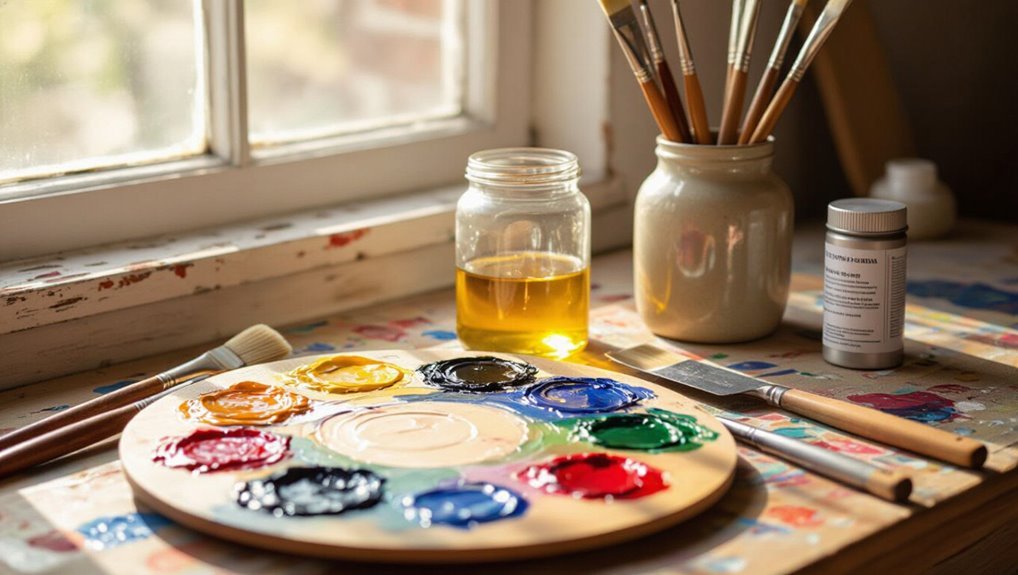
If you want oil paint to dry faster, start by using fast-drying materials and controlling the environment: choose alkyd or fast-drying oils, add a small amount of siccative (dryer), thin layers with solvent or fast-drying medium, increase airflow and warmth, and work in thinner, well-ventilated layers rather than thick impasto.
You’ll handle oil paint techniques consciously, addressing common drying challenges with simple, targeted steps.
How Oil Paint Dries: Oxidation vs Solvent Evaporation
You’ll want to know the difference between oxidation curing and solvent evaporation because they control how paint hardens.
Oxidation is a chemical reaction where the oil crosslinks and forms a durable film over time.
Solvent evaporation simply removes volatile carriers quickly but doesn’t finish the chemical curing.
Oxidation-Curing Process
While solvents evaporate and simply leave the film, oil paint mostly dries through oxidation: the fatty acids in the oil chemically bind with oxygen from the air, forming a solid, cross-linked skin. You’ll learn oxidation benefits, curing agents, drying times, and painting techniques to speed curing.
| Calm | Urgency | Hope |
|---|---|---|
| Patience | Catalyst | Progress |
| Breath | Tincture | Trust |
| Wait | Stir | Light |
| Time | Touch | Finish |
Solvent Evaporation Rate
Although oxidation is the main way oil paint hardens, solvent evaporation plays a big role early on by thinning the oil and altering how quickly your surface skins over.
Choose solvent types (turpentine, mineral spirits, alcohol blends) to control open time.
Faster evaporation conditions—heat, low humidity, ventilation—speed skin formation but can cause cracking; balance solvent choice and environment for even drying.
Fast-Dry Oil Paints and Pigments to Choose
When you need paint that dries sooner, start by choosing brands and pigments formulated for fast drying—these usually contain higher levels of linseed oil with siccatives or are blended with alkyds to accelerate curing.
Look for fast dry pigments like earths and lead substitutes, and choose quick dry oils labeled for speed.
Test tubes first, work thin layers, and note manufacturer drying times.
Use Alkyd (Quick-Dry) Mediums
If you want oil paint to dry noticeably faster, use an alkyd (quick‑dry) medium: alkyds are synthetic resins you mix into your paints that speed curing without drastically changing handling, so you can build layers sooner and varnish earlier.
Explore medium types and mixing ratios; consider alkyd benefits versus paint formulations, application methods, drying techniques, artist preferences, and drying challenges to optimize results.
Use Metal Driers Safely (Cobalt, Manganese, Lead)
Beyond alkyds, painters often speed drying by adding small amounts of metal driers—commonly cobalt, manganese, or historically lead—to oil paints or mediums; these salts catalyze oxidation so films harden faster. You’ll follow metal drier safety: wear gloves, ventilate, measure sparingly. Watch for cobalt toxicity; favor manganese benefits. Use tested lead alternatives and label mixes.
| Drier | Note |
|---|---|
| Cobalt | fast, toxic |
| Manganese | safe boost |
| Lead | avoid |
| Alternatives | non-lead options |
Paint Thickness: Why Thinner Layers Dry Faster
Because oil paint cures by reacting with oxygen, thinner layers let more of the film reach air quickly, so you’ll see them harden faster than thick impasto.
Use thin, even passes and controlled layering techniques to promote uniform oxidation. Work in stages, letting each thin layer set before adding more.
These drying methods reduce tackiness, minimize cracking, and speed safe completion without changing paint chemistry.
Adjust Consistency: Solvents, Alkyds, and Brush Loading
When you thin paint with a solvent, add an alkyd medium, or load less onto your brush, the film’s ability to oxidize improves and it dries noticeably faster.
Choose solvent types that evaporate cleanly, use fast-acting alkyds sparingly, and practice efficient brush techniques to apply thinner, even films.
Load less, work in controlled strokes, and monitor sheen for consistent drying without compromising adhesion.
Thin Safely: Solvent Ratios and Fat-Over-Lean Rules
If you want paints to dry reliably and avoid cracking, respect solvent ratios and the fat-over-lean rule: thin initial layers more with fast-evaporating solvents so they dry first, then build with progressively richer (less solvent, more oil or alkyd) layers so each subsequent film remains fatter than the one beneath it.
Follow safe mixing techniques and consider paint properties, paint mediums, and solvent safety.
- Thin early layers for quicker drying times and stable layer application
- Gradually increase fat layers using appropriate paint mediums and mixing techniques
- Monitor solvent safety and drying times to protect film integrity and avoid cracking
Improve Airflow to Dry Oil Paint Faster
You can speed drying by improving airflow in your studio—open windows and use exhaust vents to pull fresh air through.
Place fans to create a gentle, consistent breeze across your paintings without blasting them directly.
Just be mindful of dust and temperature changes while you ventilate.
Increase Studio Ventilation
Because air movement speeds solvent evaporation and oxidation, boosting ventilation is one of the simplest ways to help oil paint dry faster.
You’ll notice ventilation benefits quickly when you improve air circulation; fresh air removes fumes and helps skins form evenly.
Try simple, safe steps:
- Open windows and doors to create cross-breeze.
- Keep studio clutter low for unobstructed flow.
- Use air-exchange vents or passive louvers.
Use Fans Strategically
When you position fans thoughtfully, they speed solvent evaporation and help paint skins form evenly without blowing dust onto wet areas.
Place fans so fan placement directs gentle cross-ventilation across the canvas, not straight at it. Aim airflow direction parallel to the surface to carry moisture away, reduce drying time, and avoid uneven curing.
Monitor and adjust speed for consistent, safe drying.
Control Temperature and Humidity for Faster Curing
Although oil paint dries through chemical reactions rather than evaporation, you can speed curing by controlling temperature and humidity in your workspace.
Use consistent temperature regulation and humidity control to promote even polymerization. Monitor levels and avoid rapid swings.
Try these practical steps:
- Keep room temperature steady around 68–75°F.
- Maintain relative humidity near 40–50%.
- Use a hygrometer to track changes and adjust ventilation.
Safe Heat and Light Options (IR, Lamps, Radiators)
You can speed drying safely by using targeted infrared heat lamps or steady ambient lighting that raises room temperature without scorching the paint.
Keep lamps at a moderate distance and monitor surface heat to avoid cracking or yellowing.
Pair these with gentle radiator warmth and good ventilation for consistent curing.
Infrared Heat Lamps
One or two small infrared heat lamps can speed up the surface drying of oil paint without blasting your studio with hot air, and they’re easy to position for even warmth.
You’ll enjoy infrared benefits if you manage heat safety and lamp positioning. Monitor light intensity and use duration settings for energy efficiency and consistent curing.
- Aim lamps to avoid hotspots
- Check temps often
- Use timers
Controlled Ambient Lighting
When you combine gentle heat with consistent, low-glare illumination, controlled ambient lighting helps oil paint cure more evenly without stressing pigments or varnishes.
Using IR panels, adjustable lamps, or low-wattage radiators at moderate distances keeps drying predictable while protecting your work.
You should maintain controlled color temperature and moderate ambient light intensity, position sources for even coverage, and avoid hotspots or direct blasts that can crack or yellow layers.
Grounds and Substrates That Speed or Slow Drying
Although the paint’s formula matters, the ground or substrate you pick can speed or slow drying dramatically; absorbent, toothy grounds like raw canvas and gesso pull oil into fibers and promote faster surface skinning, while nonabsorbent or oily-primed panels keep oil at the surface and extend drying time.
The ground you choose—absorbent canvas or oily-primed panel—can drastically speed or slow oil paint drying.
Choose substrate selection by considering absorption properties, surface treatments, material choices, application methods, environmental factors.
- Use raw canvas or absorbent gesso for quicker drying.
- Prime oily panels sparingly to avoid slow paint layering.
- Match drying techniques to material choices and absorption properties.
Speed Up Underpainting, Glazes, and Impasto Techniques
If you want faster results in underpainting, glazes, or impasto, control the paint’s thickness, solvent content, and medium choice so each layer dries as planned.
Use lean underpainting techniques, thinner glazing methods with fast-evaporating solvents, and moderate impasto effects diluted slightly.
Add approved drying agents sparingly, test compatibility, and layer progressively—thin-to-thick—to speed drying without compromising adhesion or finish.
Avoid Cracking, Discoloration, and Tacky Films
Because oil paint dries through a chemical process, you’ll need to manage layer thickness, drying agents, and environmental conditions to prevent cracking, discoloration, and tacky films.
Use layering techniques and surface preparation to guarantee cracking prevention. Control environmental factors and drying times.
Maintain proper paint storage to avoid discoloration causes and apply tacky film solutions when needed.
- Thin-to-thick layers
- Humidity and ventilation
- Safe dryers and vents
Practical Fast-Dry Workflows: Studio and Plein Air
When you need quicker drying without sacrificing control, set up workflows that balance thinner paint, targeted dryers, and smart timing so you can move confidently between layers in the studio or out on location.
For studio efficiency, organize palettes, use alkyds or fast mediums, and employ controlled heat.
For plein air techniques, limit layers, pack quick-dry mediums, and plan sessions around light and drying windows.
Frequently Asked Questions
Can I Use Hair Dryers or Heat Guns Safely on Finished Oil Paintings?
You can, but cautiously: controlled heat application like low-heat hair dryers can speed drying techniques, yet you shouldn’t blast finished oil paintings or use high-temperature heat guns, because they can crack, yellow, or damage varnish and layers.
Do Varnishes or Final Coatings Affect Drying Time if Applied Early?
Yes — applying varnish too early can trap solvents and slow curing; early varnishing effects include uneven gloss and tackiness. Consider drying time factors like paint age, oil content, and ventilation before sealing your work.
How Do Different Pigments Within the Same Color Family Dry Differently?
You’ll notice pigments dry differently because pigment composition alters oil absorption and oxidation rates; some historically slower like ultramarine act oddly beside lead-based fast ones, so you’ll adjust mediums and drying agents to balance drying.
Will Adding Water to Oil Paint With Emulsion Mediums Speed Drying?
No — you shouldn’t add water; emulsion properties prevent proper mixing, and you’ll weaken film formation. Use proper drying agents or alkyd/emulsion mediums formulated for oil instead, and you’ll speed drying without compromising paint.
Can I Recycle Rags and Solvents Without Affecting Future Drying Performance?
You can reuse solvents cautiously, but don’t expect pristine drying—contaminated solvent slows curing; proper rag disposal prevents fire and contamination. Filter used solvent, separate solids, and replace when cloudy to protect future drying performance.
Conclusion
You can reliably cut oil paint drying times by weeks or even months using alkyds, fast-dry pigments, safe driers, and thin layers. Notably, alkyd mediums can shorten drying from 2–6 weeks to 24–72 hours—about a 90% reduction for some layers—so you’ll see workable films much sooner. Use thinner passages for quick work, add driers sparingly, and reserve impasto for final layers to avoid cracking. With these methods, you’ll speed production without sacrificing longevity.
