
How Do I Choose an Accent Wall to Paint? Design Tips
Choose the wall that naturally draws the eye—behind a fireplace, bed, or TV—and pick a color that anchors the room without overpowering it. Consider the room’s function, traffic flow, and existing features before committing. Test swatches at different times of day and balance warm or cool tones with natural light. Match finishes and adjacent walls for harmony, and decide whether you want bold drama or subtle warmth; keep going to learn practical color, scale, and budget tips.
Quick 3-Step Guide to Pick an Accent Wall
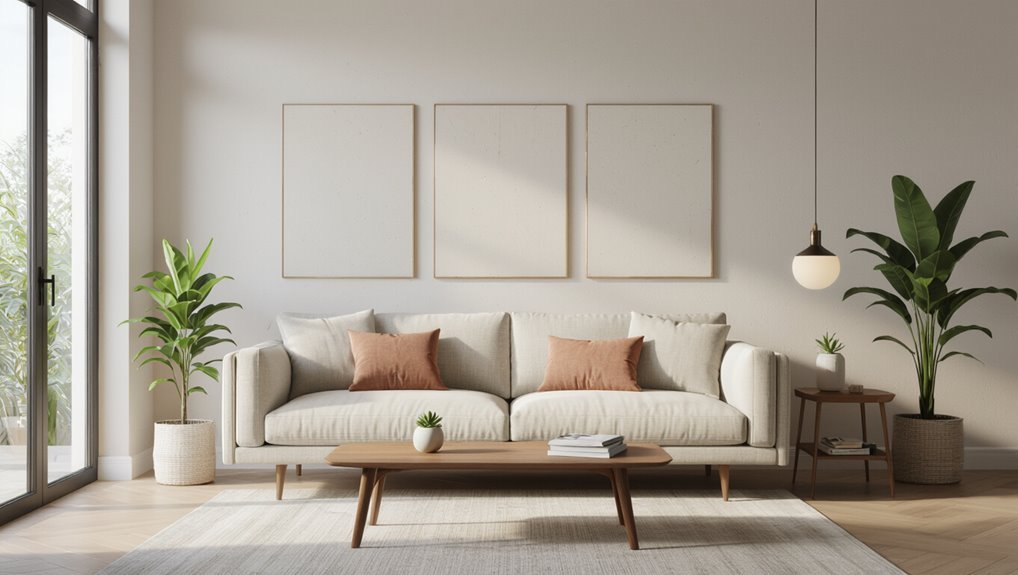
Start by standing in the room and asking which wall you notice first—pick that one.
Next, assess wall placement for sightlines and natural light, imagining how color psychology will influence mood.
Finally, test swatches at different times, step back, and confirm the wall anchors focal attention without overpowering the space.
Trust your instincts and reconsider if balance feels off.
Pick the Room and Focal Feature for Your Accent Wall
Start by thinking about the room’s primary function so the wall supports how you’ll use the space.
Pick a wall that highlights an existing feature—like a fireplace, bedhead, or built-in shelving—to make the accent feel intentional.
Also consider traffic flow and sightlines so the accent wall draws attention without interrupting movement or views.
Choose The Primary Function
Before you pick a color, decide what role the accent wall should play: do you want it to anchor a living room, highlight a fireplace, or make a bedroom feel cozier? Stay with functionality focus and purpose clarity: choose whether the wall anchors, directs, or softens the space, then select finish and scale to match that intent.
| Role | Effect | Action |
|---|---|---|
| Anchor | Grounds space | Use bold tone |
| Direct | Guides view | Use contrast |
| Soften | Add warmth | Use muted hue |
| Define | Zone areas | Use texture |
Highlight An Existing Feature
A well-placed accent wall should celebrate an existing feature—think fireplace, built-ins, bedhead, or a large window—and guide the eye there.
So pick the room and focal point that already carries visual weight and you’ll get more impact for less effort.
Assess feature selection, then choose highlight options—bold color, texture, or subtle contrast—that reinforce the room’s purpose and complement existing finishes.
Balance Traffic And Views
Anyone moving through a room will notice an accent wall, so pick a wall that complements foot traffic and sightlines—behind the sofa or bed for seated views, opposite the entry for immediate impact, or beside a hallway where passersby can appreciate it without blocking flow.
Consider color psychology to set mood, and use spatial awareness to avoid crowding circulation or obscuring vistas; let the wall guide movement.
Decide: Bold Drama or Subtle Warmth for Your Accent Wall
Want drama that grabs attention or warmth that invites you in? You’ll choose between bold colors that energize a room and subtle hues that soothe.
Think about mood, furniture contrast, and how the wall anchors the space. If you want focal impact, go vivid; if you prefer calm cohesion, pick muted tones.
Test swatches before committing.
How Natural Light Affects Accent Wall Color
Because light changes throughout the day, the same paint can read warm and welcoming in the morning and flat or cool by evening, so you should evaluate your accent-wall choices under the room’s actual natural light at different times. Test swatches on the wall; natural light alters color perception. Note direction and intensity.
| Time of Day | Effect on Color |
|---|---|
| Morning | Warmer, brighter |
| Midday | True hue |
| Evening | Cooler, muted |
Scale Accent Wall Color to Room Size and Ceiling Height
If you’ve got a compact room, don’t hesitate to pick a bold accent wall to add depth and personality.
For spaces with high ceilings, choose lighter tones to keep the room feeling airy and balanced.
Consider how scale affects contrast so your accent wall complements rather than overwhelms the space.
Choose Bold For Small Rooms
A bold accent wall can make a small room feel lively instead of cramped, but you should scale the color intensity to the room’s square footage and ceiling height so the space still feels balanced.
- Use bold colors on a single wall to create depth without overwhelming small spaces.
- Keep adjacent walls neutral to maintain balance.
- Test paint samples at different light levels before committing.
Light Tones For High Ceilings
When ceilings soar, choose light, muted tones for your accent wall to keep the room feeling airy and proportionate; pale blues, soft greiges, or warm creams draw the eye up without making the space feel cavernous.
You’ll use light color psychology to enhance openness and balance ceiling height effects—pick slightly warmer or cooler shades depending on natural light to avoid a cold, flat look while maintaining scale.
Match Your Accent Wall to Furniture and Textiles
Although you might love bold colors, pick an accent wall that connects with your key furniture and textiles so the room feels intentional rather than fragmented.
Match tones and textures to existing furniture colors and textile patterns. Consider:
- Pick a hue echoing dominant sofa or rug.
- Use a shade that complements throw patterns.
- Balance solid furniture with patterned textiles for cohesion.
Accent Wall Contrast: Low, Medium, High
If you want your accent wall to whisper rather than shout, choose contrast deliberately: decide low, medium, or high contrast based on mood and color psychology. Low blends with neutrals; medium adds interest; high commands attention. Pick accent wall styles that fit function and flow.
| Contrast Level | Effect |
|---|---|
| Low | Calm |
| Medium | Balanced |
| High | Dramatic |
| Tip | Match purpose |
Use Paint to Make Architectural Features Pop
You can use paint to draw attention to architectural details like moldings, alcoves, and built-ins by choosing a color that highlights their shape.
Pick a hue that contrasts with the surrounding walls to make those features stand out without overwhelming the room.
Also consider texture and finish—matte, satin, or gloss can change how light plays on the surface and emphasize depth.
Highlight Architectural Details
One simple way to make a room feel intentional is to paint a wall so it draws attention to architectural features—trim, built-ins, fireplace surrounds, or moldings—so those elements read as designed focal points rather than background details.
Use color for architectural contrast and feature enhancement.
Consider:
- Paint built-ins a richer tone.
- Highlight molding with a subtle shade.
- Frame fireplaces with bold color.
Contrast With Surroundings
Shifting focus from highlighting details, use contrast to make architectural elements read as deliberate features rather than background.
Choose color selection that contrasts with nearby walls and trim so moldings, beams, or niches demand attention.
You’ll amplify visual impact by balancing bold hues against neutral surroundings, ensuring proportions and sightlines guide the eye to those features without overwhelming the room’s overall harmony.
Texture And Finish Choice
Texture transforms flat paint into a tactile highlight, so pick finishes that make trim, beams, or niches read as intentional features.
You’ll choose texture types and finish options to emphasize depth without overwhelming the room.
Consider these approaches:
- Matte walls with satin trim for subtle contrast.
- Venetian plaster or suede for luxe texture.
- Eggshell walls with glossy accents to catch light.
Hide Flaws or Visually Enlarge a Room With Paint Tricks
A few strategic paint choices can mask imperfections and make a room feel larger without major renovations.
Use lighter shades on ceilings and far walls for room enlargement, and slightly darker trims to frame views.
Paint ceilings and distant walls lighter to visually expand space, pairing slightly darker trim to elegantly frame views.
Apply matte finishes to hide dents and satin to reflect light subtly.
Vertical stripes or a single darker accent wall offer practical flaw concealment without cluttering the space.
Color Theory Basics for Accent Walls
Start by looking at the color wheel to see complementary, analogous, and triadic relationships so you can pick combinations that feel intentional.
Decide whether you want a warm or cool accent to change the room’s mood—warm colors energize, cool colors calm.
Balance contrast and harmony so the accent stands out without clashing with the rest of the space.
Color Wheel Relationships
When you pick an accent wall, the color wheel becomes your quickest tool for choosing hues that harmonize or create contrast. Understanding relationships like complementary, analogous, and triadic helps you predict how colors will interact in a room.
- Use complementary colors for bold color contrast and high color saturation.
- Try analogous or monochromatic schemes for subtle color harmony and visual balance.
- Consider color psychology and color temperature to set mood.
Warm Vs. Cool
Having picked between complementary or analogous schemes, you’ll next decide whether to go warm or cool—this choice shapes a room’s energy more than any single hue.
Choose warm undertones to make spaces feel inviting and intimate, or pick cool shades to open and calm a room.
Consider natural light, furniture, and your mood to guide the final selection.
Contrast And Harmony
Because an accent wall either anchors a room or fades into the background, you’ll want to balance contrast and harmony so the space feels intentional.
Use color psychology and visual balance to guide choices.
Consider:
- High contrast for focal drama without overwhelming.
- Low contrast to harmonize with existing palette.
- Accent repetition to tie colors and maintain equilibrium.
Test Colors Quickly (Samples, Swatches, Painted Boards)
Although photos and swatches give you a sense of a color, nothing replaces seeing it on your actual wall—so test quickly with samples, swatches, or painted boards to judge hue, value, and finish in real light.
Tape sample boards near furniture and windows, view them at different times, and compare color combinations. Remove distractions, note how light shifts tones, then pick the strongest option.
Choose Finishes: Matte, Eggshell, Satin, or Glossy
Think about how each finish changes the look and texture of your accent wall—matte hides imperfections, eggshell gives a soft sheen, satin adds subtle glow, and glossy is bold and reflective.
Also consider durability: glossier finishes clean easier and resist scuffs, while flatter finishes show wear but conceal surface flaws.
Pick the finish that balances the appearance you want with the maintenance you’re willing to do.
Finish Appearance And Texture
A handful of finish options—matte, eggshell, satin, and glossy—let you control how light interacts with your accent wall and how much texture shows through.
Consider finish sheen and texture contrast to set mood and depth.
- Matte hides flaws, mutes reflections.
- Eggshell softens light, reveals subtle texture.
- Glossy amplifies color and highlights surface details.
Durability And Maintenance
Sheen and texture affect more than looks; they also change how your accent wall stands up to wear and how easy it’s to keep clean.
Choose satin or glossy for high-traffic areas since they boost paint durability and wipe clean. Use eggshell in living spaces for balance.
For matte, expect more touch-ups.
Follow simple maintenance tips: gentle cleaners, prompt spot repairs, and proper ventilation.
Add Texture: Paint Techniques, Plaster, or Wallpaper for One Wall
One simple way to give an accent wall depth is to add texture—using paint techniques, plaster, or wallpaper—to create tactile and visual interest that draws the eye.
You can pick textured finishes or subtle wall treatments to complement your room.
Consider:
- Venetian plaster for a polished, dimensional look.
- Textured paint with rollers or trowels.
- Heavy-duty wallpaper with raised patterns.
Patterns, Murals, and Graphics on an Accent Wall
If you enjoyed adding texture for depth, try introducing patterns, murals, or graphic elements to make the wall a focal point.
Consider pattern selection that complements furniture, explore mural styles from abstract to landscape, and pick graphic themes that reflect mood.
Use varied artistic techniques and deliberate color combinations to maximize visual impact, ensuring the design feels intentional and balanced without overwhelming the room.
Coordinate Trim, Ceiling, and Adjacent Walls With Your Accent Wall
When you choose a bold accent wall, coordinate the trim, ceiling, and adjacent walls so the whole room reads as a deliberate composition rather than a collection of competing elements.
- Pick trim colors that frame the accent without stealing focus.
- Use ceiling contrast subtly to add height or coziness.
- Balance wall harmony by selecting adjacent tones that echo undertones and tie the palette together.
Room-by-Room Accent Wall Color Ideas (Living Room, Bedroom, Kitchen)
Although each room has its own function and mood, you can use accent walls to underline those differences—choose warm, inviting hues for living rooms, calming tones for bedrooms, and durable, appetizing colors for kitchens.
For a living room pick cozy terracotta or deep navy; bedroom ideas include muted sage or soft mauve; kitchen inspiration favors cheerful mustard or slate.
Consider color combinations that balance light and contrast.
Budget-Friendly DIY Tips for Painting an Accent Wall
Start by planning smart: pick a durable, washable paint and measure your wall so you buy just enough—this saves money and avoids multiple trips to the store.
Start smart: choose washable, durable paint and measure carefully to buy just enough.
- Use budget friendly materials like sample pots and leftover primer.
- Borrow or rent DIY tools (sanders, edgers) to cut costs.
- Tape carefully, roll evenly, and protect floors with cheap drop cloths.
Common Mistakes and Quick Troubleshooting for Accent Walls
If you rush prep or skip test swatches, you’ll run into uneven coverage, color surprises, and peeling later on.
Check primer, sanding, and lighting before you commit. If hue looks off, retest color selection under different light and at different times.
Fix brush marks with light sanding and thin coats.
Maintain design balance by anchoring the room; move furnishings before repainting to troubleshoot placement.
Frequently Asked Questions
Can I Use Peel-And-Stick Wallpaper as a Removable Accent Wall Option?
Yes — you can use peel and stick options as a removable accent wall; you’ll get easy installation, low damage removal, and variety in wallpaper textures, but test adhesion on your surface and expect shorter lifespan than painted walls.
How Do I Protect an Accent Wall From Pets and Children?
You’ll protect an accent wall by using pet proof materials like washable, scuff-resistant paint or vinyl panels, adding corner guards and low-profile trim, and choosing child safe designs with rounded edges, non-toxic finishes, and secure, out-of-reach decor.
Will Accent Wall Paint Affect My Home’s Resale Value?
Coincidentally, buyers often notice accent walls first, and yes — they can boost or hurt resale value. You’ll influence perceptions using color psychology, so follow market trends, choose neutral bolds, and keep finishes timeless.
Can I Create an Accent Wall in a Rental Without Painting?
Yes — you can create an accent wall in a rental without painting. Use removable decals, temporary art, peel-and-stick wallpaper, fabric panels, and leaning frames; they won’t damage walls and let you express bold, changeable style.
How Often Should I Repaint or Refresh an Accent Wall?
Refresh every 3–5 years, repaint sooner if faded, scuffed, or outdated. You’ll revisit color selection, update finish types for durability, and balance mood shifts; you’ll respond to wear, trends, and your changing style with confident, timely tweaks.
Conclusion
So you’ll pick one wall—because choosing all of them would just be “painting the room,” and that’s hardly daring. You’ll aim for contrast, not chaos, because nothing says “design confidence” like a single bold move while the rest of the room watches nervously. Consider light, scale, and trim so your accent wall actually looks intentional. Then enjoy the applause (or polite nods) when guests assume it was always meant to be that way.
