
How Many Coats of Paint Do You Need to Cover Dark Walls?
You’ll usually need two coats of paint plus a tinted or high-hide primer to reliably cover dark walls, though high-quality, heavily tinted paints can sometimes do it in one topcoat over primer. If you skip primer, expect two to three topcoats for drastic color changes. Surface condition, paint quality, and application method affect results, and stain-blocking primers help problem areas. Keep coats thin and allow full dry time, and keep going to learn practical tips and estimates.
Quick Answer How Many Coats Do You Need to Cover Dark Walls?
If you’re painting over dark walls, expect most rooms to need two coats with standard latex or eggshell finishes, while high-coverage primers or tinted paints can sometimes make one coat enough.
One coat may suffice for small touch-ups or when you use a paint-and-primer blend, but large areas, textured surfaces, or drastic color changes usually require two to three coats.
Choose primer and paint quality based on the room’s lighting and traffic to minimize coats and get even coverage.
Short, practical recommendation (rooms, paint types, typical numbers)
When covering dark walls, you’ll usually need two to three coats of high-quality paint—one coat of a good primer followed by one or two topcoats—depending on the room, paint type, and how deep the original color is.
For bedrooms and living areas, plan primer plus two topcoats; kitchens and bathrooms benefit from mildew-resistant paints.
Satin or eggshell often covers better than flat. Decide based on surface and budget.
When one coat is enough and when multiple coats are required
Because dark paint soaks up and shows underlying tones, you’ll usually need more than a single coat to get full coverage—unless you use a high-hide primer or a specially formulated one-coat topcoat designed for deep-color shifts.
If you prime or choose a high-hide paint, one coat can suffice.
Otherwise plan two to three coats, allowing proper drying and inspecting under different light before deciding.
Basic Understanding Why Dark Walls Need More Paint
When you paint over a dark wall, the pigment and high contrast make it harder for the new color to fully hide the old.
Sheen and the paint’s formulation affect hiding power—gloss shows imperfections and may need more coats than a matte hide.
Also remember that the existing surface color and texture (rough or porous) will change how much paint you’ll actually need.
How pigment and contrast affect coverage
Though darker pigments pack more color per coat, they also reveal underlying tones and surface variations.
So you’ll often need extra layers to get uniform coverage. High-contrast shifts — like painting dark over light or vice versa — make flaws and seams more visible.
You’ll apply additional coats or targeted touch-ups. Expect more paint and patience for a consistent finish.
Role of sheen and paint formulation in hiding power
If you want dark walls to look rich and even, sheen and formulation matter as much as pigment concentration.
Choose higher-hide formulas—usually thicker, titanium-dioxide-rich paints—and lower-sheen finishes to reduce reflected imperfections. Satin or matte hides flaws and minimizes light bounce, so you’ll need fewer coats for uniform color.
Also pick quality binders; they improve film formation and concealment, cutting repeat coats.
Surface color vs. surface texture influences
Because dark pigments absorb more light and textured surfaces scatter it, you’ll usually need extra coats on dark walls to achieve an even look.
You should smooth or prime textured areas first; roughness creates shadows that reveal underlying colors.
Lighter primers help block bleed-through, while additional thin coats build uniformity without hiding detail.
Plan more time and paint for textured, dark surfaces.
Key Factors That Determine Number of Coats
You’ll need to evaluate a few practical factors before you start painting: the original wall color and how saturated it is, whether your new shade is lighter or darker, and the paint’s quality and type.
Also think about whether you use a high-hide primer and its hide rating, plus your application method—brush, roller, or spray—which affects coverage.
These elements together determine how many coats you’ll actually need.
Original wall color and saturation
While darker, saturated colors like deep navy or crimson can look dramatic, they also demand more attention when you repaint—especially if you’re switching to a lighter or different shade.
You’ll need extra coats or a quality primer because dense pigments show through. Assess hue depth and saturation: the deeper and more concentrated the original, the more coverage and drying time you’ll plan for to achieve a uniform finish.
New paint color (lighter vs. darker)
When you switch to a lighter color, expect to apply more coats (or use a high-quality primer) to block the dark pigment; going darker usually needs fewer coats because richer paints cover more readily.
You’ll notice light shades demand extra layers for even tone, while deeper hues often hide previous colors sooner.
Plan for test patches and adjust coats based on coverage and uniformity.
Paint quality and type (latex vs. oil, high-hide primers)
After you decide whether to go lighter or darker, the paint’s quality and type become the next big factor in how many coats you’ll need.
You’ll find high-quality latex covers well, dries fast, and cleans up easily; oil paints level nicely but often need fewer coats on stubborn colors.
Choose a high-hide formula to reduce layers and improve coverage.
Primer use and its hide rating
If you want dark walls to cover in fewer topcoats, start with the right primer: a high-hide, tinted primer can block underlying colors and create a uniform base so your paint lays down more evenly and opaquely.
Choose primers labeled high-hide or stain-blocking, tint them toward your finish color, and check hide ratings on the can—higher numbers mean fewer finish coats and faster, more consistent coverage.
Application method (brush/roller/spray)
How you apply paint—by brush, roller, or spray—directly affects how many coats you’ll need because each method lays down film thickness and texture differently.
You’ll find brushes give precise coverage but thinner coats and visible strokes. Rollers build medium thickness and hide faster, while sprayers deliver the most uniform, thicker film that can reduce coats.
Choose method based on finish and coverage goals.
Wall condition: stains, patches, and porous surfaces
Because stains, repairs, and porous surfaces change how paint soaks in and hides, you’ll often need extra coats to achieve even coverage on dark walls.
Inspect for water marks, smoke stains, or joint compound patches.
Prime stained or porous areas with a stain-blocking primer, sand patched spots smooth, then apply additional topcoats as needed to match sheen and color across the surface.
Lighting and room function considerations
After you’ve addressed stains and porous spots, consider how lighting and the room’s purpose affect how many coats you’ll need.
Bright, natural light reveals imperfections and may require extra coats or a smoother finish. Dim rooms hide flaws, so you can often get away with fewer coats.
For high-traffic areas, aim for fuller coverage and durability, even if it means an extra coat.
Step-by-Step Guide How to Plan and Execute Coverage
Start by evaluating your current wall color and surface so you know what you’re covering.
Then pick a paint color and finish, decide whether a tinted or stain-blocking primer is best, and calculate how many coats and how much paint you’ll need.
Finally, use proper application techniques to get the most coverage from each coat.
Step 1: Evaluate the existing wall color and surface
Before you pick up a brush, take a close look at the current wall color and surface so you know exactly what you’re covering.
Note shade intensity, patchiness, stains, and previous finishes. Check for texture, repairs, and glossy areas that repel primer.
Photograph problem spots, measure affected wall area, and decide if sanding, filling, or a stain-blocking primer will be needed before painting.
Step 2: Choose paint color and finish with coverage in mind
Color choice and finish directly affect how many coats you’ll need, so pick them with coverage in mind. Lighter, higher-chroma colors need more coats over dark walls.
Opt for high-hide formulas or deeper base tints to reduce layers. Matte and eggshell hide better than glossy finishes, which often require extra coats.
Test samples on the wall to confirm coverage before committing.
Step 3: Decide on primer tinted primer vs. stain-blocking primer
Because primer sets the stage for coverage, you’ll need to choose between a tinted primer that evens out dark tones and a stain-blocking primer that seals marks and tannins; pick the one that matches your wall’s condition and your topcoat choice.
If color shifting is the issue, tint to the new shade.
If stains, nicotine, or water marks exist, use a stain-blocking primer for reliable sealing.
Step 4: Calculate expected coats and paint quantity
Step 4 is where you figure out how many coats you’ll actually need and how much paint to buy: assess your wall’s darkness, the primer you applied, the paint’s stated coverage (usually in square feet per gallon), and any manufacturer notes about multiple-coat requirements, then multiply by room area and add a 10–15% buffer for touch-ups and waste.
| Factor | Effect | Action |
|---|---|---|
| Darkness | Increases coats | Add 1–2 coats |
| Primer | Reduces coats | Adjust down |
| Coverage | Gallons needed | Divide area |
| Buffer | Waste | +10–15% |
Step 5: Proper application technique to maximize coverage
Start by laying out your tools and planning your sequence so you can work efficiently and avoid missed spots.
Cut in edges first with a steady hand, then roll in W-patterns to distribute paint evenly.
Work wet edges, apply thin, consistent coats, and back-roll to eliminate lap marks.
Maintain proper pressure and overlap to maximize hide and avoid rework.
Step 6: Dry time, inspection, and when to add another coat
Plan on waiting — usually a few hours — before you inspect dark walls so you can judge true color and coverage; check under natural and artificial light, feel for tackiness, and look for streaks or thin spots.
If paint’s dry to the touch but shows unevenness, add another thin, even coat. Allow full cure between coats per manufacturer instructions.
Comparison Primer First vs. Extra Paint Coats
You’ll want to weigh primer first against simply adding extra finish coats by comparing coverage, cost, and time.
Primer can cut the number of finish coats and improve adhesion but adds upfront time and expense; extra topcoats skip the primer step but can use more paint and labor.
Think regarding total cost and schedule—primer + fewer coats often saves paint and effort on dark walls, while extra coats can work if you’re on a tight budget or timeline.
Pros and cons of using primer (time, cost, coverage)
Although applying a primer adds an extra step, it often saves you time and money overall by improving coverage and reducing the number of full-color coats needed; primer hides stains and evens porosity so dark colors go on truer and with fewer touch-ups, but it does increase upfront cost and labor compared with simply brushing on extra paint coats.
| Benefit | Drawback |
|---|---|
| Fewer color coats | Added cost |
| Better coverage | Extra time |
| Uniform finish | More prep |
Pros and cons of adding multiple finish coats
When deciding between priming first or simply adding extra color coats, think about long-term efficiency versus short-term simplicity:
Adding more finish coats can improve opacity and smooth minor flaws without primer, but you’ll use more paint and labor.
You might still get uneven sheen or bleed-through on very dark walls.
If you value speed, extra coats help; if you want reliability, consider primer instead.
Cost and time comparison (primer + fewer coats vs. more topcoats)
Having weighed short-term speed against long-term reliability, it helps to compare actual cost and time for primer plus fewer topcoats versus skipping primer and applying extra finish coats.
Using primer typically adds one product and one step but cuts required finish coats, saving paint and drying time overall.
Skipping primer saves upfront cost but often means more coats, more labor, and higher total paint expense.
Common Mistakes That Cause Poor Coverage
Don’t skip primer on heavily saturated walls or expect a single cheap, low-hide paint to do the job.
If you roll on coats too thinly or rush the drying time without proper surface prep, coverage will suffer.
Address primer, paint quality, coat thickness, drying time, and prep to avoid extra coats.
Skipping primer on heavily saturated walls
If you skip a primer on heavily saturated walls, you’ll likely need more finish coats to hide bleed-through and uneven tones.
You’ll waste time and paint chasing stains or deep pigments. Use a stain-blocking, high-adhesion primer to seal tannins and dark colors, reduce required topcoats, and improve uniformity.
Skipping it often increases cost and frustration—prime first.
Using low-hide or cheap paint
When you choose low-hide or bargain paint to save money, you’ll often end up applying extra coats and still miss full coverage on dark walls.
Cheap formulas have fewer pigments and weaker binders, so color blocking fails and bleeding shows through. You’ll waste time and materials; invest in a quality high-hide or tint-matched product instead to reduce coats and get reliable, even coverage.
Applying coats too thinly or too quickly
Because you’re keen to finish, it’s tempting to brush on thin layers or rush the next coat, but doing so undermines coverage on dark walls.
You need consistent, slightly thicker passes so pigment hides previous color. Apply even, full-bodied strokes, overlap edges, and resist the urge to skimp.
Proper film thickness reduces streaks and the total number of coats required.
Not allowing adequate drying time
Though you might be enthusiastic to move on, not letting each coat dry fully ruins coverage on dark walls.
If you rush recoats, you’ll trap solvents, cause streaks, lifting, and uneven sheen.
Follow manufacturer drying times, consider humidity and temperature, and wait between coats.
Proper drying guarantees adhesion and true color, reducing the number of additional coats you’ll need for solid, consistent coverage.
Ignoring surface preparation
If you skip proper surface prep, you’ll waste paint and still see flaws show through on dark walls.
Clean, sand, and repair dents or peeling so primer and paint adhere evenly. Remove grease, dust, and loose bits; fill holes and sand smooth.
Skipping these steps forces extra coats, causes uneven sheen, and makes dark colors look blotchy instead of uniform.
Best Practices and Tips to Minimize Coats Needed
To cut down on coats, start by using a tinted or color‑matched primer and choose a high‑hide paint in the right sheen for your room.
Make sure you prep and repair surfaces thoroughly, and use quality rollers or sprayers with the proper technique for even coverage.
Also pay attention to temperature and humidity so paint dries and adheres correctly between coats.
When to use tinted primer or color-matched primer
When you’re covering dark walls, a tinted or color-matched primer can cut the number of finish coats in half by neutralizing the underlying hue and improving paint adhesion.
This means you’ll save time and money while getting truer color payoff. Use tinted primer when the new shade is lighter or vibrant; match primer to final paint undertones for best coverage and fewer touch-ups.
Selecting high-hide paints and correct sheen
Tinted or color-matched primer gets you halfway there, but choosing a high-hide paint and the proper sheen finishes the job faster.
Pick paints labeled “high-hide” or “one-coat coverage” to reduce layers. Use flat or matte sheens to mask darkness and imperfections; eggshell can balance durability and concealment in moderate-traffic rooms.
Test samples on your dark wall before committing.
Proper surface prep and repair techniques
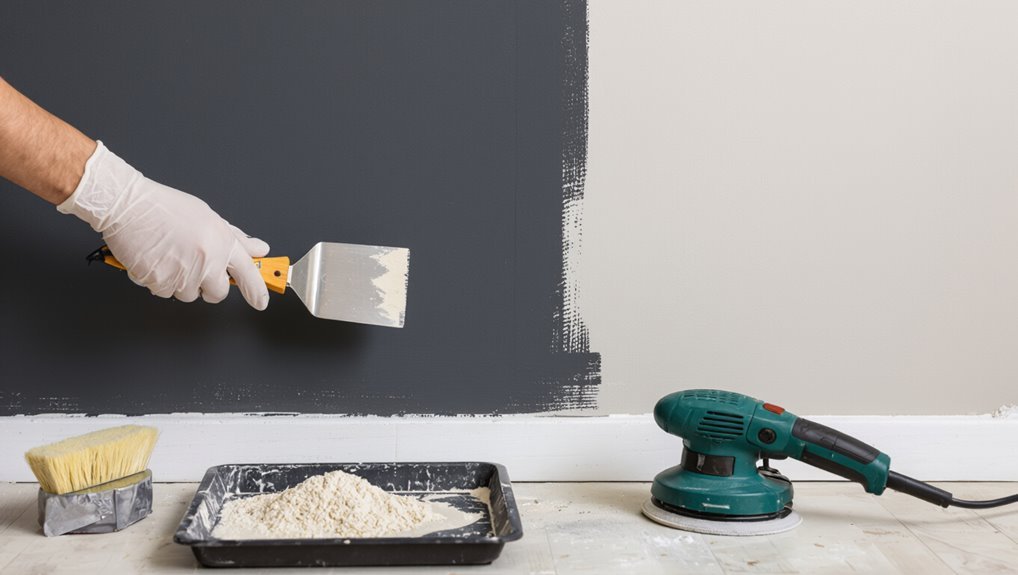
Even small bumps, stains, or loose flakes will force extra coats, so start by cleaning, sanding, and repairing the surface until it’s smooth and sound.
Remove grease and dust, fill holes and cracks with appropriate filler, sand seams flush, and prime patched areas.
Let repairs cure fully, then inspect under good light. Proper prep reduces coats, improves adhesion, and prevents show-through.
Optimal tools and application methods for best hide
1 step you can take for the best hide is to pick the right tools and apply paint correctly: use a high-quality roller with a nap suited to your wall texture, a good angled brush for cutting in, and a consistent technique—load the roller evenly, maintain a wet edge, and work in overlapping passes—so you get smooth, even coverage that reduces the number of coats needed.
- Choose quality roller covers
- Match nap to texture
- Use angled brush for edges
- Load roller evenly
- Overlap passes consistently
Seasonal and environmental tips for drying and adhesion
Once you’ve got the right tools and a steady technique, pay attention to season and conditions so paint can dry and bond properly—this directly affects how many coats you’ll need.
Work in 50–70°F (10–21°C) with low humidity, ventilate to speed curing, avoid direct sun or cold walls, and wait recommended dry times between coats to prevent lifting, blistering, or extended recoat needs.
Real-World Scenarios and Recommended Strategies
When you’re changing a dark wall, your strategy depends on the target color: switch to a pale neutral and you’ll usually need a tinted primer plus one or two finish coats.
If you’re going dark-to-dark you can often go straight to the finish coat, though a primer helps with streaks and adhesion on tricky surfaces.
For bold accents or commercial/high-traffic areas, expect extra coats or a tougher finish to guarantee full coverage and long-term durability.
Dark wall to pale neutral recommended approach (primer + coats)
Switching a dark wall to a pale neutral is doable, but you’ll want to prime first and plan for multiple topcoats to get even coverage and true color.
Use a high-hide, stain-blocking primer, let it dry fully, then apply two thin topcoats of quality eggshell or matte paint.
Expect touchups; allow proper drying and inspect under natural light for uniformity.
Dark wall to deep color recommended approach (direct coat vs. primer)
If you’re moving from a dark wall to another deep color, you won’t always need a full-coverage primer the way you’d for pale neutrals.
You can often apply one quality coat of deep-pigmented paint directly, then assess coverage. Add a second coat if streaks or translucence remain.
Use bonding primer only on glossy or stained surfaces to guarantee adhesion and uniformity.
Covering dark accent wall with bold color tips and coat count
Although covering a dark accent wall with a bold new color can feel challenging, you can usually get great results with two targeted coats and a few prep tricks:
Sand glossy spots, clean and patch imperfections, and use a tinted primer if the contrast is extreme.
Apply a high-quality stain-blocking primer where needed, then two thin, even topcoats for consistent, vibrant coverage.
Commercial/High-traffic surfaces durability and coats
When walls face constant use—from retail aisles and restaurant dining rooms to office corridors—you’ll need more than two decorative coats to keep surfaces looking fresh; apply a durable primer, then two to three coats of high-quality, washable satin or semi-gloss paint.
For extremes, add an enamel topcoat or protective clear sealer.
Schedule touch-ups and recoat cycles based on traffic and cleaning frequency.
Paint Quantity and Cost Estimates
You’ll want to calculate paint gallons by measuring wall square footage and multiplying by the number of coats to get an accurate total.
Don’t forget to include primer coverage if you’re tinting or sealing a dark surface, since that adds to the gallons needed.
Finally, factor in costs for primer, paint, and labor so your budget matches the scope of work.
How to calculate gallons needed based on coats and room size
Calculating how many gallons you’ll need starts with measuring the room’s surface area and knowing your paint’s coverage per gallon. Multiply wall area by coats, divide by coverage, then round up. Account for doors/windows subtraction. Use the table to estimate quickly.
| Item | Value | Notes |
|---|---|---|
| Area | 400 sq ft | example |
| Coats | 2 | typical |
| Coverage | 350 sq ft/gal | adjust as needed |
Budgeting for primer, paint, and labor
Start by tallying primer, paint, and labor costs so you can set a realistic budget before buying supplies.
Calculate primer gallons based on coverage and number of coats, add paint gallons for chosen sheen and color changes, and factor in brushes, tape, and drop cloths.
Get labor estimates per hour or per room, include cleanup, and build a 10–15% contingency.
How to Know When Coverage Is Complete
Start by doing a visual inspection checklist—look for streaks, patches, or flashing under even overhead light.
Next, run a touch test and inspect the surface from low-angle light to catch thin spots or brush marks you might miss head-on.
If the color is even, no texture shows through, and the wall feels smooth, you can skip an extra coat.
Visual inspection checklist
When your dark walls look even and free of streaks, you’ll be close to finished—use this quick visual checklist to verify full coverage.
Scan walls from multiple angles, note any color variance, and check corners, edges, and trim.
Look for ghosting, patchiness, or sheen differences.
Make certain shifts between coats are seamless and consistent before declaring the job complete.
Touch test and light-angle inspection techniques
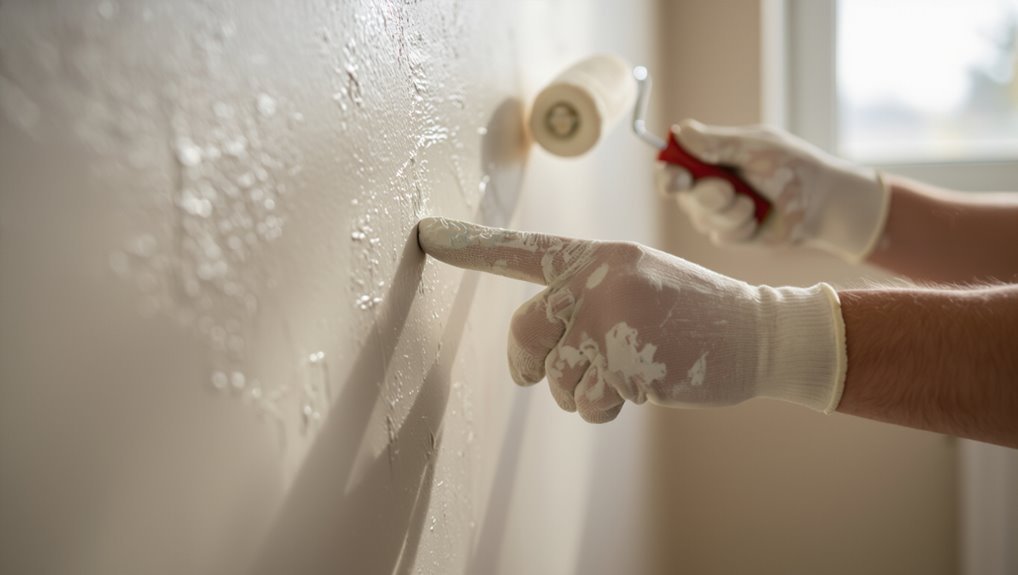
After you’ve given the walls a visual once-over, use a simple touch test and angled light checks to confirm coverage is complete.
Lightly run your fingertips over dried areas to feel texture differences; tackiness means more drying or another coat.
Shine a flashlight or work light at a low angle to reveal thin spots, streaks, or flashing.
Mark and retouch only those problem areas.
When a final coat is unnecessary
If you can’t see lap marks, thin patches, or underlying color from a few feet away and the finish feels uniform to the touch, you probably don’t need another coat.
Trust visual and tactile checks, inspect under varied light, and let the paint dry fully before deciding.
If coverage remains even and color matches surrounding areas, skip extra coats to save time and materials.
FAQ
You probably have a few quick questions about switching from dark to light paint, like how many white coats you’ll need and whether high-quality paint can replace primer.
I’ll also cover whether darker topcoats hide better than lighter ones, how long to wait between coats on dark-to-light jobs, and if sheen changes coverage.
Read on for short, practical answers.
How many coats to cover dark walls with white paint?
Wondering how many coats it takes to cover dark walls with white paint?
Typically you’ll need two to three coats of quality white over a dark base, but results depend on paint opacity and darkness.
Use a high-hide formula and thin, even coats.
Inspect after each coat—if dark tones still show, apply another coat until coverage is uniform.
Can I skip primer if I use high-quality paint?
Really? You can sometimes skip primer with premium, high-coverage paints on smooth, already-painted surfaces in good condition.
But if walls are stained, patched, porous, or drastically darker, primer’s still wise to guarantee adhesion and block bleed-through.
Using primer often reduces total topcoats, improves durability, and gives more reliable, even coverage—especially for drastic color changes.
Will darker topcoats cover better than lighter ones?
How well a topcoat hides the wall beneath depends less on lightness or darkness alone and more on pigment density and formula—so a darker paint won’t automatically cover better than a lighter one.
You’ll get stronger hiding from higher pigment volume concentration, quality binders, and opacity-enhancing additives.
Choose paints labeled high-hide or higher solid content, test samples, and expect variation by brand and sheen.
How long should I wait between coats on dark-to-light projects?
If you’ve picked a high-hide formula to help cover dark walls, the next question is how long to wait before applying another coat so your new, lighter color goes on evenly.
Generally, wait the manufacturer’s recommended recoat time—usually 2–4 hours for latex, 24 hours for oil—until the surface feels dry and not tacky.
Temperature and humidity can extend drying time.
Does sheen affect how many coats I need?
Because sheen changes how light interacts with paint, it can influence how many coats you’ll need.
Higher sheens (eggshell, satin, semi-gloss) reflect more light and may highlight imperfections, so you might apply extra coats for even coverage.
Flat or matte hides flaws better and often needs fewer coats.
Choose sheen for durability and appearance, then adjust coat count accordingly.
