
How Many Walls Should You Paint? How to Choose the Right Number for Your Space
Decide how many walls to paint by thinking about size, light, furniture layout and the mood you want; small rooms usually need fewer painted walls to stay bright, while larger or well-lit spaces can take one accent wall or all four for full immersion. Use an accent wall for a quick focal pop, two opposing walls to balance narrow rooms, or three walls to add warmth without overwhelm. Keep testing samples—keep going to learn practical tips and scenarios.
Quick Answer How Many Walls Should You Paint?
For a quick guide, paint all four walls in bedrooms and hallways.
In living rooms, paint two to three walls to create a focal area.
In kitchens, consider a single accent wall or a full refresh depending on the layout.
In bathrooms, paint one wall or just the trim.
You’ll usually pick fewer walls in small or busy rooms and more in open, spacious areas.
A simple rule of thumb: paint the whole room if you want uniformity, one accent wall for impact, and two to three walls when you need balance.
Direct recommendation by room type (bedroom, living room, kitchen, bathroom, hallway)
Whether you want a cozy bedroom, an open-feeling living room, or a bright kitchen, the number of walls you paint should match each room’s function and your style goals:
For bedrooms, paint one accent wall or all four for intimacy.
In living rooms, paint one or two to define zones.
Kitchens benefit from two or full walls.
Bathrooms and hallways usually suit one or all walls.
How many walls should I paint?
One-sentence rule-of-thumb for selecting number of walls
Pick one wall for a subtle focal point, two to define a zone or add balance, and all walls when you want cohesion or a dramatic change.
Choose based on room size, natural light, and furniture layout: one if you want emphasis without overwhelm, two to frame seating or separate functions, and all walls to unify color, mask imperfections, or create immersive mood that ties the space together.
Basic Understanding What “How Many Walls” Means
When you decide how many walls to paint, you’ll want to know the difference between an accent wall, painting the whole room, or doing partial treatments like wainscoting or a painted stripe.
Each choice changes how the space feels—accent walls draw focus, full-room color unifies, and partial treatments add texture or height.
Think about the visual and psychological effect you want before you pick how many walls to cover.
Definitions: accent wall vs. full-room painting vs. partial treatments
If you want to change a room’s look without repainting everything, you’ll choose between an accent wall, full-room painting, or a partial treatment—and each option has a different visual and practical impact.
An accent wall highlights one wall with bold color or texture. Full-room painting covers every wall for unity.
Partial treatments include wainscoting, panels, or two-tone schemes for focused interest and protection.
Psychological and visual effects of painting different numbers of walls
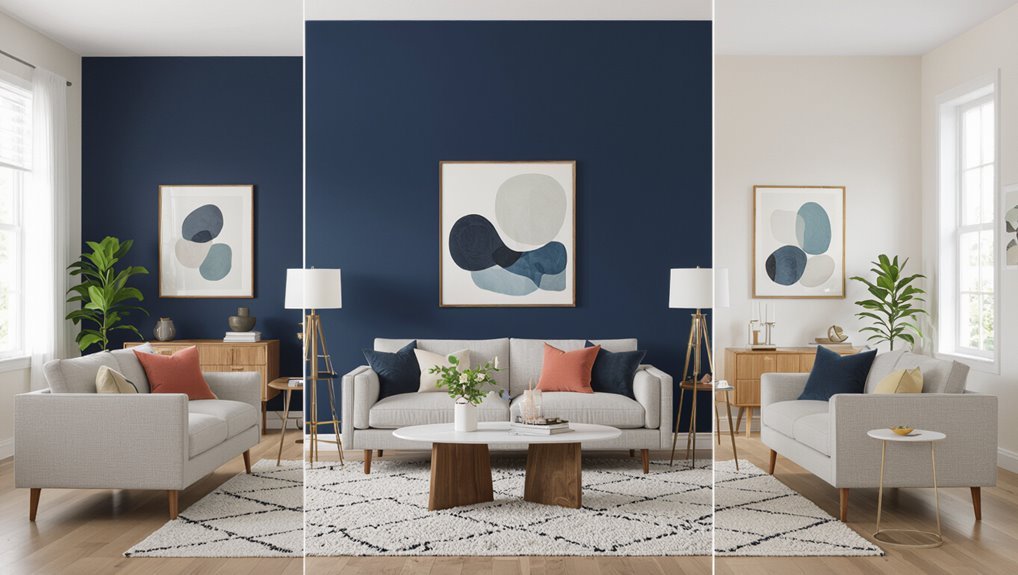
Because the number of walls you paint changes how a room feels and reads at a glance, choosing one, two, three, or all four walls is a design decision with clear psychological and visual effects.
One wall anchors focus; two create balance or framing; three add warmth without enclosure; all four unify and can visually shrink a space.
Your choice directs mood, depth, and perceived size.
Key Factors That Determine How Many Walls to Paint
You’ll want to evaluate room size and proportions, along with ceiling height and natural light, since those affect how color reads.
Think about your furniture layout and focal points and whether the room’s purpose and mood call for bold or subtle walls.
Also account for architectural features and sightlines so painted walls enhance the space rather than compete with it.
Room size and proportion
When deciding how many walls to paint, consider the room’s size and proportions first: small rooms often benefit from painting all walls the same light color to open the space, while larger or oddly shaped rooms let you use an accent wall or partial paint to create balance and focus.
Measure dimensions, note sightlines, and paint to emphasize symmetry or minimize awkward angles for a cohesive feel.
Ceiling height and natural light
If your ceiling’s low or your windows are small, painting all the walls a light, reflective color will help lift the space and bounce available daylight around the room.
Conversely, in airy rooms with tall ceilings and abundant sun, you can confidently use darker or accent walls to add depth without feeling cramped.
Consider finish sheen to maximize light.
Furniture layout and focal points
Light and dark choices also depend on where your furniture and focal points sit: paint draws the eye, so plan which walls you want to highlight around the sofa, fireplace, bedhead, or media unit.
Use accent walls to anchor seating or a TV, or paint behind shelving to showcase collections.
Balance colors so focal points pop without overpowering traffic flow or sightlines.
Purpose and mood of the room
Mood shapes choices: decide what you want the room to feel like before picking how many walls to paint.
If you want calm, paint fewer walls or use soft tones to anchor the space.
For energy or drama, paint an accent wall or two in bold hues.
In multipurpose rooms, balance warmth and neutrality so the painted walls support desired activities.
Architectural features and sightlines
When you assess a room’s architectural features and sightlines, think about which walls naturally draw attention and how paint can support those focal points.
Emphasize walls with built-ins, fireplaces, staircases, or large windows to highlight structure. Use fewer painted walls if sightlines connect multiple spaces, so changes feel cohesive.
Paint choices should enhance, not compete with, architectural detail.
Color selection and finish (sheen, lightness)
After noting which architectural elements and sightlines will guide the eye, consider how color and finish will reinforce those choices.
You’ll pick hues to expand or cozy the room, and sheens to highlight texture or hide flaws. Use trims and contrast deliberately so painted walls direct attention.
- Lighter colors enlarge
- Darker create focus
- Matte hides imperfections
- Gloss emphasizes detail
How-To Decide: Step-by-Step Process
Start by measuring the room and noting its layout so you know exactly how much surface you’re considering.
Identify the primary focal point(s), pick a color strategy (neutral base, accent, or two-tone), and test samples on each wall to see how they read in the room.
Then finalize which walls you’ll paint and create a clear plan that includes trim and ceiling.
Step 1 Assess the room and take measurements
Begin by walking the room and noting each wall’s length, height, doors, windows, and any built-ins so you can calculate paintable square footage accurately.
Measure twice, record dimensions, and subtract openings to find true surface area.
Note ceiling height variations, alcoves, and trim lines.
These figures help determine how many gallons you’ll need and whether partial or full-wall painting makes sense.
Step 2 Define the room’s primary focal point(s)
With your measurements in hand, identify where people’s eyes naturally go when they enter the room so you can plan paint accordingly.
Note architectural anchors—fireplace, large window, built-ins—or dominant furniture like a sofa or bed.
Decide which focal point you want to emphasize, then map sightlines from entrances and seating.
That guides how many walls should carry attention and which should recede.
Step 3 Choose a color strategy (neutral base, accent color, two-tone)
Pick a color strategy that fits how you use the room and the focal points you mapped—neutral base, single accent, or two-tone—so your choices serve function as well as style.
Use a neutral base to unify, reserve an accent for one wall to highlight a focal point, or apply two-tone to define zones.
Match finishes and contrast for balance and flow throughout.
Step 4 Test paint samples and visualize on each wall
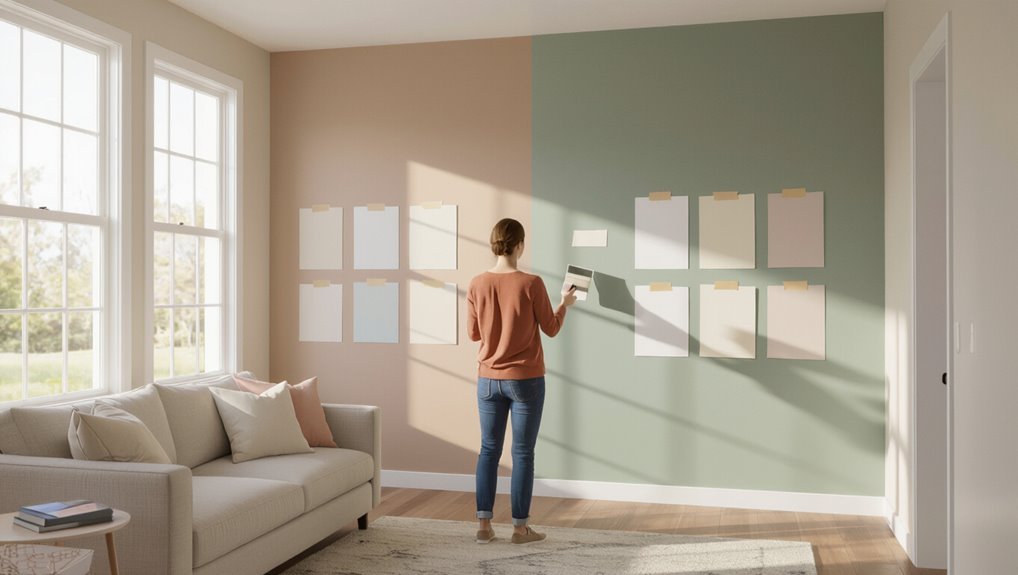
Now it’s time to try paint on the walls: apply several large samples of your shortlisted colors directly to each wall you might paint so you can see how they read in that specific light and against your room’s finishes.
Observe samples at different times and from multiple vantage points. Note undertones, contrast with furnishings, and imagine how each wall’s color affects perceived size and mood before choosing.
Step 5 Finalize number of painted walls and paint plan (including trim/ceiling)
Decide how many walls to paint by weighing light, focal points, and the mood you want to create: paint a single accent wall to anchor the room, two opposing walls to broaden a narrow space, or all walls for a cohesive, enveloping feel.
Include the trim and ceiling choices that will tie everything together. Confirm samples, pick finishes, schedule prep, and note trim and ceiling colors for balance.
Common Approaches and When to Use Them
You’ll weigh simple choices like a single accent wall against bolder moves such as painting two opposing or adjacent walls to change perceived depth.
Consider three-wall schemes (or painting the ceiling and leaving one wall white), full-room color for immersion, and partial treatments like half-walls or two-tone splits based on mood, light, and function.
Each option has clear pros, cons, and ideal scenarios you’ll want to match to the room’s size, purpose, and your tolerance for commitment.
Paint one accent wall pros, cons, ideal scenarios
If you want a quick, high-impact update without repainting the whole room, painting a single accent wall gives you a bold focal point with minimal time and cost.
You’ll highlight architectural features or art, test a daring color, and preserve a room’s brightness.
Downsides: it can imbalance small spaces or clash if poorly placed.
Ideal for rentals, living rooms, and bedrooms.
Paint two opposing or adjacent walls effects and when to choose
Want more impact than a single accent wall without overwhelming the room? Painting two opposing walls adds drama and depth, widening sightlines and creating balance.
Choose opposing walls to frame views or make narrow rooms feel broader; pick adjacent walls for a cozy, enveloping effect. Use this when you want stronger contrast than one wall but still keep visual calm.
Paint three walls (ceiling or fourth left white) balance and use-cases
When you paint three walls—leaving the ceiling or the fourth wall white—you create a controlled backdrop that both grounds furniture and keeps the room feeling airy.
Use this when you want cohesion without full immersion: a feature wall effect that still reflects light.
It suits open-plan spaces, small bedrooms, or rental situations where a single unpainted surface preserves brightness and resale neutrality.
Paint all four walls when full immersion works best
Leaving one surface white keeps things light, but painting all four walls floods a room with color and personality, creating a fully immersive atmosphere.
You’ll choose this when you want cohesion, drama, or to unify open-plan areas. Deep or saturated hues cozy up large rooms; bold neutrals add sophistication.
Remember lighting and scale—test samples, then commit if the mood and flow feel right.
Partial/half-wall treatments and two-tone horizontal splits
If you’re looking for a balanced way to add color without overwhelming a room, partial or half-wall treatments and two-tone horizontal splits give you control and visual interest while keeping things grounded. You can anchor furniture, protect walls, or add drama by pairing neutrals below with bold hues above; they suit hallways, nurseries, and small rooms.
| Lower | Upper |
|---|---|
| Wainscot | Paint |
| Chair rail | Accent |
| Durable | Light |
| Grounded | Airy |
Comparison: Visual Impact and Practical Considerations
Decide how many walls to paint based on the visual effects you want: fewer walls can make a room feel brighter and more spacious, while more painted surfaces add warmth and coziness.
Also consider durability and how much upkeep each option needs—accent walls may hide wear better but still concentrate touch-ups.
Weigh the repainting workload against the look you’re aiming for so you won’t be stuck with a maintenance plan you don’t want.
How many painted walls affect perceived space, light, and warmth
Although painting every wall can create a bold, cocooning feel, leaving some walls neutral or unpainted helps preserve light and perceived space.
You’ll want to balance visual impact with practical needs like maintenance and furniture placement.
Paint fewer walls to keep rooms airy and reflective; paint an accent wall to add warmth and depth without shrinking scale, or paint two opposing walls for balanced coziness.
Durability, maintenance, and repainting workload by option
Once you pick how many walls to paint, think about how each choice affects durability, upkeep, and future repainting. Fewer painted walls mean less surface to maintain; accent walls highlight wear. Full-room paint evens out fading but increases time and cost. Match finish to traffic: satin for washability, matte for low-traffic areas.
| Option | Maintenance |
|---|---|
| One wall | Low |
| Multiple walls | Medium |
| All walls | High |
Mistakes to Avoid When Choosing Number of Walls
Don’t ignore sightlines and how natural light will change the look of your walls throughout the day.
Avoid slapping dark colors on multiple walls or you’ll overwhelm the room and clash with existing furniture.
Always do test patches and check them at different times so you don’t commit to a scheme that won’t work.
Common planning errors (ignoring sightlines, natural light)
When planning which walls to paint, don’t overlook sightlines and natural light — they’ll change how colors behave and how the room feels.
Consider how windows, doorways and hallways expose painted walls from other rooms; a color that works up close might clash from a distance.
Note sun direction and shifting light; test samples at different times to avoid unexpected washes or muted tones.
Overuse of dark colors on multiple walls
Sightlines and light also dictate how many dark-painted walls will work in a room.
So after checking how colors read from other rooms and at different times of day, think twice before wrapping a space in multiple deep hues.
Dark walls can shrink a room, muddy details, and absorb light; reserve them for accents, focal walls, or well-lit spaces to maintain balance.
Mismatching furniture and wall strategy
If your furniture’s style, scale, or finish clashes with the wall plan, the room will feel disjointed no matter how well you’ve picked colors.
You should align paint choices with existing pieces: match undertones, balance bold walls with neutral furnishings, and guarantee scale harmony.
If you plan dramatic accent walls, simplify patterns and finishes so furniture complements rather than competes, creating cohesive visual flow.
Skipping test patches and failing to view at different times of day
Because paint looks different under varying light, you shouldn’t skip test patches or assume a sample can’t fool you—always try swatches on multiple walls and check them at morning, midday, and evening.
You’ll notice temperature shifts, reflections, and how color changes with artificial lighting.
Test before committing to one or multiple feature walls so you avoid costly repaints and mismatched moods.
Tips, Best Practices, and Design Tricks
Think about how trim, moldings, and even the ceiling can frame your painted walls for a sharper look.
You can mix paint with wallpaper or textured finishes, and coordinate colors with textiles, flooring, and lighting to tie the room together.
Plan your budget, timeline, and staging so painting multiple walls stays efficient and stress-free.
Using trim, moldings, and ceilings to enhance painted walls
When you use trim, moldings, and ceilings thoughtfully, they frame painted walls and lift a room’s style without a full overhaul; choose profiles and paint finishes that complement your wall color, establish clear sightlines, and reinforce the room’s scale so the whole space reads as intentional and cohesive.
Use contrasting trim to define focal walls, crown molding to raise perceived height, and a painted ceiling to unify or accent.
Combining paint with wallpaper and texture
Trim, moldings, and painted ceilings set a strong stage, and you can build on that by mixing paint with wallpaper and textured finishes to add depth and personality.
Choose one focal wall for bold patterns, balance it with solid colors on adjacent walls, and use subtle texture—grasscloth, plaster, or beadboard—for tactile contrast.
Test samples, match scales, and keep changes clean for cohesion.
Coordinating paint with textiles, flooring, and lighting
Although paint sets the room’s mood, you’ll get the clearest effect by coordinating it with textiles, flooring, and lighting so each element reinforces the others.
Choose fabrics that pick up undertones, match rug warmth to floor tones, and use layered lighting to highlight painted accents.
Test swatches under real bulbs, keep contrast balanced, and let textures bridge color shifts for a cohesive, comfortable space.
Budgeting, timeline, and staging advice for painting multiple walls
If you’re tackling multiple walls, start by mapping scope, costs, and timing so the project stays predictable and affordable.
Break work into phases, prioritize high-impact areas, and factor materials, labor, and touch-ups.
Coordinate furniture moves and drying windows to limit disruption. Get quotes and buffer 10–15% for surprises.
- Phase rooms by priority
- Estimate materials precisely
- Schedule drying and ventilation
- Stagger movers and cleaners
Scenario-Based Recommendations (Case Studies)
Think about each space’s needs: in a small bedroom you’ll weigh painting one wall for depth versus all four for warmth.
Meanwhile, an open-plan living/dining area can use a single color to unify or contrasting walls to define zones.
If you’re in a rental, choose temporary accents and reversible solutions like removable wallpaper or peelable paint for easy changes.
For high-traffic areas, pick durable, forgiving colors and consider painting fewer walls to reduce touch-up work.
Small bedroom: maximising space with 1 vs. 4 walls painted
One simple choice — painting a single focal wall or all four — can change how roomy your small bedroom feels and functions.
Choose one accent wall to create depth, draw attention to the bed, and keep light reflection high on surrounding light walls.
Paint all four if you want a cozy cocoon, richer mood, or to hide uneven tones, but expect a smaller visual footprint.
Open-plan living/dining: unifying or zoning with color choices
Moving from a small bedroom’s choice of one versus four painted walls, open-plan living/dining areas ask a different question: do you want a unified flow or clearly defined zones?
Decide based on function and light. Use a continuous neutral to unify; introduce a single contrasting color to anchor dining, or paint a partial accent wall or ceiling to subtly delineate seating without fragmenting the space.
Rental apartment: temporary accent strategies and reversibility
If your lease limits permanent changes, you can still create bold accents that peel off when it’s time to move: peel-and-stick wallpaper, removable paint films, temporary wallpaper paste, and adhesive molding let you add pattern, color blocks, or faux paneling without damaging surfaces.
Prioritize neutral base walls, highlight one focal wall, test adhesives on hidden spots, and document original paint for easy restoration.
High-traffic areas: practical color and wall-count choices
High-traffic rooms demand durable color choices and smart wall-count decisions so your paint holds up and spaces feel balanced.
Choose mid-tone, washable paints that hide scuffs; restrict bold accents to one wall to minimize visual clutter and maintenance.
In corridors or entryways, paint two adjacent walls for continuity, but keep ceilings and trim neutral to simplify touch-ups and preserve resale appeal.
Quick Checklist Before You Start Painting
Before you grab a brush, measure each wall and calculate how much paint you’ll need so you don’t run out mid-job.
Make a simple tool list—rollers, brushes, tape, drop cloths—and set up a small sample patch in an inconspicuous spot.
Give the sample the recommended dry and cure times, then evaluate it for color, sheen, and coverage before committing.
Measurements, paint quantities, and tool list
Measure each wall and opening so you know exactly how much paint and how many tools you’ll need.
Calculate square footage (width × height), subtract doors/windows, and divide by paint coverage per gallon.
List needed supplies: primer, topcoat, rollers (nap by surface), angled brushes, tray, tape, drop cloths, sandpaper, patching compound, ladder, and a stir stick.
Buy a little extra.
Sample patch placement and evaluation times
Pick two small, inconspicuous spots—one in direct light and one in shadow—and apply your primer and topcoat samples so you can judge color, sheen, and adhesion where it matters most.
Wait 24–48 hours for full drying and view at different times. Note performance, touch-up ease, and true color under evening and morning light.
- Test primer then topcoat
- Wait 24–48 hours
- View morning and evening
- Check adhesion and sheen
FAQ
You’ll find answers to common questions here, from picking the best wall for an accent to whether one dark wall or lighter walls suit your room.
We’ll cover how multiple painted walls and ceiling color affect perceived size and mood, plus the easiest way to test your choices.
If you’ve got a specific room in mind, mention its size and light and we’ll tailor the advice.
How do I choose which wall should be the accent wall?
Which wall should get the accent? Choose the wall your eye naturally lands on: behind the bed, sofa, fireplace, or main entry.
Pick one with architectural interest or that frames a view. Consider furniture placement and sightlines so the color anchors the room.
Avoid walls crowded with doors or windows. Test samples in different light before committing to the final hue.
Is it better to paint one dark wall or all walls a lighter shade?
If you’ve settled on an accent wall location, the next question is whether to stop there or coat the whole room in a lighter shade.
One dark wall creates focus and depth without overwhelming; it’s bolder and easier to change.
Painting all walls a lighter shade brightens, unifies, and feels calmer.
Choose based on mood, lighting, furniture, and how often you want to redecorate.
Can painting multiple walls make a small room feel smaller?
While painting several walls in a small room can sometimes make it feel cozier rather than cramped, the effect depends on color choice, light, and contrast.
If you use dark, high-contrast hues on multiple walls, the room can feel compressed. Lighter, warm tones on more surfaces keep sightlines open.
Balance painted walls with bright lighting, reflective finishes, and minimal clutter to avoid visual shrinkage.
How does ceiling color interact with number of painted walls?
Along with how many walls you paint, the ceiling color shapes how spacious the room feels and how the painted walls read. A lighter ceiling opens sightlines, letting darker or accent walls feel intentional rather than enclosing.
A matching or slightly darker ceiling creates coziness and can unify multiple painted walls. Use contrast sparingly to control depth and perceived height.
What’s the easiest way to test how many walls to paint?
Want to know fast whether one, two, or all four walls should get paint? Tape large swatches or poster-board panels in each spot you’re considering, view them at different times of day, and snap photos.
Live with the samples for a few days to see light and mood changes. That’ll show balance, focal points, and whether a full or partial paint job works.
