
How Much for a Gallon of Paint at Home Depot: Price Guide and Cost Factors
You’ll pay about $15–$65 per gallon at Home Depot depending on brand, finish, and specialty formulas. Budget paints run $15–$25, mid-range $30–$45, and premium up to $65 for better hide and durability. Coverage varies by porosity and color—plan two coats for most jobs—while tints, deep colors, and additives raise cost. Also factor tools, samples, and warranties. Keep scrolling and you’ll find specifics on coverage, brand differences, and buying tips.
Quick Price Snapshot: Home Depot Paint Per Gallon
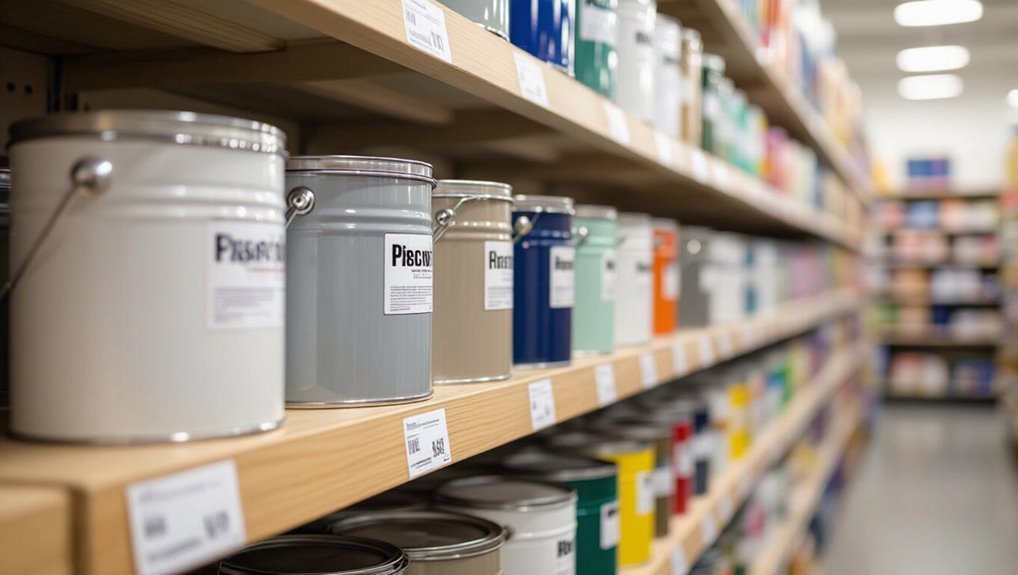
You can expect most Home Depot paint to range between about $15 and $65 per gallon depending on brand and finish.
You’ll find budget options around $15–$25, mid-range near $30–$45, and premium choices up to $65.
Quick cost comparisons help you spot value, while considering paint finishes (flat, eggshell, satin, semi-gloss) guides decisions based on durability and sheen.
How To Choose Between Budget And Premium Paint
Wondering whether to save with a budget can of paint or invest in a premium brand? You’ll weigh cost against performance: premium hides better, lasts longer, and resists stains, while budget saves up front.
Consider color selection—rich or complex hues often need higher-quality pigments.
Match product to desired paint finish and room use: higher-traffic areas usually justify premium for durability and fewer coats.
How Much A Gallon Covers (Real-World Sq Ft)
After deciding between budget and premium, factor in how much a gallon actually covers so you can estimate cost and labor.
You’ll use coverage estimation for real world applications like walls and trim.
Consider these practical points:
- Surface porosity affects yield.
- Two coats double needed area.
- Ceiling vs. wall coverage differs.
- Wasted paint from cut‑ins and touchups.
Behr Vs. Glidden Vs. PPG Vs. Rust‑Oleum Prices
When comparing Behr, Glidden, PPG, and Rust‑Oleum at Home Depot, expect prices to vary by line and finish, so pick by performance needs as much as budget.
You’ll weigh Behr comparisons for color accuracy and finish options, Glidden features for value, PPG reviews for durability, Rust Oleum applications for specialty coating.
Check price trends, brand reputation, customer feedback, and environmental impact before buying.
Interior Vs. Exterior: Per-Gallon Price Differences
Although both interior and exterior paints are sold by the gallon at Home Depot, you’ll usually pay more for exterior formulations because they contain additional binders, UV blockers, and weatherproofing agents that boost durability.
Exterior paints cost more per gallon—extra binders, UV blockers, and weatherproofing give the durability exterior surfaces need.
You’ll weigh interior factors against exterior factors, noting price variations and quality differences. Consider usage recommendations, color considerations, finish choices, and brand comparisons:
- Durability needs
- Climate exposure
- Aesthetic priorities
- Maintenance frequency
How Sheen Affects Price And Performance
When you’re choosing paint, sheen changes both how tough the finish is and how much coverage you’ll get.
Higher sheens like semi-gloss are more durable and easier to clean but can highlight surface flaws, while flatter sheens hide imperfections and may require more coats.
That trade-off often affects price per gallon, since specialty sheens or higher-resin formulas cost more.
Sheen VS Durability
Sheen matters because it directly links appearance to performance: higher sheens (like satin, semi-gloss, and gloss) resist scuffs, clean more easily, and typically cost a bit more per gallon than flat or matte options.
You’ll weigh sheen types against durability factors when choosing paint:
- Flat/matte: hides flaws, lower durability
- Eggshell: moderate durability
- Satin: good cleanability
- Semi-gloss/gloss: highest durability
Sheen VS Coverage
Because the finish changes how light reflects and how pigment sits on the surface, it also affects how much paint you’ll need and what you’ll pay per coat.
You’ll notice flat covers more evenly, hiding flaws with fewer coats; gloss and satin reflect more, needing extra pigment and coats for uniformity.
Compare sheen types and sheen finishes to balance cost, coverage, and desired look.
Why Pigment And Solids Change Cost
You’ll notice higher-priced paints often use finer, more lightfast pigments that give truer color and better coverage.
The percentage of solids matters too, because paints with more solids leave a thicker, more durable film per coat.
Understanding pigment quality and solids percentage helps you decide if a pricier gallon is worth the extra performance.
Pigment Quality Impact
When choosing paint, remember that pigment quality and the proportion of solids directly affect both coverage and price.
You’ll notice pigment types and color intensity influence cost because higher-quality pigments give better hide and longevity.
Consider:
- Premium inorganic pigments for durability
- Organic pigments for vivid color intensity
- Specialty pigments (UV, metallic) cost more
- Cheaper blends need more coats, raising labor and material costs
Solids Percentage Effect
Although pigments determine color and hide, the solids percentage in paint largely drives how much paint you actually need and what you’ll pay, since higher solids mean more pigment and binder per gallon, better coverage, and fewer coats.
You’ll notice solids benefits in durability and stain resistance; consider coverage implications when comparing prices so you buy fewer gallons and save overall.
Primer Options And How One Affects Per-Gallon Cost
Because primers set the foundation for your paint, choosing the right type changes both performance and per-gallon cost.
You’ll weigh primer types, primer benefits, primer application, and primer drying when budgeting.
Consider these options:
- Latex: fast primer drying, economical for interiors.
- Oil-based: seals stains, higher cost.
- Shellac: best stain blocking, pricey.
- Specialty: mold/mildew resistance, premium price.
Paint-And-Primer Vs. Separate Primer: Cost Tradeoffs
If you want to save time, paint-and-primer formulas can cut steps by combining coverage and adhesion in one coat.
They often cost more per gallon than basic paint, but you may need fewer coats overall, so your per-coat cost can be lower.
For rough or stained surfaces you’ll still need separate primer, so factor prep needs into the total price.
Paint-And-Primer Benefits
Choosing between paint-and-primer combined and buying separate primer plus paint often comes down to upfront cost versus time and coverage.
You’ll weigh benefits like improved paint durability and faster drying time.
Consider:
- color selection and finish options
- surface compatibility and texture differences
- application technique and maintenance needs
- environmental impact and safety considerations
Cost Per Coat
When you break cost down to cost per coat, the real tradeoff between paint-and-primer and separate primer-plus-paint becomes clear: you’ll compare upfront gallon price versus layers needed.
Paint-and-primer saves labor and often lowers cost per coat if coverage is strong.
Use a coverage calculator to estimate gallons; weigh cost efficiency against stubborn stains or drastic color changes that may still need separate primer.
Surface Preparation Needs
Because surface condition drives how much prep you need, you’ll often save money by matching product choice to the task:
- Choose surface preparation techniques and surface cleaning essentials for light jobs.
- Use primer selection tips when wall damage repair or substrate compatibility matters.
- Consider surface texture considerations and finishing touches for aesthetics.
- Account for environmental factors, humidity impact and temperature effects during prep.
Specialty Formulas That Raise Per-Gallon Price
If you need paint with UV blockers, mildew resistance, or built-in primer, expect the per-gallon price to climb—these specialty additives and engineered formulations cost more to produce and test.
You’ll pay extra for specialty finishes, eco friendly alternatives, high gloss options, textured paints, low VOC formulations, metallic effects, spray paint, chalk paint, waterproof coatings, and color enhancing formulas, all designed for specific performance.
How Deep Colors And Custom Tints Affect Price
Although the base price on the label looks straightforward, deep colors and custom tints will raise the per-gallon cost because they require more concentrated pigments and extra machine time to mix precisely.
Deep or custom tints raise per-gallon costs — they need stronger pigments and extra mixing time for precision.
You’ll pay more for increased color depth and custom tinting.
Consider factors:
- Pigment volume
- Mixing time
- Batch consistency
- Waste from trial mixes
Color-Matching And Tint Fees At Home Depot
At Home Depot you’ll often pay a tint or color‑matching fee when you want a custom shade or need paint matched to a sample; those charges cover machine time, tint concentrates, and the staff effort to dial in the right mix.
You’ll see modest tint fees on most cans, vary by brand and depth, and they’re added to the base gallon price for color matching.
Savings From Multi-Gallon Packs And Bulk Buys
If you’re buying several gallons, Home Depot often applies multi-gallon discount rates that cut the per-gallon price.
For big jobs you can also choose contractor-size bulk packs that lower costs further and simplify logistics.
Compare the per-gallon math between single cans, multi-gallon deals, and contractor packs to see which saves you the most.
Multi-Gallon Discount Rates
When you’re covering a large area or outfitting multiple rooms, buying paint in multi-gallon packs or bulk quantities can cut your per-gallon cost considerably; you’ll see multi gallon benefits and better bulk pricing.
You should compare unit prices, storage needs, color consistency, and return policies:
- Check per-gallon savings
- Confirm color batch numbers
- Plan secure storage
- Know return rules
Contractor-Size Bulk Packs
For bigger jobs you’ll get even steeper savings by moving from multi-gallon packs to contractor-size bulk packs, which often sell in 5-gallon pails or larger quantities and cut the per-gallon price noticeably. You’ll save with bulk purchasing and contractor pricing, especially on premium lines. Compare quantities and warranties before you buy.
| Pack Size | Price/Pack | Price/Gallon |
|---|---|---|
| 1 gal | $30 | $30 |
| 5 gal | $120 | $24 |
| 55 gal | $900 | $16.36 |
Contractor Discounts And Volume Pricing At Home Depot
Although you might shop there casually, Home Depot offers contractor discounts and volume pricing that can cut the per-gallon cost greatly once you buy paint in bulk or enroll in their Pro programs.
You’ll get contractor savings and volume discounts via membership tiers, project quotes, and bulk orders.
- Pro membership pricing
- Tiered volume discounts
- Job-site delivery options
- Account-based invoicing
Online Vs. In-Store Home Depot Paint Prices
Want to shop online or head into the store? You’ll compare online pricing and in store pricing, check paint availability, and weigh delivery options versus pickup. Regional differences can change costs; seasonal trends affect stock levels. Look at promotional offers and customer reviews before you decide.
| Channel | Cost | Convenience |
|---|---|---|
| Online | Variable | Delivery options |
| In-store | Local | Immediate pickup |
Seasonal Sales, Promotions, And Rebate Tips
Curious when you’ll get the best deal on paint? You’ll watch seasonal trends and use promotional strategies to lower costs.
Plan timing purchases around spring sales and holiday promotions, and enroll in rebate programs for extra savings.
Consider these quick tips:
- Check weekly ads and clearance racks
- Sign up for emails and app alerts
- Stack coupons with rebates
- Buy in bulk during promos
Warranty And Guarantees: Are Pricier Paints Worth It?
How do warranties and guarantees change the value of pricier paints?
You’ll weigh premium benefits like extended fade resistance, repair coverage, and color-matching support against upfront cost.
Clear warranty terms can deliver long term savings by reducing repaint frequency and touch-ups.
Read exclusions, required prep, and claim processes so the promised protection actually offsets higher initial expense.
When Cheaper Paint Is OK (Low‑Traffic Rooms)
If you’re painting a guest bedroom or a seldom-used hallway, cheaper paint can be a smart way to save without sacrificing color.
You’ll still get plenty of budget-friendly color options at Home Depot, and those formulas work fine where durability isn’t essential.
Just skip the high-end stain- and scuff-resistant lines and pick a basic latex for easy touch-ups down the road.
Budget-Friendly Color Options
When you’re painting low‑traffic rooms like guest bedrooms, closets, or storage areas, you can often save by choosing budget‑friendly paints without sacrificing acceptable results; these cost‑effective options cover well for occasional use and still let you pick from a wide range of colors and sheens.
Use affordable palettes and trendy shades to refresh spaces.
- Neutral basics for easy matches
- Soft pastels to lighten rooms
- Accent walls for impact
- Sample pots before buying
When Durability Isn’t Crucial
Because you’re not dealing with heavy wear, you can choose cheaper paints for low‑traffic rooms and still get good-looking results; they’re fine for guest bedrooms, closets, or storage areas where scuffs and stains are rare.
You’ll save money upfront, accept modest paint longevity, and still maintain aesthetic appeal. Pick a trusted brand, match finish to use, and touch up as needed to extend life.
When To Invest In Premium Paint For Long-Term Savings
Although premium paint costs more up front, choosing it can cut your repainting frequency and maintenance bills over time.
Premium paint costs more up front but lowers repaint frequency and long‑term maintenance expenses.
You should pick premium when you want proven premium paint benefits and clear long term savings.
Consider situations like:
- High-traffic rooms needing stain resistance
- Humid areas prone to mildew
- Surfaces you’ll keep long-term
- Popcorn ceilings or textured walls that show touch-ups
Estimate Total Paint Cost: Bedroom, Kitchen, Exterior Examples
If you’ve decided premium paint fits your needs, you’ll want to translate that choice into a realistic budget for specific rooms and exteriors.
For a small bedroom estimate, count two gallons; for a typical kitchen estimate, plan three gallons; for an exterior estimate, expect 5–10 gallons depending on size.
Do a simple cost comparison by multiplying gallons by your per-gallon price.
Tools And Supplies To Budget With Your Paint
When you’re budgeting paint, don’t forget the tools and supplies that push the total higher—rollers, brushes, tape, drop cloths, primer, caulk, sanding blocks, trays, and cleanup materials all add up.
Don’t forget tools and supplies—rollers, brushes, tape, primer, drop cloths and cleanup essentials add to paint costs.
You’ll need paint tools and supply essentials beyond gallons. Plan costs for quality vs. disposable items and buy only what’s necessary.
- Rollers and brushes
- Tape and drop cloths
- Primer and caulk
- Cleaning supplies
Home Depot Low‑VOC And Eco Paint Options & Costs
You’ve budgeted for brushes and drop cloths, but choosing low‑VOC or eco paint can affect both cost and indoor air quality. You’ll weigh low VOC benefits, paint certifications, and environmental impact against cost comparisons. Consider health considerations, application techniques, and color selection when comparing eco friendly options at Home Depot.
| Feature | Impact |
|---|---|
| VOC | Lower fumes |
| Cost | Slightly higher |
| Certification | Assures claims |
| Finish | Application matters |
Quick Tips To Get The Best Value Per Gallon
If you want the most paint for your money, buy larger cans or buckets when a project calls for it — the per‑gallon price usually drops on 2.5‑gallon and 5‑gallon sizes.
Pick mid‑range Home Depot lines instead of the cheapest or premium extremes, since they often balance coverage and durability without a steep price hike.
Combine quantity buying with a mid‑range formula and you’ll cut cost per gallon while keeping performance solid.
Buy In Larger Quantities
Buying paint in larger quantities is one of the easiest ways to lower your cost per gallon without sacrificing quality.
You’ll get bulk purchase benefits and better cost efficiency when you:
- Buy 5-gallon buckets for big projects
- Split cost with friends or contractors
- Use Home Depot’s contractor discounts
- Reduce waste by matching batches and returns
Choose Mid-Range Lines
Pick a mid-range paint line when you want solid performance without paying premium-brand prices; these formulas typically balance durability, coverage, and finish so you get more value per gallon.
You’ll find mid-range options that cover well with fewer coats, cut down labor time, and offer decent stain resistance.
Check color selection samples and ask staff about touch-up and warranty details.
5-Step Checklist To Pick The Right Home Depot Paint
Start by listing your room’s needs—surface type, traffic level, desired finish, and any durability or stain resistance requirements—so you can match Home Depot’s paint options to real-world conditions.
Start by listing your room’s needs—surface, traffic, finish, and durability—to match Home Depot paint to real conditions.
Use these paint selection tips and test color matching samples.
- Choose sheen for function
- Pick mid-range or premium line
- Buy sample pot and test patch
- Calculate coverage and coat count
Frequently Asked Questions
Do Home Depot Paint Return or Exchange Policies Affect Unopened Gallons?
Yes — you can return unopened gallons under Home Depot’s paint return process; their unopened gallon policy lets you get a refund or exchange within the specified period, provided you have your receipt and the paint’s original, sealed condition.
Can I Get Custom Color Matching From a Photo or Sample at Home Depot?
Yes—you can get color matching from a photo or sample at Home Depot; associates’ll scan it and mix paint, and you can order small paint samples or sample pots to test the matched color before buying a gallon.
Are There Hazardous Material Fees for Disposing Leftover Paint at Home Depot?
Like a small fee for an extra bag, you might pay hazardous material fees at Home Depot for paint disposal; you’ll check local store policies, explore paint disposal and recycling options, and staff’ll guide acceptable drop‑offs.
Does Home Depot Offer Student, Military, or Senior Paint Discounts?
Yes — Home Depot sometimes offers discounts for military and veterans; student and senior paint pricing varies by store and promotion. Check local store policies for discount eligibility, current paint pricing, and required ID or verification.
How Soon Can I Pick up a Custom-Tinted Gallon After Ordering Online?
Think fast: you can usually pick up a custom-tinted gallon within 1–2 hours after online ordering, though rush demand or complex colors might take up to 24 hours, so check your store’s ready-by notification.
Conclusion
You’ve got the map now — like Odysseus eyeing the coast, you’ll pick the paint that gets you home: budget for quick wins, premium for lasting beauty. Factor coverage, surface prep, and tools into the total cost so surprises don’t sink your voyage. Compare brands, choose low‑VOC if health matters, and follow the checklist to land the right gallon. Ready your brushes, and sail into a smarter, smoother paint project.
